Bee-atrice log hive is on the left.  The inner tube is a draft reducer, not what it looks like, so no snide remarks!

Bee-atrice log hive is on the left. The inner tube is a draft reducer, not what it looks like, so no snide remarks!

Here's a better shot of Bee-atrice.  The blue tarp in the background is protecting my Tower of Jewels echium plants and artichokes.  I'm hoping they will bloom this time around.

Here’s a better shot of Bee-atrice log hive. The blue tarp in the background is protecting my Tower of Jewels echium plants and artichokes. I’m hoping they will bloom this year because the nectar is so good for the bees and they’ll bloom all summer.

The outside temperature is a frosty 34˙F.  Barely above freezing.  It's no wonder the bees aren't flying today.

The outside temperature is a frosty 34˙F. Barely above freezing. It’s no wonder the bees aren’t flying today.

While the outside temperature is 35˙F (1.67˙C), the inside is 50˙F (10˙C).  Someone should have cleaned off the cob webs. :)

While the outside temperature is 34˙F (1˙C), the inside is 50˙F (10˙C), which means there is something warm inside.  Someone should have cleaned off the cob webs before he shot the photo. 🙂

Looking through the observation window of Bee-atrice Log Hive reveals lots of honey.  It's such an improvement over last year's status of 'no bees.'

Looking through the observation window of Bee-atrice Log Hive reveals lots of honey. It’s such an improvement over last year’s status of ‘no bees.’

Bee Beard Log hive is doing well with the August 9th swarm that chose to move in.

Bee Beard Log hive is doing well with the August 9th swarm that chose to move in.

This hive in the tree swarmed three times during summer.  Two went to Bob and one we transferred into Del's hive.

This hive in the tree swarmed three times during summer. Two went to Bob and one we transferred into Del’s Warre hive below.

Del's hive...the bees came from the green hive in the tree.  After hanging on the pine tree for about three days, I tried to get them to crawl into an inverted swarm catcher scented with lemon grass oil.  No luck.  They finally disappeared.  I thought, "Good, I've got enough hives," only to find them on a branch of this spruce tree.  After they had hung out for at least 6 days, I dropped them into this hive that I had planned to donate to the bee club.

Del’s Warre hive…the bees came from the green hive in the tree. After hanging on the pine tree for about three days, I tried to get them to crawl into an inverted swarm catcher scented with lemon grass oil. No luck. They finally disappeared. I thought, “Good, I’ve got enough hives,” only to find them on a branch of this spruce tree. After they had hung out for a total of 6 days, I dropped them into this hive that I had planned to donate to the bee club.  Lost it…see below.

This hive catches the afternoon sun.  Some bees responded to the warmth.

Del’s hive catches the afternoon sun. Some bees responded to the warmth and gathered outside.
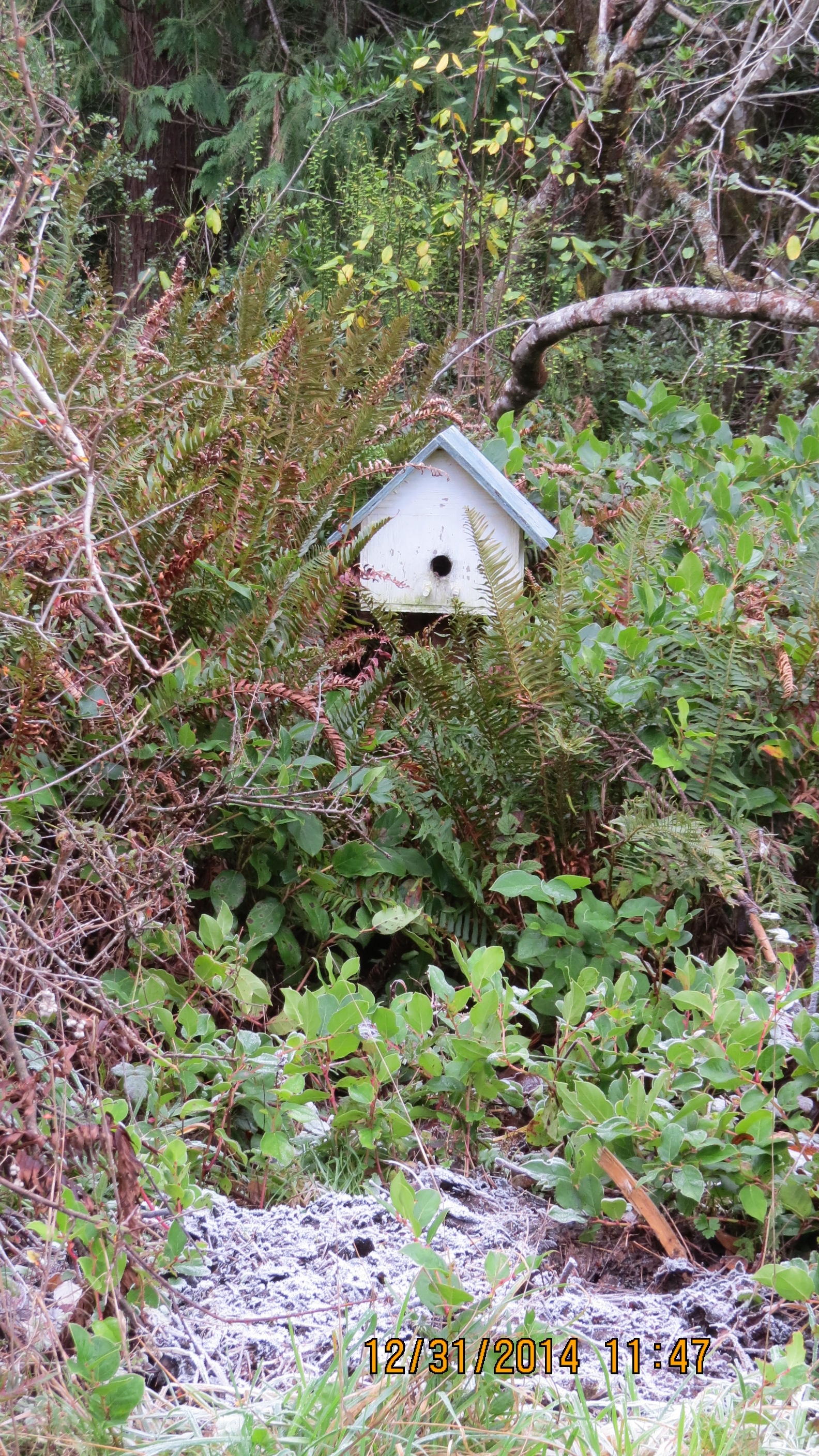
12-31-14...Birdhouse bees.  These bees came from Mary's backyard birdhouse swarm.  When I couldn't get them to move into my new Warre, I 'posted' them here.  Today they are not flying.  Too cold.  You can see frost on the ground in front.

12-31-14…Birdhouse bees. These bees came from Mayor Mary’s backyard birdhouse swarm. When I couldn’t get them to move into my new Warre, I ‘posted’ them here. Today they are not flying. Too cold. You can see frost on the ground in front.  They are in the shade possibly until March.

A closer look at the birdhouse bees shows no bee activity.

A closer look at the birdhouse bees still shows no bee activity.  Guess I’ll have to wait til it warms up.  This hive is in the coldest part of the property.  If they make it, it’ll be because they are strong bees, not because I treated them.

Warre 3...The bees came from Warre 2, around May 10, 2014.  They built up fast but only in the top box.  This 'shelter' leaves something to be desired because every time we get a stiff wind, the sheets of fiberglass blow off.  Thus the reason for the tie down.

Warre 3…These bees came from Warre 2, May 10, 2014. They built up fast but only in the top box. This ‘shelter’ leaves something to be desired because every time we get a stiff wind, the sheets of fiberglass blow off, thus the reason for the tie down.  Lost it…see below.


So there it is…from three hives a year ago to eight hives this year.  As a third year natural beekeeper, I believe in letting my bees swarm.  I like the article written by British beekeeper John Haverson that “Swarming Bees are Healthy Bees,” so I don’t destroy the queen cells or otherwise try to thwart their natural tendency to swarm.

I go against the recommendations of my local bee association which advises to kill the varroa mites.   I know there are beneficial mites in the hive.  According to long time beekeeper Michael Bush, who wrote “The Practical Beekeeper,” there are over 30 kinds of mites in a typical hive.  If you are killing varroa mites, you are upsetting the ecology of the hive.  I think we should let the bees adapt to living with mites.  Conversely, if we poison the mites, they will eventually build up a resistance at the expense of the bees.

Since we have just started winter, I know that it’s possible that some hives won’t make it, especially if I choose not to feed them.  Those would be the weak hives.  As a fairly new beekeeper I’m constantly questioning whether I’m doing the right thing.  Right now, I am of the mindset that we should not be propping up weak hives because we will be passing on weak genetics.   In my humble opinion when you capture a swarm, you should not kill that queen,  but keep her with the swarm.  She has survived the winter and proven herself.  All my bees have come from swarms.

If my bees can make it to early February, the pussy willows will bloom and weather permitting, nectar and pollen will be available in a critical stage of winter.

Yesterday I noticed honeybees on the gorse blossoms down the road from me.  This was a happy surprise because I don’t usually see bees on gorse blossoms possibly because gorse is harder to work (or so I’m told), but if there’s nothing else available, the bees will be able to get nourishment.  Some individuals around here hate the gorse.  It’s spiny thorns make it impossible to walk near, it grows prolifically, and it’s blamed for burning the town in the big 1936 fire.

March 4th note…  We lost Del’s hive.  It’s not a surprise because it never really built up any ‘honey weight’  pre-winter.  I haven’t taken it apart yet, but when I do, I’ll clean it out, put in observation windows, and donate it back to the bee club.

We lost #3 Warré too.  I took it down last week after I saw robber bees visiting it.  There was still some capped honey in the combs.  About 125 bees were dead on the bottom.  Some of the combs were moldy, so I’m guessing it’s been dead for awhile.  Both hives were weak hives.  While I’m upset at having lost them, I’m thinking that maybe it’s for the best because if the bees can’t survive in our relatively mild winter, maybe they shouldn’t be in the gene pool.  I’m down to six hives now, but the willow tree has been blooming for about three weeks and I can see the bees bringing in orange pollen and that means nectar too!
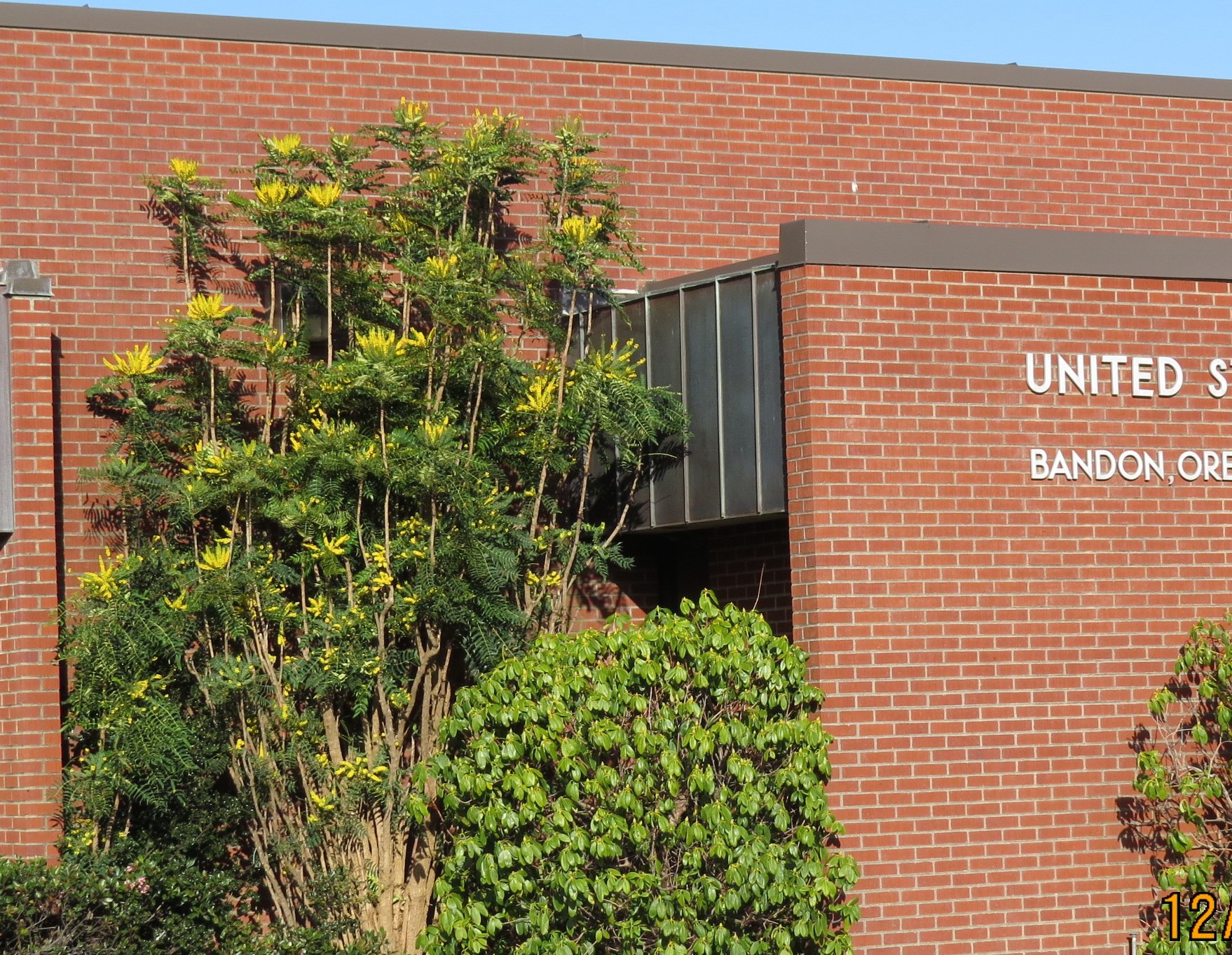
 

Since mid November this giant Oregon Grape Holly, (mahonia aquifolium) has been blooming and it's likely to keep blooming into January the way the weather has been.  Most people can't believe it, but I'm happy to see so many of my bees getting nourishment from it.  How do I know they're mine?  I'm sure I recognized them. :)

Since mid November this giant Oregon Grape Holly, (mahonia aquifolium) has been blooming and it’s likely to keep blooming into January the way the weather has been. Most people can’t believe it, but I’m happy to see so many of my bees getting nourishment from it. How do I know they’re mine? I’m sure I recognized them. 🙂


Three Kids Log Hive

My next log hive to bee...When I was puzzling over what unique carving I should have on it, what indeed, could possibly be a step up from Bee Beard or Bee-atrice, my paper salesman suggested my grand kids.  It didn't take me long to realize they would be perfect...if I could get the wood carver to go for it.

My next log hive to bee…When I was puzzling over what unique carving I should have on it, what indeed, could possibly be a step up from Bee Beard or Bee-atrice, my paper salesman, John Wise, suggested a carving of my three grand kids. It didn’t take me long to realize they would be perfect.  I better check with Brian Vorwaller, the wood carver.


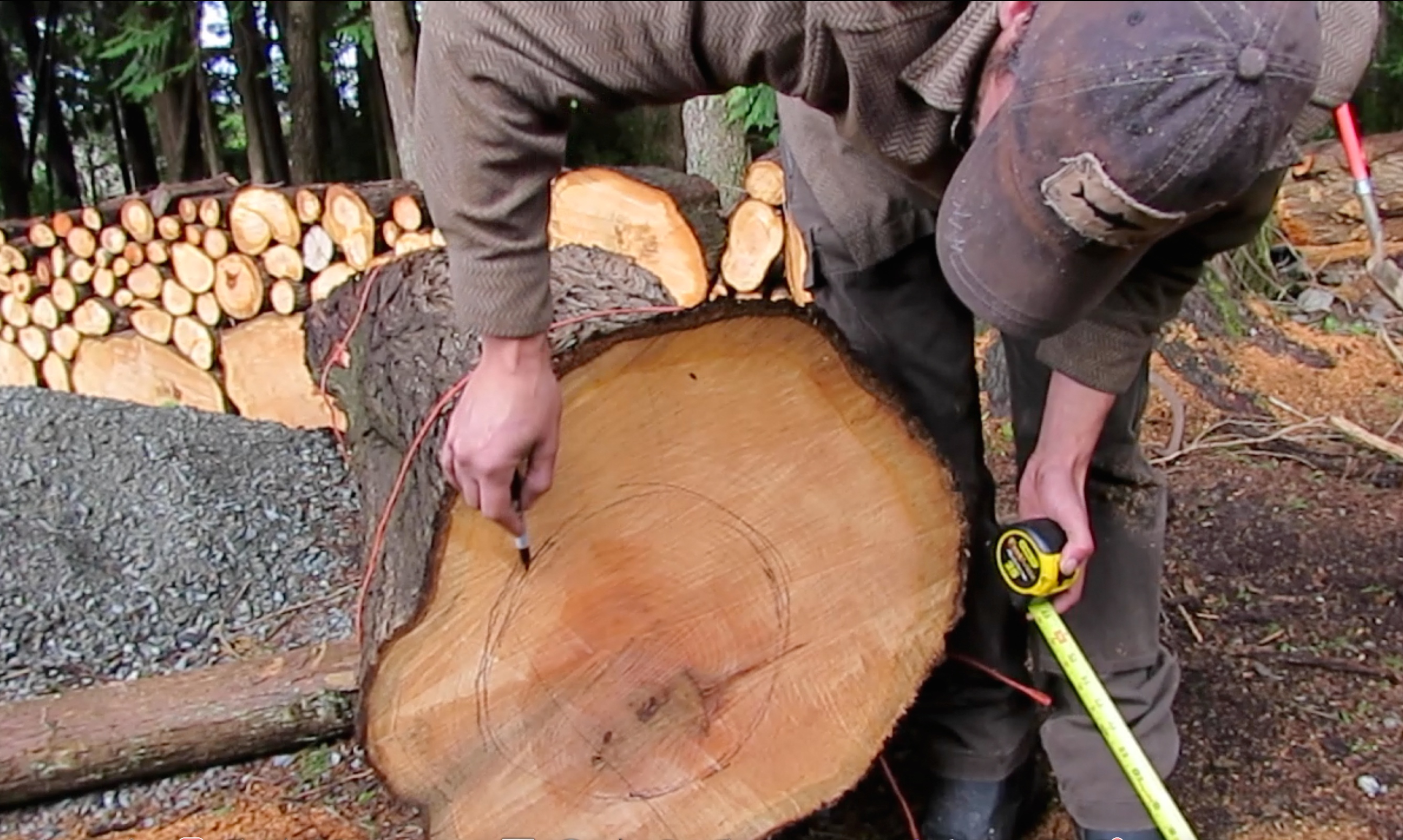
Measuring the log to determine how much surface area is needed for three faces.

Measuring the log to determine how much surface area is needed for three faces.

Brian Vorwaller draws the place he wants the bee cavity.  We've got to leave about a 4 inch thickness the  kids' faces.

Brian draws the place he wants the bee cavity. We’ve got to leave about a 4 inch thickness for the kids’ faces.

Some progress has been made

Hollowed out and ready for Brian

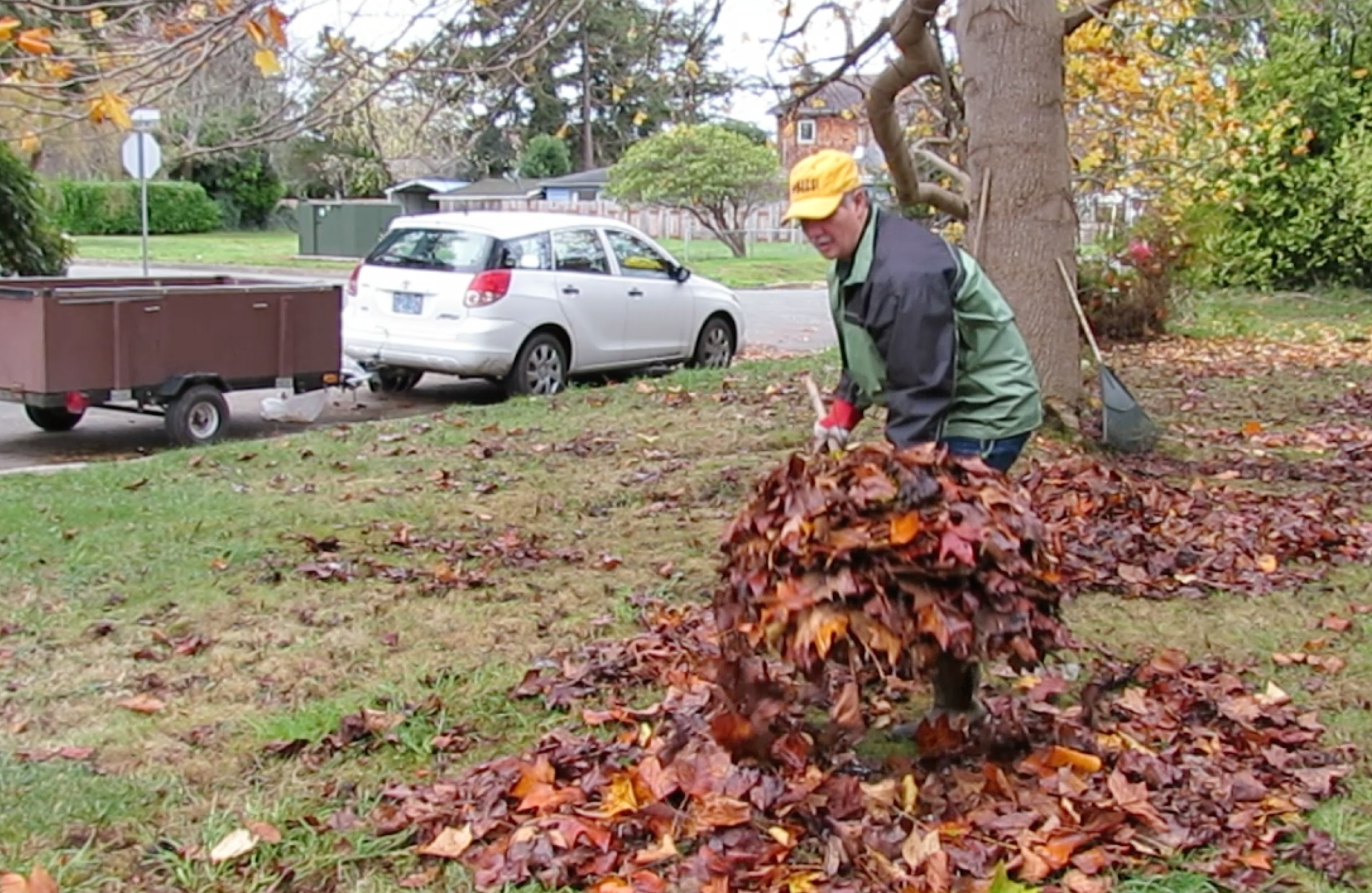
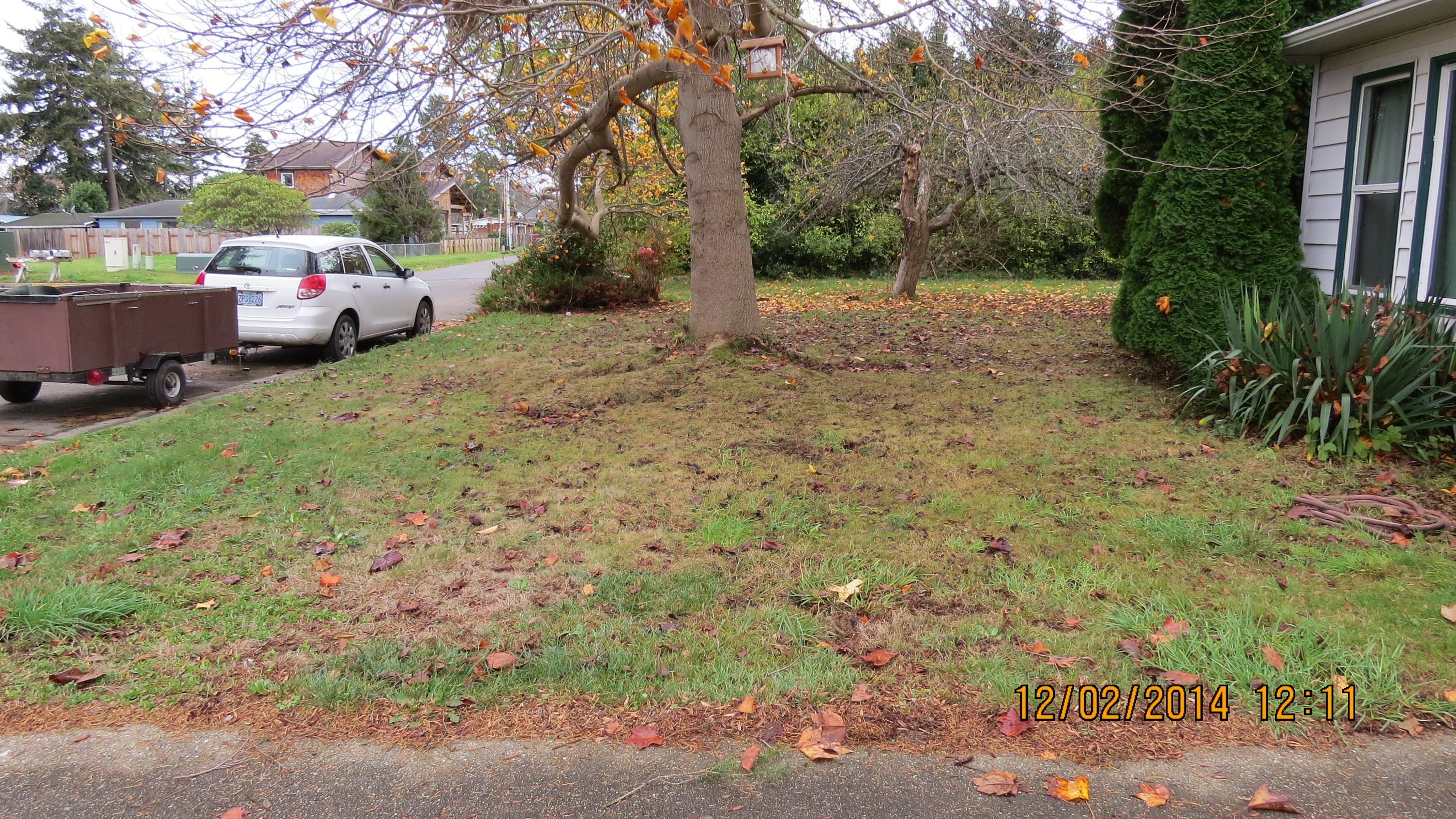
On a bleak December day, we set out to rake in the golden harvest of the Tulip tree.

On a bleak December day, we set out to rake in the golden harvest of the Tulip tree.

I have to show off my new hat, of course. :)

I have to show off my new hat, of course. 🙂

No noisy leaf blower for us, we'd rather do it the hard way.

No noisy leaf blower for us, we’d rather do it the hard way.

Who can pick up the most leaves?

Who can pick up the most leaves?

Me, of course...with the big hay fork!

Me, of course…with the big hay fork!

Half way done.

Half way done.

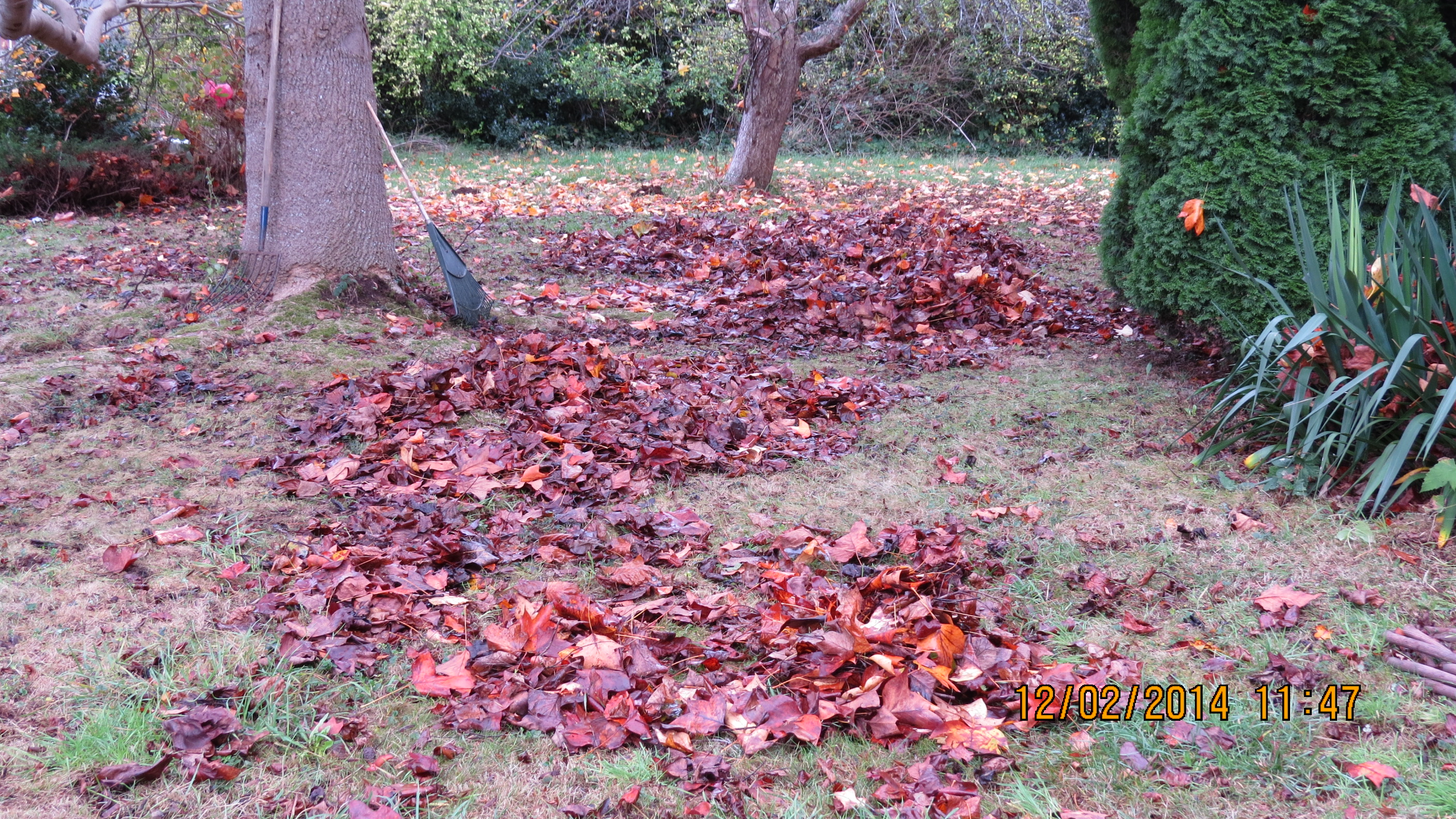
All done.

All done.

A golden treasure...to be parceled out to garden beds, compost, and, 'insect piles.'

A golden treasure…to be parceled out to garden beds, compost, and, ‘leaf litter.’

We made short work of it…

I thought you might like to see Steve Montana playing his banjo.


I Heart BEES!

I have to admit I got the idea for these hats from a "I Heart Bees" sticker that my daughter gave  me.  I knew it would be a conversation starter (not that I needed one) to talk about my favorite subject. If the subject turns to bee keeping, I carry pictures in a shirt pocket to brag up my log hives.

I have to admit I got the idea for these hats from a “I Heart Bees” sticker” that my daughter gave me. I knew it would be a conversation starter (not that I needed one) to talk about my favorite subject. When the subject turns to beekeeping, I carry pictures in a shirt pocket to brag up my log hives.

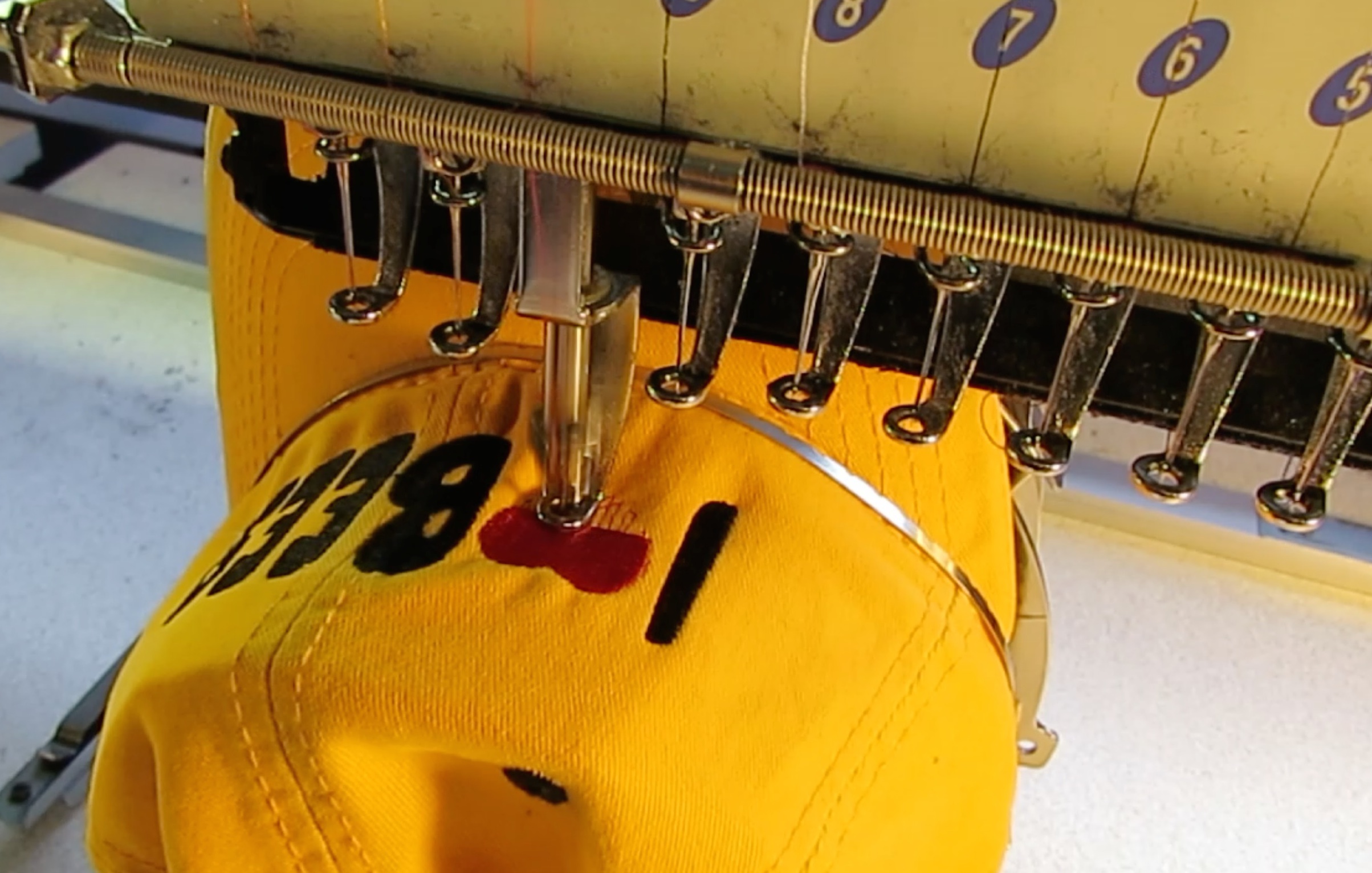
I've always wanted to see how the logo gets sewn onto a hat and this was my chance!

I’ve always wanted to see how the logo gets sewn onto a hat and this was my chance!

Adding the heart

Adding the heart

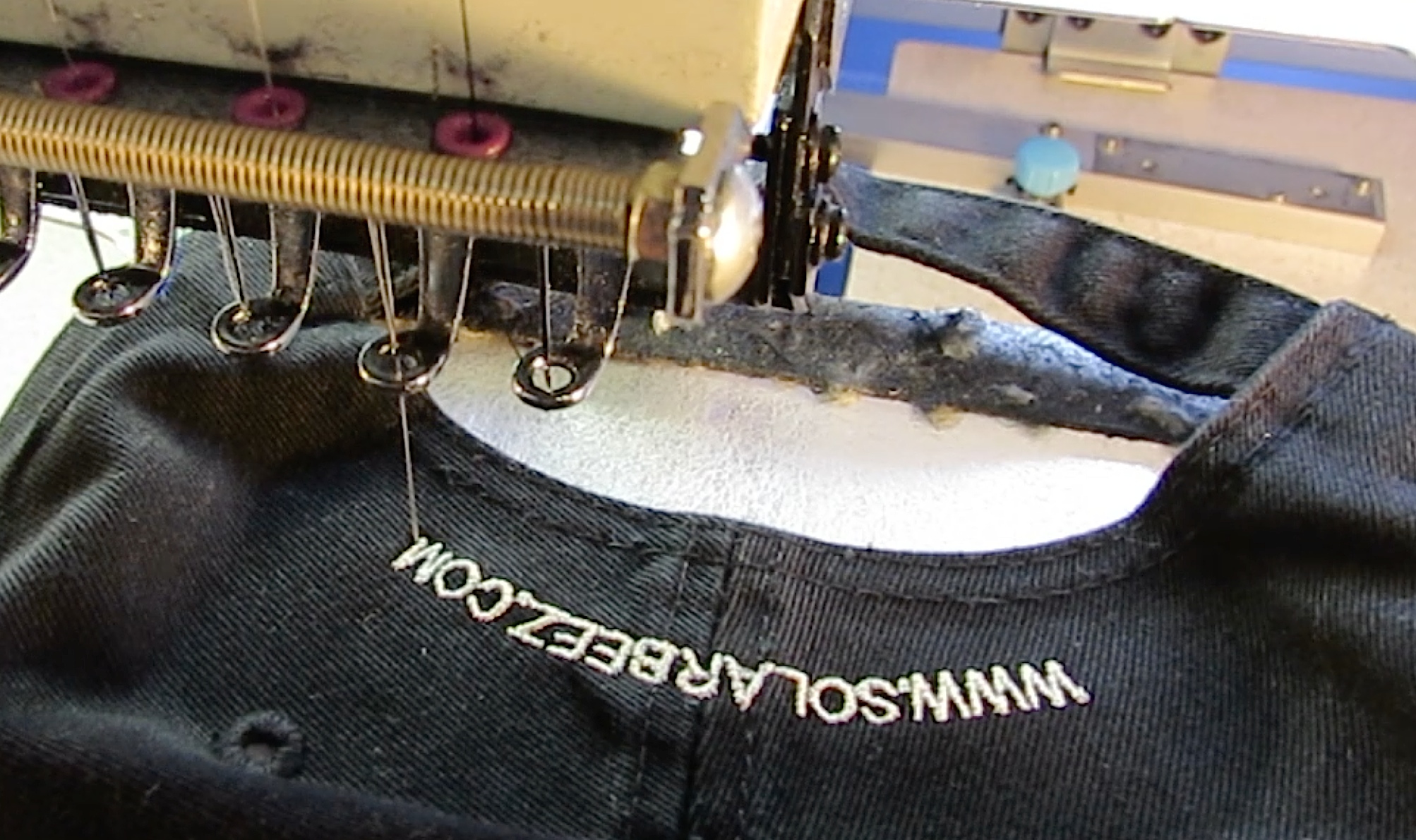
I've got to get my web site on it, of course.

I’ve got to get my web site on it, of course.


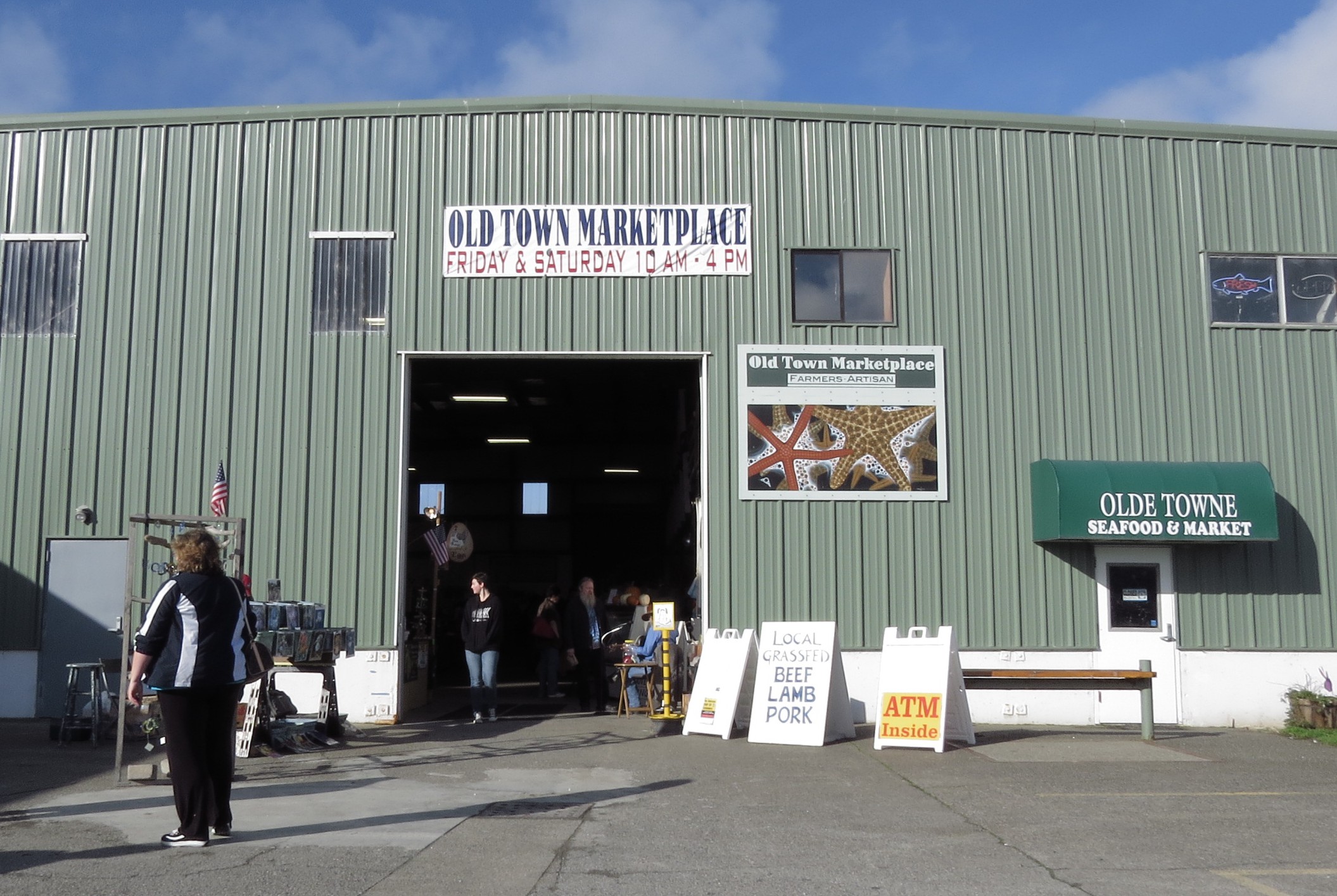
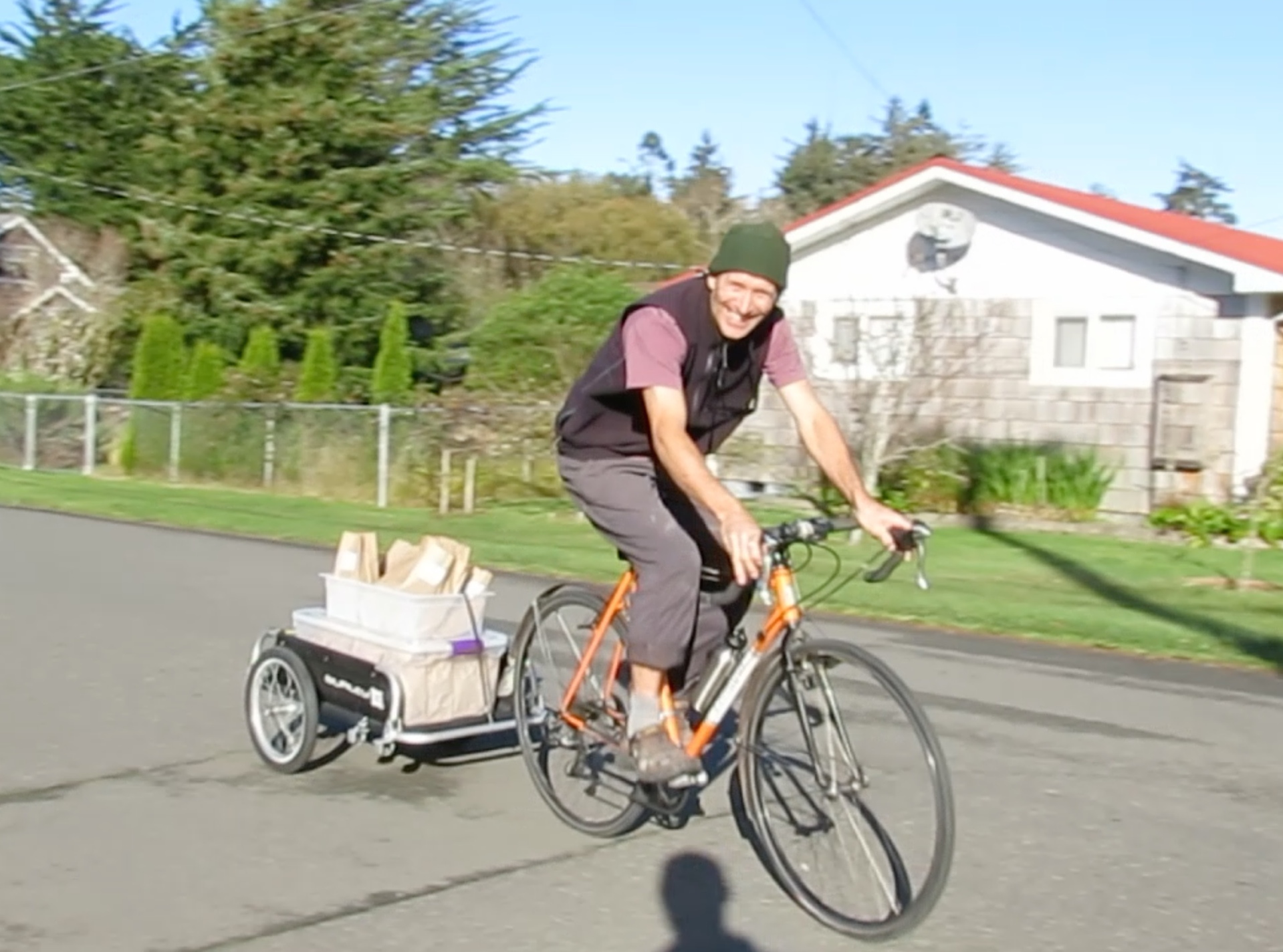
It was such an uncharacteristically warm day, we decided to bicycle down to the Port of Bandon to look at Old Town Marketplace.

It was such an uncharacteristically warm day, we decided to bicycle down to the Port of Bandon to peruse the Old Town Marketplace.

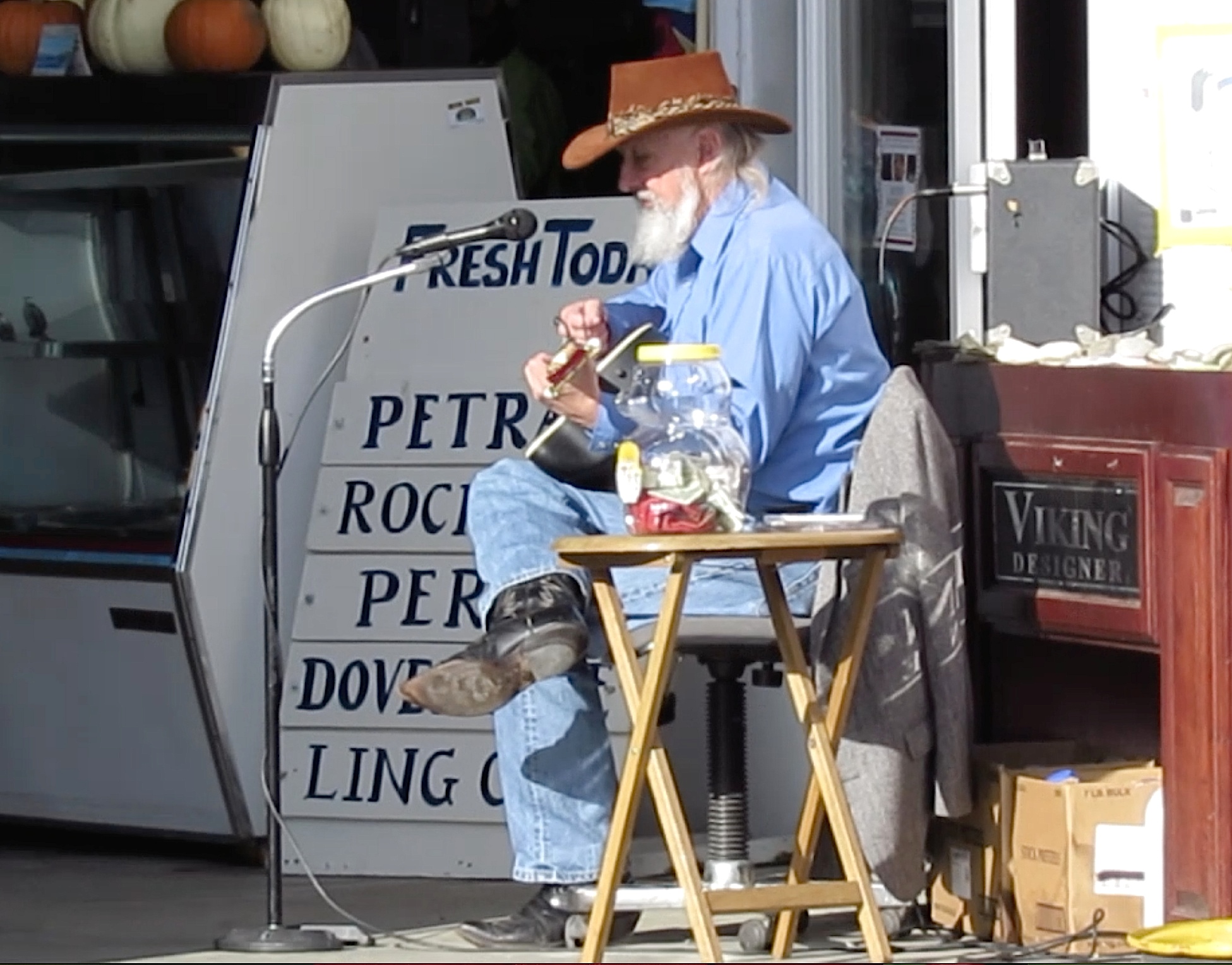
It was one of those perfect days when everyone was in a good mood with the weather being warm, artists selling their crafts, and Kirk Schumacher strumming his guitar.  I asked Kirk if he would sing one of my favorite summertime songs.  Without missing a beat, he he belted out "Summertime."

It was one of those perfect days when everyone was in a good mood with the weather being warm, farmers selling their veggies, and Kirk Schumacher strumming his guitar. I asked Kirk if he would sing one of my favorite summertime songs. Without missing a beat, he belted out “Summertime.”

Bandon Lighthouse

Bandon Lighthouse

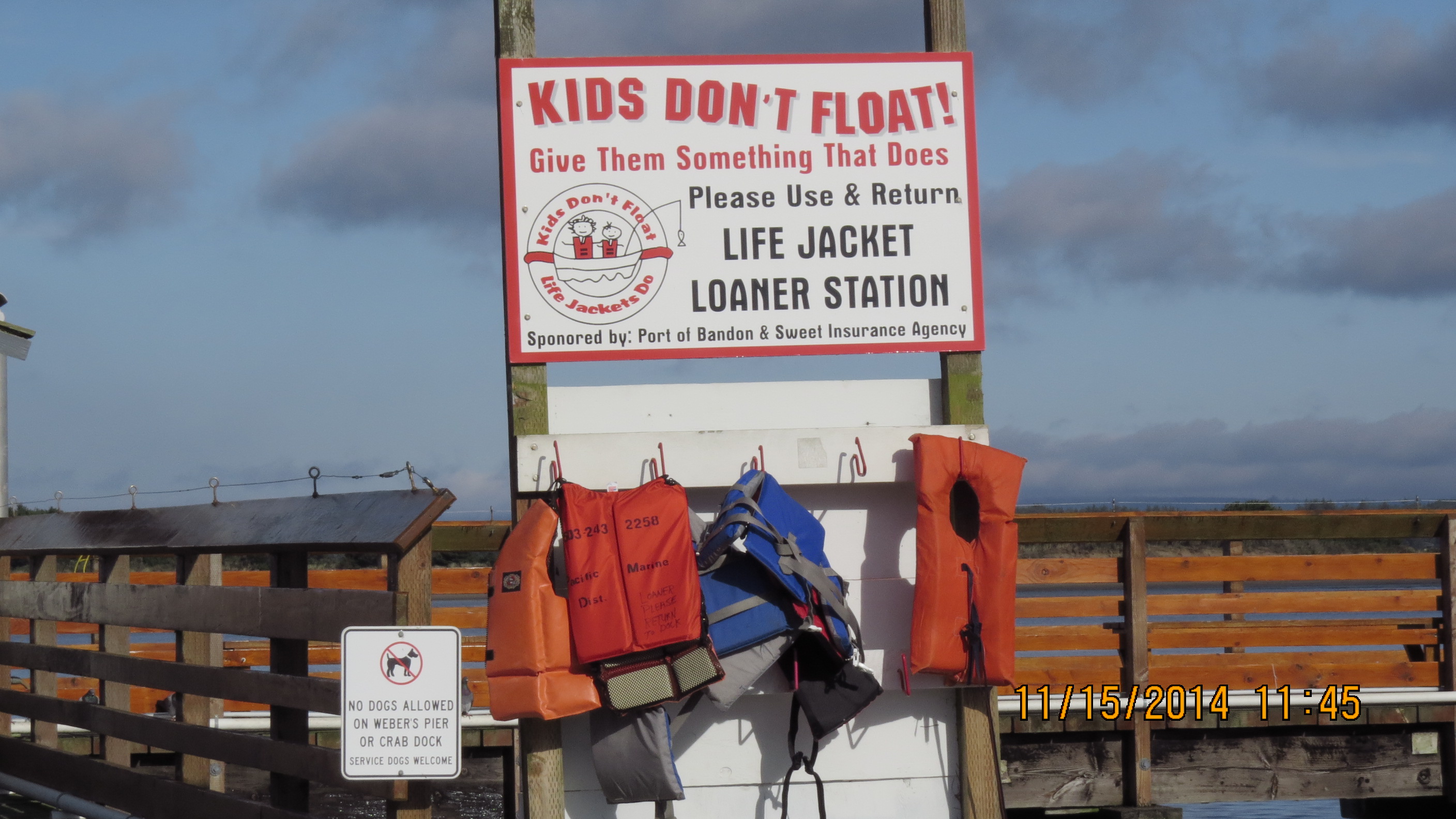
7A Kids Don't Float, 11-14-14

Crabbing at the dock, Bandon lighthouse in background.

Crabbing at the dock, Bandon lighthouse in background.

I even got to watch a pelican swallow a fish.

I even got to watch a pelican swallow a fish, twice…possibly the same fish. 🙂

Seth’s Sourdough Breads

It took about six months for Seth to build his Alan Scott wood-fired bread oven and the shop that serves as his kitchen. My daily walks would take me by his place.  I watched as he built the roof.  It was meticulously built on the ground with beautiful jointing.  I wondered how he was going to lift it up to the top.  One day, as we walked past, there it was connected to the uprights.  I asked him how he got it up there.  His reply..."one piece at a time."  "I built it on the ground to make sure it was right."

It took about six months for Seth to build his Alan Scott wood-fired bread oven and the shop that serves as his kitchen.
My daily walks would take me by his place. I watched as he built the roof. It was meticulously built on the ground with beautiful jointing. I wondered how he was going to lift it up to the top. One day, as we walked past, there it was connected to the uprights. I asked him how he got it up there. His reply…”one piece at a time.” “I built it on the ground to make sure it was right.”

The small fire was lit on Sunday, the day before ‘bread day.’  Enough heat is stored in the dome to bake 125 to 130 loaves of bread the next day.

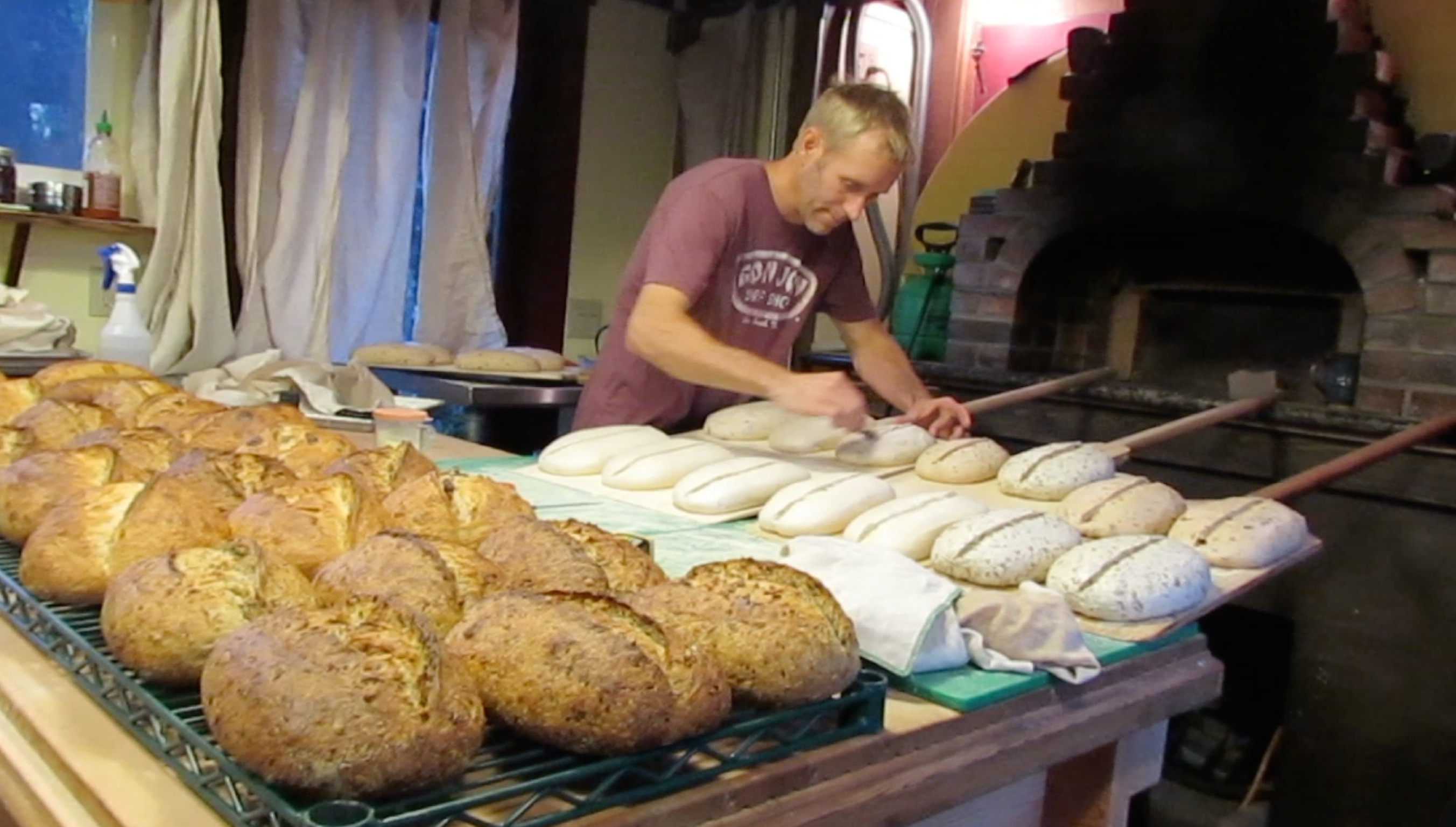
Seth scores the dough so moisture will be released and enable the bread to 'bloom.'

Seth scores the dough so moisture will be released and enable the bread to ‘bloom.’

When done, the bread goes onto the cooling rack.

When done, the bread goes onto the cooling rack.

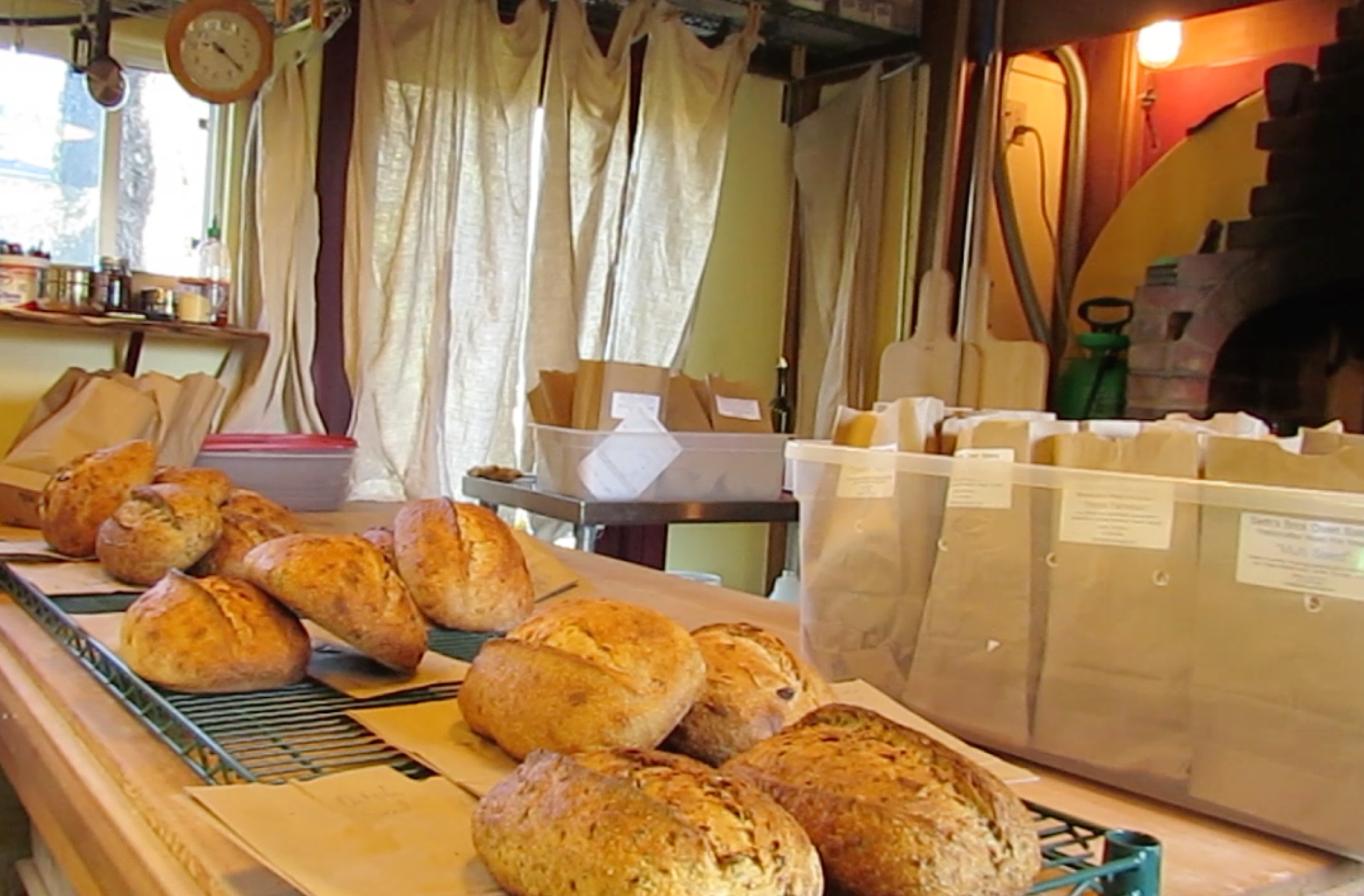
I had breakfast and returned to see the bread all sorted for deliveries.

I had breakfast and returned to see the bread all sorted for deliveries.

At about 9 am, fresh bread gets delivered by bicycle to the natural foods store.

At about 9:30 am, fresh bread gets delivered by bicycle to the natural foods store.

Follow a Tree, November

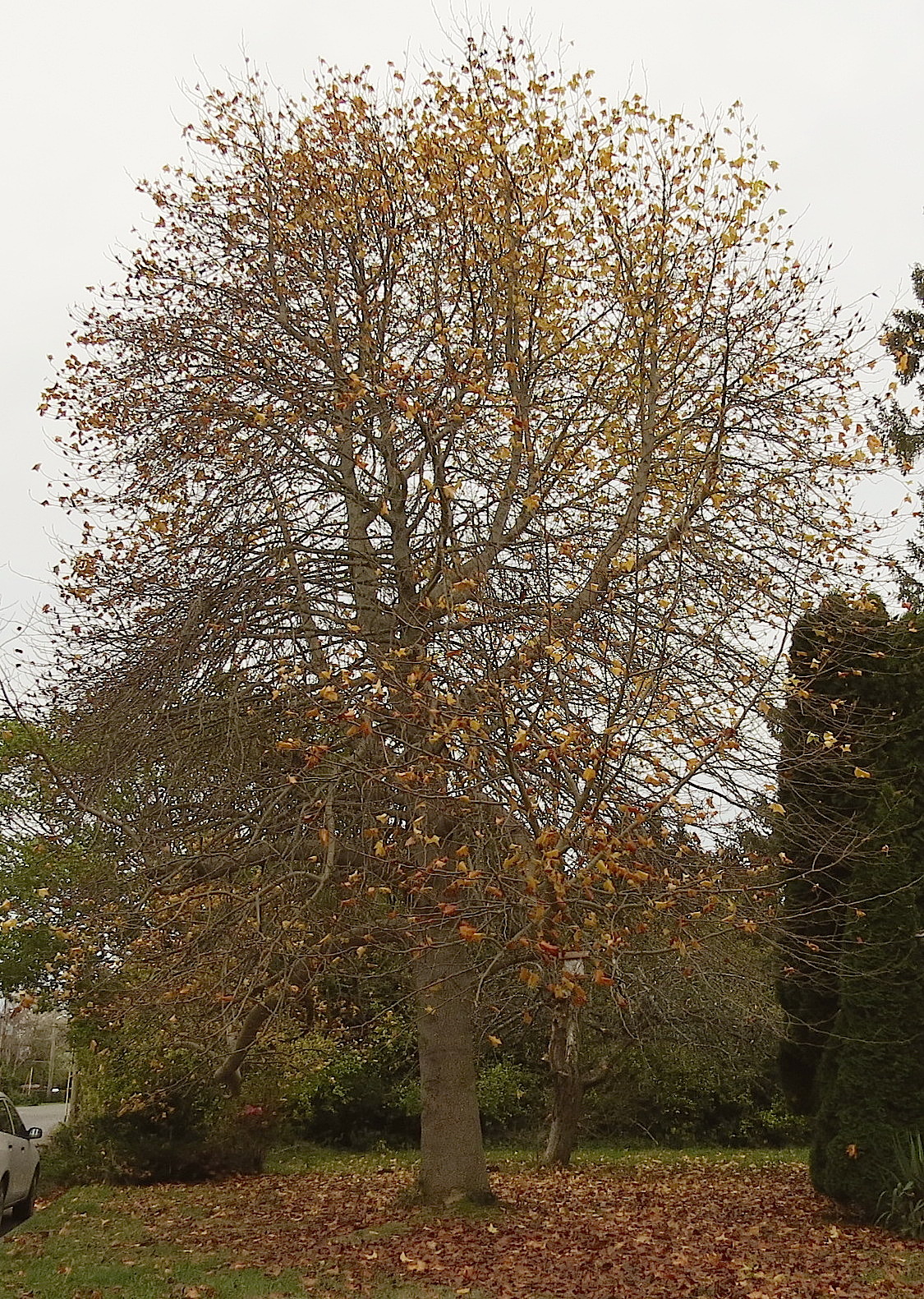
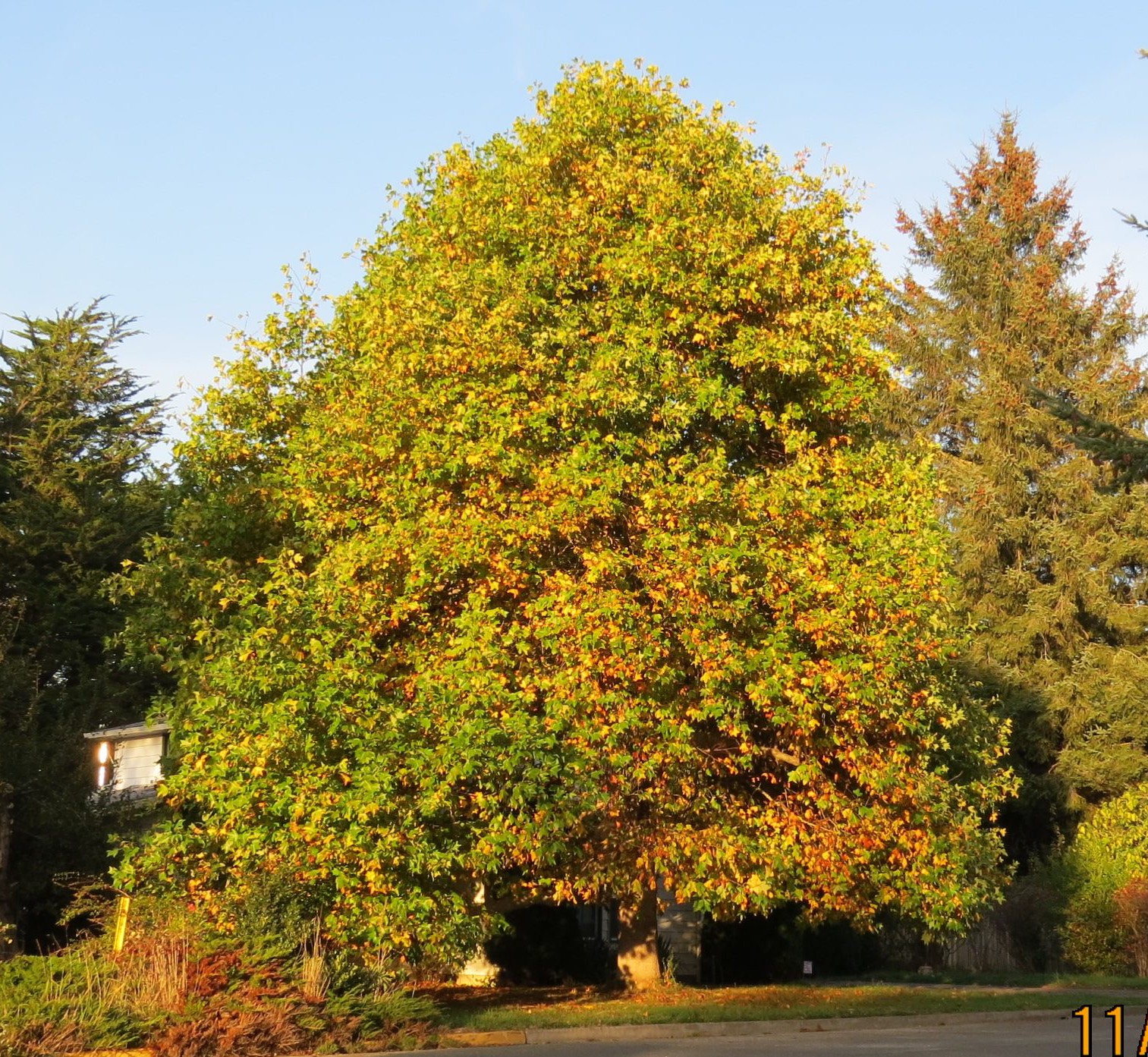
November 11...The leaves are full of color.  In another month or less, I'll be happy to rake up piles of them.  Ulp, I better see if the owners are okay with that.

November 11…The leaves of the Tulip tree are full of color. In another month or less, I’ll be happy to rake up piles of them. Hmmm, maybe I better see if the owners are okay with that.

A different view of the Tulip tree.  The setting sun brings out the colors.

A different view of the Tulip tree. The setting sun brings out the colors.

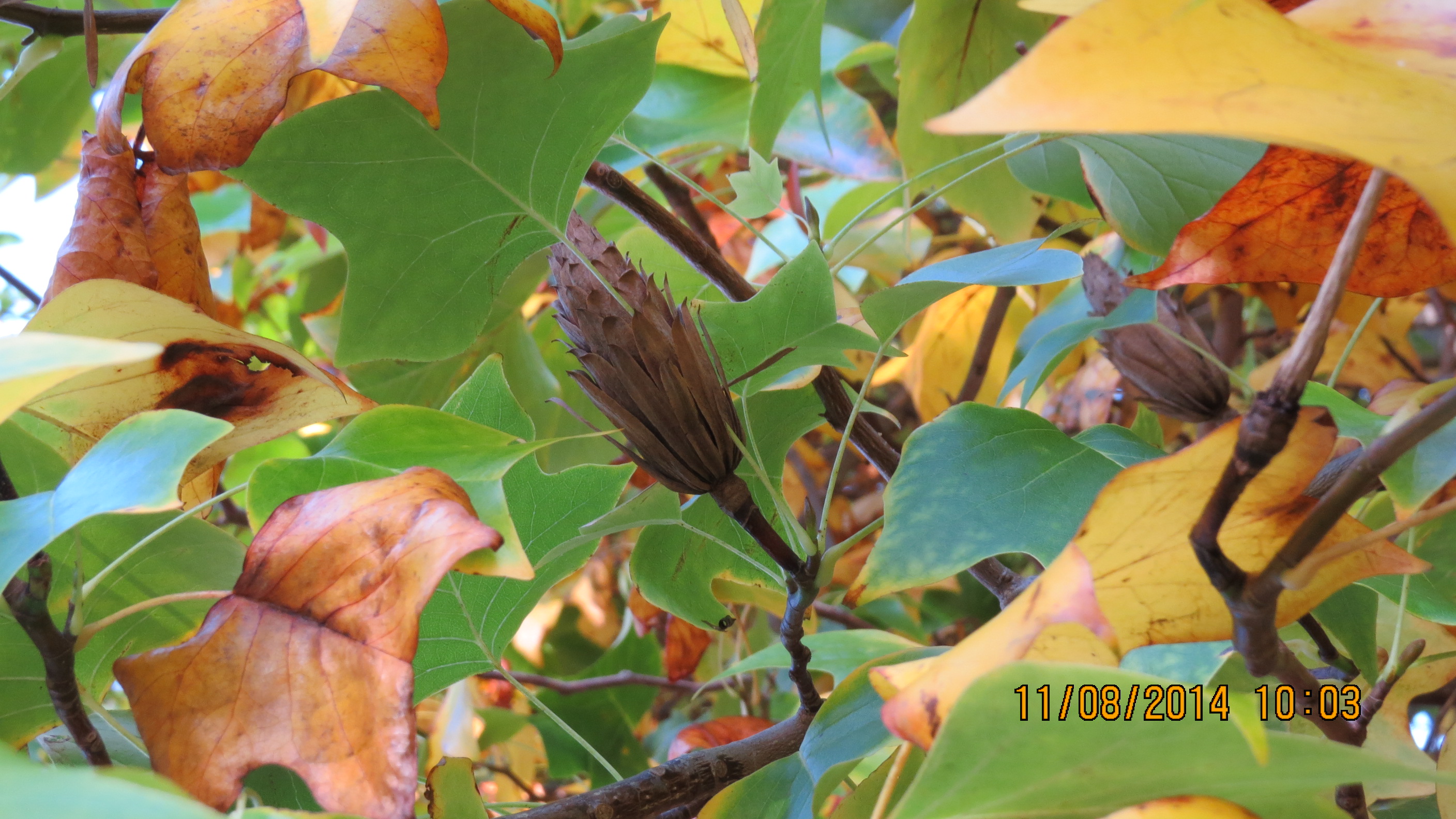
Ah, there's a seed pod up there.

Ah, there’s a seed pod up there.

The seed pods are finally dried.  I pulled out my pocket knife to cut it off, but it just fell into my hand.

I pulled out my pocket knife but the pod just fell into my hand.

There were precious few pods hanging in the tree...then I looked down and found lots of them on the ground already.

There were precious few pods hanging in the tree…then I looked down and found lots of them on the ground already.

November 12...I picked up as many seed pods as my bag would hold wondering what people thought of me walking with a very full doggy bag.

November 12…I picked up as many seed pods as my bag would hold wondering what people thought of me walking with a very full doggy bag.

November 12...Hoping to get the seeds to pop out, I pulled the pod open...but where are the seeds?

Hoping to get the seeds to pop out, I pulled the pod open…but where are the seeds?

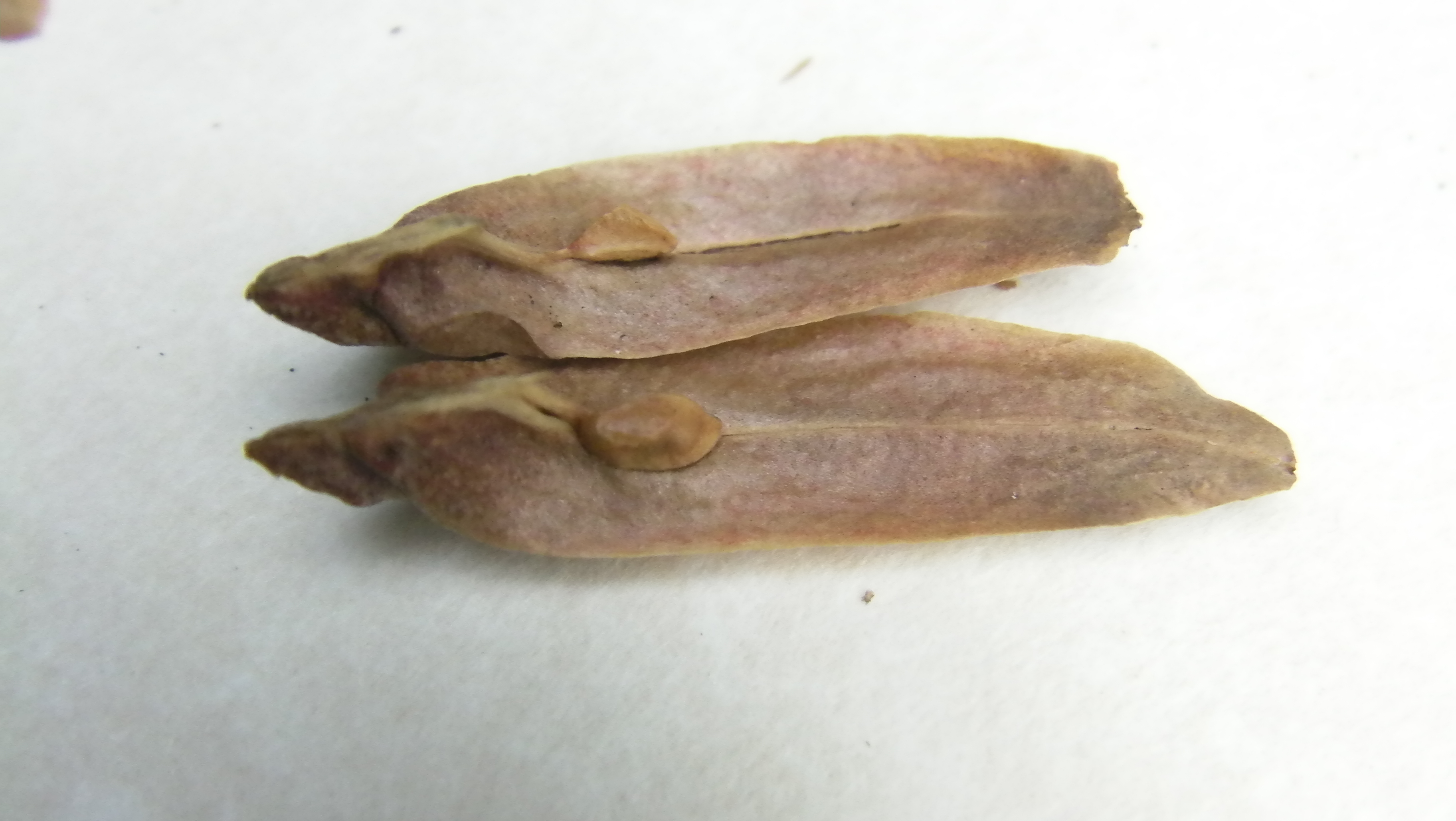
Are these the seeds?  I'll try planting these in the spring, but if they don't grow, I can always plant a Tulip tree twig.

Are these the seeds? I’ll try planting these in the spring, but if they don’t grow, I can always plant a Tulip tree twig.  (See gregmcswain1’s comment below)


I was struck by how similar the Tulip tree seed pods were to my backyard spruce tree 'pine cones.'

I was struck at how similar the Tulip tree seed pods were to my backyard spruce tree cones.    Deciduous on the left, conifer on the right.

I couldn't get enough of the colorful leaves, so I just pointed the camera upward for one more shot before leaving.

I couldn’t get enough of the colorful leaves, so I just pointed the camera upward for one more shot before leafing leaving.

Hebe Bees

November 5, 2014...On an unusually warm November day, I spotted these hebes growing in front of Bill Sweet Insurance Agency.  The bees were loving it.

November 5, 2014…On an unusually warm November day, I spotted these hebes growing in front of Bill Sweet Insurance Agency. The bees were loving it.  Thanks, Bill.

While the east coast is getting hammered by the polar vortex cold weather, the west coast is enjoying warm sunny days into early November. At this time of year there are very few sources of nectar, so it’s good that the honeybees are getting  a lot from the hebes.  Nectar provides an important energy source (carbohydrate) for the bees.

Many thanks to Steve Montana who has let me use his musical talents as background to the video.  “GaelaMae On The Bluffs” was written by Steve and the banjo music was written by Buell Kasey back in the late 1800’s.  Watch Steve Montana play banjo at the beginning of Sustainable World.  Click on “Soldier’s Joy.”

Many thanks to Steve Montana for permission to use his music.