Posts Tagged ‘organic gardening’

Get out the Solar Oven and let’s have enchiladas for lunch.

Enchiladas for lunch.

Now that the sun has warmed up the soil enough to plant, we’ve got to hook up the Solar Roller. These panels are mounted on a 2 x 4″
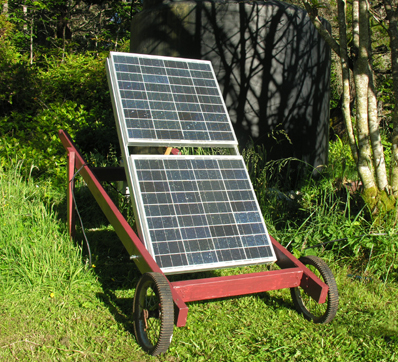
Solar panels on handmade wheeled cart

cart with some old lawnmower wheels attached. Since I have many trees shading parts of the garden, this roller allows me to follow the sun. I can actually get 12 hours of sun-pumping water into the large tank in the background and then gravity flow to 1/2″ pvc placed in the raised beds. The kit came with solar panels, submersible pump, and a Dankoff control box. This control box allows the pump to kick on in low light and works so well that it’ll pump on a gray shadowless day. I’ve even seen it pump during a light rain.

Gray shadowless day, solar pump still working…thank you Mr. Dankoff, for inventing the controller that makes the pump work on a very gray day!

The tank feeds into a regular garden hose and into the water grids. The grids are drilled with 1/16” holes. Hook up the hose to the grid and plant next to the holes.
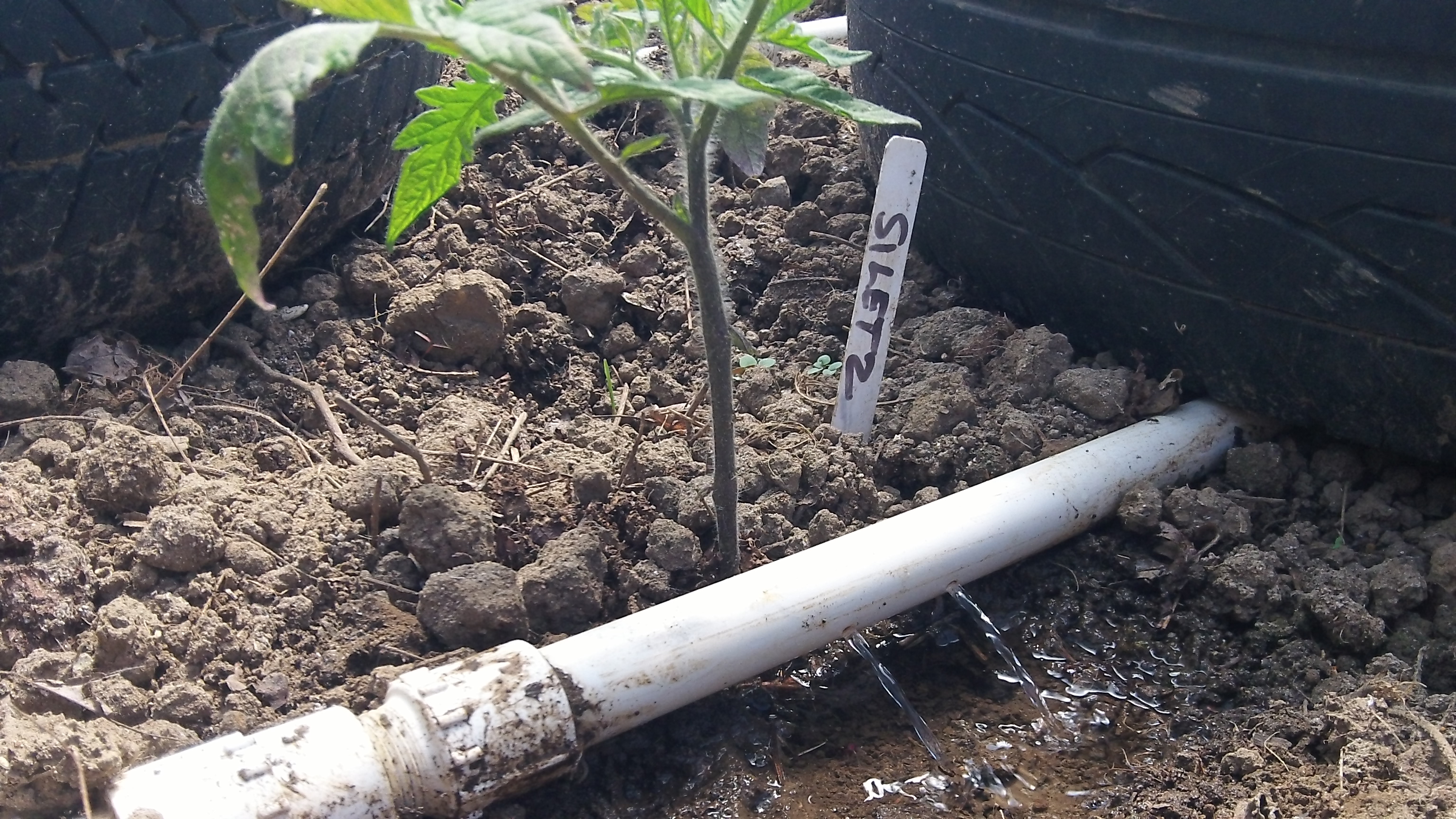
Drip water grid in tomato bed

Drip watering potatoes
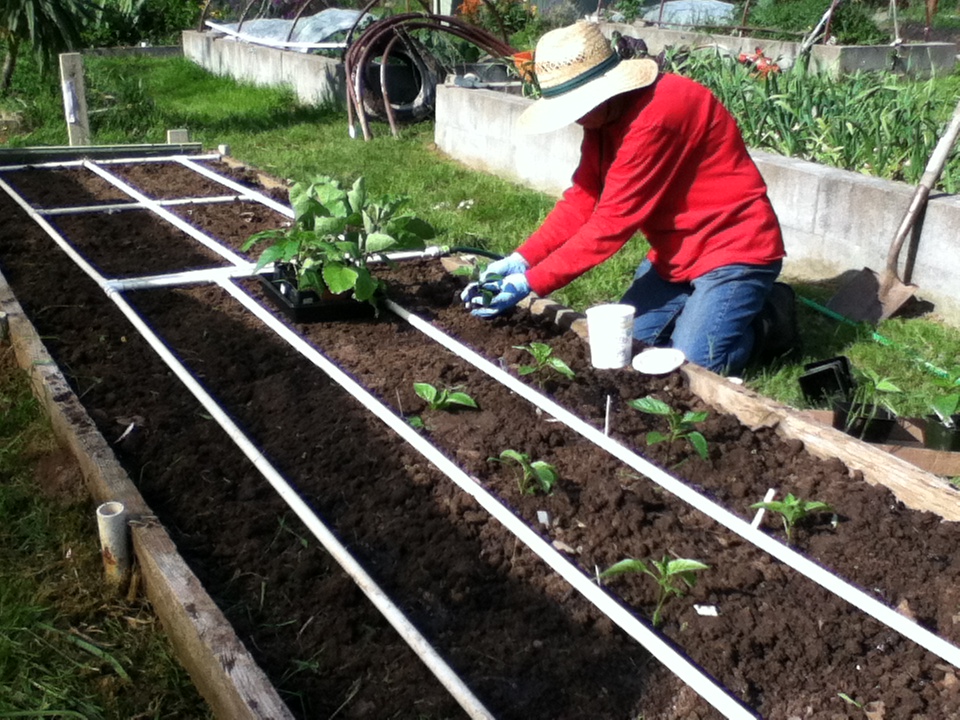
Placing the plants next to a pre-drilled hole.

Ready to close the tent on the warm loving eggplant and peppers

And that’s how we spent Mother’s Day, how about you?

For more solar check out my little solar system.

Read Full Post »

These kale plants might look a bit ragged, but it’s great to have flowers for the bees. It’s easy to grow, lasts all winter, and feeds the bees in the spring. Kale is full of antioxidant, anti-inflammatory, and cancer prevention qualities. It tastes good too. One of my favorite soups is this one my daughter sent to me from The Dragons Kitchen.

AFRICAN SWEET POTATO STEW

2 tablespoons olive oil

1 small onion, finely chopped

1 clove of garlic, minced

1/4 teaspoon ground cumin

1/2 teaspoon peppercorns, crushed

1/2 teaspoon red pepper flakes

1/4 teaspoon dry mustard

1/4 teaspoon ground cloves

1 15 oz can of stewed tomatoes

1 large sweet potato, peeled & chopped into large chunks

1 bunch of kale, deveined and shredded

2 carrots, peeled and sliced

4 cups vegetable stock

1/2 cup chunky peanut butter

1 inch piece of ginger, grated

salt to taste

Directions:

1. Heat the olive oil in a large heavy bottomed pot with a tight fitting lid. Add the onions and cook on medium-low until they begin to caramelize.

2. Add the garlic, cumin, peppercorns, red pepper flakes, mustard and cloves to the oil and onions. Cook for 1 minute.

3. Add the stewed tomatoes, sweet potato, kale and carrots. Cook for 2 minutes.

4. Add the vegetable stock, peanut butter and ginger. Bring to a rolling boil. Turn down heat and cover. Cook for 30 minutes or until sweet potatoes and carrots are cooked. Check the seasoning after 15 minutes and add salt as needed.

Read Full Post »

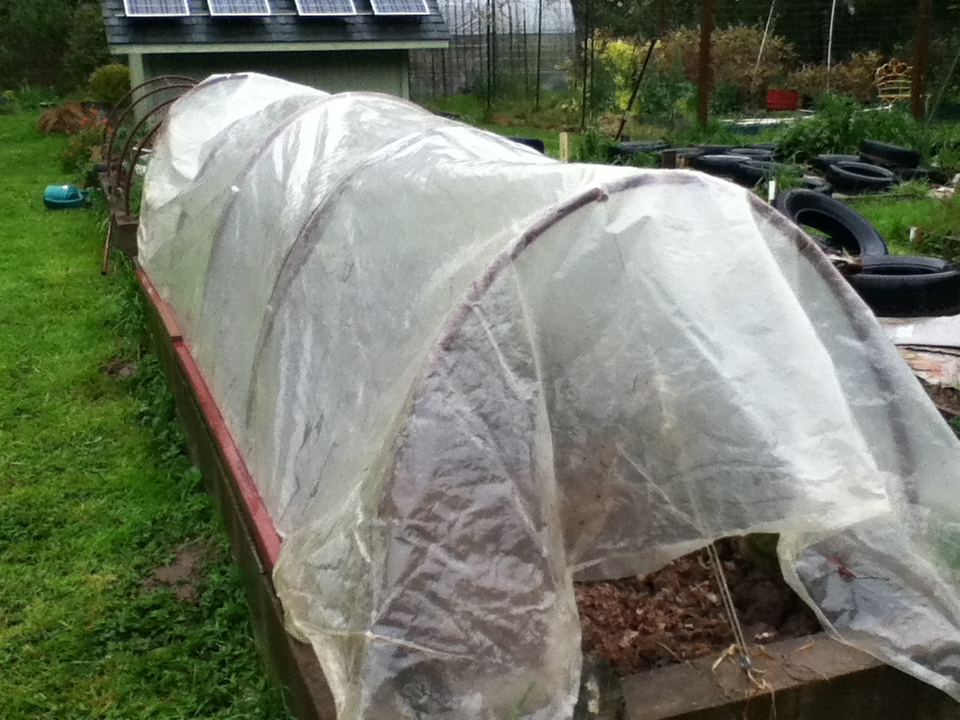
Growing tomatoes on the Oregon Coast calls for special measures. This clear 6 mil UV resistant film ‘tent’ shields the soil from the drenching rainfalls of April and May. To get ripe tomatoes by early August we must often plant in inclement weather.

Beating the late blight is the name of the game in a cool climate. We don’t use fungicides so since the mid to late 90’s we follow some strict rules…NO overhead watering, drip watering only. Trim lower branches a so no leaves touch the ground. Do not follow tomatoes with potatoes or vice-versa for at least one year (two years are better).

After gardening in the same location for over 35 years, we always add amenities to enhance the soil…cottonseed meal, kelp meal, bone meal, blood meal, dolomite, gypsum. This is in addition to trenching in deciduous leaves, crab shell, and coffee grounds in the fall.

The water grid is 1/2″ pvc with 1/8″ holes drilled in the proper spacing for tomatoes. It can be gravity fed from the tank that is powered by solar, delivering the water directly to the roots.

The tires are centered over the holes to add extra warmth into the evening.

Pinch off lower leaves, add a bit of fish meal, place in ground with lots of compost and plant deep.

Next add the hoops…these are 3/4″ pvc that fit loosely into 1 1/4″ pvc sockets. These hoops are strong and last for years (Schedule 40) Strengthen them with rope and 1×2’s.

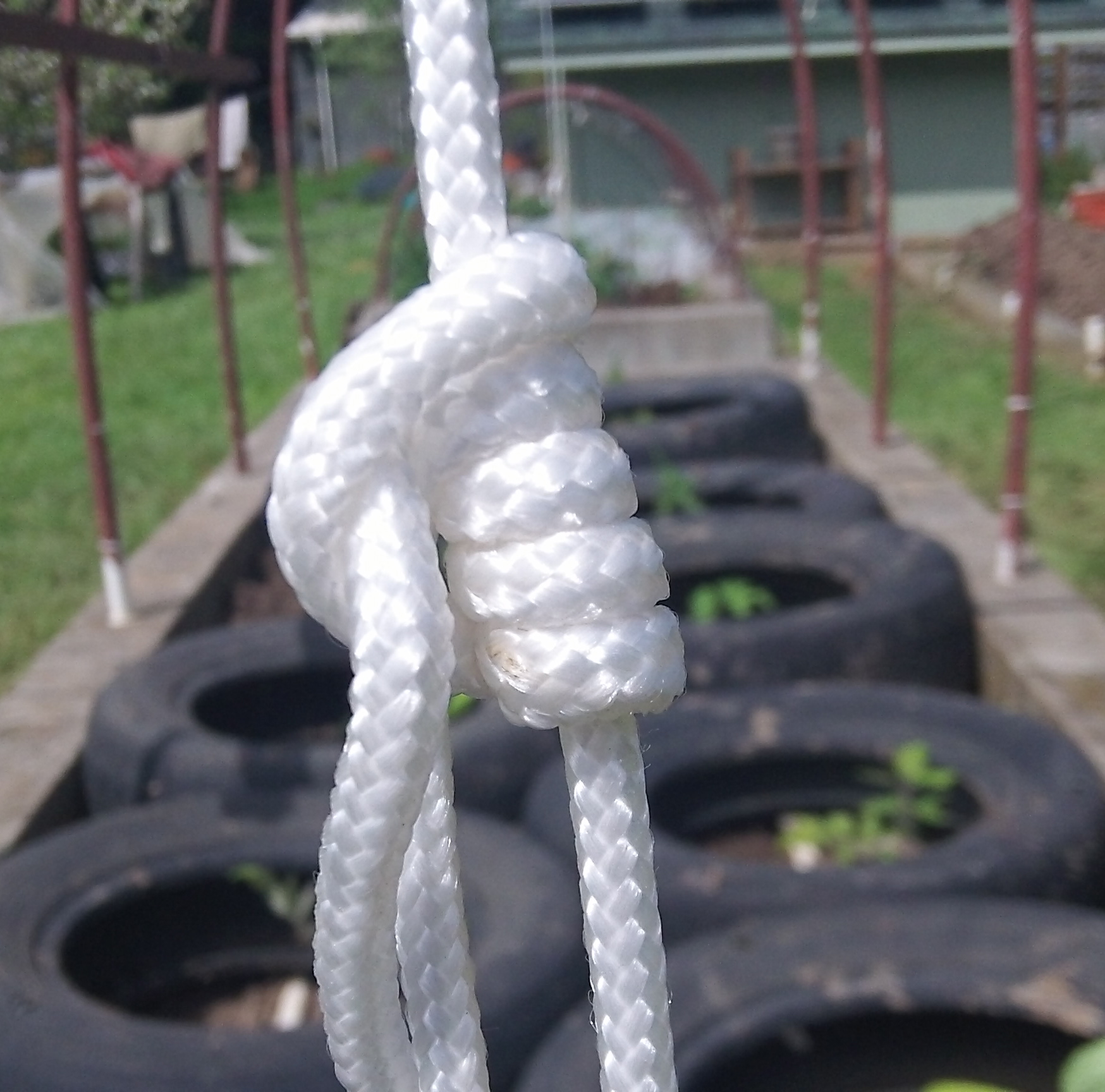
Use a taut-line hitch to take up slack when rope stretches.

This is 6 mil, UV resistant film. 2x2x8’s are butted up to each other and 1×2’s are nailed to hold them together. Then the film is nailed to them using more 1×2’s. That forms the weight to hold the film over the hoops. If you “under roll” the film and tie it to the hoop with a slip knot it will stay up all day. At night or during a rain, we always close the tents to keep water off the leaves. Tomatoes need air circulation, so it’s important to open the tents whenever possible.Tent is closed protecting the plants from the cool night air. Since we like to eat tomatoes in the winter, we plant about 60 plants. This is the first tomato bed this season and holds 15 plants. The cages will be added later when after we’ve treated them with bleach water.  Check out the cages here…added a month later.

Preserving the tomatoes.

Read Full Post »

20120310-205252.jpg

It’s hard to believe this little tray of peat pots comprises most of our tomato plants. I had to throw in some blanket flower seeds as well as poppy seeds. The bees love poppies as can be seen in this fuzzy photo of six bees on a St. John’s Wort which is covered with bees mid June to late July.

20120310-205028.jpg

Read Full Post »

« Newer Posts