Jan. 3...Progress so far on log

Jan. 3…Progress so far on log

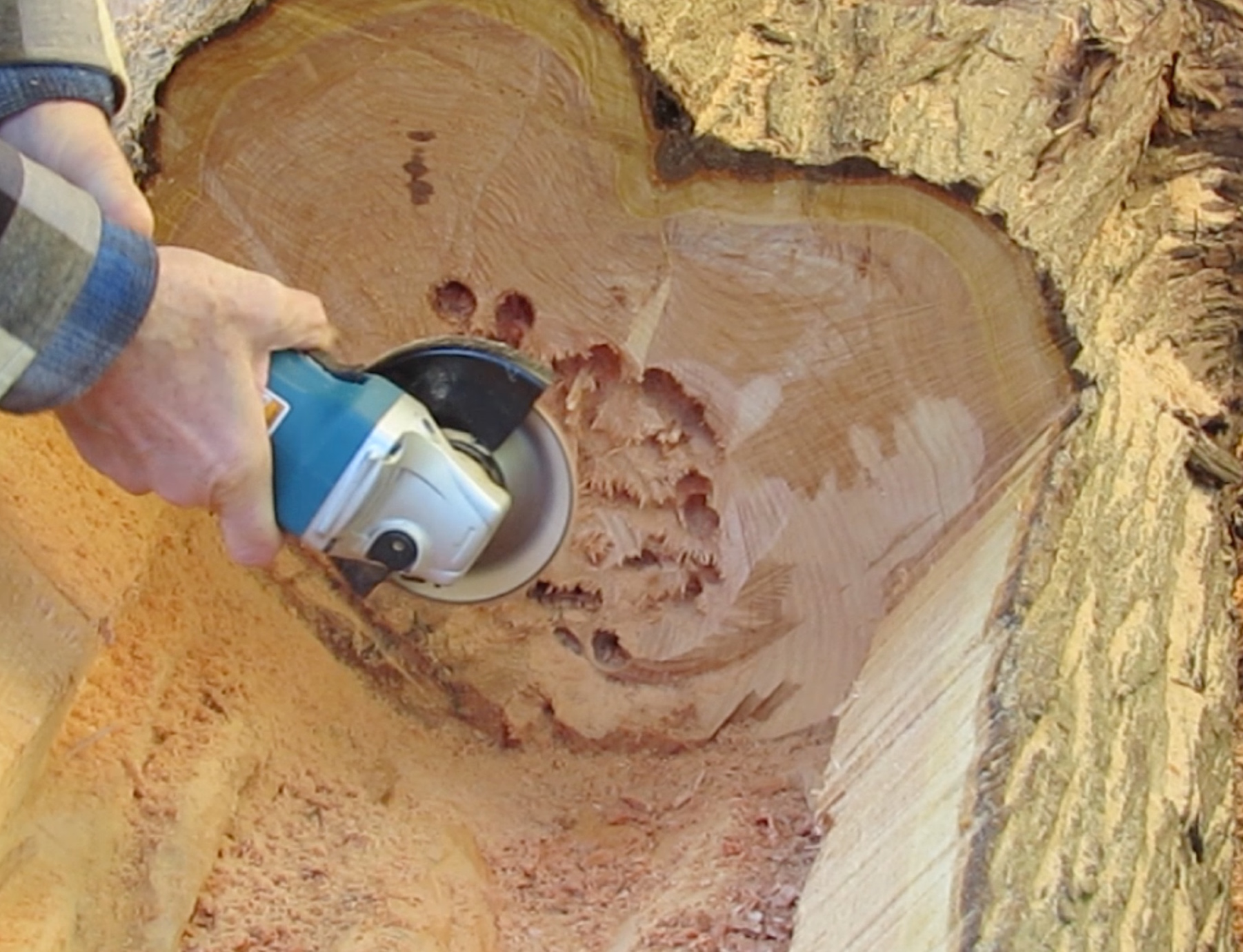
Jan. 3...See the big rotten spot in the middle?  All that is rotten.  I believe it might have been started by nails driven into the tree many years ago.  See the next photo.

Jan. 3…See the big rotten spot in the middle? All that brown wood is rotten.  I removed a huge section of rot already and there’s still some left.  I believe it might have been started by nails driven into the tree many years ago. See the next photo.

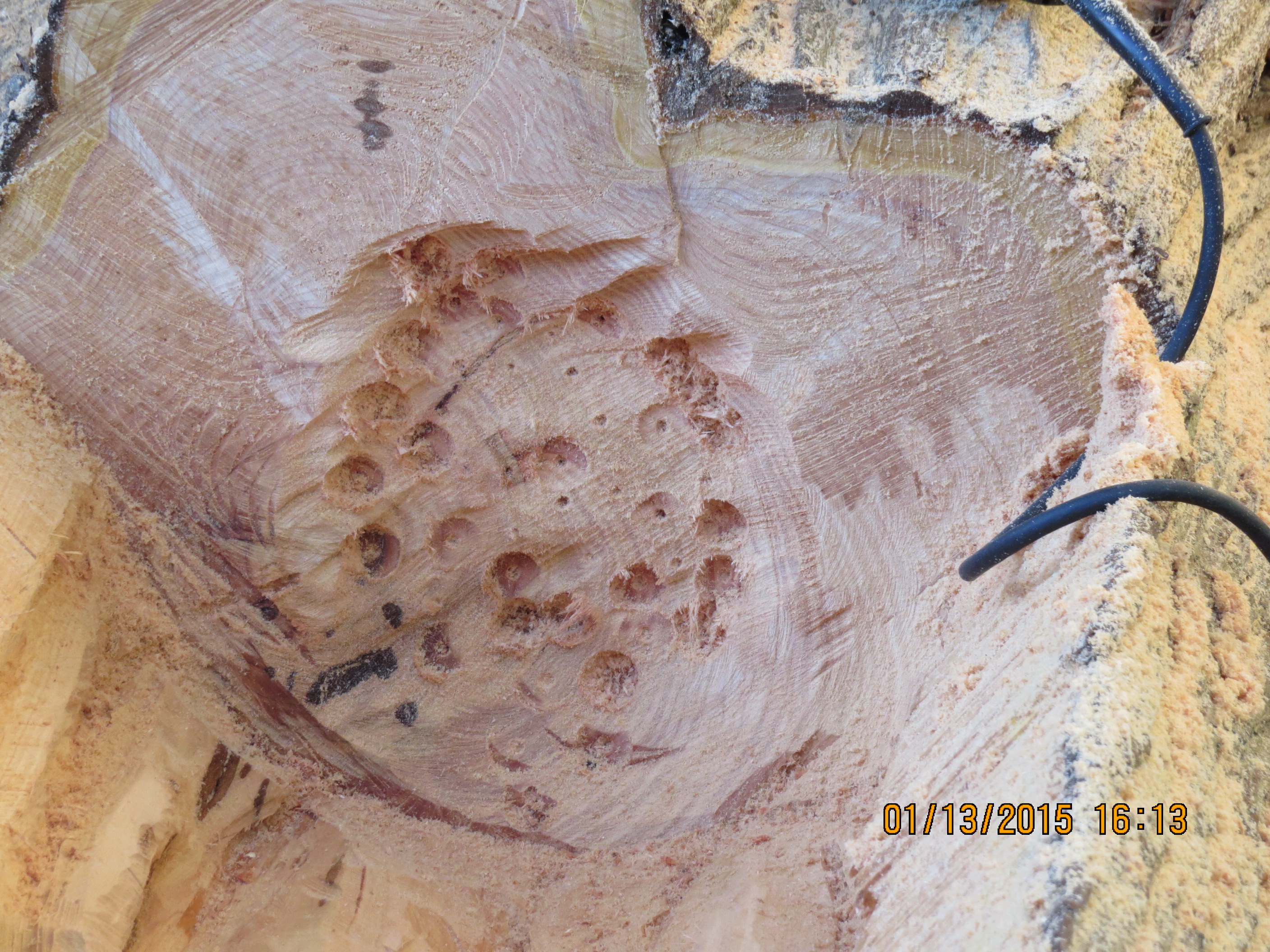
Three brown streaks from three old nails.  The next time you're tempted to drive a nail into a tree, think about this photo.  I believe these nails started the rot in the tree which resulted in a big rotten spot in the trunk...not visible on the outside of the tree.

Three brown streaks are from three old nails. The next time you’re tempted to drive a nail into a tree, think about this photo. I believe these nails started the rot in the tree which resulted in a big rotten spot in the trunk…not visible on the outside of the tree.

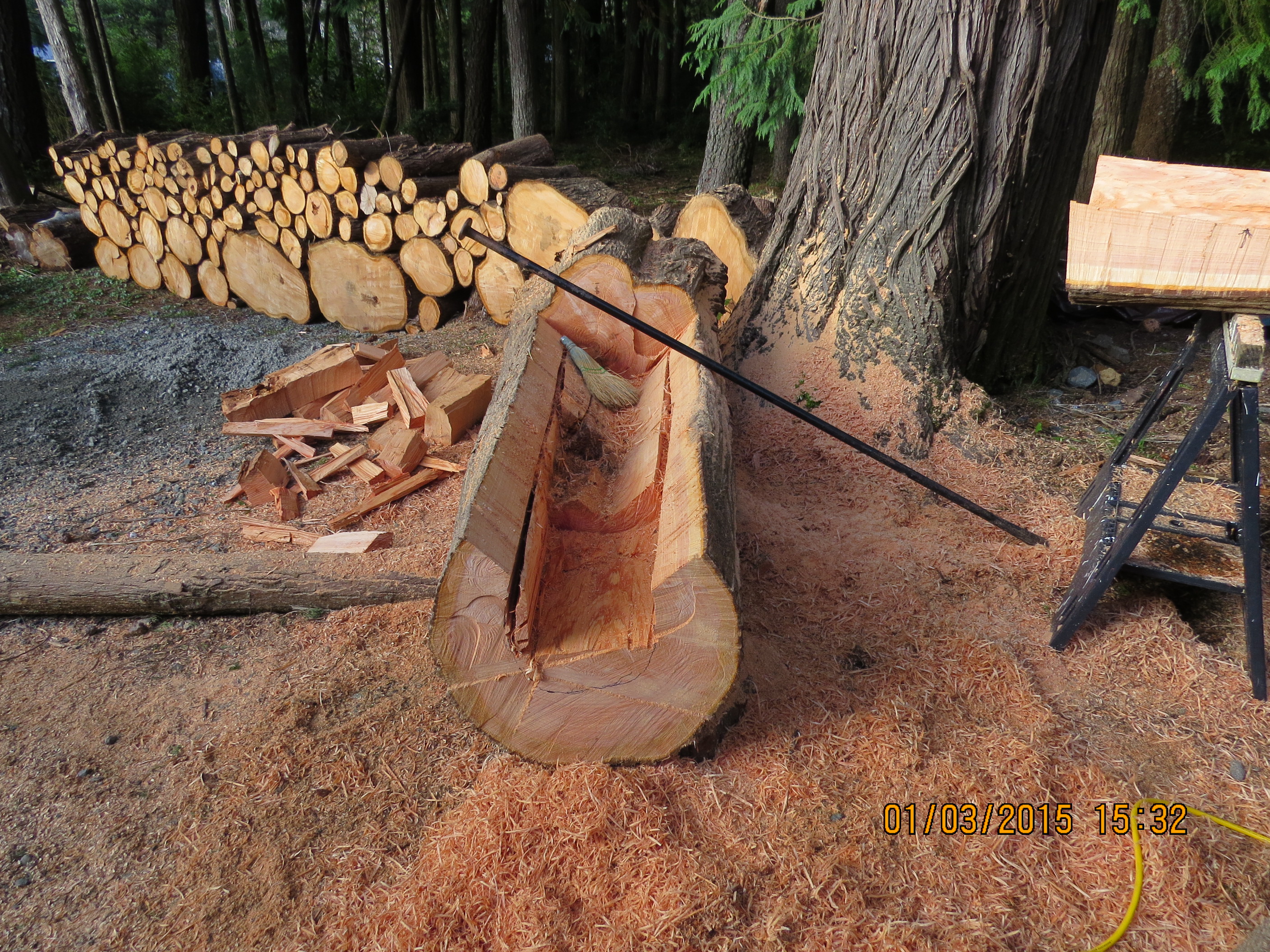
The start of the 'bowl.'  I want to have a little cavity on the bottom of the hive.  I'll place a pile of sawdust and maybe some leaves to create habitat for sow bugs, earwigs, pseudoscorpions, and whatever else should be living in a tree.  When mites fall down, they can get devoured.

Jan. 13…The start of the ‘bowl.’ I want to have a little cavity on the bottom of the hive. I’ll place a pile of sawdust and maybe some leaves to create habitat for sow bugs, earwigs, pseudoscorpions, and whatever else should be living in a tree. When mites fall down, they can get devoured.

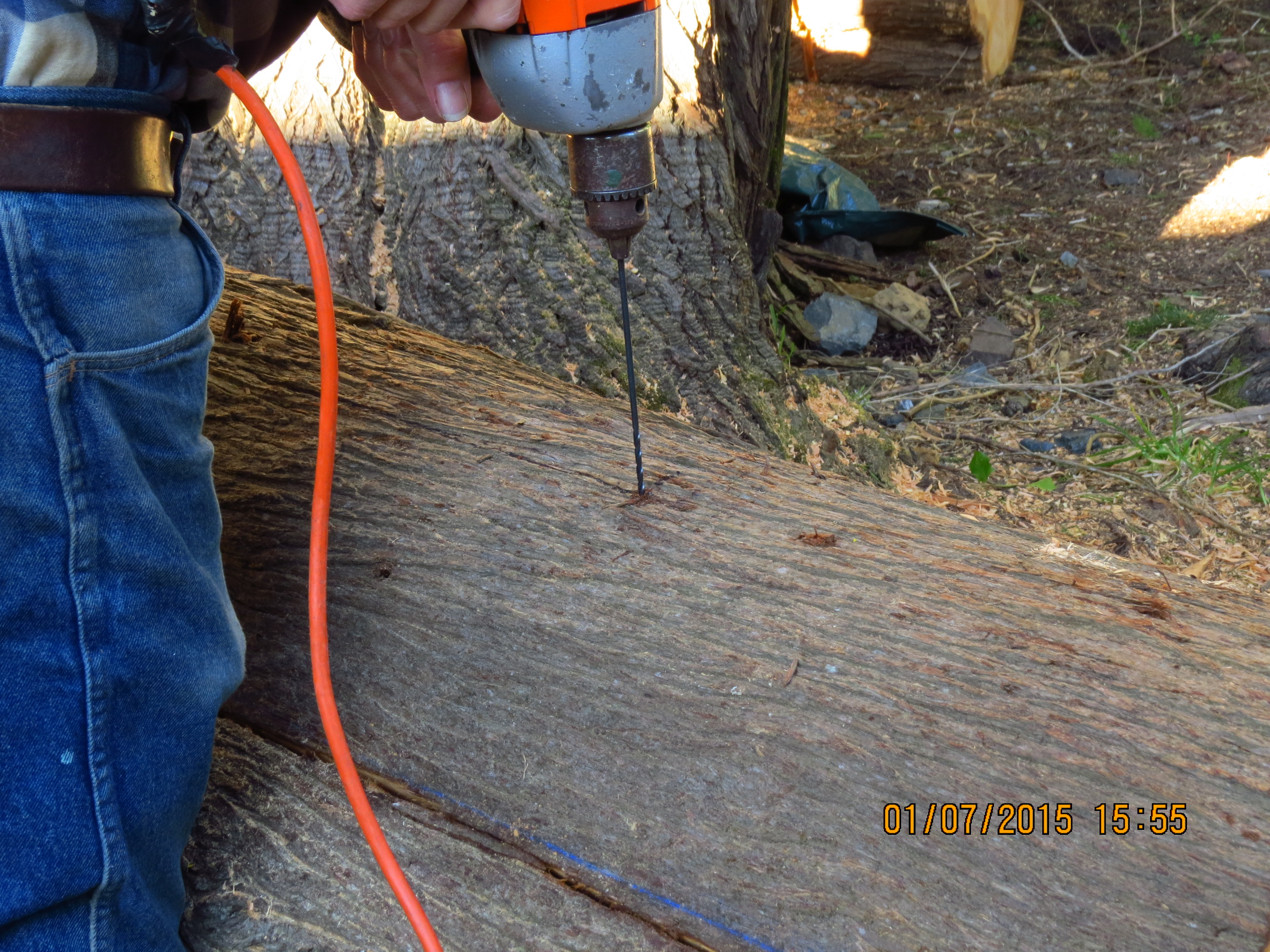
Drilling more holes for the 'bowl.'

Drilling more holes for the ‘bowl.’

Let's grind them down

Let’s grind it down

Not deep enough yet.

Not deep enough yet.

Hope this is deep enough

Hope this is deep enough

We're going to call it good.  I've got to get the observation window built.
We’re going to call it good. I’ve got to get the observation window built.

Hal said to drill the corners, then saw up to them.  I'm starting my first corners, but I changed my mind after I saw where they broke through.

Hal said to drill the corners, then saw up to them. I’m starting my first corners, but I changed my mind after I saw where they broke through didn’t leave much ‘observing’ space.
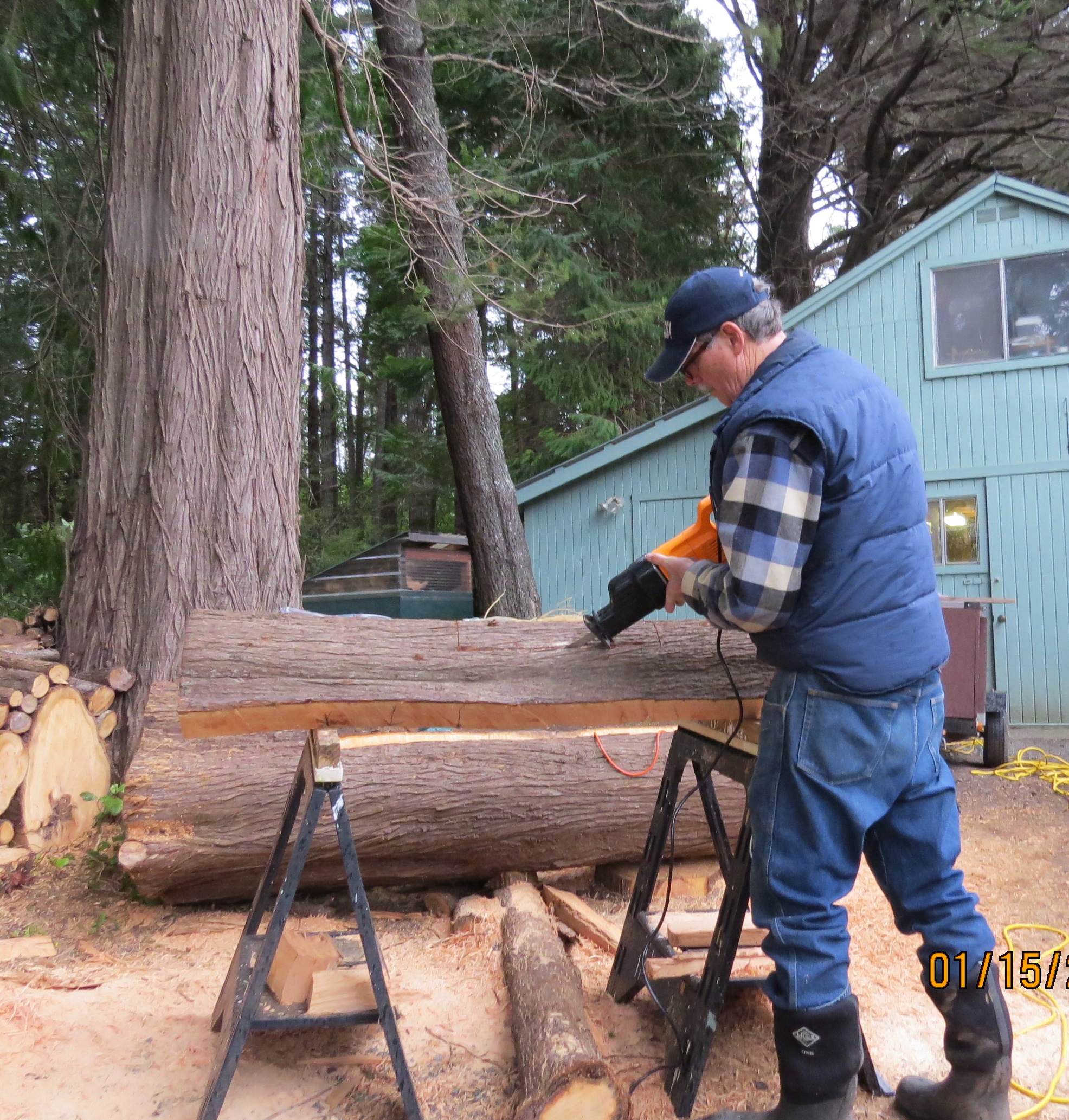
Jan. 15...After changing my mind several times, I finally jelled on where the observation window should go.  This is it!!!

Jan. 15…After waffling several times over the window, I finally jelled on where it should go. This is it!!!

I've been thinking about getting one of these saws for years, finally I have an excuse.  Using it, I cut out a place for the glass.

I’ve been thinking about getting one of these saws for years, finally I have an excuse. Using it, I cut out a place for the glass.
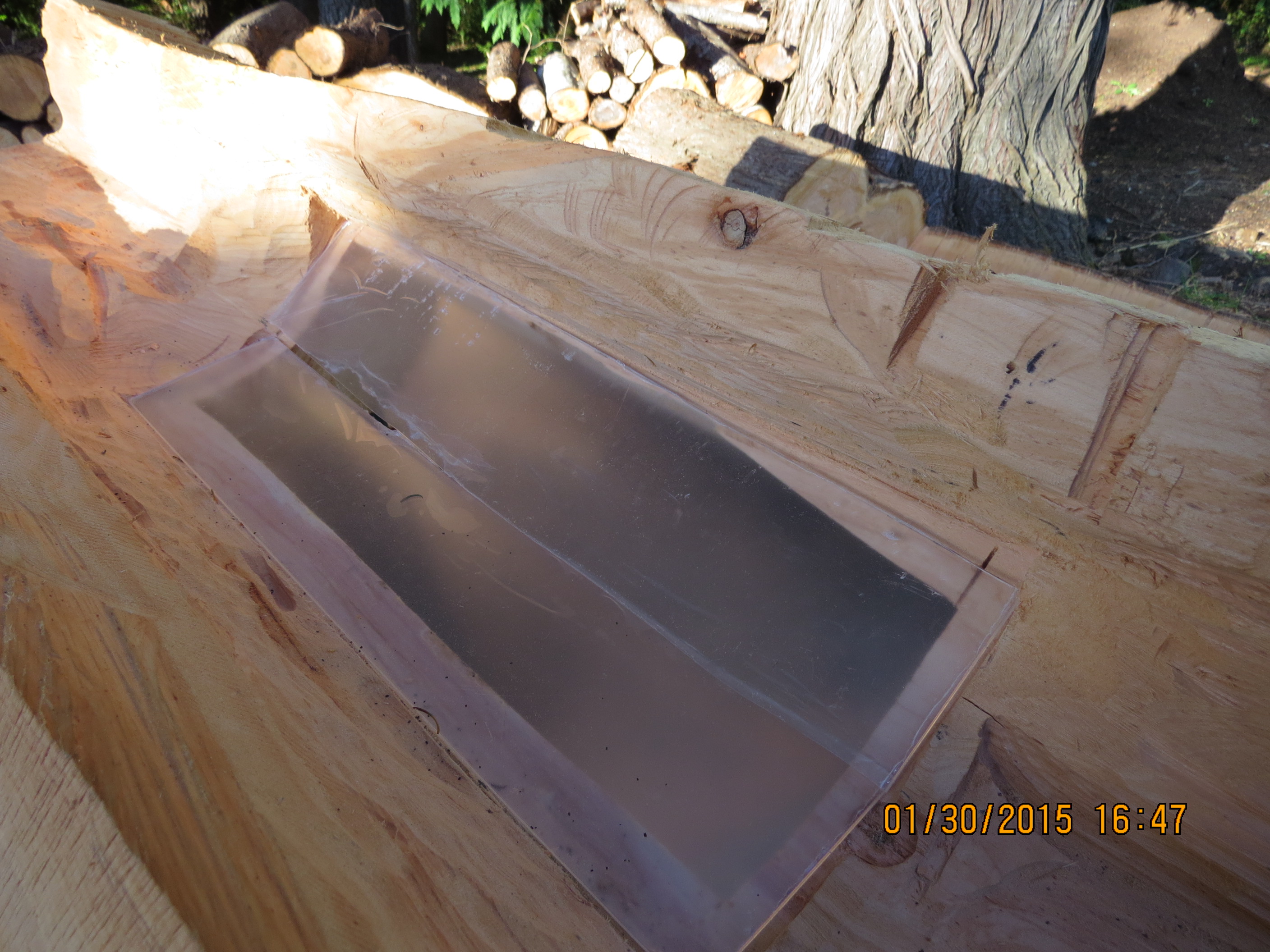
I cut the plexiglass, pushed it down into a curve, and broke it.  Hmmm, I guess I pushed too hard.

I cut the plexiglass, pushed it down into a curve, and promptly broke it.

I cut a new piece, carved some wooden 'wedges' to make the glass lay flat, and drilled it in place.

I cut a new piece, carved some wooden ‘wedges’ to make the glass lay flat, and fastened it in place.

February 4...The log is almost ready for Brian Vorwaller, but I've still got to get the top bars fitted.

February 4…The log is almost ready for Brian Vorwaller, but I’ve still got to get the top bars fitted.
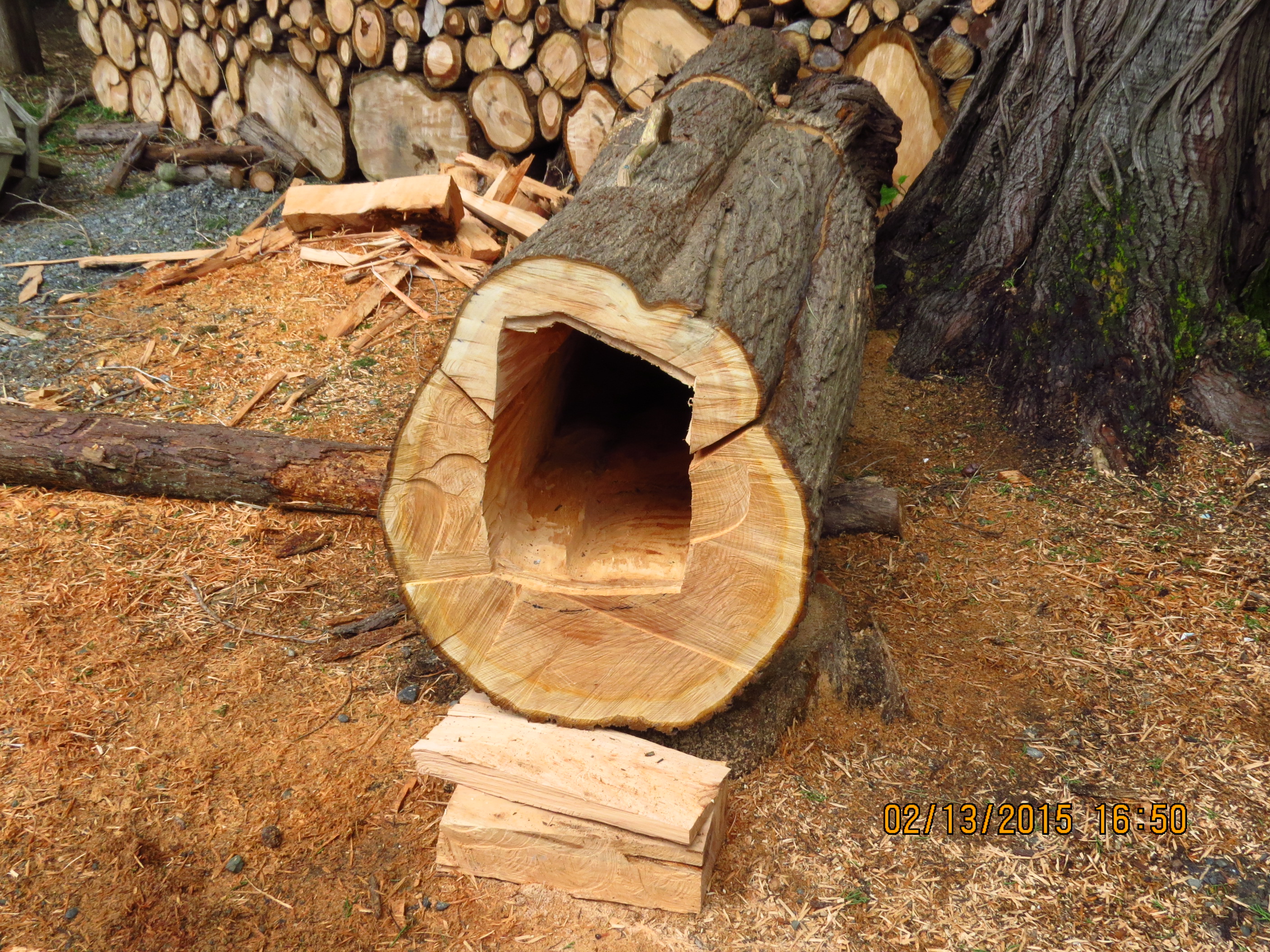
Using my new orbital saw, I cut a rabbet for the bars to sit on.

Using my new multi-tool saw, I cut a rabbet for the bars to sit on.

My neighbor wanted to get some scrap cedar out of the way, which he donated to me.  I cut my top bars.

My neighbor donated some cedar he didn’t need.  I cut my top bars.

Check out this custom top bar. :)

Check out this custom-cut top bar. 🙂

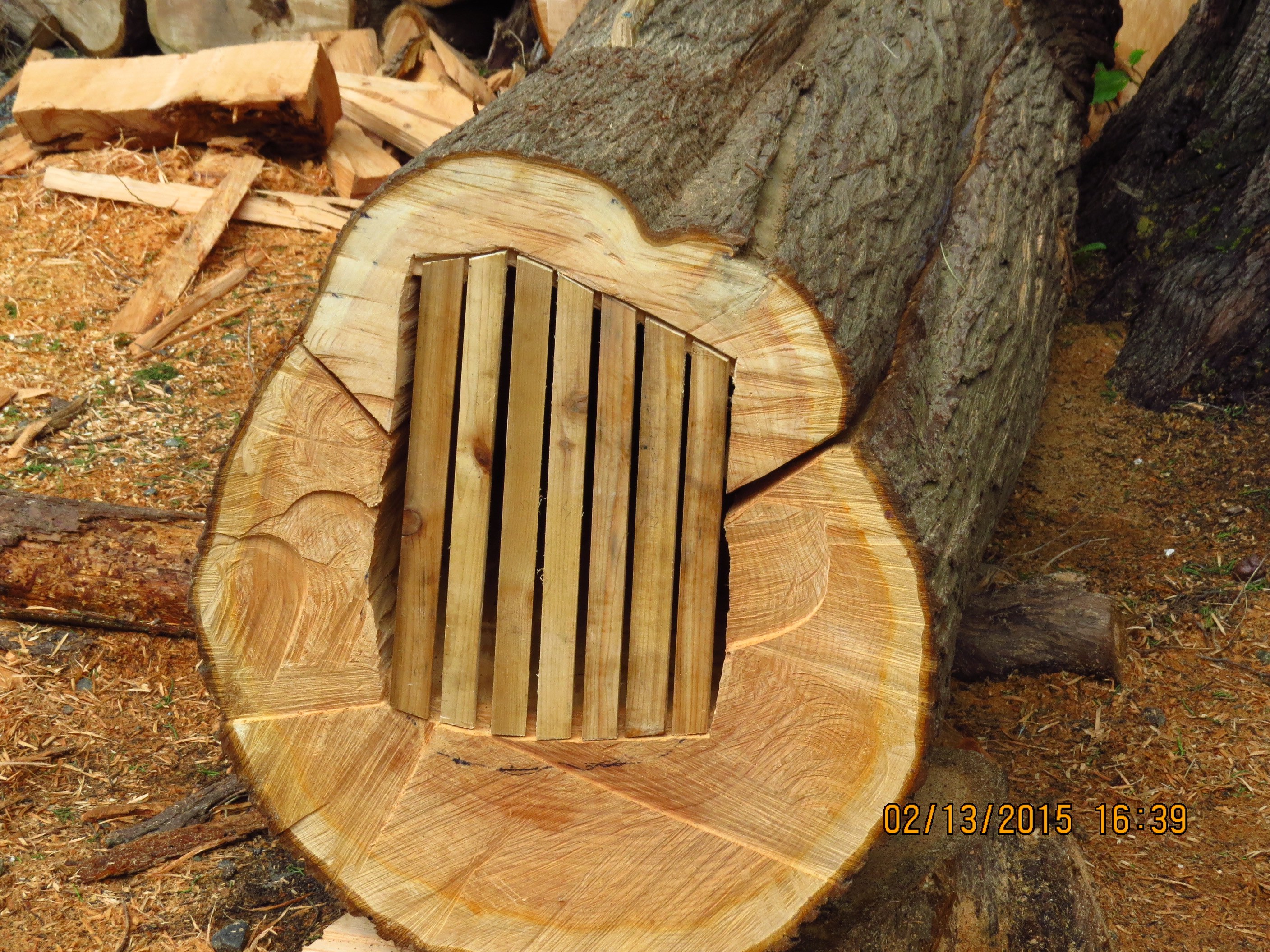
Custom fitted top bars in place.  Zada just called to say Brian is coming to pick up the log tomorrow.  I'm glad I'm ready.

Custom fitted top bars in place. Zada just called to say they are coming tomorrow to pick up the log.   I’m glad I’m ready.

Well, almost ready.  I've still got to hollow out the top slab to use as a quilt box.  I'm thinking about adding this old birdhouse on the very top.  My wife is not 100% on board with that idea, so it's still up in the air.

Well, almost ready. I’ve still got to hollow out this top slab to use as a quilt box. I’m thinking about adding this old birdhouse on the very top. My wife is not 100% on board with that idea, so it’s iffy.  As it turns out, Brian Vorwaller didn’t like idea either.  He didn’t say it, but I knew it when he says, “Give me another chunk of wood to work with.”
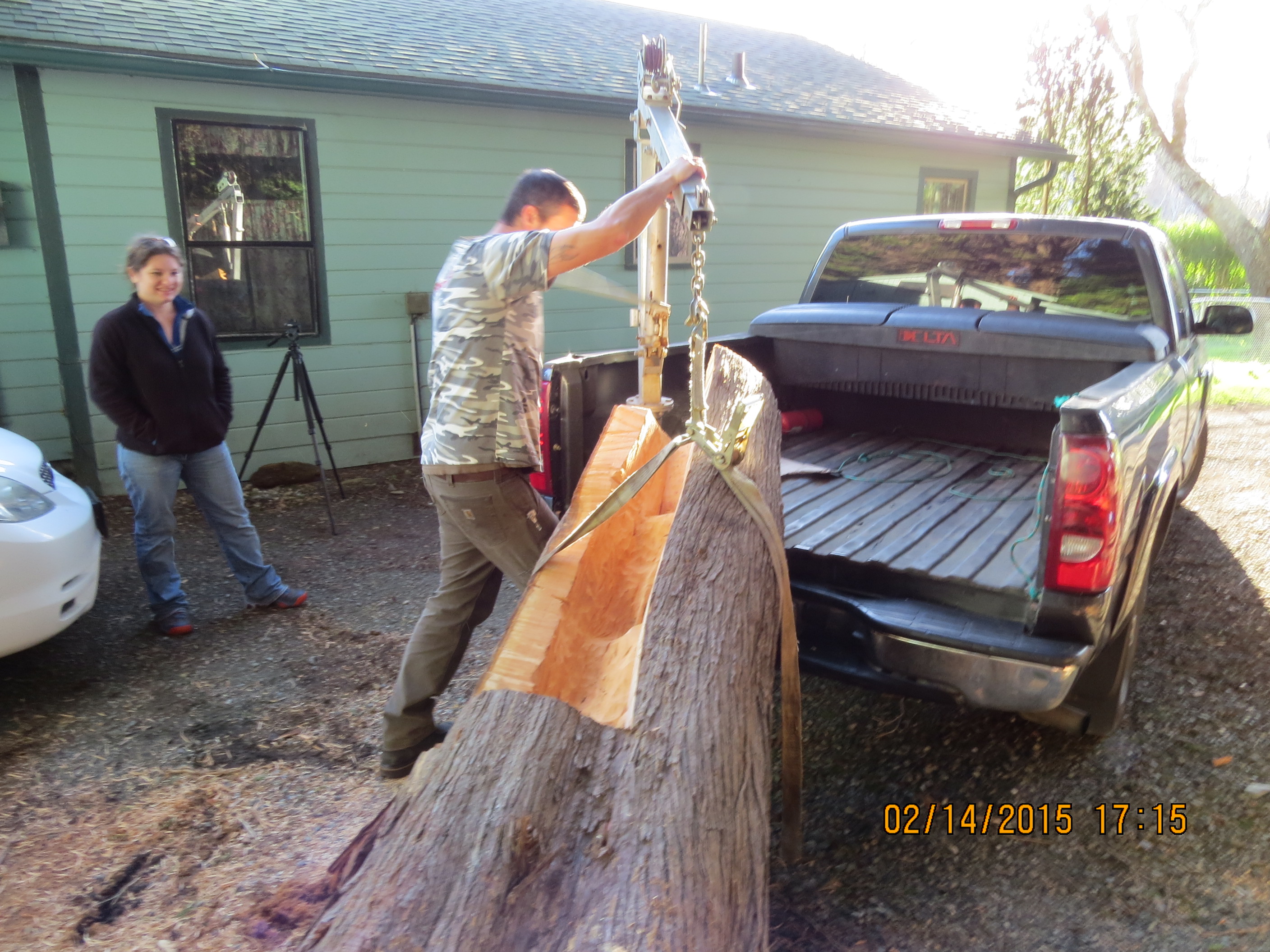
February 14...Brian works the winch while his valentine makes sure he's observing safety measures.

February 14…Brian works the hoist while his Valentine makes sure he’s observing proper safety protocols.

Making sure it's good and secure before driving to the wood shop.

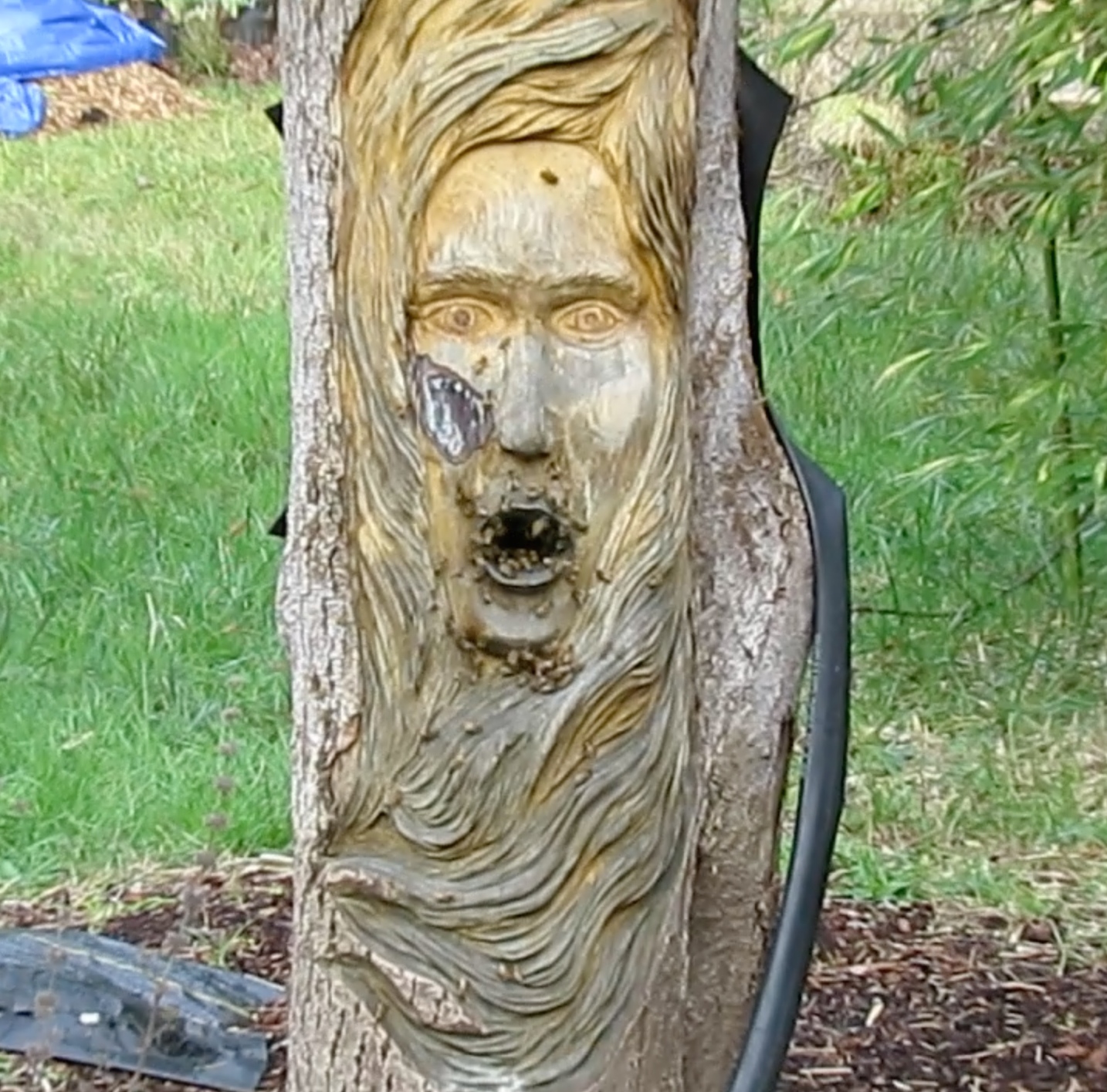
Brian will need about a month or so to carve the three grand kids’ faces onto the log.  Zada will videotape the progress.  So while I bid adiós to my log for awhile, I know it’s in good hands.

Grand Kids Log Hive:  The beginning

Hollowing out the log

Getting the faces carved in

Grand Opening

Tulip Tree Wrap-up


Things I learned this year…

•  The Tulip tree (Liriodendron tulipfera) also called the American Tulip, Tulip Poplar, or Yellow Poplar is a member of the Magnolia family.  It’s an important nectar source for bees across Tennessee, Kentucky, and much of the eastern US.

•  The wood of choice for organs, panels of carriages, coffin boxes, wooden ware and because it’s resistant to termites, house and barn sills were made using tulip poplar beams.

•  The wood is lightweight and was preferred by Native American tribes in the construction of canoes.

•  Tea was made from the inner bark to treat fevers and indigestion.

•  The bark can be chewed for an aphrodisiac.

Many thanks to Lucy Corrander at Loose and Leafy  for hosting the Tree Following blog

If you have keen powers of observation, a curiosity about nature, and a camera to record tree changes, please consider following a tree.

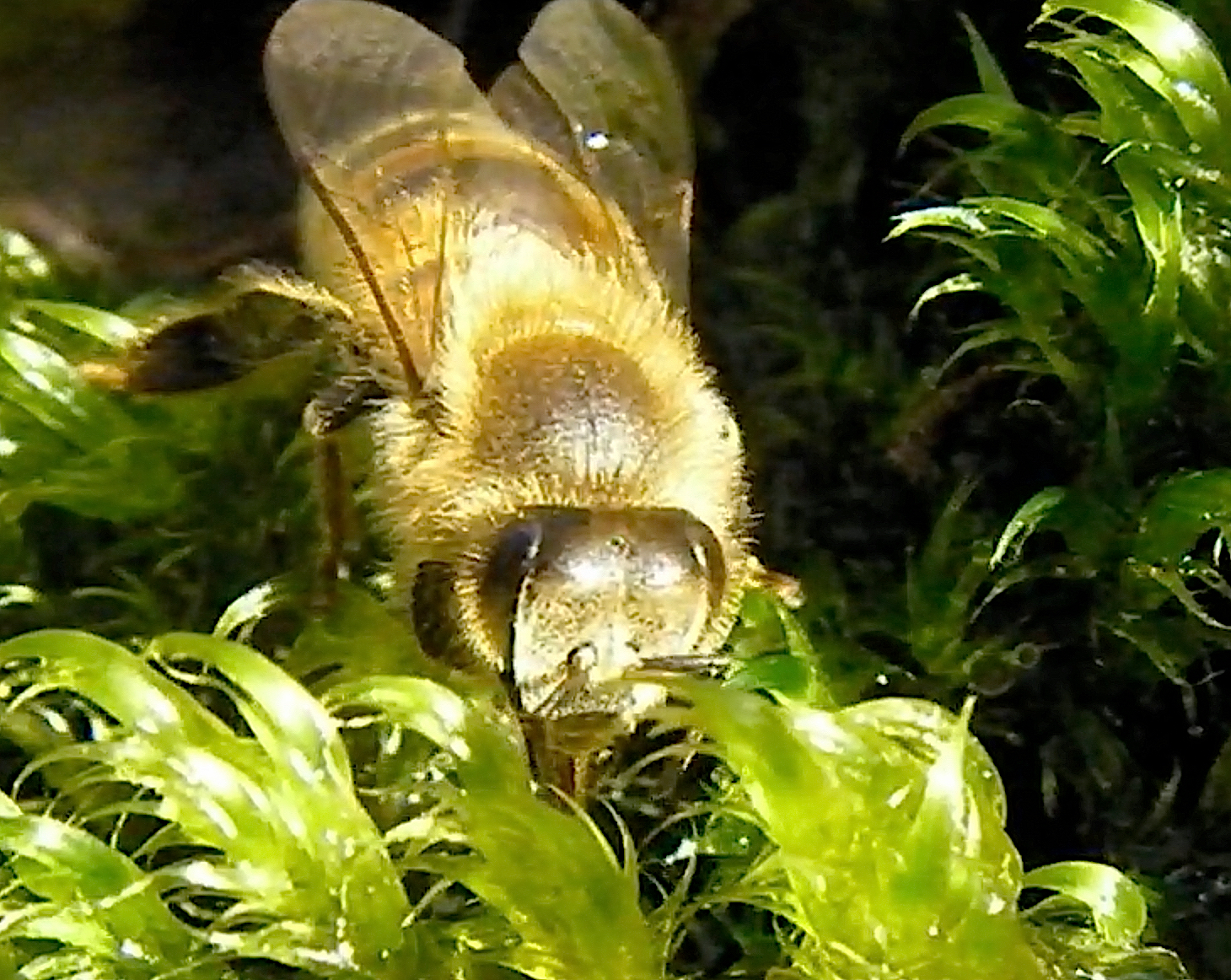
A couple of weeks ago we started seeing bees gather in a little pond beneath the willow tree. It looked like they were sipping the water where moss was growing.

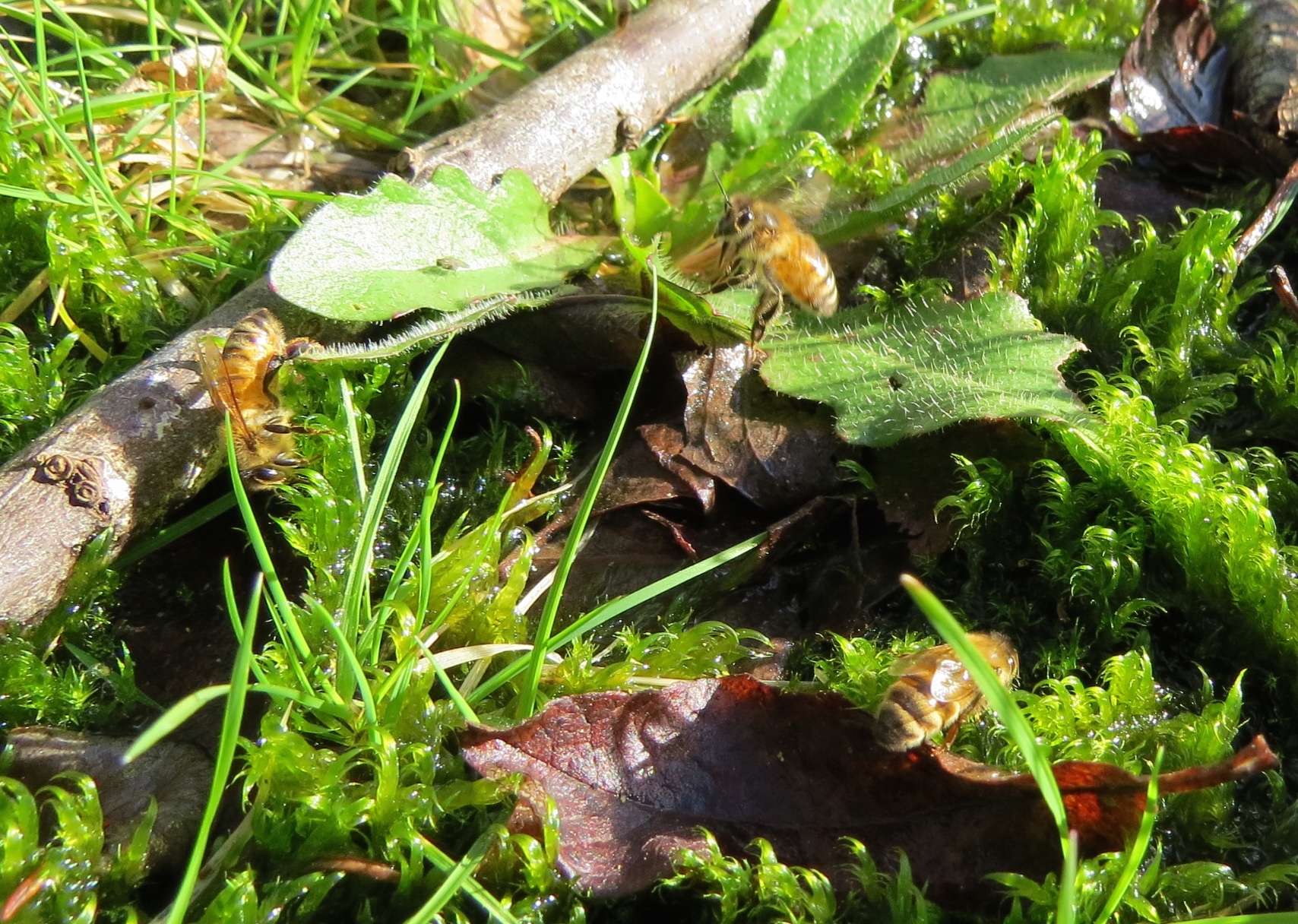
January 22...Three bees spotted on this patch of moss.

January 22…Three bees spotted on this patch of moss.

Into the moss...

Into the moss…

January 22...I've heard bees like "dirty" water, so I guess this mossy water is no surprise, but I wonder what they're getting out of it.

January 22…I’ve heard bees like “dirty” water, so I guess this mossy water is no surprise, but I wonder what they’re getting out of it.

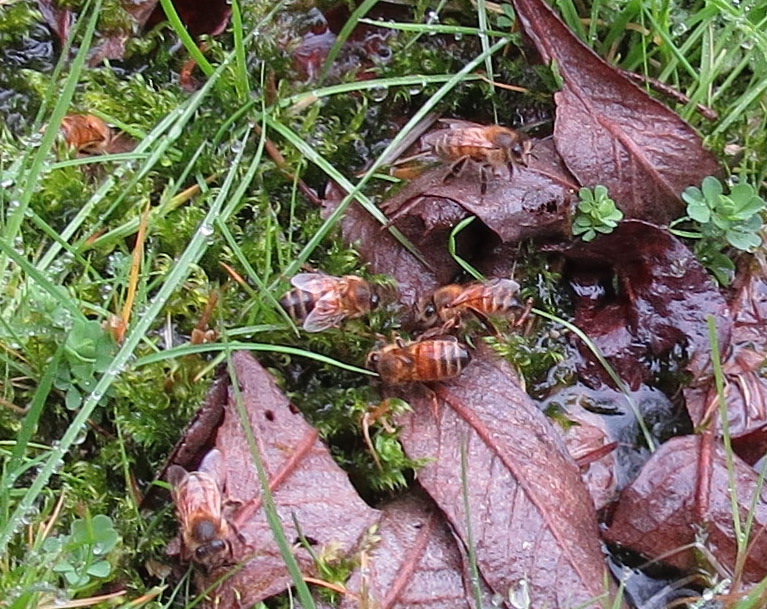
Feb. 2...Being a day of steady drizzle, I checked again to see if the bees were here.  Yes, this time I saw more bees.  They are truly dedicated bees.

Feb. 2…Being a day of steady drizzle, I checked again to see if the bees were here. Yes, this time I saw more bees. They are truly dedicated bees.

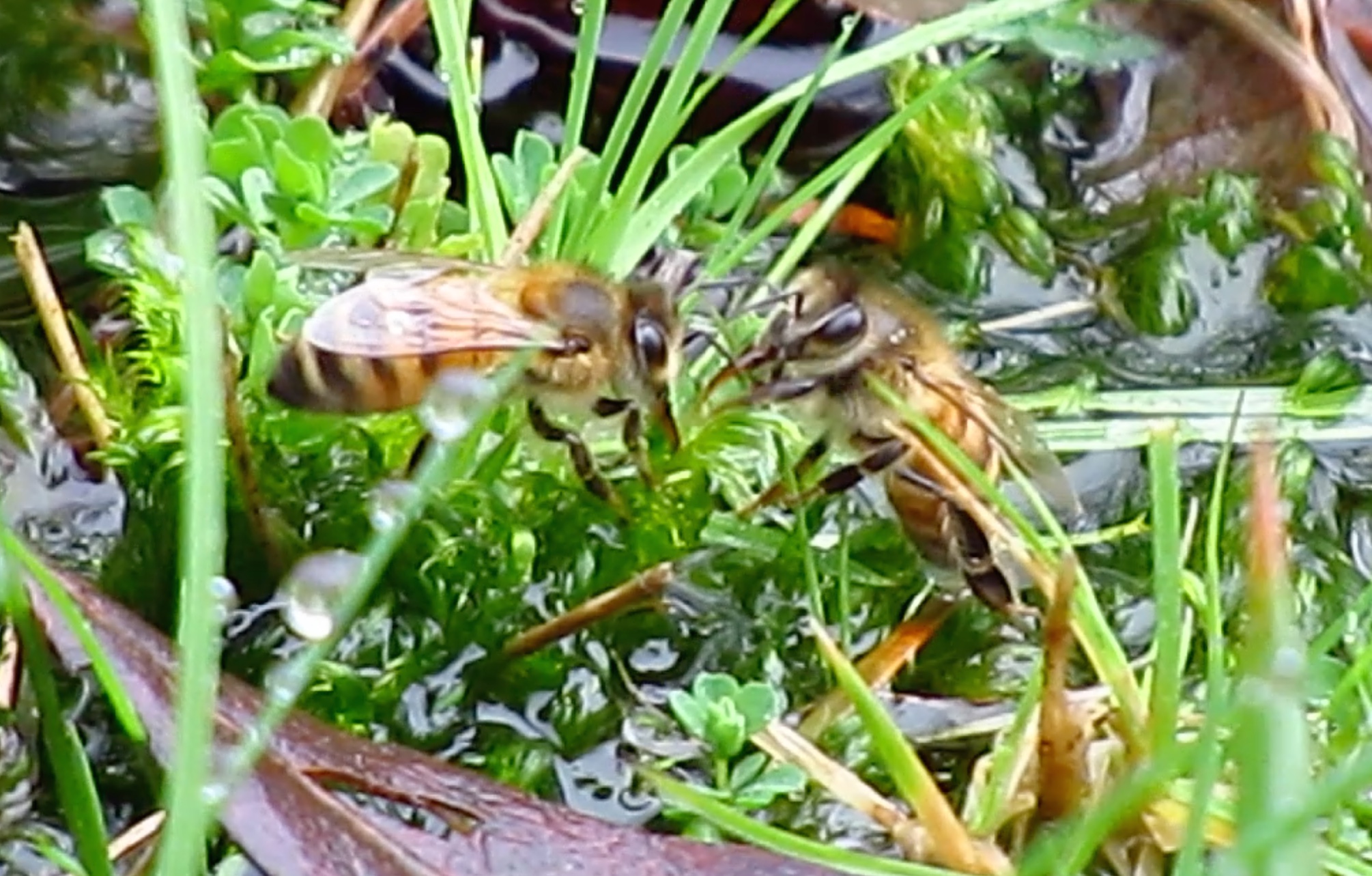
February 3...this photo is taken from a video when it was raining, but it still shows bees that are visiting the moss even though the water is covering most of it.

February 3…this photo is taken from a video when it was raining, but it still shows bees that are visiting the moss even though the water is covering most of it.

Some more video of honeybees active in the moss while it’s raining…

Let It Bee

Let It Bee mandala...water color painting by Vikki Reed.

Let It Bee mandala…watercolor painting by Vikki Reed.

My sister is an artist who loves to paint mandalas.  She starts on a mandala sometimes not knowing where it will lead.  It was during one of our weekly conversations when I’m excited about hollowing out my next log hive that she feels compelled to add bees to her mandala and changes the title from “Let it Be” to “Let it Bee.”

“Let It Be”  The story behind the mandala

“Let It Bee”  The conclusion

This is a short video showing how the mandala takes shape.  No computer graphics either…it’s all hand painted watercolor.


Bee Math Be Wrong?

Or maybe it’s MY math that’s wrong. Back in September I was worried about Bee-atrice Log hive.

She had swarmed the month before and then the bee numbers were down and more importantly,

the temperature had dropped to 62F (16C).  It’s January now and there are loads of bees, so we might be out of the woods.

January 5...Bee-atrice has bees on her face.  Lots of bees!

January 5…Bee-atrice has bees on her face. Lots of bees!

The temperature is fluctuating a lot though.

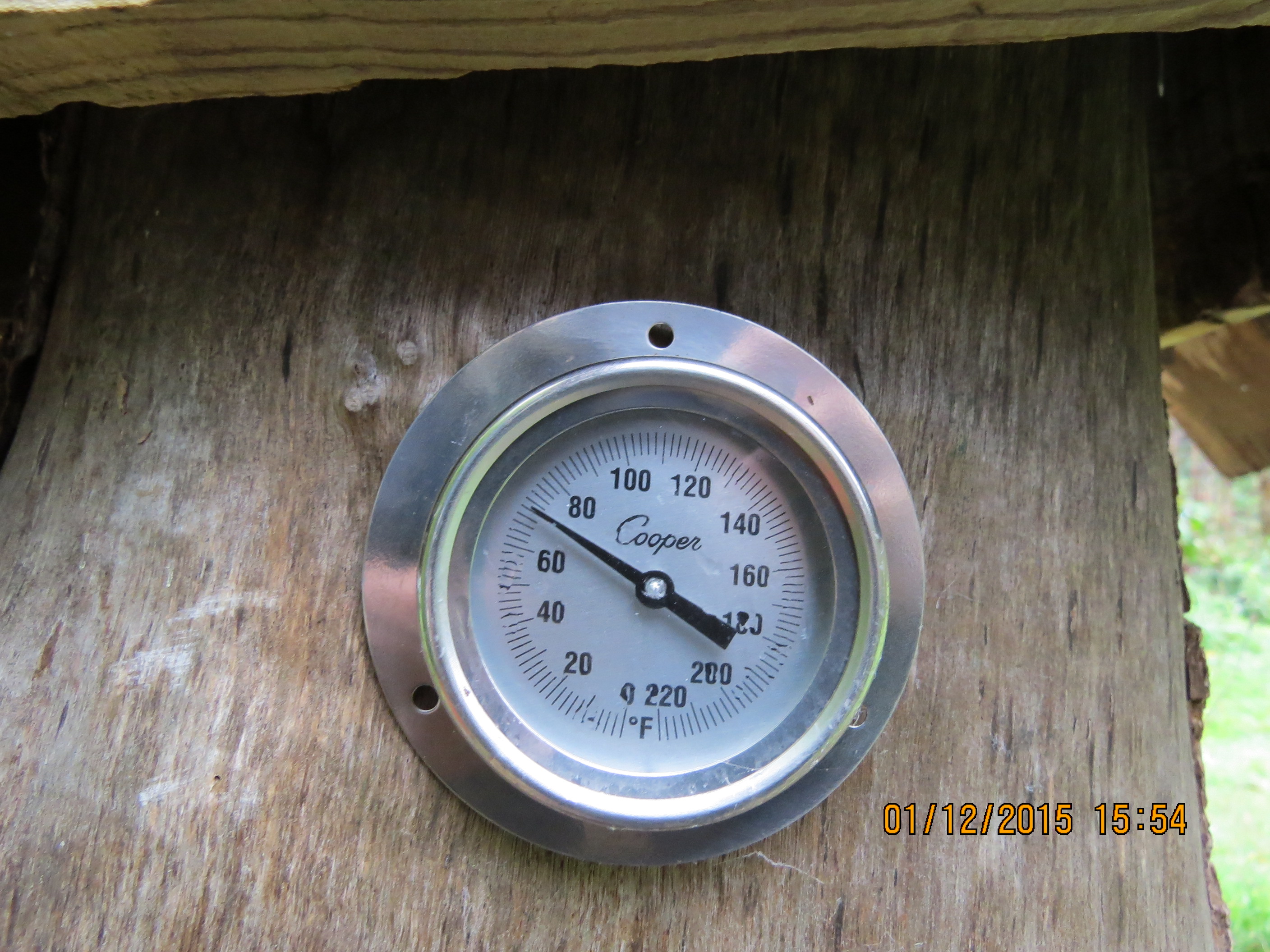
January 10...temp at 88˙F

January 10…temp at 88˙F

January 12.....Temp drops to 70F (21C)  18 degrees in two days?  What's going on?

January 12…..Temp drops to 70F (21C) 18 degrees in two days? What’s going on?

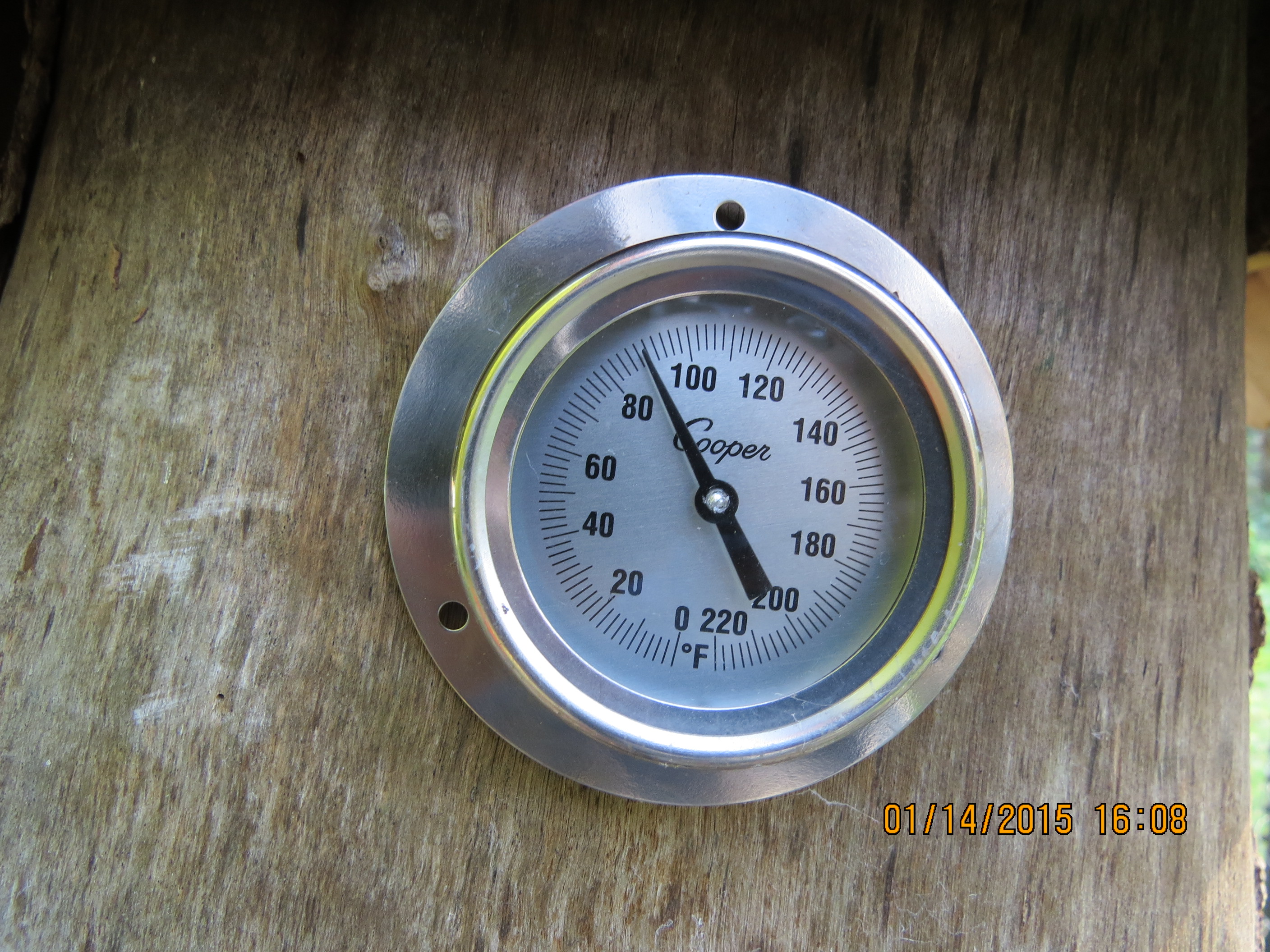
January 14....Temp is back up to 90F

January 14….Temp is back up to 90F

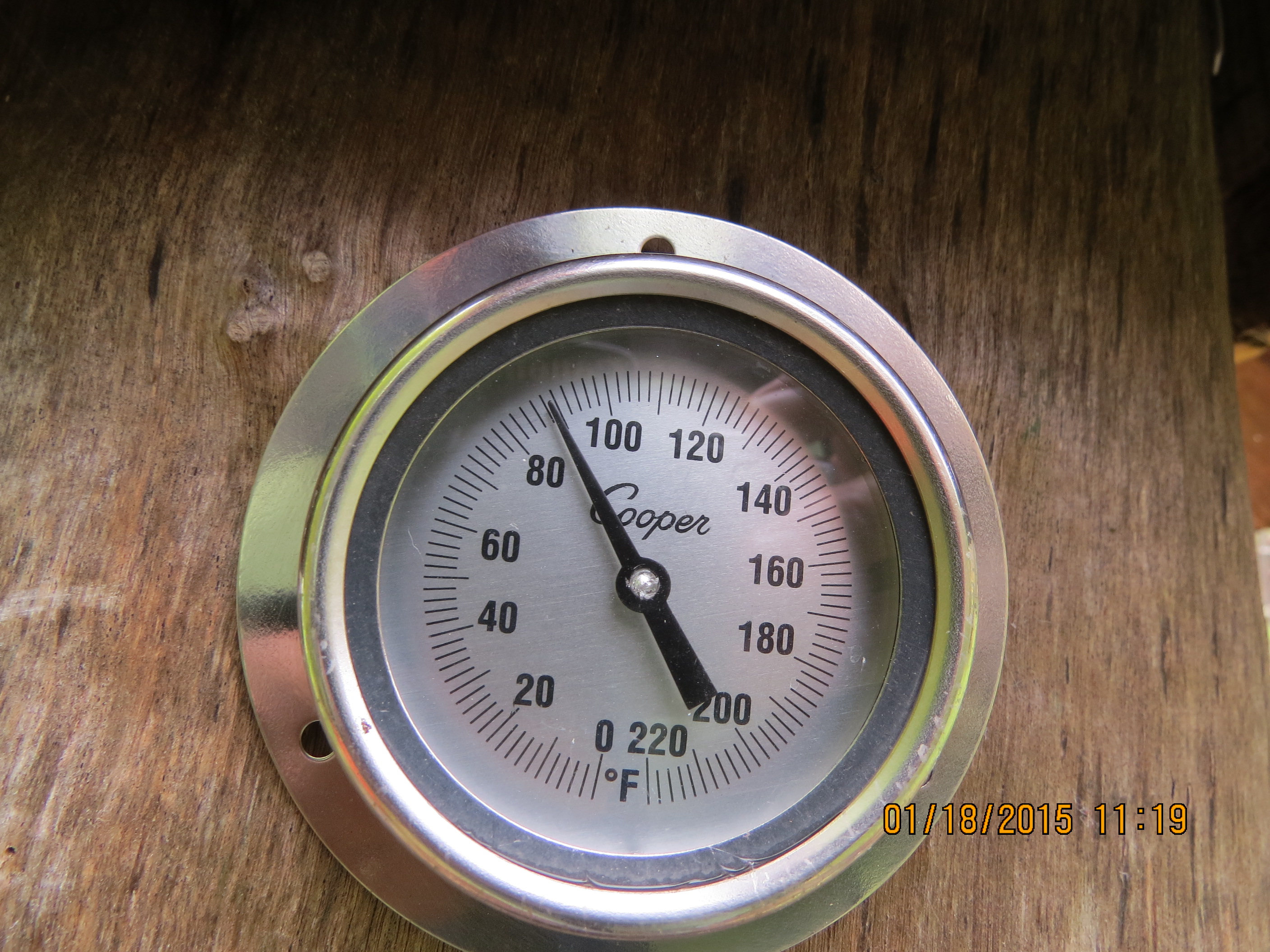
January 18...Temperature is holding at about 90F.

January 18 (today)…Temperature is holding at about 90F.

I shot some video just because I was happy to see numbers of bees.  About a week later they were bringing some pollen.  Just to finish off the song by Steve Montana, I added some video of the birdhouse bees.  Despite being a small hive in the shade of pine trees for a good three months, they are still holding on, treatment-free.  Hold on bees, the pussy willows will be flowering in February.
 

Building the Modern Way

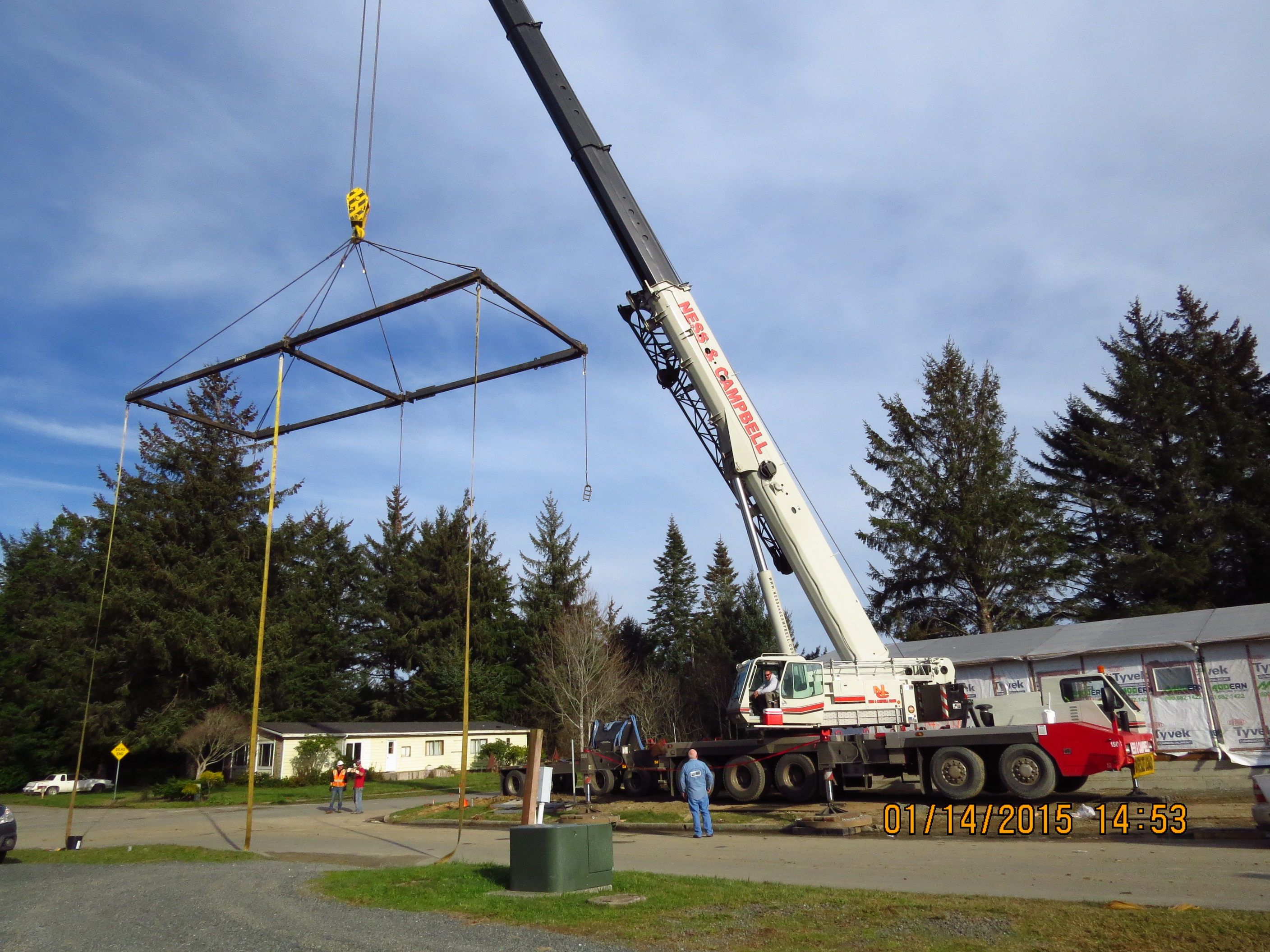
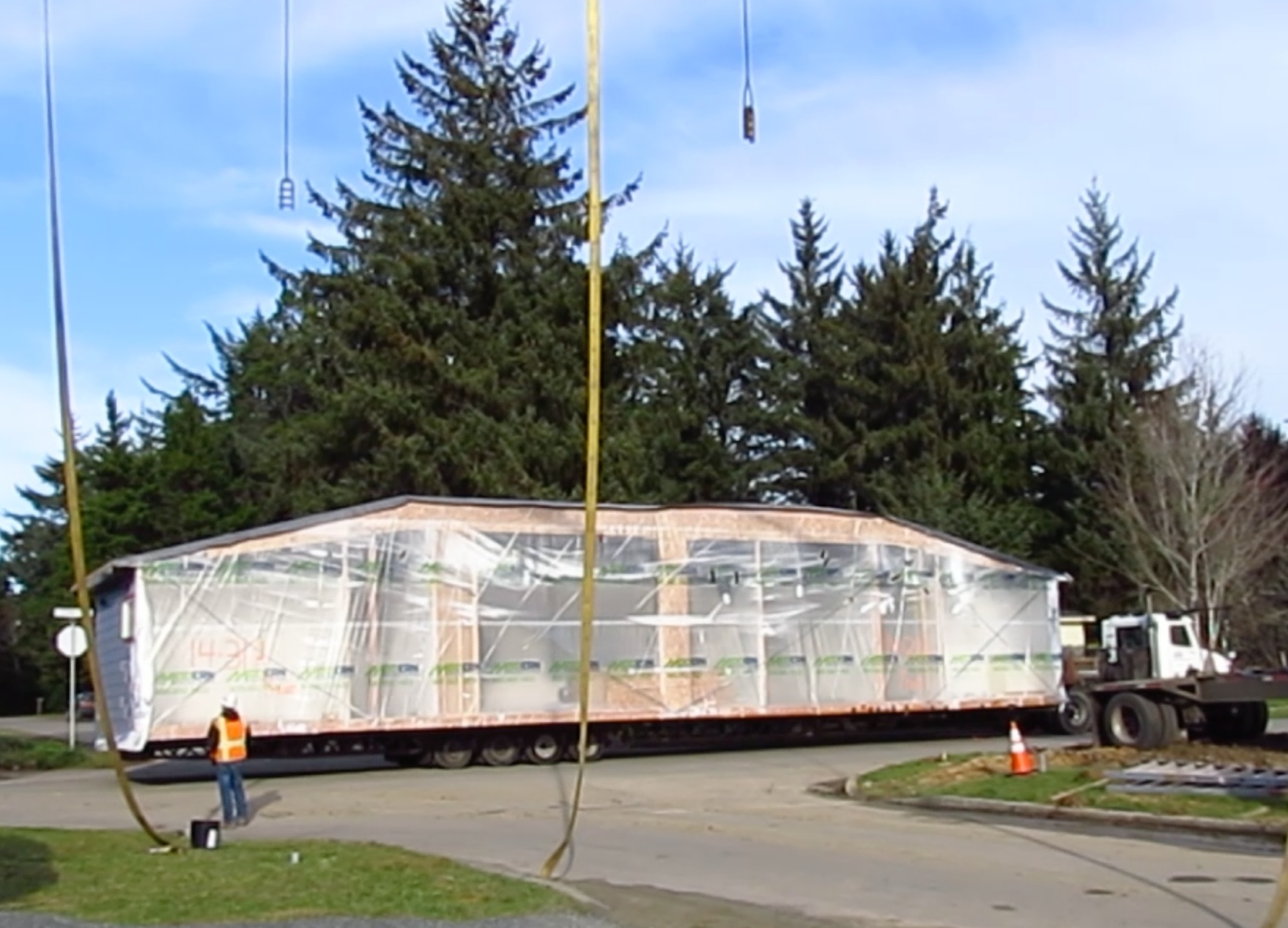
This crane is waiting to off load the last piece of the medical office.

This crane is waiting to off load the last module of the medical office.

At the risk of losing all street cred, I shot a video of a medical building getting off loaded and set up.  In my defense, I set out on this day to shoot videos of bees.  Beth had called to say that she saw bees out front in the heather, bumblebees as well as honeybees.  I wheeled out my bicycle, packed my cameras and headed over to her place.  The weather had turned cool and there were no bees to be found.  Rain was in the forecast for the next 7 days so I figured I’d better get back to working on my log hive.  On my way home I see these construction guys staring in my direction.  I roll up to them and ask, “You guys waiting for me?”  The reply, “Nope, but we ARE waiting for that truck behind you.”

and there's the truck hauling the last unit to be set up.  I'm lucky...the weather is great and I have time to shoot a video.  How cool is that?

and there’s the truck hauling the last unit to be set up. I’m lucky…the weather is great and I have time to shoot a video. How cool is that?

For the next hour I was able to shoot video of the Modern Building Systems crew rigging the module,  the crane lifting the module off the truck, and swinging it into position.  I’ve got to say I was impressed at how everyone knew what to do…and they absolutely nailed the placement of that module.  I know, I’ve got it on video, corner lined up to corner, perfectly!

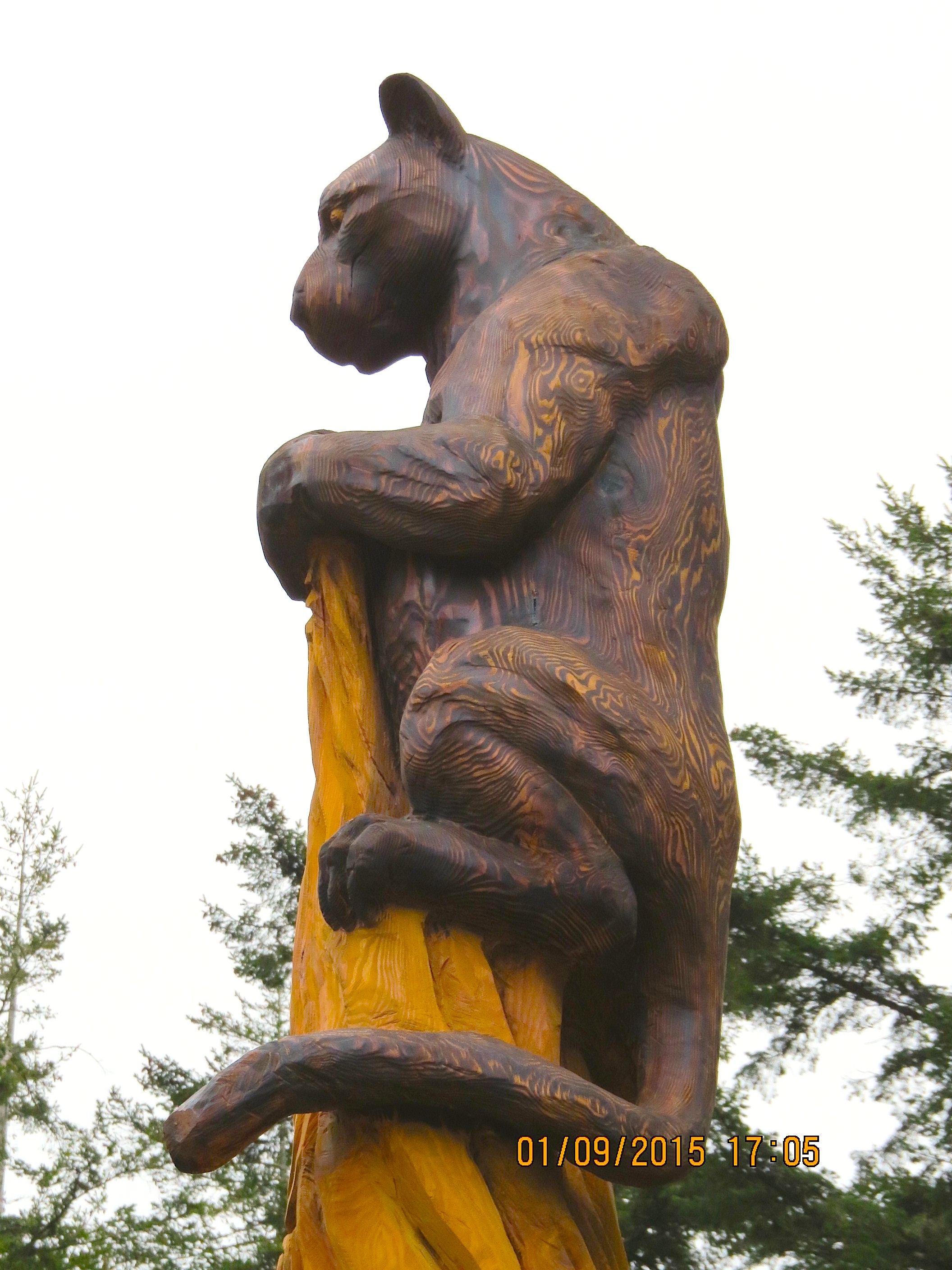
Side view of the totem shows how tall it is.

Side view of the totem shows how tall it is.

As I'm standing directly in front, it looks like the panther is staring right at me.

As I’m standing directly in front, it looks like the panther is staring right at me.

The panther was created by sawing wood from the tree, something that's really hard to grasp for non artist people like me.  You create something by taking something away.

The panther was created by sawing wood from the tree, something that’s really hard to grasp for a non artist person like myself. You create something by taking something away.

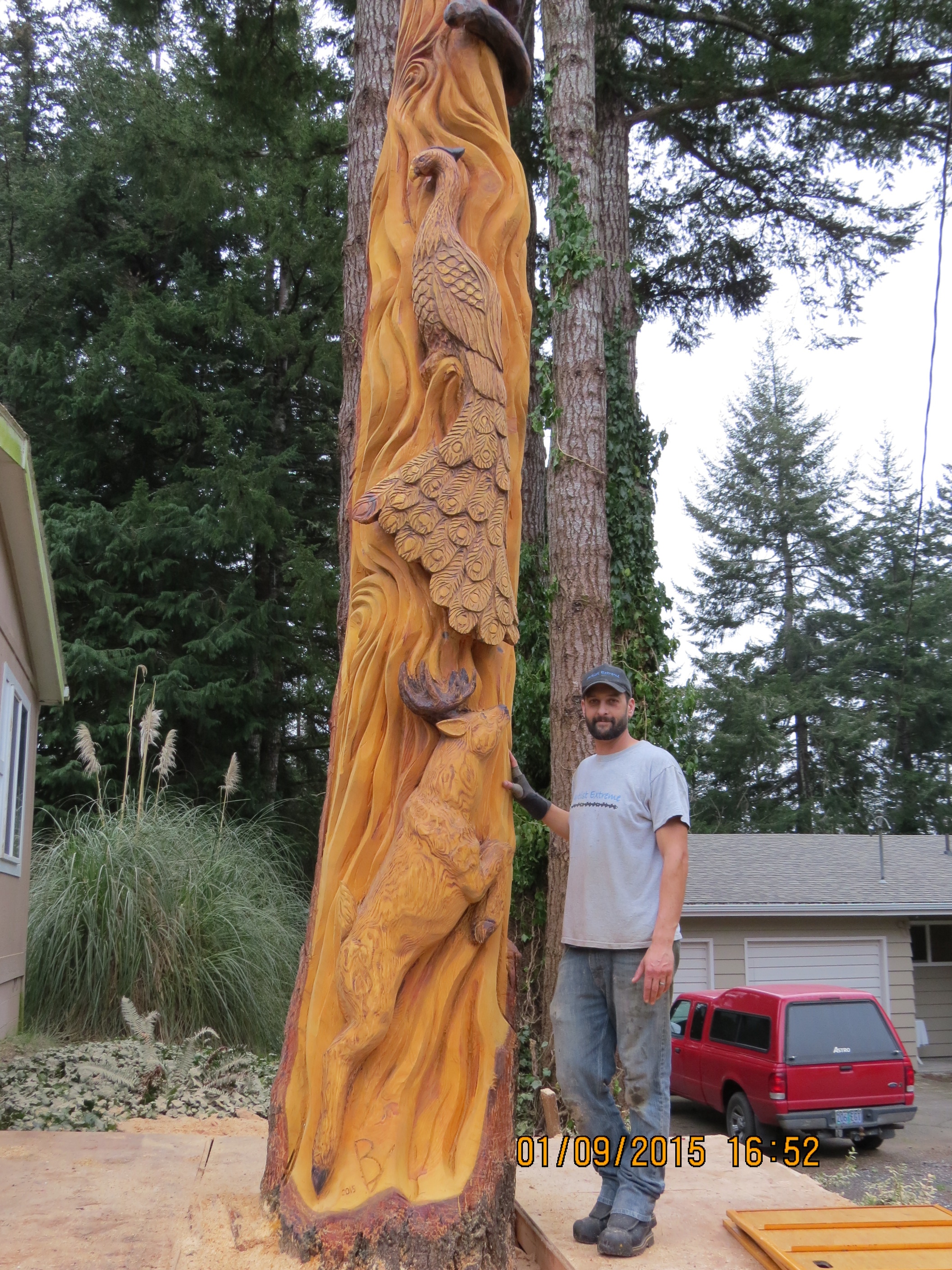
Peacock carving

Peacock carving

Brian Vorwaller poses with the finished totem

Brian Vorwaller poses with the finished totem

I should have been hollowing out my next log hive because Brian is going to carve the faces of my three grand kids on it next, but I just wanted to show you how talented he is.

Beginning of the 3 Kid Log Hive

Some progress has been made

Following a Dream-Brian and Zada

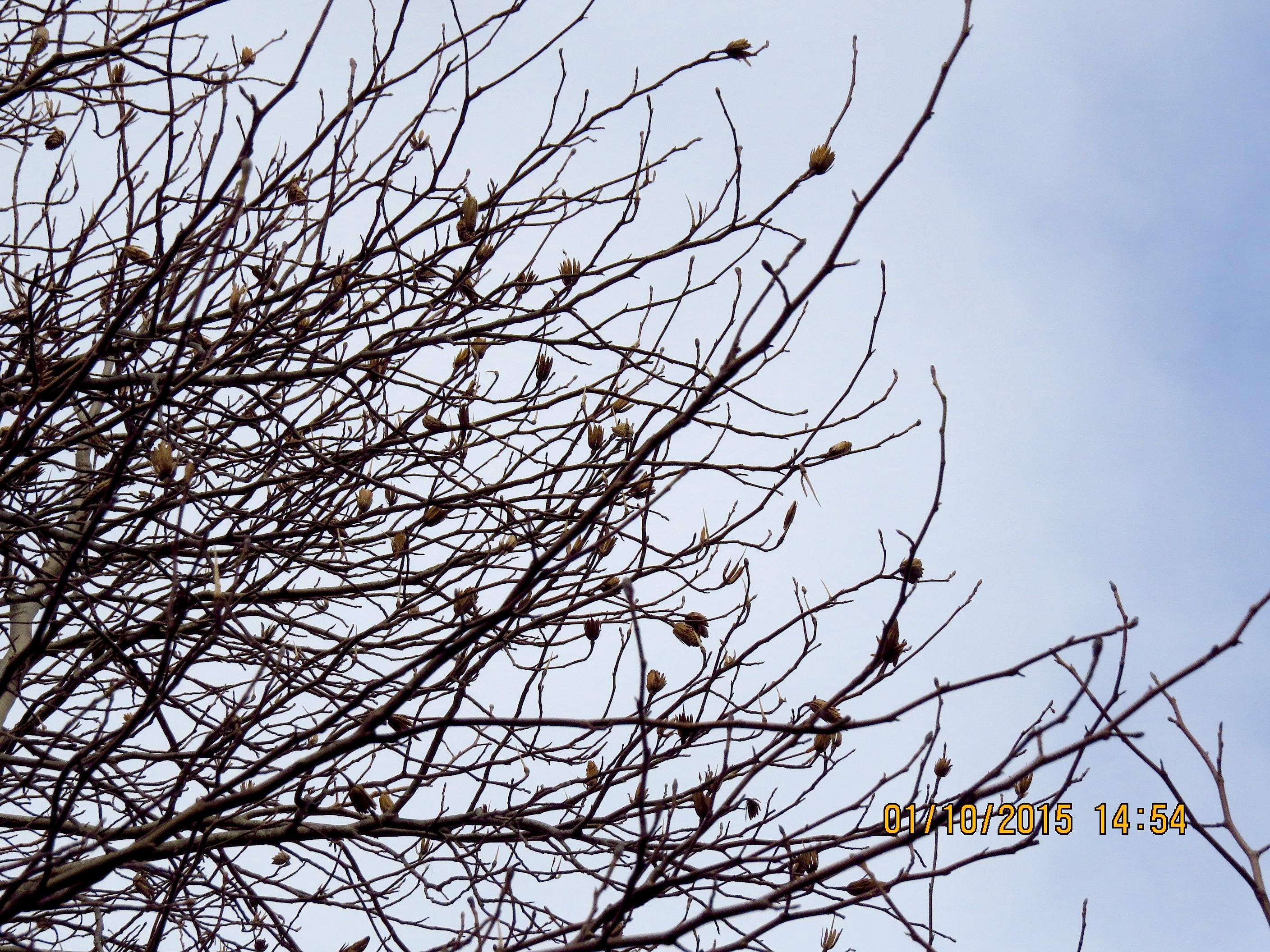
"All the leaves are gone, and the sky is gray."  For the last few weeks, every day when I walk past this tree, the Mama's and Papa's start playing that song in my head.

“All the leaves are gone, and the sky is gray.” For the last few weeks, every day when I walk past this tree, The Mamas And The Papas start playing that song in my head.

1-10-15...There are still many seed pods hanging on the tree.  I've got a whole bag of them, so I won't be picking these.

1-10-15…There are still many seed pods hanging on the tree. I’ve got a whole bag of them, so I won’t be needing these.

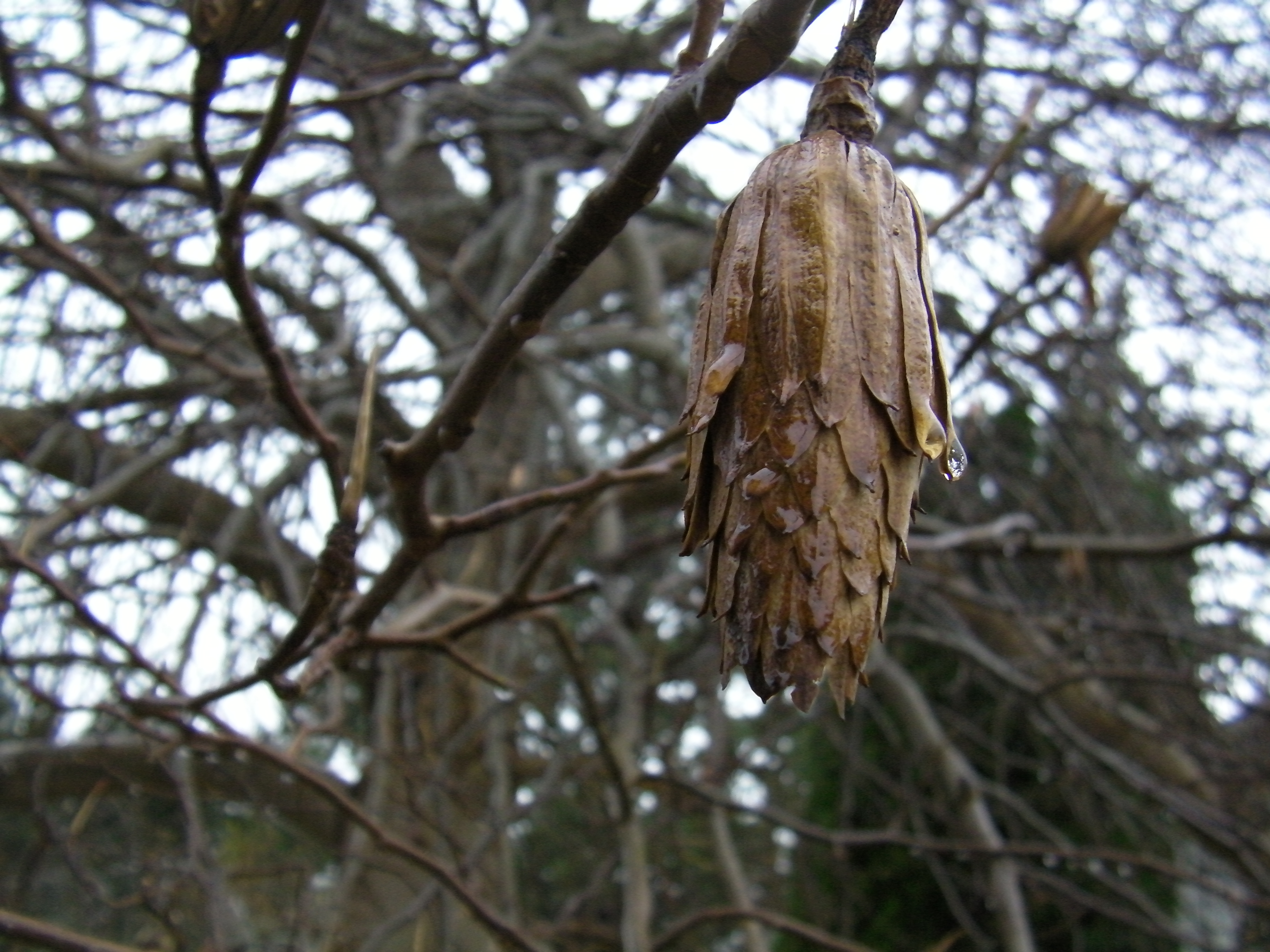
Close up view of a seed pod.

Close up view of a seed pod.

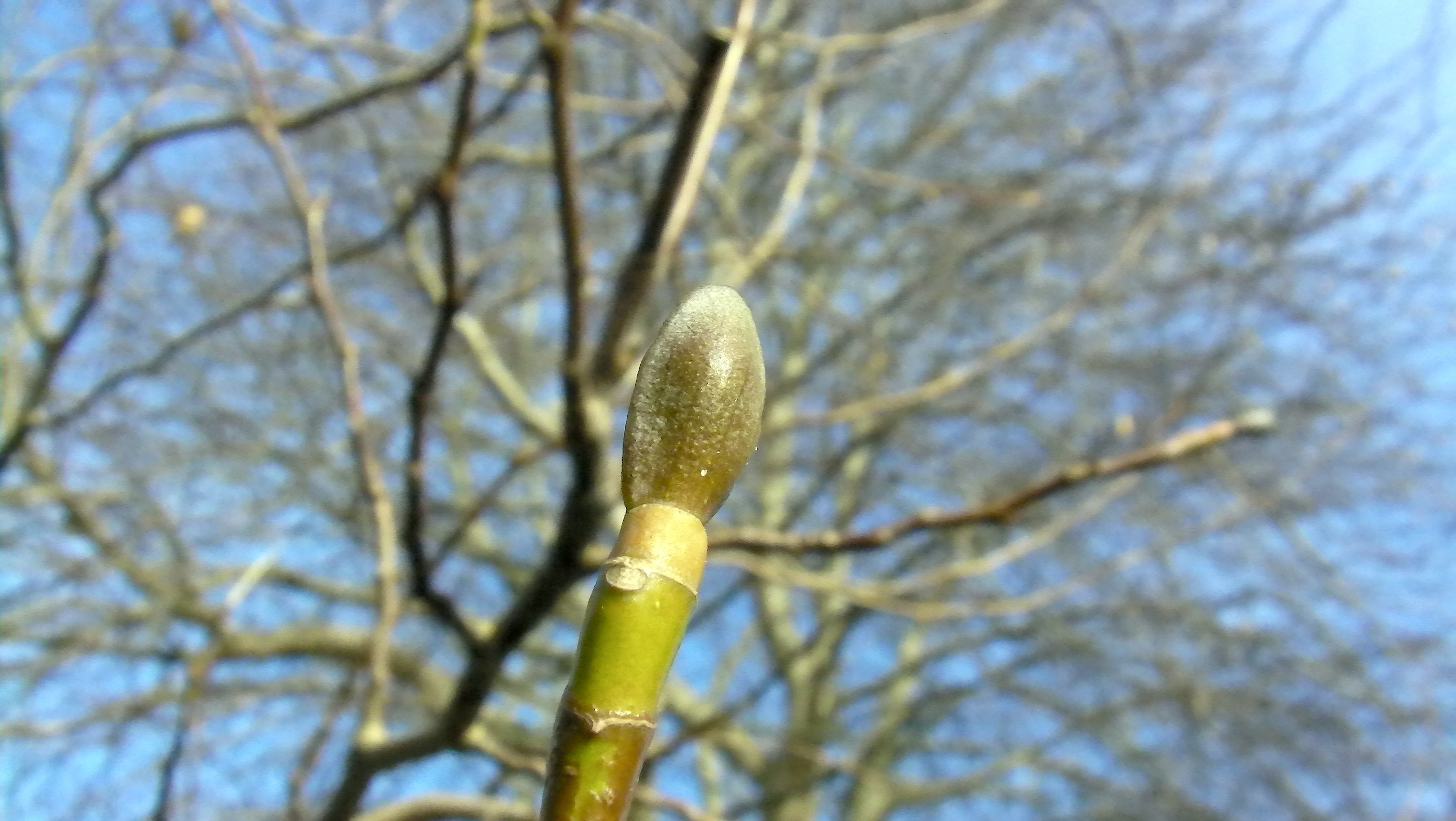
Already a promise of things to come.

Already a promise of things to come.

Many thanks to Lucy at Loose and Leafy for hosting the Follow a Tree blog.  I have learned so much about this Tulip tree that I never would have learned if there had not been a deadline.

Perone Hive Failure

Back in May 2013, I had an extra swarm to give away and  Vernon was in need of a swarm for his self-built Perone hive.  We gave him our Mother’s Day Swarm which went into his Perone hive #1.  Through Vernon’s updates we’ve learned that the Perone hive that our swarm inhabited, made it through the 2013-2014 winter treatment-free.  Vernon built a second Perone hive which he populated with some packaged bees.  The following is the story of the second Perone hive…

In Vernon’s words from January 5, 2015…For almost a month the activity at the entry of my newer hive has been near zero.  At first I thought the colony was settled in for the Winter, but the weather has been mild and the older hive was still somewhat active.  So today I opened the shutters and found that my colony had failed.  Although there were a few dead bees left in the hive, it appears that the majority absconded.  It’s a clear case of Colony Collapse Disorder.  My heart is broken, but I decided to take some pictures to document the failure, in hopes of helping other beekeepers.

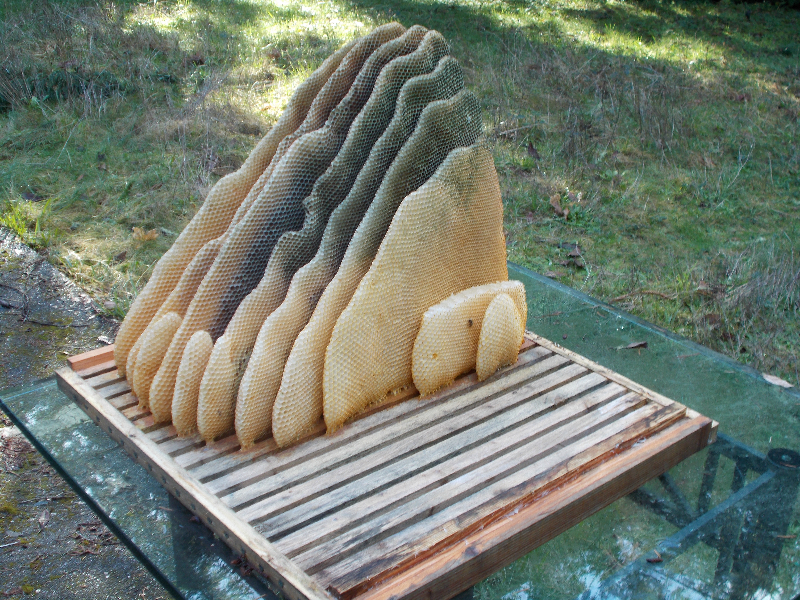
2015-01-05...It's difficult to remove the comb from a Perone brood box.  I broke two combs, which isn't too bad.

2015-01-05…It’s difficult to remove the comb from a Perone brood box. I broke two combs, which isn’t too bad.

Here's a view from the other side.

Here’s a view from the other side.

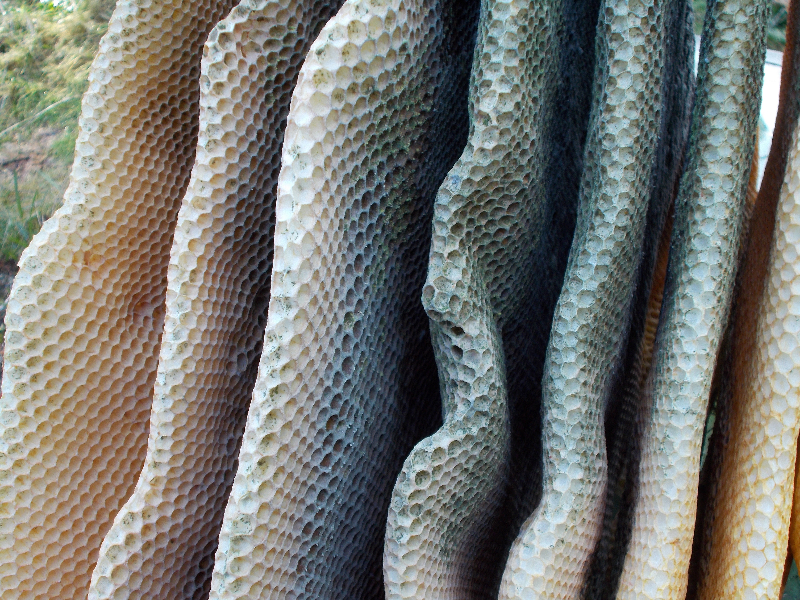
Maybe some of the local beekeepers will be able to help me do a post mortem.  Some of the comb is very dark, almost black.  Is that mold or mildew I'm seeing?

Maybe some of the local beekeepers will be able to help me do a post mortem. Some of the comb is very dark, almost black. Is that mold or mildew I’m seeing?

The spaces between the combs appears generally uniform.

The spaces between the combs appears generally uniform.

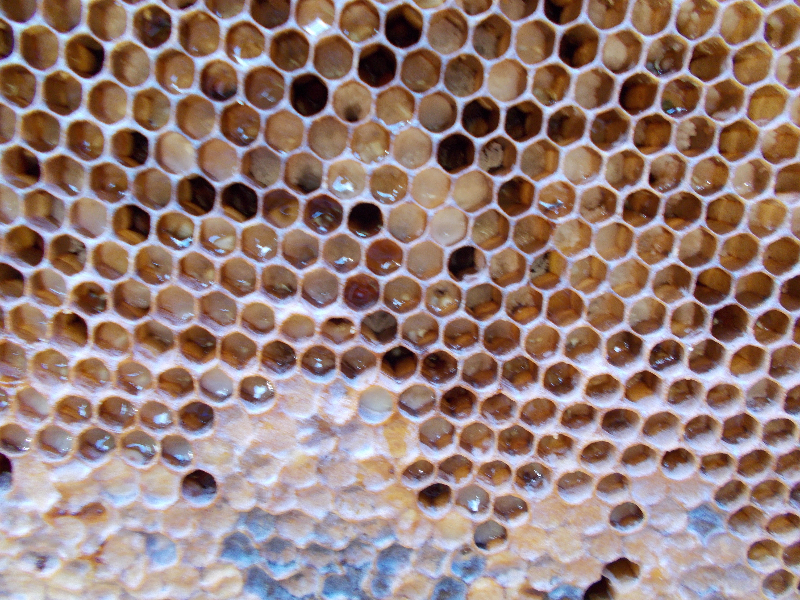
This close-up shows that most of the cells were empty, and the black substance was pervasive.

This close-up shows that most of the cells were empty, and the black substance was pervasive.

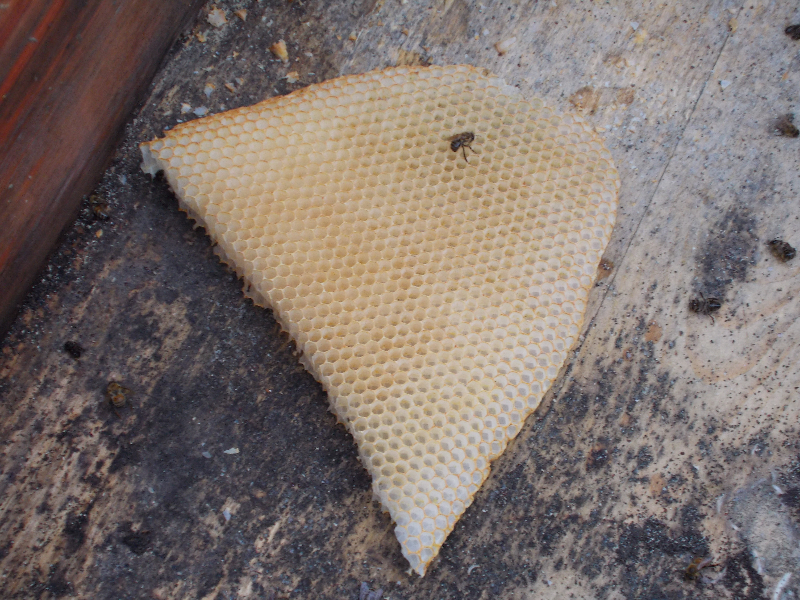
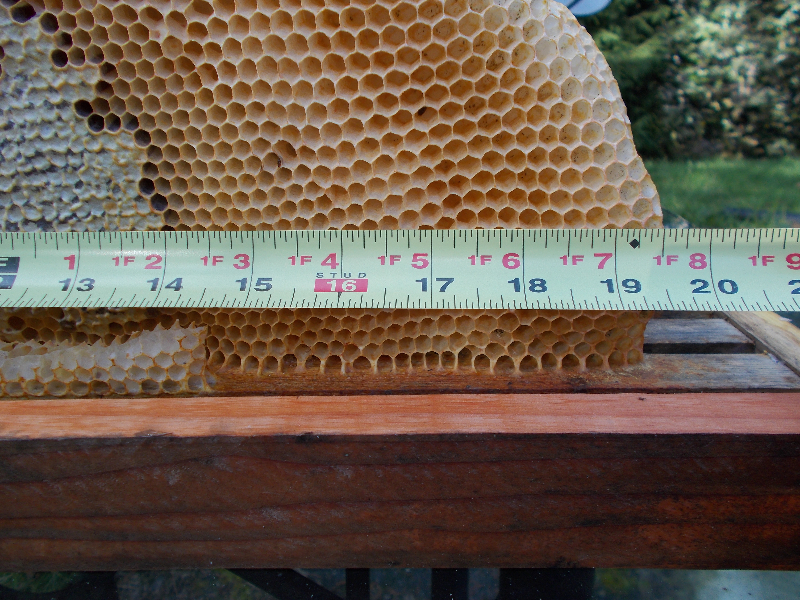
Although this comb measures an impressive 19.5 inches in width, it was, in the end, non-functional.  Most of the cells are empty, and those that are capped are covered with that black substance.

Although this comb measures an impressive 19.5 inches in width, it was, in the end, non-functional. Most of the cells are empty, and those that are capped are covered with that black substance.

It appears that brood was developing when the colony absconded.

It appears that brood was developing when the colony absconded.

A few dead bees remain, but the most concerning thing about the floor is the black mold (or whatever it is).

A few dead bees remain, but the most concerning thing about the floor is the black mold (or whatever it is).

Close-up of the Black Death and some of its victims.  The hive was always very moist inside.  Maybe next time I'll slant the floor, or drill some holes, or make some other provision for drainage.

Close-up of the Black Death and some of its victims. The hive was always very moist inside. Maybe next time I’ll slant the floor, or drill some holes, or make some other provision for drainage.

A solitary worker clings in death to the comb she helped build and fill.  You and your mates worked tirelessly, little friend, and I'm sure you're all in bee heaven now.  Hail and farewell!

A solitary worker clings in death to the comb she helped build and fill. You and your mates worked tirelessly, little friend, and I’m sure you’re all in bee heaven now. Hail and farewell!

Vernon wrote yesterday his recent thoughts…”I’ve got a plausible hypothesis for the cause of this hive failure. Some beekeepers equalize the populations of adjacent hives by trading frames. This is supposed to discourage robbing.  Early this Spring my Hive #1 probably had close to 100,000 bees.  I located Hive #2 adjacent to it, populated with at most 12,000 bees from a 3 pound package.  Not smart.  Bees from Hive #1 were probably robbing Hive #2 from the start.

Going back over my old photos it’s clear that the new bees built a lot of comb that never got filled, even though they brought back a lot of food and produced a lot of brood.  Wouldn’t that indicate robbery from their stores?

Stocking the hive with package bees may have made robbing more likely.  The queen was a Carniolan type and the workers were Italians, derived from a number of hives.  The brood was Carniolan, so the Italian workers were nursing juvenile bees with a different pheromone signature.  That may have desensitized the colony to the unfamiliar pheromones of bees from outside the colony.

What do you think?”

The beginning of the project

Grand Kids’ Log Hive Status Report, as of February 15, 2015