Bumble Bee Rescue

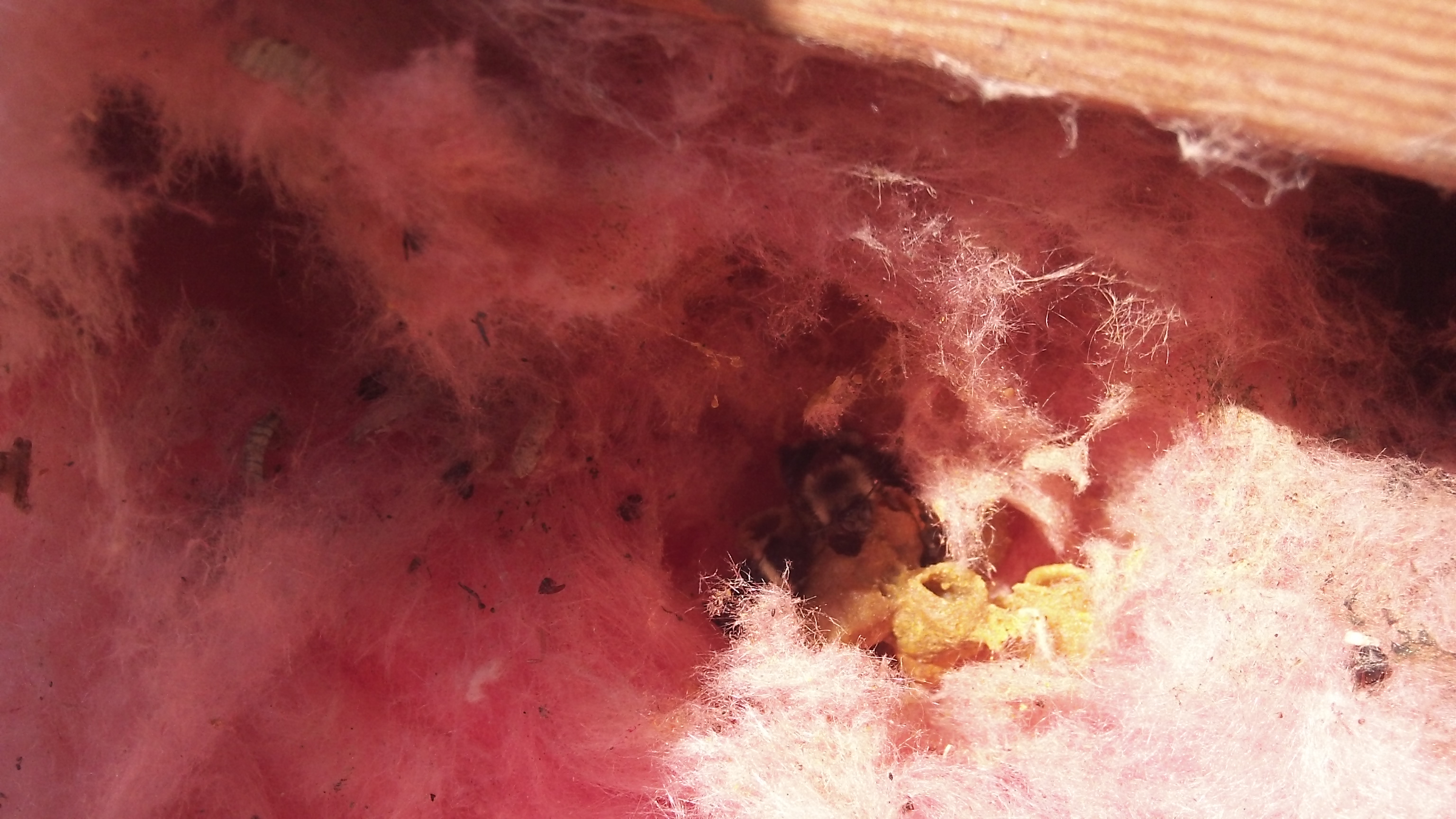
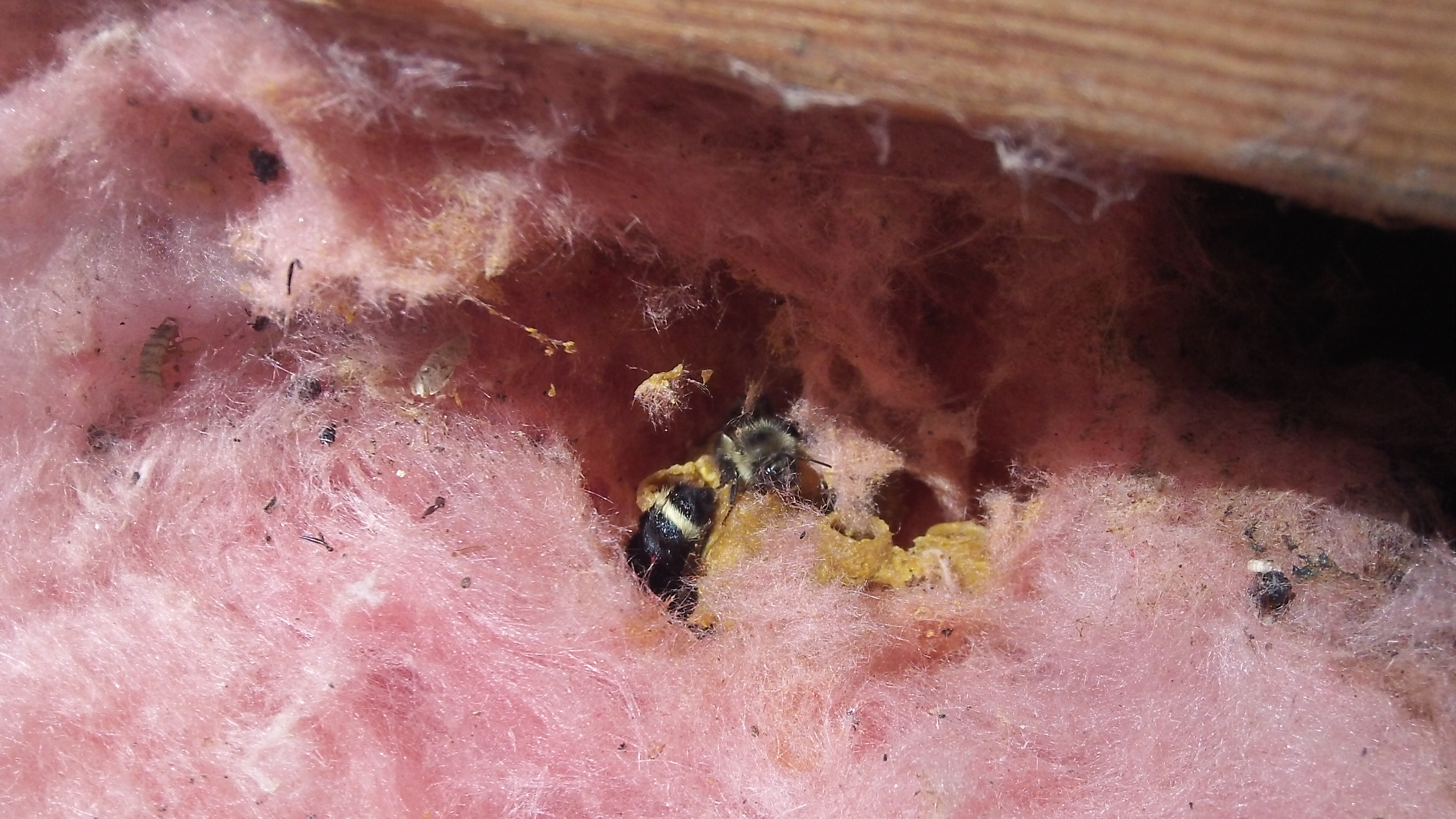
While removing some rot on the east part of the shop, Geoff discovers a bumblebee nest.

Bumblebee comb in wall

Queen bumblebee

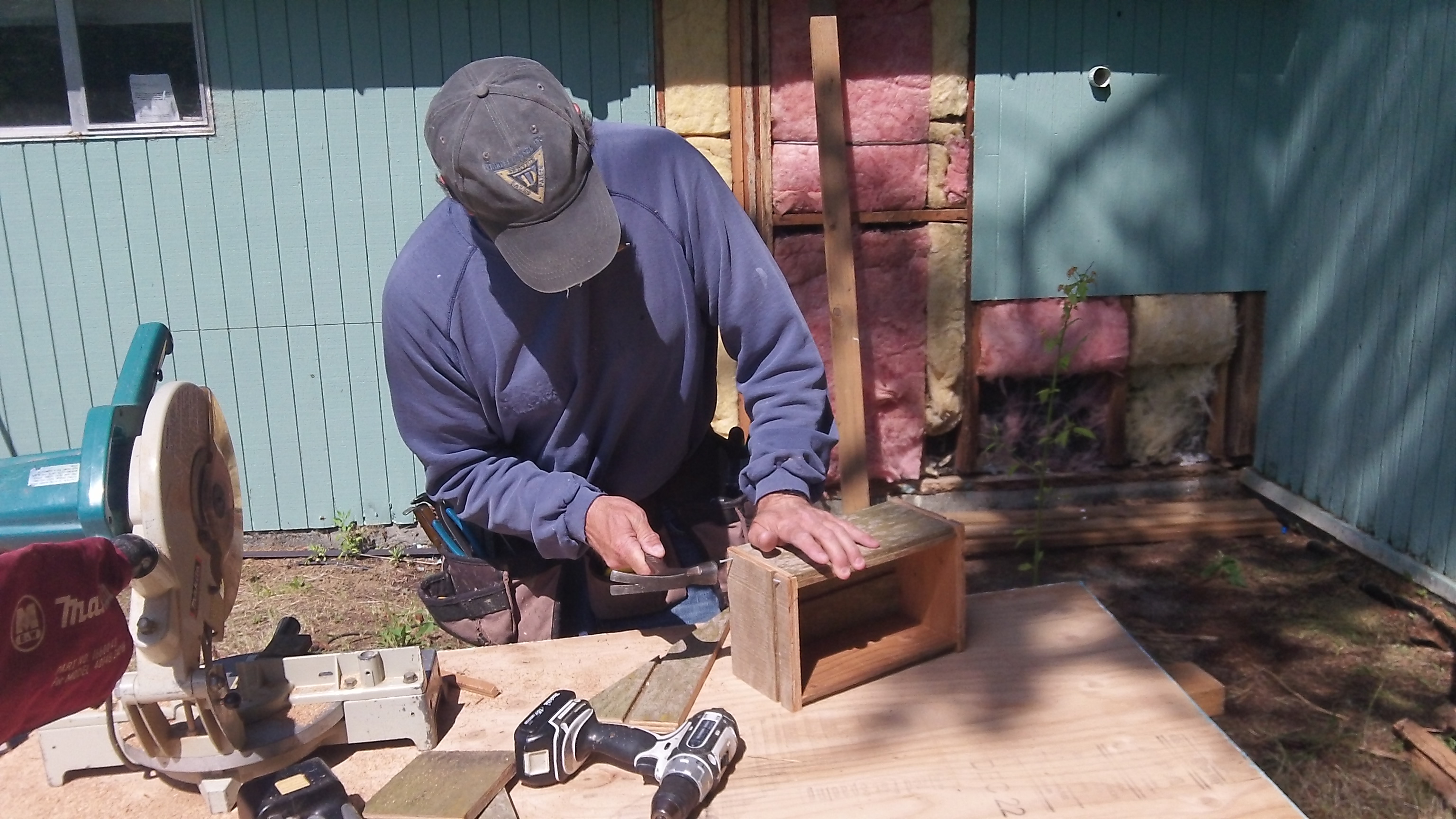
Geoff, a very capable contractor who shares our respect for nature, builds a small box to house the nest.

A bumblebee box is assembled to save the nest

Bumblebee box ready for the rescue

This evening before a rain shower we see what looks to be the bee in the nest, a Bombus Californicus…is it the same one?  You be the judge.

Buzzing in the Rhodies.MP4

http://youtu.be/ofo7RWS1DpE

Last week I was able to catch up with Hal and ask him about his log hives.

The hive cavity measures about 10 in. x 10 in. x 36 in. (59 liters) There is a large observation window in the back covered by a wedge of wood.

I admire his spunk in trying something different and his attitude for not feeding, treating them, or taking their honey. And I’d love to get a swarm off that hive.

Grow with Solar

Get out the Solar Oven and let’s have enchiladas for lunch.

Enchiladas for lunch.

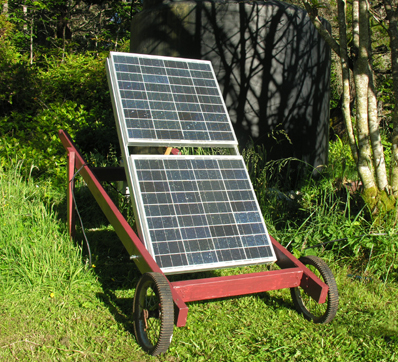
Now that the sun has warmed up the soil enough to plant, we’ve got to hook up the Solar Roller. These panels are mounted on a 2 x 4″

Solar panels on handmade wheeled cart

cart with some old lawnmower wheels attached. Since I have many trees shading parts of the garden, this roller allows me to follow the sun. I can actually get 12 hours of sun-pumping water into the large tank in the background and then gravity flow to 1/2″ pvc placed in the raised beds. The kit came with solar panels, submersible pump, and a Dankoff control box. This control box allows the pump to kick on in low light and works so well that it’ll pump on a gray shadowless day. I’ve even seen it pump during a light rain.

Gray shadowless day, solar pump still working…thank you Mr. Dankoff, for inventing the controller that makes the pump work on a very gray day!

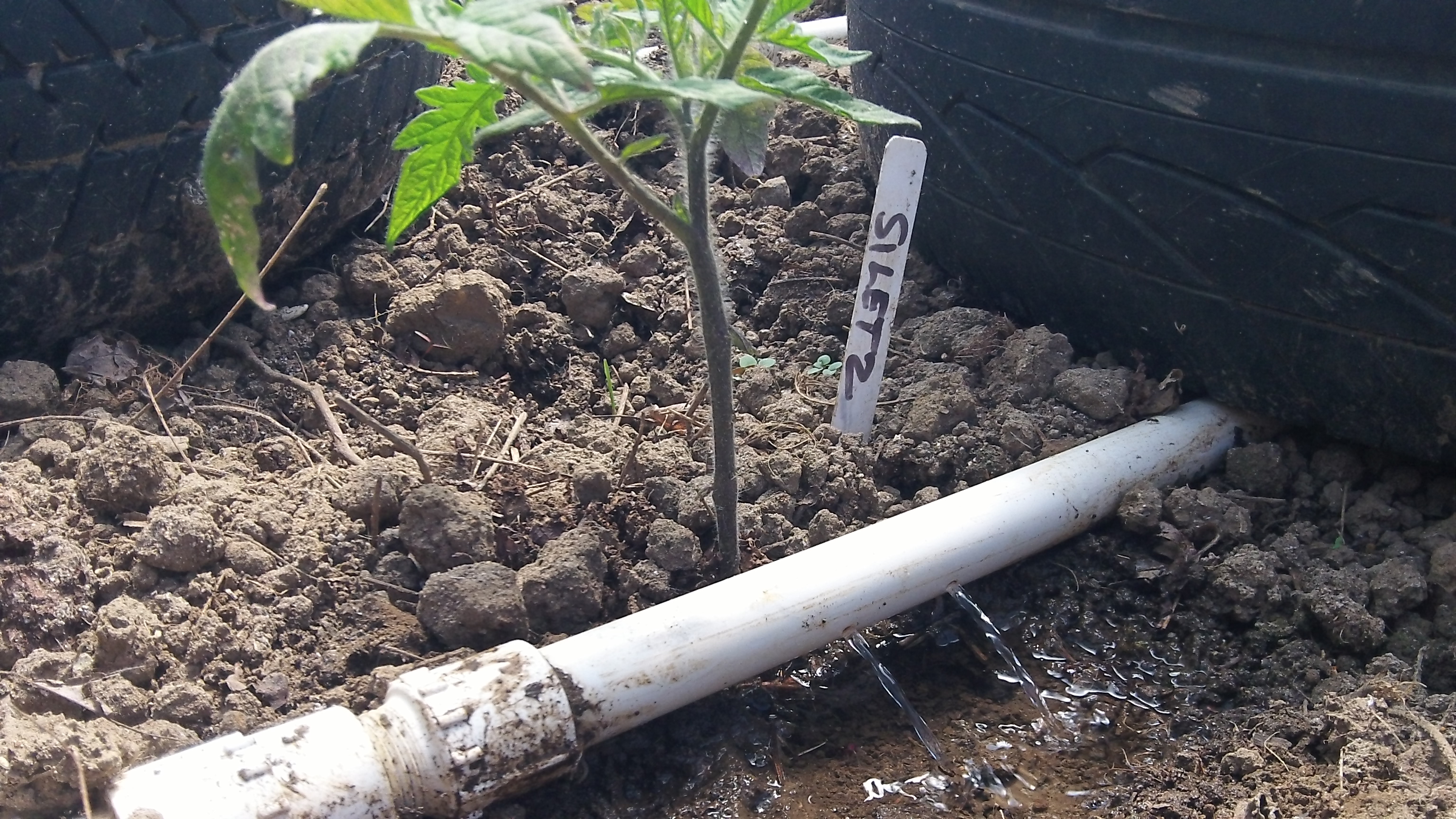
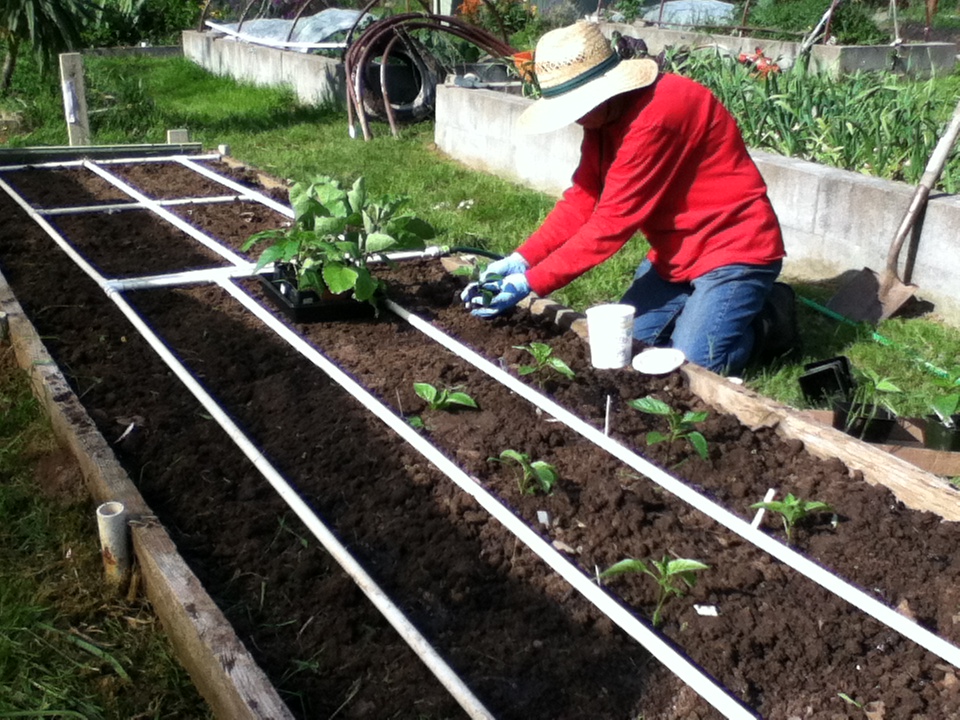
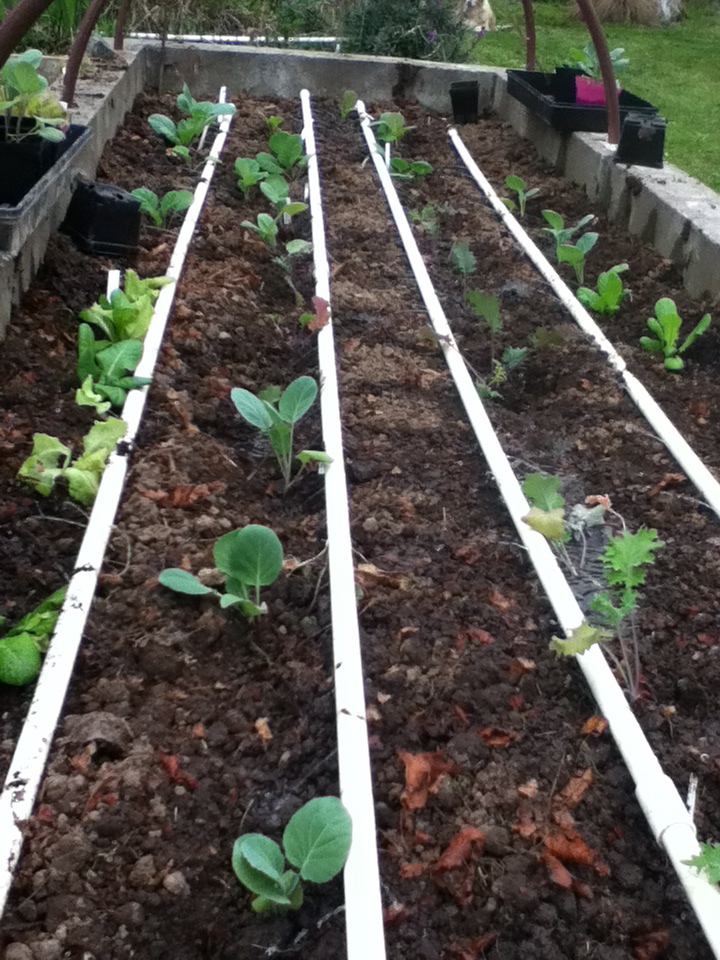
The tank feeds into a regular garden hose and into the water grids. The grids are drilled with 1/16” holes. Hook up the hose to the grid and plant next to the holes.

Drip water grid in tomato bed

Drip watering potatoes

Placing the plants next to a pre-drilled hole.

Ready to close the tent on the warm loving eggplant and peppers

And that’s how we spent Mother’s Day, how about you?

For more solar check out my little solar system.

Kale Flowers

These kale plants might look a bit ragged, but it’s great to have flowers for the bees. It’s easy to grow, lasts all winter, and feeds the bees in the spring. Kale is full of antioxidant, anti-inflammatory, and cancer prevention qualities. It tastes good too. One of my favorite soups is this one my daughter sent to me from The Dragons Kitchen.

AFRICAN SWEET POTATO STEW

2 tablespoons olive oil

1 small onion, finely chopped

1 clove of garlic, minced

1/4 teaspoon ground cumin

1/2 teaspoon peppercorns, crushed

1/2 teaspoon red pepper flakes

1/4 teaspoon dry mustard

1/4 teaspoon ground cloves

1 15 oz can of stewed tomatoes

1 large sweet potato, peeled & chopped into large chunks

1 bunch of kale, deveined and shredded

2 carrots, peeled and sliced

4 cups vegetable stock

1/2 cup chunky peanut butter

1 inch piece of ginger, grated

salt to taste

Directions:

1. Heat the olive oil in a large heavy bottomed pot with a tight fitting lid. Add the onions and cook on medium-low until they begin to caramelize.

2. Add the garlic, cumin, peppercorns, red pepper flakes, mustard and cloves to the oil and onions. Cook for 1 minute.

3. Add the stewed tomatoes, sweet potato, kale and carrots. Cook for 2 minutes.

4. Add the vegetable stock, peanut butter and ginger. Bring to a rolling boil. Turn down heat and cover. Cook for 30 minutes or until sweet potatoes and carrots are cooked. Check the seasoning after 15 minutes and add salt as needed.
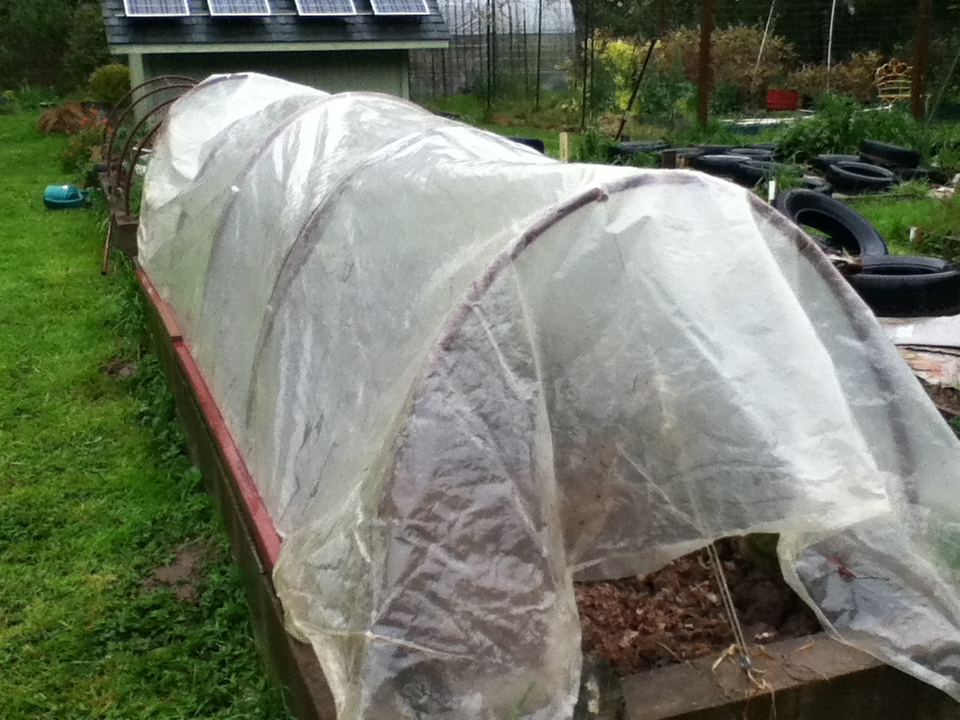
Growing tomatoes on the Oregon Coast calls for special measures. This clear 6 mil UV resistant film ‘tent’ shields the soil from the drenching rainfalls of April and May. To get ripe tomatoes by early August we must often plant in inclement weather.

Beating the late blight is the name of the game in a cool climate. We don’t use fungicides so since the mid to late 90’s we follow some strict rules…NO overhead watering, drip watering only. Trim lower branches a so no leaves touch the ground. Do not follow tomatoes with potatoes or vice-versa for at least one year (two years are better).

After gardening in the same location for over 35 years, we always add amenities to enhance the soil…cottonseed meal, kelp meal, bone meal, blood meal, dolomite, gypsum. This is in addition to trenching in deciduous leaves, crab shell, and coffee grounds in the fall.

The water grid is 1/2″ pvc with 1/8″ holes drilled in the proper spacing for tomatoes. It can be gravity fed from the tank that is powered by solar, delivering the water directly to the roots.

The tires are centered over the holes to add extra warmth into the evening.

Pinch off lower leaves, add a bit of fish meal, place in ground with lots of compost and plant deep.

Next add the hoops…these are 3/4″ pvc that fit loosely into 1 1/4″ pvc sockets. These hoops are strong and last for years (Schedule 40) Strengthen them with rope and 1×2’s.

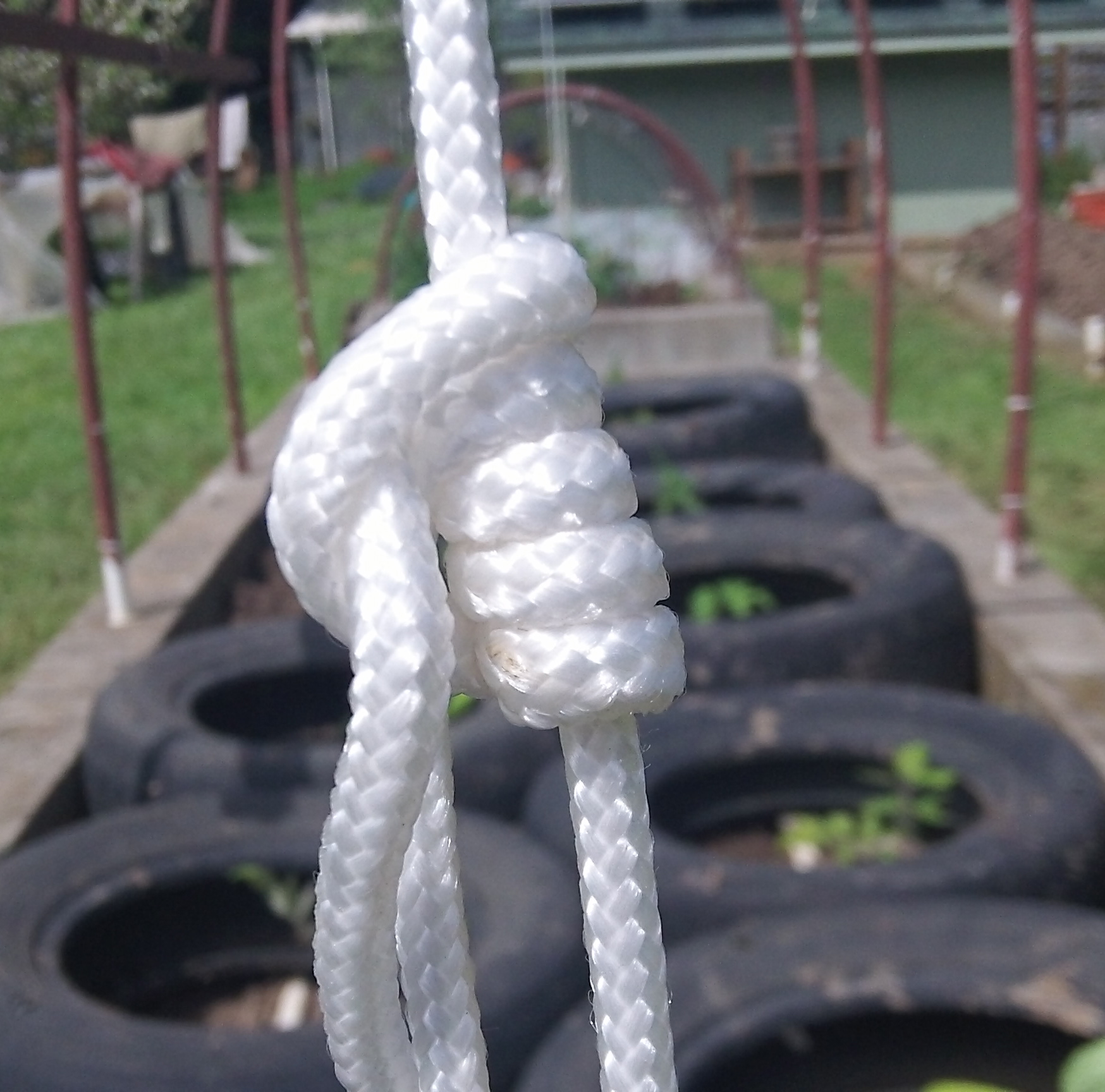
Use a taut-line hitch to take up slack when rope stretches.

This is 6 mil, UV resistant film. 2x2x8’s are butted up to each other and 1×2’s are nailed to hold them together. Then the film is nailed to them using more 1×2’s. That forms the weight to hold the film over the hoops. If you “under roll” the film and tie it to the hoop with a slip knot it will stay up all day. At night or during a rain, we always close the tents to keep water off the leaves. Tomatoes need air circulation, so it’s important to open the tents whenever possible.Tent is closed protecting the plants from the cool night air. Since we like to eat tomatoes in the winter, we plant about 60 plants. This is the first tomato bed this season and holds 15 plants. The cages will be added later when after we’ve treated them with bleach water.  Check out the cages here…added a month later.

Preserving the tomatoes.

(High) Hive Hopes

Randy seems to know all the bee trees in the county.  I asked him if he thought hanging a bait hive up a certain logging road would be permissible with the owners.  He said “There’s no bees up there.  What you ought to do, is hang it at (a not to be disclosed) wayside.  There’s a bee tree there.”  Deep in the middle of a shaded grove of Myrtlewood trees was a bee tree.  It was spotted by a picnicker who was interested in what I was doing.  About 20-25 feet (6-8 meters) up was a bunch of bee activity. I chose a tree about 50 feet (15 meters) away facing the river to hang the bait hive after baiting it with old comb and LGO. The family of picnickers and their kids were excited to  learn the plight of the bees and what backyard beekeepers are doing to help out.

It’s not as pretty as Bernhard Zaunreiter‘s, but hopefully it’ll do the job.

Updated to “Kicked out of State Park.”

Occupiers Wanted

Bee Beard is patiently waiting for a swarm of bees. He is finally located on site, facing east with the bamboo blocking the southwesterlies that rage in the winter.

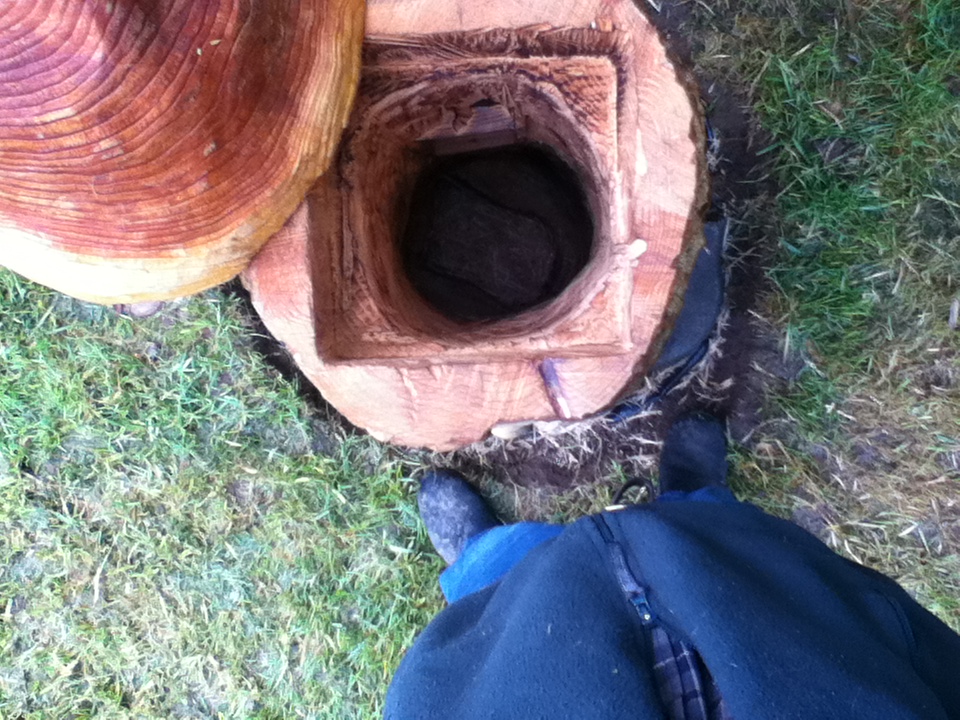
After reading a post by Phil Chandler about the importance of moisture control and hive scent, I decided to hollow out the base. It was much easier this time as the saw pushed all the way through.

Phil was also discussing the importance of hive ecosystem…“that it might be beneficial to have wood shavings and possibly dry leaves in the hope of stimulating an ecosystem similar to the natural environment where perhaps earwigs and woodlice etc. would live below the bees and maybe eat any falling varroa.” Should I add shavings or sawdust? I’ll just rake up these shavings and jam them in the center. I can always add sawdust later.

A view from the top. The quilt box fits nicely here on top of the short top bars. Sawdust will fill the quilt box over the burlap. Then the ‘hat’ pivots back to center.

Bee Beard gets bees!

Bee Beard worked hard all winter and served up 6 swarms.  I missed the prime swarm but caught three more.  One went into my new Warre hive.

Tree hive.

My new log hive. 

How Bee-atrice was carved.

Preparing Bee-atrice for a hive

Getting a log hollowed out

This log was cut from deep in the forest on the Oregon Coast. It was being cut into lengths when the saw bit into the bee hive and bees came flying out. Rather than lose the hive, one of the guys called Randy, a known beekeeper, who patched up the log and brought it to his bee yard. These very feral bees are now adjusted to their new surroundings and are out flying.

All of a sudden it’s time to get serious about this.  I built most of the bait hives in February.  April and May are the best months on the Oregon Coast.  I don’t want to start too late because I’ll be advised to feed the bees and I DON’T want to do that.

This one is not as high as I would like, but it’s a start.  I’m using old brood comb from last year, some melted pine sap, and Lemon Grass Oil.  I’ll check it in a week and daub some more LGO on the outside of the hive.

I used a ladder with this one and got a little higher.  This one has top bars that fit a Warre Hive.  It’s located within walking distance of my house so I can check on it more often.  It’s located near a creek in a stand of firs and cedars.

It’s always fun for us to uncover the very soggy cardboard and see all the earth worms.  In years past we would rototill, but now because we trench in leaves, crab shell, coffee grounds and sometimes  kitchen garbage in the fall,  our beds are teeming with life.  We don’t want to chop up the worms with a tiller so we do a little spading to loosen the soil and push in the transplants.  Many times the ground is too wet for a tiller, but not for a shovel or fork. l

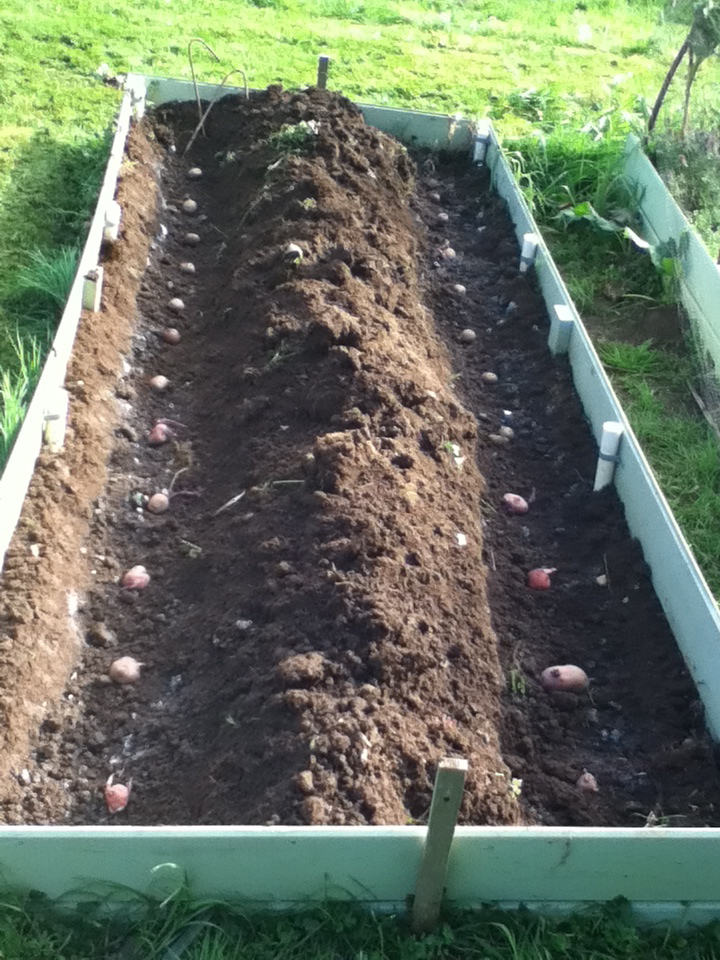
Our Red Pontiacs from last year were getting soft so we decided to use them as seed potatoes. With the raised beds we can plant earlier and cover up the beds if the weather report warns for freezing.  We can also net to keep out the deer or in this case, the cats.  Check out the progress on these beds.