This is far from National Geographic video quality, but it does show the intimate relationship between the bee and the flower. The bee lands on the flower petals, spreads out the lower ones, then triggers the pollen release possibly by pushing something with it’s head…I couldn’t see that part, but when it happens, it’s sudden and strong, like an explosion.
May 3…Here’s a pretty variegated Scotch Broom (Cytisus scoparius). You can tell that a bee has been there , because the stamen have already popped up.
Pollen Alert…bee has triggered a pollen shower, stamen pop up and rub anthers on her back.
This bee has learned well how to trigger the pollen release as can be seen by the amount of pollen on herself.
I shot this video to show what our bees are doing when they leave the hive. It may surprise you. 🙂
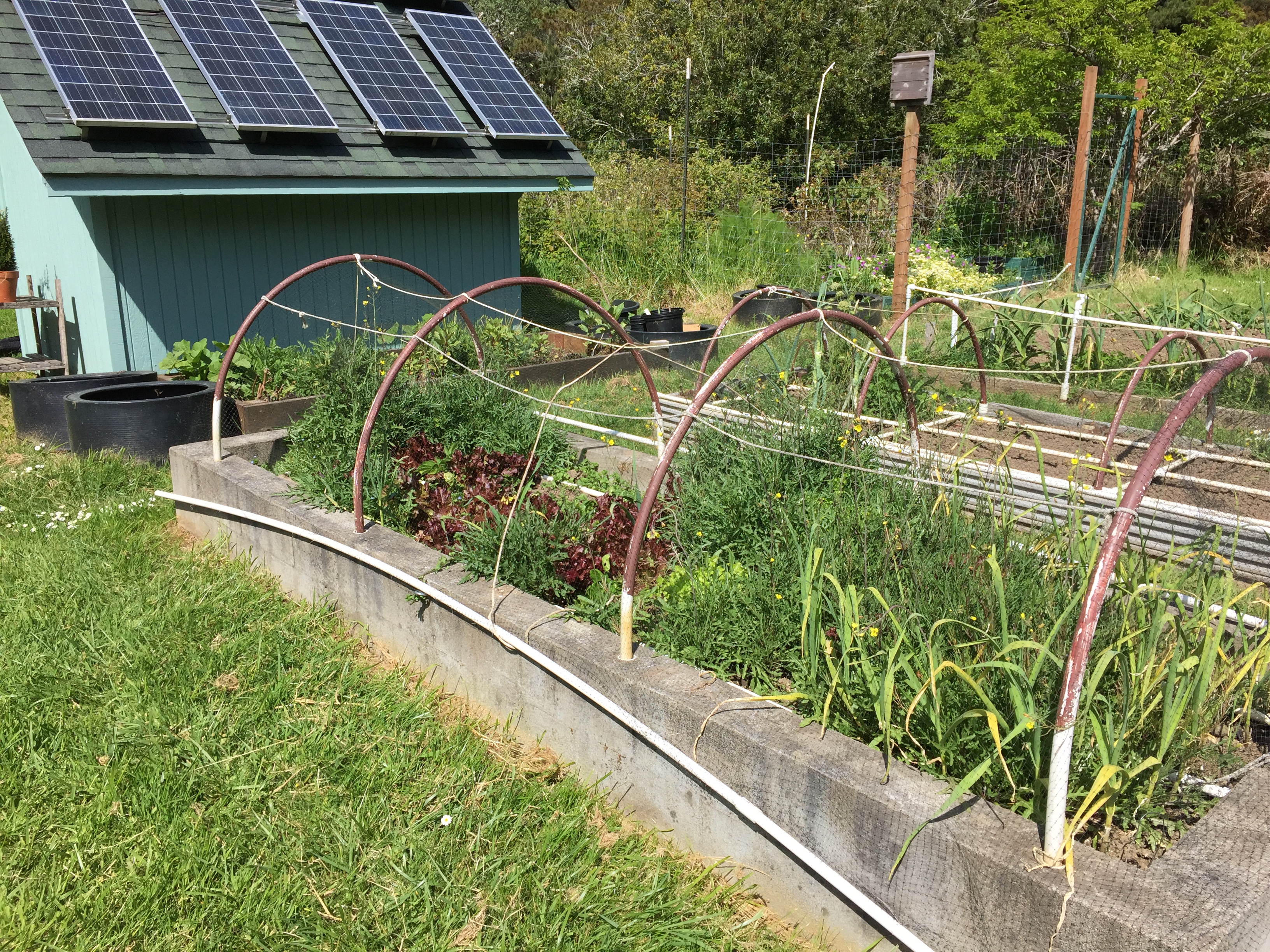
The potatoes have been weeded and hilled up. ‘Survivor*’ garlic is on the left and Meadowfoam is in the background, fenced away from deer, but still accessible to the bees. I’ll be using 12 foot lengths of 1/2″ PVC to drip water the potato rows. The seed potatoes were planted at about 9″ distances which match up to the holes drilled into the PVC drip watering system. *Survivor garlic is garlic that made good sized bulbs even though it got the rust virus.
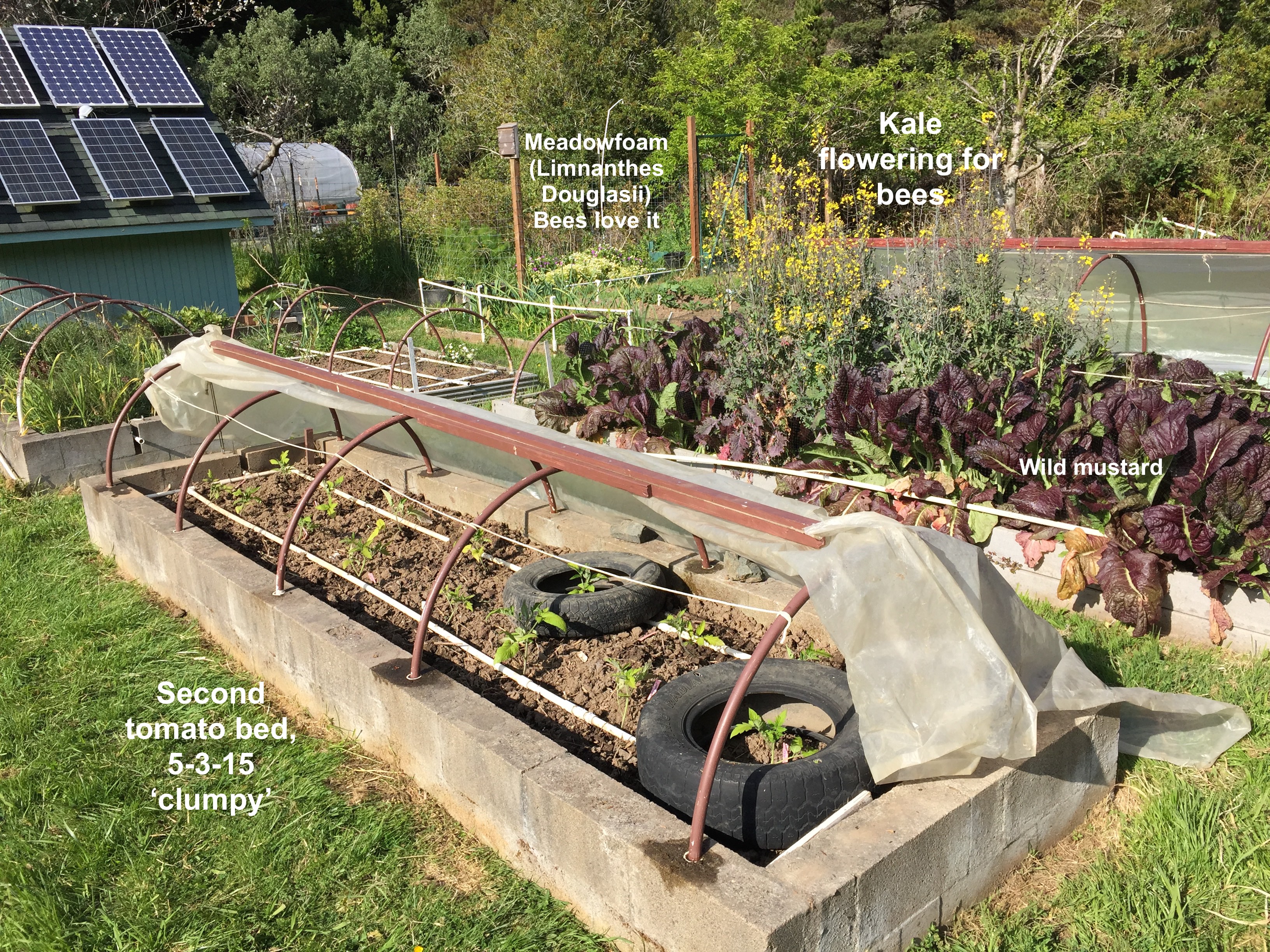
The first bed of tomatoes has been transplanted from the light stand in the house. We’ve used the tire method for 30+ years. They will dissipate heat into the evening. The night temps will get down into the mid 40’s (7C) even sometimes in the summer, so we’ve got to tent them. You might have noticed the wild mustard patch in the background…that started out as a clover patch. I wanted to grow clover to enhance the soil. I rigged up this PVC arrangement to hold the deer netting off the expected plants. I wanted to see the bees visit the clover blossoms in the spring. Then we experienced a cold snap. The clover died and the mustard plants germinated from the compost we spread out. It grows well, too well. I’ll probably have to spade it into the soil before it goes to seed.
A closer look at the tomatoes and drip watering grid. The 1/2″ PVC has been drilled so the water drips out near the plant. I’ve been using these for over ten years and it works well.
May 4th…The second tomato bed goes in. You might notice the ‘clumpy’ soil. I was soooo tempted to pull out my rototiller to break up the soil, but I resisted. We’ve been trying to prove that we can garden without the use of fossil-fuel. So the soil is a bit lumpy and we’re hoping the tomato plants don’t mind too much.
We’ve been eating lettuce and spinach from this first bed of salad greens for about three weeks. My wife likes the wild arugula, but it’s a bit hot for me.
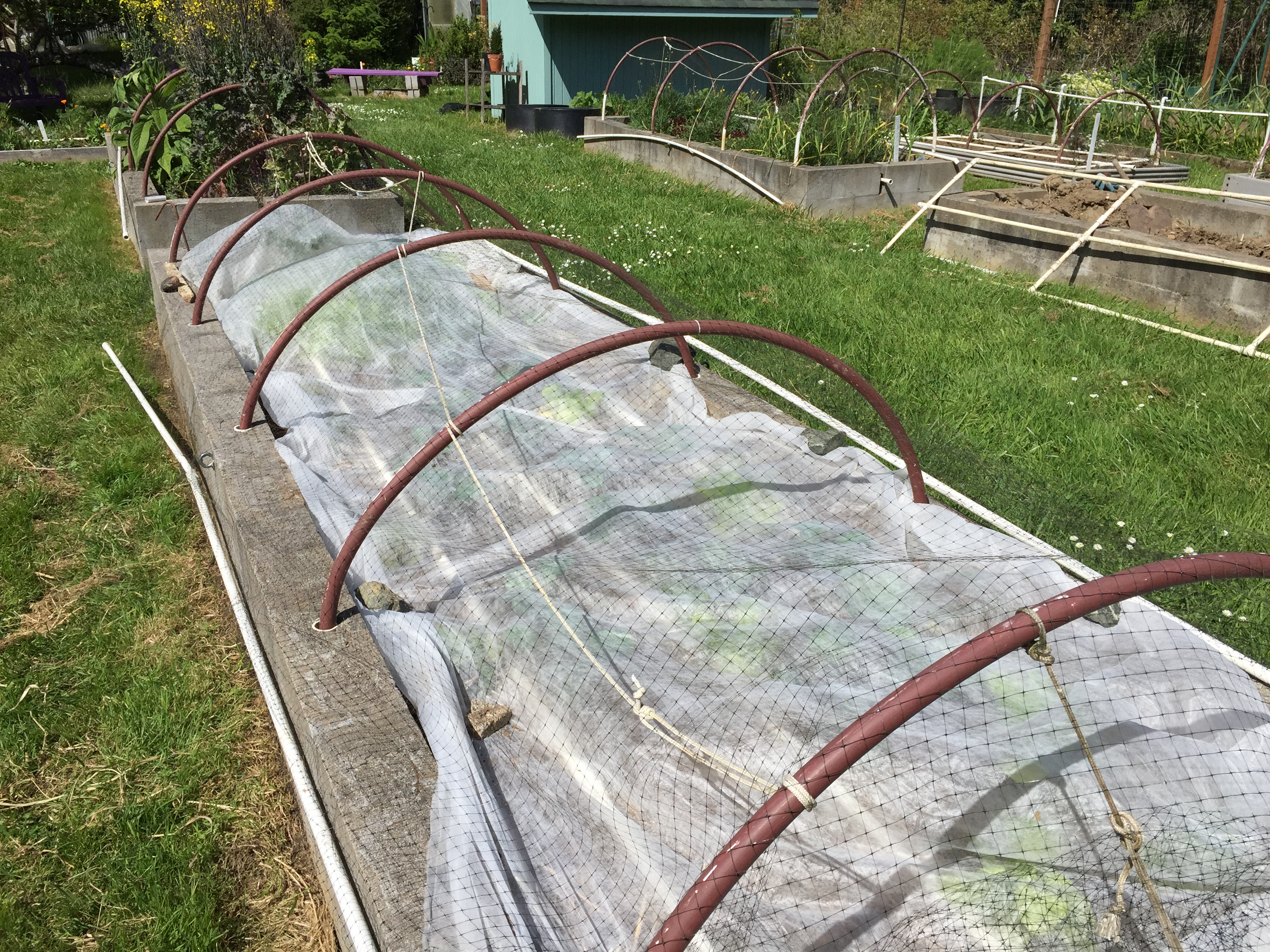
March 28…Planting the second bed of lettuce, Parel cabbages which were started in the house, purchased broccoli plants and maybe some collard greens.
We’ve got to protect them from the cabbage moth.
May 3…Peeking under the cloth to see how the lettuce is doing.
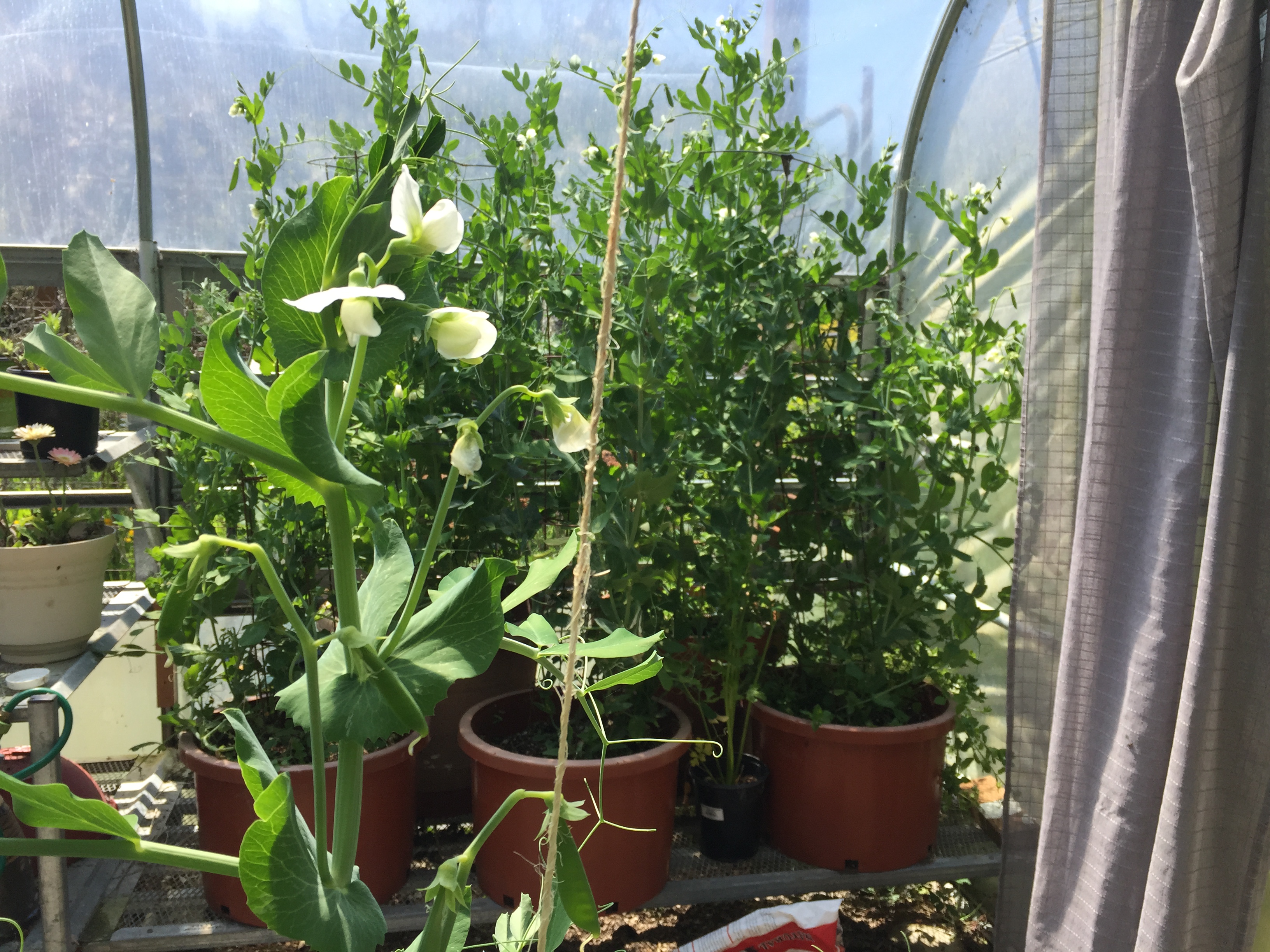
We planted the edible pod peas in the greenhouse in February.
…and have been using the pea pods in salads and soups for a good month.
April 25…Since the deer like to munch on nasturtiums, we’ve got to protect them. What better way than to clean out the weeds around an apple tree and plant them there. These are a new kind that will sport red blossoms. I hope the bees like them.
May I say something else about Limnanthes Douglasii Poached Egg Plant (Meadowfoam)? It wintered over without any kind of frost protection like a tarp or a pile of leaves. It was tough love for sure because it’s in a section of the garden that’s in the shade until noon. This was self seeded from last year’s crop which was about 1/4 the size. (What have I started?) The Vision Violet Geraniums also wintered over well. Together they have been attracting the bees in the afternoon hours.
May 3…I know, I know, I shouldn’t have to transplant borage because it grows ‘like a bad weed’ around here, but there was an empty spot in the hugelkulture bed after I weeded it and the bees love it so much. Three spade-fulls and I’ve got a three more spots to video the bees. 🙂
This Cardinal Climber is supposed to attract hummingbirds. We’ve started it under lights in the house. My wife is going to donate a couple of plants to try to get it to climb up the echium ‘tree.’ I think it’ll be fun to see if we can get some birds and bees.
May 3…”Reach for the sky,” little Cardinal Climber…
…You will have to if you want to climb this “Tower of Jewel” echium tree. It’s 12 ft tall and growing.
I just bought this African Blue Basil. Jeff, at my favorite nursery, tells me it’s a super bee magnet which will blossom all summer. He knows how to tempt me.
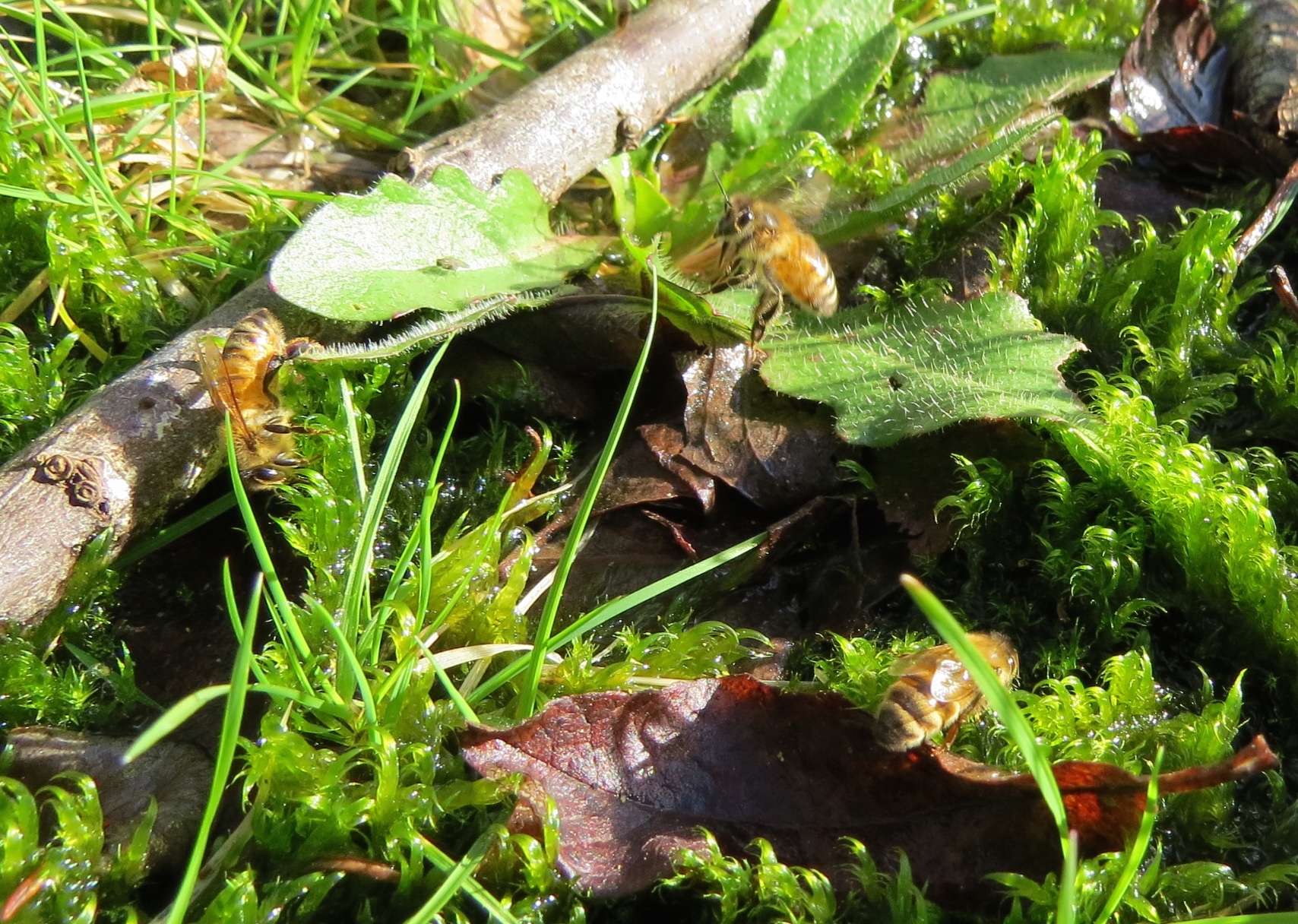
May 5…Because the bees were visiting the moss in the pond so much and because someone on the biobees.com forum mentioned that his grandfather used moss for a watering station, I thought I’d try it out. Who knows, the bees might be getting some kind of essential minerals or properties from it. I just dug some up, found a plastic container and try to keep it hydrated. It’s the only waterer I’ve had any success with.
Time to roll out the “Solar Roller.” Things are drying out. This ‘solar panel roller’ can be positioned to catch the early rays of the sun as well as the sunset. I can get about 10-12 hours of sunshine if I’m conscientious about moving it twice a day.
Forgive me if I’m talking about this new bee bed too often. It’s just that we wanted to add more flowers for the bees without taking away space from the veggie garden. This was the perfect solution…but after adding Walker’s Low Nepeta, artichokes, Scabiosa, and red echium, we’re already running out of space.
This started out as a garden video, but there was so much excitement today with two swarms happening and bees (from where?) checking out my new log hive. I had to include some video below.
Chuck Barrett is pictured here with his signature orange cake. Made from scratch, his secret ingredient is Triple sec. Whenever he is invited to a gathering, he brings his cake and garners rave reviews. The ladies in the group are are always impressed with his baking skills.
Inspired by my bee stories, my ninety-one year old father-in-law took pen in hand and wrote “A Busy Bee Song.” Setting the words to a simple tune he composed, he hoped to inspire children to learn about and respect the honeybees.
Judy Rhodes
He asked Judy Rhodes, a local singer in his home town of Phoenix, Arizona, to sing his song. Judy performs with a small group, “Up the Road and Around the Bend,” who sing for folks in retirement homes around the Phoenix area. He copyrighted his words and music to make it officially his own.
Chuck Barrett is truly an inspiration. He leads an exercise group three days a week at his local YW. His enthusiasm is contagious and people join in, some in wheelchairs, some with walkers with bingo in the next room as his fierce competition.
I set videos and photos of my bees to Chuck’s song, and we hope you will enjoy our efforts to bring awareness to the honeybees story.
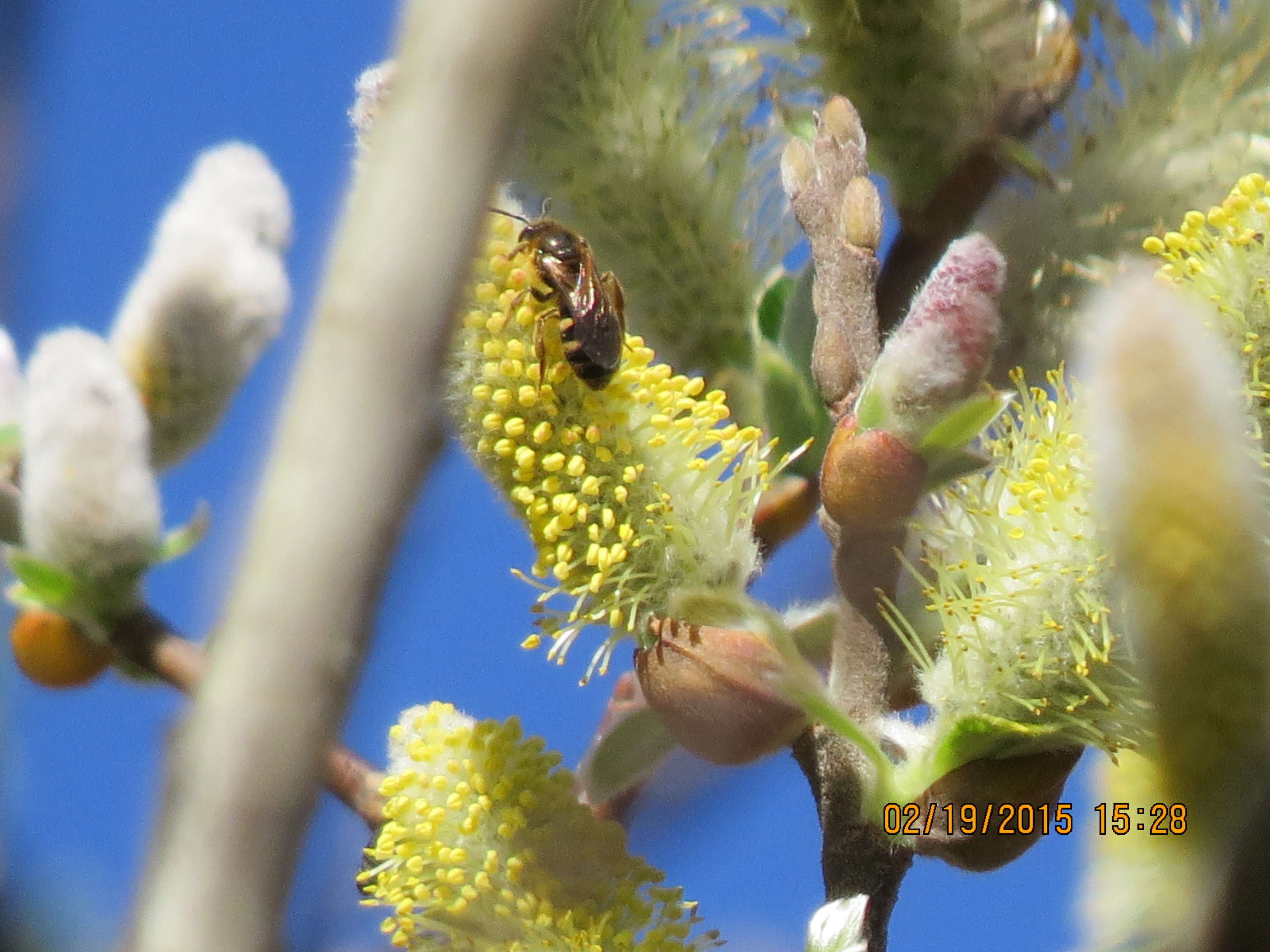
This honeybee has been busy. She’s already got a load of willow pollen.
February 19…bees enjoy the willow blossoms along with robber flies and other pollinators.
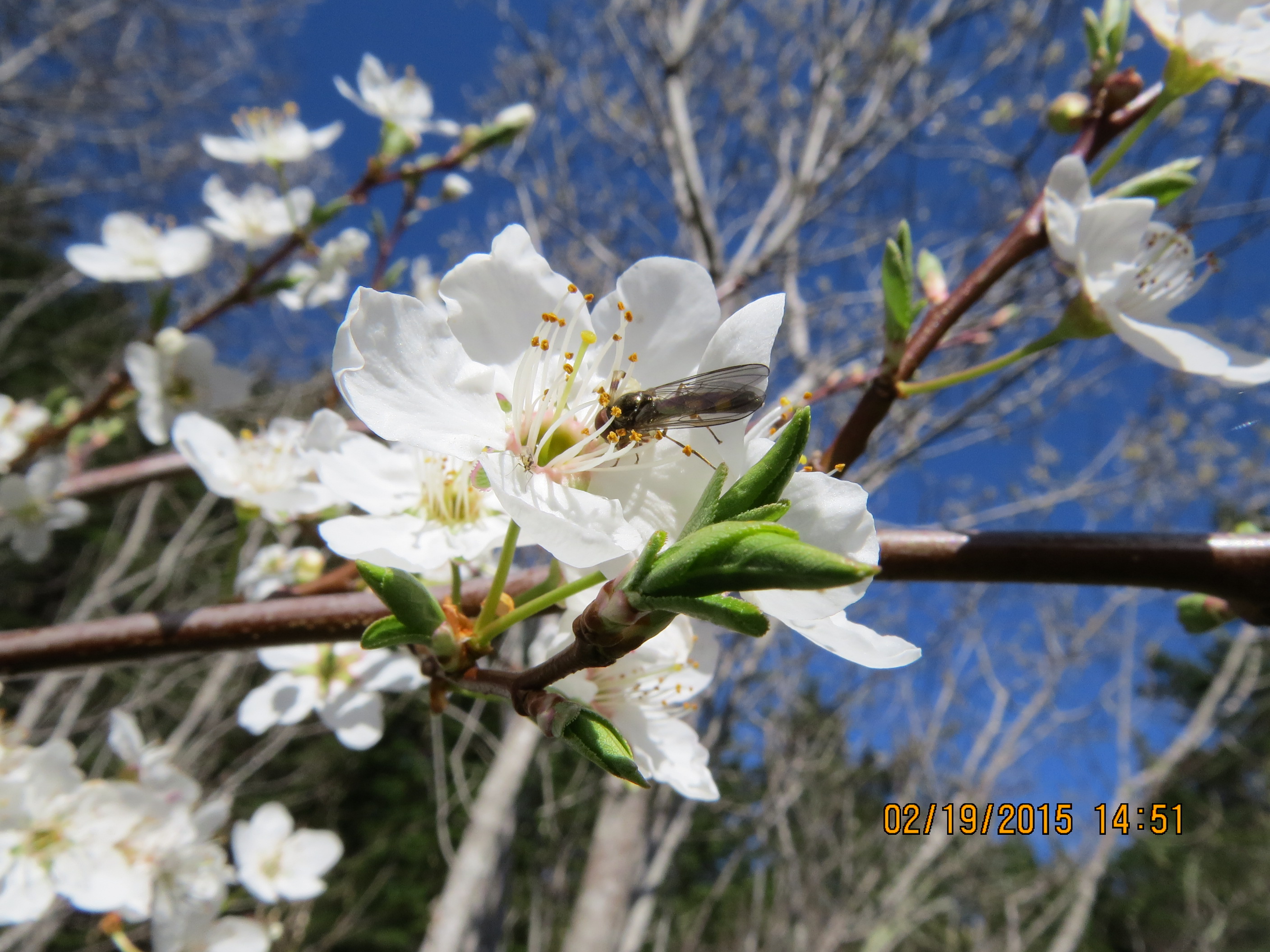
A blurry look at a robber fly high in the Hooker Willow. See Michael Marlow’s comment below. “Hi Pat, just an fyi, those flies in your photos do not look like robber flies, but rather hover flies (family Syrphidae).”
Another robber fly on a plum blossom. See Michael Marlow’s comment below.
I’m not sure what kind of bee this is.
A gorgeous blue sky warm day…while the East Coast is getting battered with snow storms.
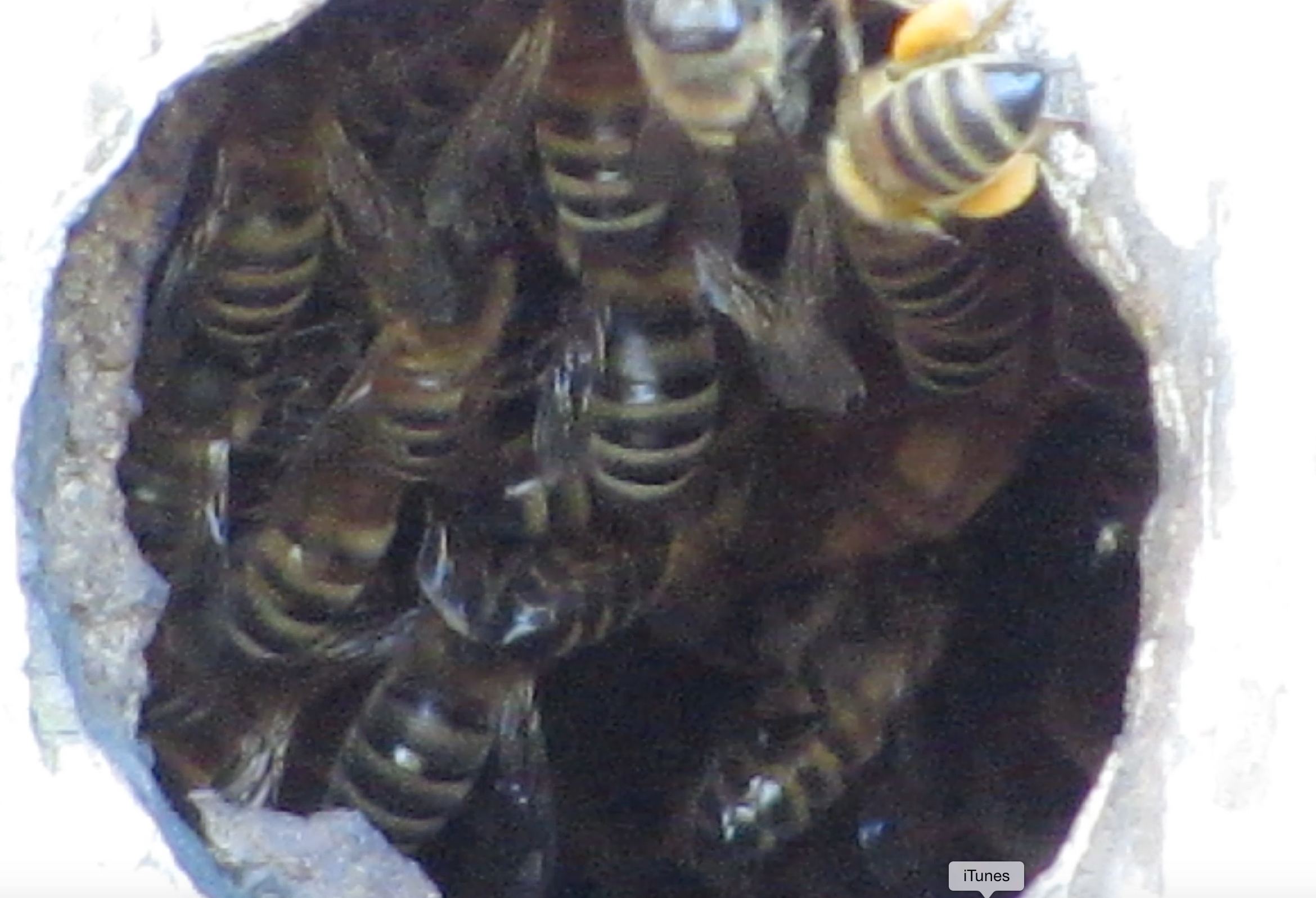
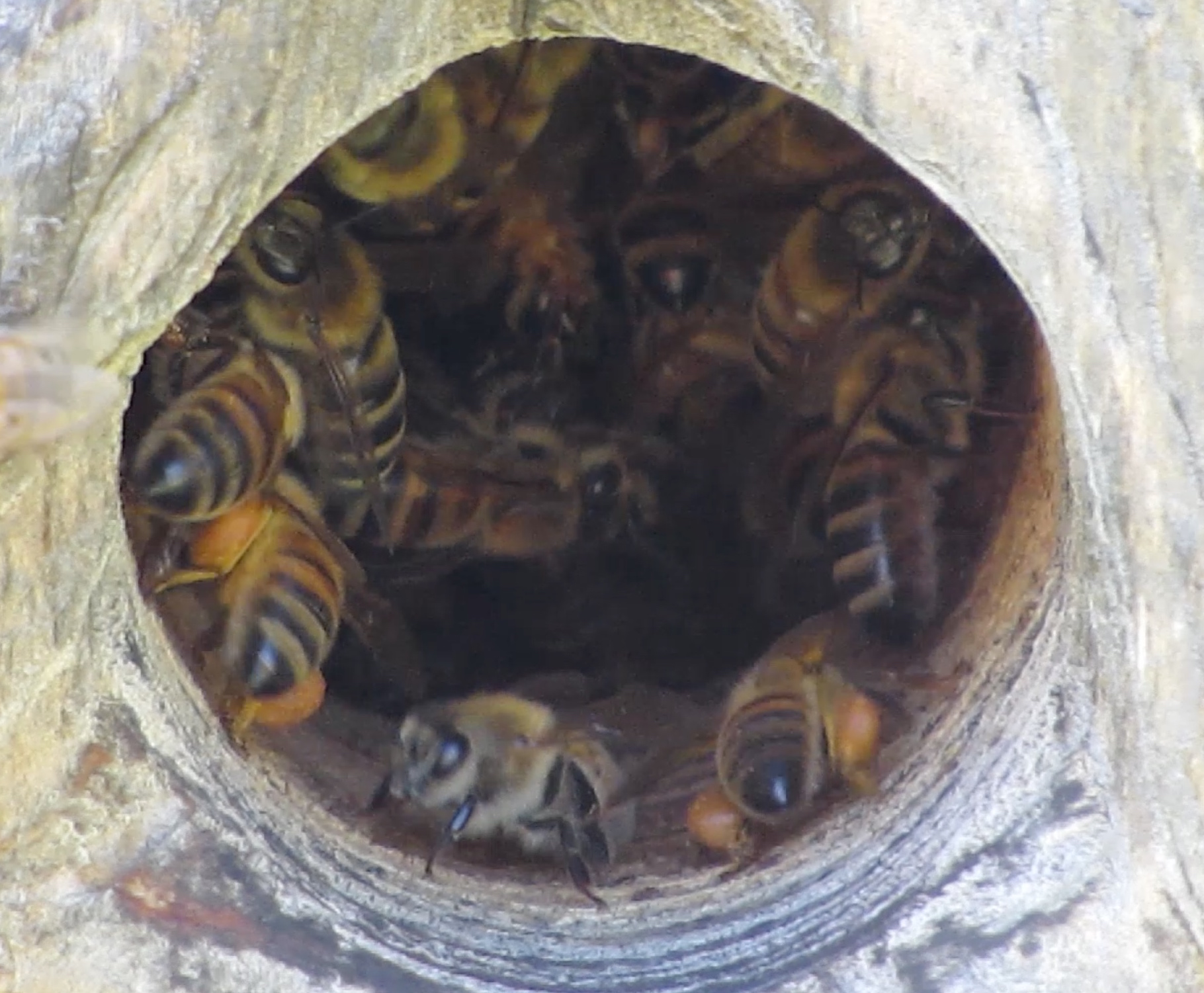
A look inside the little birdhouse bee hive with willow pollen being carried in. This little bee hive is doing well despite being in a small space in the winter shade. I’ve got to keep the swarm if I can…it’s got good genetics.
Of course, the other hives are enjoying the willows too. Here Bee Beard has bees swaggering in with their bags of pollen. There’s something going on in the background. I can’t figure out what the bees are doing, but if you look at the video, see if you can tell what they’re doing.
Not to be outdone, Bee-atrice’s bees have been busy too, with a bee fanning at the entrance.
February 24…I visited Brian Vorwaller today. I just wanted to see the log standing upright. He thinks he can start on it next week.
A couple of weeks ago we started seeing bees gather in a little pond beneath the willow tree. It looked like they were sipping the water where moss was growing.
January 22…Three bees spotted on this patch of moss.
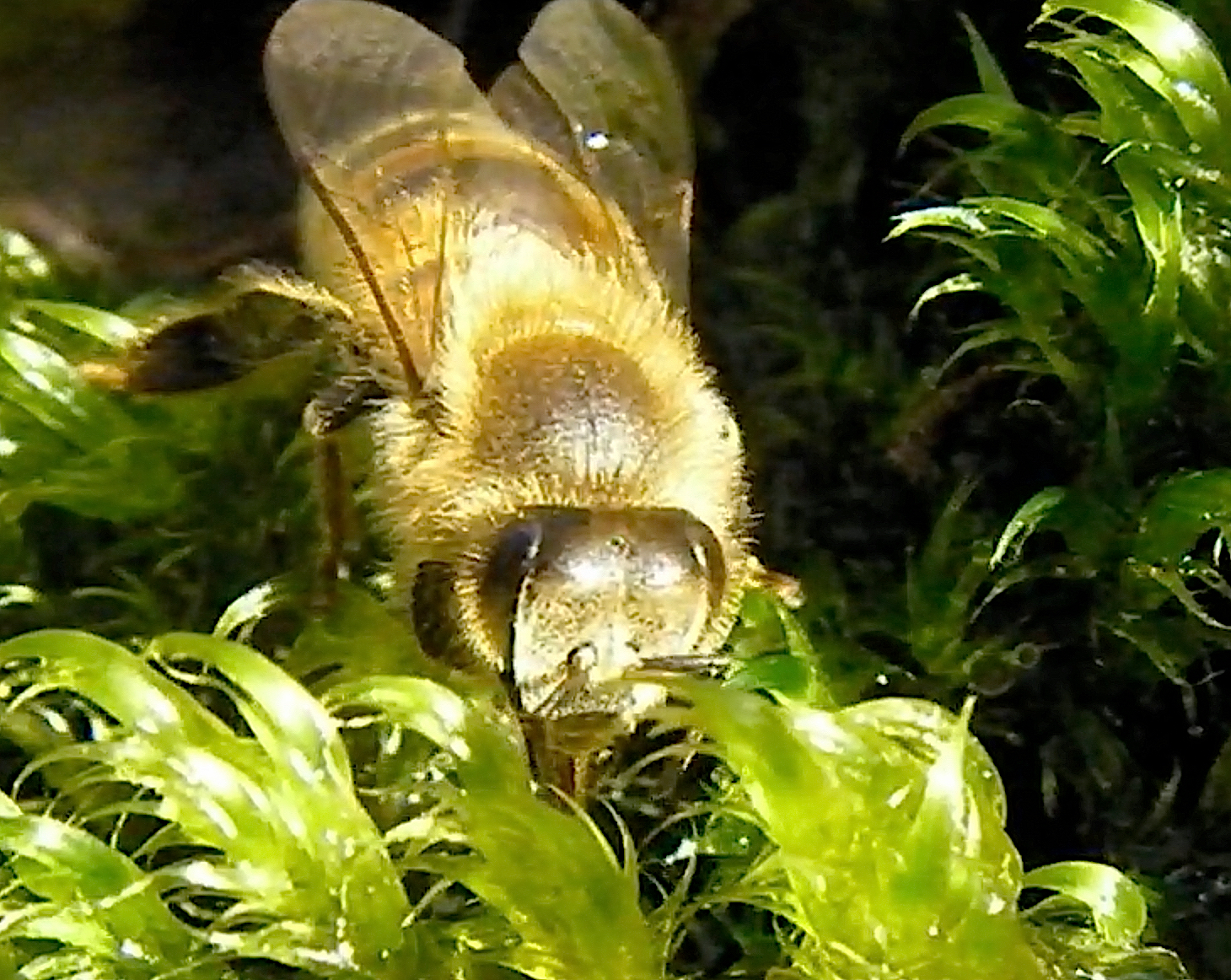
Into the moss…
January 22…I’ve heard bees like “dirty” water, so I guess this mossy water is no surprise, but I wonder what they’re getting out of it.
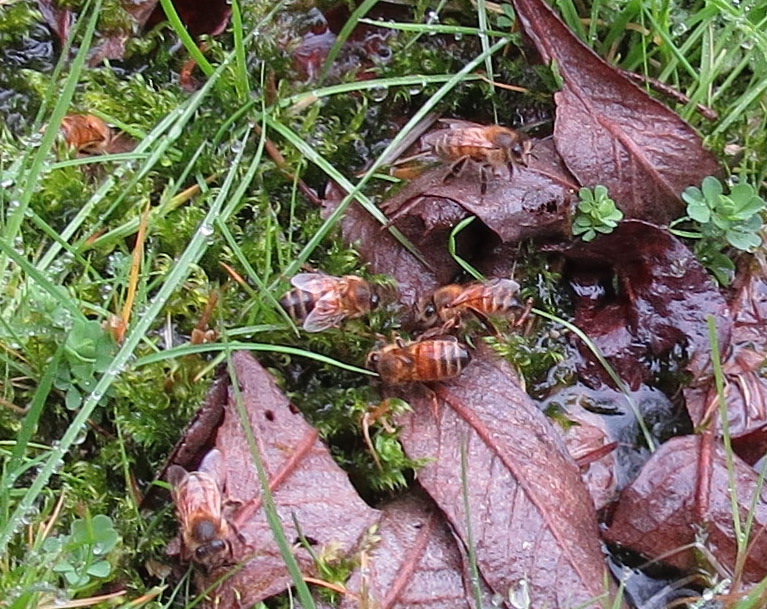
Feb. 2…Being a day of steady drizzle, I checked again to see if the bees were here. Yes, this time I saw more bees. They are truly dedicated bees.
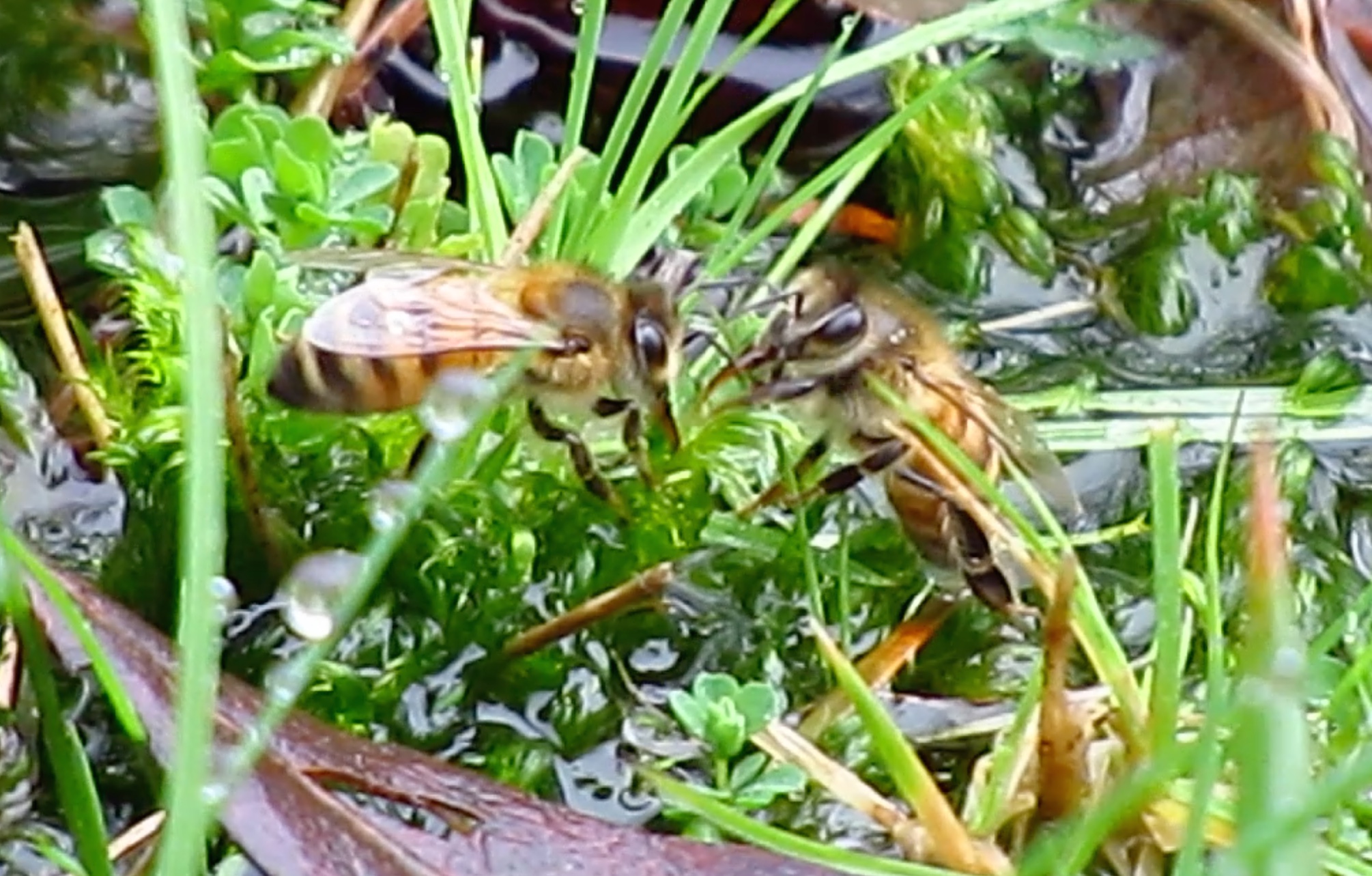
February 3…this photo is taken from a video when it was raining, but it still shows bees that are visiting the moss even though the water is covering most of it.
Some more video of honeybees active in the moss while it’s raining…
Or maybe it’s MY math that’s wrong. Back in September I was worried about Bee-atrice Log hive.
She had swarmed the month before and then the bee numbers were down and more importantly,
the temperature had dropped to 62F (16C). It’s January now and there are loads of bees, so we might be out of the woods.
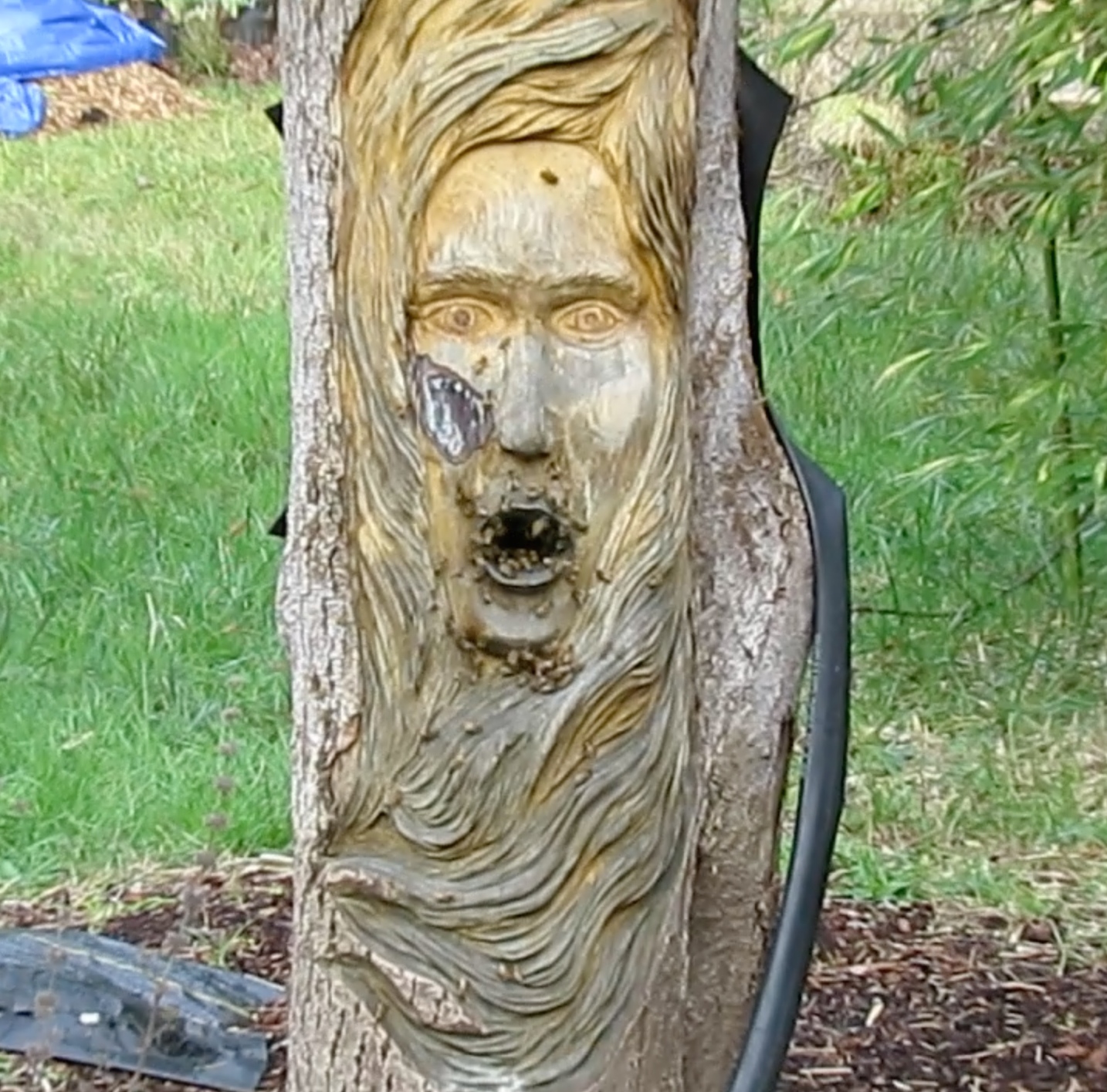
January 5…Bee-atrice has bees on her face. Lots of bees!
The temperature is fluctuating a lot though.
January 10…temp at 88˙F
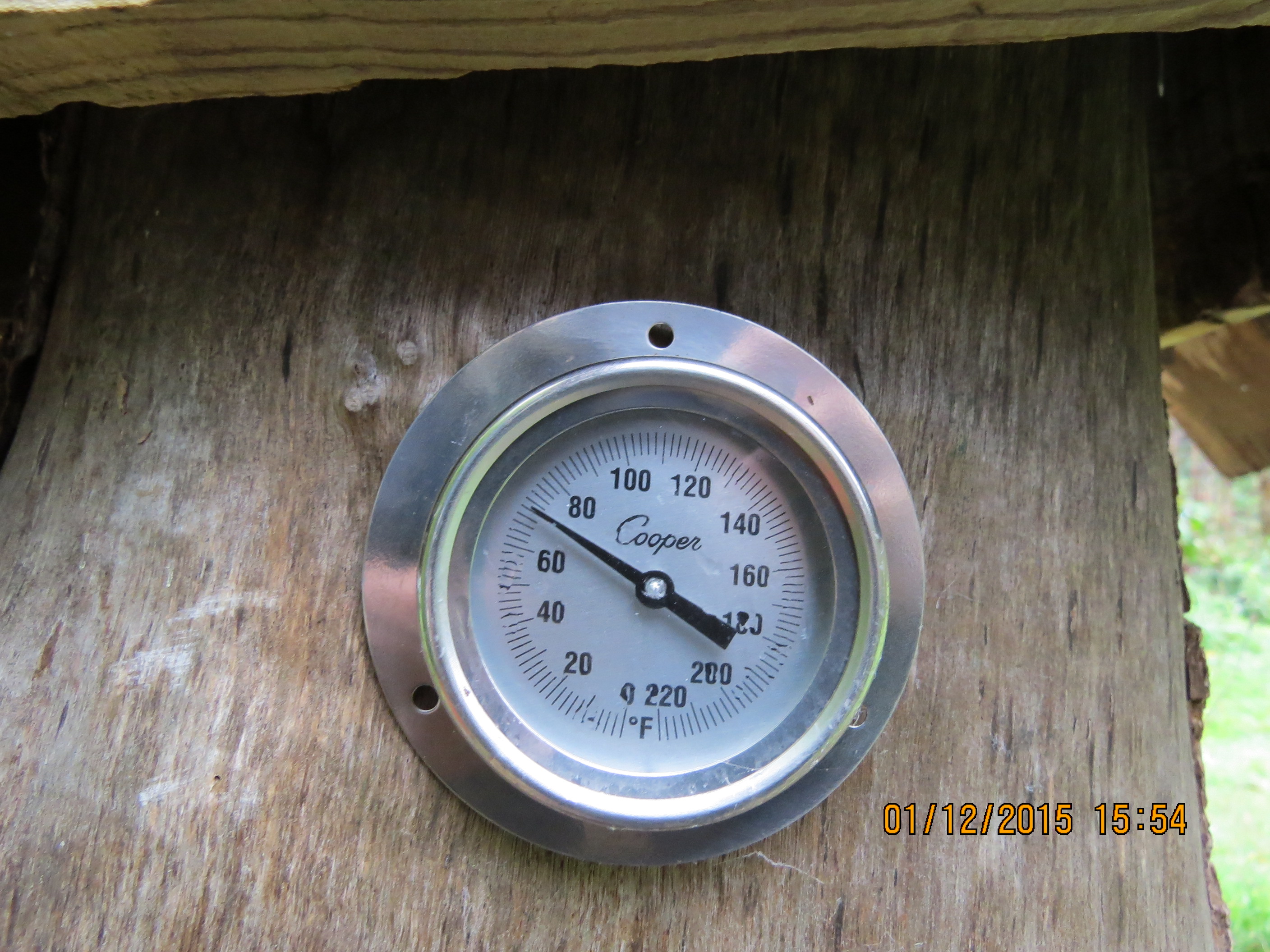
January 12…..Temp drops to 70F (21C) 18 degrees in two days? What’s going on?
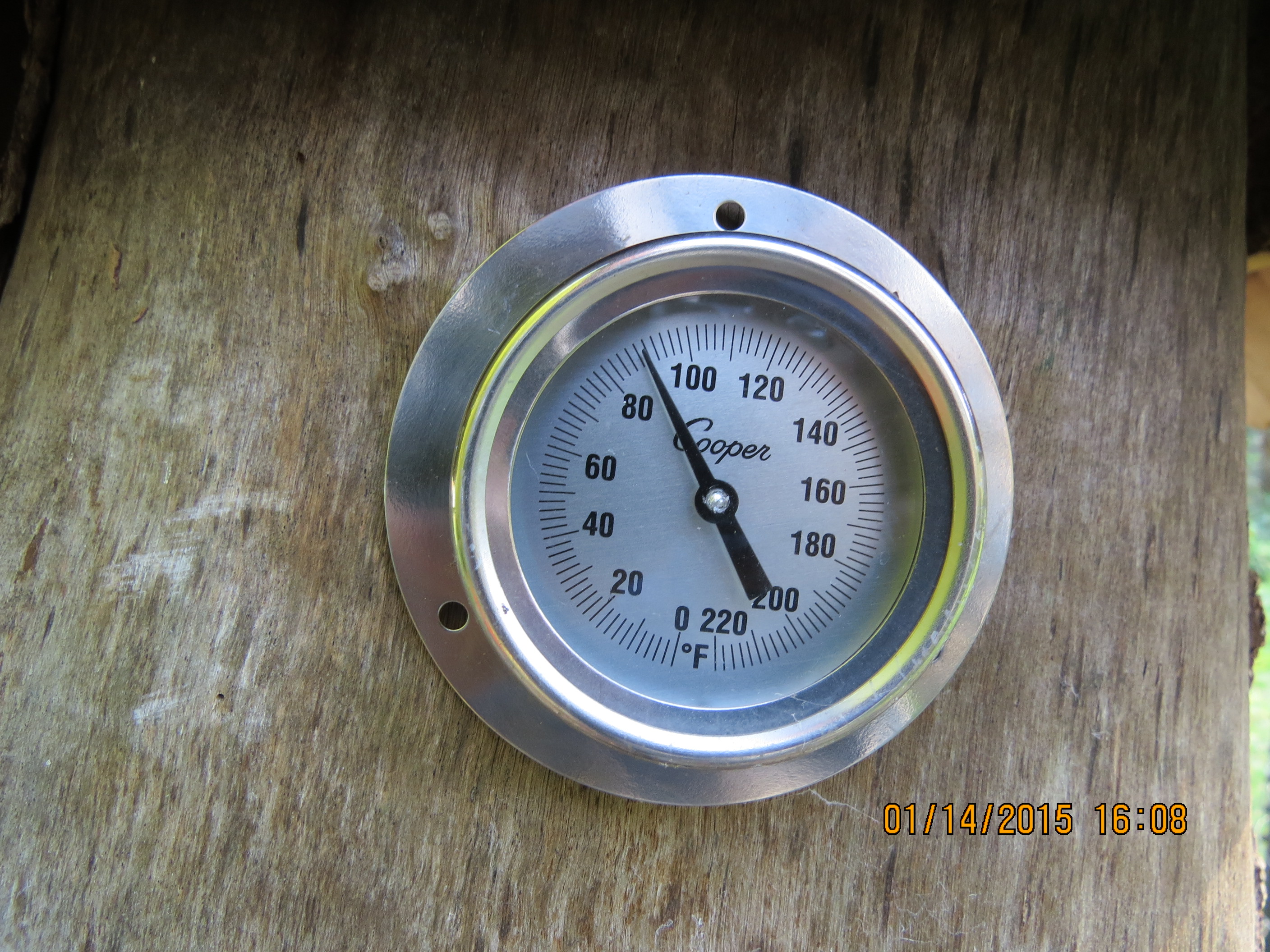
January 14….Temp is back up to 90F
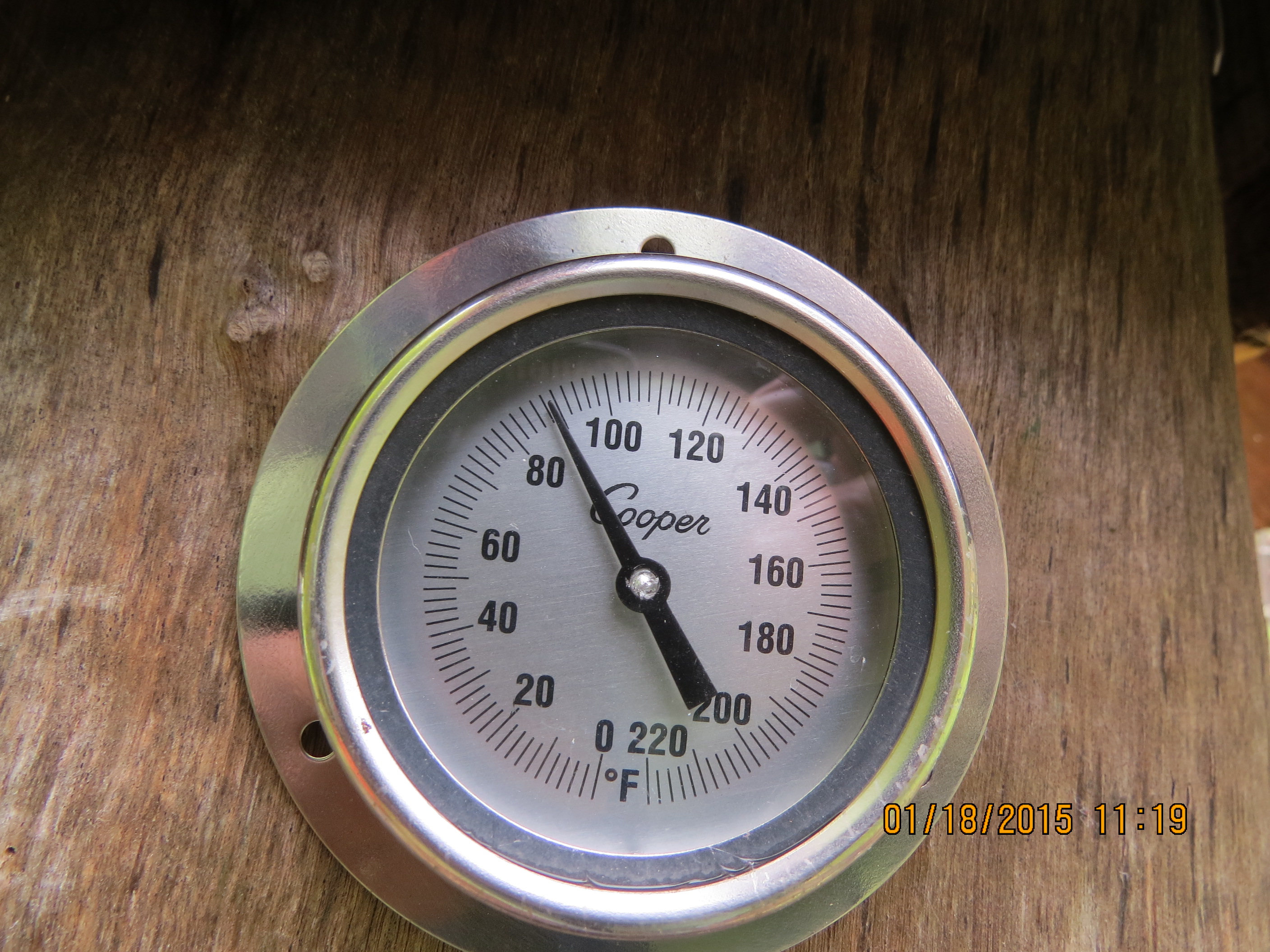
January 18 (today)…Temperature is holding at about 90F.
I shot some video just because I was happy to see numbers of bees. About a week later they were bringing some pollen. Just to finish off the song by Steve Montana, I added some video of the birdhouse bees. Despite being a small hive in the shade of pine trees for a good three months, they are still holding on, treatment-free. Hold on bees, the pussy willows will be flowering in February.
Back in May 2013, I had an extra swarm to give away and Vernon was in need of a swarm for his self-built Perone hive. We gave him our Mother’s Day Swarm which went into his Perone hive #1. Through Vernon’s updates we’ve learned that the Perone hive that our swarm inhabited, made it through the 2013-2014 winter treatment-free. Vernon built a second Perone hive which he populated with some packaged bees. The following is the story of the second Perone hive…
In Vernon’s words from January 5, 2015…For almost a month the activity at the entry of my newer hive has been near zero. At first I thought the colony was settled in for the Winter, but the weather has been mild and the older hive was still somewhat active. So today I opened the shutters and found that my colony had failed. Although there were a few dead bees left in the hive, it appears that the majority absconded. It’s a clear case of Colony Collapse Disorder. My heart is broken, but I decided to take some pictures to document the failure, in hopes of helping other beekeepers.
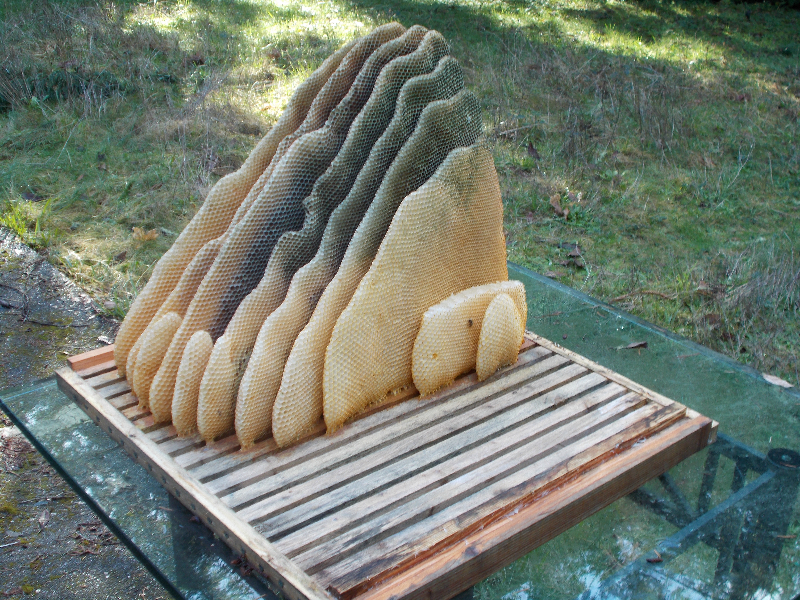
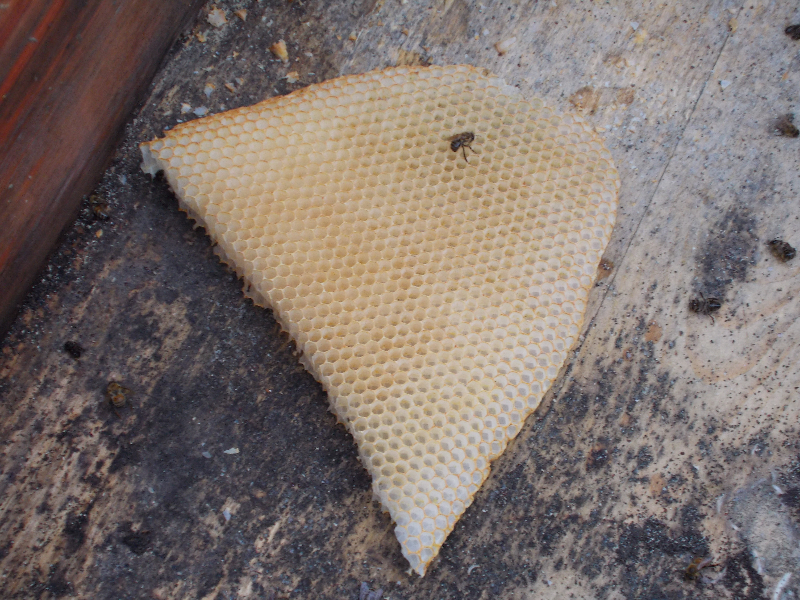
2015-01-05…It’s difficult to remove the comb from a Perone brood box. I broke two combs, which isn’t too bad.
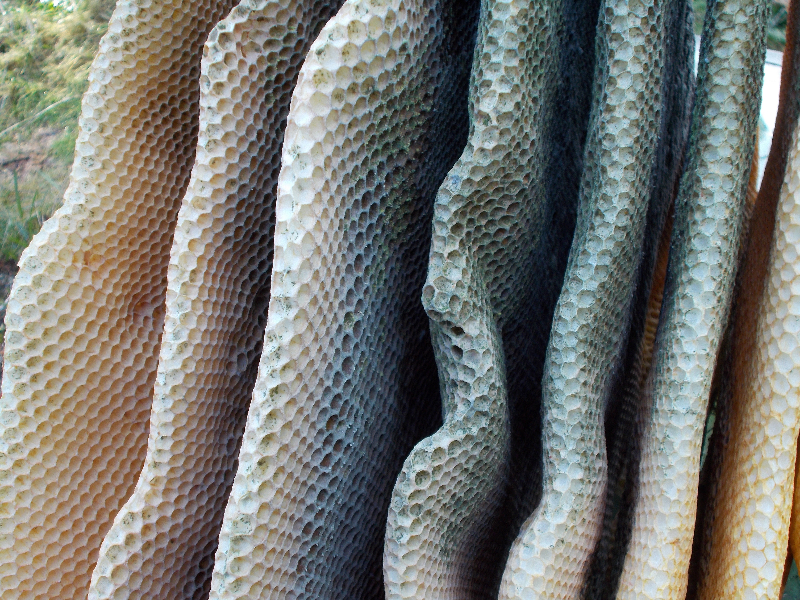
Here’s a view from the other side.
Maybe some of the local beekeepers will be able to help me do a post mortem. Some of the comb is very dark, almost black. Is that mold or mildew I’m seeing?
The spaces between the combs appears generally uniform.
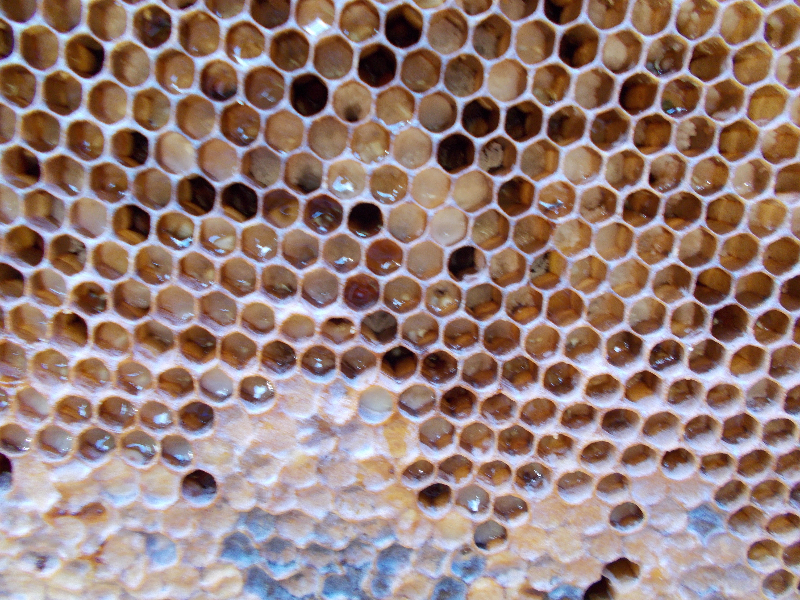
This close-up shows that most of the cells were empty, and the black substance was pervasive.
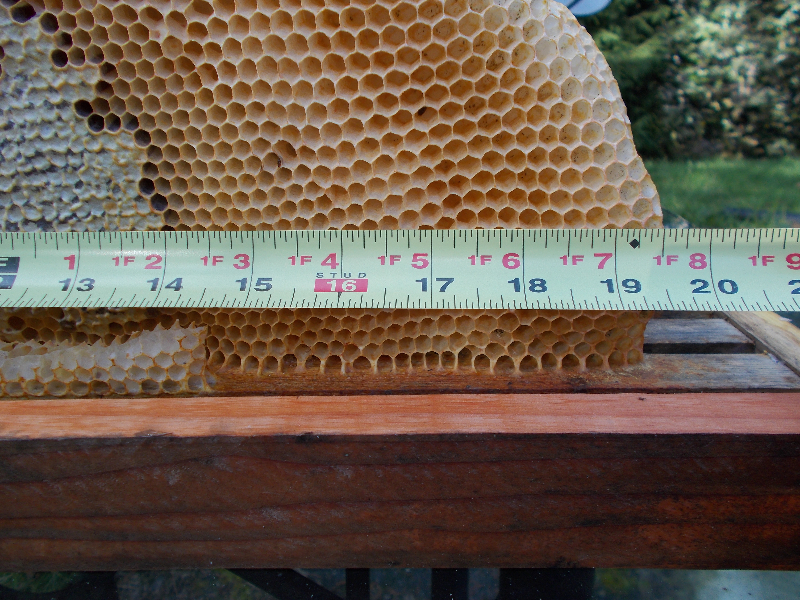
Although this comb measures an impressive 19.5 inches in width, it was, in the end, non-functional. Most of the cells are empty, and those that are capped are covered with that black substance.
It appears that brood was developing when the colony absconded.
A few dead bees remain, but the most concerning thing about the floor is the black mold (or whatever it is).
Close-up of the Black Death and some of its victims. The hive was always very moist inside. Maybe next time I’ll slant the floor, or drill some holes, or make some other provision for drainage.
A solitary worker clings in death to the comb she helped build and fill. You and your mates worked tirelessly, little friend, and I’m sure you’re all in bee heaven now. Hail and farewell!
Vernon wrote yesterday his recent thoughts…”I’ve got a plausible hypothesis for the cause of this hive failure. Some beekeepers equalize the populations of adjacent hives by trading frames. This is supposed to discourage robbing. Early this Spring my Hive #1 probably had close to 100,000 bees. I located Hive #2 adjacent to it, populated with at most 12,000 bees from a 3 pound package. Not smart. Bees from Hive #1 were probably robbing Hive #2 from the start.
Going back over my old photos it’s clear that the new bees built a lot of comb that never got filled, even though they brought back a lot of food and produced a lot of brood. Wouldn’t that indicate robbery from their stores?
Stocking the hive with package bees may have made robbing more likely. The queen was a Carniolan type and the workers were Italians, derived from a number of hives. The brood was Carniolan, so the Italian workers were nursing juvenile bees with a different pheromone signature. That may have desensitized the colony to the unfamiliar pheromones of bees from outside the colony.
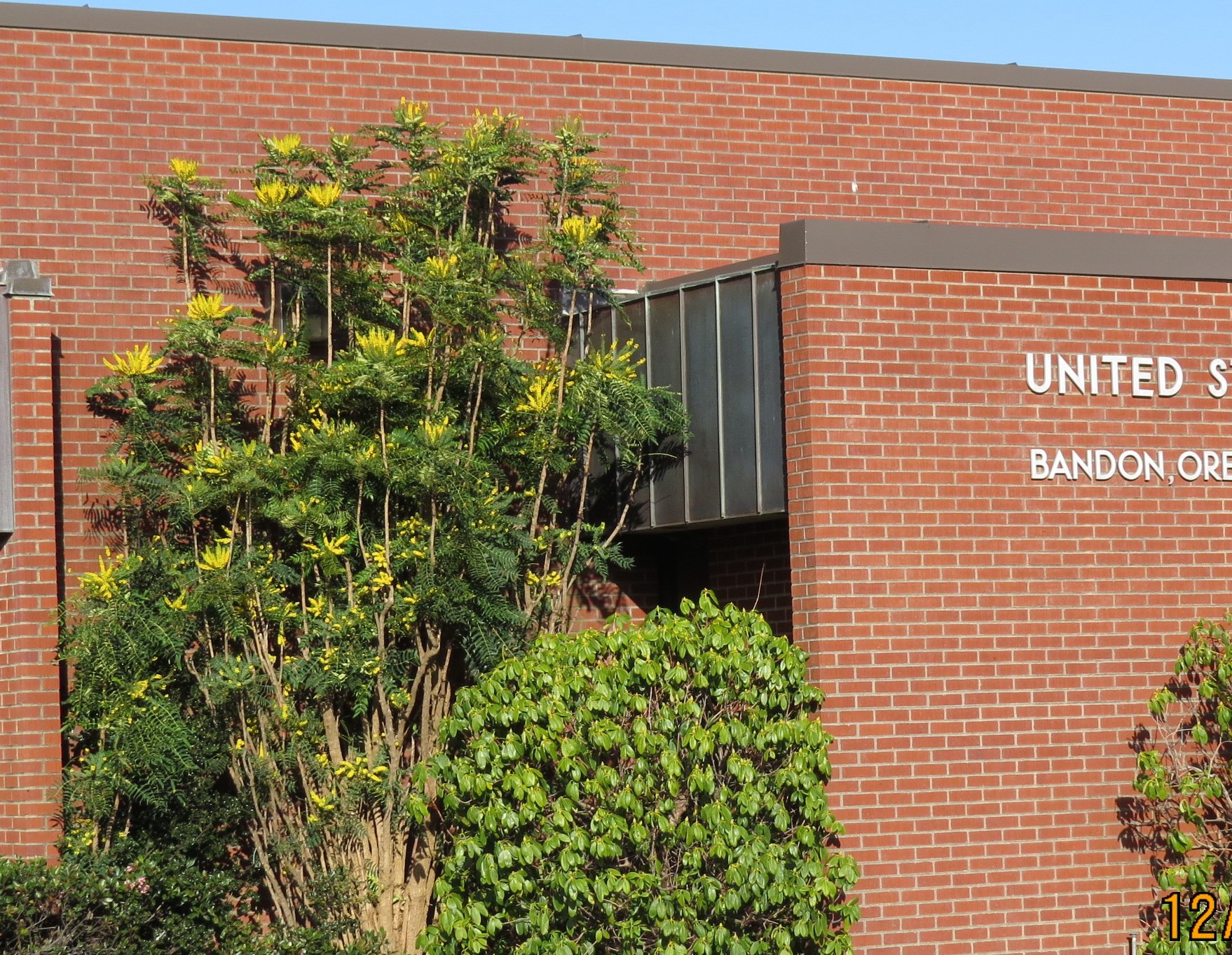
Since mid November this giant Oregon Grape Holly, (mahonia aquifolium) has been blooming and it’s likely to keep blooming into January the way the weather has been. Most people can’t believe it, but I’m happy to see so many of my bees getting nourishment from it. How do I know they’re mine? I’m sure I recognized them. 🙂
November 5, 2014…On an unusually warm November day, I spotted these hebes growing in front of Bill Sweet Insurance Agency. The bees were loving it. Thanks, Bill.
While the east coast is getting hammered by the polar vortex cold weather, the west coast is enjoying warm sunny days into early November. At this time of year there are very few sources of nectar, so it’s good that the honeybees are getting a lot from the hebes. Nectar provides an important energy source (carbohydrate) for the bees.
Many thanks to Steve Montana who has let me use his musical talents as background to the video. “GaelaMae On The Bluffs” was written by Steve and the banjo music was written by Buell Kasey back in the late 1800’s. Watch Steve Montana play banjo at the beginning of Sustainable World. Click on “Soldier’s Joy.”


















 Adventures in Natural Beekeeping