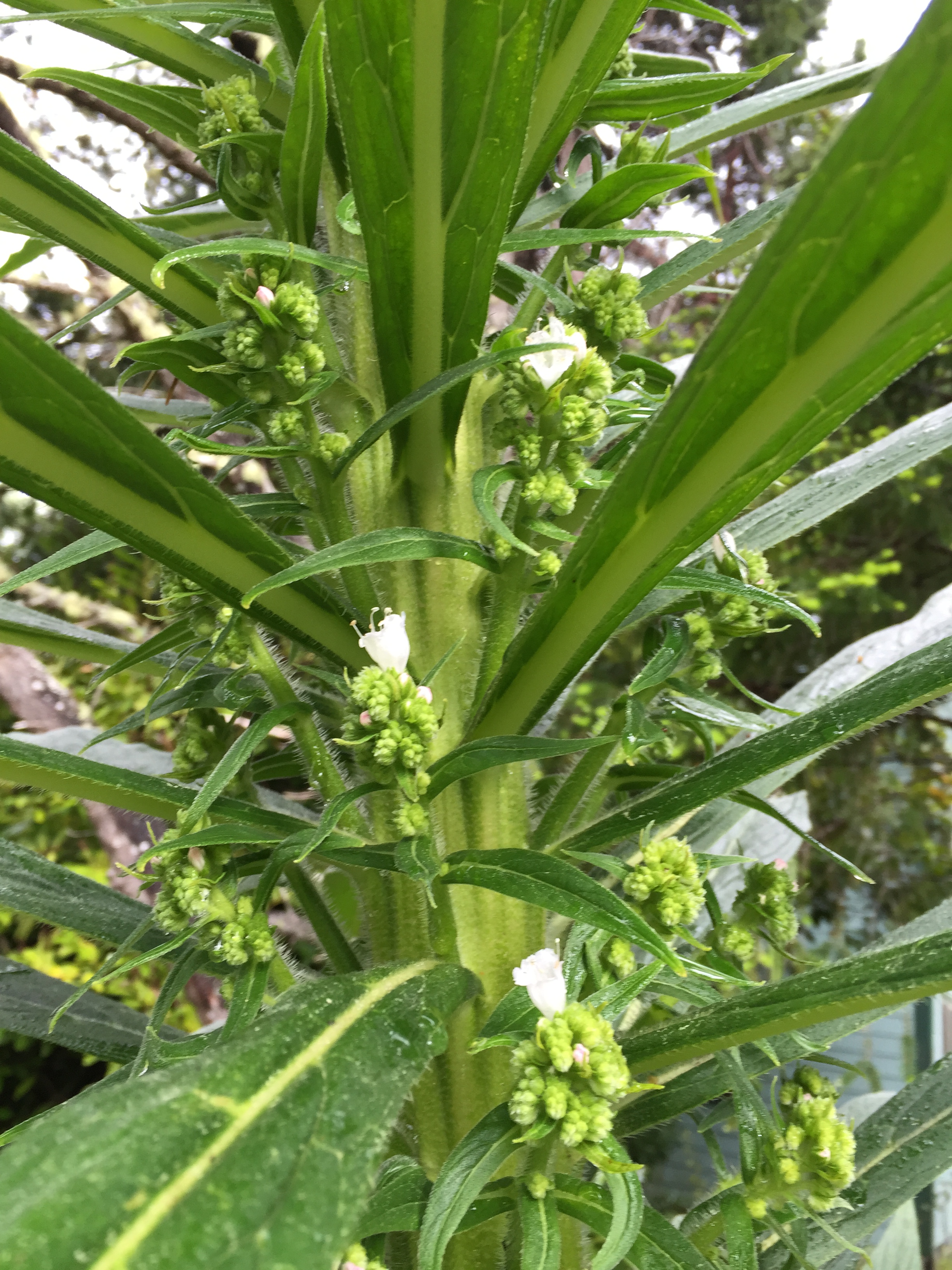
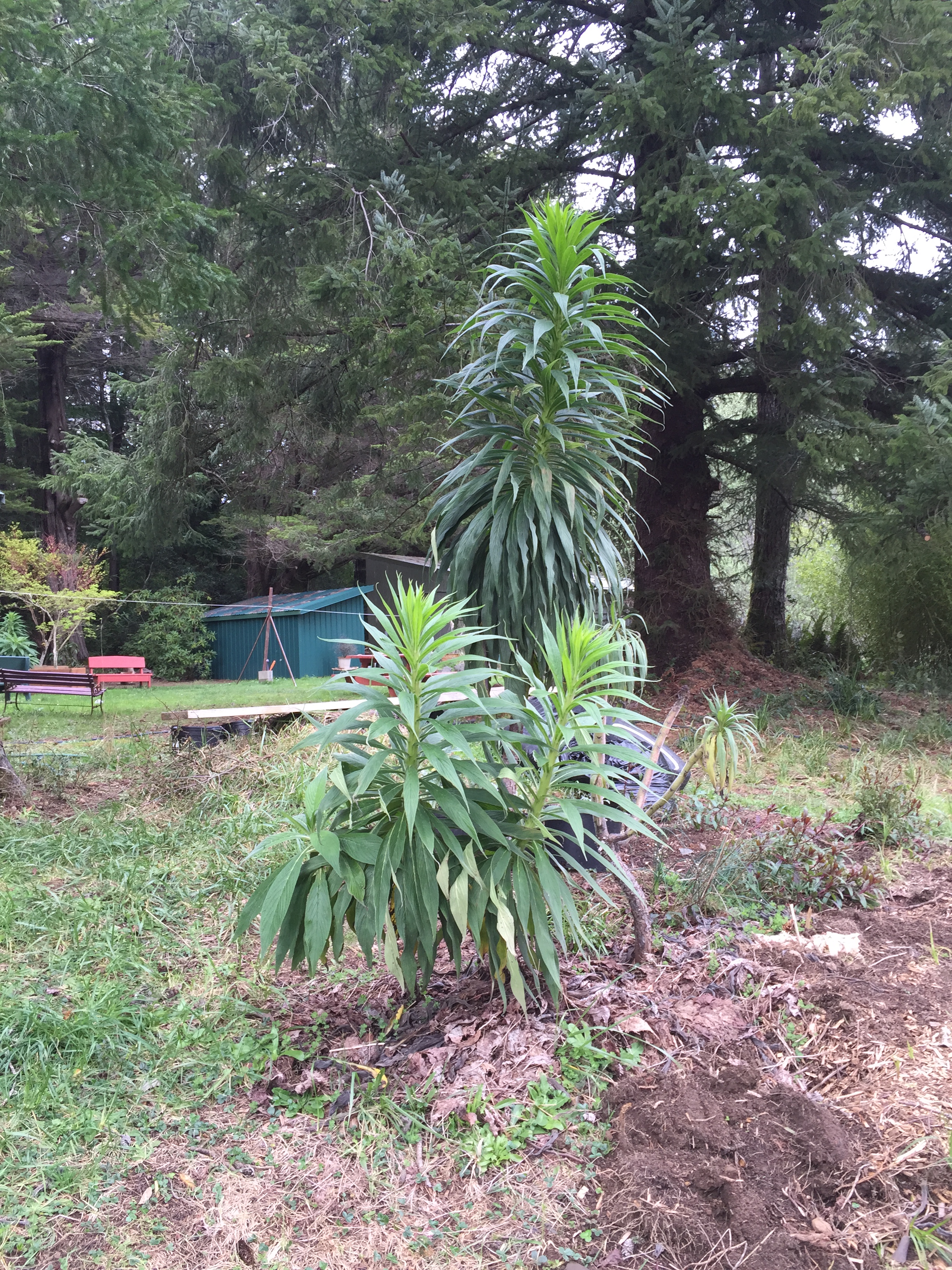
May 3…My wife suggested putting some logs around the new bee-flower echium bed. I declined knowing how much work that would be, finding some dead trees that were long and straight enough, cutting them to size, and hack-sawing rebar to hold them in place. You can see who won out, but I think it looks good. Walker’s Low Nepeta (a real bee lover) will go behind the lobelia, then some thyme, artichokes, and various other bee-loving plants to flesh it out. The Tower of Jewels echium has started blooming already. Three plants (out of 6) made it through two winters.
I started this project about a week ago after we decided to improve the neighborhood around the new Grand Kids Log hive seen in the background.
April 29…They are starting to bloom already. I’m looking forward to watching all kinds of bees partake of the nectar and pollen they will provide. Footnote: I’ve asked my son to practice up his guitar version of “Stairway to Heaven” to accompany my video of it in full bloom.
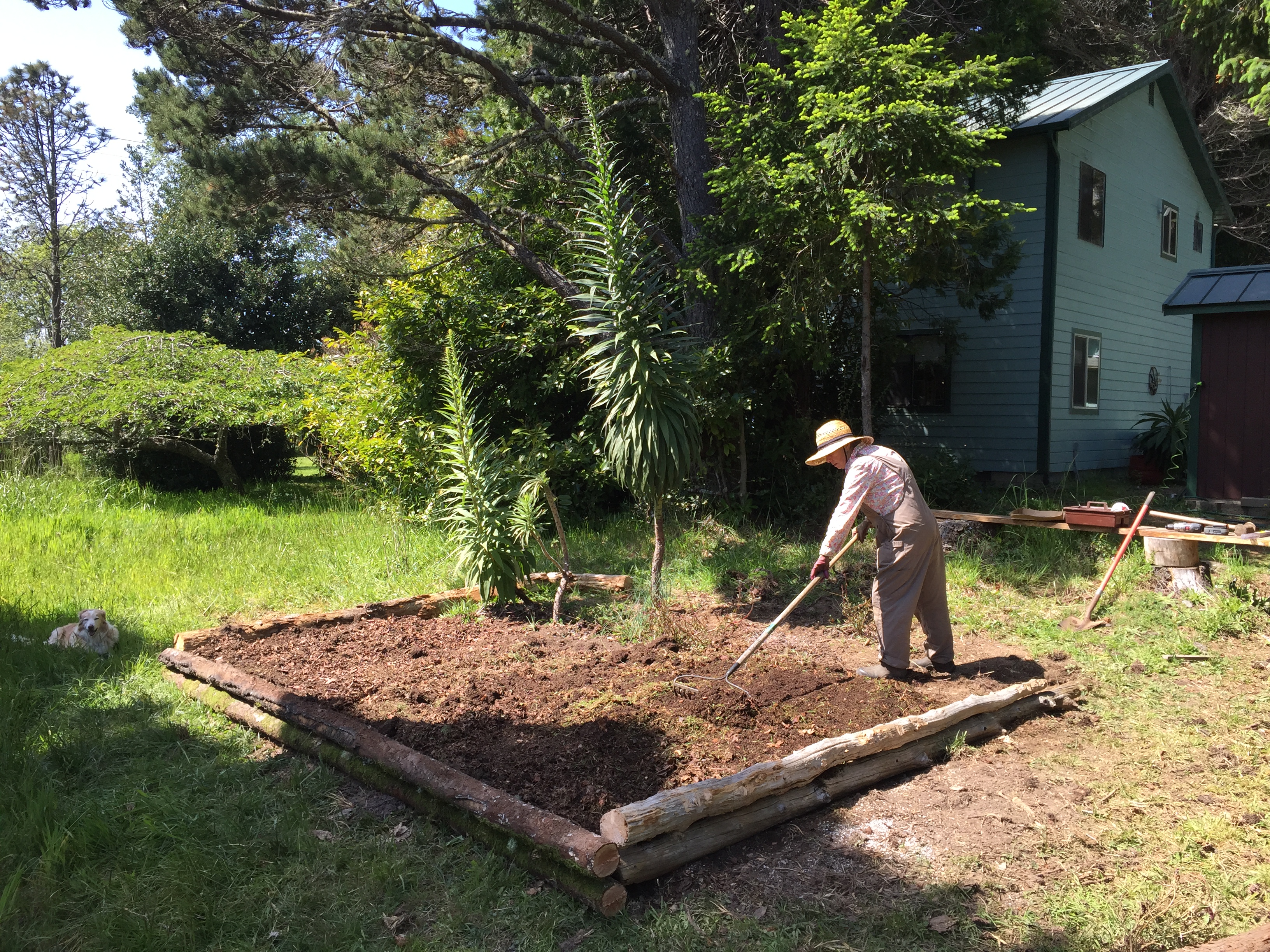
We noticed a pile of top soil on our morning walk. Someone had dumped it up the road from us after they were done rolling out their new turf. My wife spotted it. “Let’s get it.” That we did, the equivalent of four big wheelbarrow loads. Here she is raking out the treasure. Then she put in Phacelia started from seed, lobelia, and mowed around the bed to ‘spiff it up.’
March 9, 2015…you can see how much it has grown in less than two months. This was taken before we trimmed the branches in the background for the new log hive.
I started this post out as a garden update, but we’re so happy about this new spot for bee flowers, I wanted to post it first.
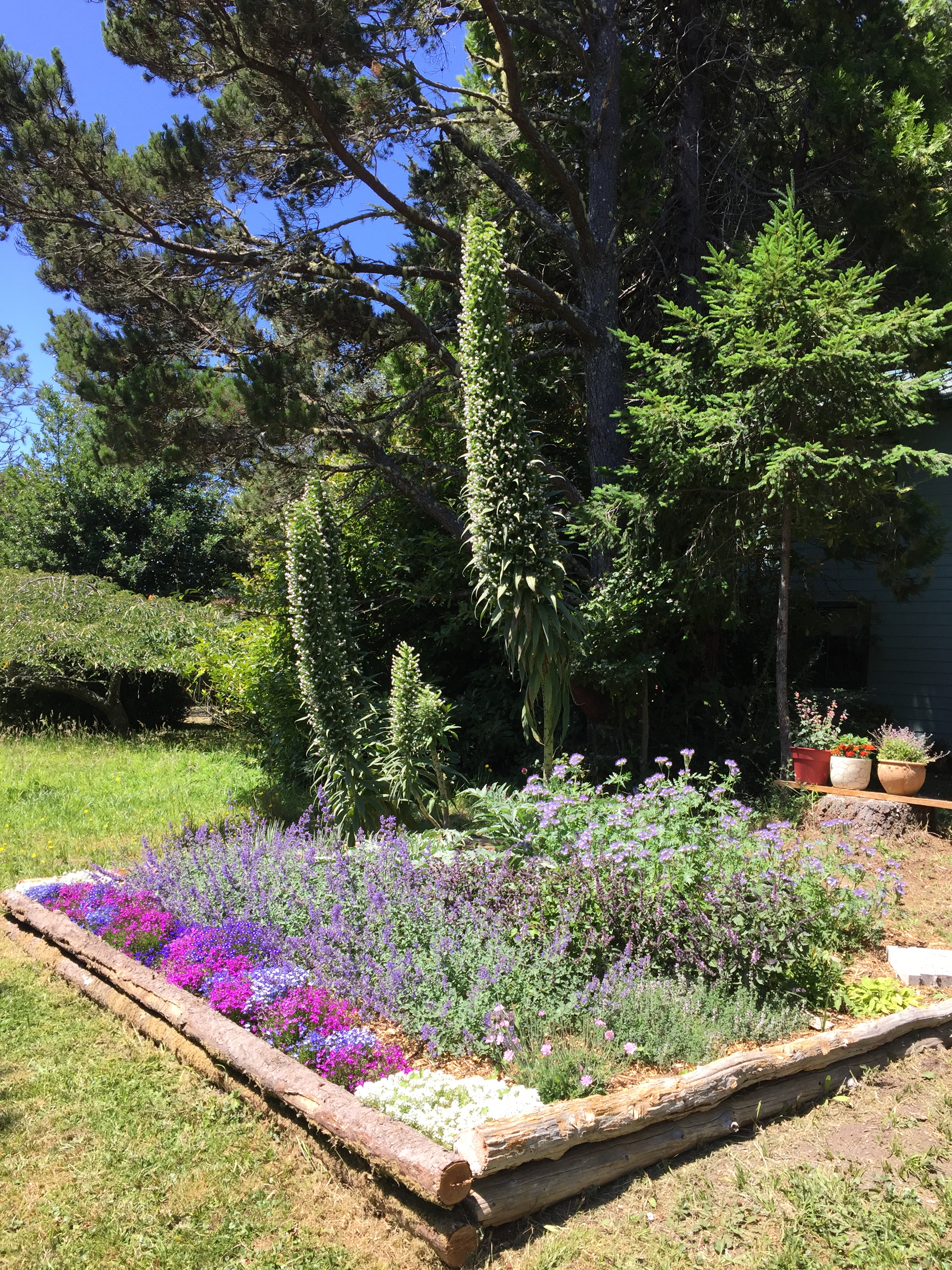
July 14, 2015…The Towers of Jewels echium is standing tall in the background. The other bee plants are filling in nicely.
January Progress Report Not being an expert on the chainsaw, I had been worrying about how I would be able to make the vertical cut. I wanted it to be straight. I didn’t want the cut to widen out in places while being narrow in others. I used the weather for an excuse, but eventually I had to face up to the challenge so I could get the log back by April. It worked out well.
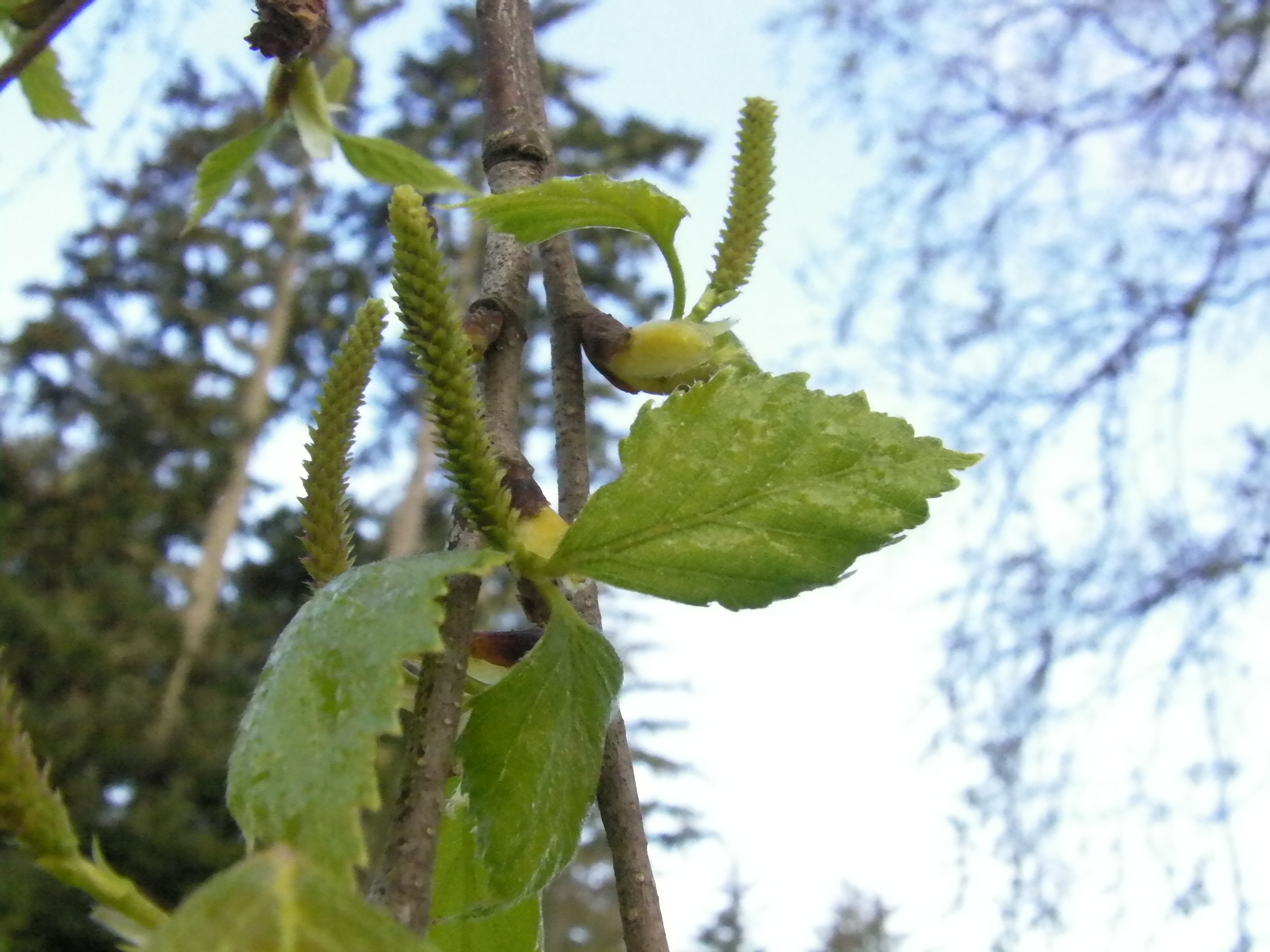
April 2, 2015…The tree is getting leaves. I’m hoping someone can ID it.
Does this look like an alder leaf? I’ve looked at dozens of alder leaves, but they look slightly different…wider, with less exaggerated serrations. Alder leaves are supposed to be egg-shaped.
This is what the back of the leaf looks like.
Are these the female flowers? I apologize for the blurriness of this photo, but it shows them as they are on the tree. The below photo is sharper.
I snipped the branch and took it home to get a sharper photo.
I don’t think this is a cottonwood even though the leaves are serrated, or a Balsam Poplar, or a Cascara Buckthorn, but I guess it still could be an Alder or even a birch.
You might think that I followed up on a decision to cut the ivy off this tree, but that’s not factual. After reading a comment by Steve Mitchell (in my last post) about the value of ivy growing on a tree, I hesitated. The trimming was not done by myself, and at this time, I don’t know ‘who dun it.” The owners don’t know either.
Just for a point of reference, these fir trees across the street from the mystery tree have ivy growing up their trunks. They don’t seem to be in any danger of dying, so what I’ve read on several web sites about ivy not being a parasite might be true.
Gardening Know How says… “Alder trees (Alnus spp.) are often used in reforestation projects and to stabilize soil in wet areas, but you seldom see them in residential landscapes.”
I suppose this tree could have been started just from a bird dropping a seed, but I would really like to know what it is. Any ideas?
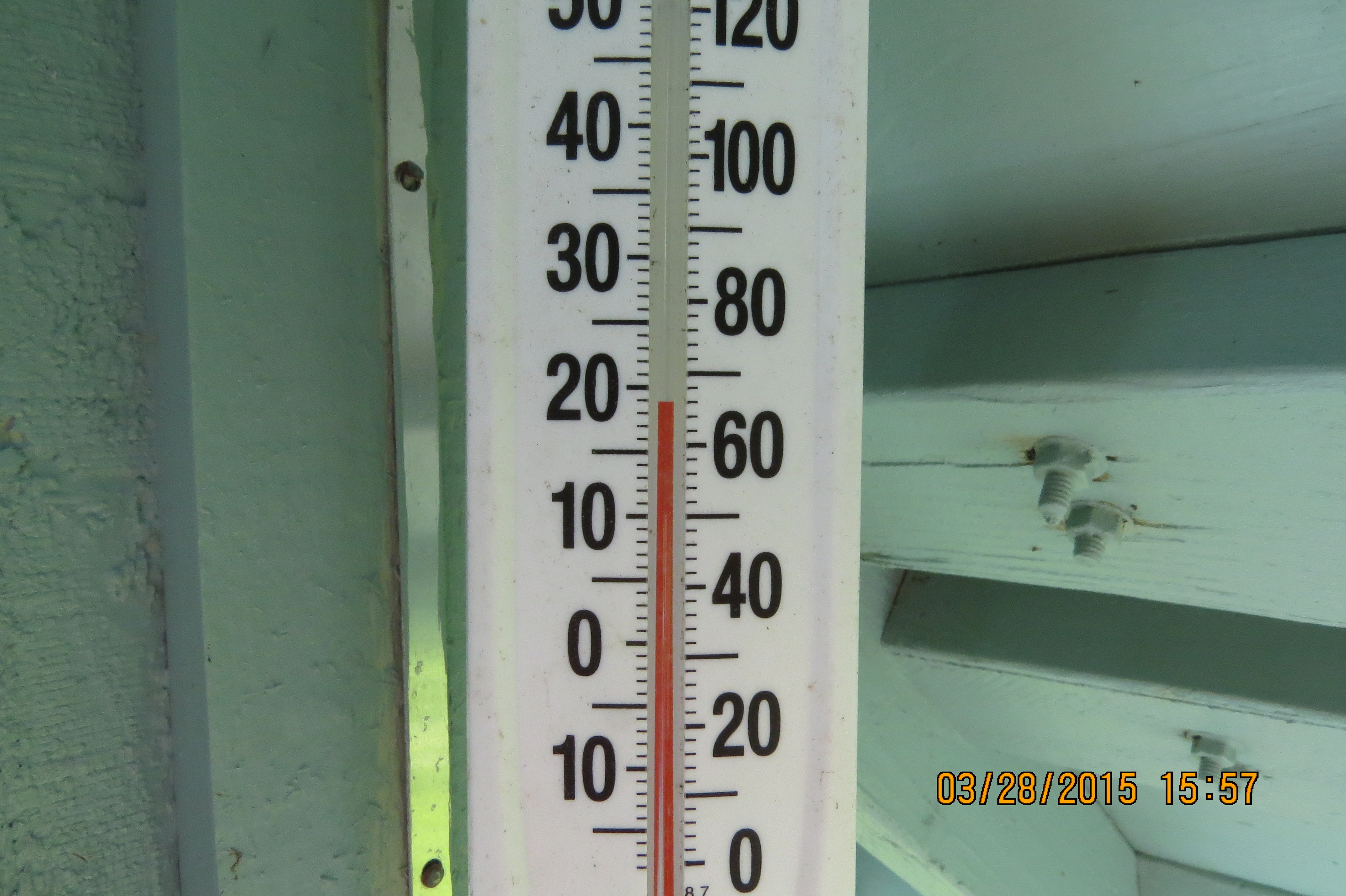
It should be raining sideways right now in March, but because the East Coast is grabbing all the cold air, we’ve been enjoying 66˙F weather on The Oregon Coast.
Because of the warm spell, we were able to move some things off the light stand in the house and into the garden. These lettuce and Parel cabbage plants, and (bought) broccoli were put into ground today.
March 28…66˙F (18˙C) Looking at tomorrow’s weather forecast, I’m going to have to find a shade cloth for the new transplants. Michael Marlow says it was 28˙F in Western Massachusetts this morning, lightly snowing on the foot of snow already there.
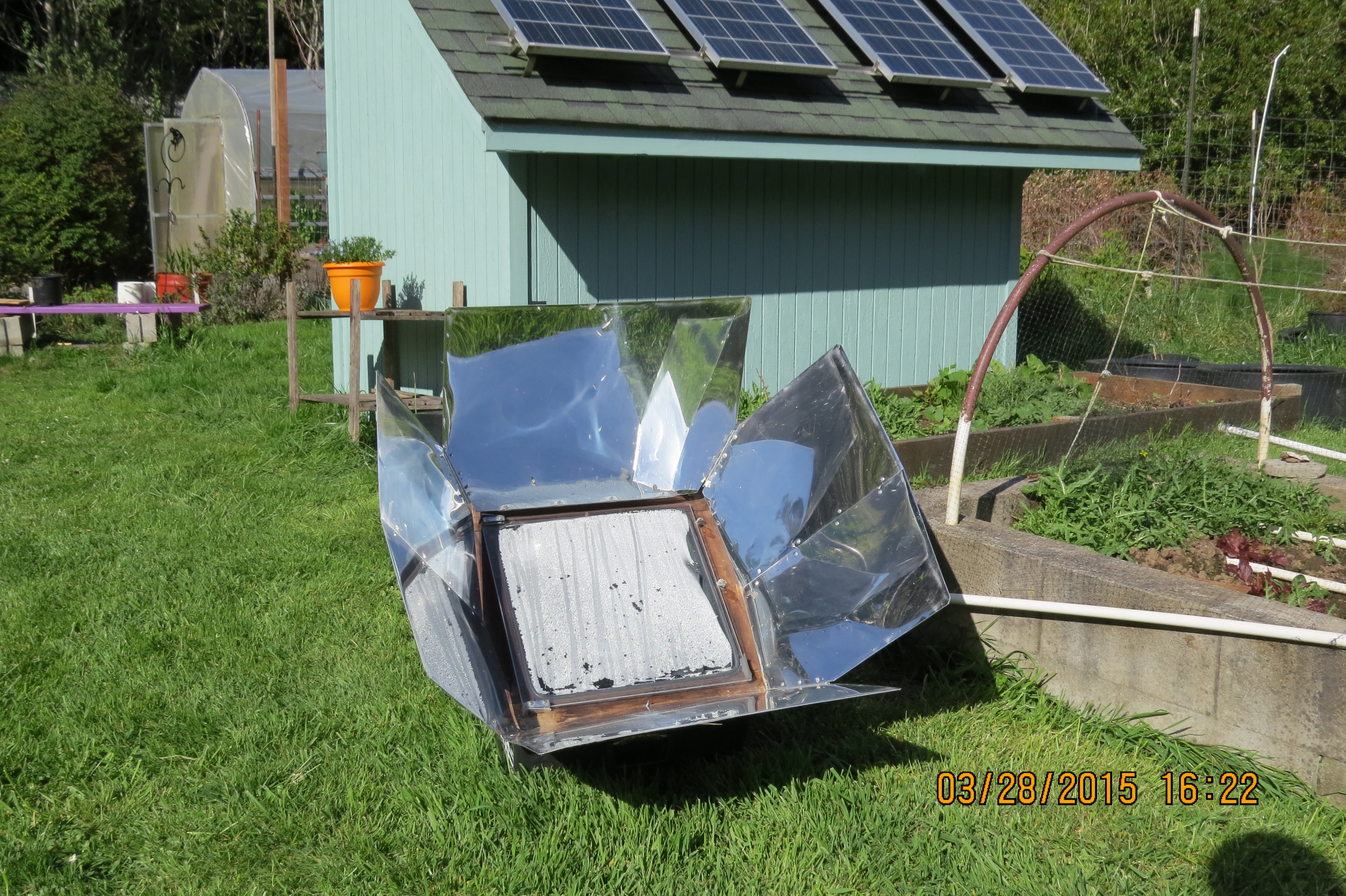
We even brought out the Sun Oven to bake up a pot of beans.
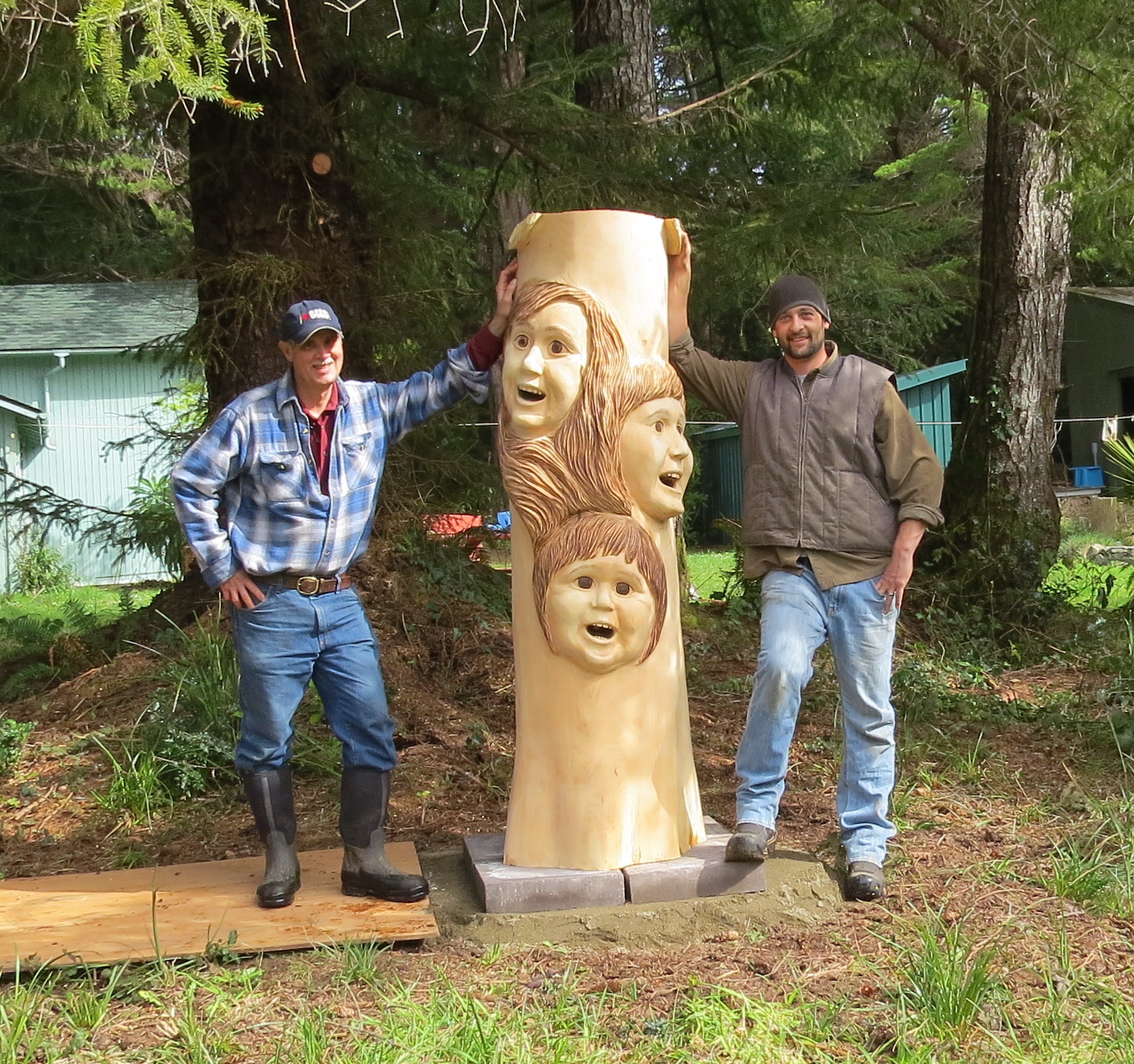
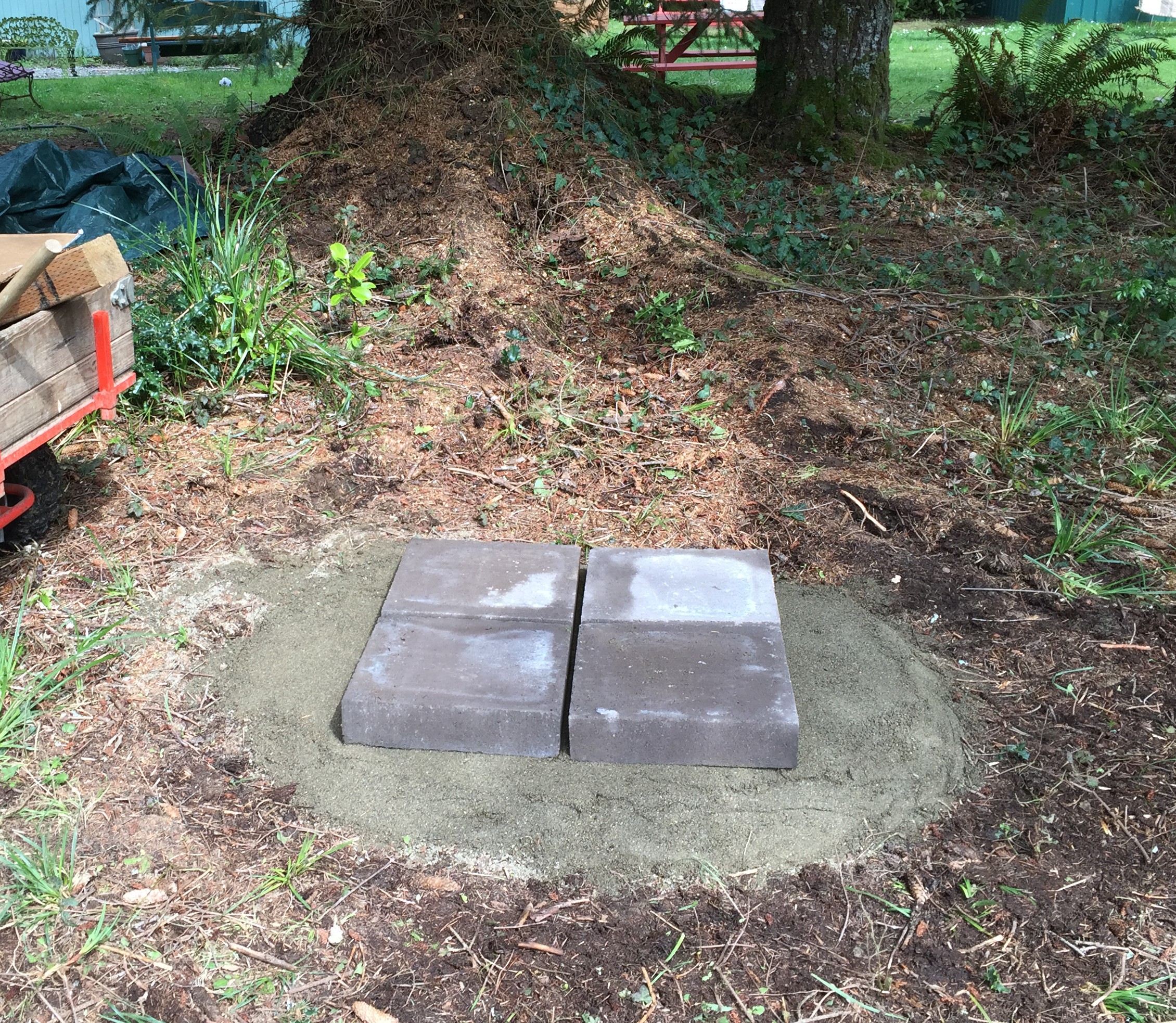
While my wife was transplanting, I was preparing a base for my new log hive. The wood carver said he would bring it out Monday. I think I’m ready with packed sand under these heavy cement blocks.
When I proposed using an old bird feeding station on the log hive, Brian Vorwaller went quiet. I don’t think he really wanted to see that old thing on top of his beautiful creation, so he asked me for another chunk of wood.
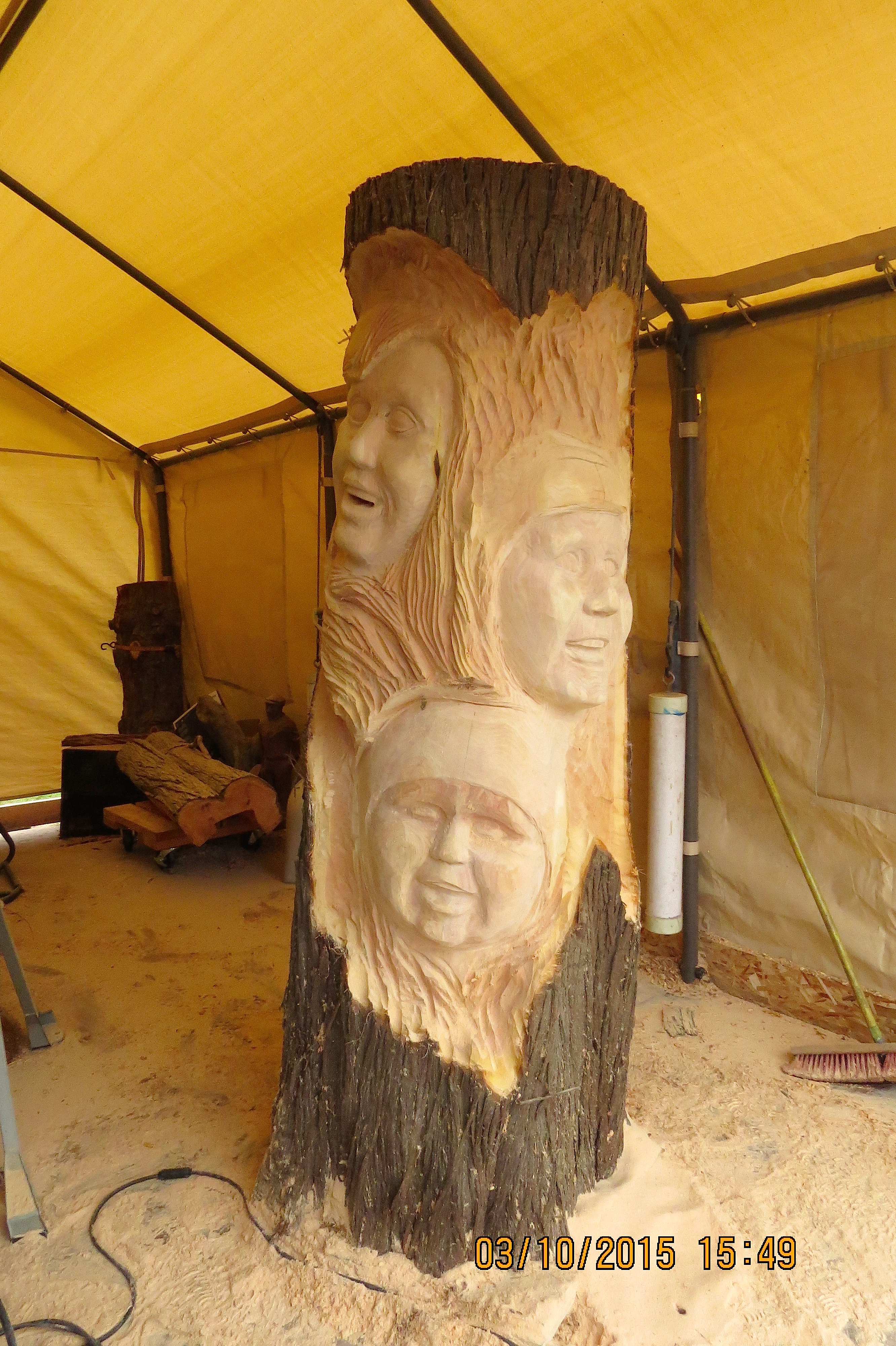
March 21…From this chunk of wood (in the care of the wood carver) comes…
…the ‘shake’ roof that will serve as the rain-shedding top of my Grand Kids Log hive. It’s hard to see, but the quilt box is on the bottom 4 inches of it. Brian worked it into the design so well.
March 28…To the bees’ delight, our flowering cherry tree is in full bloom.
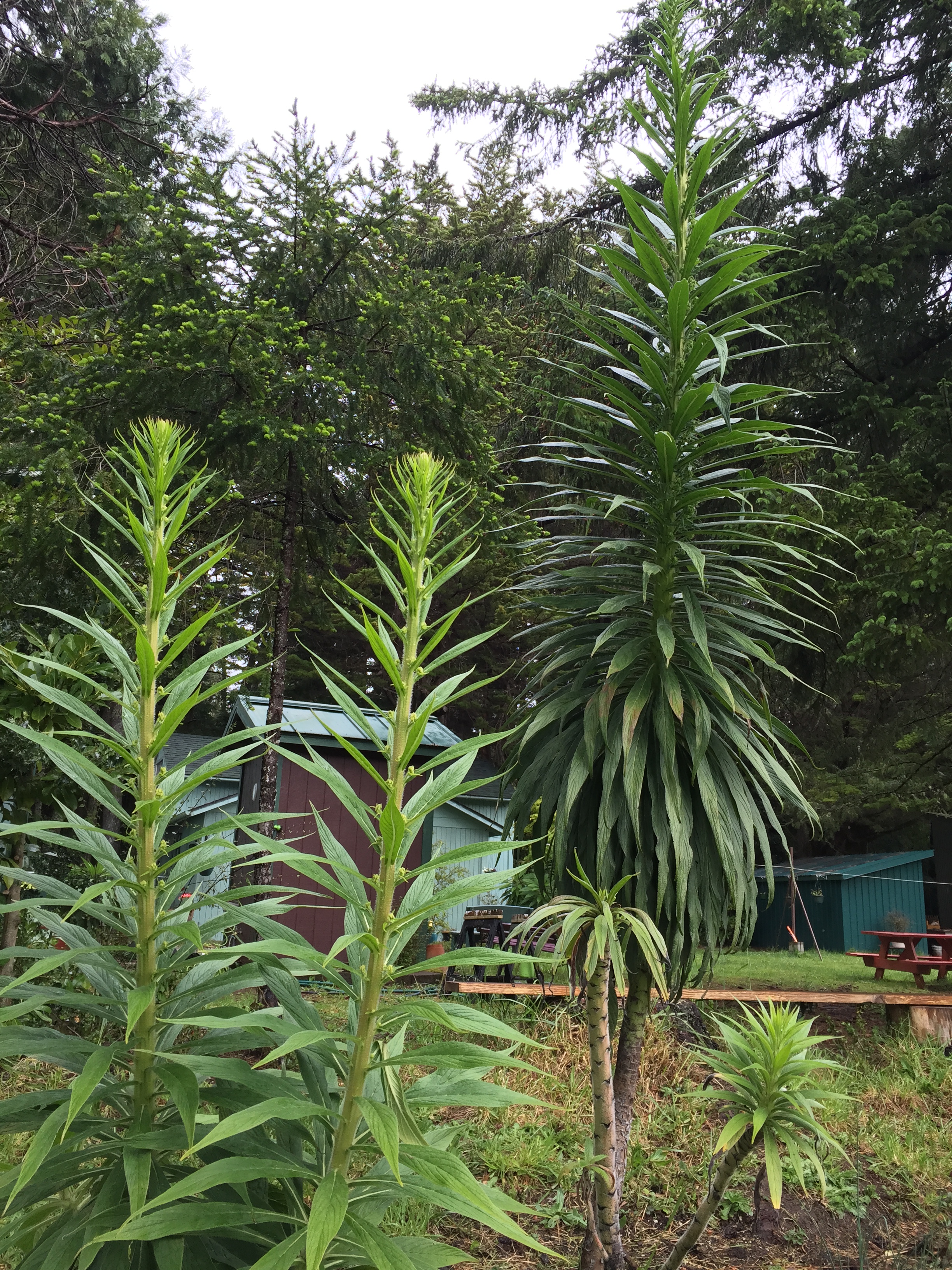
The Tower of Jewels echium plants are going to bloom this year…HOORAY! I’ve waited two years for this. They should bloom for about 3 months giving out nectar all day long. How do I know they will bloom?
They have shot up about 4 feet in the last month, but the telltale sign is under the leaves where they meet the main stem…bud beginnings!
March 17th…Since it was my birthday, I skipped work to see how Brian was progressing on the faces. The ‘quilt box’ has been added on top and Brian is figuring out what kind of carving he will add to the very top for the purpose of shedding rainwater and to add another uniqueness to my already different looking hive.
Here he describes what he has done and what is remaining to be done. He plans to be done in a week and that means I better get prepared for it…SOON!
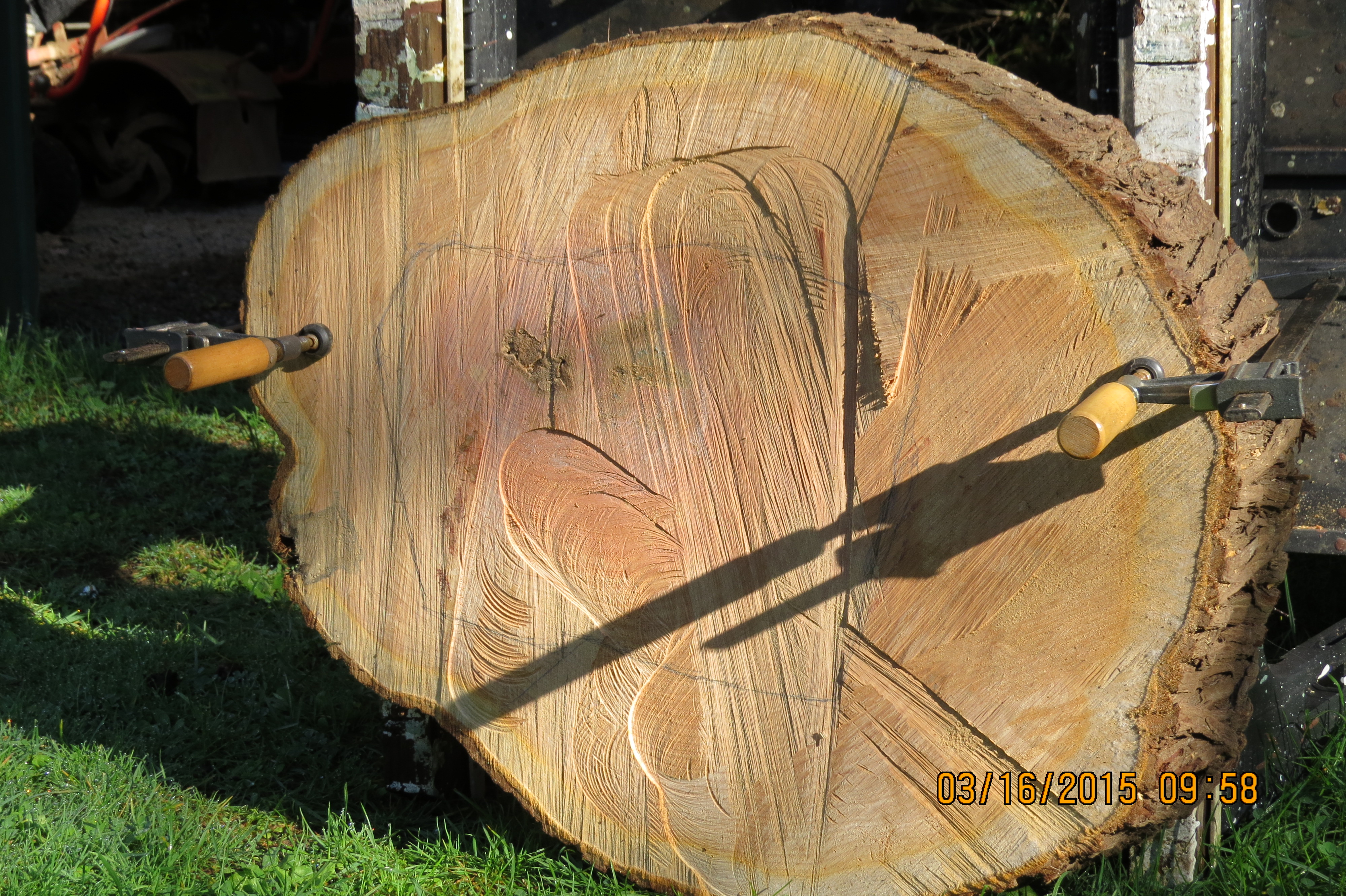
March 16…The sun came out so I was able to get some time outside. The pencil lines line up with the top bars on the top of the log hive.
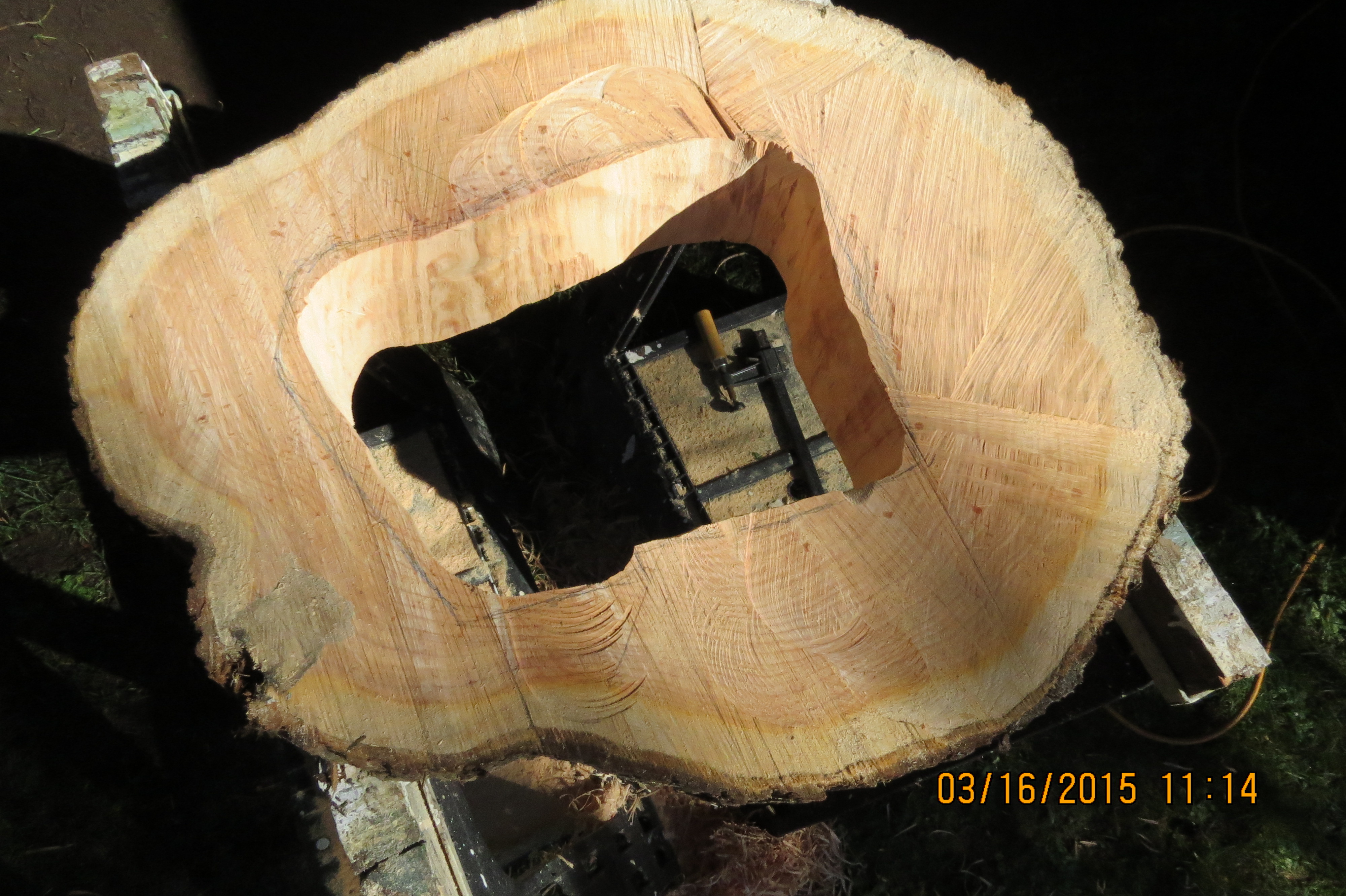
This shows the first few cuts in the quilt box. I’m using an electric chain saw plugged into my solar system with canola oil to lubricate the chain. (I don’t want any hydrocarbons in my hive)
This was so easy I made a bunch of cuts…
…and then pushed them out.
Then I enlarged it outwards towards the pencil line.
I cleaned up the insides with the “Sa-burr” wheel on a handheld grinder.
The #8 screen will hold the quilt and the sawdust at the top of the hive. This will enable the bees to regulate the temperature and ventilation of the hive by plugging up or eating through sections of the cloth.
I took a photo of this old ‘quilt’ taken from a Warré hive. You can see where the bees have chewed spaces (I assume) for ventilation into the box above that’s full of sawdust to hold the hive scent. The upper box has another ‘quilt’ to keep the sawdust from falling into the interior of the hive.
I’ll take the quilt box to the wood carver so he can shape up the structure on top of it. I think he’s going to carve a type of birdhouse top that will shed water.
Chuck Barrett is pictured here with his signature orange cake. Made from scratch, his secret ingredient is Triple sec. Whenever he is invited to a gathering, he brings his cake and garners rave reviews. The ladies in the group are are always impressed with his baking skills.
Inspired by my bee stories, my ninety-one year old father-in-law took pen in hand and wrote “A Busy Bee Song.” Setting the words to a simple tune he composed, he hoped to inspire children to learn about and respect the honeybees.
Judy Rhodes
He asked Judy Rhodes, a local singer in his home town of Phoenix, Arizona, to sing his song. Judy performs with a small group, “Up the Road and Around the Bend,” who sing for folks in retirement homes around the Phoenix area. He copyrighted his words and music to make it officially his own.
Chuck Barrett is truly an inspiration. He leads an exercise group three days a week at his local YW. His enthusiasm is contagious and people join in, some in wheelchairs, some with walkers with bingo in the next room as his fierce competition.
I set videos and photos of my bees to Chuck’s song, and we hope you will enjoy our efforts to bring awareness to the honeybees story.
The bare bones of the tree. I’m wondering if it’s an alder. I guess I’ll find out when the leaves make their appearance.
Looking up into the umbrella before the leaves form.
Here’s a better look at the white bark.
A fat robin sits high in the branches.
These look like they could be alder cones.
My apologies to everyone in the UK, but this English Ivy has got to go. It will compete for food with the tree and if left to grow up the limbs, it could cause them to break by increasing their resistance to wind. I hope by this time next month I will have removed it. I’ve got to get permission from both owners first. It happens I know both of them. I’m guessing they will be very happy to have someone take care of it for them.
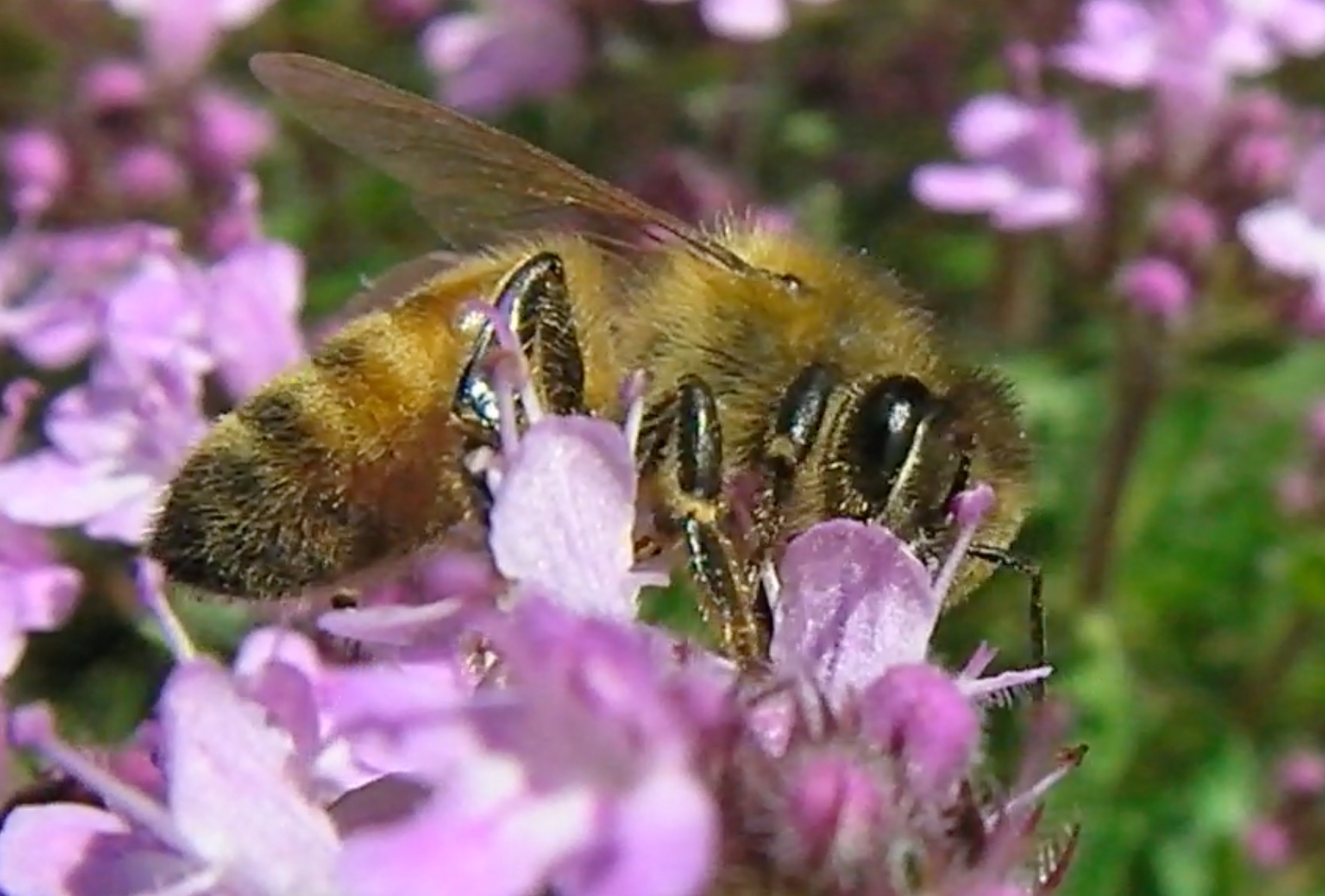
This honeybee has been busy. She’s already got a load of willow pollen.
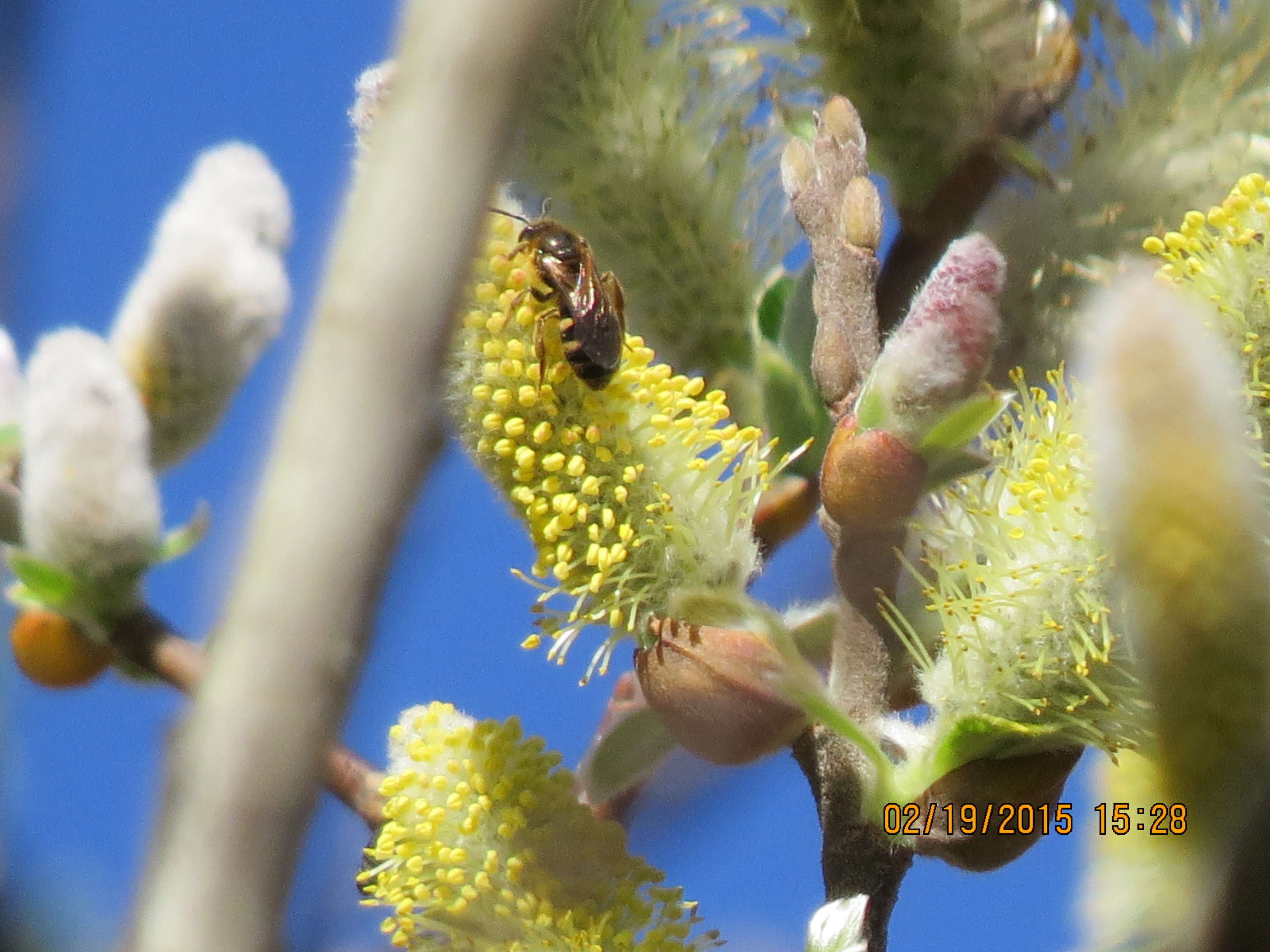
February 19…bees enjoy the willow blossoms along with robber flies and other pollinators.
A blurry look at a robber fly high in the Hooker Willow. See Michael Marlow’s comment below. “Hi Pat, just an fyi, those flies in your photos do not look like robber flies, but rather hover flies (family Syrphidae).”
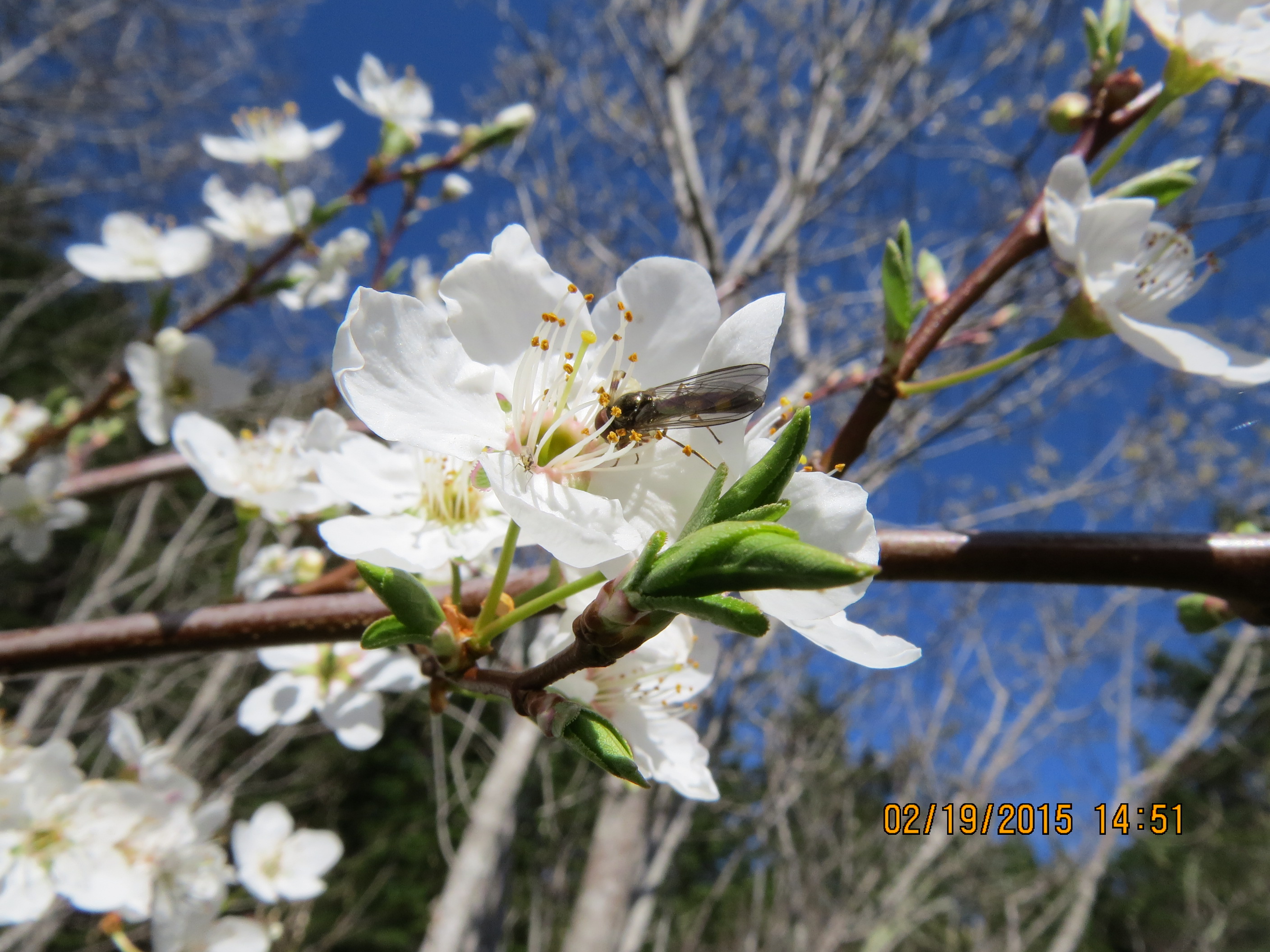
Another robber fly on a plum blossom. See Michael Marlow’s comment below.
I’m not sure what kind of bee this is.
A gorgeous blue sky warm day…while the East Coast is getting battered with snow storms.
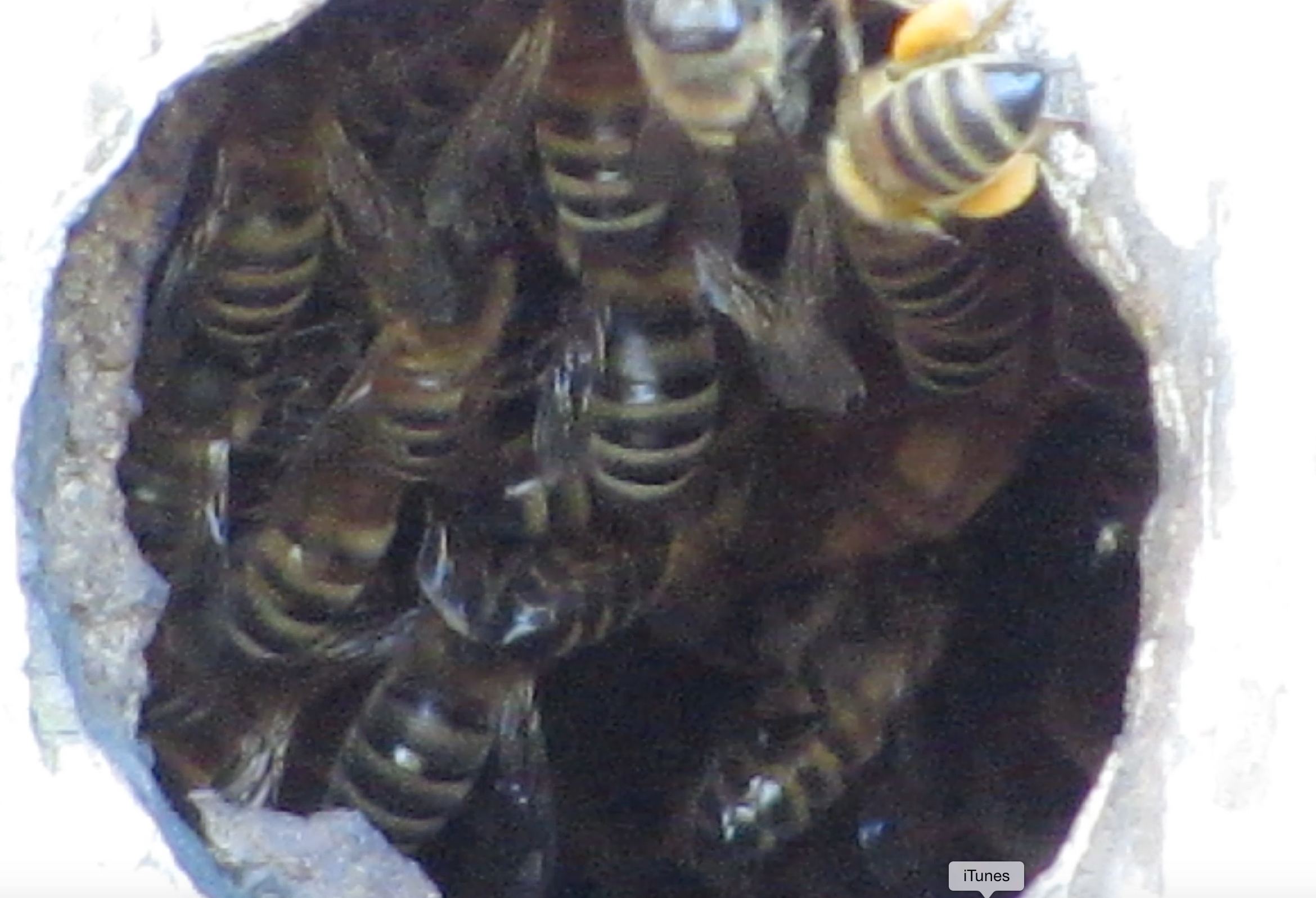
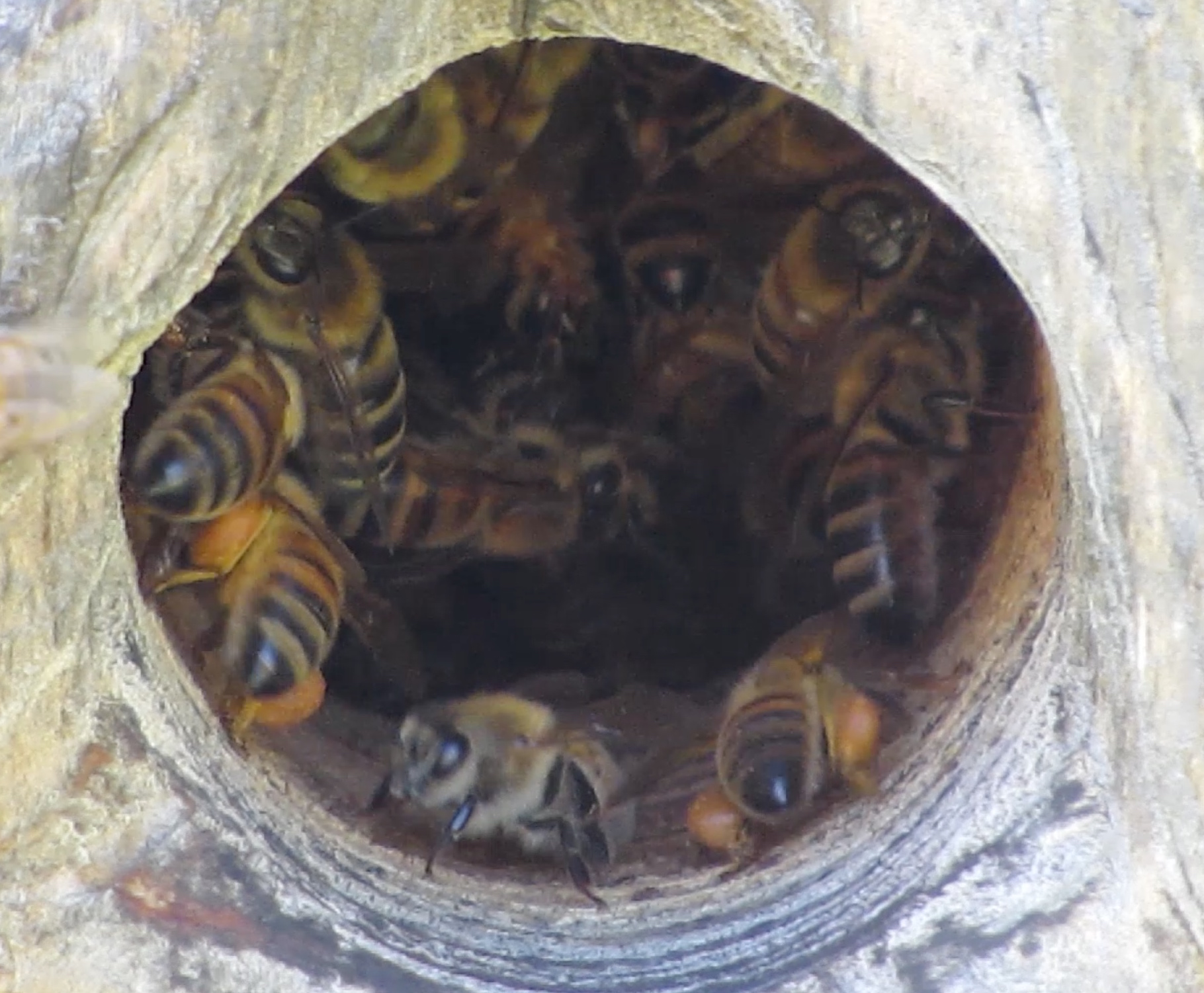
A look inside the little birdhouse bee hive with willow pollen being carried in. This little bee hive is doing well despite being in a small space in the winter shade. I’ve got to keep the swarm if I can…it’s got good genetics.
Of course, the other hives are enjoying the willows too. Here Bee Beard has bees swaggering in with their bags of pollen. There’s something going on in the background. I can’t figure out what the bees are doing, but if you look at the video, see if you can tell what they’re doing.
Not to be outdone, Bee-atrice’s bees have been busy too, with a bee fanning at the entrance.
February 24…I visited Brian Vorwaller today. I just wanted to see the log standing upright. He thinks he can start on it next week.
























 Adventures in Natural Beekeeping