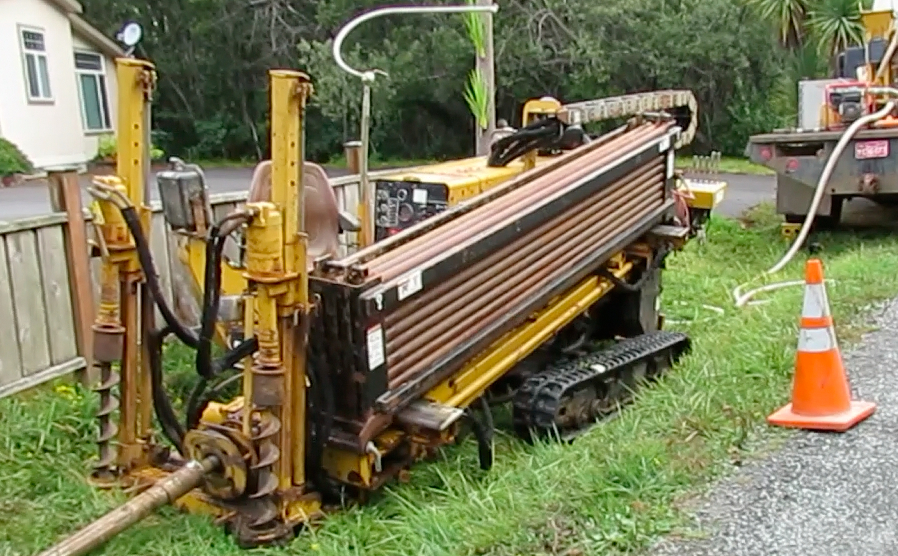
I bet you always wanted to see a Horizontal Drilling Machine in action. I know I did and when the crew set up on my road, the opportunity presented itself. I took some pictures so you get the idea. The video lets you watch the crew work without having to stand in the rain. As it happens, the owner/operator is a cousin of fellow beekeeper/photographer, Mureen Walker in the county to the south of me, the only connection I can claim that has anything to do with bee keeping. 🙂
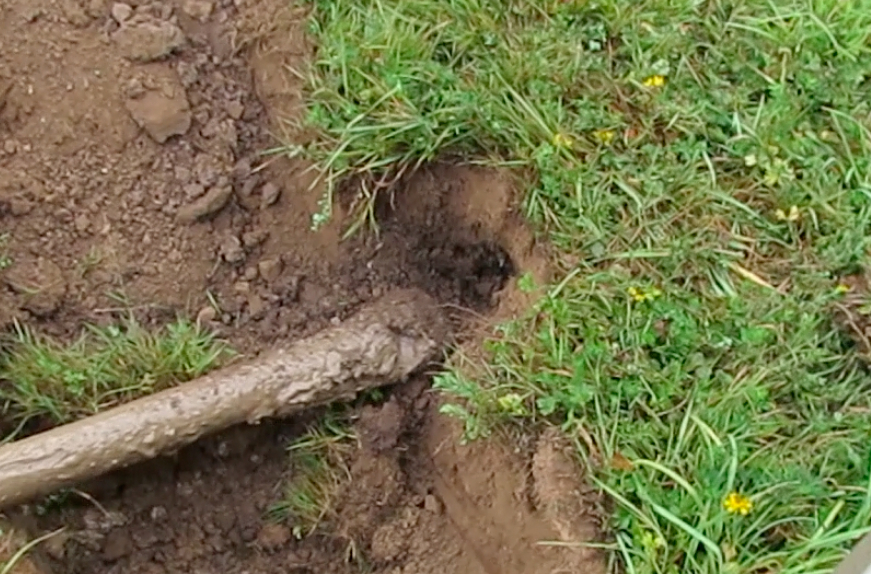
Starting the drill bit and aligning the path
Adding another 10 ft. rod extension. The machine unscrews one end, backs up, another rod is lined up perfectly, it screws in tightly and carries on.
Remote Guidance System…The one on the left shows the pitch or slope of the bit, The one on the right (YAW) shows the side to side movement.
The rod rack holds four rows of rods 11 deep. That’s enough for 440 feet (134 m). This distance is about 380 feet (115 m), plus there are a few roots along the way. This is going to take a while, I better get some deadlines done.
You might think it would be easier just to dig a trench, lay the conduit in, and cover it back up, but there is a city water main here too.
This pole is about 50 or 60 years old. The wires criss cross with the wires of another utility. A big storm could bring the whole thing down in a dangerous way. Thank you, power people for taking care of this BEFORE it happens.
Early 2012…The foundation is in place, now Hal will fit the window panel on.
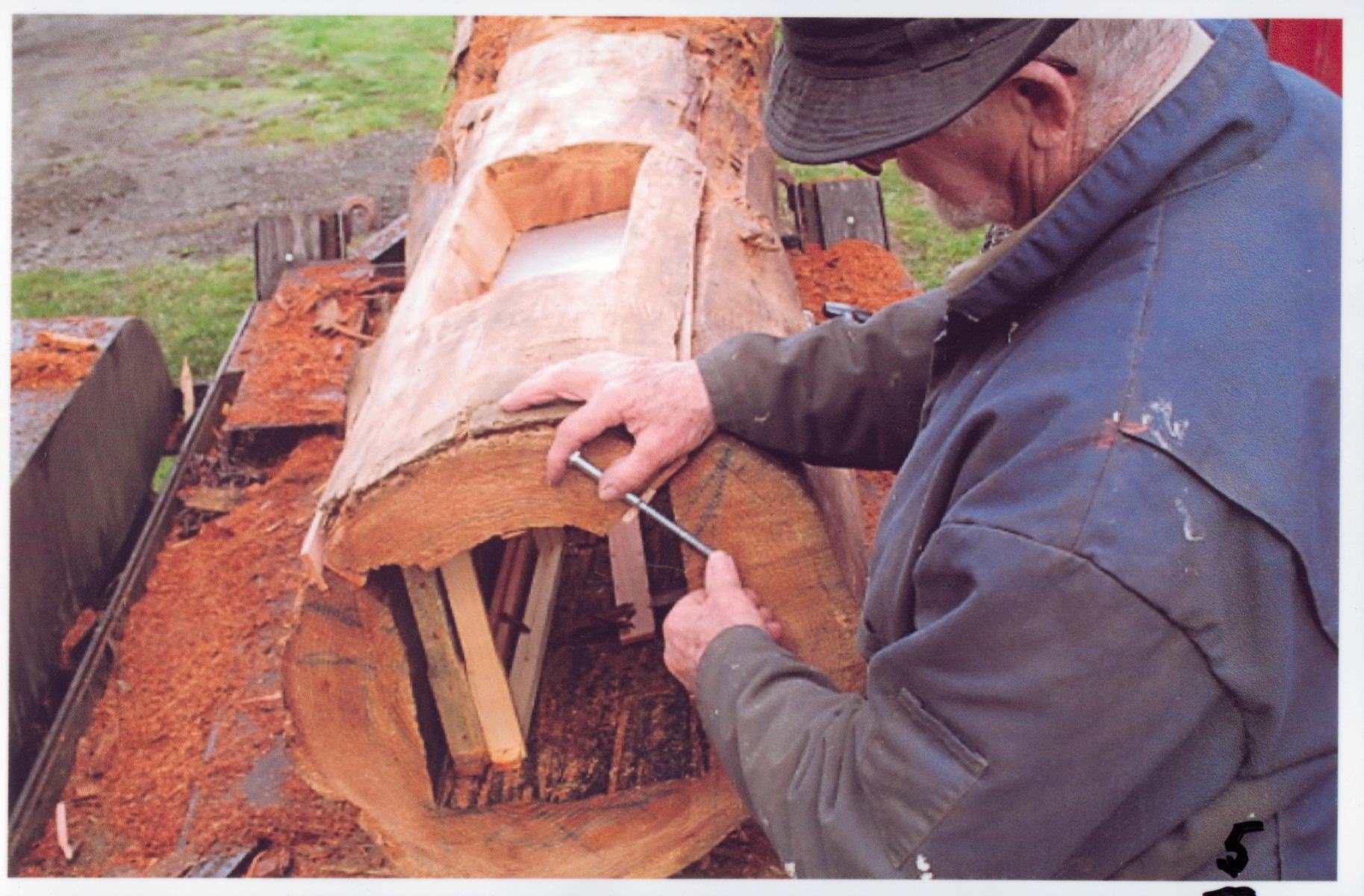
Measuring the bolts
Fitting the window plug.
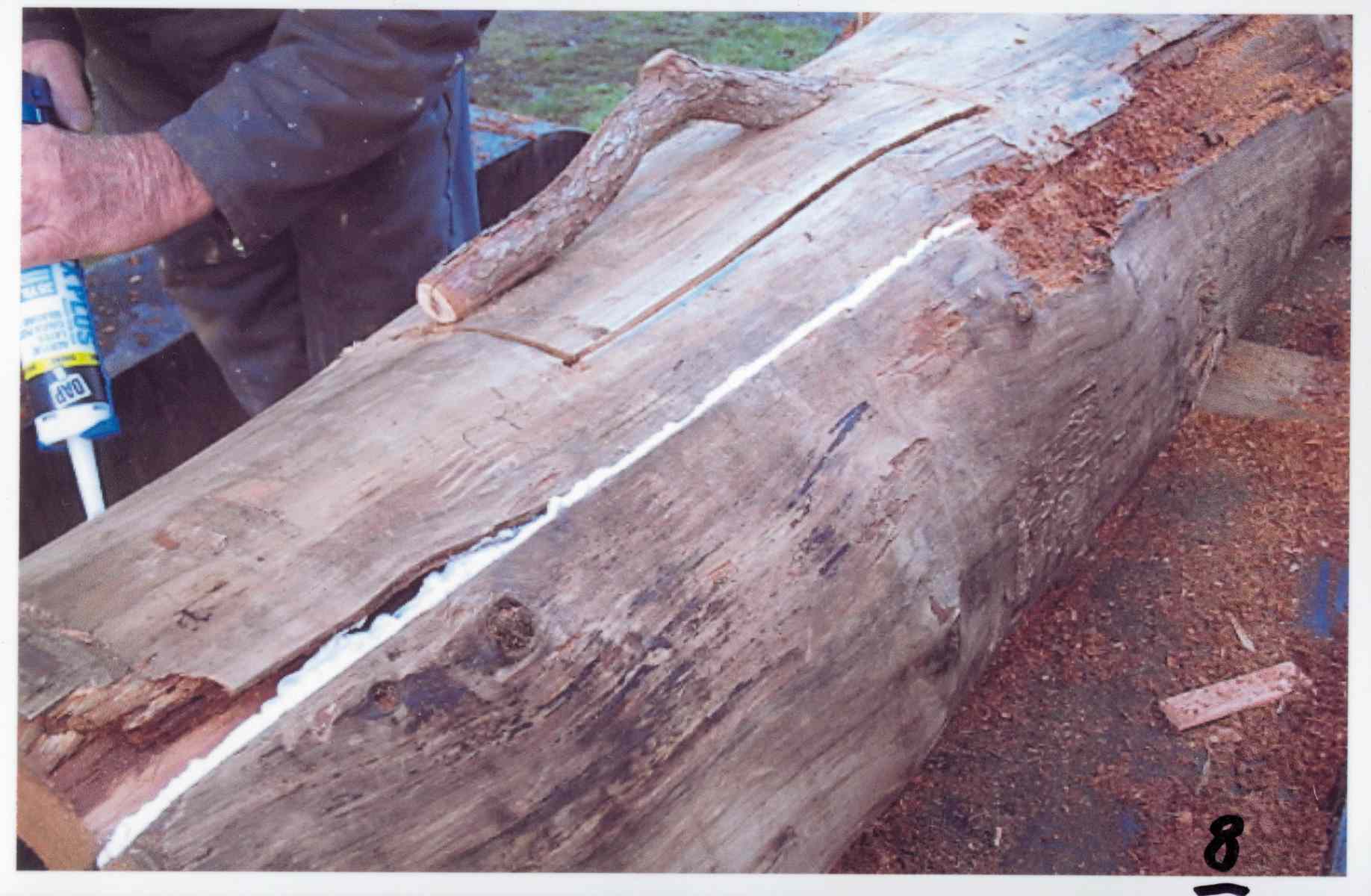
Sealing up the cracks.
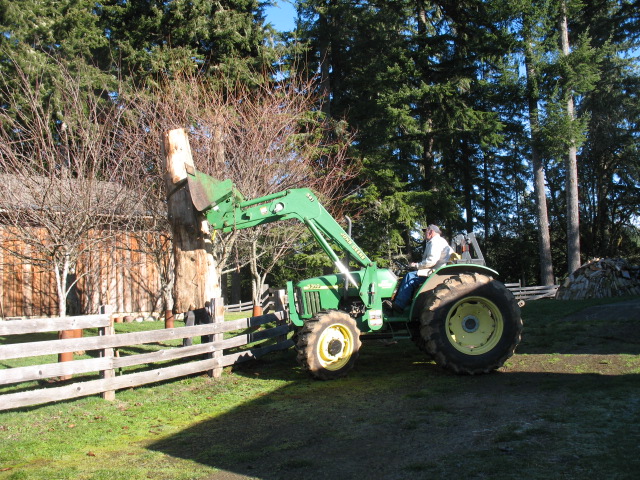
What do you use to lift a large log over a fence? A large tractor of course. LG demonstrates how to do it without smashing your fence.
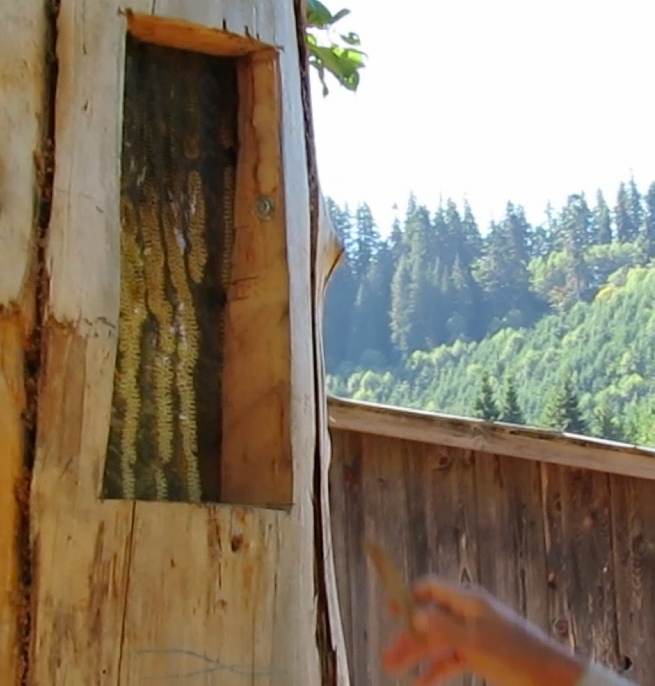
August 18, 2013 Log hive #2 built by Hal, owned by LG, is doing very well
Log Hive #2 with lots of beautiful honey comb
While visiting the 113 year old Gearhart ranch last week I had the occasion to ask LG, (the owner of the log hive) if he would show us the #2 log hive that Hal built for him last year.
Bee Beard…August 1, 2013. The bees always fly around at the entrance between 1:30 and 3:30. I’m not sure why, the outside temperature is only 68 F (15C)
After it threw six swarms, I wondered if Bee Beard had anything left. Yes, there were bees but was there a laying queen? Then in the beginning of April, I started watching in horror as drones were being tossed out of the entrance. Drones with reddish colored eyes and ‘chewed up’ wings. I checked the bee literature and learned that I was looking at a good example of “Deformed Wing Virus,” thought to be caused by the dreaded varroa mite.
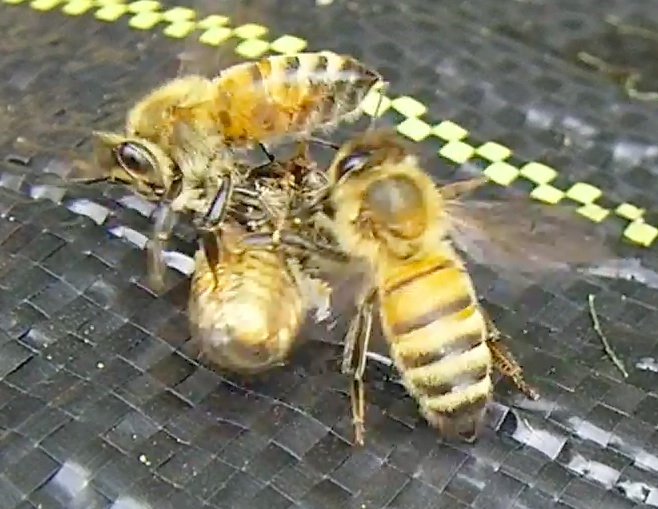
April 1, 2013…I was filming the bees at the entrance when I heard a thump on the landscape cloth. Two bees were evicting one with Deformed Wing Virus
It started in the beginning of April and continued through the end of the month. Then came Drone Awareness Month. I thought for sure, this would be the end of the hive because I had a “laying worker.”
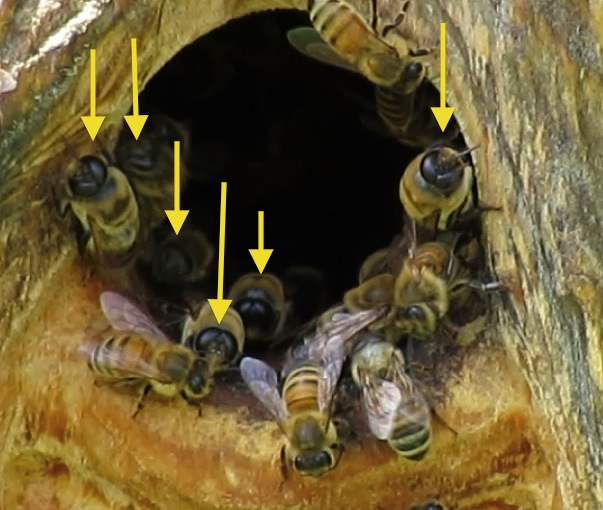
April 25, 2013…SIX DRONES visible. I have never seen so many drones at the entrance.
You can notice these bees because of their eyes. The tops of their eyes meet in the middle. Also drones are big. In the video you’ll notice how much bigger they are then the worker bees. I wasn’t worried about their size however, I was worried there was no queen. For this many drones in one place, it meant (to me) only one thing…a laying worker. If there’s no fertilized queen (possibly because of all the swarms) then sometimes a worker bee will start to lay. If you inspect the combs, you’ll see the eggs laid on the side of the cell or multiple eggs in an individual cell…the sign of a laying worker (or more than one) Workers are not fertile and can only lay drones. If they are only laying drones, the colony will die out, because drones don’t work. Since I didn’t want to open the hive and intervene, I was going have to sweat it out.
August 4, 2013…I see lots of bee activity and pollen going in. Is it possible my fears were unfounded?
Bee Beard Log Hive is an experiment in what happens with no intervention. I don’t medicate, miticide, or treat the bees with anything. That includes essential oils and powdered sugar. I don’t take any honey. These bees came from a myrtlewood tree last June. They’ve never even been smoked. We grow many bee-loving flowers, but I know that bees also go elsewhere for foraging. Is it possible the Varroa mite and deformed wing virus are still around? Of course…but as long as the bees can adapt, that’s as much as anyone can want. I guess I’ll know more by next spring, but right now they look good.
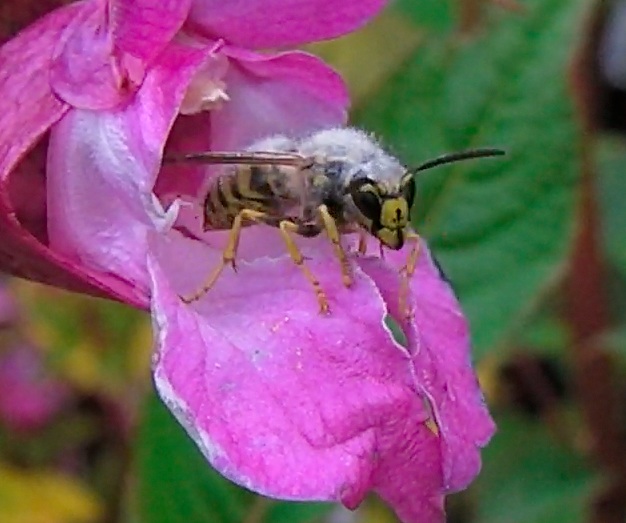
July 30, 2013…A pollen covered wasp takes off from Barbara’s Poor Man’s Orchid
On our morning walk we pass Barbara’s well-maintained flower garden. Today, Barbara called out, “Pat, did you see those white bees?” I had never heard of white bees so we looked carefully. They were certainly white, but I couldn’t get a good fix on them as they were darting in and out of the flowers so fast. After I replayed the videos I could see what they were…wasps and bumblebees covered with white pollen.
This could be a Yellow-faced Bumble Bee, Bombus vosnesenskii, or possibly a Bombus Californicus…I can’t tell the difference. The video shows this bee backing out of the flower and getting a trail of pollen up her back.
Lots of nice bee flowers here…in the foreground are the Poor Man’s Orchids.
June 1, 2013…Squash and corn area with PVC water grids.
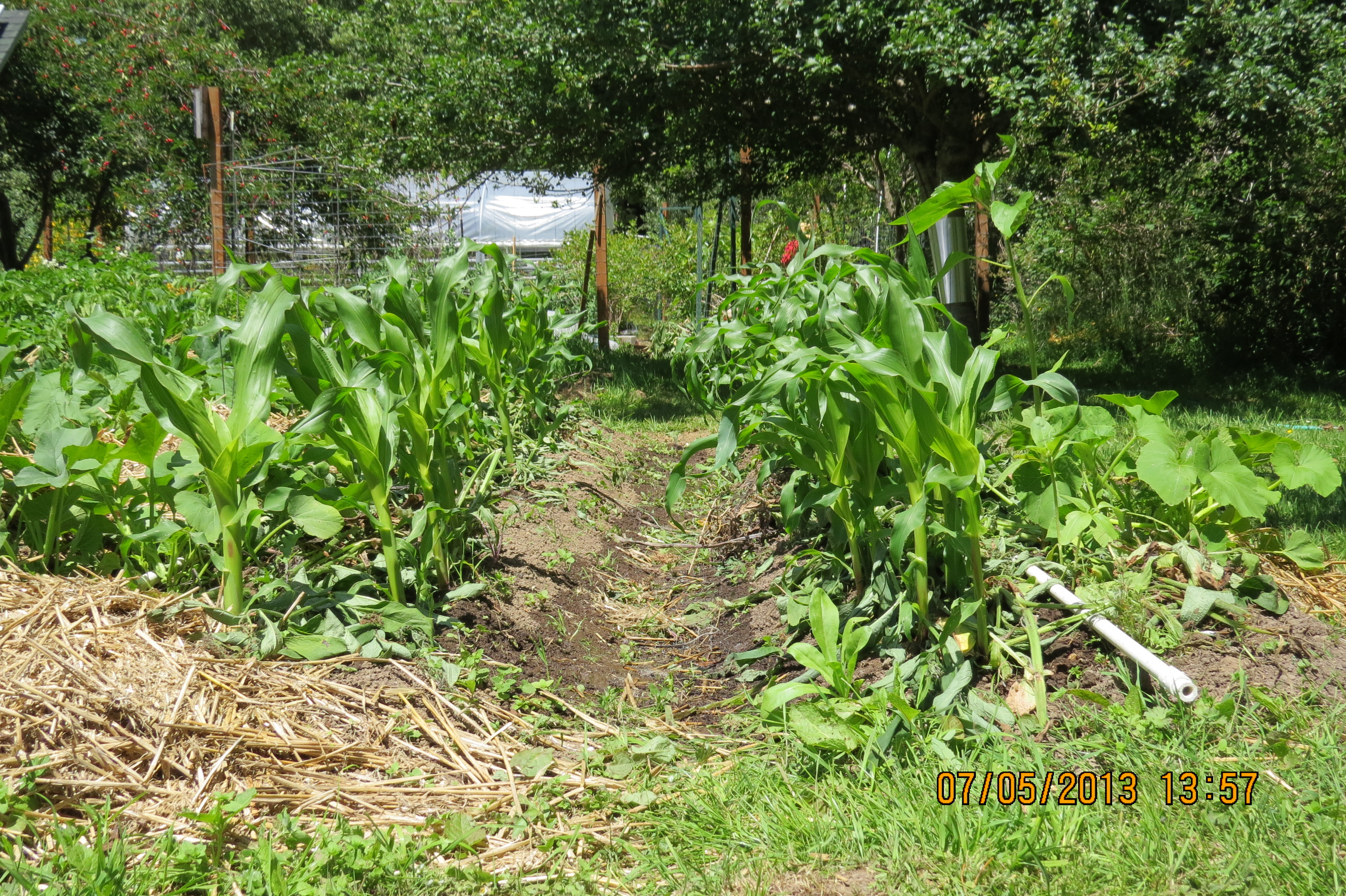
July 6, 2013…Squash and corn growing well after mulch added to keep soil from drying out.
July 24, 2013…Squash and corn bed. Corn is starting to tassel..
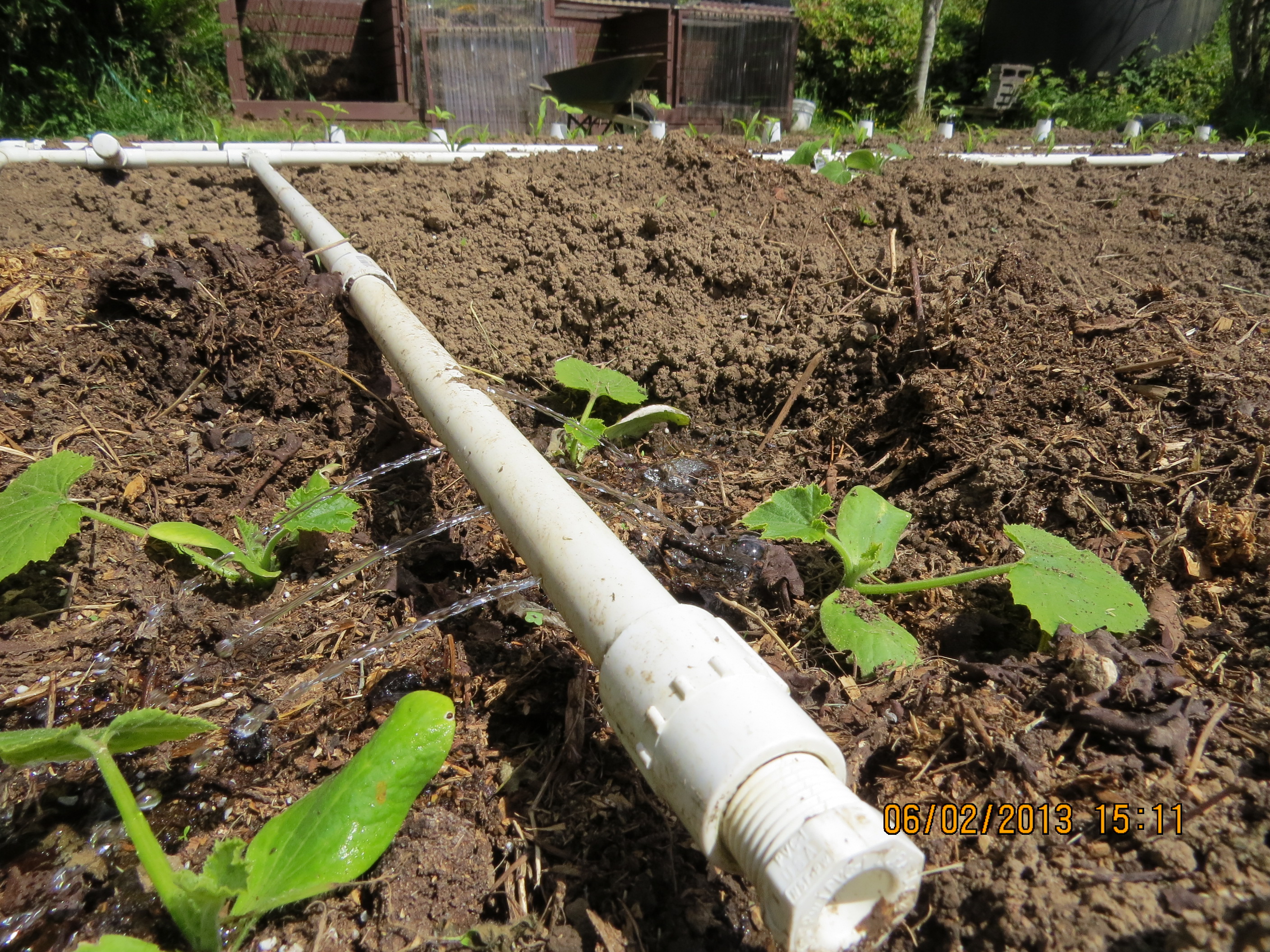
Despite the fact that the Oregon Coast gets about 60 inches (1500 mm) of rain a year, we still are very frugal about watering. Overhead sprinklers not only waste water but can invite plant diseases. We’ve found drip watering works well…but how do you water squash which is spaced so far apart? Over the years, we’ve developed a method that gets the job done with a little effort at the beginning of the season. It’s as easy as playing with tinker toys.
PVC can deliver straight to the customer…but these connections are the screw-in type that I started with about 15 years ago. I’ve since graduated to glue-less slip-ons…cheaper and easier to work with.
This glue-less connection can swing in any direction for the water hose connection.
You don’t usually need a water pressure reliever, just turn the shut-off valve on your hose if the pressure is too high.
The garden hose adapter slips on the length of PVC. Use the thin-walled type of PVC because you’ll be drilling holes in it and it doesn’t have to hold pressure.
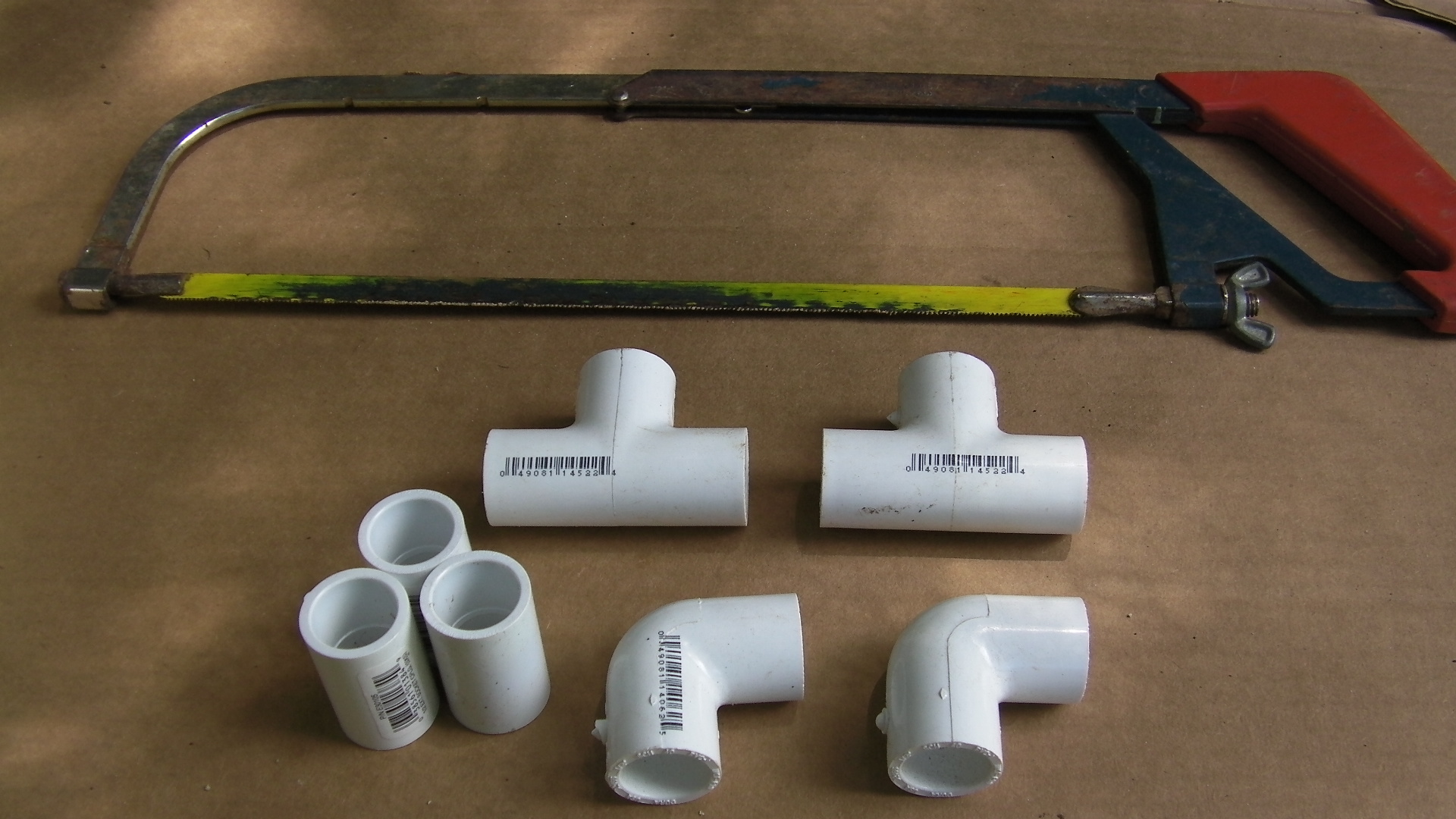
Tees, couplers, and ells, are just about all you need besides the hacksaw and 10 foot lengths of the thin walled Schedule 20 pvc.
You can economize by sharing a hose connector between two grids.
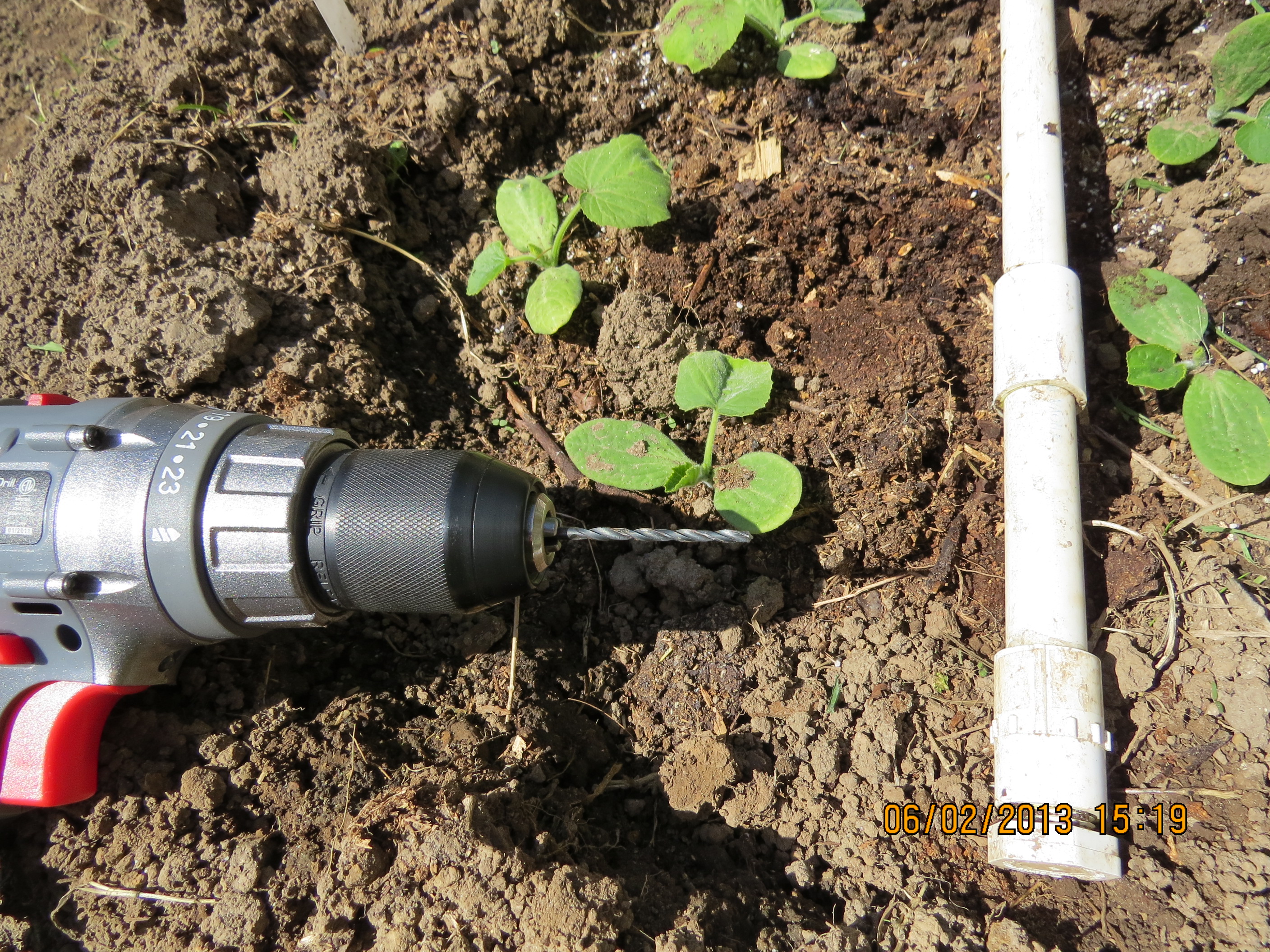
Need new holes, just drill where you want it…be careful though, it’s a little tricky getting the bit to stay put on a round surface. Don’t hold it in your hands or on your lap. If you slip…well, you get the picture.
Too many holes? Wind electrician’s tape to block off extra holes in unneeded places.
Need to get over to top of a raised bed? With the slip-on connections, it’s much easier.
Don’t be tempted to plant first and then figure out how to water it…it takes more work like this one, a real mess. My SO was in a hurry to get the seedlings in.
July 5, 2013…I’m trying a new compost tea. It’s made from soaking chopped-up comfrey leaves for three weeks. I’ve added it to the right row of corn only for comparison…it sure smells bad, if it doesn’t work I’ll know why. Footnote…my wife doesn’t think much of it.
An example of drip water PVC that DIDN’T work. I tried this on the Hugelkulture bed…back to the drawing board.
Drip watering potatoes…I space the potatoes at 9″ apart. The holes are drilled in the pvc at that distance. This stick is the length of all my potato beds. When I finish with one, I can move it to the next row. I use it year after year, but you know, you have to rotate your crops. Don’t follow tomatoes with potatoes, or potatoes with potatoes for at least a year, preferably two.
This is how I water all my tomatoes. You space the holes where you want the tomatoes, lay the grid in the bed, plant where the water drips out.
The start of our winter lettuce…This year I’m determined to grow enough for the winter…might be a tad early though.
July 28, 2013…time to thin lettuce and turnip greens. I had to get the deer net up, the deer are hungry, and we are on their dinner route.
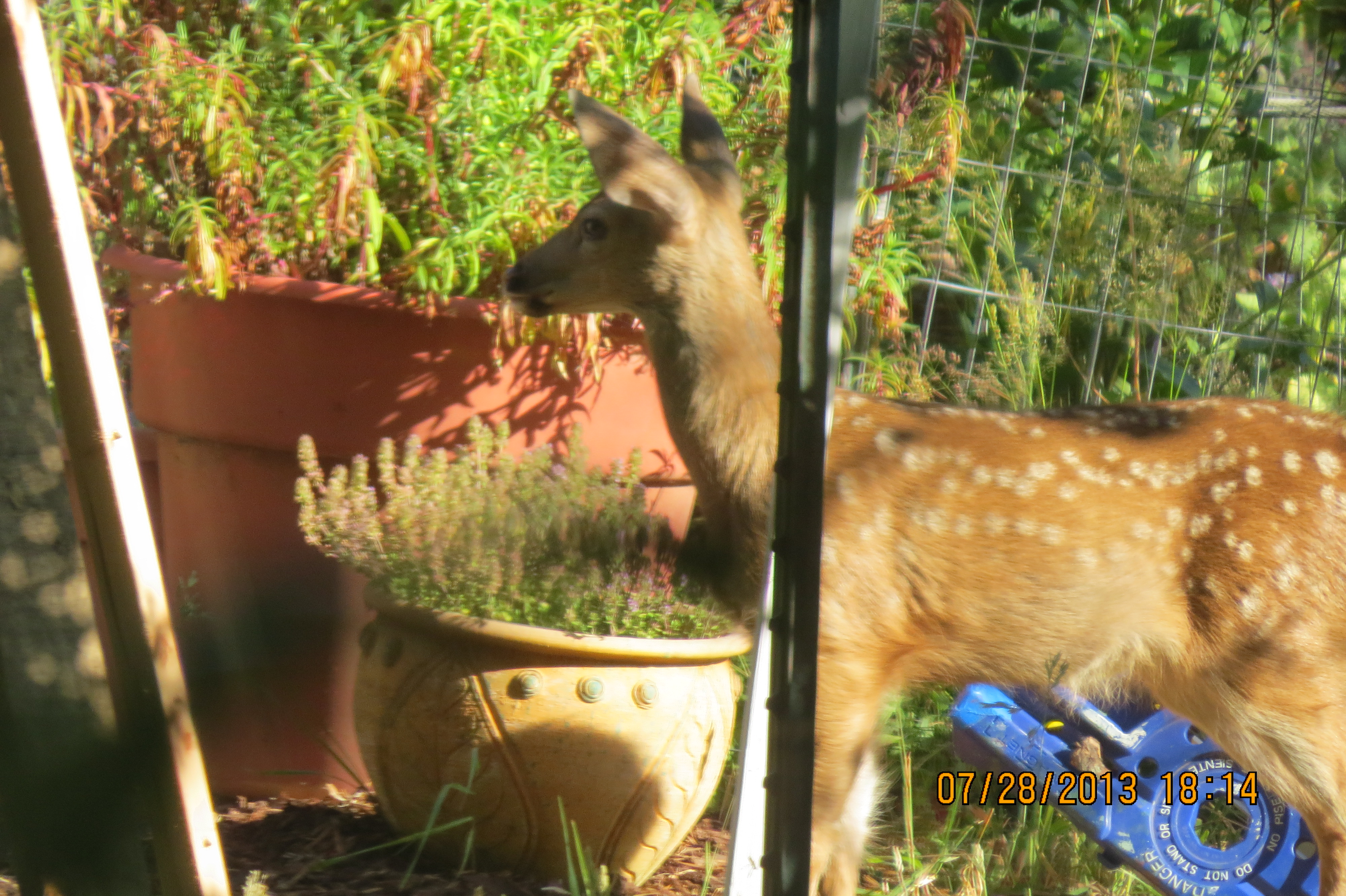
July 28,2013…This new fawn was frisking around. I was able to catch it (on camera) by waiting it out. It’s momma was showing it where the best places to eat were.
Who ever said plant biology was boring? Certainly not me after shooting this video.
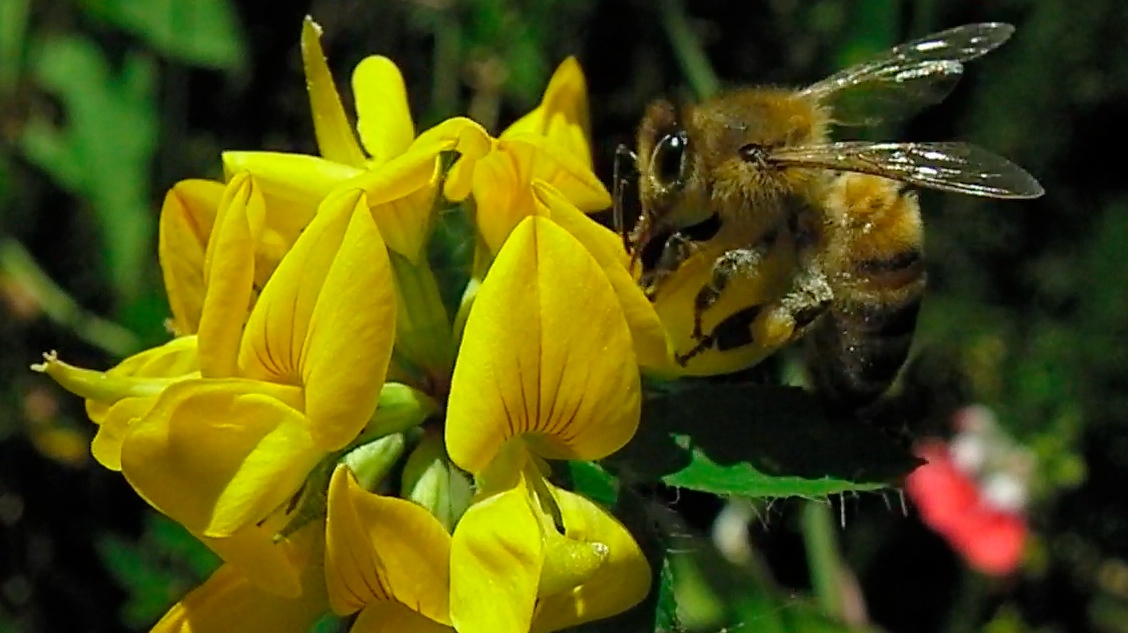
When I shot this video I didn’t realize I was witnessing an intimate relationship between flower and bee. The pistil is still showing here, but in the video, the petals clamp shut soon after the bee moves on.
The flower provides the nectar to attract the bee. The bee lands on the flower, pulling the petals apart to reveal the pistil. The flower makes pollen available which the bee carries away.
Since this is my 100th blog, I wanted to do something special. I wanted to have some music in the background. Sweet Thunder, a quartet in Portland, graciously gave me permission to use one of their tunes called, “Blues in the Barn.” Kiera O’Hara, who composed the music, said “she wrote it when she lived on a tree farm in Michigan and her piano room was a refurbished nook in an old barn.” “We are a collaborative bunch, so the sound of my tunes on the disk is very much the result of that collaboration.”
Thank you Sweet Thunder for the sweet music.
The video shows the bee and flower cooperation. I never took biology in school, so I don’t know if they show this racy stuff, but this is an unrated Bee movie in the truest sense.
I was unsure what this blossom was. I thought it might be a yellow vetch, so I asked Morris Ostrofsky. Morris, a forty year beekeeper and scientist affiliated with the Oregon State Master Beekeeping Program positively identified this blossom as a Bird’s Foot Trefoil.
“The plant is indeed Birds Foot Trefoil. This plant ranks high on the bees’ favorite forage list. If you go back in some of the older bee publications, it was actually encouraged as bee forage. However, it’s no longer encouraged because it has been found to be invasive. However, the bees’ still love it.”
March 23, 2013…Lots of blossoms, hope the bees find them.
We’ve got plums!!! Yes, we’ve had plums before, but not like this. Our honey bees and Mason bees have contributed to the success…but now I’ve got to protect them. I’ve also seen evidence of raccoons. I won’t show the photo of raccoon scat, just trust me on this. Raccoons can climb fences (in my case, deer cages that surround the trees.) Last year we had counted about 40 to 50 plums almost ready to harvest, which disappeared overnight from raccoons climbing the wire deer proof cage.
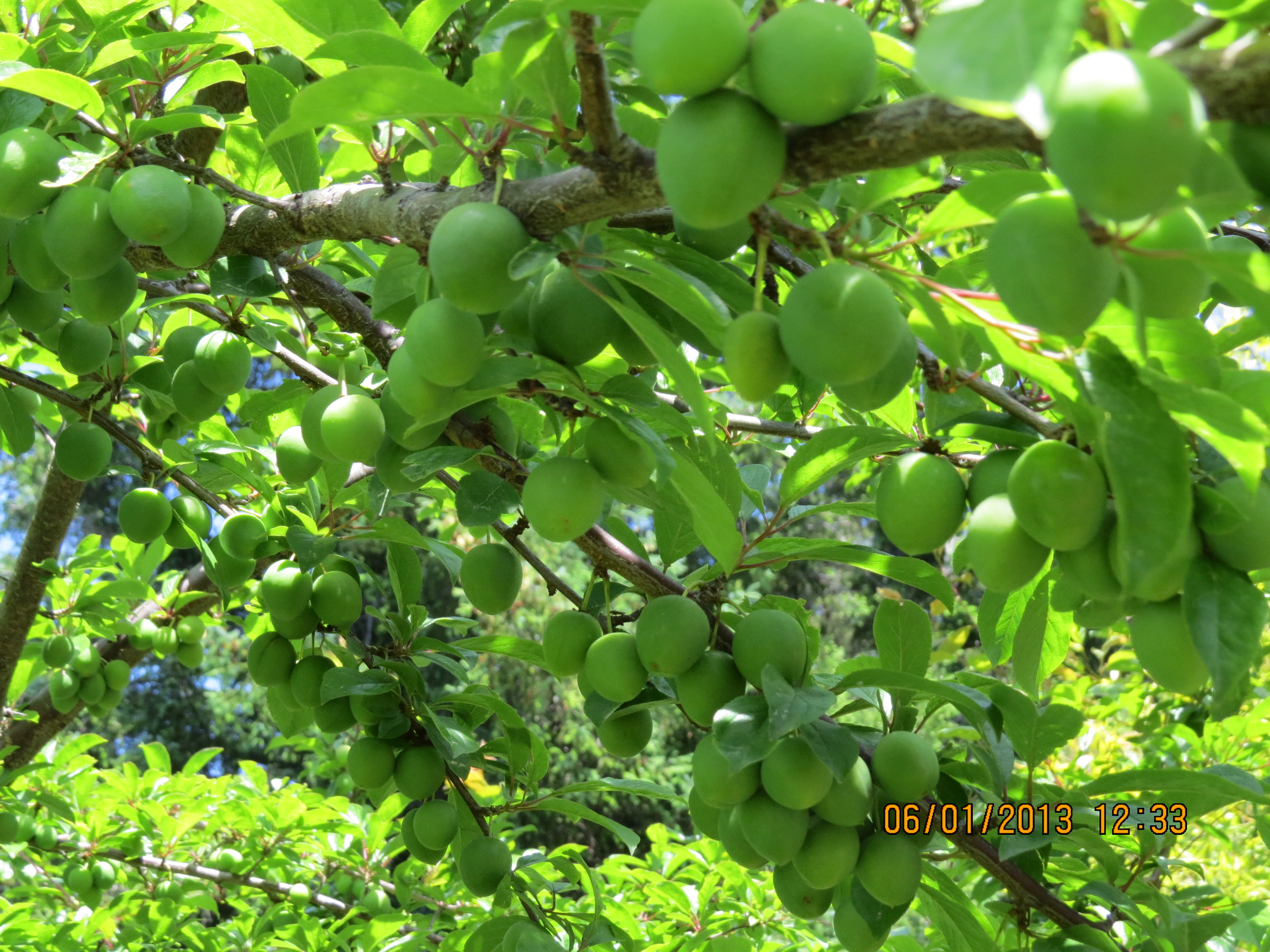
6-1-13…Plums getting bigger…Hummm, I better start preparing raccoon protection.
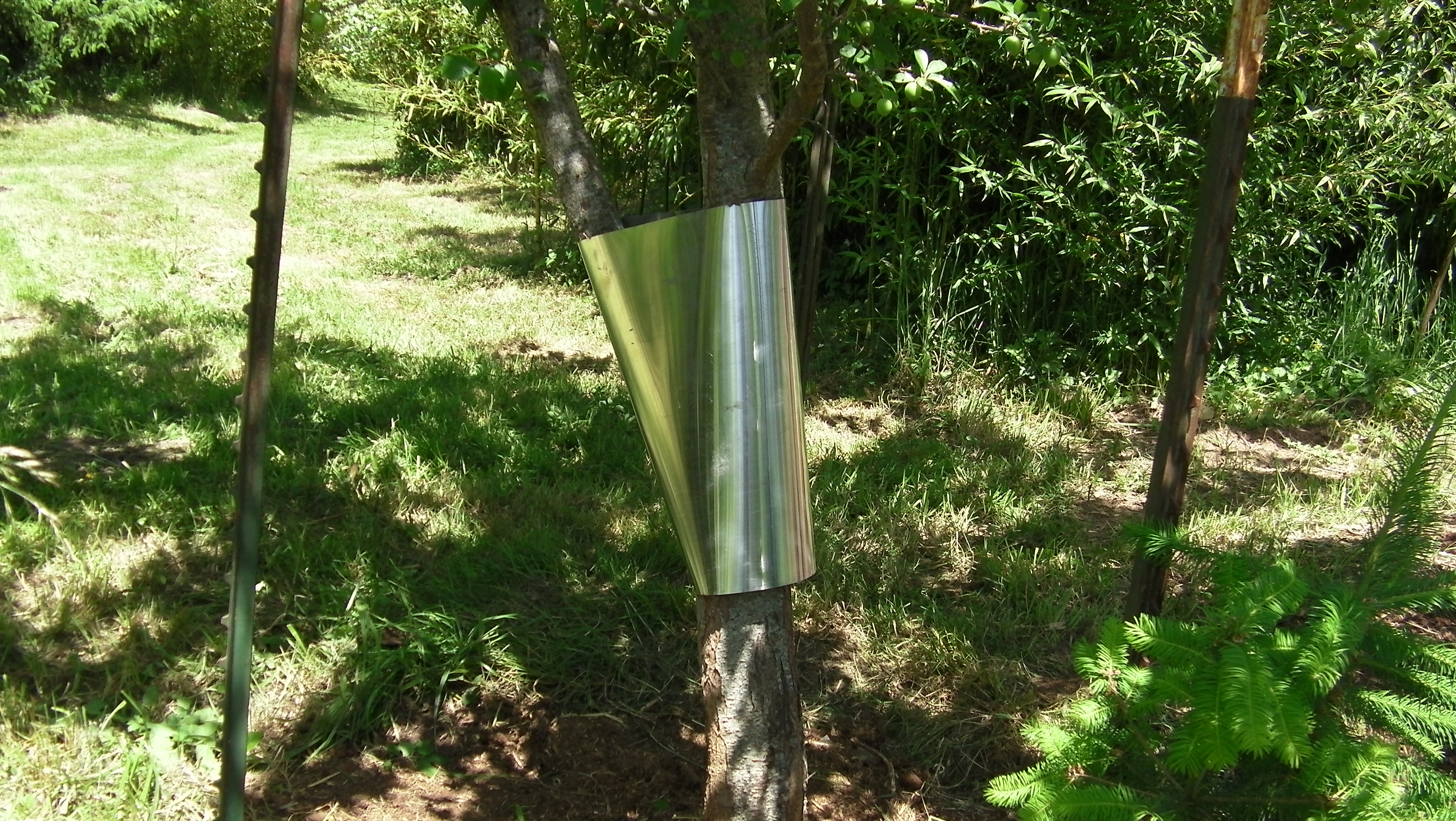
I had noticed the sheet metal wrapped around Hal’s plum tree every time we looked at his bee hives. One day I asked about it. “It’s to prevent the raccoons from getting a foot hold on the plum tree.”
Even Hal’s plum tree supports are protected with sheet metal.
I removed the wire deer cage and bought a roll of sheet metal to prevent the raccoons from climbing the trunk. I figured if Hal had success with it, so would I.
July 7, 2013 These branches were starting to break under the weight of all those plums.
I copied Hal’s method of holding up the branches. These supports also serve to keep the branches higher off the ground so the raccoons can’t pull on them. Hope they can’t climb 2×4’s. Footnote: I traded the 2×4’s for 2×2’s the next day…I didn’t want to take any chances.
Even this young tree has plums. I didn’t want to pull off the deer fence so I hung the sheet metal on it, hoping the height is up far enough that the raccoons can’t climb it. The plums are getting ripe so we’ll soon find out.
July 19, 2013,,,My sweetheart has enough plums for the first batch of plum jam. Carmen approves.
The deer help themselves to the dropped plums. We’re happy to share.
Blackberries are considered to be Oregon’s largest nectar flow, starting mid to late June.
If you have clover in your yard, you have a ready excuse NOT to mow the lawn…“I’m just helping out the bees!”
We see hedges of Escallonia on our morning walks. If I bring a camera, it’s easy to get pictures.
It looked like this bee was ‘biting’ the pollen grains off the anthers. I slowed down the video to see better, but it’s soft on focus. Then the deer found it, now it’s gone.
Wallflower, (Erysimum) blooms all summer…and the Bumblebee, honeybees, and butterflies can be seen sipping nectar.
It took us a while to identify this moth. It’s a Ctenucha multifaria, appearing on our Echium tree, June 28, 2013. I couldn’t find any videos on this, so mine might have to be the first one.
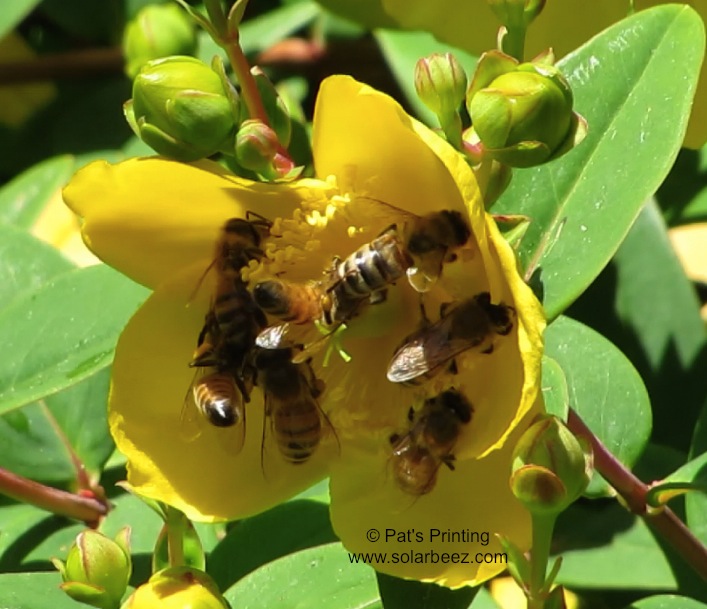
June 8, 2013 I feel like it ought to be stitched on my belt…”Seven bees on one blossom.”
This Hidcote hypericum, commonly called St. John’s Wort or Aaron’s Beard was given to us by my mother-in-law about 20 years ago. We never knew how much bees like it until recently, when we started keeping bees…but like it they do. I often stop to watch them in a frenzy hurriedly climbing over and through the anthers. Hidcote hypericum grows in a bush unlike the Hypericum Calycinum, Creeping St. John’s Wort, that grows along the ground.
Hypericum Calycinum on left…Hidcote Hypericum on right. I think the one on the left is much prettier, but I’ve never seen any honeybees on it. The Hidcote Hypericum grows in a big bush about 8+ feet wide by 8+ feet tall. (3 m x 3 m)
These two bees got into a disagreement over who gets to work the flower. I didn’t see it until I played the video on the laptop. The bee on the left was working the blossom first. I slowed down the action on the video so you could see it better.
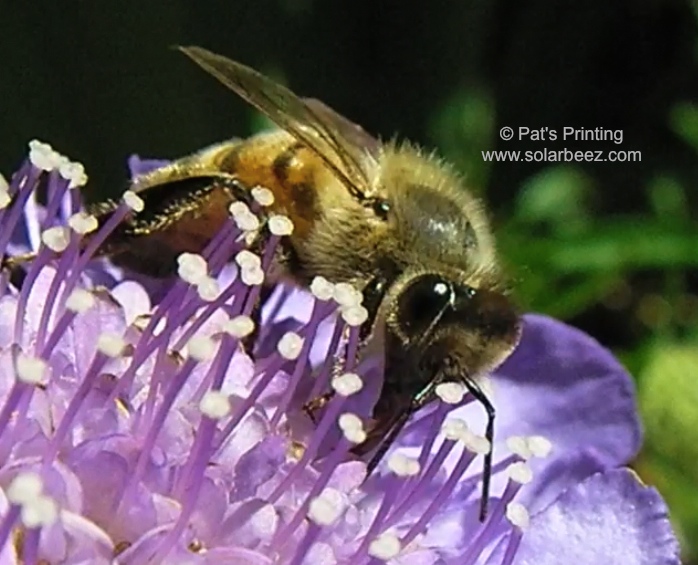
June 8, 3-13…Scabiosa, (Pin cushion flower) is a great bee-loving flower. It fits in the home garden well, is easy to grow, and you’ll never get tired of watching the bees get nectar from it.
It helps to have a camera to look at the bees because they move so fast. I slowed the video so you can see the bees better.
June 11, 2013…Yucca Trees started blooming a few days ago. 12-26-13…Just found out these are called New Zealand Cabbage Trees.
Footnote: 12-26-13 Jeff Ollerton, a Professor of Biodiversity in the Department of Environmental and Geographical Sciences at the University of Northampton. says what I’m calling “Yucca Trees” are more likely “New Zealand Cabbage Trees,” (Cordyline australis )
June 11, 2013…A bee with pollen baskets full heads back to the hive from the New Zealand Cabbage tree
June 11, 2013 The Wallflowers attract many different kinds of wild pollinators, including this bumblebee which we think is a bombus Melonopygus.
You’re CHEATING ON ME!!! Sometimes a bumblebee will stab a hole directly into the nectary, bypassing the pollination route…other bees will use that hole as well. It’s a good thing comfrey can spread by root propagation.
































 Adventures in Natural Beekeeping