My son teaches chemistry. He likes to show experiments that his students can relate to. In this example, he wants to show what happens when you pour some water on calcium carbide.
Archive for the ‘Uncategorized’ Category
My Son, the Chemistry Prof
Posted in Uncategorized, tagged calcium carbonate and water reaction, chemistry experiment on November 3, 2013| 6 Comments »
Cemetery Bush
Posted in Bee to Flower relationship, Bee-loving flowers, Music video, Natural Beekeeping, Uncategorized, Videos, tagged Averill Pioneer Cemetery, Bandon Lighthouse, bee-loving flowers, bees pollinating cotoneaster, Cotoneaster, honey bees, macro nature video, nature photography, Wild pollinators on October 29, 2013| 1 Comment »

Cemetery bush, July 1, 2013
In July I noticed honeybees were pollinating these bushes in the cemetery. I took photos so I could show them to knowledgeable people to ID them. I asked quite a few people who had no idea what those bushes were. Jim, the volunteer at the cemetery, said at first he thought they were planted, but later he realized the birds must have dropped seeds where the mower couldn’t reach and they just grew without being cut.

July 1, 2013 Bees love this bush. Circle shows the color of pollen.

October 26, 2013…we suddenly realize this is a cotoneaster bush. It’s just so obvious with the red berries. Thanks to the bees the birds will benefit.
I shot some video of the blossoms with the bees getting nectar. If I see the birds eating berries, I’ll get a video on them.
Cough And Sore Throat Soothing Honey Lollipops
Posted in Cooking with honey, Uncategorized, tagged Healthy Halloween candy on October 26, 2013| 4 Comments »
Here’s a healthy homemade Halloween candy that can double as a cough and sore throat remedy.


Emily Heath, one of my UK beekeeper/blogger friends, mentioned in her recent post about the London Honey Show that she is suffering from a very bad cold.
Another blogger friend, Solarbeez, asked me if I had a honey recipe that could soothe Emily’s symptoms.
Of course I do!!
Here is my recipe for Cough and Sore Throat Soothing Honey Lollipops. They are easy to make and effective and taste wonderful as well.
Ingredients:
You will need at least a 1/2 cup to 1 cup of honey, a non stick surface, a candy thermometer and 10-12 sucker sticks. You can also add flavors such as lemon, lavender, or cinnamon if you desire. A 1/2 tsp. should do the trick.
Directions:
First lay out your sucker sticks, spaced apart, on your non stick surface. (You can make cough drops by omitting the sticks!)
Pour the honey into a heavy sauce pan and…
View original post 226 more words
Stringing Wire
Posted in Coos-Curry Electric Cooperative, Uncategorized, tagged Changing out old power pole, Line men working on October 22, 2013| 2 Comments »

This power pole has been deemed unsafe. The power company says it’s 50 to 60 years old. I’m wondering if it dates back to the Rural Electricification Administration (REA) created by President Franklin D. Roosevelt in 1935. It’s possible because many rural areas were not served until the late 50’s.
To further complicate things, another power company has strung wires that criss cross these wires. To fix everything, the experts decide to go underground. That’s when the Horizontal Directional Drill Crew set up their equipment. Shortly after they drilled and buried the conduit, Hoss, from Coos-Curry Electric Cooperative, shows up in my driveway. I remember Hoss because he was involved in getting my 3-phase electricity to my shop for my big press back in 1987. “Which day is better for us to kill the electricity for a few hours,” he asks. “Well, Wednesday is better because Thursday is my biggest production day,” I reply. That’s how it all started. I was flattered the power company would ask.
Wednesday morning brought Randy to my driveway. Years ago when I first started my ‘at home’ print shop, I had a power outage. I called the power company to report the outage. The dispatcher took down the information and asked if this was the print shop. I replied “yes,” wondering how he would know that. “Well, we will get you back up because we know you have deadlines.” I was so surprised I didn’t think to tell him my deadlines weren’t all that important that I couldn’t wait it out. That was a good 25 years ago. The person who took that call was Randy. I found that out several years later.

Randy tells me what he’s planning to accomplish today.
Since the power is off, I get my camera out to document the project. One by one I ask the crew if they wouldn’t mind if I video them while they’re working. Everyone is okay with that. I’m impressed with their professionalism. It’s obvious they have trained for this. With very little conversation (except when they are answering my questions) they go about the business of getting the cables into the conduit, pulling out old wires, splicing in new ones. They work fast.
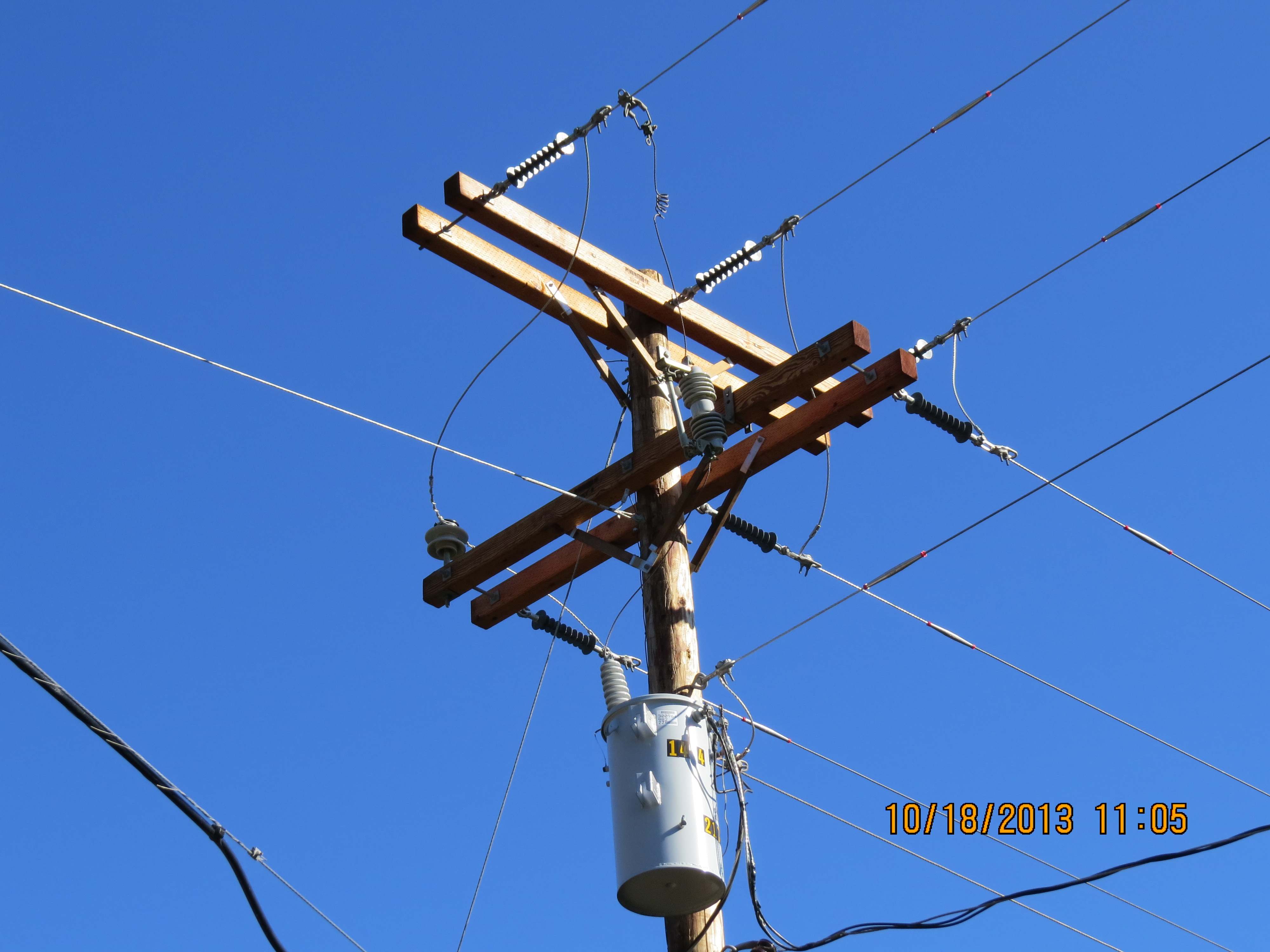
After a couple of days, the new pole is placed, wires hooked up, and potential problem is prevented.

Boulders protecting the junction box, grass growing already. Well done!
I want to thank Coos-Curry Electric Cooperative for maintaining the power, averting a possible dangerous problem, and letting me shoot the videos.
Stringing wire, The movie…
Planting, Splitting, and a Walk on the Beach on a Sunny Sunday
Posted in Bee to Flower relationship, Bee-loving flowers, Uncategorized, tagged Seaweed on beach, Splitting firewood, Violet geranium pollination, Vision Violet pollination on October 7, 2013| 4 Comments »

These bee-loving Vision Violet geraniums will bloom from early spring to late summer.
Thanks to Bob and Carol Fischer for providing the starts for us.

Vision Violets attract bees. They bloom from early spring to late summer…The bees love them and so do I.
Want to see the bees on the flowers?
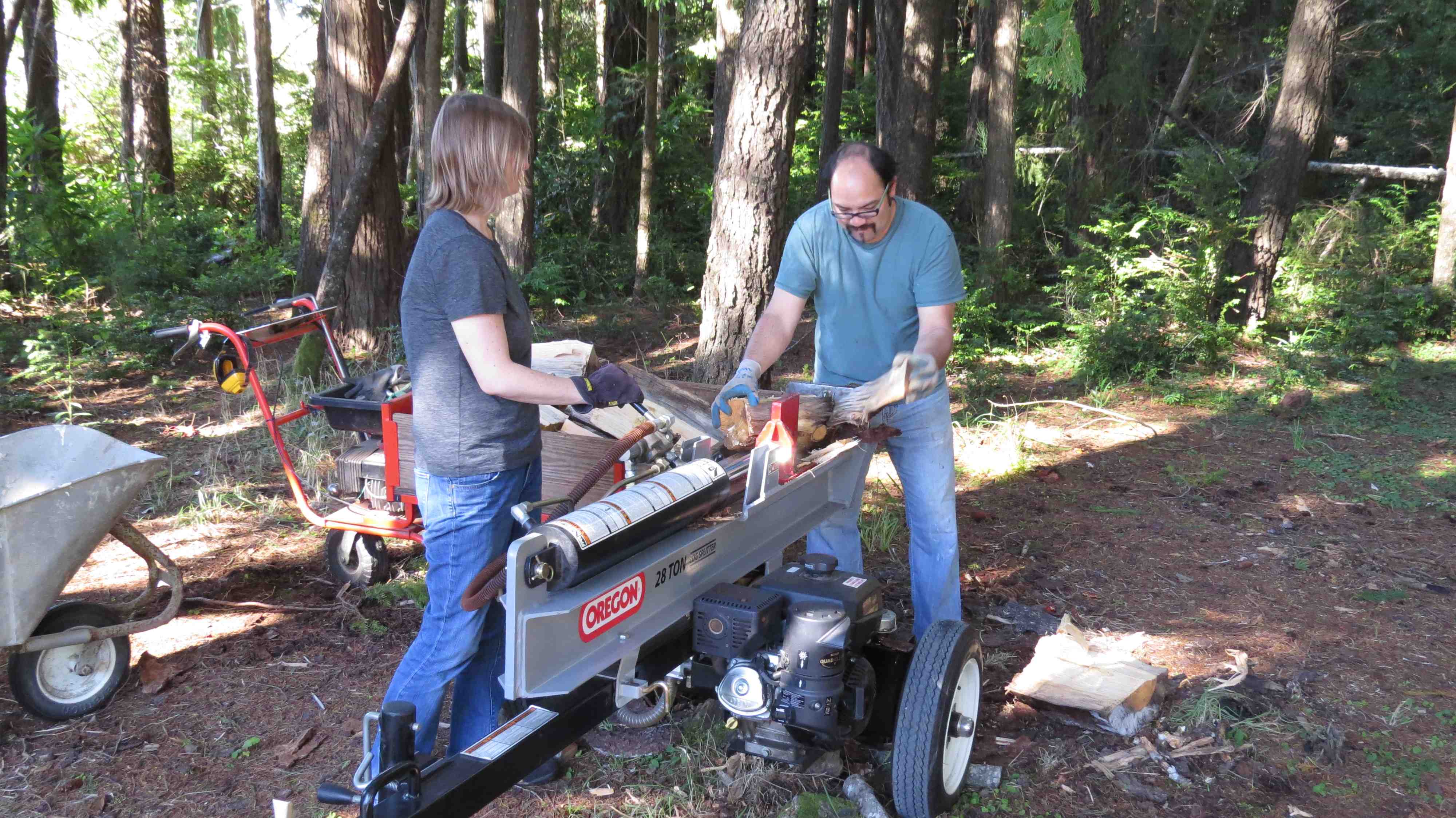
Daughter and son-in-law help us with firewood splitting and stacking every year.
After several hours of lifting, splitting, carrying, and stacking, we treat ourselves to a walk on the beach. We are greeted by the incoming tide washing in and over the mounds of seaweed.

Piles of seaweed get pummeled by the incoming tide.

Seastacks on a perfect sunny Sunday. Why don’t we walk on the beach more often?
The Horizontal Directional Drill
Posted in A Horizontal Directional Drill, Uncategorized on September 3, 2013| 5 Comments »

A Horizontal Directional Drill in action
I bet you always wanted to see a Horizontal Drilling Machine in action. I know I did and when the crew set up on my road, the opportunity presented itself. I took some pictures so you get the idea. The video lets you watch the crew work without having to stand in the rain. As it happens, the owner/operator is a cousin of fellow beekeeper/photographer, Mureen Walker in the county to the south of me, the only connection I can claim that has anything to do with bee keeping. 🙂
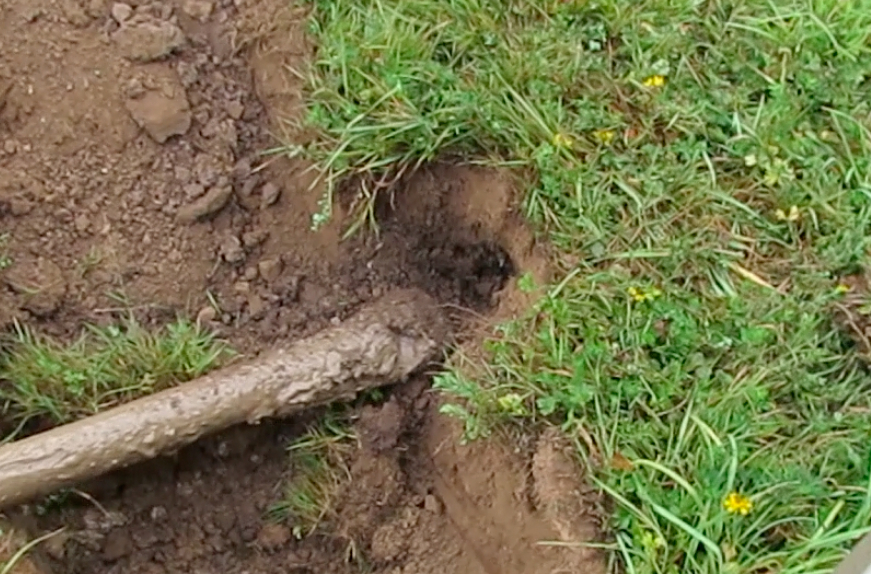
Starting the drill bit and aligning the path

Adding another 10 ft. rod extension. The machine unscrews one end, backs up, another rod is lined up perfectly, it screws in tightly and carries on.

Remote Guidance System…The one on the left shows the pitch or slope of the bit, The one on the right (YAW) shows the side to side movement.

The rod rack holds four rows of rods 11 deep. That’s enough for 440 feet (134 m). This distance is about 380 feet (115 m), plus there are a few roots along the way. This is going to take a while, I better get some deadlines done.
You might think it would be easier just to dig a trench, lay the conduit in, and cover it back up, but there is a city water main here too.

This pole is about 50 or 60 years old. The wires criss cross with the wires of another utility. A big storm could bring the whole thing down in a dangerous way.
Thank you, power people for taking care of this BEFORE it happens.
The crew and drill in action…
Plum tree protection
Posted in Raccoon protection on plum tree, Uncategorized, tagged garden pests, Gardening, Gardening tips, Protecting fruit tree from raccoons on July 12, 2013| 2 Comments »

March 23, 2013…Lots of blossoms, hope the bees find them.
We’ve got plums!!! Yes, we’ve had plums before, but not like this. Our honey bees and Mason bees have contributed to the success…but now I’ve got to protect them. I’ve also seen evidence of raccoons. I won’t show the photo of raccoon scat, just trust me on this. Raccoons can climb fences (in my case, deer cages that surround the trees.) Last year we had counted about 40 to 50 plums almost ready to harvest, which disappeared overnight from raccoons climbing the wire deer proof cage.
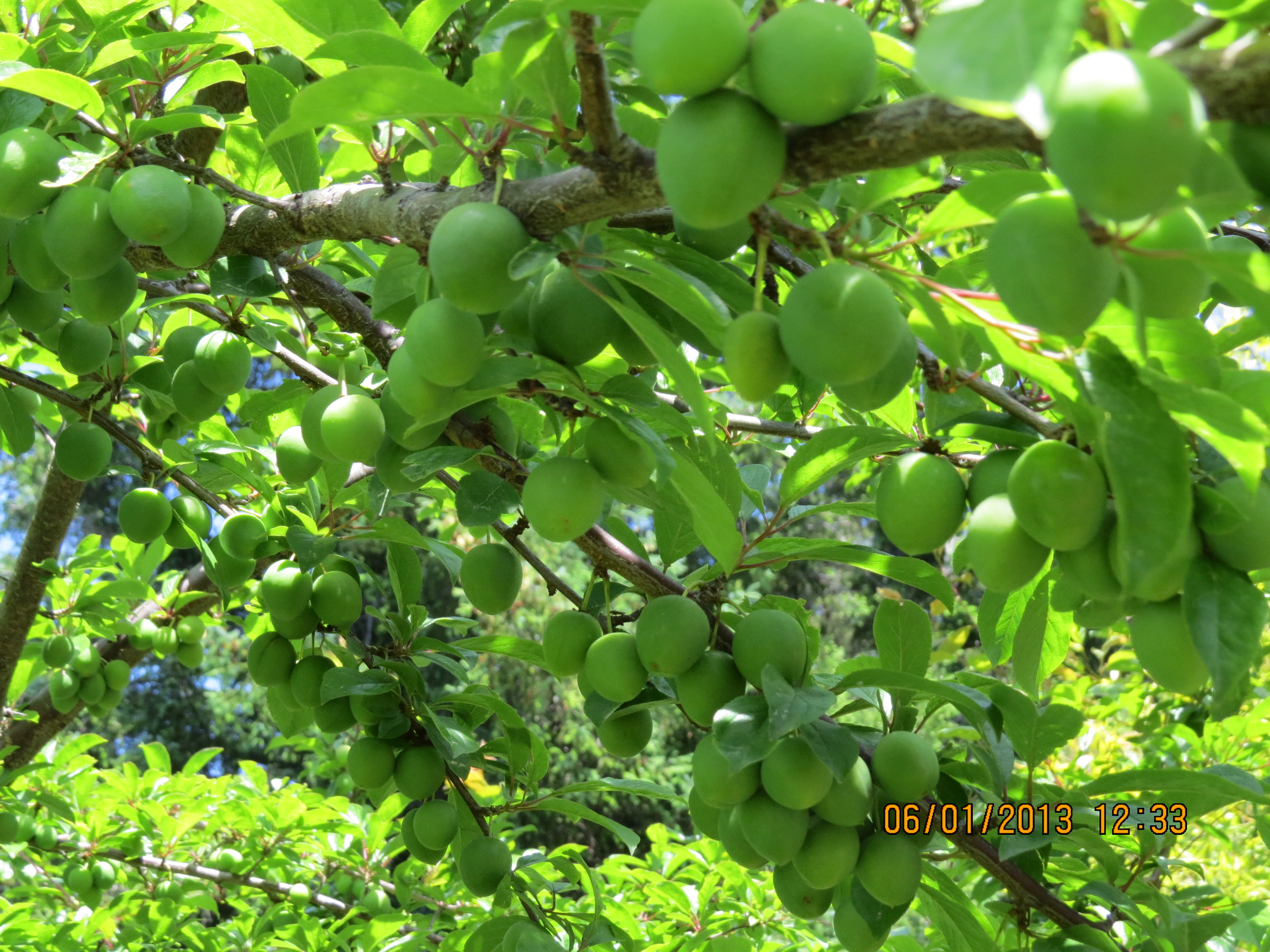
6-1-13…Plums getting bigger…Hummm, I better start preparing raccoon protection.

I had noticed the sheet metal wrapped around Hal’s plum tree every time we looked at his bee hives. One day I asked about it. “It’s to prevent the raccoons from getting a foot hold on the plum tree.”

Even Hal’s plum tree supports are protected with sheet metal.
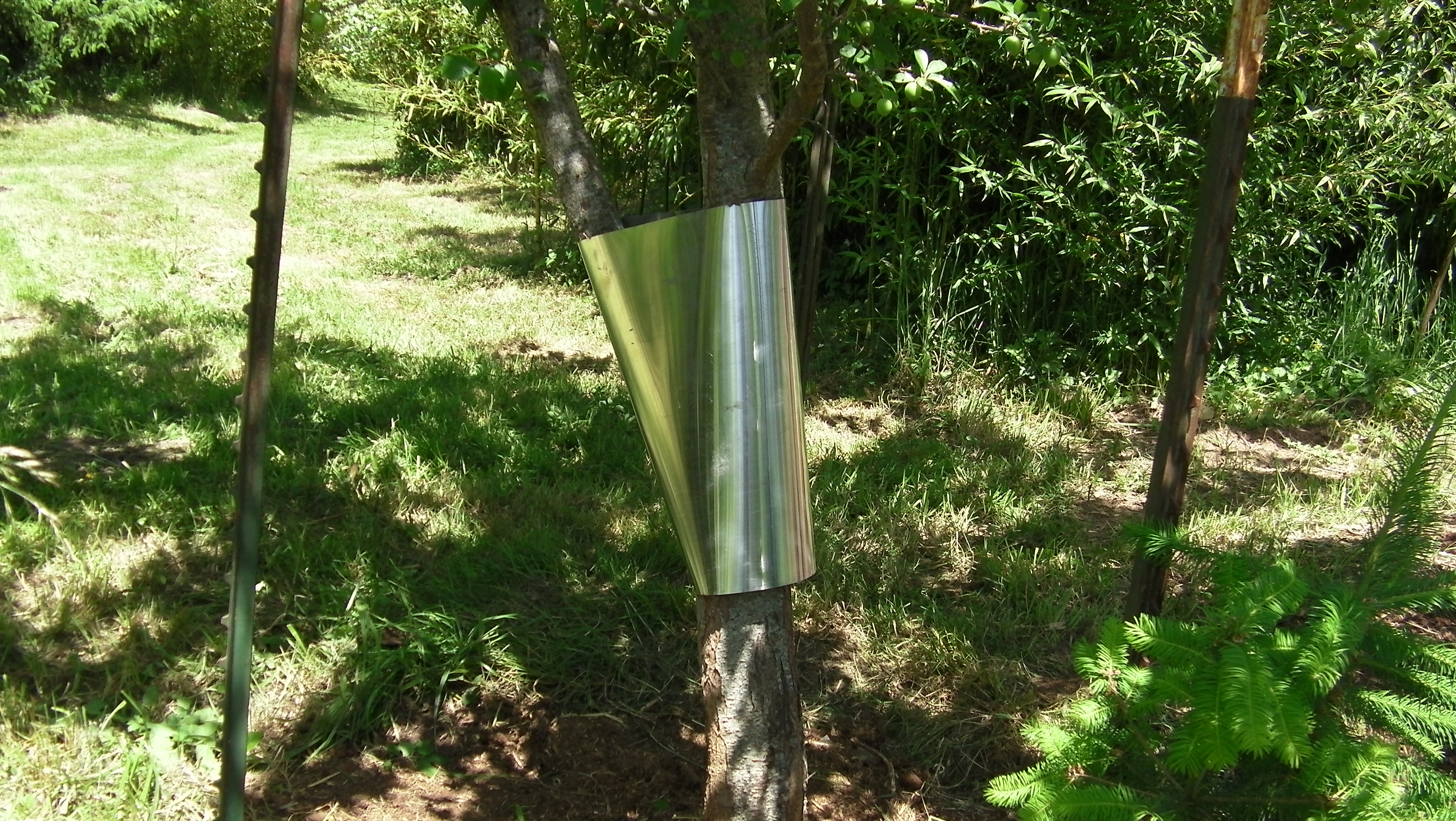
I removed the wire deer cage and bought a roll of sheet metal to prevent the raccoons from climbing the trunk. I figured if Hal had success with it, so would I.

July 7, 2013 These branches were starting to break under the weight of all those plums.

I copied Hal’s method of holding up the branches. These supports also serve to keep the branches higher off the ground so the raccoons can’t pull on them. Hope they can’t climb 2×4’s. Footnote: I traded the 2×4’s for 2×2’s the next day…I didn’t want to take any chances.

Even this young tree has plums. I didn’t want to pull off the deer fence so I hung the sheet metal on it, hoping the height is up far enough that the raccoons can’t climb it. The plums are getting ripe so we’ll soon find out.

July 19, 2013,,,My sweetheart has enough plums for the first batch of plum jam. Carmen approves.

The deer help themselves to the dropped plums. We’re happy to share.
A Mother’s Day Swarm
Posted in Hives, Natural Beekeeping, Perone Hive, Swarms, Uncategorized, Videos, tagged beekeeping, Capturing a swarm, honey bees, natural beekeeping, natural comb, Oregon Coast, Perone hive, Steinkraus-Morse Swarm catcher, swarm retriever on May 14, 2013| 5 Comments »
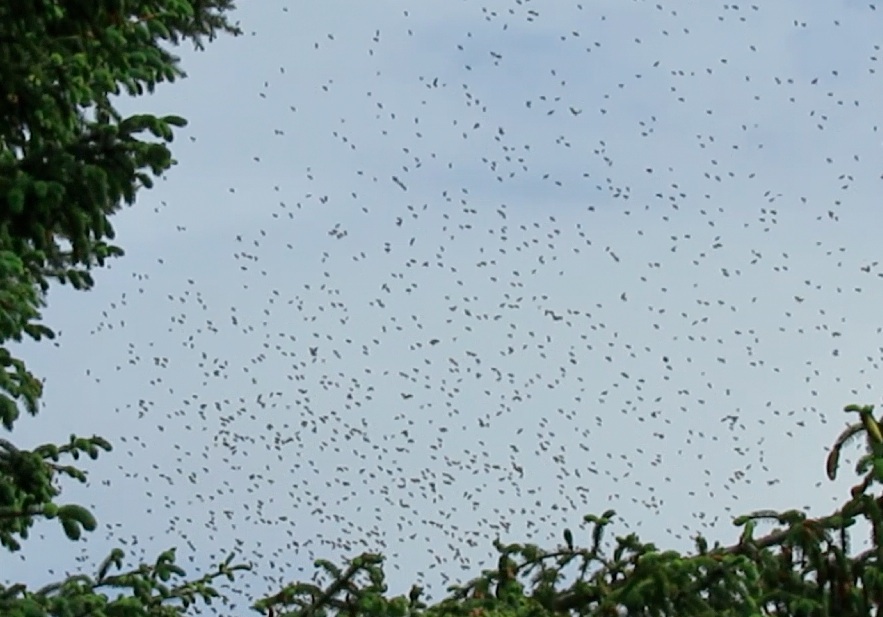
Bees, bees, bees
My daughter, son-in-law and new granddaughter were visiting us on Mother’s Day. It was about noon, we were eating lunch…my wife spots this horde of bees. “It’s a swarm!” We all rush out to see it. I think it probably came from the Warre hive that’s been threatening to swarm for over two weeks. Son-in-law says, “What can I do to help you capture it?” My wife says, “Oh, thank you, Jim, I didn’t want to have to do it.”
We let the bees coalesce on a branch.
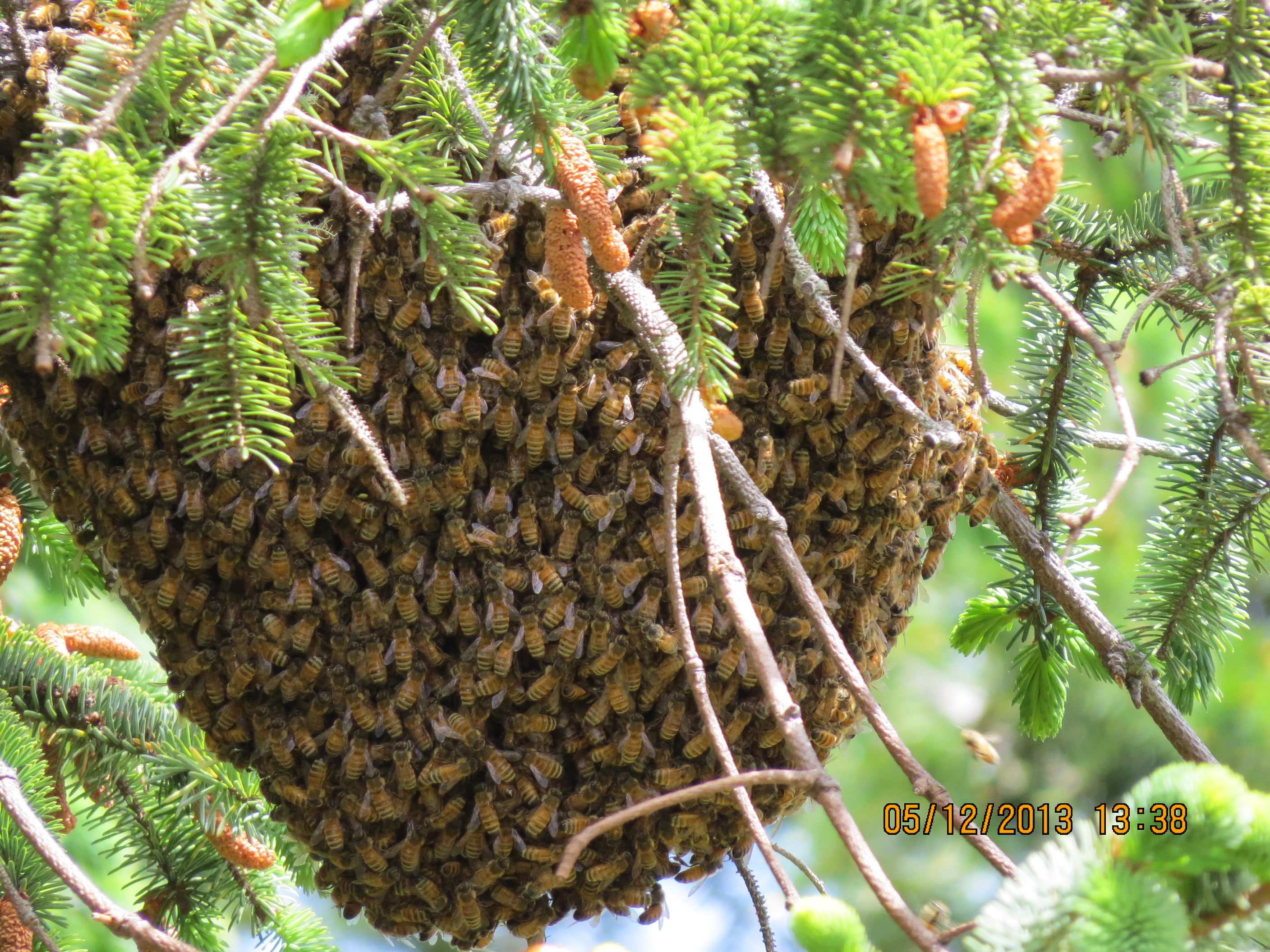
They settled down into a nicely shaped swarm about 12 feet (4 m) up.
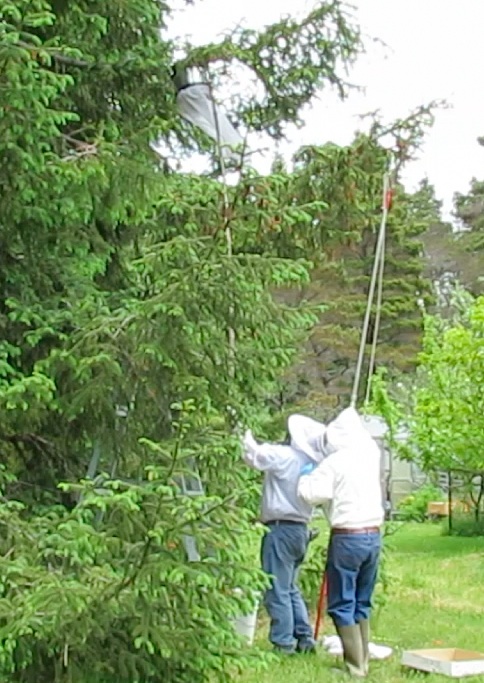
This calls for the Steinkrauss-Morse swarm retriever
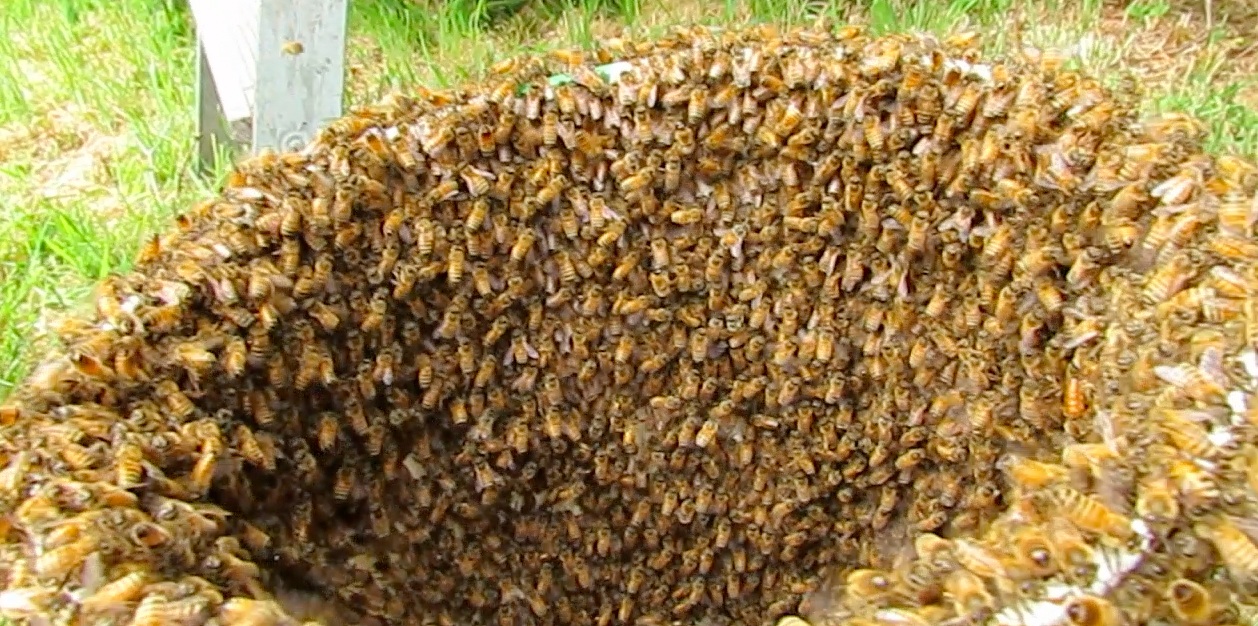
A Bucket of Bees
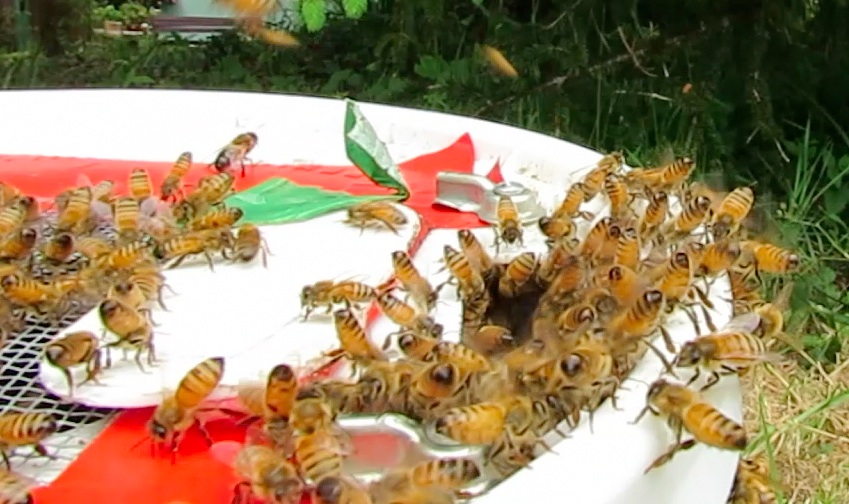
“The queen is over here…” Bee stick their abdomen up in the air to fan the pheromone letting stragglers know where the queen is.
It was a win, win, win. My son-in-law, Jim Montgomery provided much needed assistance in corralling the swarm, my daughter was able to capture the whole event with the camera, and my wife was able to spend more time with our granddaughter.
Where did the bucket of bees go? Well, I would have liked to put it into Bee-atrice log hive because it’s a ‘prime’ swarm, but Bee-atrice was already occupied. I found someone who didn’t want package bees. He has built a Perone style hive. It’s a BIG hive. I like his attitude…”The Perone hive is built for the bees, not the bee keeper. It’ll hold about 150,000 bees. I’ll let them build their own comb.” We arrange for the ‘hand-over,’ and meet at a very scenic state park along the Oregon Coast.

Vernon built his own Perone hive. He brought the framework holding 17 top bars where the bees will build their natural comb. He held it up so we could see how big the hive will be. In the background you can see why I wanted to live on The Oregon Coast.
Flowers blooming mid-winter
Posted in Bee-loving flowers, Log hives, Natural Beekeeping, Uncategorized, Videos, Warre Hive, tagged bee-loving flowers, beekeeping, Canon SX-50, Gardening, honey bees, Log hive wood carving, Log hives, macro, natural beekeeping, nature photography, organic gardening, photography, pollinators, Sanyo Xacti, Sustainable living, Verticle log hive, Wild pollinators on February 22, 2013| 8 Comments »
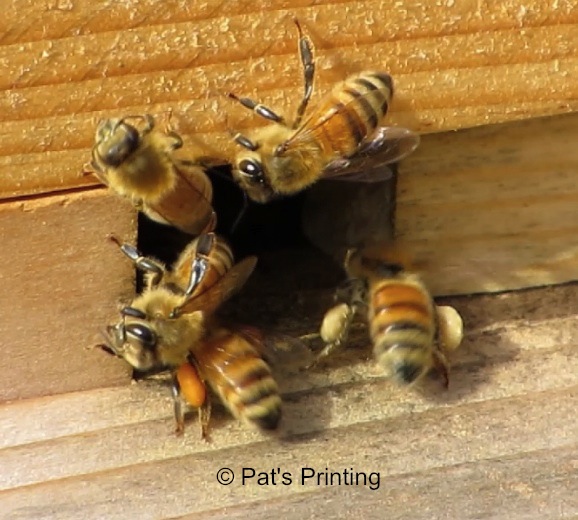
Could this be pollen from the laurel bush? It’s been blooming since Jan. 22. I know that you can’t tell by color alone, but at this time I don’t have the microscope or capability to properly identify pollen.
This is the first year I’ve had bees into winter. I was curious about all the types of pollen showing up on the bees entering the hive. I was sure some of it was gorse since we seem to have so much of it growing thanks to Lord Bennett of Ireland.
I made a 9 minute movie showing the bees on different types of flowers and Shigeo of the local bee association demonstrates how to transplant an Echium. I realize that some people can’t spare the time, so I’m offering ‘screen saves,’ as well.

Laurel blooming by Bonnie’s house

Bee on laurel, tannish-colored pollen…January 22, 2013

Bees on rosemary, at City Hall, February 8, 2013
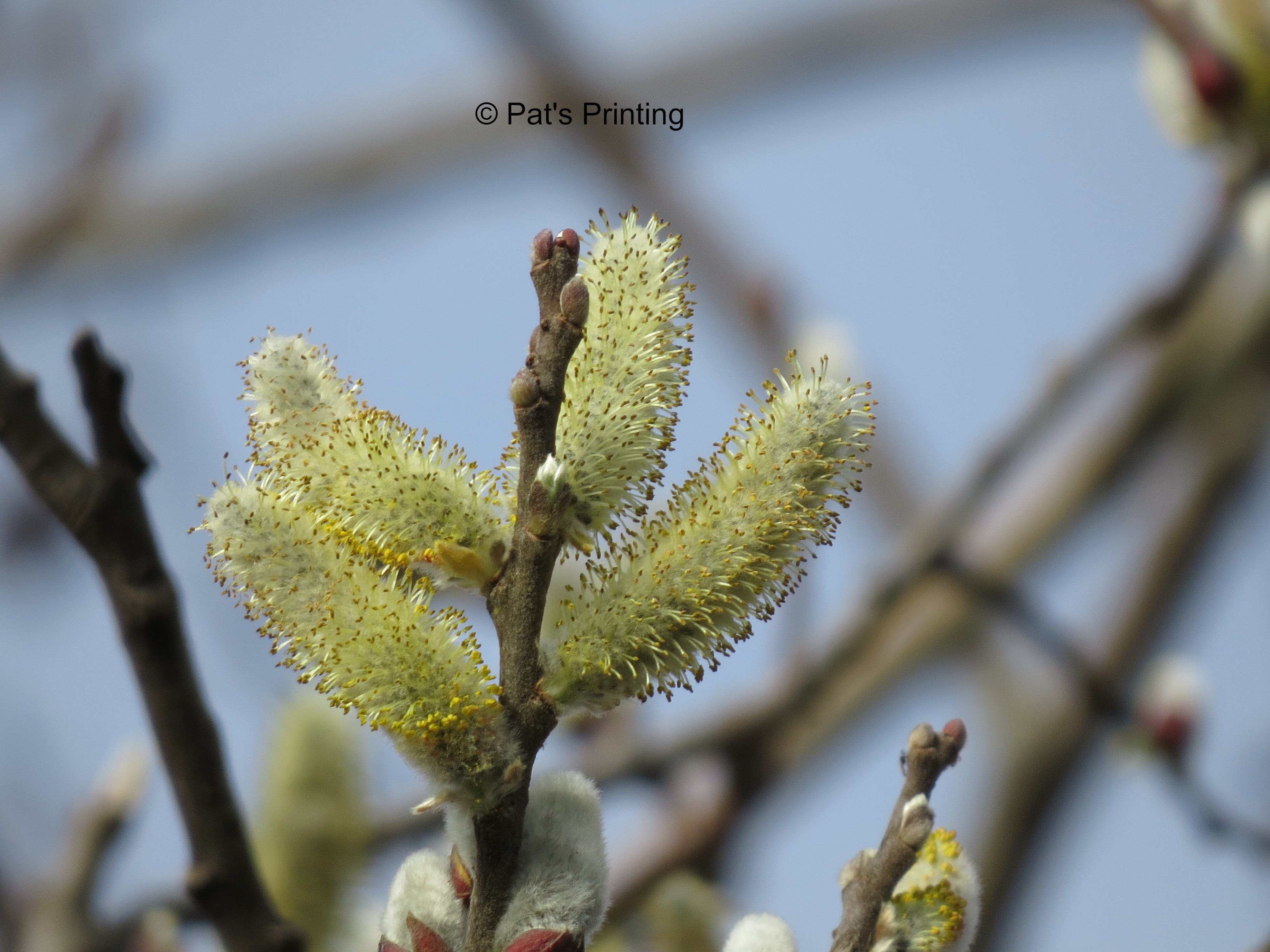
Willow catkins blooming near our hives…sun comes out…bees love it. February 8,2013

Gorse pollen is orange…I had been hoping it was the yellow pollen I had seen going into the hive. February 13, 2013

The video shows this bee in slow motion working the pollen back to it’s pollen sac. I didn’t see it at first until a more experience bee keeper showed me. February 13, 2013
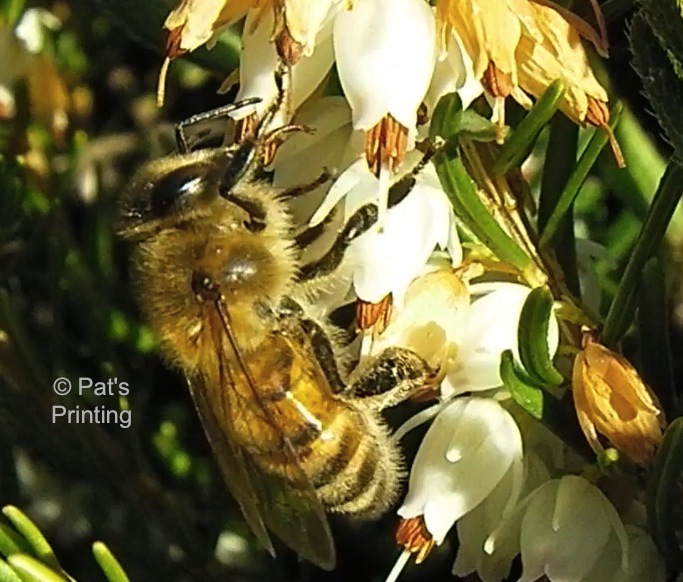
Bee on heather, 2-14-13, right up the street from Joe and Karen’s house.
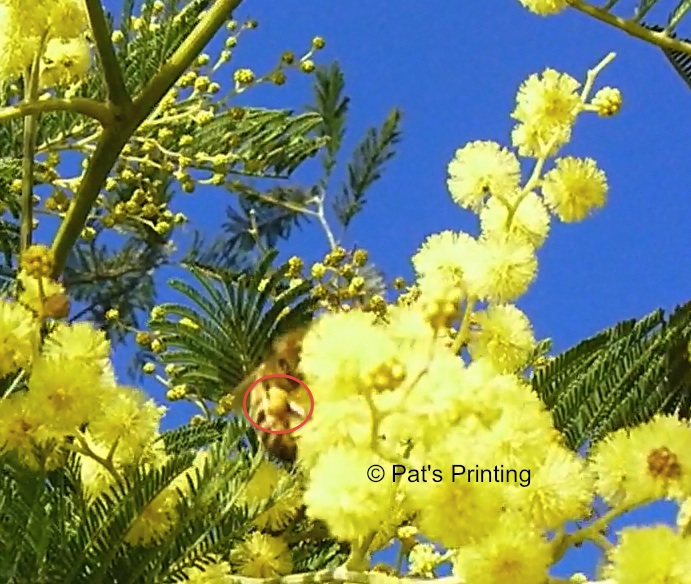
Bee on acacia, 2-15-13…Shigeo showed me this place to get some video. By the time we got to it, the bees were returning to home so I only got a short clip of it.

Shigeo shows how to transplant an Echium Tree.

Echium for 2013…I’m hoping this plant will shoot up 10 feet (3 m) starting about April or May. The tarp protects against freezing weather.

These are the plants that Shigeo demonstrated in the video, how to transplant. They are my hope for 2014

We planted this echium in late October 2011. It just stood still for several months. About April or May we noticed it had grown to about 10 feet. The bees worked it for 3 solid months.
The video shows the bees in action on the flowers. I used the Canon SX-50 (50x optical zoom) on the laurel as well as the willow catkins. My little pocket camera, a Sanyo Xacti performed admirably for the rest of the close ups…I love the ‘super macro’ feature.
Hugelkulture
Posted in Gardening, Hugelkulture, Raised beds, Uncategorized, tagged Centipede, fungal pipi, hugelkulture, metabolites, Nasturtiums, nature photography, organic gardening, rotten logs raised bed, Snail-eating ground beetle on February 17, 2013| 17 Comments »
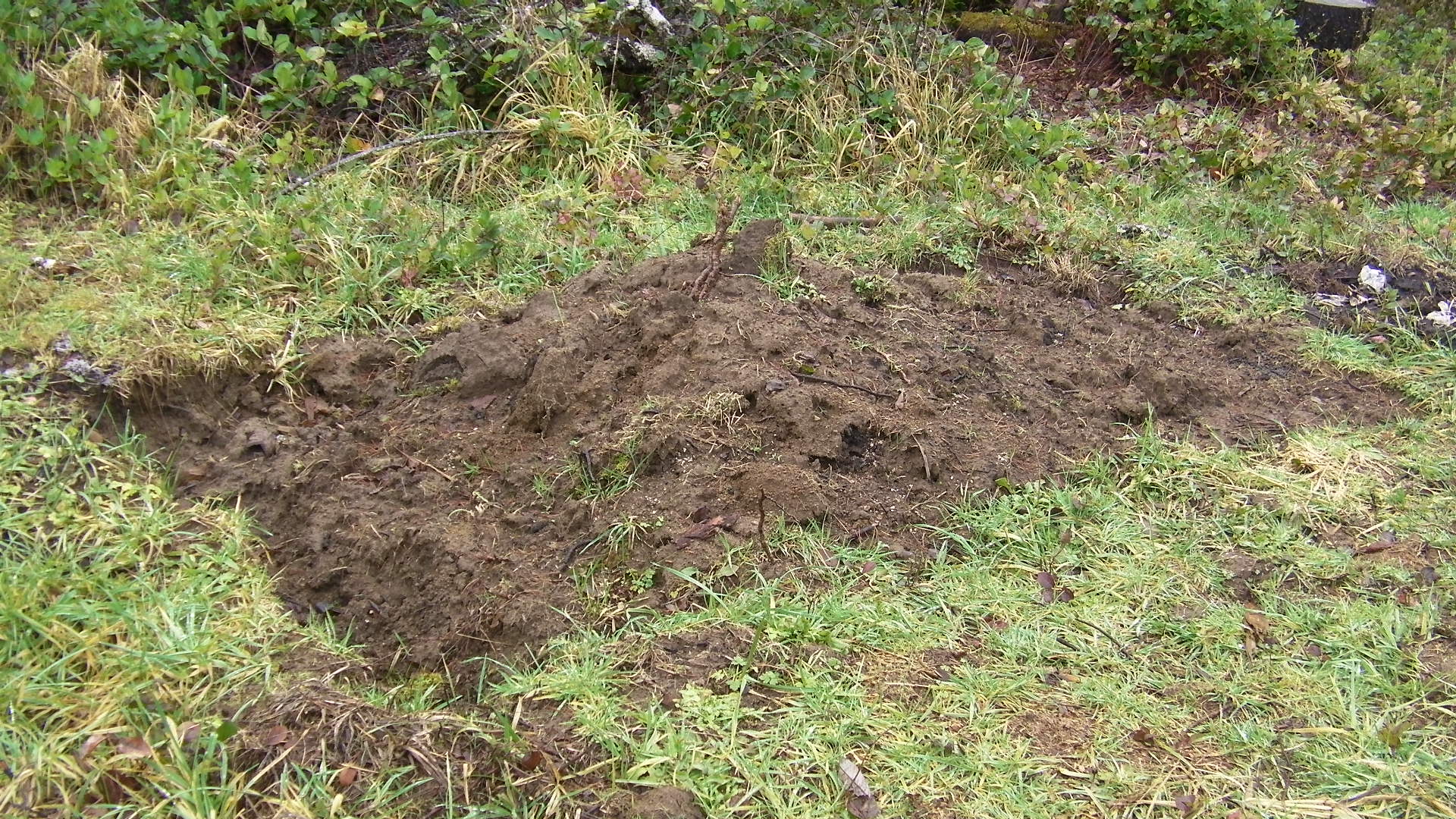
This little patch of land is going to be the hugel kulture bed
My son started looking at perma culture ideas. “Hey Dad, I was thinking about building a Hugelkulture bed. You put in logs that are loaded with mycelium and plant in them. You don’t ever need to water.” “That’s interesting,” I said, “but you don’t have any room for something like that.” “No, but YOU do.” That’s true and I’m always game for trying out a new idea. My son has helped me so much. He installed my solar projects, roofed my house and shop, and repaired a bunch of rotten siding on the house. Why NOT try this out? I’ve got lots of rotting logs too.

Pick and shovel work. I don’t think I’ll go down any deeper because I’ll hit water at this time of year.
This will be a little experiment. I’d like to plant bee-loving flowers like Nasturtiums, Wall flowers, and other flowers which the deer won’t eat so I don’t have to fence it in.
The next weekend I was working on a burn pile of accumulated storm debris. This had been piled up for a few months. We wanted to get the place cleaned up for visitors, this weekend it wasn’t raining, so it must be done NOW! Everything was so wet it, it was going to be an all day affair. As the fire got built up, I started pulling out branches to burn and starting seeing wonderful mushrooms and examples of mold. I didn’t want to destroy this beautiful living organism, so I started collecting it for my hugelkulture bed.
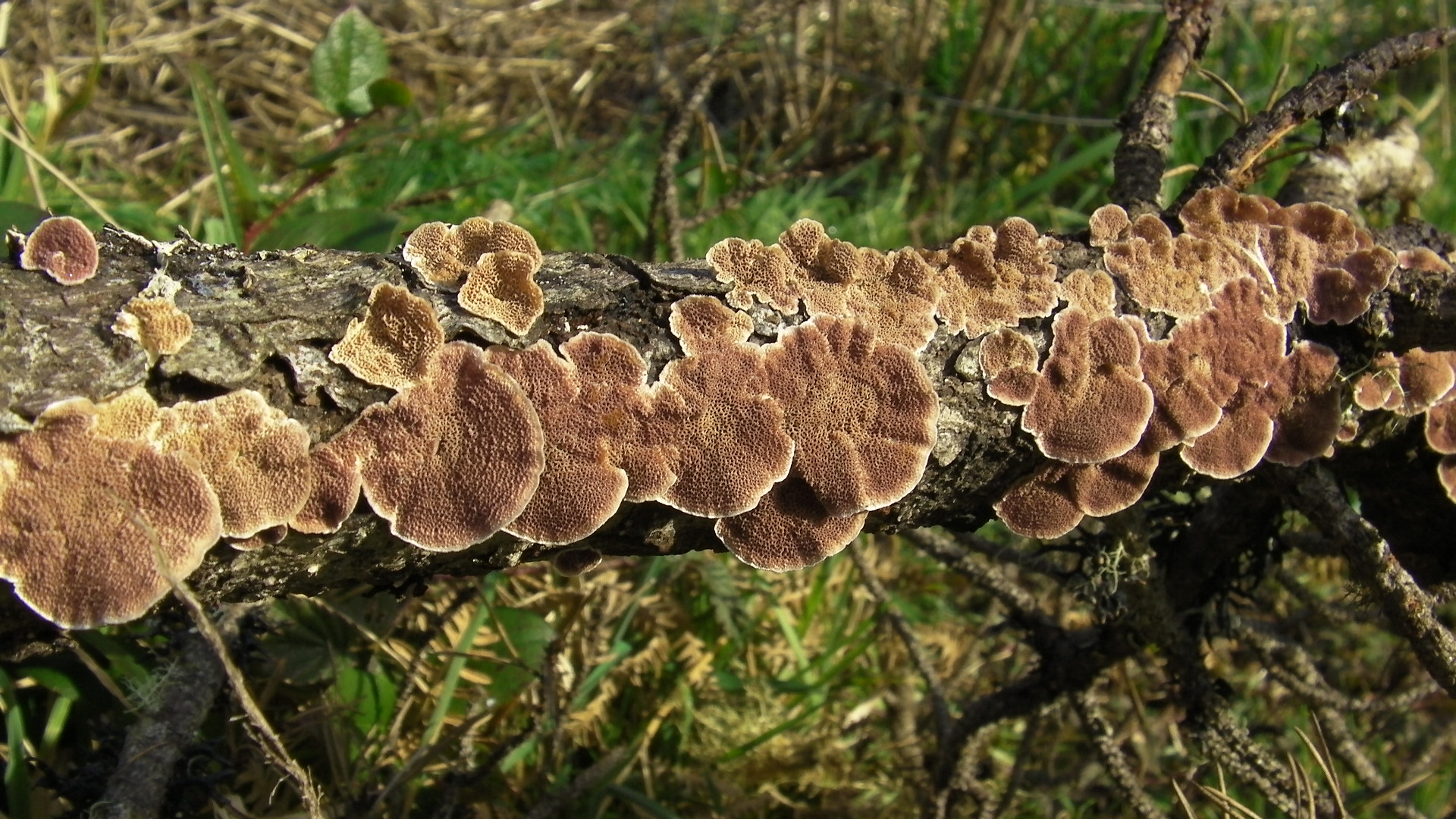
White tinged dusty pink mushrooms on log. It would be a shame to burn it…toss it into the bed.

Yellowish mold on branch…into the bed.

White mold on stick

Whitish pink mold on branch, save it for the bed.

This log is saturated, look at the moss growing one it. Good candidate for the bed.

I figured the mushrooms and mold grew because it was in contact with the wet branches and bamboo leaves, so I better add them to the mix.

Double split-pea soup made from scratch by my sweetie, so we could eat while I tended the fire.

Not as neat and tidy as the Hugelkulture web site, but hey, let’s face it, nature is messy.

Rotting firewood, mold all over it…into the bed

Are these drops of sap? Are they feeding the mycellium? I don’t know, but it’ll be good for the bed.

What it looks like so far
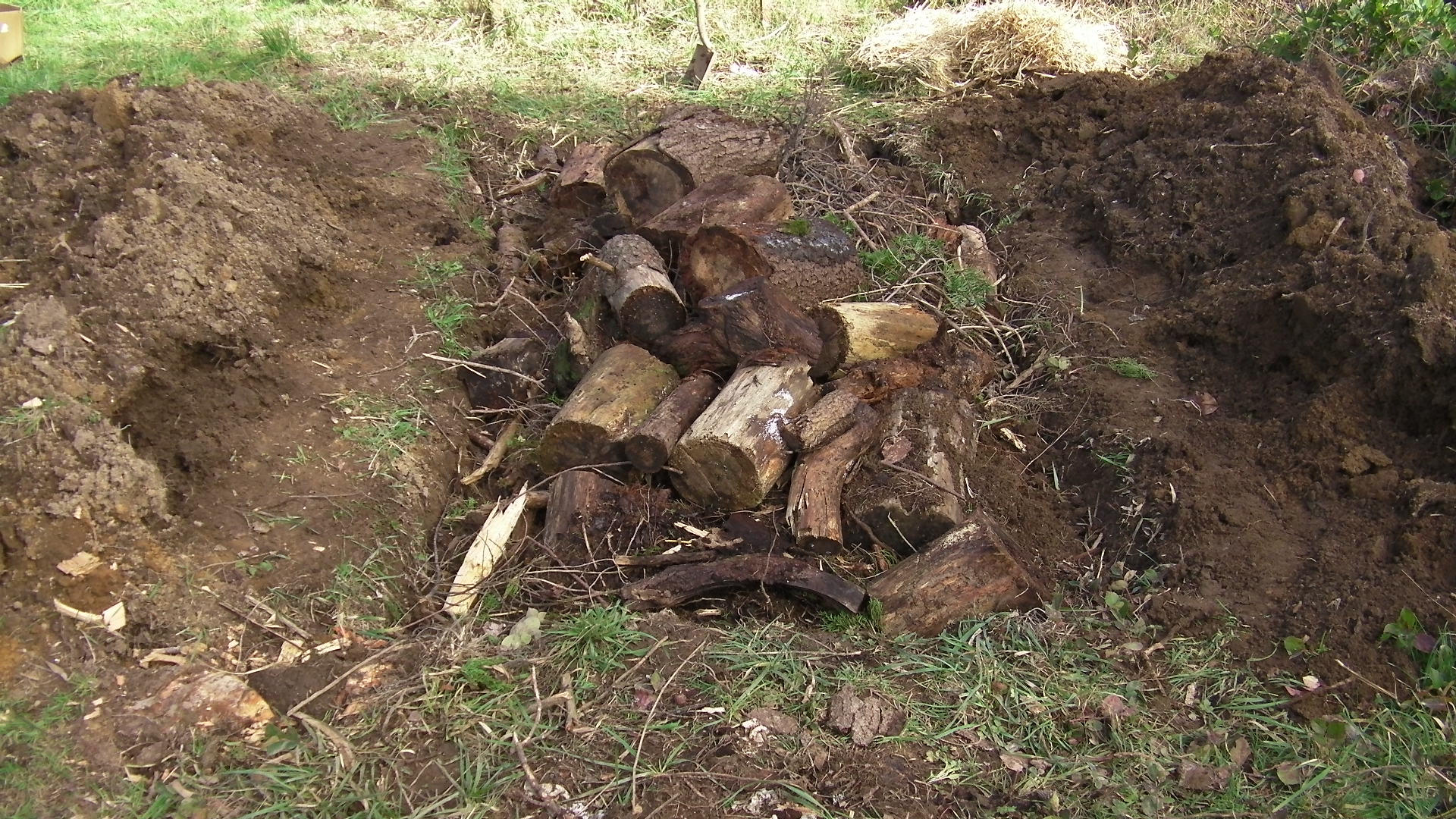
Added more rotting logs this end
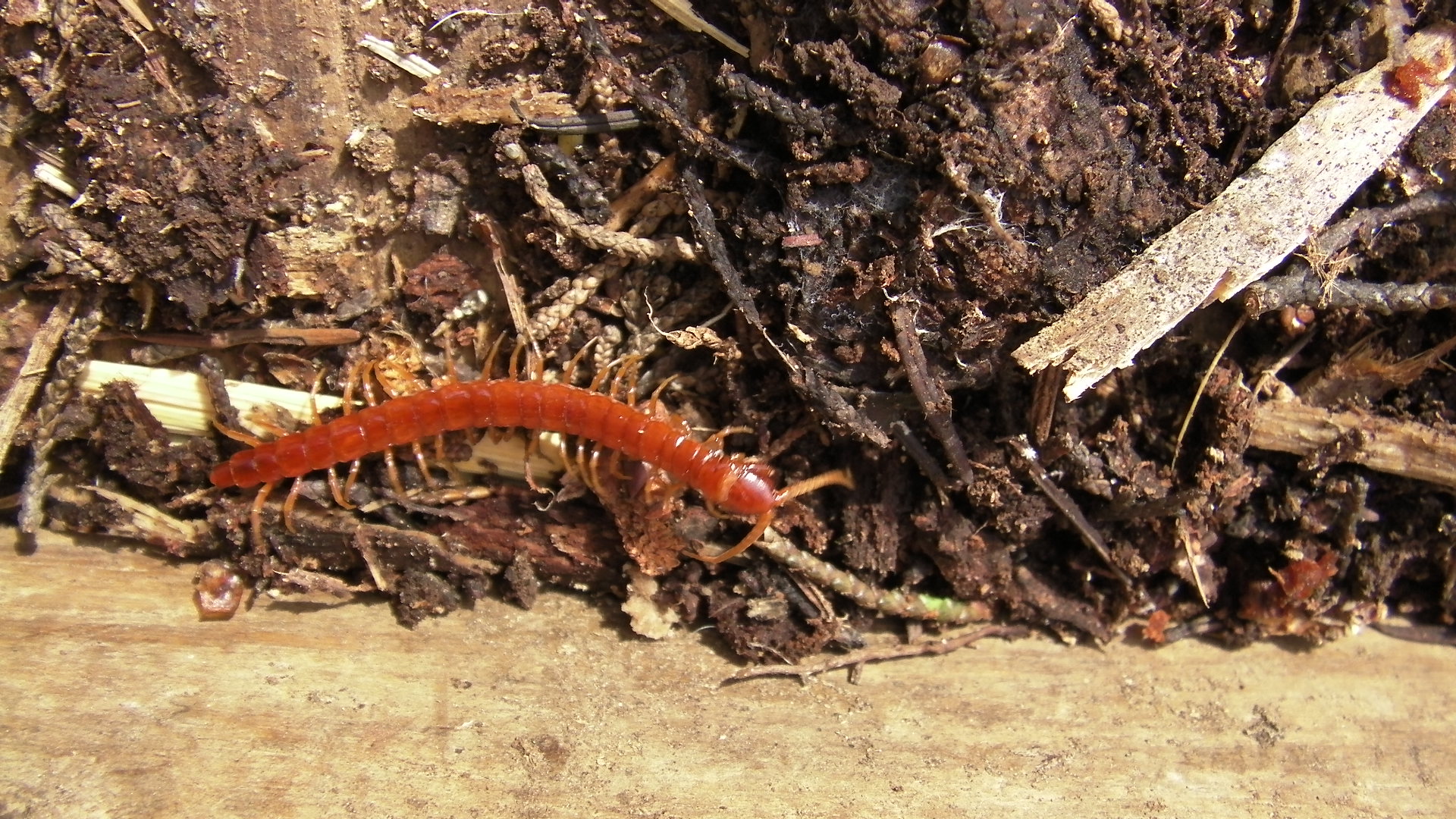
Centipede roaming around in the power wagon…into the bed!


I think it’s ready…”Honey, you can shovel all the dirt in now…”
The folks at Shroomery were kind enough to tell me what the ‘mushrooms’ are…”metabolites, fungal pipi, or mycelial piss.”
 Adventures in Natural Beekeeping