Archive for the ‘Natural Beekeeping’ Category

June 3, 2013...bees on the Ceanothus (California Lilac) at Amy's house.  Everyday we walk past her house anticipating this bloom.  It finally happened.

June 3, 2013…bees on the Ceanothus (California Lilac) at Amy’s house. Everyday we walk past her house anticipating this bloom. It finally happened.

It seemed like June was really busting out all over.  Everyday there were opportunities to shoot videos.  It got so bad I was hoping for some rainy days so I could get some print work done.

I’ve taken  some screen shots to show some of the blossoms.  These are from the videos just in case you don’t have time to watch them.

June 3, 2013...Ceanothus

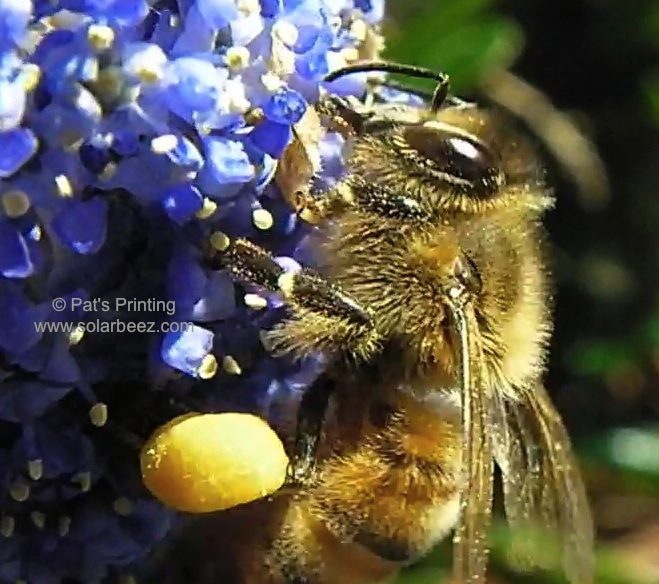
June 3, 2013…Ceanothus with a honeybee.  Look at the pollen in her pollen basket.  I was surprised it was so yellow, but it you look closely the tips of the blossoms are the same color.

June 3, 2013...Since I had my camera out, I dropped by Bob and Carol's house.  They've got all kinds of flowers growing instead of a lawn.  Bob said I could take all the shots I wanted.

June 3, 2013…Since I had my camera out, I dropped by Bob and Carol’s house. They’ve got all kinds of flowers growing instead of a lawn. Bob said I could take all the shots I wanted, so I started on this Red Thyme growing low to the ground.

June 3, 2013...While I was at Bob and Carol's I spotted this little gem.

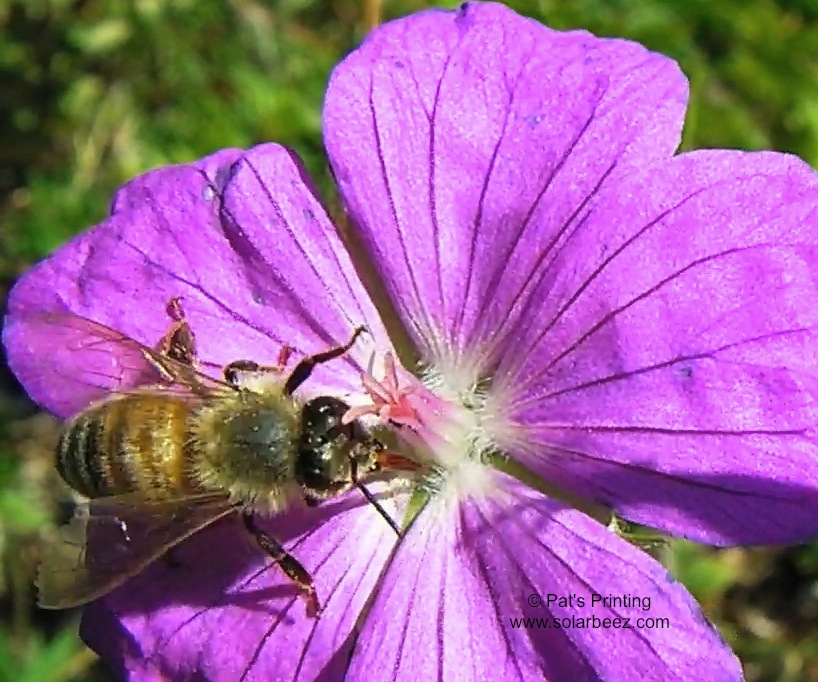
June 3, 2013…While I was at Bob and Carol’s I spotted this little gem.  It’s a geranium by the name, “Vision Violet.”

Read Full Post »

My first Warre is the one on the left.  It's the one I was really worried about not getting through the winter.

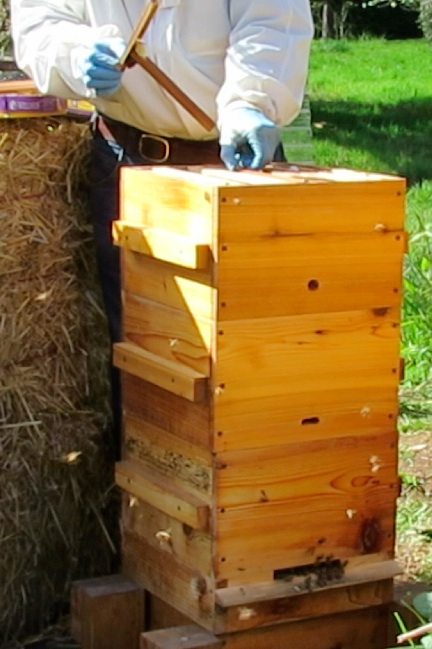
My first Warre is the one on the left. It’s the one I was really worried about not getting through the winter.  It wintered over with only one box which is now on the bottom.

I don’t know why I was so skeptical when people talked about getting honey bound.  I guess I never thought I’d get ANY honey at all because the summers on the coast are so windy and cool.  Our main goal was to provide a place for the bees to live, let them pollinate our flower and vegetable garden, and just take pleasure in watching them do their thing.

When we captured a swarm last year to inhabit the Warre, it was a small one which seemed to build the first box very quickly and then just stopped building.  I wintered over with just one box and on the advice of many more knowledgeable people, fed the bees a dry sugar paddy.

Bottom box (#1) over wintered successfully.

Bottom box (#1) over wintered successfully.  So we added box #2 in February.

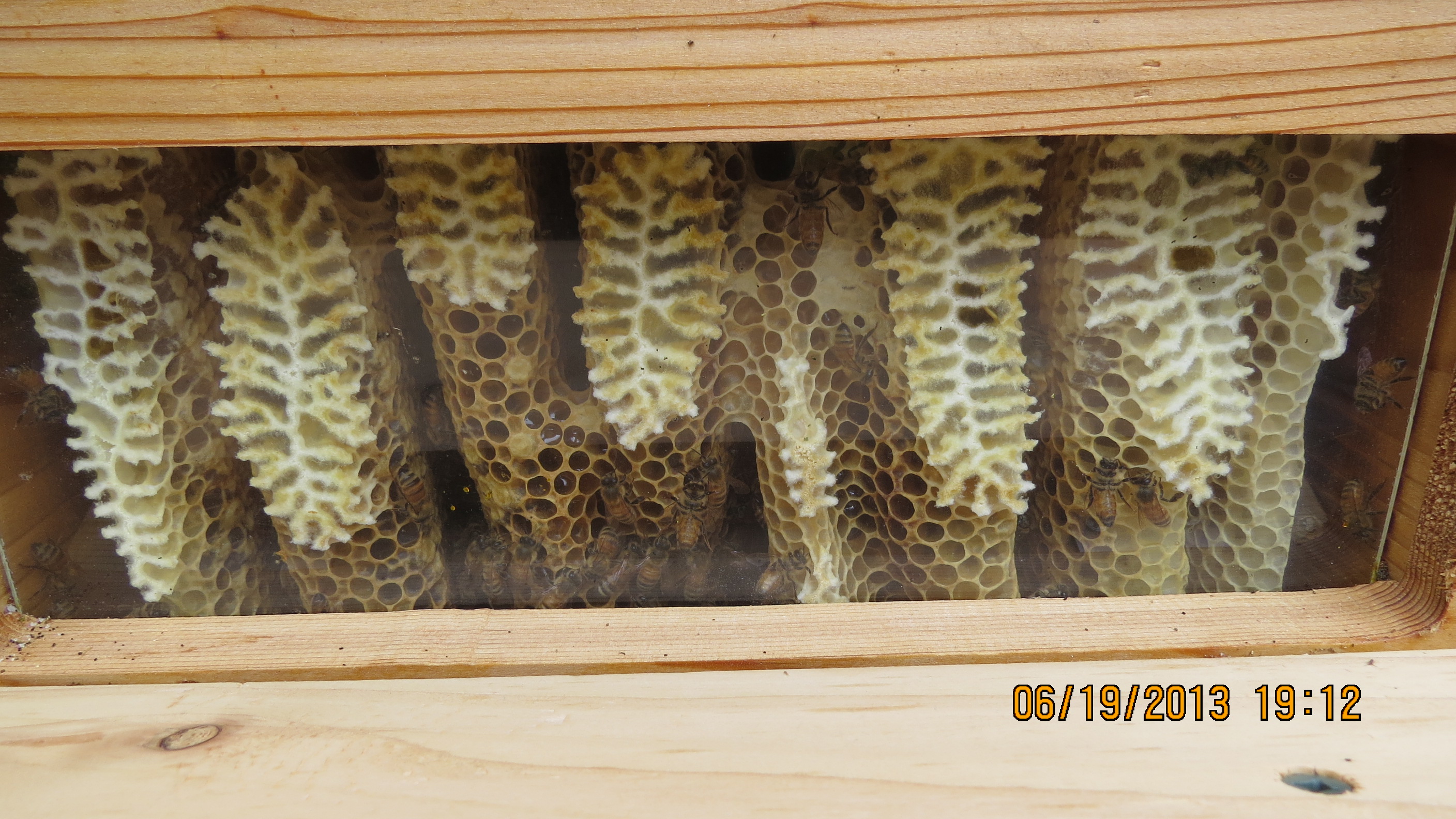
On February 15, I added a second box.  When the bees wouldn’t fill it, I added some comb ladders on March 24th.   The bees immediately started building comb which is full now as can be seen below.

As soon as the comb ladders were added, the bees expanded on the combs so the queen could lay.  When it was 3/4 full, I added a third box.

Box #2  As soon as the comb ladders were added, the bees built fast so the queen could lay. When it was 3/4 full, I added a third box.

Box #3  When box #2 was 3/4 full we added this box, but comb was getting scarce so I tried using  t-posts with a melted wax coating.  Small pieces of comb was 'welded' to the top bars.

When box #2 was 3/4 full we added box #3, but comb was getting scarce so I tried using t-posts with a melted wax coating to act as a ladder. Small pieces of comb was ‘welded’ to the top bars.

Box #3...adding t-posts with small bits of comb 'welded' to them.

Box #3…adding t-posts with small bits of comb ‘welded’ to them on April 2nd.

Box #3 built up so fast we added Box #4 on May 1.  But now we have this honey bound problem as can be seen below…

Box #3 is so full of honey, it's blocking the queen from getting into the top box.

Box #3 is so full of honey, it’s blocking the queen from getting into the top box.  The t-posts worked well.

We didn’t realize we’d get any honey…and really didn’t want to take any…UNLESS there was an excess while a nectar flow was on.   Oregon’s big nectar source of blackberries is going on right now, so   we will put this box #3 on top and the empty box #4 will be inserted between #1 and #2.  If they build that out, I’ll get to harvest the honey.

Fixing the Honey-bound problem

Read Full Post »

This is actually a fly...I didn't know that while I was filming it, but I kept it in the movie so you could see the tongue.  I'm wondering if this inspired 'Alien.'

This is actually a fly…I didn’t know that while I was filming it, but I kept it in the movie so you could see the tongue. I’m wondering if it inspired ‘Alien.’

This is the tail end of the kale flowers.  In April, the bees were so busy on the kale you could hear the happy humming.  In June when I'm finally posting this, the kale has been pulled and hung so the seed pods can dry out.

This is the tail end of the kale flowers. In April, the bees were so busy on the kale you could hear the happy humming. In June when I’m finally posting this, the kale has been pulled and hung so the seed pods can dry out.

We've worked up a flower garden near the bee hives.  This is an Echium which was given to us by Shigeo who was very helpful with his "Big Dog" chainsaw carving out my Bee-atrice log hive.

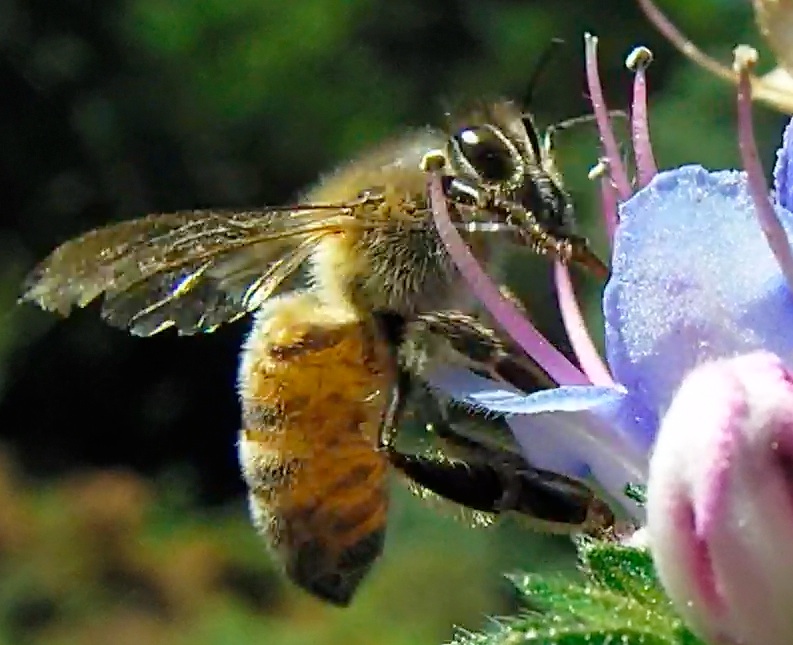
We’ve worked up a flower garden near the bee hives. This honeybee is working an Echium which was given to us by Shigeo who was very helpful with his “Big Dog” chainsaw carving out my Bee-atrice log hive.

Read Full Post »

I just love standing on this bridge and seeing all the work Hal and Patti have done.  It's so beautiful.

I just love standing on this bridge and seeing all the work Hal and Patti have done. It’s so beautiful.

Hal called me up last week to say he took some video of a bee swarm flying INTO his unoccupied bee log.  I’m thinking “Well, that’s a first.  Whenever I see a swarm, they are flying OUT of something…like a hive.”  I had to see this.  While I was there I shot some photos of all the work they have done.  I draw inspiration every time I visit.  It was here that I learned about sedum and what a wonderful bee loving flower that is. There is so much color here, so many flowers.  It surely takes hard work and dedication to keep everything looking so good.

When I first saw all the bees sipping nectar on these sedum, I knew I wanted a bunch.  It's clear it's nectar they are after...I didn't see a speck of pollen in their pollen baskets.

When I first saw all the bees sipping nectar on these sedum, I knew I wanted a bunch. It’s clear it’s nectar they are after…I didn’t see a speck of pollen in their pollen baskets.  This photo was shot at Patti’s garden in September 2012

It didn't take long for the bees to set up home. They  swarmed INTO this log, April 18.

It didn’t take long for the bees to set up home. They swarmed INTO this log, April 18.

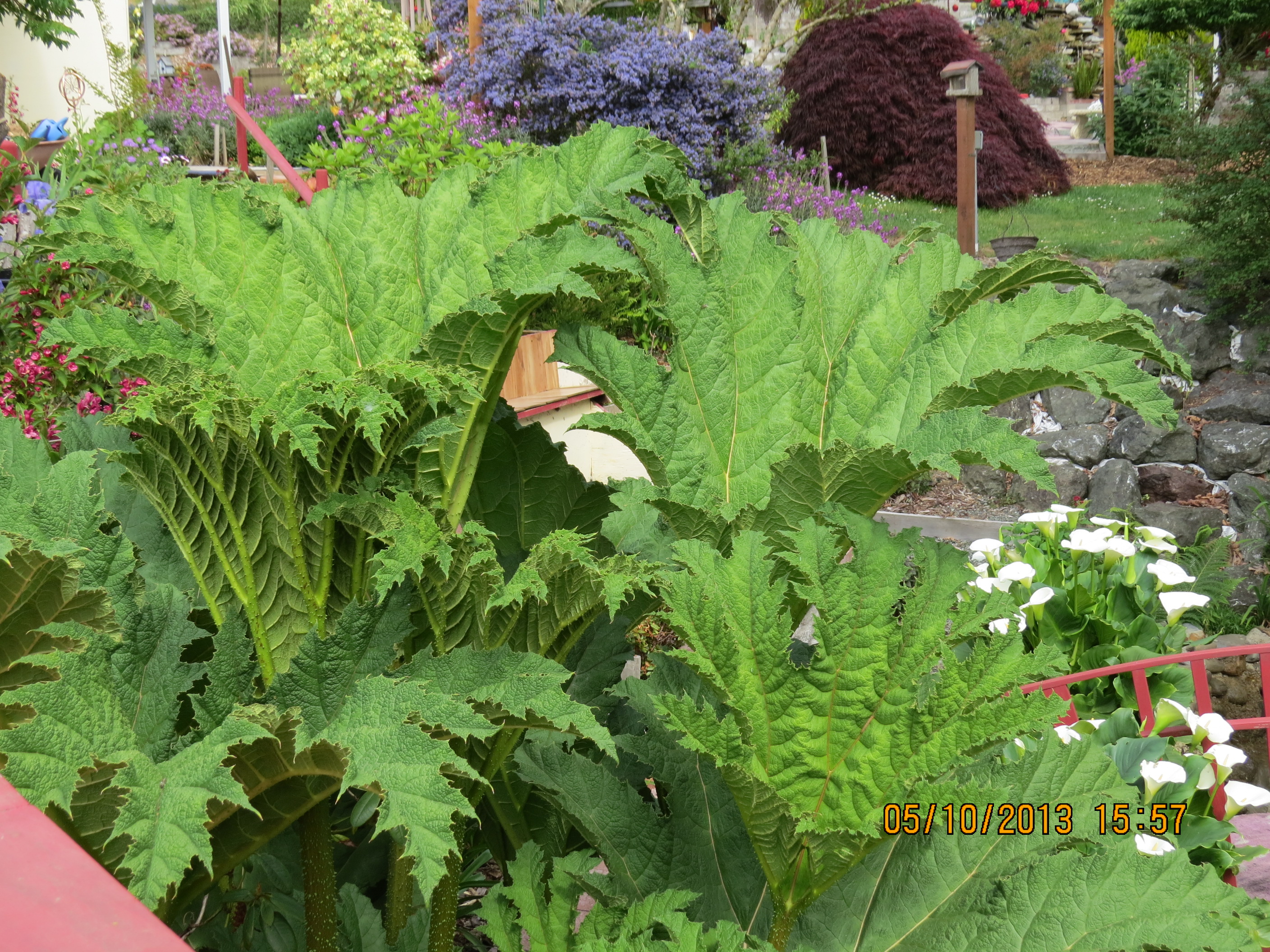
Patti's gunnera growing under the bridge

Patti’s gunnera is growing under the bridge

Hal and Patti on bridge, May 10, 2013

Hal and Patti on bridge, May 10, 2013

This video shows the swarm of bees moving INTO the  vacated log hive.  Hal explains what is going on as he shoots the video on his iPhone.

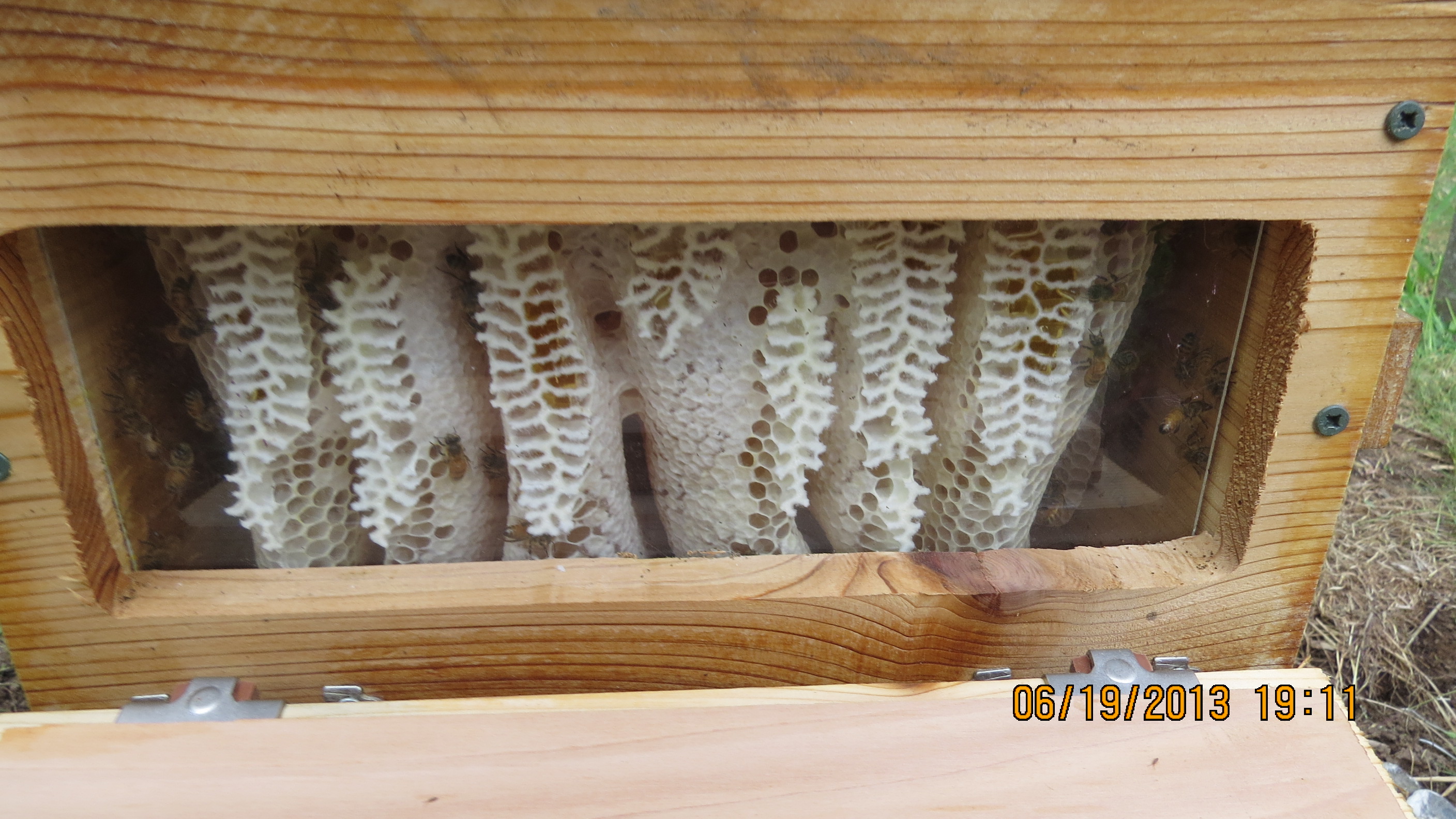
All this is natural comb, built in less than two months from when the bees swarmed INTO the log hive.

All this is natural comb, built in less than two months from when the bees swarmed INTO the log hive.

Hal’s first log hives

Hal talks about his log hive

Read Full Post »

Bees, bees, bees

Bees, bees, bees

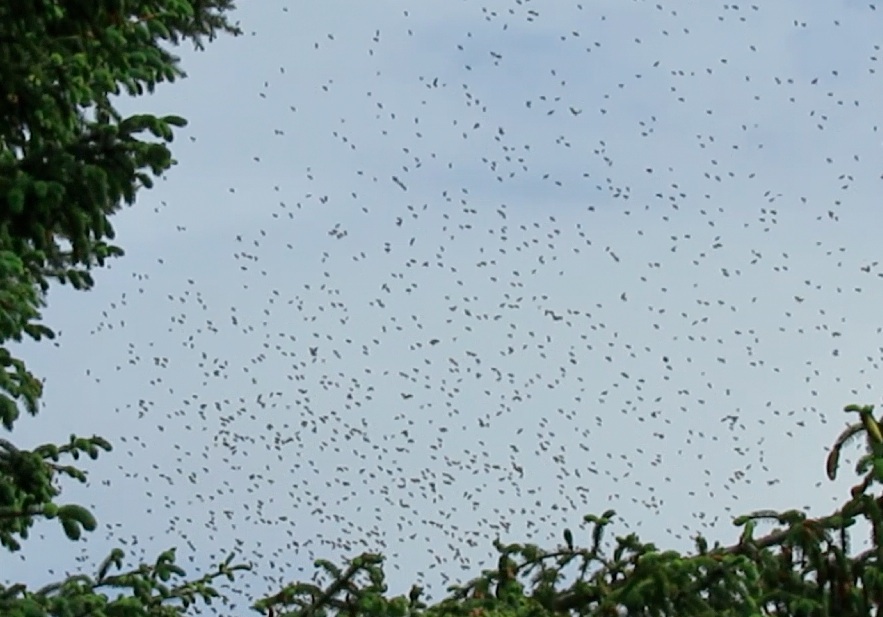
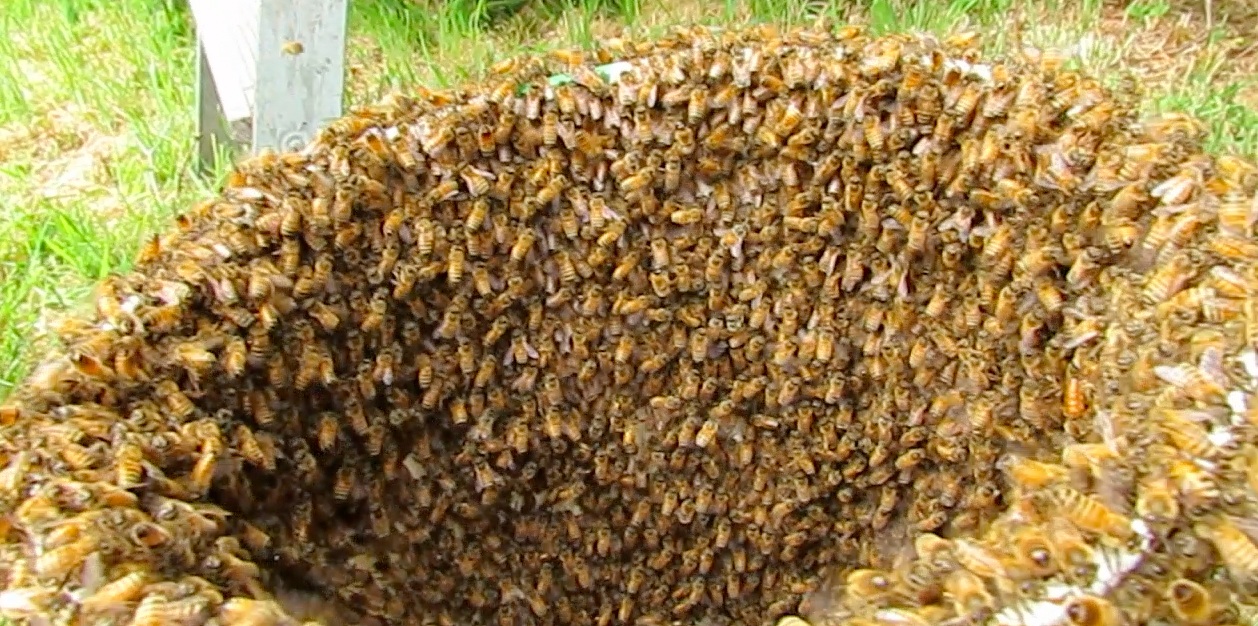
My daughter, son-in-law and new granddaughter were visiting us on Mother’s Day.  It was about noon, we were eating lunch…my wife spots this horde of bees.  “It’s a swarm!”  We all rush out to see it.  I think it probably came from the Warre hive that’s been threatening to swarm for over two weeks.  Son-in-law says, “What can I do to help you capture it?”  My wife says, “Oh, thank you, Jim, I didn’t want to have to do it.”

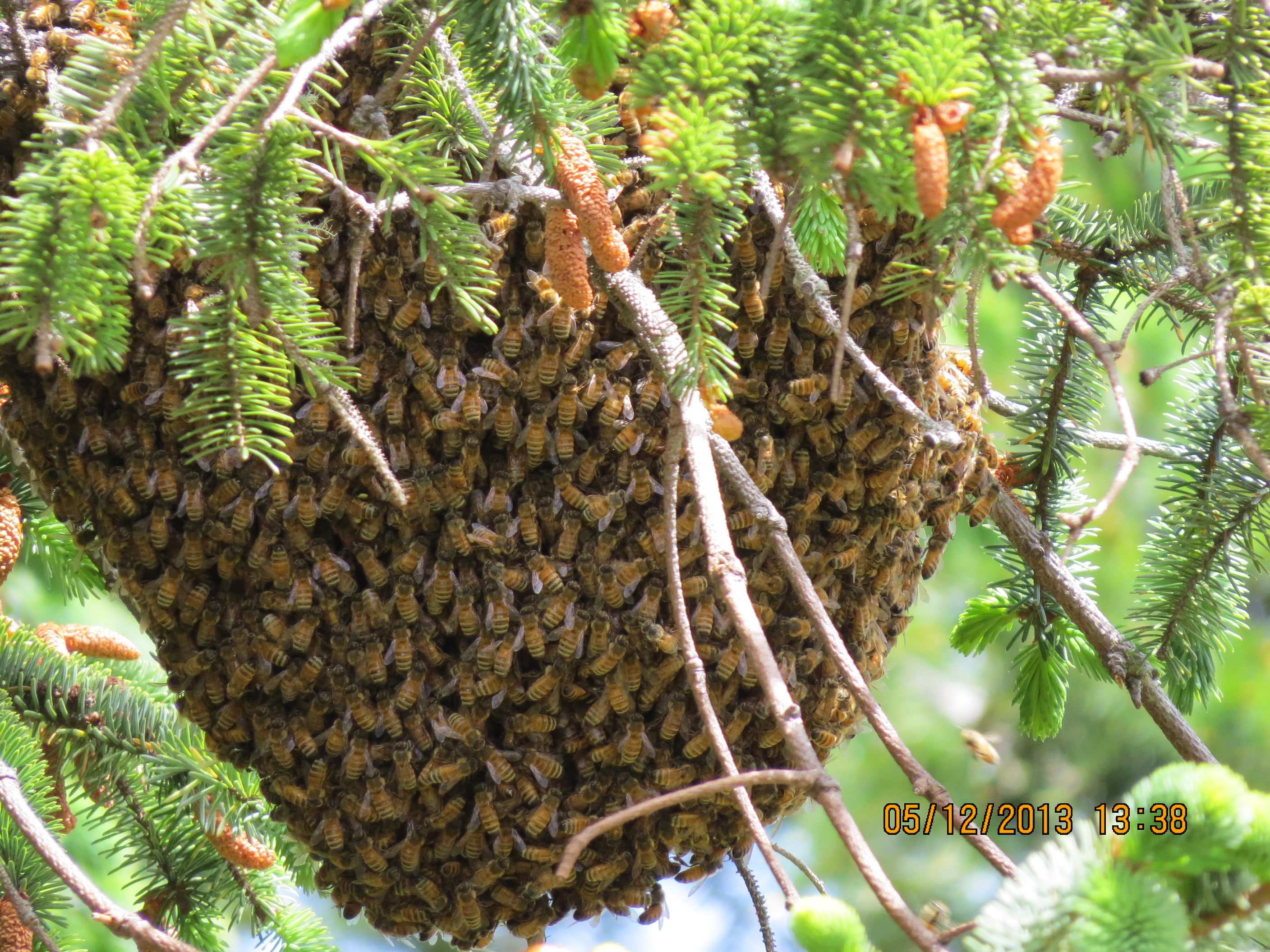
We let the bees coalesce on a branch.

A nicely shaped swarm

They settled down into a nicely shaped swarm about 12 feet (4 m) up.

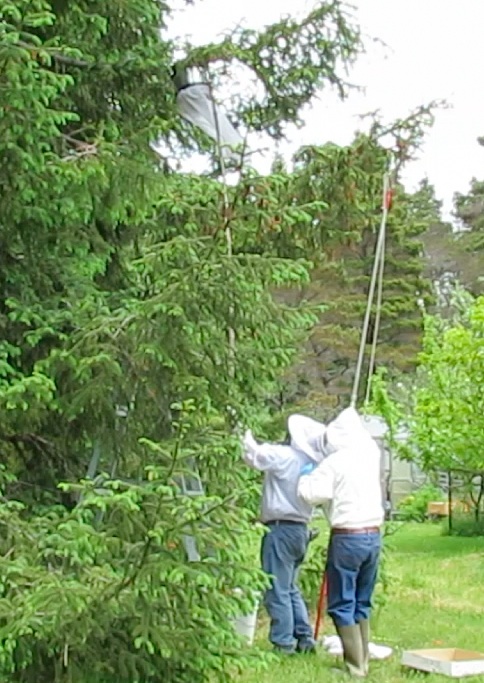
This calls for the Steinkrauss-Morse swarm retriever

This calls for the Steinkrauss-Morse swarm retriever

A Bucket of Bees

A Bucket of Bees

"The queen is over here..."

“The queen is over here…”  Bee stick their abdomen up in the air to fan the pheromone letting stragglers know where the queen is.

It was a win, win, win.  My son-in-law, Jim Montgomery provided much needed assistance in corralling the swarm, my daughter was able to capture the whole event with the camera, and my wife was able to spend more time with our granddaughter.

Where did the bucket of bees go?  Well, I would have liked to put it into Bee-atrice log hive  because it’s a ‘prime’ swarm, but Bee-atrice was already occupied.  I found someone who didn’t want package bees.  He has built a Perone style hive.  It’s a BIG hive.  I like his attitude…”The Perone hive is built for the bees, not the bee keeper.  It’ll hold about 150,000 bees.  I’ll let them build their own comb.”  We arrange for the ‘hand-over,’ and meet at a very scenic state park along the Oregon Coast.

There are 17 top bars where the bees will build their comb.

Vernon built his own Perone hive.  He brought the framework holding 17 top bars where the bees will build their natural comb.  He held it up so we could see how big the hive will be.  In the background you can see why I wanted to live on The Oregon Coast.

Read Full Post »

This tight #8 screen will hold the burlap.  The wood shavings and sawdust will fill it up.   No wasps allowed!

This tight #8 screen will hold the burlap. The wood shavings and sawdust will fill it up.

Quilt box with burlap

Quilt box with burlap

Filled with myrtlewood shavings and sawdust.

Filled with myrtlewood shavings and sawdust.

Scorching inside of hive cavity

Scorching inside of hive cavity…mouth entrance can be seen below

Myrtle leaves and sawdust for the bottom of the hive.

Myrtle leaves and sawdust are for the bottom of the hive.

Bees live in Myrtle Trees.  The wood smells good and the leaves are like bay leaves…you can use them in place of bay leaves, but in smaller quantities.   According to wikipedia, the leaf has been used as a cure for headache, toothache, and earache—though the volatile oils in the leaves may also cause headache.

I used cedar sawdust in the bottom of my first log hive.  Phil Chandler of biobees.com was  discussing the importance of hive ecosystem…“that it might be beneficial to have wood shavings and possibly dry leaves in the hope of stimulating an ecosystem similar to the natural environment where perhaps earwigs and woodlice etc. would live below the bees and maybe eat any falling varroa.”  Since my first log hive survived the winter intact, without me feeding or medicating them, I think I’ll try the sawdust option again.  This time I’ll add myrtle leaves to the mix.

I've been saving the last of the old comb in the freezer.  It's time has come.

I’ve been saving the last of the old comb in the freezer. It’s time has come.

The plan is to remove bars,  add a swarm when it becomes available, then replace bars

The plan is to remove the bars, drop the  swarm in, then replace bars

Fence post anchor

Fence post anchor…two were planned, but the swarm came first.

We left town to visit the grandkids.  It was just a day trip, but when we got back a little package was waiting for us…hanging from a tree.

Because of the angle the picture was taken, this swarm looks bigger than it is.  Tree hive in background.

Because of the angle the picture was taken, this swarm looks bigger than it is. Tree hive in background.

Thankfully I was prepared.   All that I had to do as it was getting dark was to snip the branch with a bucket under it and carry it to the log…remove the top bars and drop the swarm into the log.  This is swarm #5 from Bee Beard Log hive.  It probably does not have a mated queen, but the weather looks good for the next 7-10 days, so it should be a safe bet that the queen will be able to fly out.

Unfortunately this small swarm never quite made it.  It was slow to build up and just didn’t have the numbers to survive the week of freezing nights we had in December.  Good news though.  A prime swarm picked out Bee-atrice for their home on or about June 6, 2014.

Beginning of the log hive

Bee-atrice, the Carving

Meet Bee-atrice, A Female Companion for Bee Beard

Read Full Post »

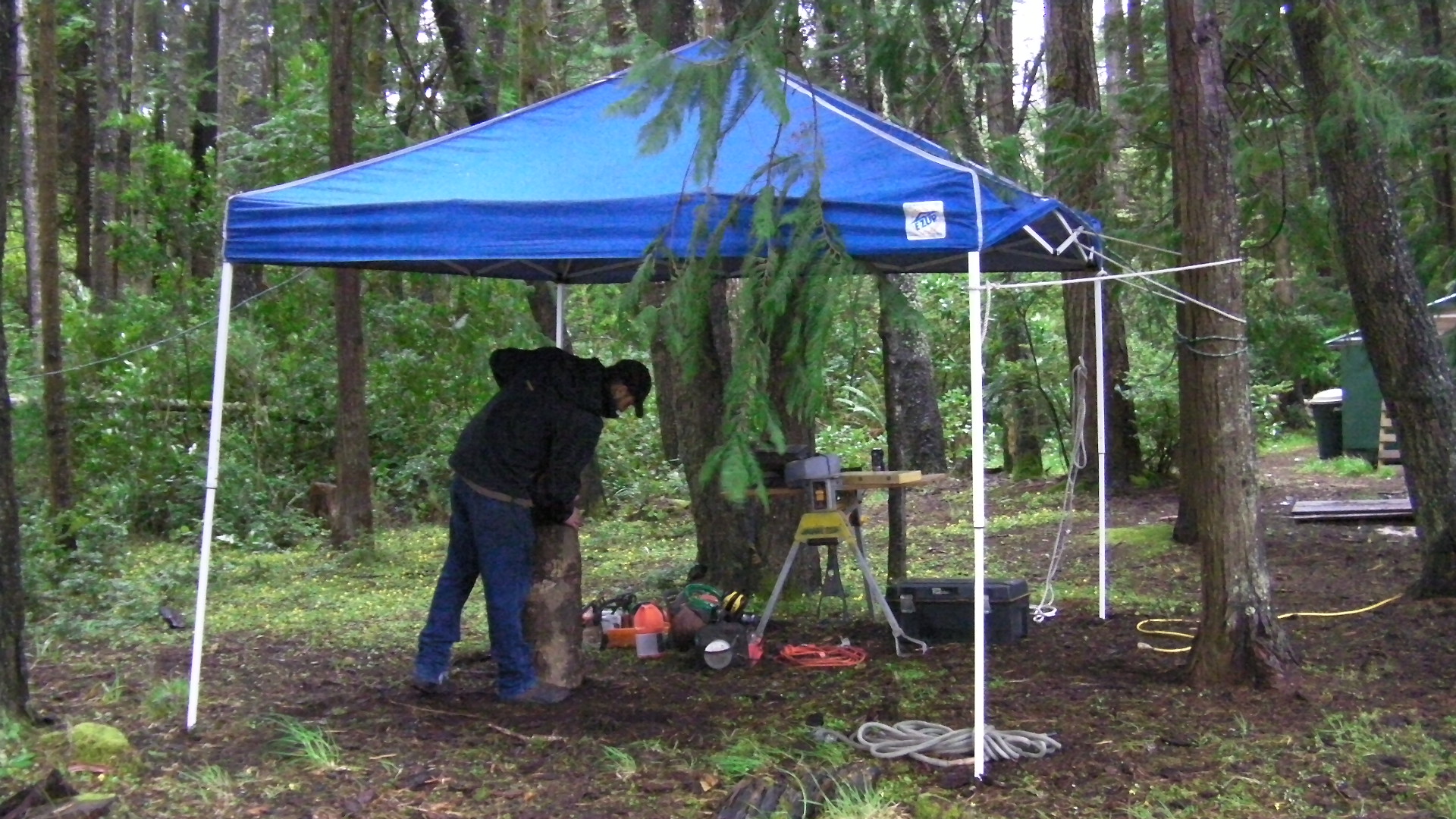
Brian brought his own tent awning to use.

Brian brought his own tent awning to use.

When I talked about carving another face on a log hive, I wasn’t sure what I wanted.  I had looked at hundreds of google images, wood carvings, even some Northwest totems, but I didn’t see anything that ‘jumped out’ at me.  I told Brian and Zada Vorwaller they had done such a great job with Bee Beard that I wanted something along the same lines, but slightly different.  Brian suggested a female companion.  He said he’d been thinking about how he could accomplish it and was up to the task.  I thought for a minute how Bee Beard was one of a kind, but in that role, there was a certain loneliness.  It might be good to have a companion…and yes, a female one at that.  Little did I know what I was getting myself into.

Brian rolled into my driveway about 10:30 am on a windy, rainy day.  He’d brought a tent awning which he set up in the woods not seeming to mind the dead trees swaying above him.  We propped up the log and he started feeling out the wood.  I held my breath.

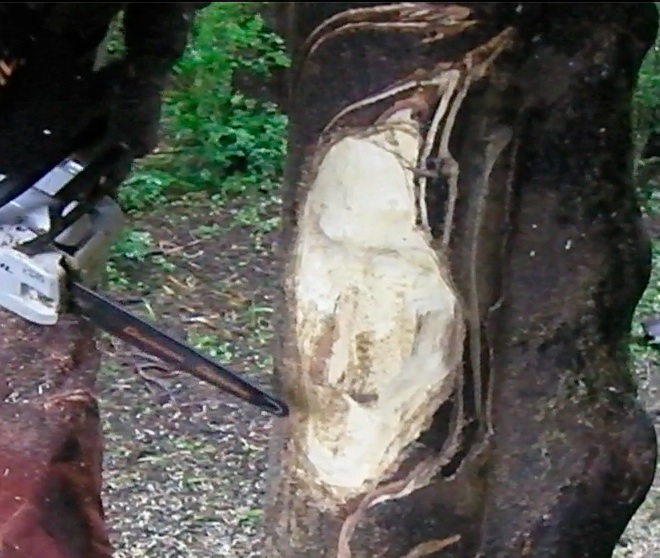
After about 15-20 minutes he says “I’m beginning to see her.”  I had given him a real challenge.  The big chainsaws had dug deep into the wood.

These deep grooves must be smoothed out.  Bees don't like sharp edges.
These deep grooves must be smoothed out. Bees don’t like sharp edges.

When I used my Sa-burr wood grinder to smooth out the chainsaw grooves, it became apparent the wood was ‘thin’ at some points.  So I was much relieved that he could visualize the image.  He starts to work.

Not being an artist myself, I can't see how anyone can visualize something by 'taking away' instead of adding to.

The lines are drawn…it has begun!

Not being an artist, it's hard for me to

Not being an artist, it’s hard for me to understand how a person can visualize an image and then make it appear by sawing parts away.

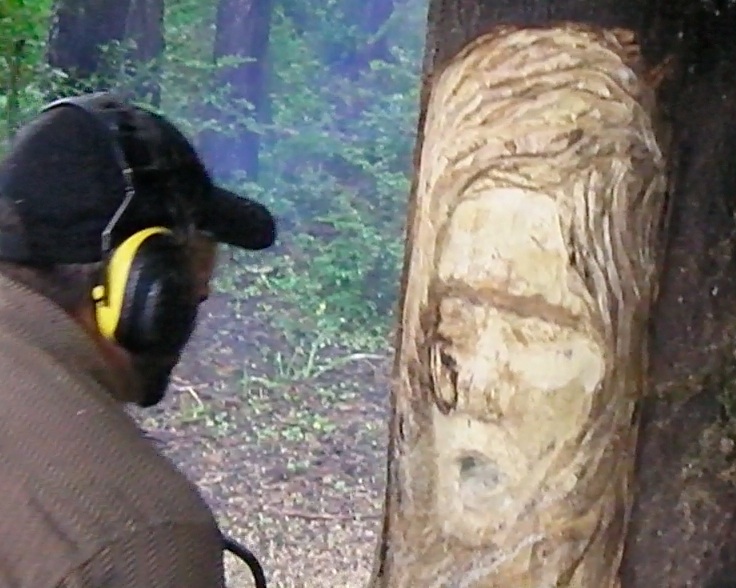
Slowly taking shape

Slowly taking shape

Carving mouth

Carving the mouth

Artist and subject, eye to eye

Artist and subject, eye to eye

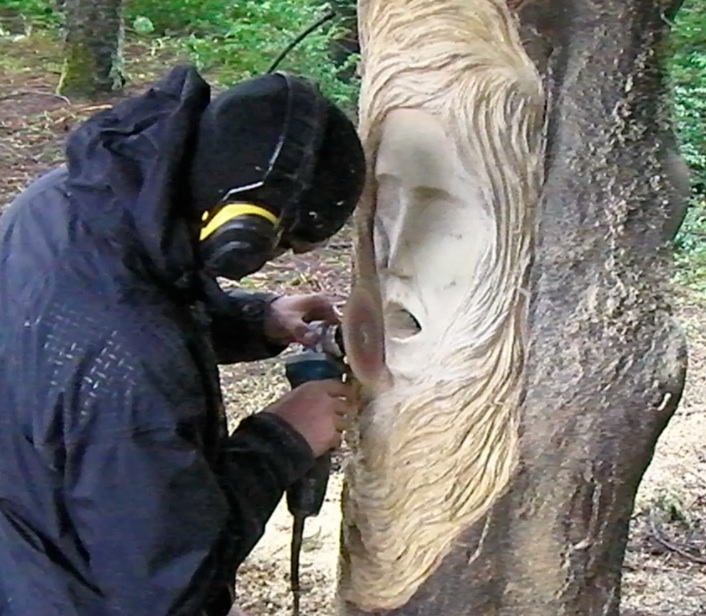
Sanding the cheeks...give her good cheek bones, Brian!

Sanding the cheeks…give her good cheek bones, Brian!

Sanding the mouth

Sanding the mouth

For eight hours he works, taking a short lunch break, but mostly sawing and sanding, sanding and shaping.  A true artist absorbed in his work.  Gradually she comes to life, but still has a blank look on her face…

A blank look on her face

A blank look on her face

then he adds the eye brows and eye lashes and voila…she appears!

He's done!

The artist is done!

The Artist…

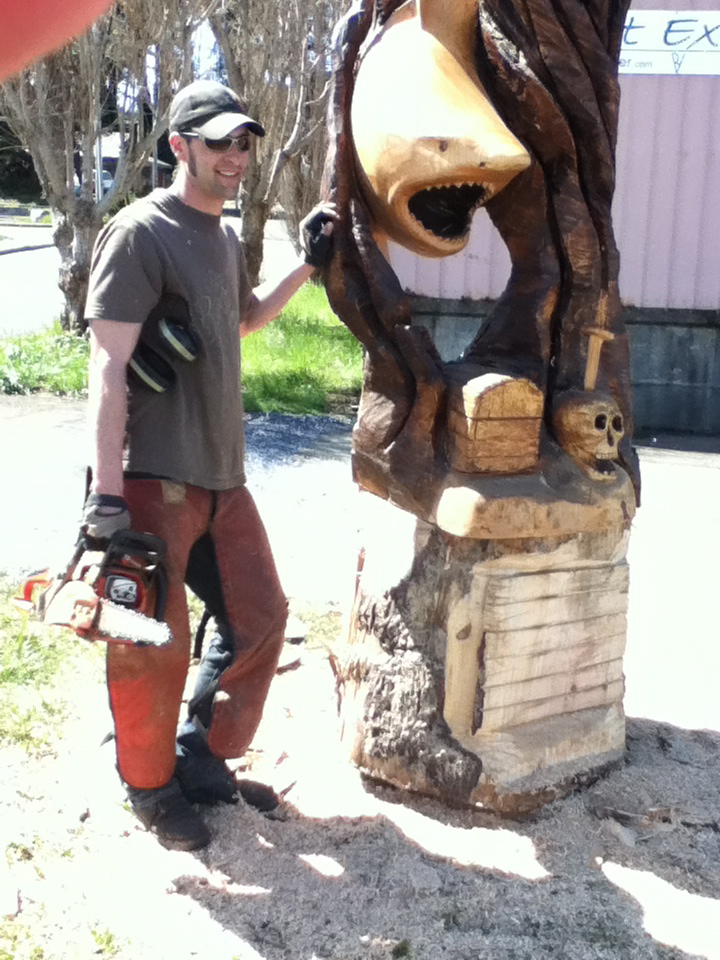
Brian Vorwaller of Artist Extreme, poses in front of his shark carving.  It was all carved from one chunk of wood.

Brian Vorwaller of Artist Extreme, poses in front of his shark carving. It was all carved from one chunk of wood.

The beginning of the log hive.

Preparing Bee-atrice for prime time

Meet Bee-atrice…A Female Companion for Bee Beard

Who is Bee Beard?

Read Full Post »

This is what we were waiting for...Bee Beard's Prime Swarm, but it was waaay out of reach

This is what we were waiting for…Bee Beard’s Prime Swarm, but it was waaay out of reach

When we started keeping bees we read that a healthy hive will swarm, at least once every year.  Our goal was to get through the winter without feeding, medicating, or miticiding. The swarm would be our sign of success.  On a warm day March 30th, that’s what happened.  We heard the loud buzzing, came out to witness the bees heading up to the top of a nearby spruce tree.  I even tried ‘tanging,’ banging a spoon on a pan to create noise so they wouldn’t go far and would form near the ground.  I was wildly unsuccessful.  This would have been the swarm to get, but it was clearly out of reach.

Swarm #2 is within reach

Swarm #2, April 17 is within reach

Swarm number 2 is withing reach, but the 2nd log hive isn’t ready for it yet…I’ll have to stick it into the ‘back-up Warre.”

Let's try out this bamboo swarm catcher so I won't have to use a ladder

Let’s try out this bamboo swarm catcher so I won’t have to use a ladder

Well I ended up using a ladder to cut the bamboo and let the swarm drop into the white sail cloth basket.

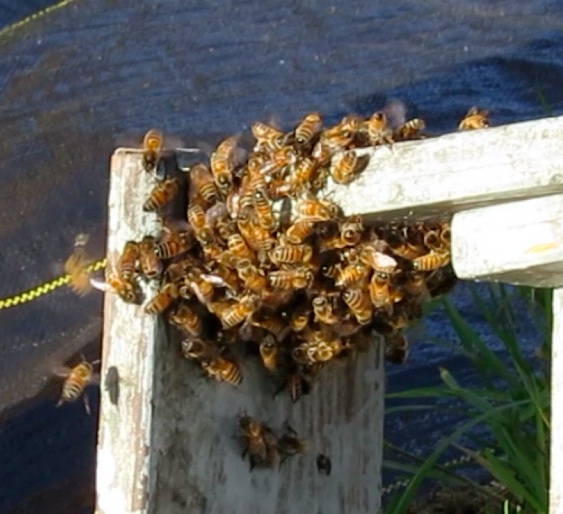
My wife noticed some bees on the ladder...we brought it near the hive for them to crawl in, but looking closer, they were fanning.  The queen must be here.  We gathered them up and placed them into the hive.

My wife noticed some bees on the ladder…we brought it near the hive for them to crawl in, but looking closer, we noticed they were fanning. The queen must be here. We gathered them up and placed them into the hive.

After the bees were dropped in, we added the top bars with comb attached…hoping they would stay attached once I hung them in the hive.
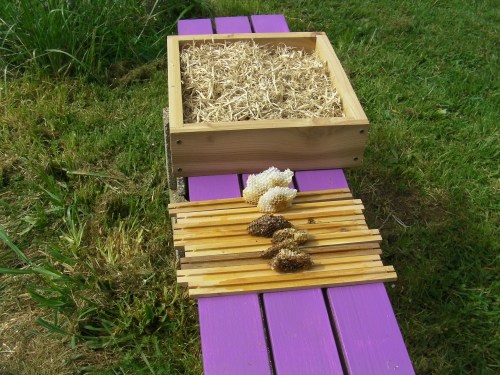
Top bars with old comb melted on.  Quilt box in background

Top bars with old comb melted on. Quilt box in background

I had already built the sugar frame shown below.
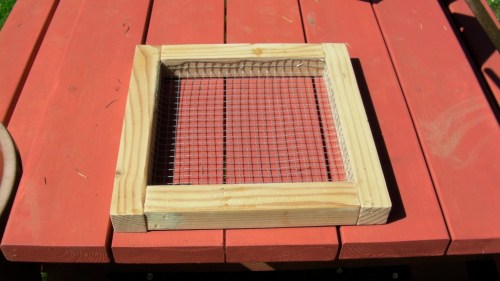
Sugar for comb building pm a couple of sheets of blank newsprint.

1/2 inch hardware cloth will hold up sugar if using newsprint.

Premixed sugar recipe laying on a couple sheets of blank newsprint

Premixed sugar  laying on a couple sheets of blank newsprint for the Warre hive #2

We slid the sugar frame into place.
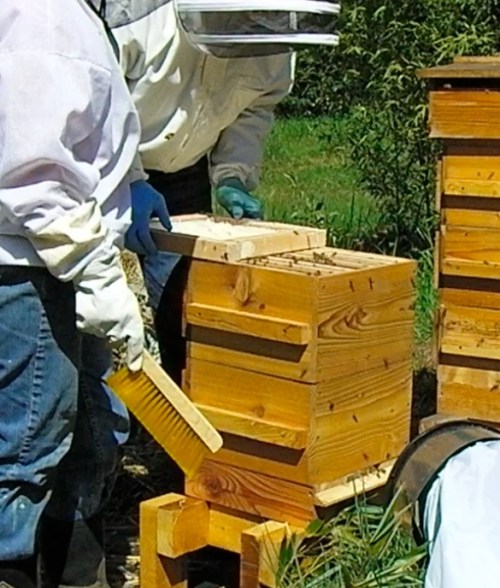
Sliding the sugar frame into place

Sliding the sugar frame into place

Next comes the quilt box.
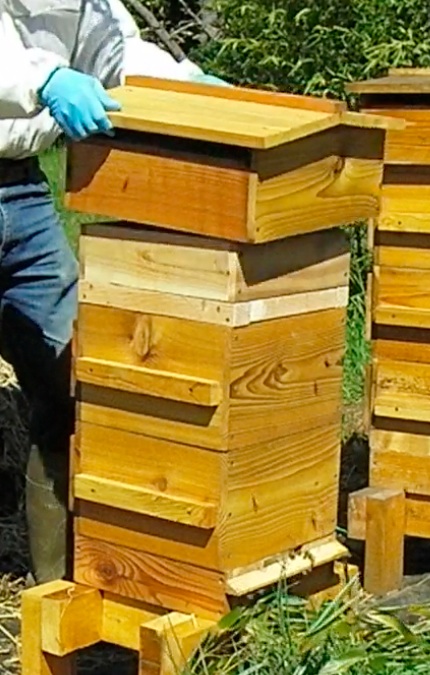
Next comes the quilt box.

Top it off with the roof.  Matt Reed of beethinking.com, you made a nice hive kit.
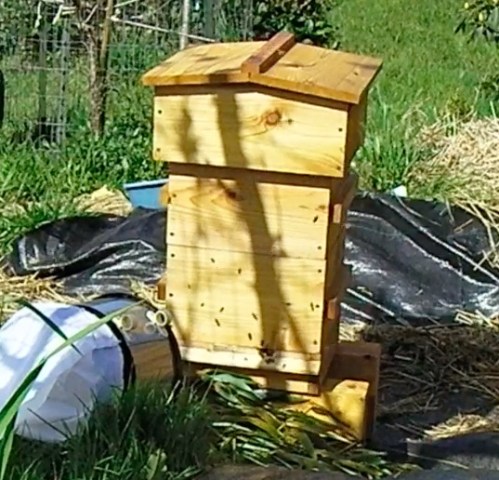
Top it off with the roof. Matt Reed of beethinking.com, you made a nice hive kit.

Bees flying orientation flights.

Bees flying orientation flights.

Through the observation window we can see the bees working.  No new natural comb can be seen yet, but it won't be long.

April 23…through the observation window we can watch the bees working. No new natural comb can be seen yet, but it won’t be long.
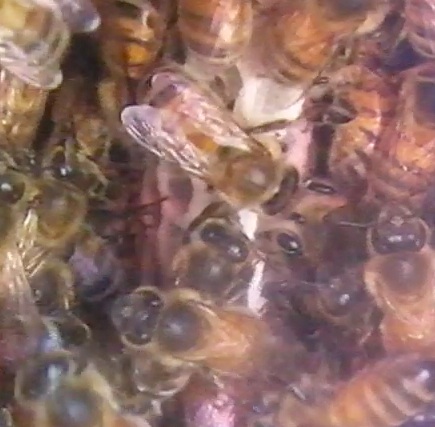
April 26, Natural comb can be seen on Day 9.

April 26, Natural comb can be seen on Day 9.


Where this and other swarms are coming from…Bee Beard Log Hive.

Read Full Post »

Mason bee covered in yellow pollen, sticking out of nest block

Mason bee covered in yellow pollen, sticking out of nest block

I check the bees occasionally, but usually at this time of night, they are all tucked into their nest tubes, so it was surprising to me to see this pollen covered bee sticking out.  Does anyone know what’s going on?

I shot this short video so you could see what I’m talking about.

This year’s start…

Read Full Post »
A bee sipping nectar on Autumn Beauty sedum

A bee sipping nectar from the  Autumn Joy sedum

Last year I discovered a new bee-loving flower.  My wife and I were visiting with Hal and Patti when I spotted a bunch of bee activity on some reddish blossoms.  Patti said it was Sedum.  I had heard of it, but I’ve never paid much attention to it.  Now that I’m keeping bees, I’m all ears when it comes to flowers that attract bees.

So we bought some from our friendly nursery…bees started working it as my wife was carrying the potted plants out to the garden.

The plants will winter over, but protect them from the deer which will eat surely eat the blossoms as we found out.

This sedum has wintered over and is on it's way to flowering in September

This sedum has wintered over and is on it’s way to flowering in September.  This time I’ve got it inside a deer fence.

I shot some video of the bees working the sedum.  It’s a good time to plant some now hint, hint…:-)

Read Full Post »
« Newer Posts - Older Posts »