Last year I discovered a new bee-loving flower. My wife and I were visiting with Hal and Patti when I spotted a bunch of bee activity on some reddish blossoms. Patti said it was Sedum. I had heard of it, but I’ve never paid much attention to it. Now that I’m keeping bees, I’m all ears when it comes to flowers that attract bees.
So we bought some from our friendly nursery…bees started working it as my wife was carrying the potted plants out to the garden.
The plants will winter over, but protect them from the deer which will eat surely eat the blossoms as we found out.
This sedum has wintered over and is on it’s way to flowering in September. This time I’ve got it inside a deer fence.
I shot some video of the bees working the sedum. It’s a good time to plant some now hint, hint…:-)
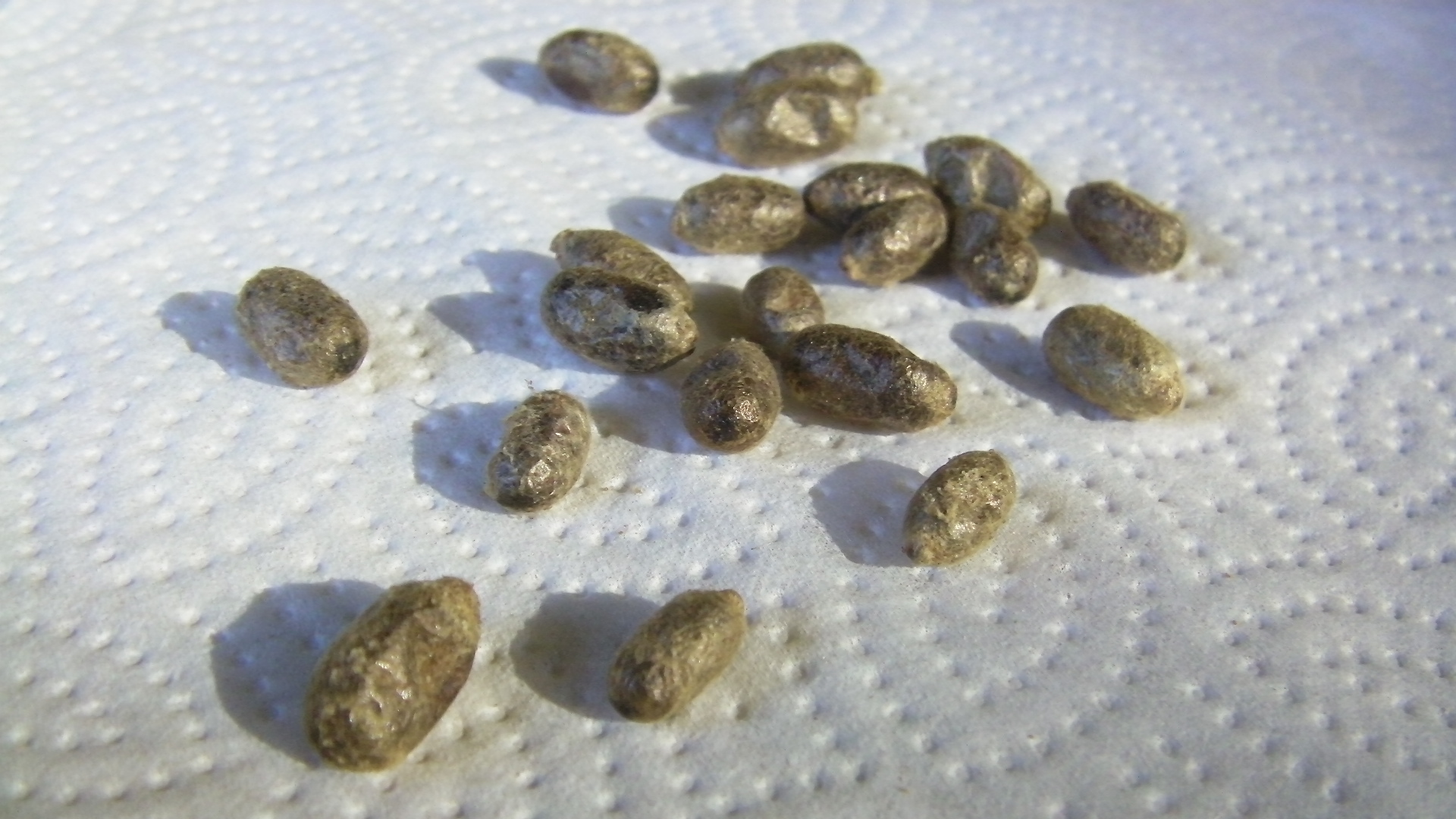
Last year my wife opened the refrigerator to discover the Mason bees were starting to hatch…this year we were determined to hang the nests before that happened. We ordered the cocoons from Knox Cellars in Western Washington. They provided this little ‘launch box.’
Ready to place cocoons into box
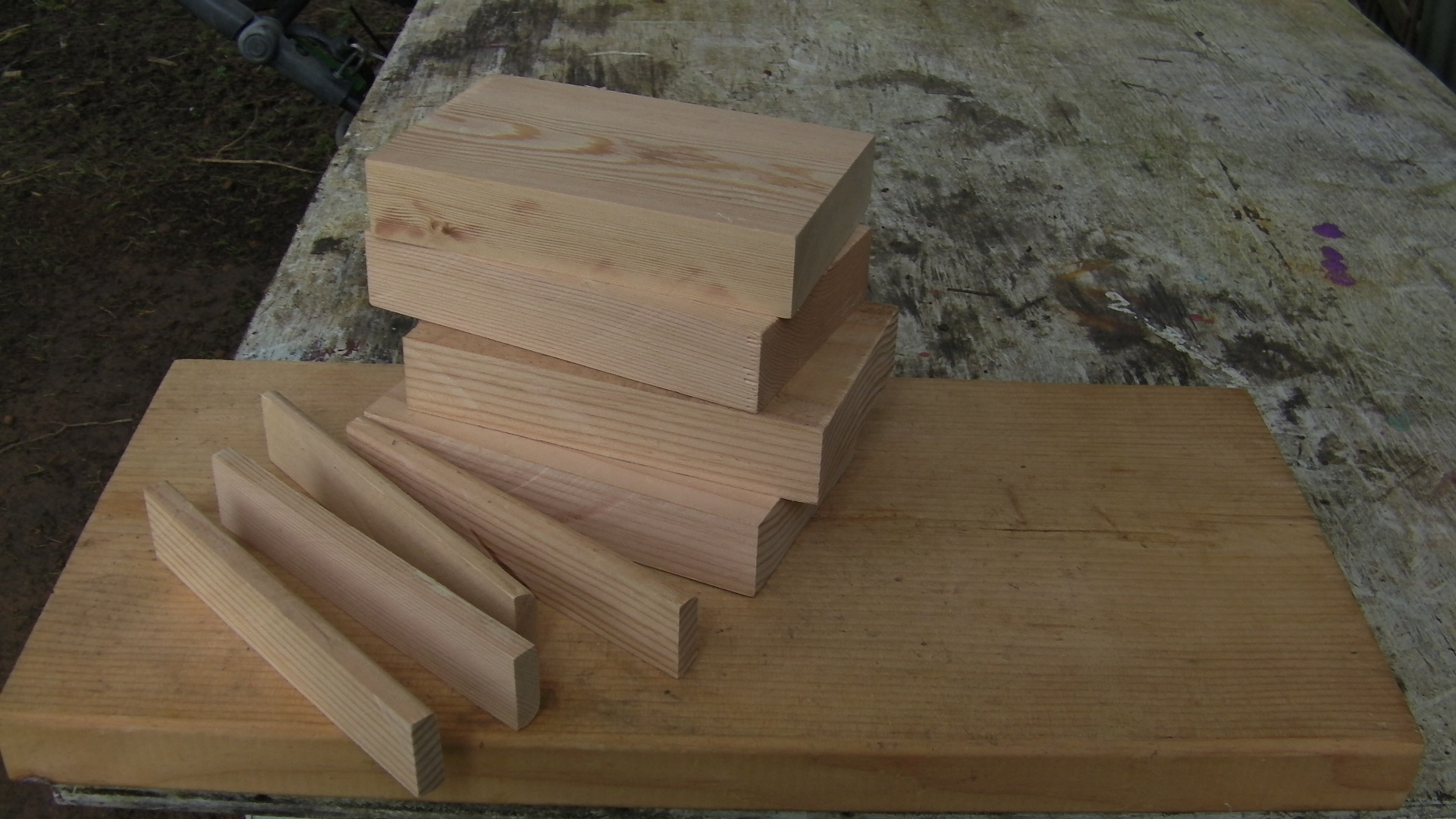
I saw some great plans on Dave’s Bees on how to build the nests so I got started yesterday.
Saw off 1/2″ (1 cm) off 2x6x8″
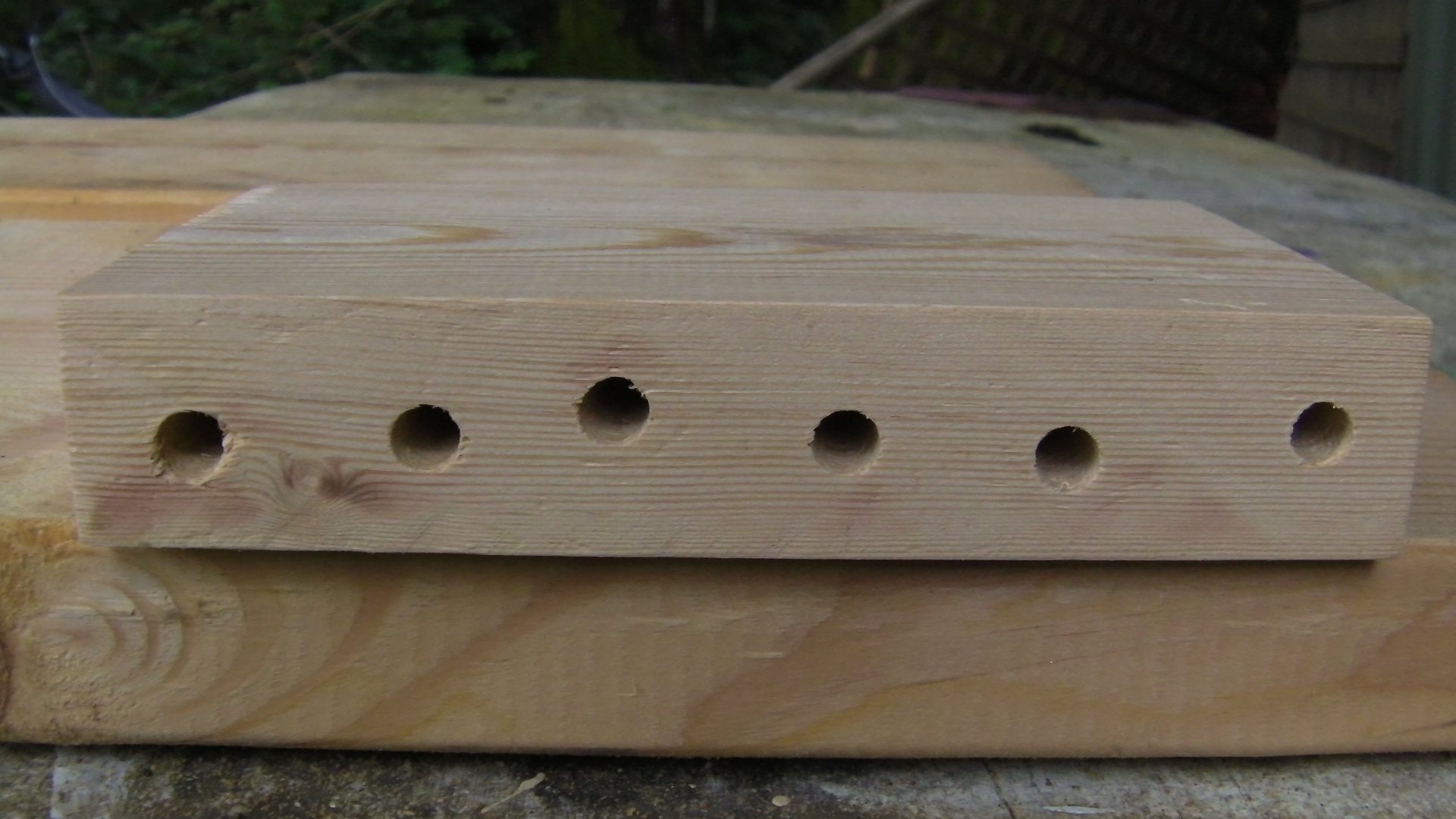
Drill 3/8″ (9.5 mm) holes more or less in a straight line about 3/4″ apart
I hope the bees don’t have a measuring tape…someone can’t drill straight!
I didn’t want to buy a longer bit, so I started with the top one and ended with the blade bit. Don’t start with the blade type…it’ll take forever to drill.
Assembly on kitchen table. My wife is knitting a bee hive hat…how appropriate.
The rolled up parchment paper liners are sticking out. They will be bent flat when the 1/2″ piece of sawed-off wood is fastened back on to seal it off. See Dave’s Bees excellent video.
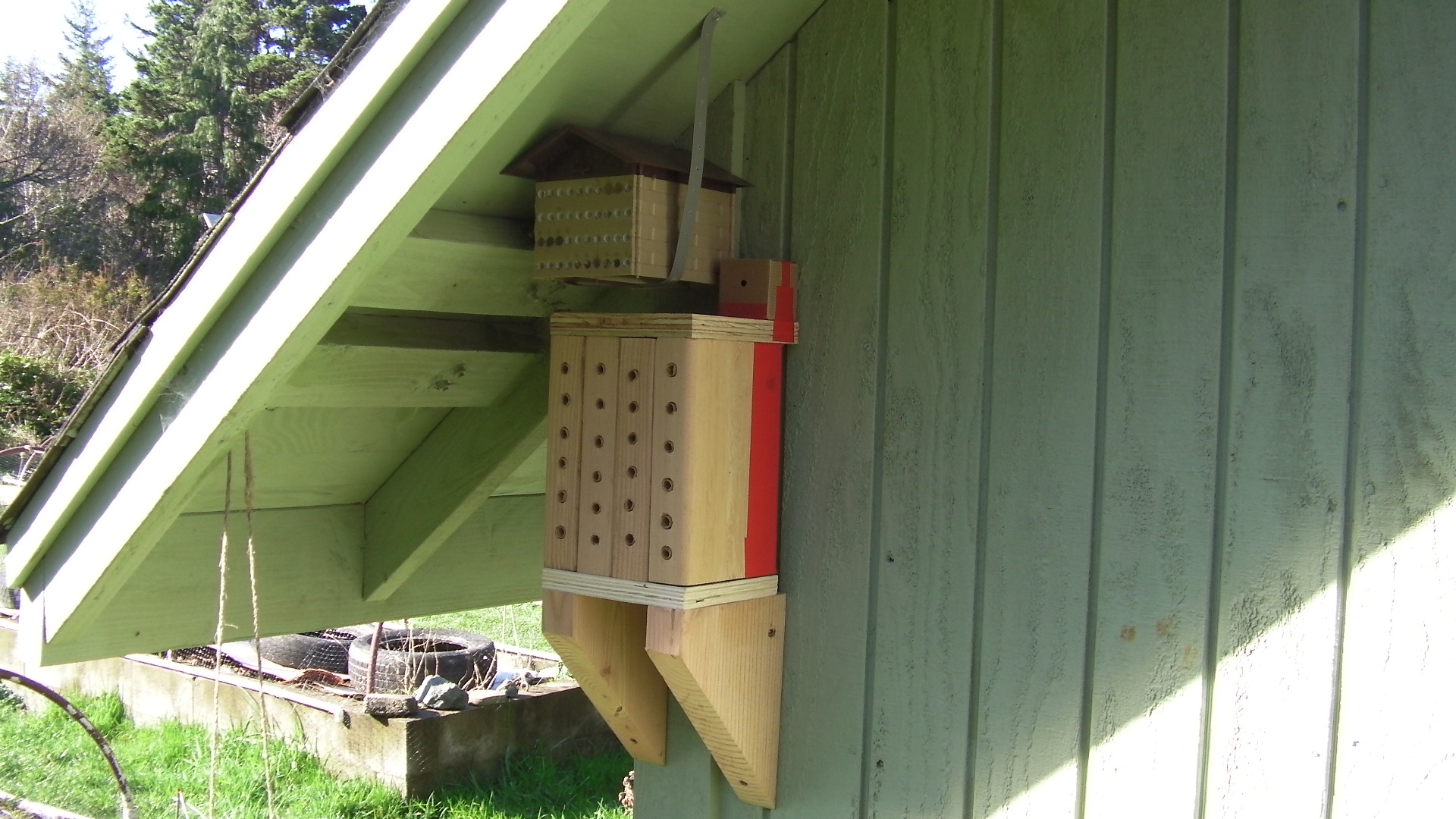
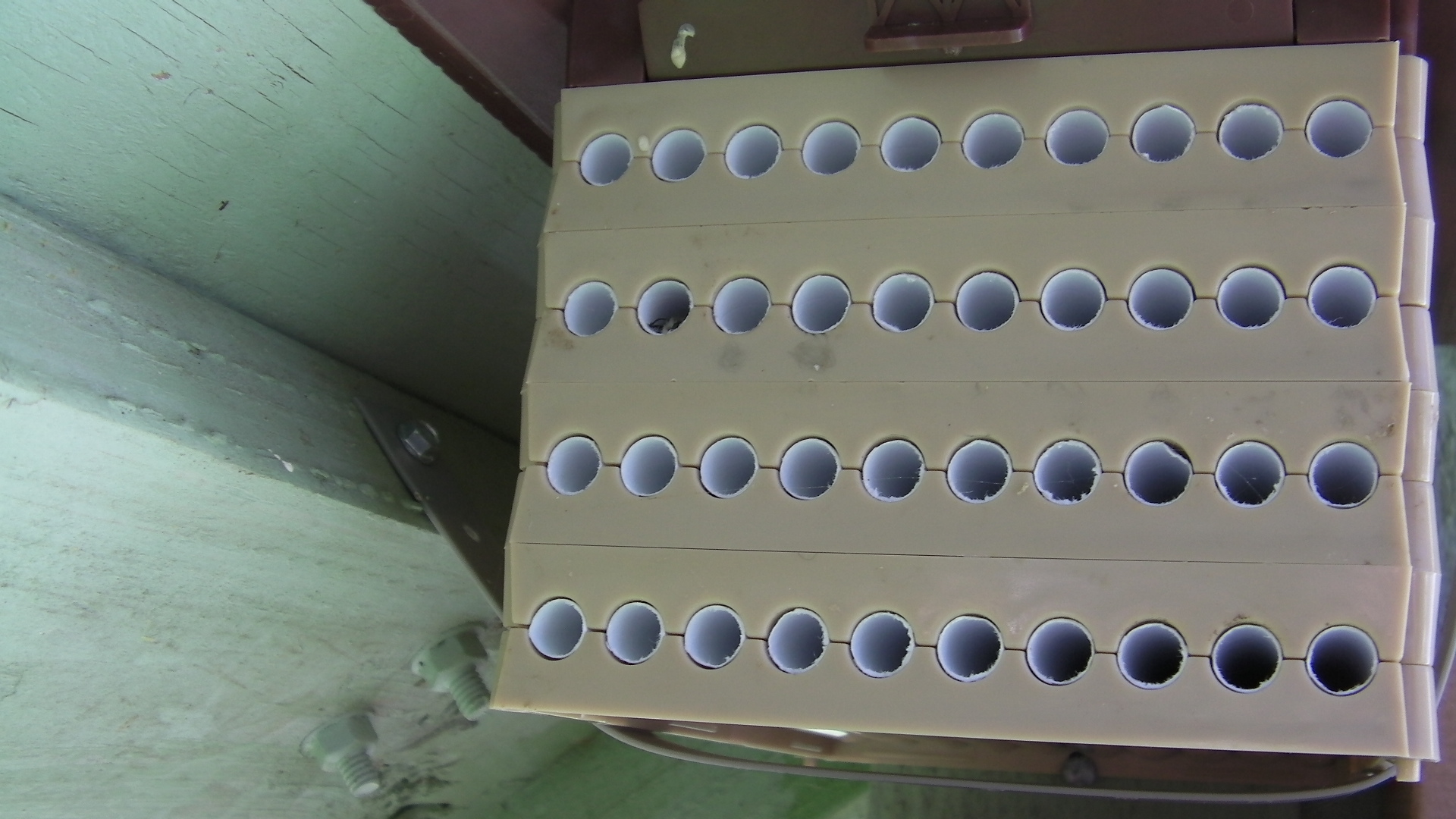
March 23…Mason Bee Nests in place with launch box taped securely
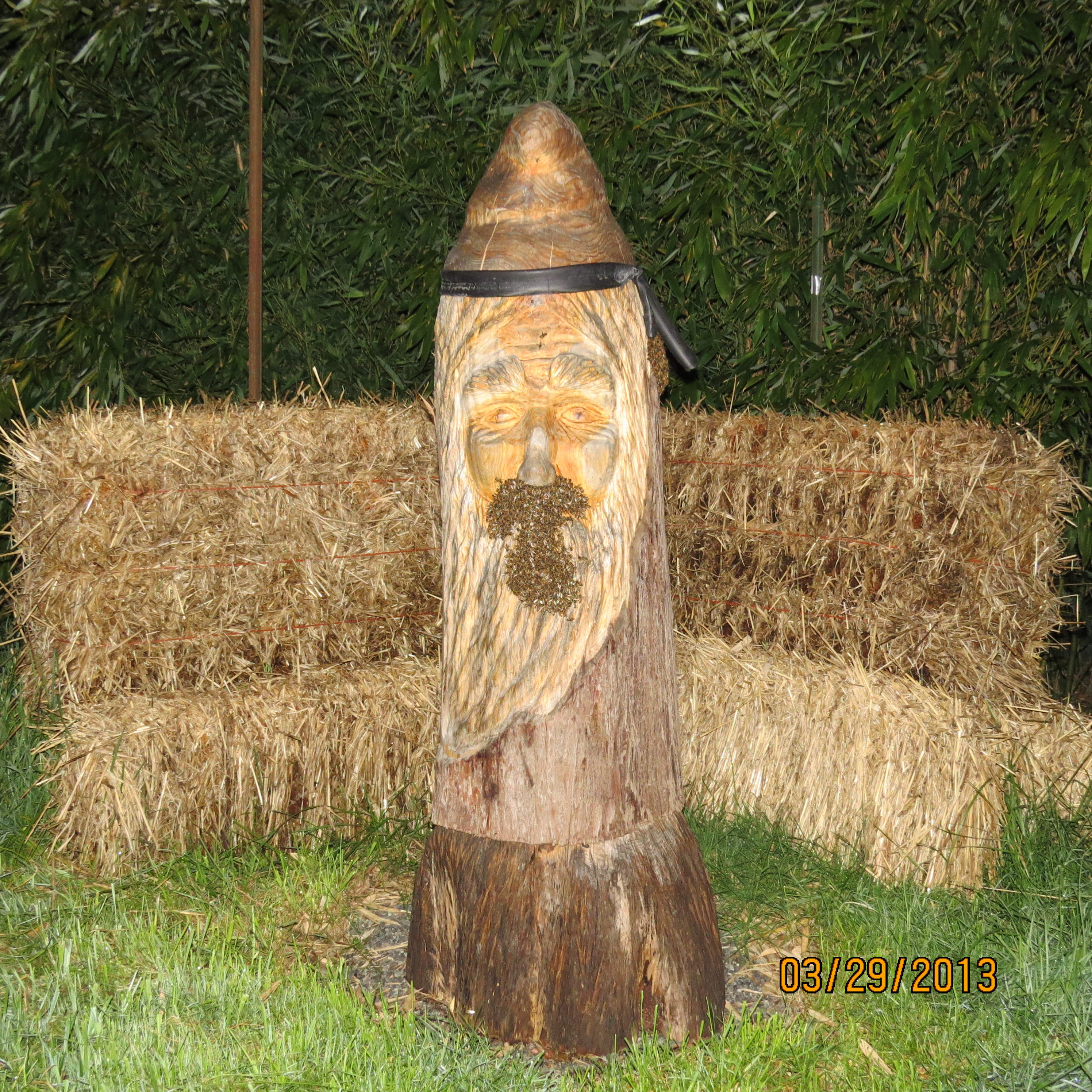
Grass trimmed under nests to make bees more visible if they fall below. The drones (males) will emerge first and wait for the females. Sometimes the females will emerge and fall to the ground.
After about a week of waiting we start to see some activity…
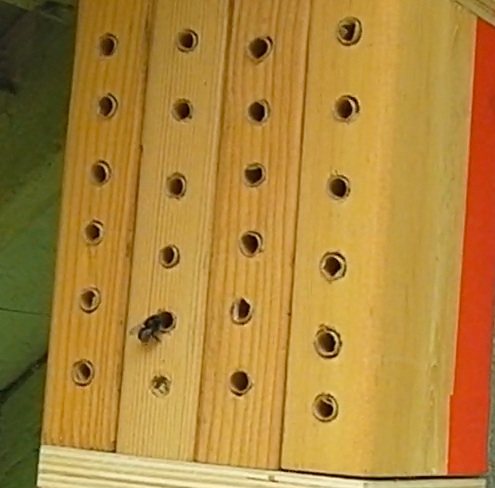
One shy bee showing in 2nd row 2nd from left
March 30…Mason bee entering straw tube in wood block
Keeping mason bees is one of the easiest method of beekeeping. Some interesting facts…200 mason bees will outpollinate 2000 honey bees. Mason bees rarely sting.
On a hot day in late March, the bees step out for some fresh air and dancing.
It’s unusably warm on the Oregon Coast today.
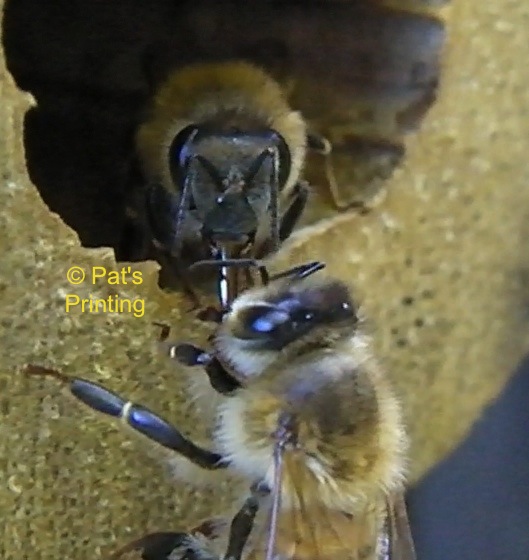
The lower bee has been fanning for awhile. While I was photographing, this other bee came out and fed her? I don’t know if that’s what it is, but from here, that’s what it looked like.
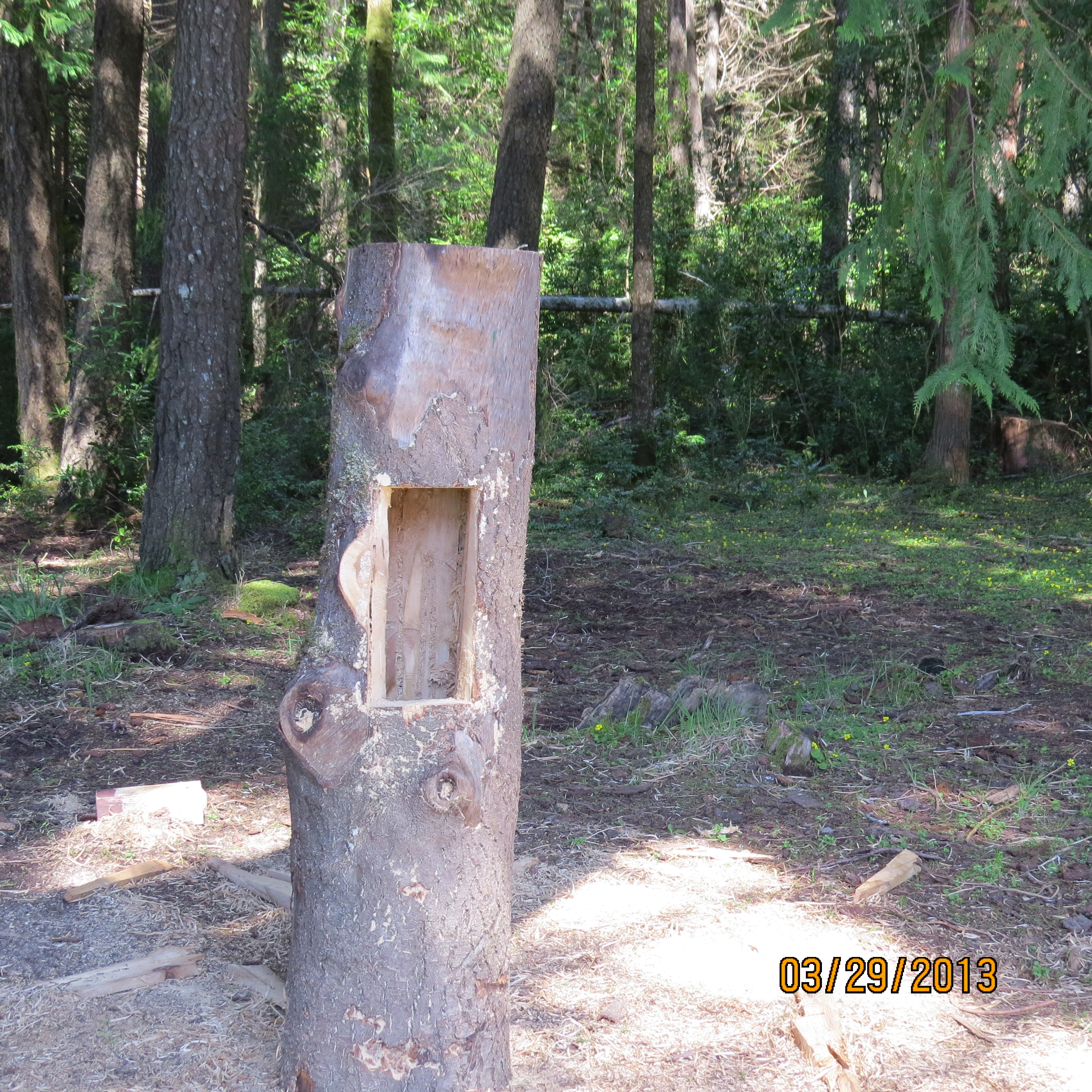
Pat’s next log hive progresses…much work still to be done before ready for bees.
Some bees are still outside the hive, at 10 pm. and 49 deg. F (9.4C)
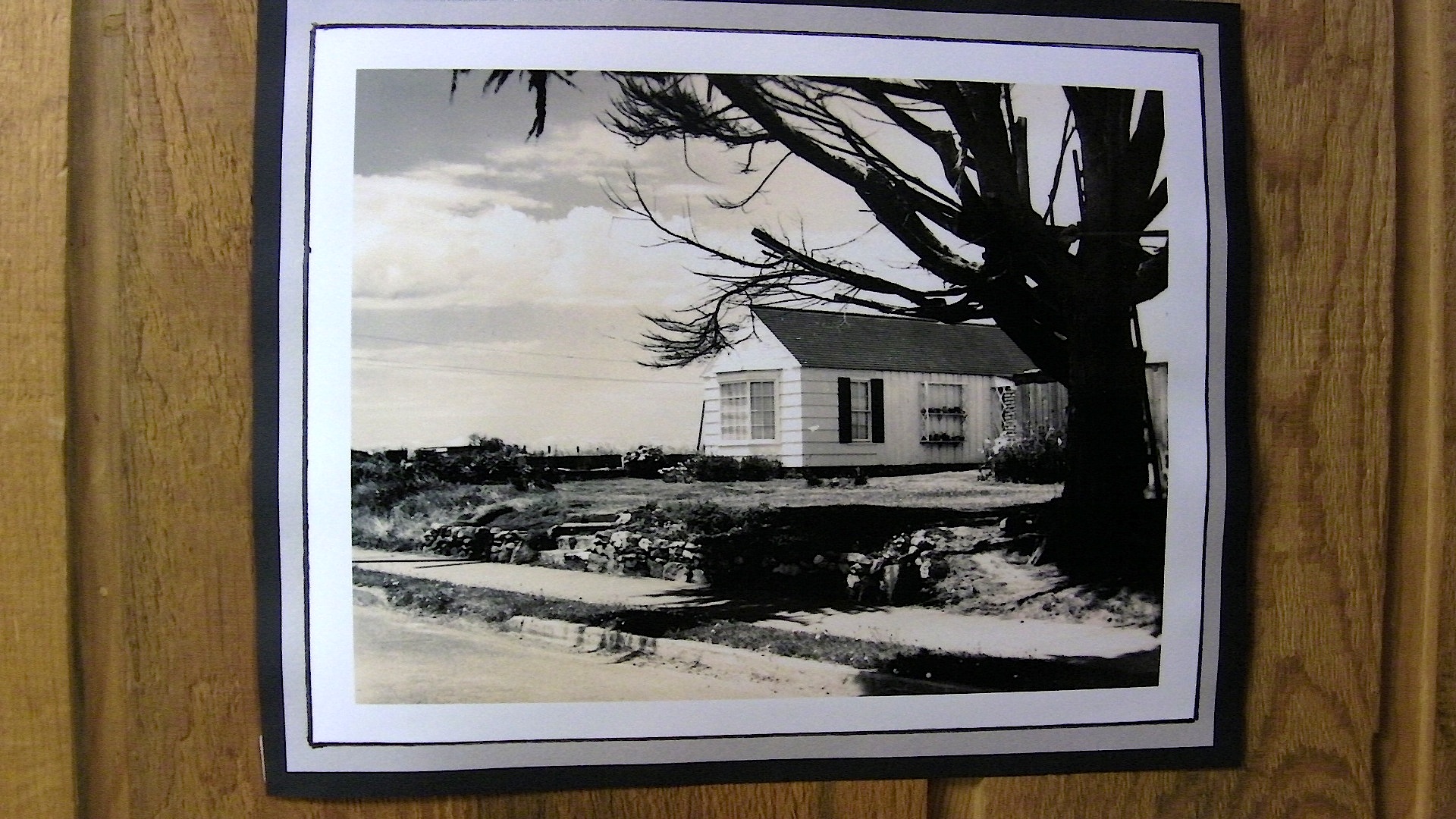
George Bennett wasn’t the first to visit Bandon from Ireland, but he was the one who named the town in 1891, because it reminded him of his home town of Bandon, County Cork, Ireland. His friend, Henry Hewitt Baldwin was the first. Baldwin’s ship, the “Captain Lincoln” wrecked north of the Coos Bay bar in 1852 and he hiked into this area. Baldwin persuaded his home town friend, George Bennett to settle here. Lord Bennett and two sons arrived in 1873. It is unclear how and when the title “Lord” was bestowed on him. Some members of the Bandon Historical Society Museum are in agreement that he acquired the title on the journey from Ireland to here. The former name of the town was Averill which is now the name of the Pioneer Cemetery where Lord Bennett is buried.
Averill Pioneer Cemetery, where Lord Bennett is buried.
Lord Bennett is probably best known not for naming the town, but for bringing GORSE seeds to this area.
To say gorse is a nuisance plant is probably an understatement. It’s full of sharp spiny thorns, is impenetrable to walk through, and embodies an oil-type substance that makes it highly flammable.
In 1936, the Bandon Fire leveled the town, gorse being a contributing factor.
My new hobby of beekeeping has sparked an interest in gorse. When I joined the local bee club, I was advised that Bandon was not the best place for bees. “Too damp and windy.” I thought to myself maybe Bandon would have a slight advantage in the winter because of all the gorse growing here. It starts to bloom early to mid February and continues through late spring. This would be a definite advantage in giving my bees a nectar and pollen source mid winter.
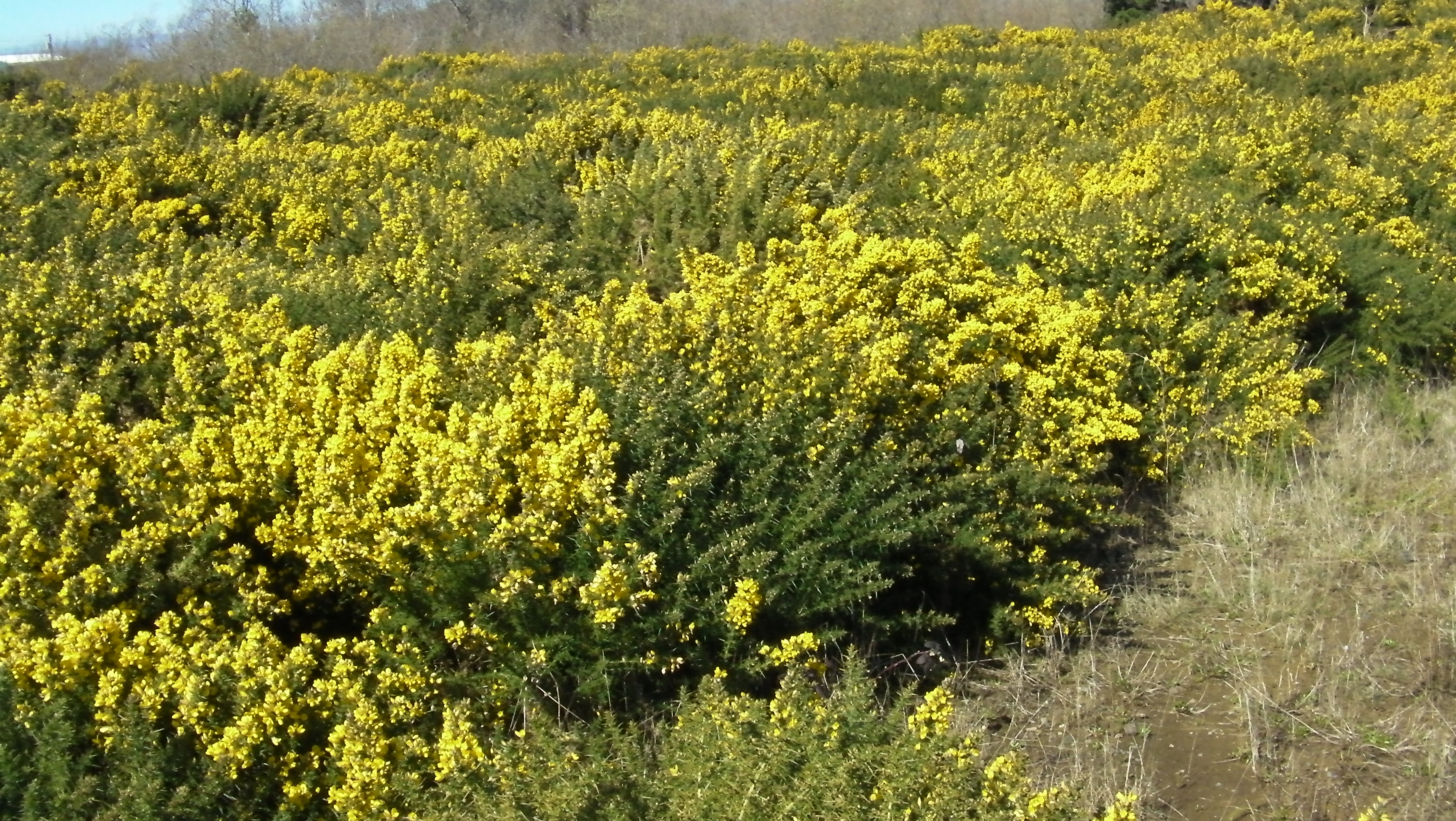
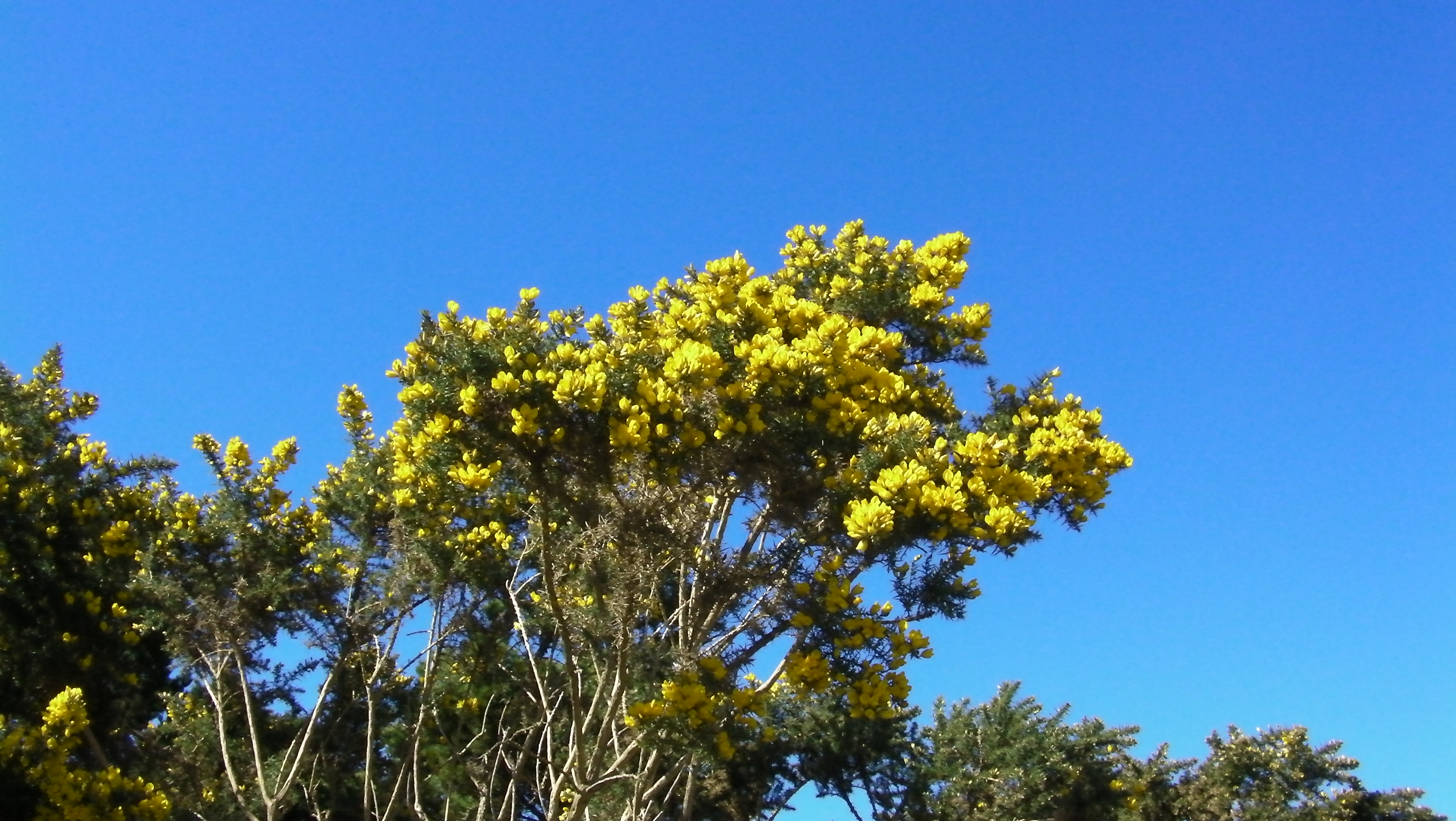
Some photographs of gorse.
Gorse growing near town
Gorse can grow tall
Gorse pollen is orange…I had been hoping it was the yellow pollen I had seen going into the hive. February 13, 2013
Honey bee on gorse, up the road from me.
I love how the bees swagger when they are loaded with pollen…
I realize that without special techniques to properly identify pollen, I can’t say for certain that all the orange pollen is from gorse. Indeed, I could only find a small percentage of gorse with bees working it, but there is a lot of gorse that I don’t see. My bees were bringing in a gobs of orange pollen through February and early March. It’s possible this pollen could be coming from gorse. I’d like to think so.
Could this be pollen from the laurel bush? It’s been blooming since Jan. 22. I know that you can’t tell by color alone, but at this time I don’t have the microscope or capability to properly identify pollen.
This is the first year I’ve had bees into winter. I was curious about all the types of pollen showing up on the bees entering the hive. I was sure some of it was gorse since we seem to have so much of it growing thanks to Lord Bennett of Ireland.
I made a 9 minute movie showing the bees on different types of flowers and Shigeo of the local bee association demonstrates how to transplant an Echium. I realize that some people can’t spare the time, so I’m offering ‘screen saves,’ as well.
Laurel blooming by Bonnie’s house
Bee on laurel, tannish-colored pollen…January 22, 2013
Bees on rosemary, at City Hall, February 8, 2013
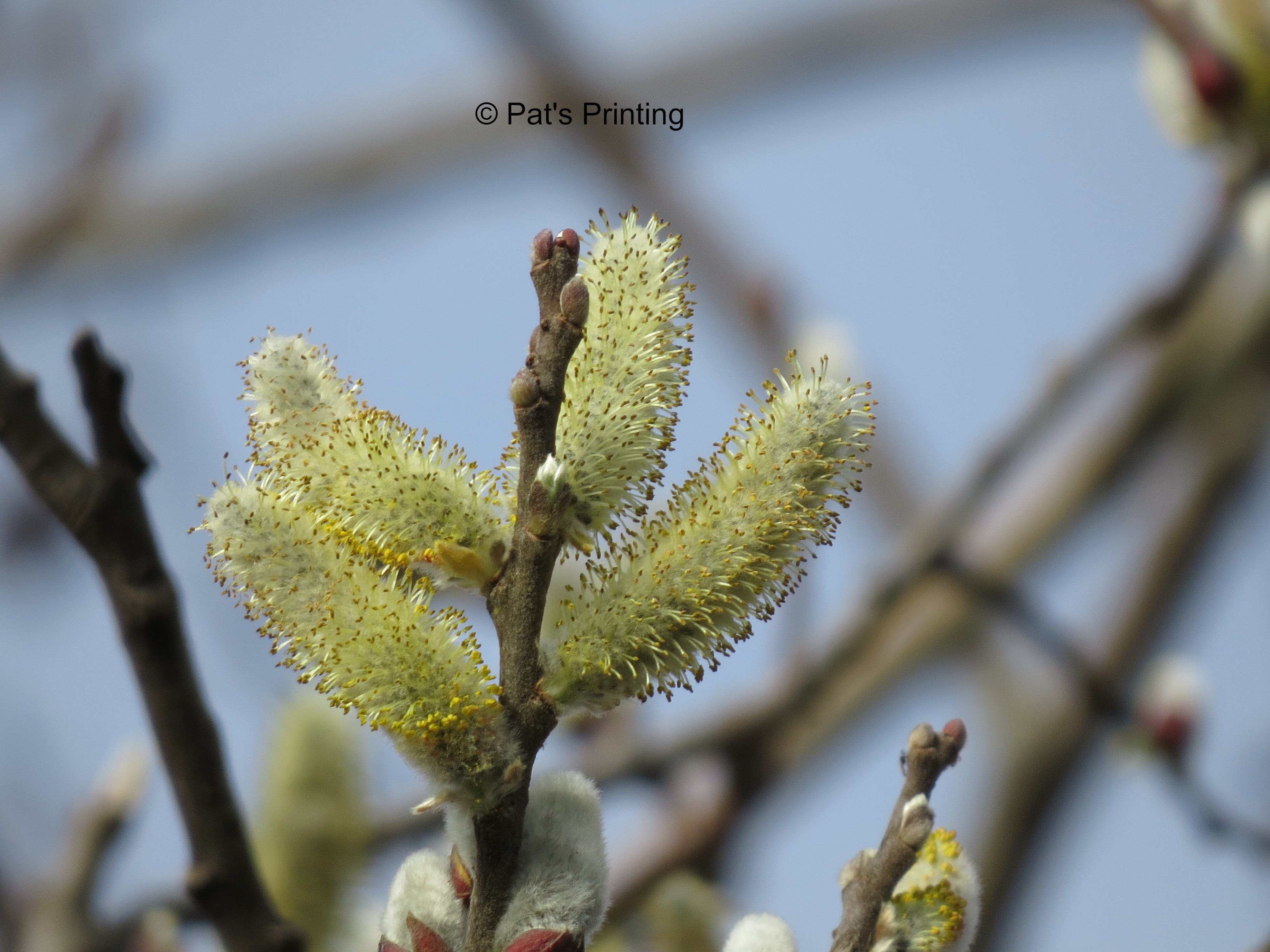
Willow catkins blooming near our hives…sun comes out…bees love it. February 8,2013
Gorse pollen is orange…I had been hoping it was the yellow pollen I had seen going into the hive. February 13, 2013
The video shows this bee in slow motion working the pollen back to it’s pollen sac. I didn’t see it at first until a more experience bee keeper showed me. February 13, 2013
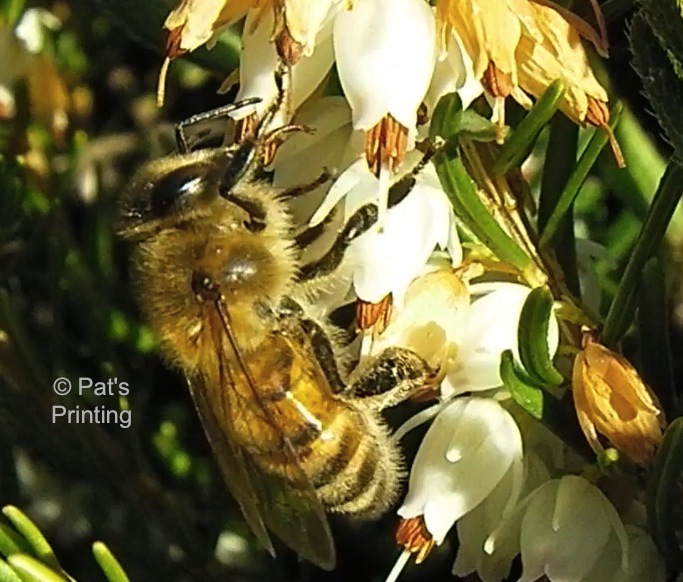
Bee on heather, 2-14-13, right up the street from Joe and Karen’s house.
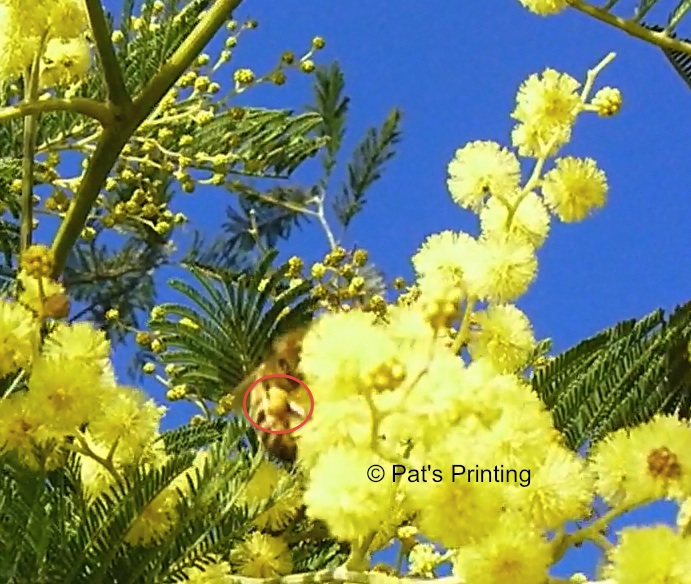
Bee on acacia, 2-15-13…Shigeo showed me this place to get some video. By the time we got to it, the bees were returning to home so I only got a short clip of it.
Shigeo shows how to transplant an Echium Tree.
Echium for 2013…I’m hoping this plant will shoot up 10 feet (3 m) starting about April or May. The tarp protects against freezing weather.
These are the plants that Shigeo demonstrated in the video, how to transplant. They are my hope for 2014
We planted this echium in late October 2011. It just stood still for several months. About April or May we noticed it had grown to about 10 feet. The bees worked it for 3 solid months.
The video shows the bees in action on the flowers. I used the Canon SX-50 (50x optical zoom) on the laurel as well as the willow catkins. My little pocket camera, a Sanyo Xacti performed admirably for the rest of the close ups…I love the ‘super macro’ feature.
As a newbie beekeeper I thought the bees just kept within the hive during the winter, leaving the hive infrequently. I know things are different on the coast because we rarely get snow, but we get loads of cold winds and driving rains. So it’s to my surprise that the bees are so active. They are actually bringing in pollen during January and early February. I’m hoping the yellow pollen is gorse, because everyone around here hates gorse so much (with good reason…it’s blamed for burning the town down in 1936), I’d like to know gorse is good for something, especially since it usually blooms early February.
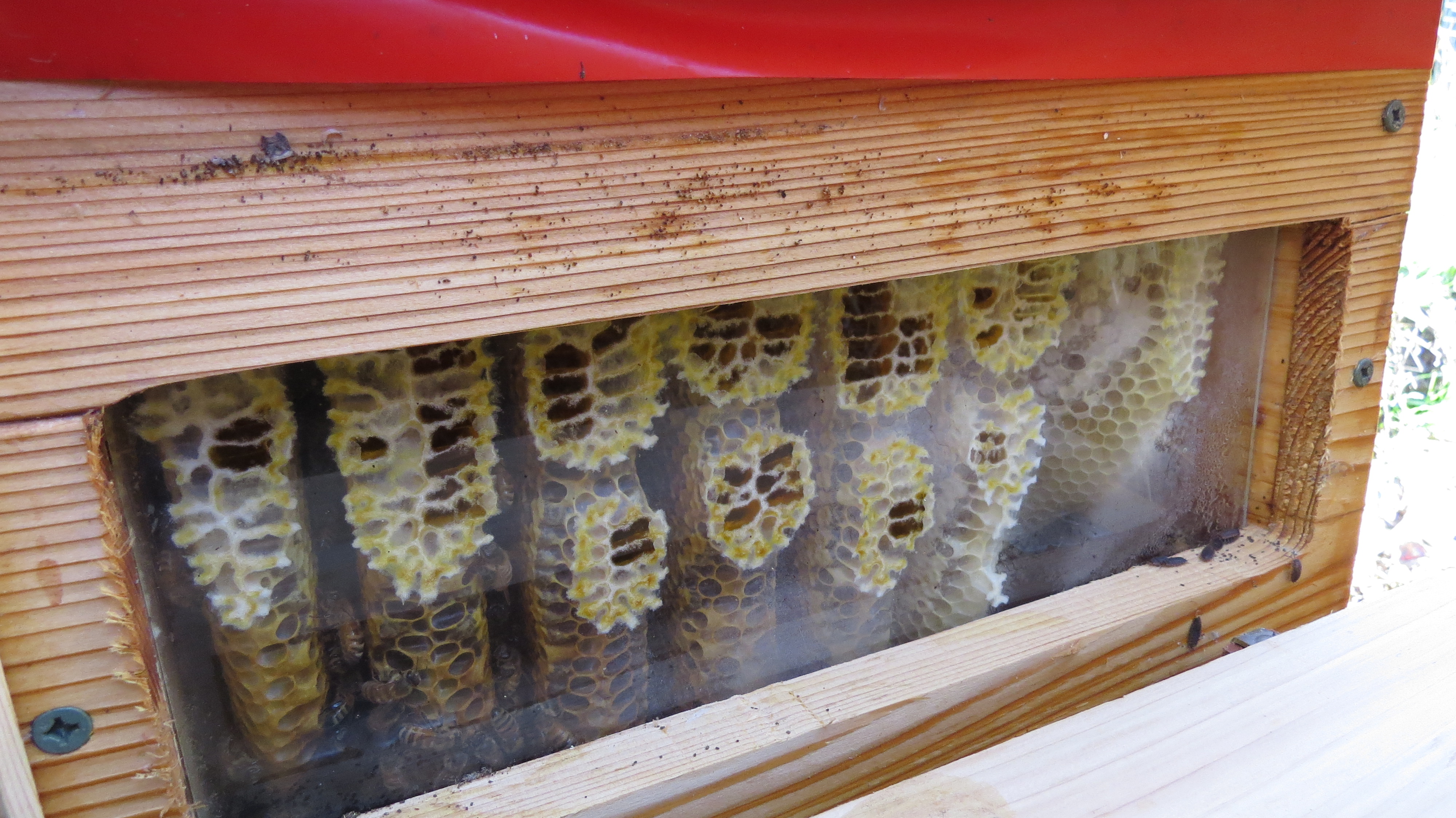
I’m concerned about the Warre hive. The top video shows the front of the hive with the bees bringing in yellow and orange pollen and through the observation window in back. I’d like some advice from more knowledgeable beekeepers about what to do. I almost nadired another box underneath, had planned for the forecasted hottest part of the day at 55 deg.F (12 deg.C) but then the temperature turned cool. Should I add another box so they can grow into it before they swarm or should I wait for a few more weeks because the winter weather will return the latter part of February and into March? Another box means they have to heat it. I’ve got a dry sugar pad above the box as a just in case food source.
The log hive below looks very strong, lots of activity whenever the sun comes out and the temps are in the 50’s (10 C) bringing in pollen during January and February. Those bees came from a feral tree hive. I’m leaving them alone to fend for themselves. I’m hoping the hive will act as an undisturbed ecosystem…bees adapting to survive mites and other pests.
Hope to have another log hive in place before they swarm.
A long time beekeeper in the bee association warned me to expect 50% winter losses. I thought to myself which hive am I going to lose, the one I’m reluctantly feeding or the log hive?
I realize this is only the beginning of winter, but both hives have already come through hurricane-force winds, weeks of steady rain, and a few recent frosty mornings. The sun finally came out this weekend and to my happy surprise, both hives are still flying, even though the temperature was a mere 50 deg. F (10 deg. C) The log hive is still bringing in a surprising amount of pollen.
I was able to shoot the 2nd part of this video with my new camera that sports a 50x zoom. I don’t have to get as close to the hive now. 🙂
Here’s a photo of the bottom board taken the next day…Some more experienced beekeepers say you can tell what’s inside the hive by reading the bottom board. I see flakes of wax, but I’m not sure about the rest of it…
Warre Hive Floor Board…Learning how to read the floor board. The layout of the bars are parallel with the bottom of this board. What do you see?
When it’s cold the bees hang out in the lower left of hive.
Here is Bernhard Zaunreiter’s assessment of my little Warre Hive…
Posted: Thu Jan 03, 2013 8:09 am Post subject:
It is a very small colony. But since they made it until now, they most probably make it through winter and until Spring. It will be a difficult time in Spring, when the old winter bees die off and have to be replaced with young bees just in time. Just make sure you protect them from robbing in Spring. A big colony will surely assault such a small colony and wipe them out of life. So reduce and watch the entrance.Such a moldy floor only can be found in small colonies. The black stuff on the right of the picture is mold. It won’t harm the bees for now. So no worries. The black dirt ist bug poo, I think the hive has quite some wax moths. The common woodlice are wintering within the hive, but won’t harm the bees much. You could clean the floor board regularily, so you can notice the differences over the time. Once the first stripes and pollen appear on the board, they started brooding. Wipe the mold off with some vinegar, washing and drying it afterwards with a hair dryer.Plenty of stores, so no worries about that. Maybe you scrape open some honey cells from above in Spring, so the honey draws moisture and can be eaten up more quickly, leaving empty cells to lay eggs into. Just some combs at a time. The most critical thingin Spring are empty cells.
Sandi works for a company that orders printing from me all the time. Whenever she would call, I’d bore her with my excitement about bees. At that point I didn’t have any bees and was building swarm bait hives, wondering where I could place them, and in general being hyper about getting some. Eventually, I got some bees. So when Sandi called in late June to say she had a swarm on her property and didn’t want them because she was allergic, I felt obligated to get them. She had suffered through my bee-brain ramblings, so I better come through. I was still smarting from the feral bee hive transfer to Bee Beard Log Hive and didn’t want a third hive, but there was a couple whose daughter had built them a top bar hive that needed bees. I called them and yes, they still wanted bees.
I’m sure there are better ways to capture a swarm. These bees were snug against the trunk of a small fir tree. I couldn’t bend the tree over the bucket to shake them in so I just sort of ‘brushed’ them into the bucket…watching for the bees to stick there rear ends up and fan the pheramone…”the queen is in the bucket.” Hearing the grandkids exclamations are priceless.
I don’t understand it. I got stung 25 times when transferring bees into Bee Beard and didn’t swell up as much as this time with only 5 stings!
I’m happy to report my Bee Beard log hive came through the hurricane-force winds without getting blown over. The bamboo and ‘staked’ hay bales must have protected it enough.
Since we are new to beekeeping we try to pay attention to the advice of more experienced beekeepers. We have been warned about robber bees attacking the hive…robbing the honey. I shot this video in an effort to find out if my log hive is getting robbed. I don’t know whether these are robber bees or just the normal activity of the hive. They are still bringing in pollen so I’m assuming (naively?) it’s all normal behavior. The bees came from a feral hive in a tree on private property. Maybe it’s strong enough to defend itself.
A short video of my Warre Hive is included. Much less activity can be seen around the Warre. Is it because I’m feeding them sugar? Maybe the bees don’t feel the need to venture out.
It’s early November when the clouds parted and the sun popped out. The day started warming and the bees started flying. It had been overcast and rainy for about a week, so I guess the bees were anxious to get out, but I was surprised to see so much pollen coming back in. The Warre hive had bees flying but not returning with the ‘gobs’ of pollen like the log hive…could it be because I’m feeding sugar to the Warre hive and not to the log hive?
I have no idea what kind of pollen they are bringing back. Nothing is blooming in the garden but rosemary and borage and I don’t see many bees on it. Is this normal behavior this late in the year? Comments are appreciated.
After reading the comment from Emily Heath, I started looking around the area for ivy. To my surprise it was growing all over the place. It’s one of those things that you don’t see until someone points it out to you. I had to get close to see the blossoms and that’s when I saw the bees. I hope some of them came from my hives.


















 Posted: Thu Jan 03, 2013 8:09 am Post subject:
 Adventures in Natural Beekeeping