Posts Tagged ‘pollinators’

An added bonus to growing flowers for the bees is attracting different pollinators.  Dozens of butterflies fluttered onto our flowers.    The Wallflower, Erysimum has been blooming all summer and today it was visited by an American Lady.  Will Cook was kind enough to answer my late night email inquiry and identified it.

An American Lady shows off her two eye spots on the underside of her wings.

An American Lady sipping nectar

This short video shows the butterfly probing the flower with her proboscis.  Sometimes it takes a few tries before the nectar is located.

For more information about butterflies, check out this web site.

Read Full Post »

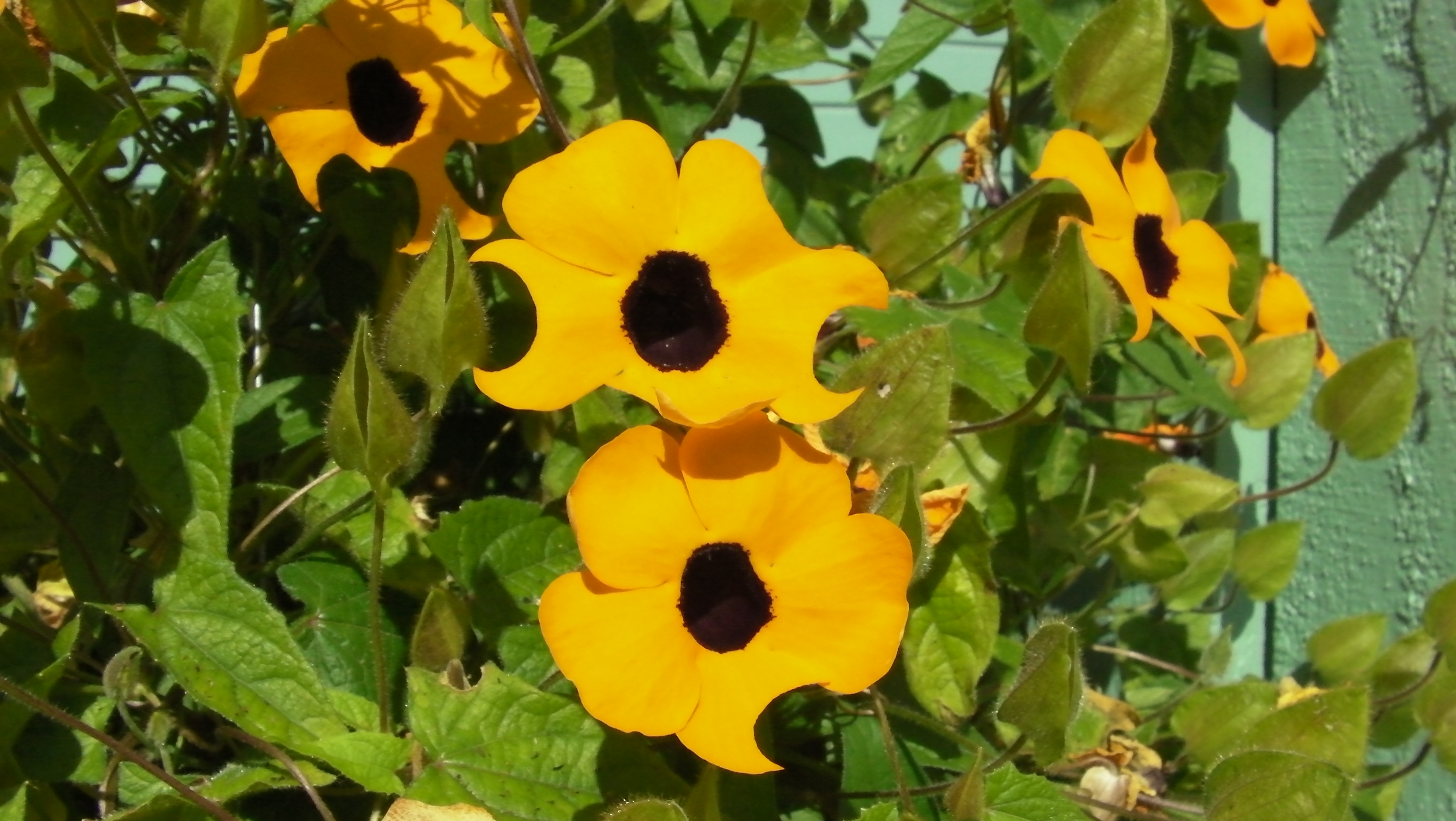
What is making these circular holes in the Black-Eyed Susan Vine? Slugs can’t get up that high and birds wouldn’t cut circles.

Last year my wife noticed circular holes in her Thunbergia’s petals.  She couldn’t figure out what could have made the holes.  We soon found out after spotting a bee carrying a leaf.  It flew into a hole in the side of the shop.

Dahlia blossom with circular holes

As I was looking for more evidence to photograph, a leaf cutting bee landed on this Dahlia plant and cut a segment out.  She was fast.  It took about 10 seconds to cut the petal and fly away.  I was able to point the camera and shoot away.  It wasn’t until the next day that I was able to catch the bees flying into a hole in the newly replaced shop wall, between two spider webs.  Both spiders failed to trap her…this time.

Here’s a short video showing all the action…

Read Full Post »

Two years ago we wanted to quit having to mow between our blueberry bushes. We laid down landscape cloth, covered it with sawdust, and our mowing days were behind us. That year we watched the bees pollinate the blossoms and the berries grew like never before. We had a huge berry crop but couldn’t eat a single berry because as they ripened, a family of robins spotted them first…each bush was clearly visible from a bird’s eye view and as the berries ripened, the birds easily picked them off before we could. We laid fake snakes on the ground. We hung shiny wind socks to distract them. We thought about netting them, but it would have been difficult to pick them. So we let the birds have them.

Last year we tried a different strategy. We let the comfrey that we had been treating as weeds, grow up next to the bushes. We didn’t have any bird problems. So this year we’re doing the same thing. The comfrey provides blossoms to attract the bees which pollinate both the blueberries and the comfrey and we are assured of having berries without birds.
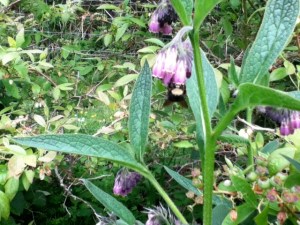
Bumblebee pollinating Comfrey blossoms. The bees work both the comfrey and the blueberry bushes that the comfrey hides from the birds.
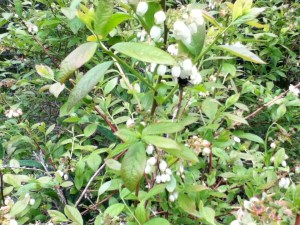
Bumblebee on Blueberry blossom
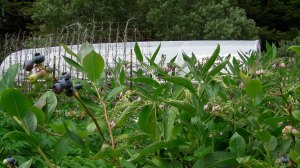
The comfrey is still blooming!! It’s been over two months since the first picture was taken.   The blueberries are now ripe and ready to pick.  Thanks to the comfrey for hiding the blueberries from the birds, we can now pick them.

The bumblebees are still pollinating the comfrey even though it’s been over two months.

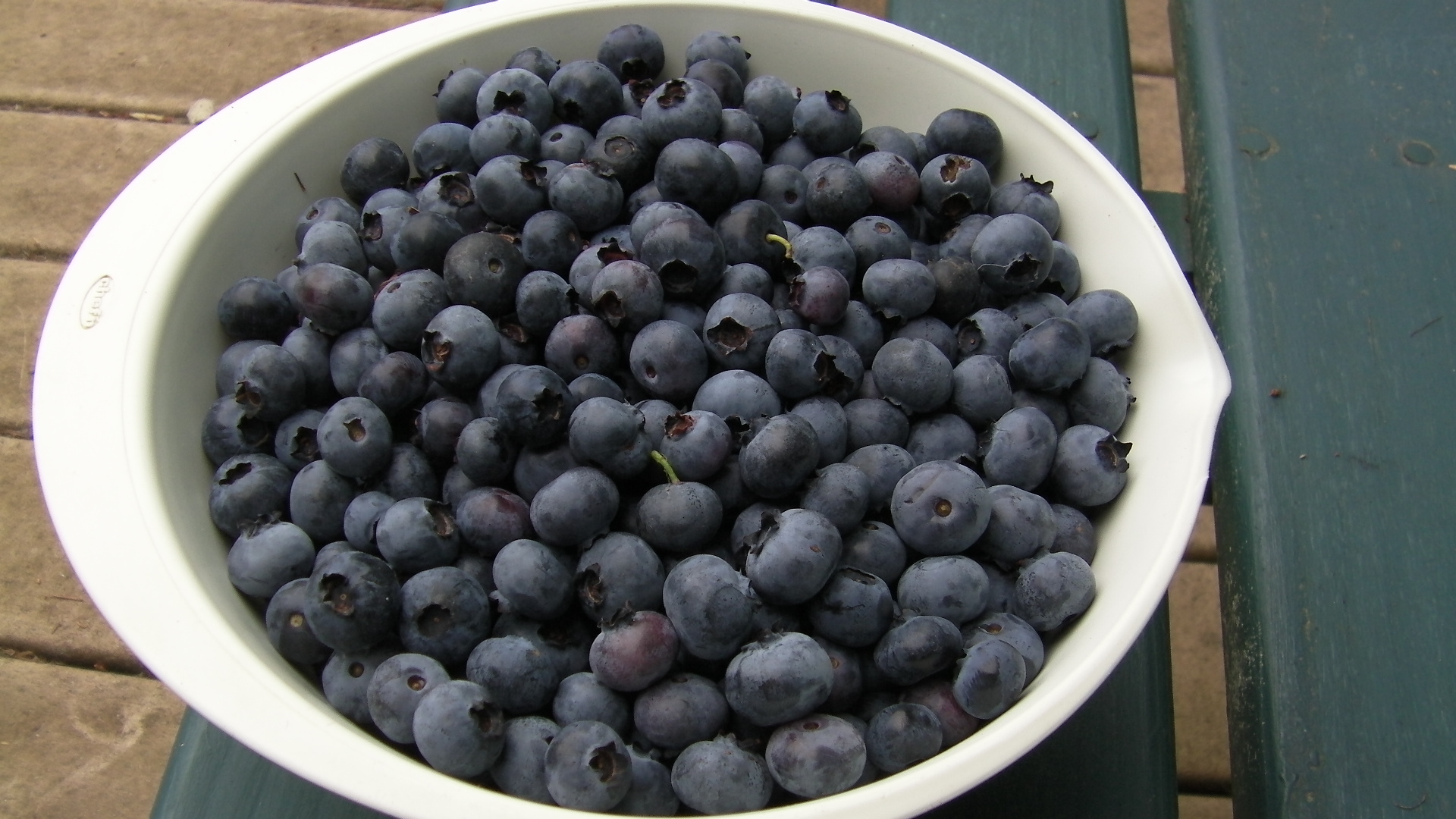
These blueberries were picked today. This is probably our best harvest yet.  We’ve been getting this much every couple of days.

It’s been a successful experiment.  The comfrey might compete somewhat with the blueberries for water and space…but what matters most is the successful harvest before the birds get them.

As a win-win, comfrey is known for it’s healing qualities also.  For growing and using comfrey see this article by The Mother Earth News.  And here’s a another person’s story of how to make a poultice and apply it.  I just came across yet another site about the great qualities of comfrey.

Read Full Post »

Last week I was able to catch up with Hal and ask him about his log hives.

The hive cavity measures about 10 in. x 10 in. x 36 in. (59 liters) There is a large observation window in the back covered by a wedge of wood.

I admire his spunk in trying something different and his attitude for not feeding, treating them, or taking their honey. And I’d love to get a swarm off that hive.

Read Full Post »

20120310-205252.jpg

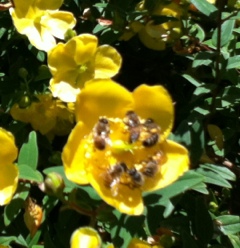
It’s hard to believe this little tray of peat pots comprises most of our tomato plants. I had to throw in some blanket flower seeds as well as poppy seeds. The bees love poppies as can be seen in this fuzzy photo of six bees on a St. John’s Wort which is covered with bees mid June to late July.

20120310-205028.jpg

Read Full Post »

See the beginning of the log hive here

Bee Beard Gets Bees…

Pat’s New Log Hive

Meet Bee-atrice

Read Full Post »

« Newer Posts