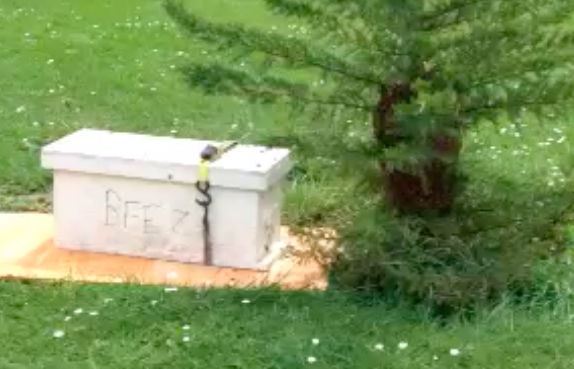
April 22, 2014…Swarm in short tree. Baited nuc hive very close. Wife says, “DO NOT CUT MY TREE.” The bees refused to enter this hive. Hal waits four days…no luck. He gets a bigger hive.
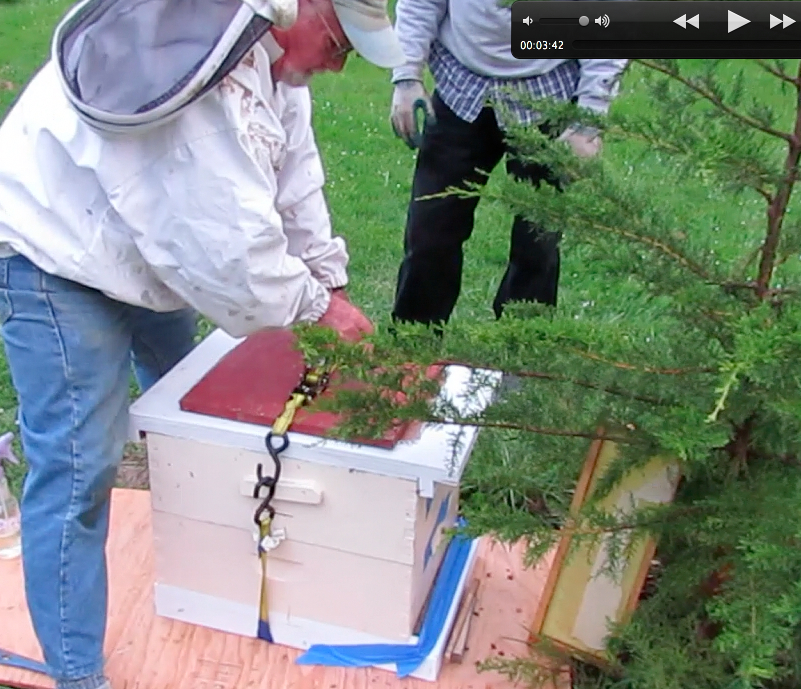
April 24, 2014…With a bigger hive consisting of two Westerns, Hal coaxes the bees in, opens the lid briefly to show us the bees, before closing everything up.
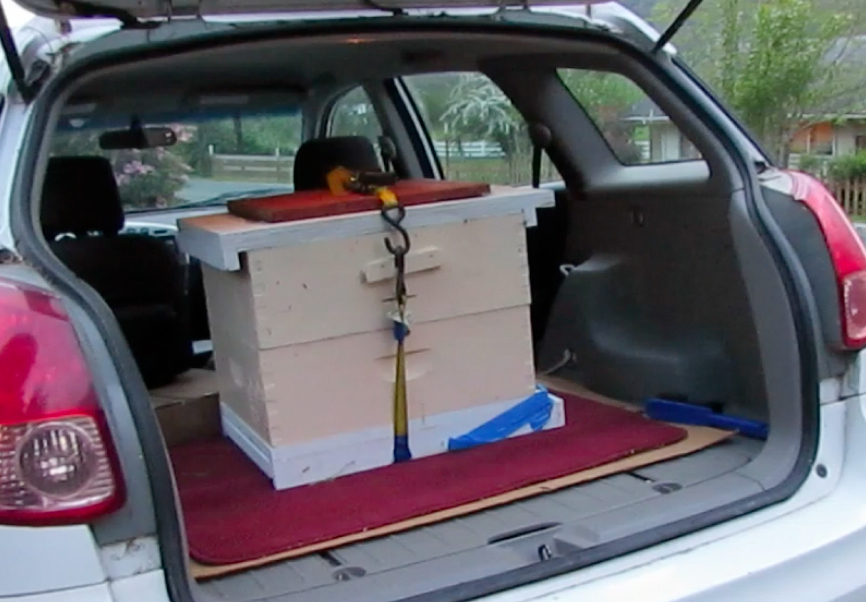
Cinches the belt so we don’t have to worry about the hive sliding open and bees flying around our heads while driving back.
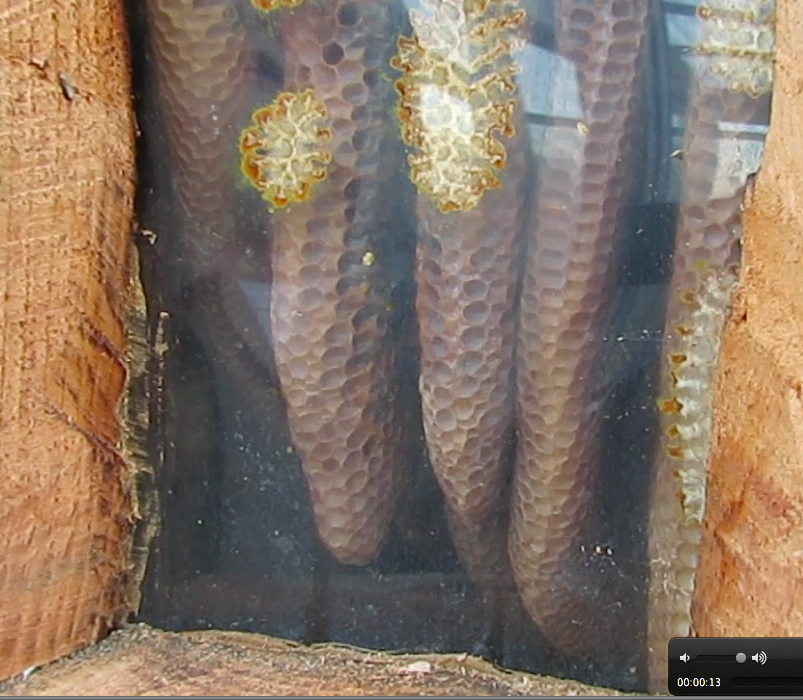
April 24, 2014…This is the log hive where the bees swarmed from.
January 22, 2014…Same log hive, many fewer bees which are clustering up high.
Hive loaded into car, we are good to go!
Next morning…Day 1. Bees still here.
April 27, 2014…Day 3. The bees are flying well. Looks like they have accepted the move. Thank you, Hal, for getting us bees that have not been medicated, treated with mite strips or even fed with anything but their natural unadulterated honey.
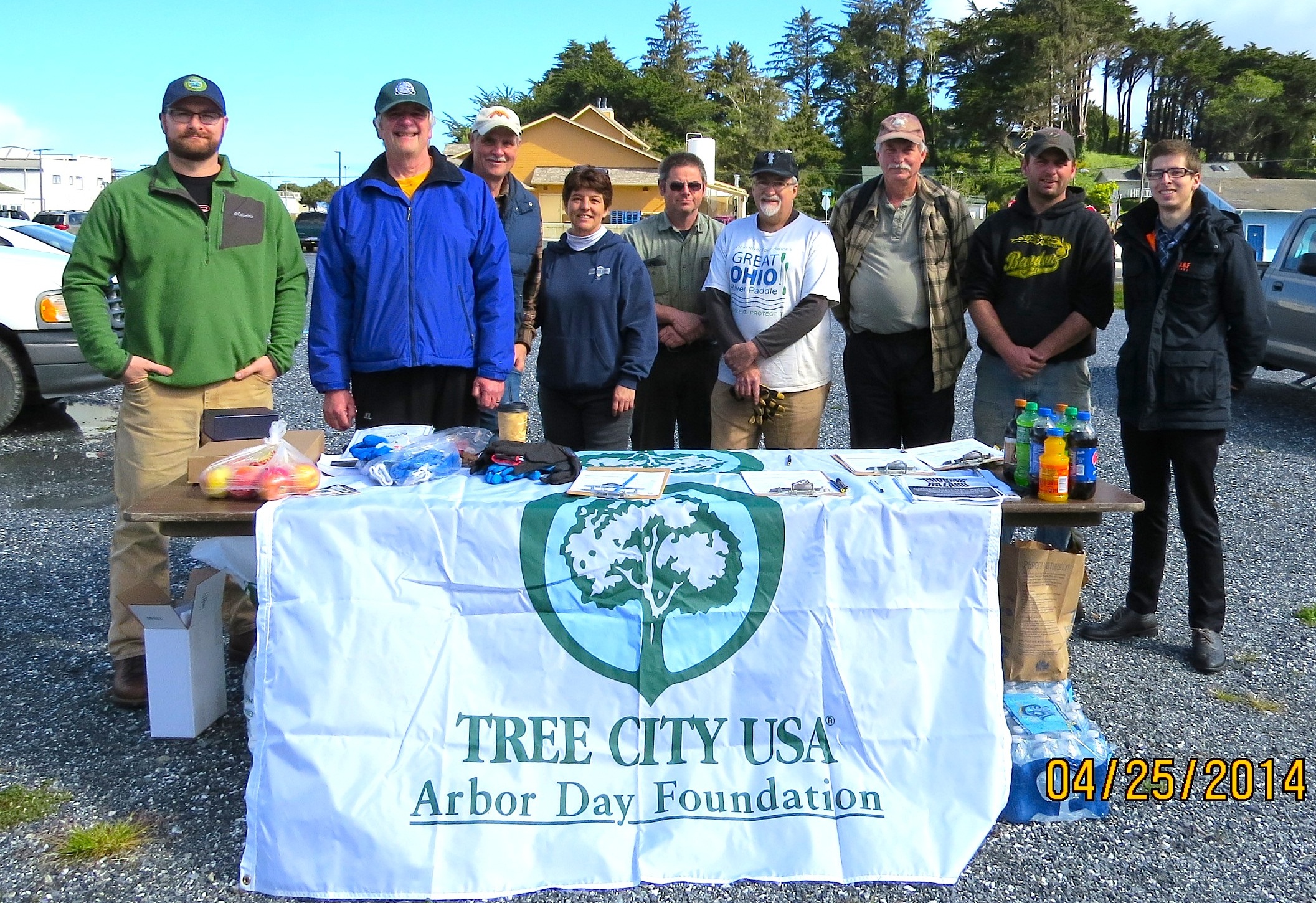
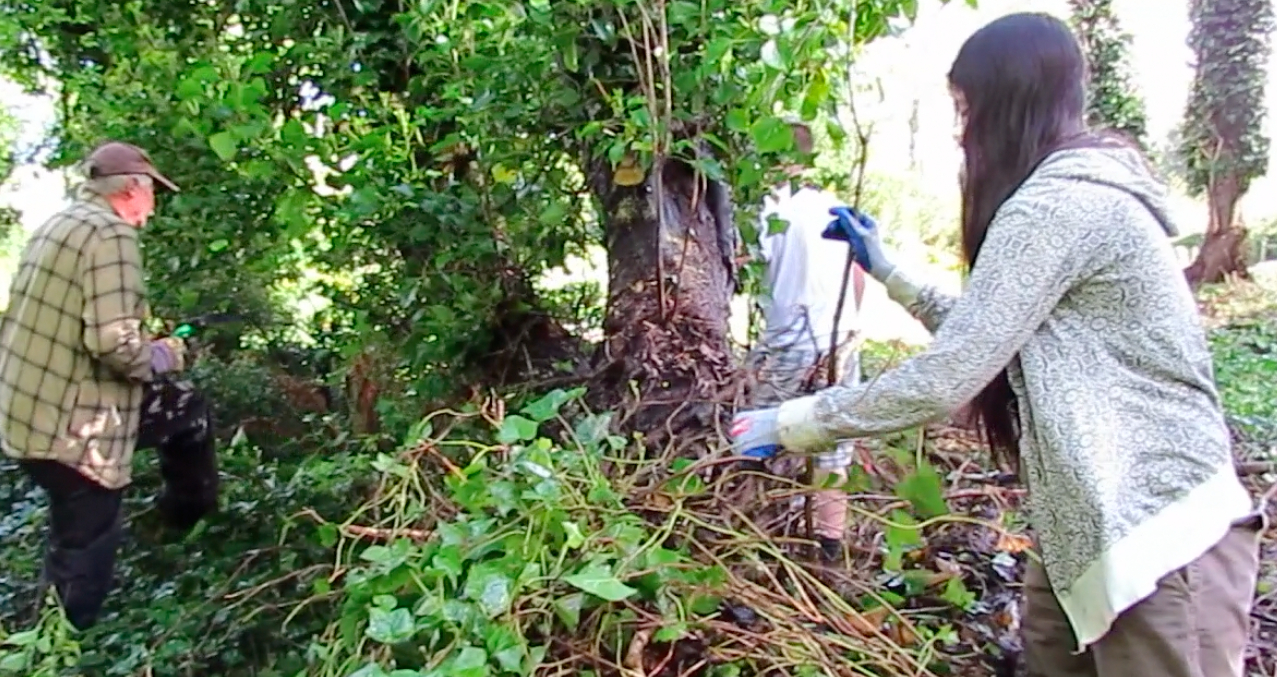
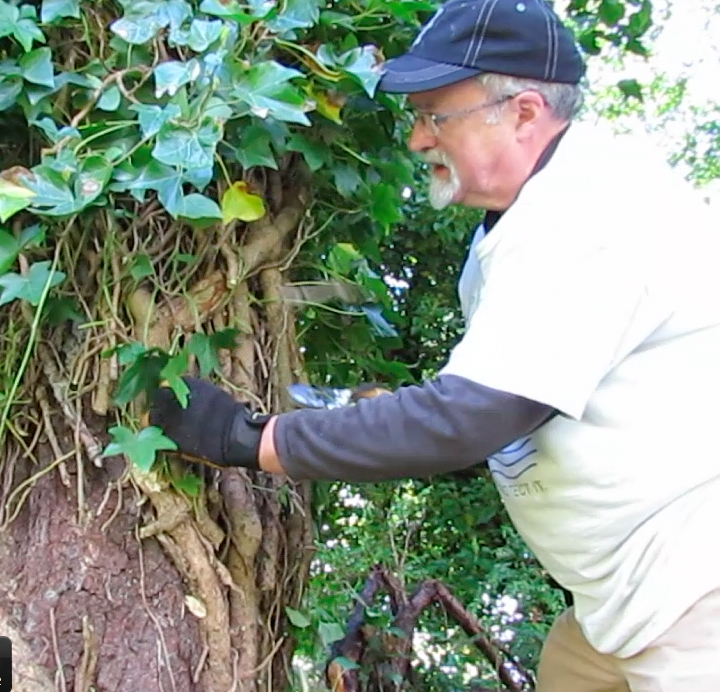
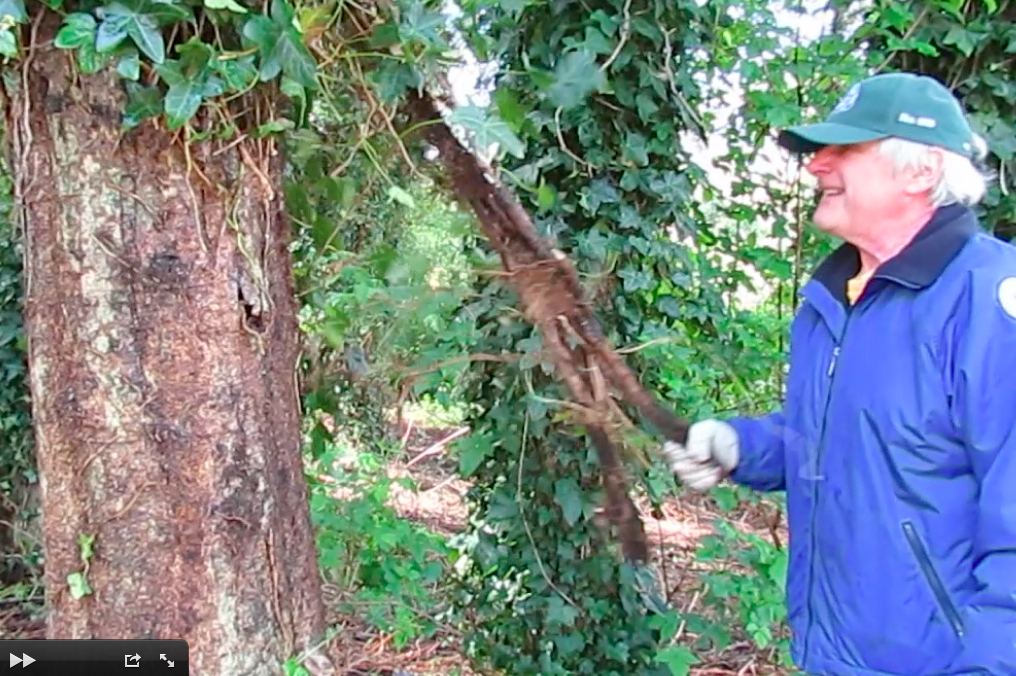
April 25, 2014… is declared Arbor Day in Bandon, Oregon. These volunteers are donating their time to remove ivy from the alder and ash trees. Organizer Michelle Hampton (left center) knows that honeybees and other pollinators get nourishment from ivy, but it’s choking the trees and must be removed. Since my bees might be affected she has revealed to me a place where I might find an old colony of bees to capture a swarm from. More on that later.
April 25, 2014…Nick Morris, Stewardship Forester with Oregon Department of Forestry, presents the Five Year Service Award for participation in the Tree City USA Program to the City of Bandon.
Harv Schubothe, chairperson of the Parks and Recreation Commission, reads the Proclamation, proclaiming April 25, 2014 to be Arbor Day in the City of Bandon.
It was good to see some kids helping out especially on a day off from school.
On a personal note, until I arrived at the gathering place set up to pull ivy off the trees, I didn’t even know about Arbor Day. Deadlines have always kept me in the print shop. Now that my largest account (an account that I have had for over 25 years) has gone paperless, I have more time. When I saw the article in the local newspaper asking for volunteers, I volunteered, not having done any community volunteer work for over 30 years, I thought maybe it was time. I knew that Lucy at Alder and Ash would approve. I caught the excitement of Following a Tree from Lucy and community volunteerism from Emily Heath. They are both from Great Britain. Hmmm, I wonder if they know anything about English Ivy?
In an effort to get the bees to move up to box #3, I made some ladders. The first two boxes were full. I knew I better give them more room, but they wouldn’t move up…until I added ladders.
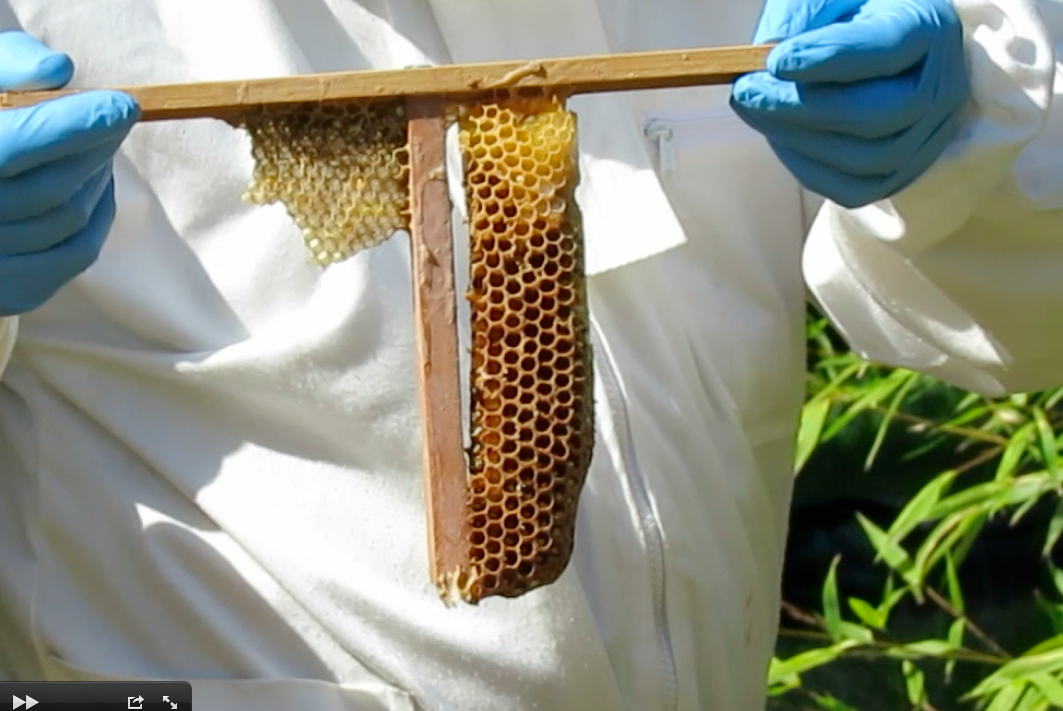
March 24, 2014…I pulled out some bars so I could replace them with ladders. I’m reluctant to use foundation, so I’m being miserly with what I have left in old comb…MY COMB which doesn’t contain any toxins from mite strips, meds, or antibiotics. As long as the ladders are 7.5″ (19 cm) they work well.
Second ladder is added. In all I placed about four ladders. A 7.5″ (19 cm) length of wood is added for stability. The remaining four bars have small pieces of comb melted on. When I have no comb left, I just use the lengths of wood with wax melted on.
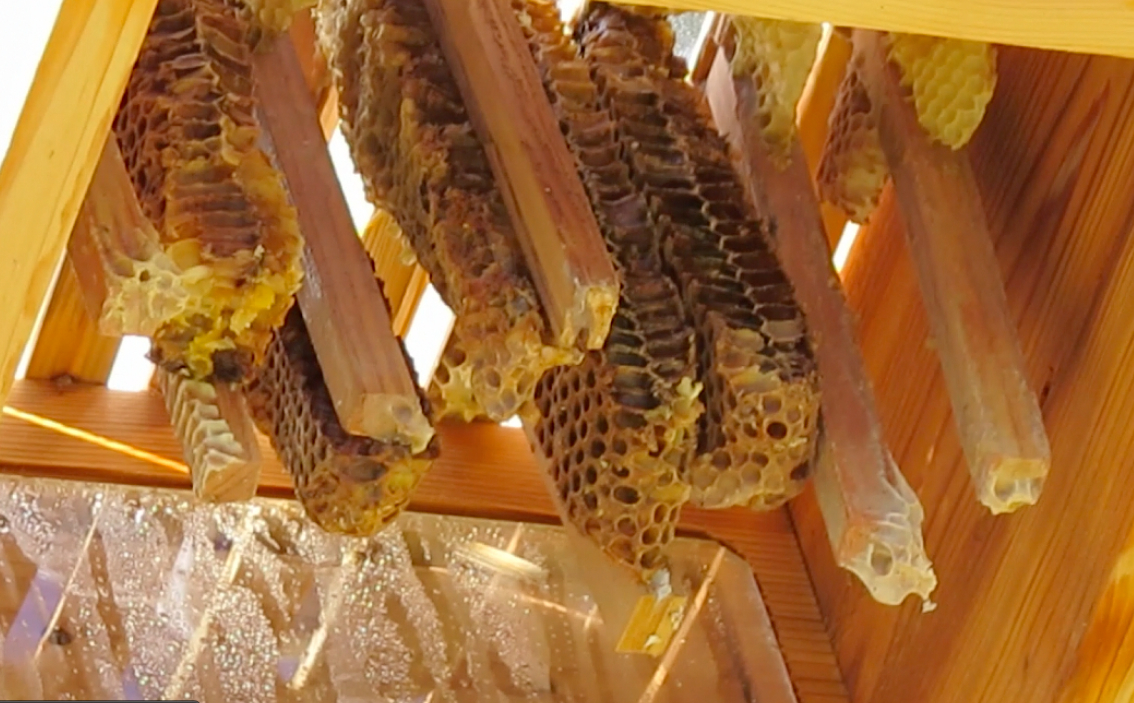
Looking up from underneath the box at the ladders and non ladders.
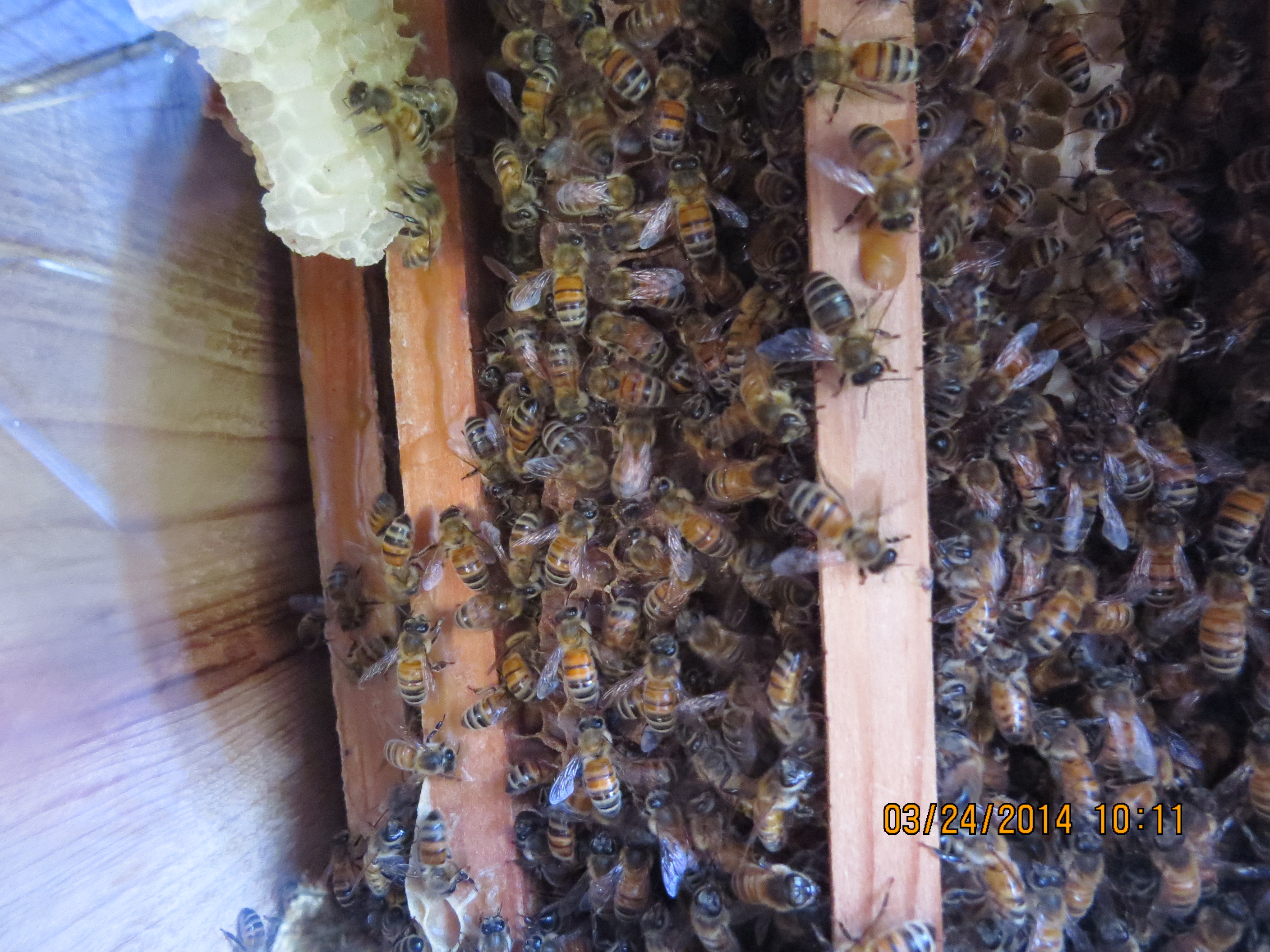
March 24, 2014…bees moved in right away.
April 18, 2014…#3 box is 3/4 full, time to add box #4.
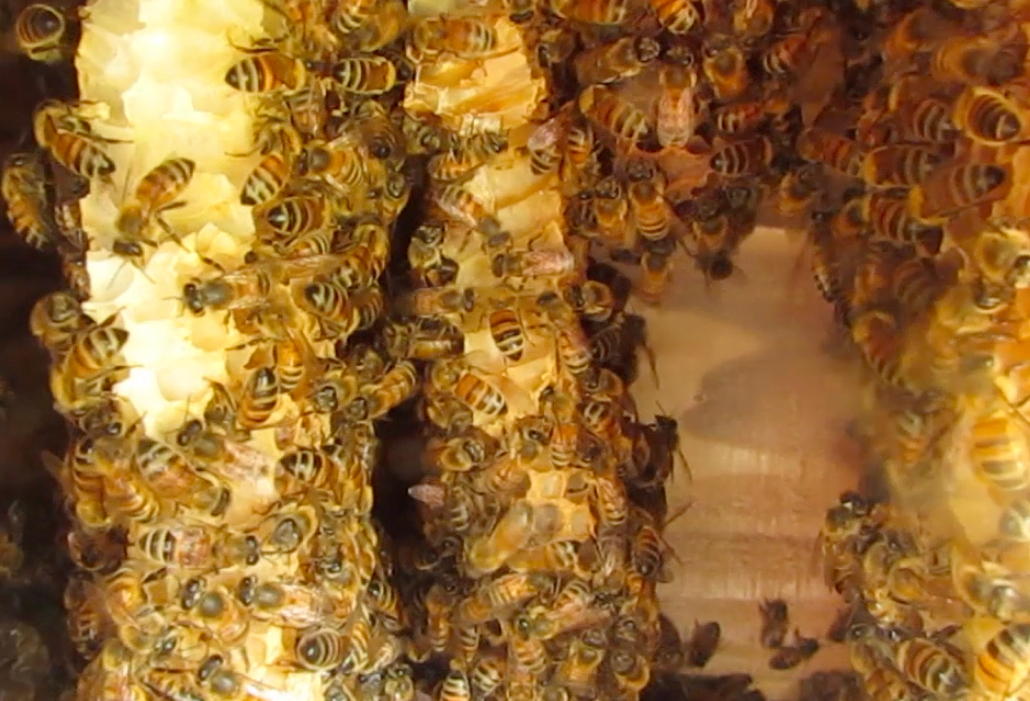
April 18, 2014…I just added box #4, again with ladders…bees move up immediately.
Whenever we find a swarm much above eye level, the Steinkraus-Morse Swarm Catcher is called into action. You can make one by cutting the bottom out of a plastic flower pot and attaching a cloth sack. The height is adjustable by the length of bamboo used. Many thanks to Don Steinkraus for writing about it, and Terry Kelly of Berkeley for sending it to me. It’s invaluable.
I consider myself a ‘natural beekeeper.’ I don’t make splits, raise my own queens, or buy package bees. I let the bees swarm. I believe in the adage, “Swarming Bees are Healthy Bees.” Having said that, when the bees swarm, we have to catch them. If they swarm into the bamboo, it’s lower to the ground, but difficult to get. If they swarm into the spruce tree, they generally cluster up high. The first one this year formed high, then re-formed to a lower more reachable area.
Pipe holders for a length of bamboo to slip into.
Sew in a curve to avoid trapping bees in a corner.
Velcro attaches the sack to the cut off flower pot.My first swarm this year happened last week. I was busy with printing deadlines when my wife shouted, “WE HAVE A SWARM!” The bees seem to like this spruce tree. It’s been the scene for three swarms now, two of which we have caught.
Centering the catcher under the swarm.
The idea is to position the catcher under the swarm before bumping the branch to make the bees fall directly into the sack. Last year I was able to ‘pop’ the branch upward to get a bunch of bees all at once. This time it didn’t go as planned. The bees clung to the branch. When I ‘popped the branch,’ They started flying around and getting all defensive. The camera lady was concerned (maybe because we were both getting stung) so we didn’t get the action on video. The next morning we were more successful. We trimmed a few branches and I was able to ‘pop’ the branch from above. The bees fell into the sack, the sack was emptied into the empty Warre, and all is well as of day 4.
April 15, 2014…This is day 4. I’m assuming the bees have decided to stay.
April 15, 2014…the bees can be seen through the observation window. Chaining to ‘measure’ for building natural comb.
I’m sure you’ve seen the you-tube video of the guy putting his bare hand into a swarm of bees. As I suited up to get this newly formed swarm, I’m thinking, “what a sissy I am. The swarm just formed, they’re not going to sting.” Let’s just say, I’m glad I was suited up. I was able to give this bee sting remedy a good test. By softening up the end of a clove of garlic, rubbing it onto the stings to relieve the pain and the swelling, I can report that it worked well on all our stings.
I found out about peppermint oil from one of the bee forums. If you daub some of it around the sting area, it will cover up the bee’s alarm pheromone…just don’t daub it directly on your sting because it can be much more painful than the sting itself. Believe me, I know.
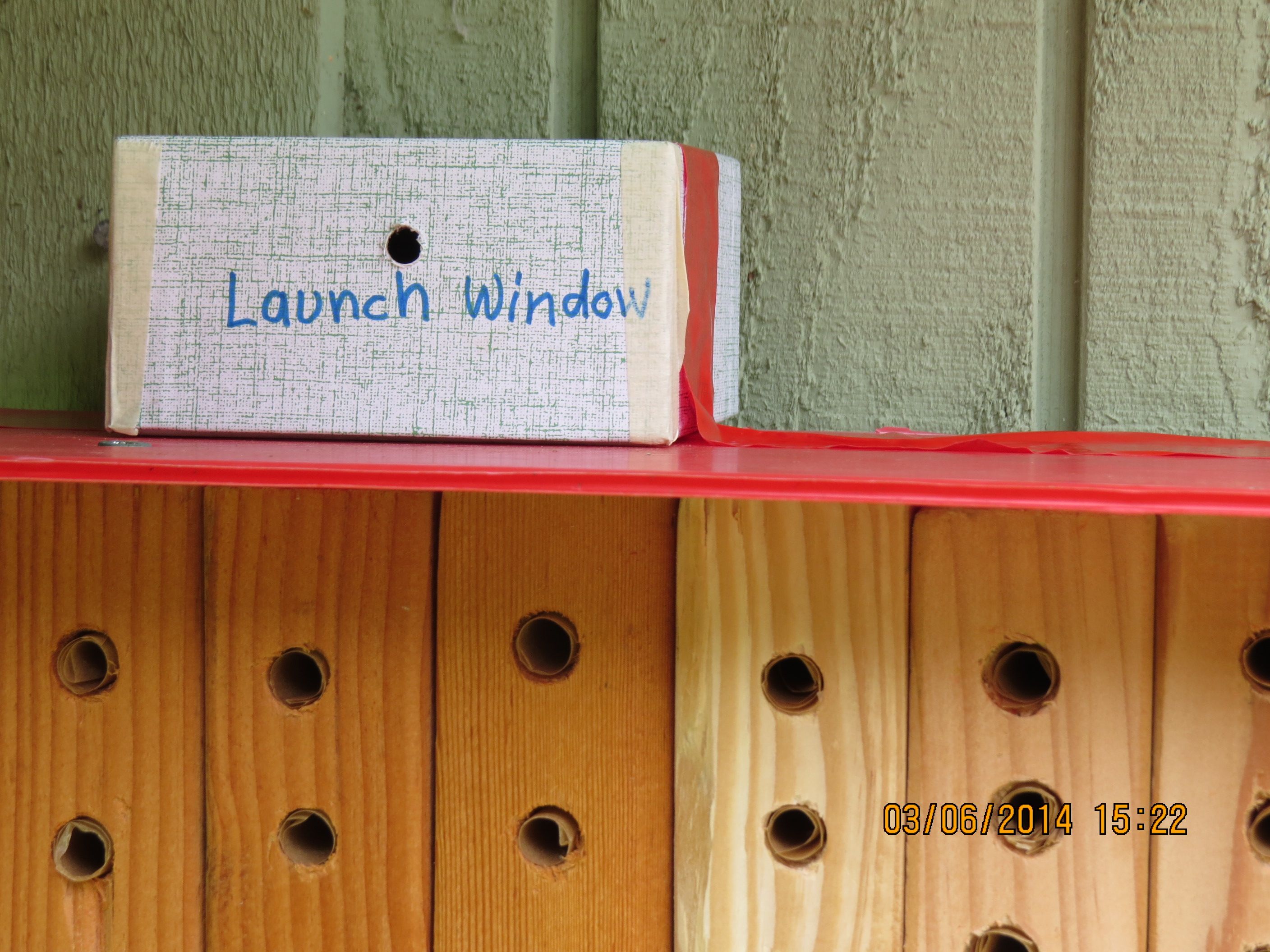
March 6, 2014…Cocoons transferred from refrigerator to this “Launch Box,” ready for action. There should be about 100…
Launch box complete with about 100 cocoons.
March 6, 2014…first set of Mason bee blocks set up on new shelf.
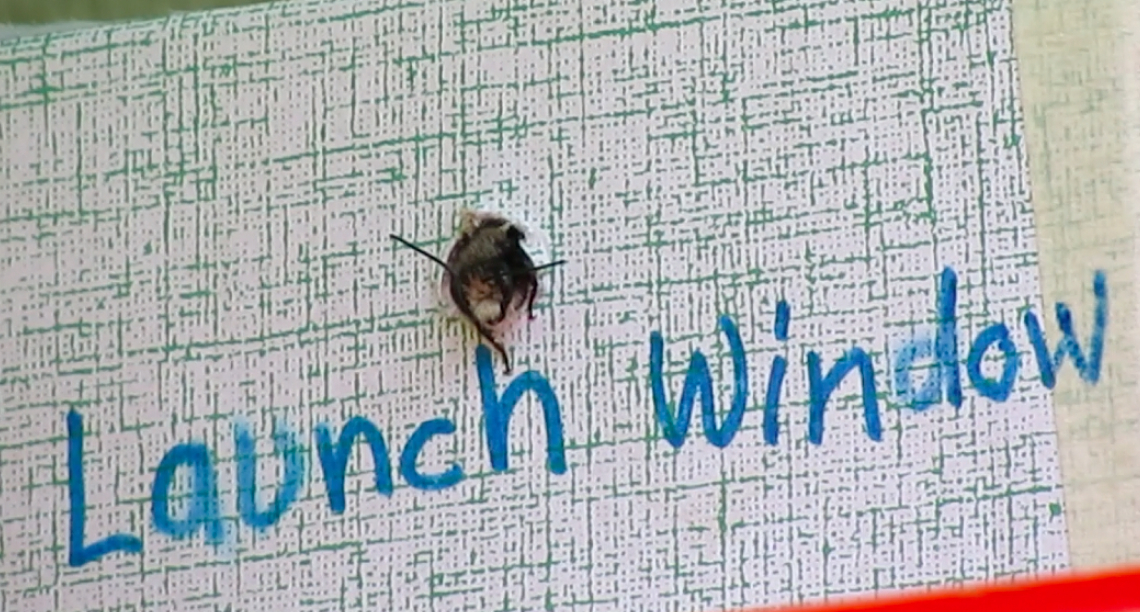
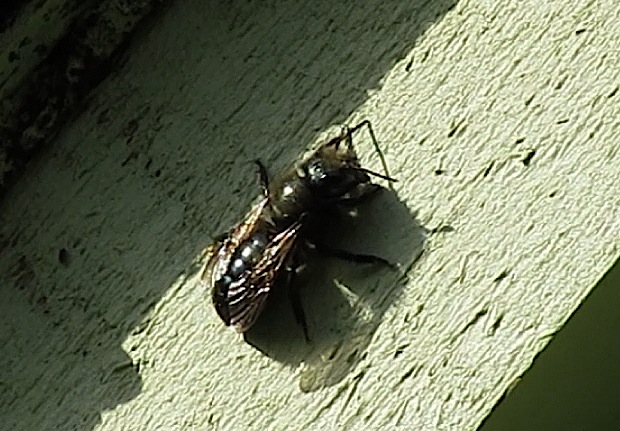
March 30, 2014…We have lift-off. After 24 days of anxious waiting, we see a bee emerge.
HB says this is a male. You can see a little yellow fuzz on the face and it has long antenna. I’m soooo relieved to see bees, because after pulling them out of their tubes last year, I wondered if I had handled them too roughly.
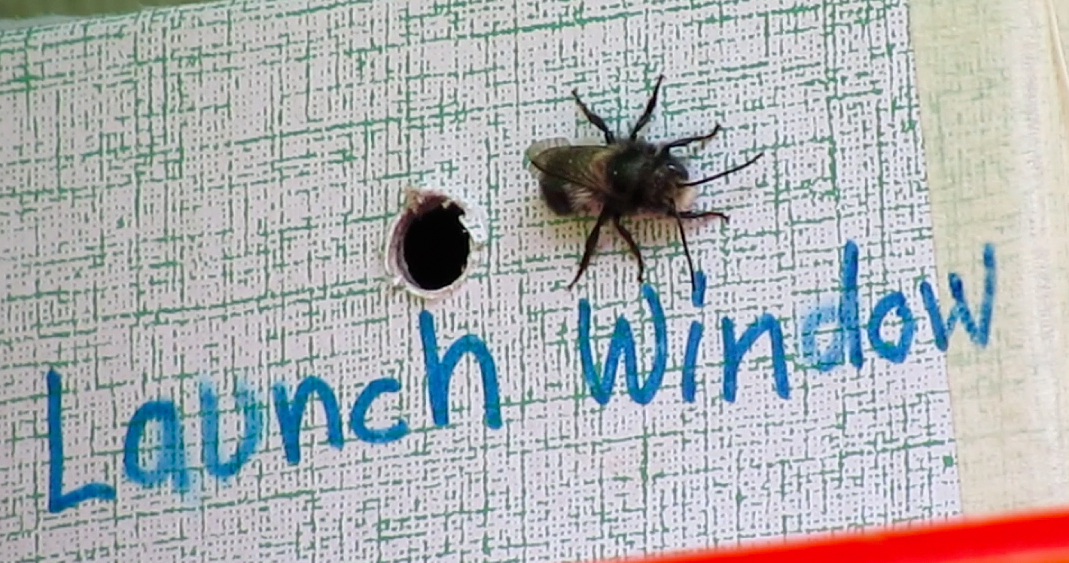
March 30, 2014…I’m guessing this is a male mason bee. (“Not so fast, Pat”. HB says this is a FEMALE) The males live but a few days. After they mate with the female, they die.
A female has already chosen her first tube.
Carolyn Prola, author and historian who lives in Myrtle Point, Oregon, shows off her Mason bees. Her bees are ahead of mine by a week or two. Carolyn is responsible for getting me back into Mason bees after a couple of false starts.
Our cat likes to play in this grass. I have no idea why she likes it, but like it she does. When I had the camera out shooting the bees on the pussy willow last week, I caught her in the act.
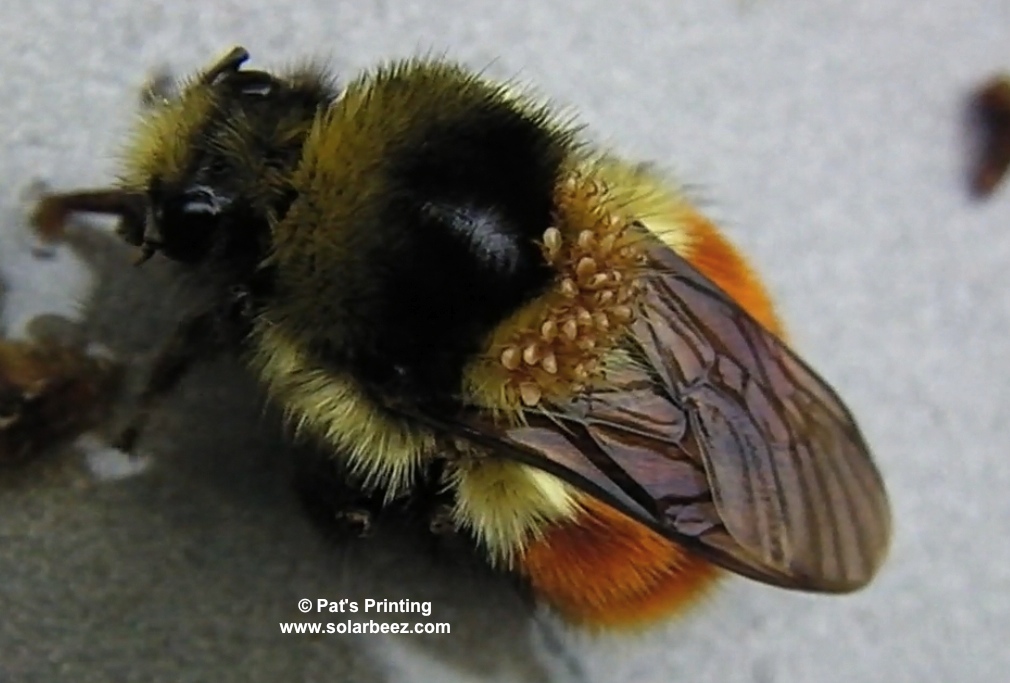
February 13, 2014…This bumble bee (bombus Melanopygus, I believe) was sipping honey when we noticed all the mites on her back. We would like to try to remove them…Does anyone have any ideas of how to accomplish that?
July 7, 2013…Spring veggies harvested, soil spaded and leveled, drip watering in place, this bed is ready to plant our winter garden.
When we planted turnips, lettuce and kale in July for our winter garden little did we know we were planting for the bees as well as ourselves.
July 28, 2013…turnips are growing nicely in the center, lettuce and kale are on the sides. Deer netting over pvc hoops.
January 16, 2014…We had eaten most of the turnips and just left a few to go to seed. We never thought the bees would be enjoying them in mid January. What a welcome surprise.
February 9, 2014…My apologies for posting such a fuzzy picture of a bee on the catkins,but it was rather high up. I wanted to show where the pollen was coming from that is going into my log hive.
February 9, 2014…Many colors of pollen can be seen entering the hive. In the video you can see the bright yellow pollen from turnip flowers. It’s possible this shot is from the pussy willows that are just starting to blossom. The darker orange might be from early gorse.
February 10, 2014…Yellow turnip flowers have been flowering since mid January. Pussy willows are starting to blossom already. Second bed is producing greens for our salads. We can eat them 15 minutes after they are picked…can’t get much fresher than that. We cover them with plastic film (partially visible on far side) on nights of sub freezing temps.
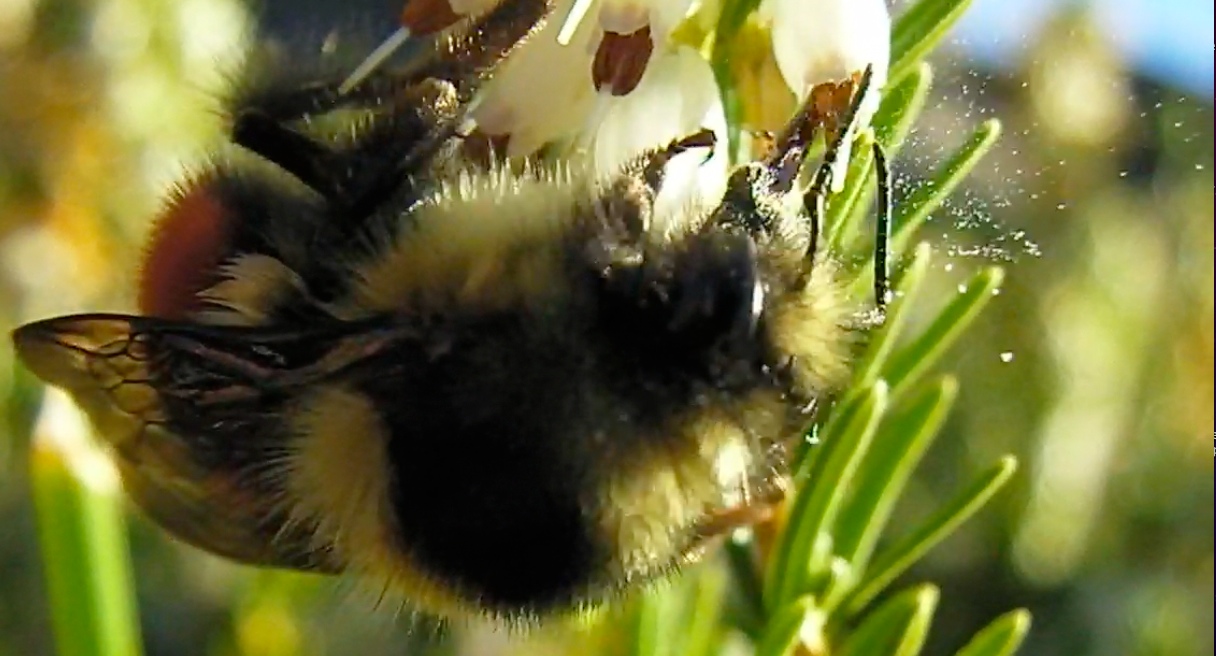
January 14, 2013…a beautiful warm day brought the bees out to the heather. I saw very few honeybees, but very many bombus Melanopygus (this one) and also Bombus vosnesenskii (yellow-faced bumbles)
Here you can see the pollen release. When the bee gets the nectar, the pollen shoots out.
As she grooms herself with her front legs, you can see what looks to be a static electricity charge on her bee fuzz…it shows up better on the video.
This short video shows a bumblebee (bombus Melanopygus) sipping nectar from heather in mid January. As she sips, pollen can be seen shooting out. Later she grooms herself. I noticed what looked to be a static electricity charge when her front legs combed her fuzzy head.
I didn’t want to interrupt the music so I added some video of my Bee-atrice log hive which didn’t make it through the sub freezing weather. I looked at a comb which had some capped honey as well as uncapped cells. I replaced the comb in the hopes that this hive will attract a swarm in spring.
It should be raining sideways this month. It’s not. After our cold snap, we’ve been enjoying daytime temperatures in the 50’s and 60’s F. (10’s and 20’s C) When I filmed this it was 71 F. (22 C). Our honeybees love it. They are bringing back yellow and orange pollen. I can’t figure where they’re getting it because the pussy willows aren’t blooming yet, but traffic is heavy as can bee seen on the video.
This is my second winter with bees. They don’t fly when it’s raining of course, but we do get breaks in the rain, the sun pops out and the bees are flying. I feel bad for the beekeepers that must tuck their charges to bed in the autumn and trust they will emerge when the weather warms up sometimes months later. I’m talking about people like Emily Heath among others in cold far away places. 🙂 I guess you could say I’m spoiled to be able to see them active during the winter. I don’t know what will happen in spring. It’s possible we’ll get our rain then…given the choice, I’d rather get it now. In any case the bees are making use of the warm weather.



















 Adventures in Natural Beekeeping