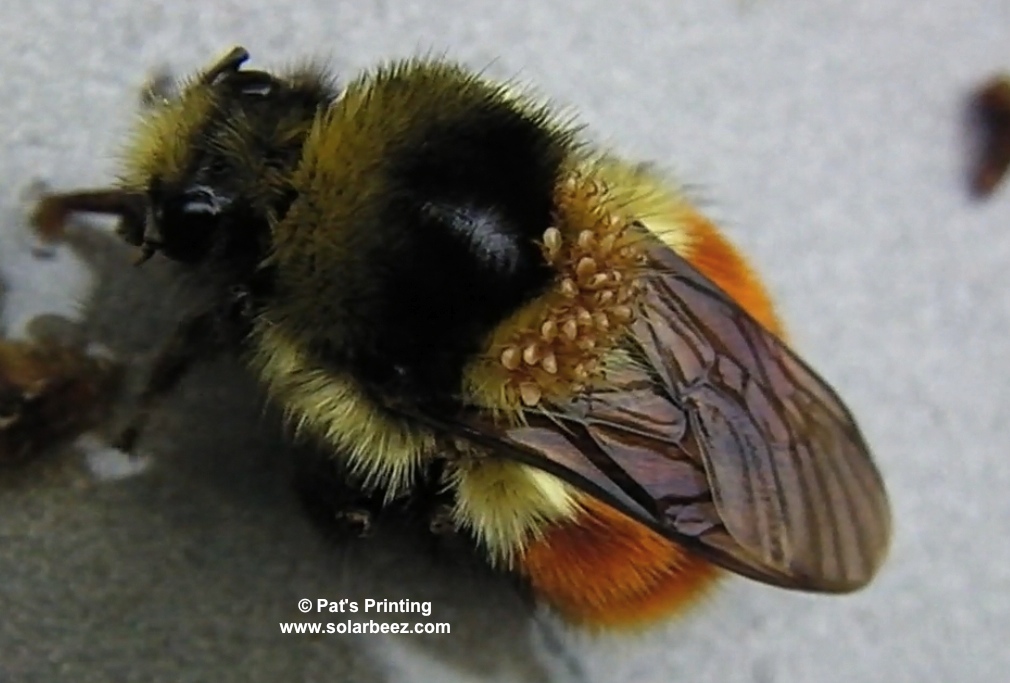
February 13, 2014…This bumble bee (bombus Melanopygus, I believe) was sipping honey when we noticed all the mites on her back. We would like to try to remove them…Does anyone have any ideas of how to accomplish that?
Posted in Bumblebees, Music video, Natural Beekeeping, Videos, tagged bees on Oregon Coast, bombus melanopygus, bumblebees, macro nature video, mites on a bumblebee, nature photography, pollinators, Wild pollinators on February 13, 2014| 15 Comments »
February 13, 2014…This bumble bee (bombus Melanopygus, I believe) was sipping honey when we noticed all the mites on her back. We would like to try to remove them…Does anyone have any ideas of how to accomplish that?
Posted in Bee-loving flowers, Drip watering, Natural Beekeeping, Raised beds, Sustainable living, Videos, tagged bee-loving flowers, bees on catkins, bees on Oregon Coast, bees pollinating turnip flowers, deer netting in raised beds, drip watering, Gardening, macro nature video, natural beekeeping, nature photography, pussy willow trees, raised beds, Sustainable living, Turnip flowers, Turnip flowers for bees, turnips, vegetable growing on February 12, 2014| 16 Comments »

July 7, 2013…Spring veggies harvested, soil spaded and leveled, drip watering in place, this bed is ready to plant our winter garden.
When we planted turnips, lettuce and kale in July for our winter garden little did we know we were planting for the bees as well as ourselves.

July 28, 2013…turnips are growing nicely in the center, lettuce and kale are on the sides. Deer netting over pvc hoops.

January 16, 2014…We had eaten most of the turnips and just left a few to go to seed. We never thought the bees would be enjoying them in mid January. What a welcome surprise.

February 9, 2014…My apologies for posting such a fuzzy picture of a bee on the catkins,but it was rather high up. I wanted to show where the pollen was coming from that is going into my log hive.

February 9, 2014…Many colors of pollen can be seen entering the hive. In the video you can see the bright yellow pollen from turnip flowers. It’s possible this shot is from the pussy willows that are just starting to blossom. The darker orange might be from early gorse.

February 10, 2014…Yellow turnip flowers have been flowering since mid January. Pussy willows are starting to blossom already. Second bed is producing greens for our salads. We can eat them 15 minutes after they are picked…can’t get much fresher than that. We cover them with plastic film (partially visible on far side) on nights of sub freezing temps.
Posted in Bee to Flower relationship, Bee-loving flowers, Natural Beekeeping, Poached Egg Meadowfoam, tagged Bee on gaillardia, bee pollinating penstemon, bee-loving flowers, bees on Oregon Coast, bumblebee on Penstemon, bumblebees, bumblebees on Penstemon video, butterfly on pincushion flower, butterflyweed, Gardening, Limnanthus alba, Limnanthus Douglasii, macro nature video, meadowfoam, Meadowfoam bees, Oregon Coast bees, Outsidepride.com, penstemon, S, Salvia attracts bees, Scabiosa pollinator, Wild pollinators on February 4, 2014| 12 Comments »

Last year in June, before the deer discovered it, the bees were on the Meadowfoam everyday.
If you’ve ever watched the bees on a Poached Egg Meadowfoam (Limnanthes Douglasii), you will want to grow some for your bees. Last year I bought 12 plants from my friendly nursery (101 Plants). The bees were on them everyday. Unfortunately, the deer discovered them, and mowed them down. This year I’m happy to say I found a source for seeds. I’m buying 1000 seeds for under $5.00 from Outside Pride in Oregon. With that many seeds, I can scatter them in quite a few areas (fenced in, this time). The bees will love them and so will I.
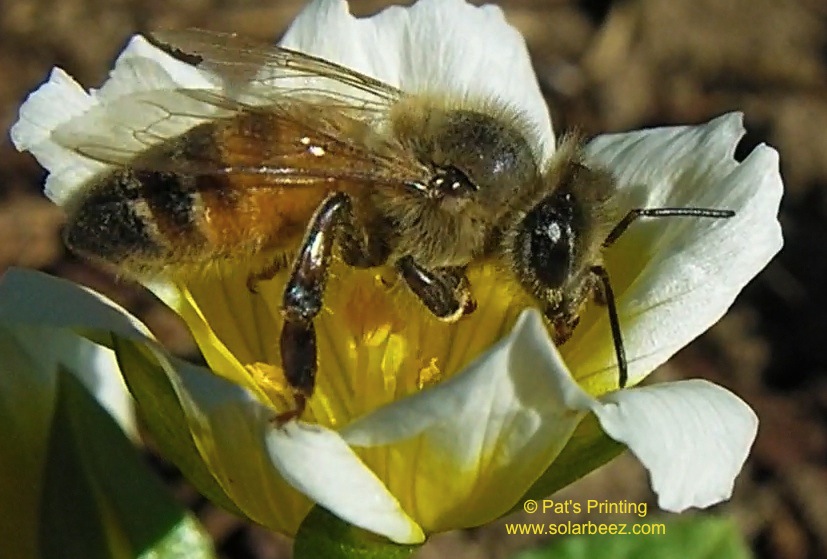
Another photo taken shortly before the deer decided to sample it last year.
I was under the mistaken impression that Meadowfoam was grown mostly in Oregon and Northern California, but I see the Royal Horticultural Society in Great Britain has a listing for it as a Poached Egg Plant.
The oil from Limnanthes Alba is valuable…According to Oregon Meadowfoam Growers, meadowfoam oil is 20 times more stable than soybean oil, which means it does not deteriorate as readily when exposed to air. A gallon of meadowfoam oil is worth about $200 retail.
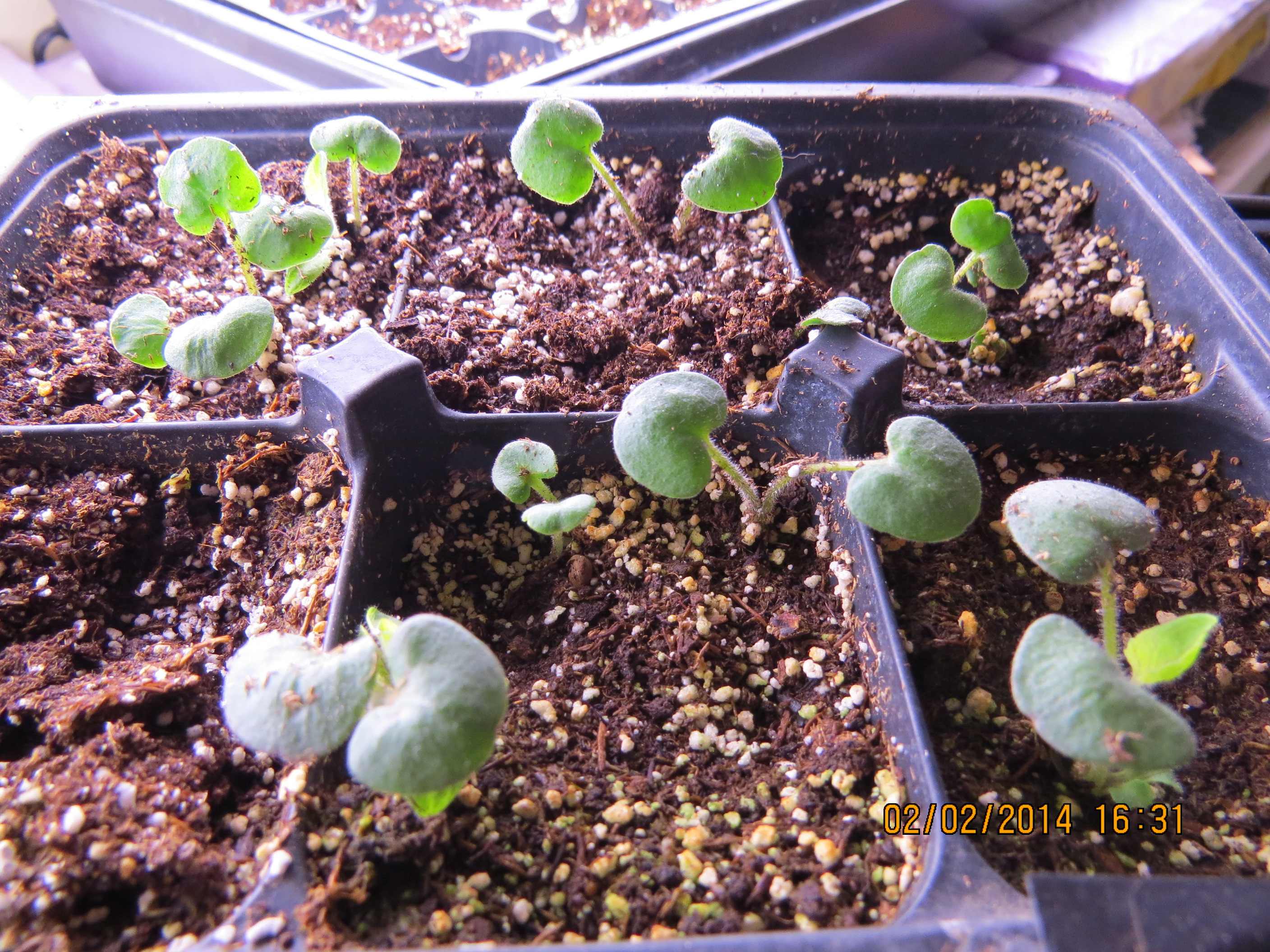
February 2, 2014…the salvia is looking strong. Footnote…we replaced some bulbs in the light stand with the full spectrum bulbs this year hoping to lessen the legginess. These look good.

June 28, 2013…Penstemon is a great bumblebee attraction.

June 9, 2013…Honeybees are getting nectar from the Pincushion Flowers (Scabiosa)
Don’t forget the butterflies!

February 3, 2014…received my Butterflyweed seed package today. These bright flowers attract honeybees also.
One of the beekeeping blogs I follow, written by Emma Sarah Tennant, featured a TED talk by Marla Spivak, showing the reasons why bees are disappearing and how we can help them by planting habitat. We are proud to be a small part of a growing movement to help our wild pollinators.
Posted in Bee to Flower relationship, Bee-loving flowers, Log hives, Music video, Natural Beekeeping, Videos, Warre Hive, tagged bees on Oregon Coast, bombus melanopygus, bumblebees on heather, honey bees, Log hive wood carving, Log hives, macro nature video, macro photography, natural beekeeping, natural comb, nature photography, pollen shower, Verticle log hive, Warre hive, Wild pollinators, wood carving on January 17, 2014| 19 Comments »

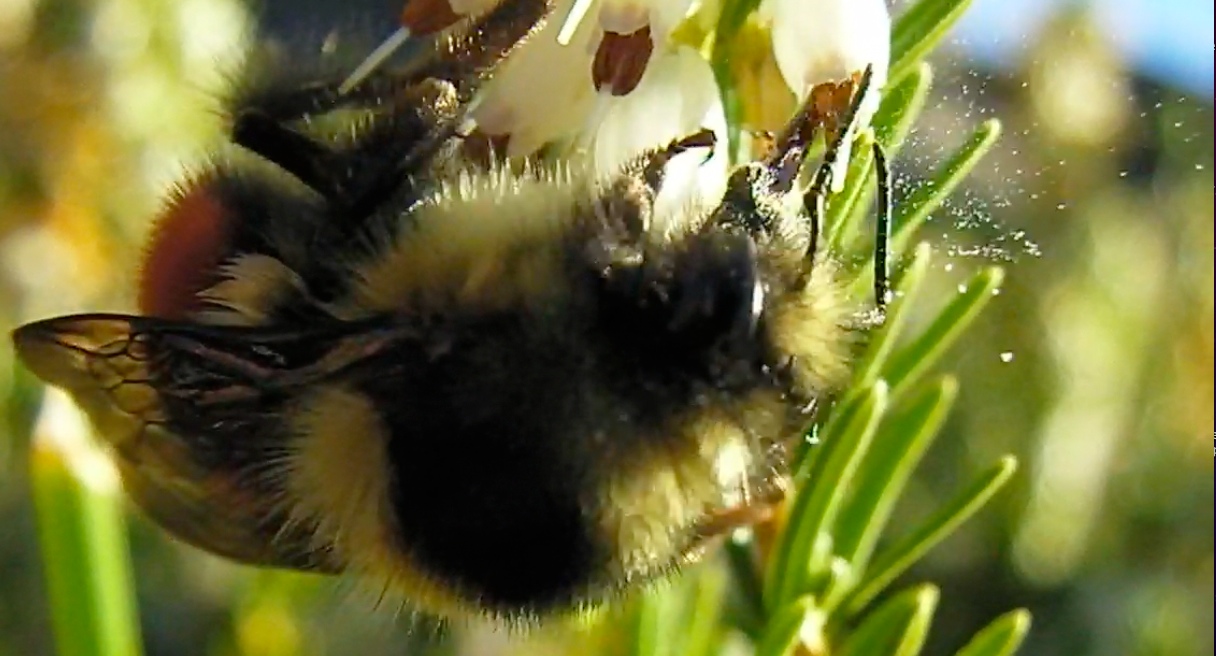
Here you can see the pollen release. When the bee gets the nectar, the pollen shoots out.

As she grooms herself with her front legs, you can see what looks to be a static electricity charge on her bee fuzz…it shows up better on the video.
This short video shows a bumblebee (bombus Melanopygus) sipping nectar from heather in mid January. As she sips, pollen can be seen shooting out. Later she grooms herself. I noticed what looked to be a static electricity charge when her front legs combed her fuzzy head.
I didn’t want to interrupt the music so I added some video of my Bee-atrice log hive which didn’t make it through the sub freezing weather. I looked at a comb which had some capped honey as well as uncapped cells. I replaced the comb in the hopes that this hive will attract a swarm in spring.
It should be raining sideways this month. It’s not. After our cold snap, we’ve been enjoying daytime temperatures in the 50’s and 60’s F. (10’s and 20’s C) When I filmed this it was 71 F. (22 C). Our honeybees love it. They are bringing back yellow and orange pollen. I can’t figure where they’re getting it because the pussy willows aren’t blooming yet, but traffic is heavy as can bee seen on the video.
This is my second winter with bees. They don’t fly when it’s raining of course, but we do get breaks in the rain, the sun pops out and the bees are flying. I feel bad for the beekeepers that must tuck their charges to bed in the autumn and trust they will emerge when the weather warms up sometimes months later. I’m talking about people like Emily Heath among others in cold far away places. 🙂 I guess you could say I’m spoiled to be able to see them active during the winter. I don’t know what will happen in spring. It’s possible we’ll get our rain then…given the choice, I’d rather get it now. In any case the bees are making use of the warm weather.
How are your bees?
Posted in Hives, Log hives, Natural Beekeeping, Videos, Warre Hive, tagged beekeeping, bees on Oregon Coast, honey bees, Honeybees packing pollen, Log hive wood carving, Log hives, natural beekeeping, pollinators, Warre hive, Wild pollinators on December 27, 2013| 6 Comments »

December 27…Bees in Bee Beard Log Hive have found a pollen source late in the year. Natural comb can be seen in the rear. In the video, the bees can be seen entering the hive and moving downward in front of the comb.
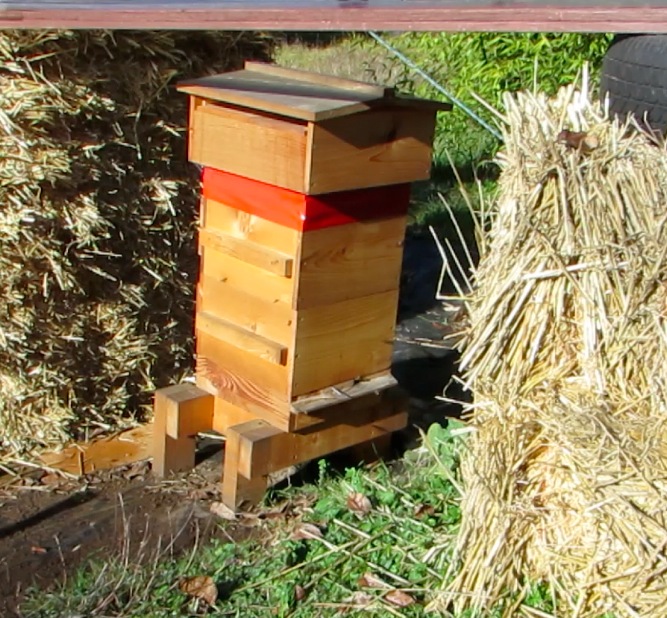
December 27…Warre Hive is being fed with a dry sugar mix consisting of green tea, chamomile tea, nettle leaf extract oil, cane sugar, and a few other little gems. The sugar was placed on a 2″ x 2″ frame and positioned between the brood box and the quilt box, then sealed with red tape. I’m not real excited about feeding sugar to the bees. It’s possible that I won’t do that next year, but that’s what I said last year too. It’s the only hive that is being fed this year.

December 27…Even this little hive was flying today. The pink insulation is meant to cut the cold wind, but it still lets the hive breathe through the quilt box on top.
This short video shows the bees bringing in gobs of orange pollen.
Posted in Bee-loving flowers, Bumblebees, Hummingbirds, Music video, Natural Beekeeping, Oregon Grape-Holly, Videos, tagged bee-loving flowers, bees on Oregon Coast, bumblebees, honey bees, macro nature video, Mahonia aquifolium, natural beekeeping, Oregon Grape-Holly, Wild pollinators, Yellow-faced Bumble Bee on November 27, 2013| 12 Comments »
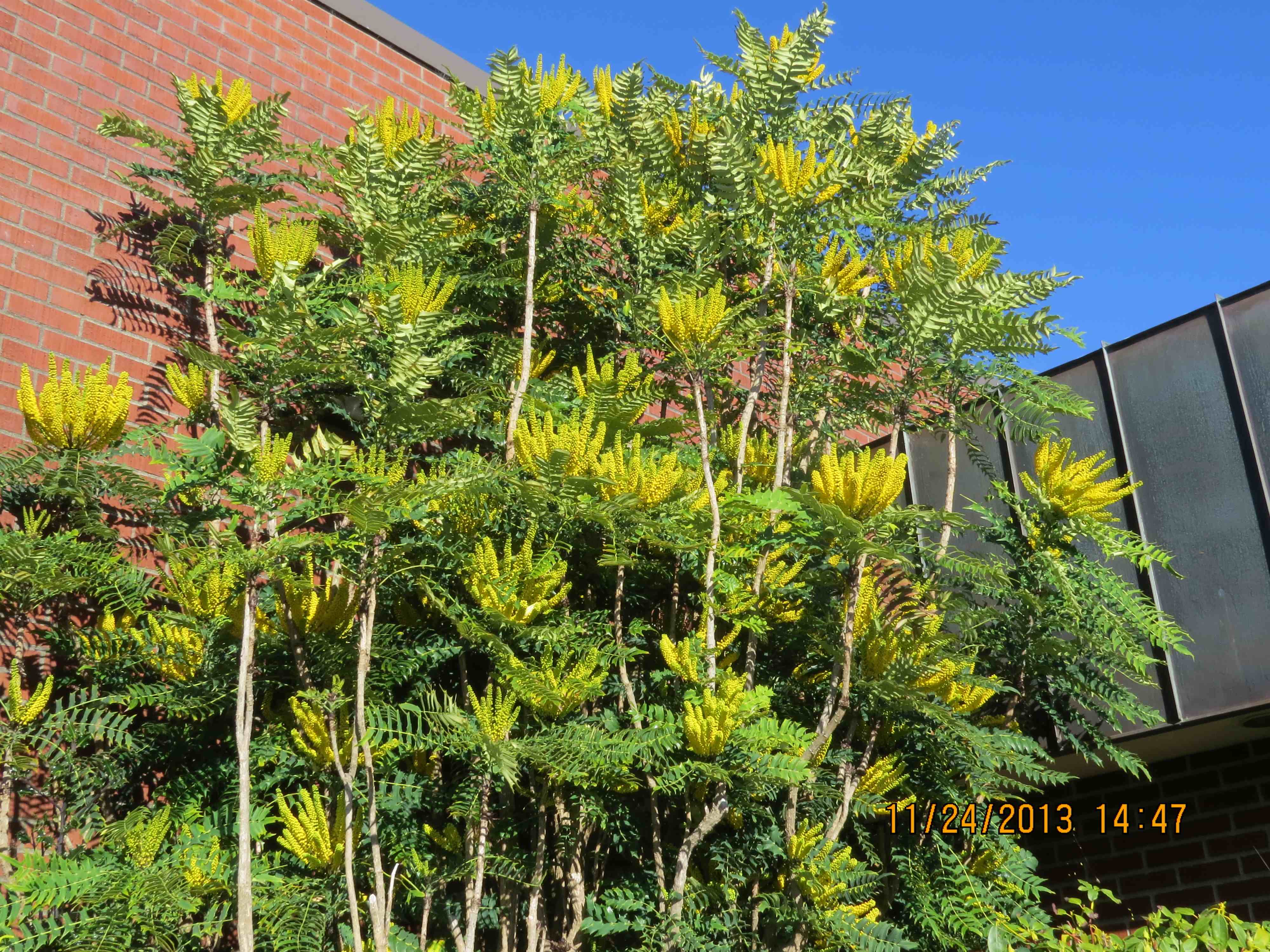
Oregon Grape-Holly blooming in late November
Most visitors to the post office go to get their mail. These visitors go to get nectar. The Oregon Grape Holly is in full bloom, offering nectar and nectar is what they got. Honeybees, bumblebees, even a couple of green hummingbirds partake in the feast.
What is the importance of nectar? My Biodiversity Garden states “Nectar is the fuel for our pollinators such as solitary bees, bumblebees, honeybees, butterflies, moths and bats. It is the only source of energy and without it, the pollinators cannot fly. Nectar is secreted by nectaries within the flower.”
According to Dave’s Gardens Mahonia Aquifolium blooms in mid spring. This is late November! The plant is growing against a brick wall, facing south, during an unseasonably dry autumn. In any case, the wild pollinators love it.

November 24th…This honeybee is getting nectar from an early blooming Oregon Grape Holly (Mahonia Aquifolium)
Posted in Leaf cutting bees, Mason Bees, Natural Beekeeping, tagged mason bee blocks, mason bees on November 25, 2013| 4 Comments »

March 23, 2013…mounted on solar wall awaiting the hatching. Home made wooden nesting boxes on bottom, purchased plastic box on top.
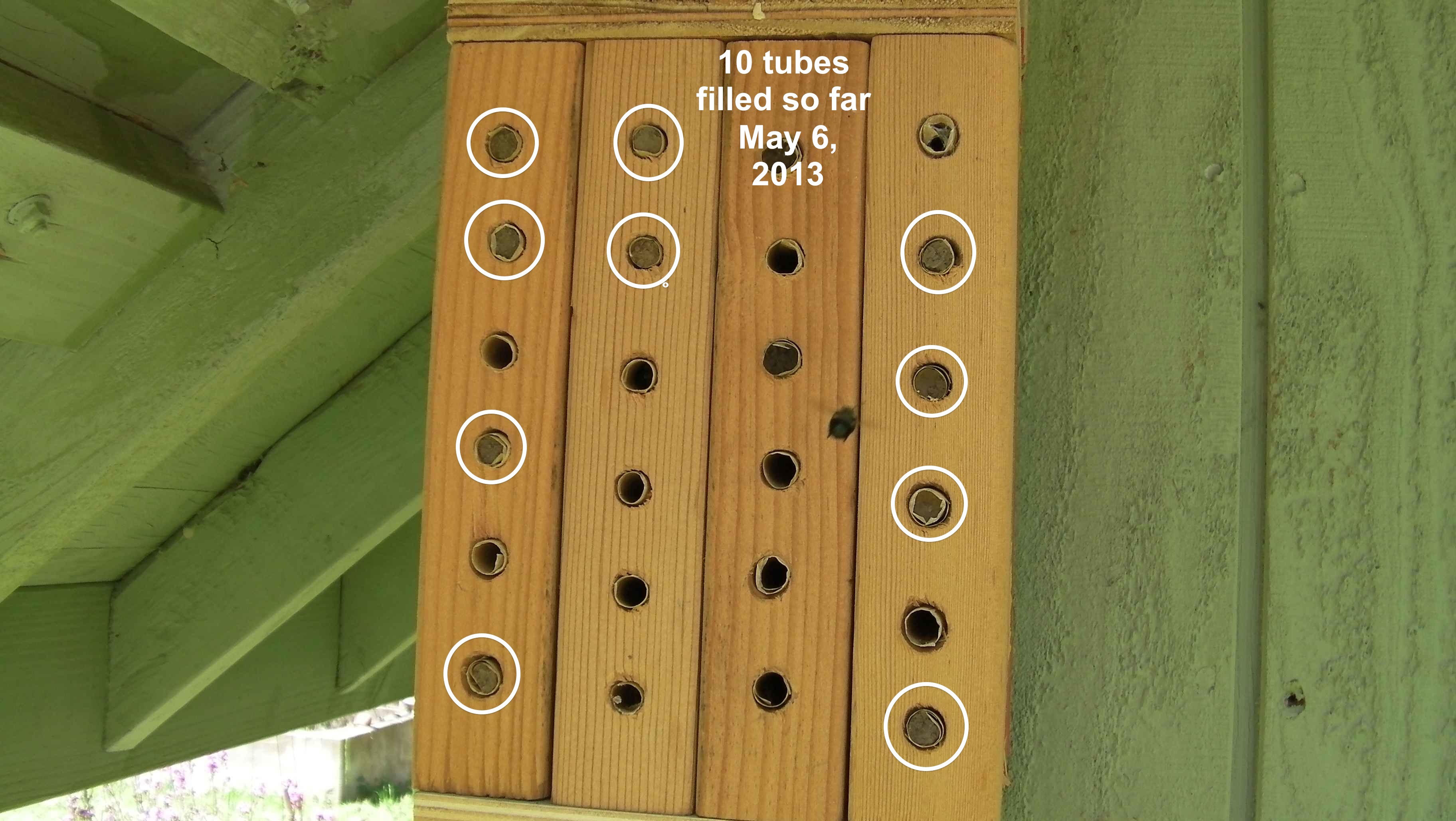
May 6, 2013…10 tubes filled so far.

Mid June…18 Tubes are filled. It looks like some predation is taking place, I should move them carefully to the house, standing them in the same orientation so they can finish their metamorphisis.
Mason bees are solitary bees but they also prefer to live close to each other. The females each nest in their own tubes and do not help each other. They only raise one generation a year.
The life cycle of a Mason bee according to Our Native Bees, A day or two after mating the females begin searching for new nest sites, such as insect holes bored in wood, plant canes, gaps in siding, masonry weep holes and, of course, Plan Bee Houses, if they’re lucky enough to find one!
Each female constructs her own brood cells using mud (Orchard Mason Bees) or leaf pieces (Leafcutter Bees) to partition each brood cell. She forages for pollen and nectar, and makes a pollen-nectar loaf upon which she deposits one egg. She then seals the cell with either mud or leaf pieces, and begins the process again, normally making 6 – 7 brood cells in a 6″ deep hole or nesting straw. About one week later the eggs hatch and the larvae feed until they’ve eaten all their food supply, which takes approximately six weeks. By late June the larvae spin cocoons around themselves and have developed into pupae, or fully-formed adult bees, by late summer. From September to April they remain dormant in a state of ‘diapause’ until the warm spring temps awaken them and the amazing cycle repeats itself.
By comparison, honeybee worker development is 21 days, egg to adult.
Fun facts from Kym Pokorny of The Oregonian…
Females decide whether to lay a female or male egg. A female lays about three to four male eggs for every two females because males emerge from the nest first and are more likely to end up as dinner for a predator. Since the males have no other job except to fertilize the females, they stick around the entry waiting for a female to emerge.
It takes the female about 15 to 35 trips — with 75 flower visits per trip — to collect enough pollen and nectar to feed one larva. She lays approximately 30 eggs in her lifetime.
Keeping mason bees is one of the easiest method of beekeeping. What is so amazing about them? 200 mason bees will out-pollinate 2000 honey bees, they will fly at cooler temperatures than honeybees, and rain doesn’t bother them. Mason bees rarely sting.
How do Mason bees pollinate so well? Their pollen is gathered ‘dry’ on the underside of their abdomen. It’s more easily transferred than the wet pollen of the honeybee.
It’s November now. The adult bee is fully formed and it’s the time of year to inspect for Chaetodactylus mites, (not Varroa mites, common on honeybees). Some people advise to wash the cocoons in a sieve with warm water. I hesitate to do that, it seems like it might be too rough. I opt to unroll the tube and gently brush off the debris.

November 17, 2013…we pull out a tube to inspect for mites.

November 17, 2013…adults are inside these cocoons. Mud partitions clearly visible.

Parchment tubes frame the cocoons which have been brushed clean, no mites seen.
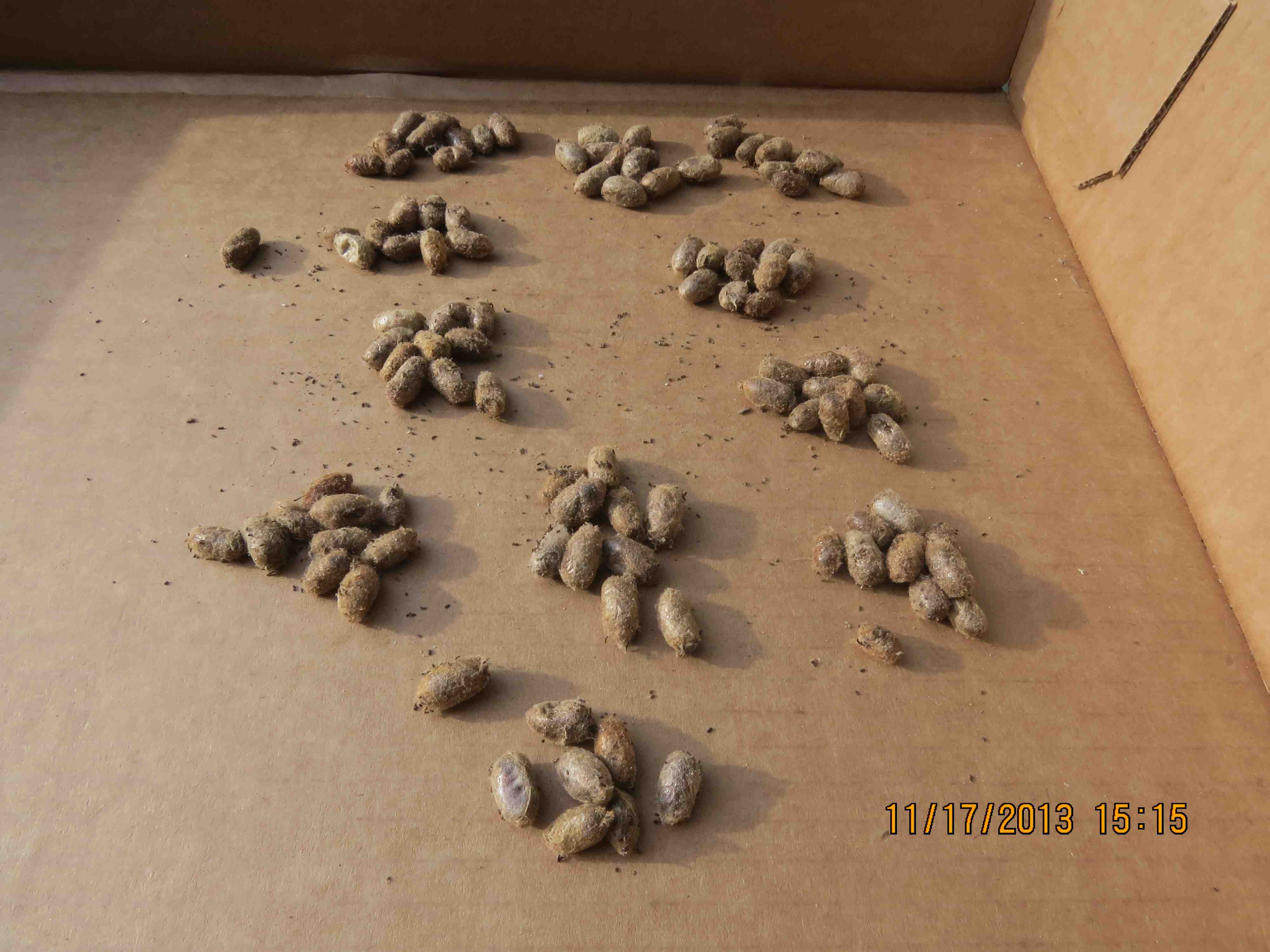
108 adults this year. They look good as compared to last year when we didn’t inspect until just prior to putting out the cocoons in late March. We have found in this moist area, the bees seem to prefer the wood nesting blocks as opposed to plastic homes. They nested in 21 holes and only one in the plastic box. Last year when I only used the plastic box there was mold in the tubes. I’m not sure if it was due to the plastic or the length of time that I waited.
The start of the Mason bees this year.
Launching Mason bees in 2014 (from these cocoons)
Posted in Bee-loving flowers, Bumblebees, Natural Beekeeping, Tower of Jewels, tagged Allium, bee-loving flowers, beekeeping, bees on Oregon Coast, Gardening, grape hyacinth, honey bees, natural beekeeping, Siberian Squill, Snowdrops, Tower of Jewels, Wild pollinators on November 19, 2013| 10 Comments »

Some of the bulbs being planted for the bees. I was able to purchase these locally from my favorite nursery, 101 Plants and Gifts.
It’s possible that everyone already knows certain bulbs provide an early nectar source for bees. I might be new to the game because, well, I’ve never really been overly appreciative of growing flowers. “They take up space and use precious water.” Being on a shallow well makes you a water miser. But these grow during the rainy season. Some can even be planted in the front lawn, not taking up space or using extra water as in the Siberian Squill. Being a beekeeper has changed my attitude towards flowers. Now my motto is, ” You can never have too many (bee-loving) flowers.”
Since I recently broke up a new patch of ground for the Towers of Jewel ‘trees’, I have some extra space I can dedicate to bulbs. Che Guebuddha, a blogger from Sweden, mentioned even more bulbs like the white Snow Drops and the yellow Eranthis. A quick call to find out I can’t get them locally, but I CAN get them from John Scheepers on the east coast. I order another 150 more. Looks like I’ll have to break more ground. As an after thought I wonder if I have to worry about poisons on the bulbs. Alicia at the customer service desk of John Scheepers, Inc. assures me “there are no sprays, poisons, or toxins associated with these bulbs.” Good! They are going in next weekend.

Newly planted “Tower of Jewel ‘trees. I’m counting on these plants to grow about 10 feet (3 meters) this spring. With the addition of bulbs, we’ll be able to provide an early nectar source as well as mid summer nourishment for the honeybees and bumblebees.

12-26-13…Drumstick Alliums are up already. I don’t know if that’s a good thing or not! I’m protecting this patch because the sub freezing temps are bad for the echium (Tower of Jewels)…something I didn’t think about when I planted the bulbs. 😦

February 5, 2014…Grape Hyacinth and 15 Drumstick Allium are up. Giant Snowdrops just breaking.

February 5, 2014…close up of Grape Hyacinth. My wife says I planted them too close together. She might be right.
Posted in Hives, Log hives, Natural Beekeeping, tagged Log hive wood carving, Log hives, natural beekeeping, Verticle log hive on November 17, 2013| 8 Comments »

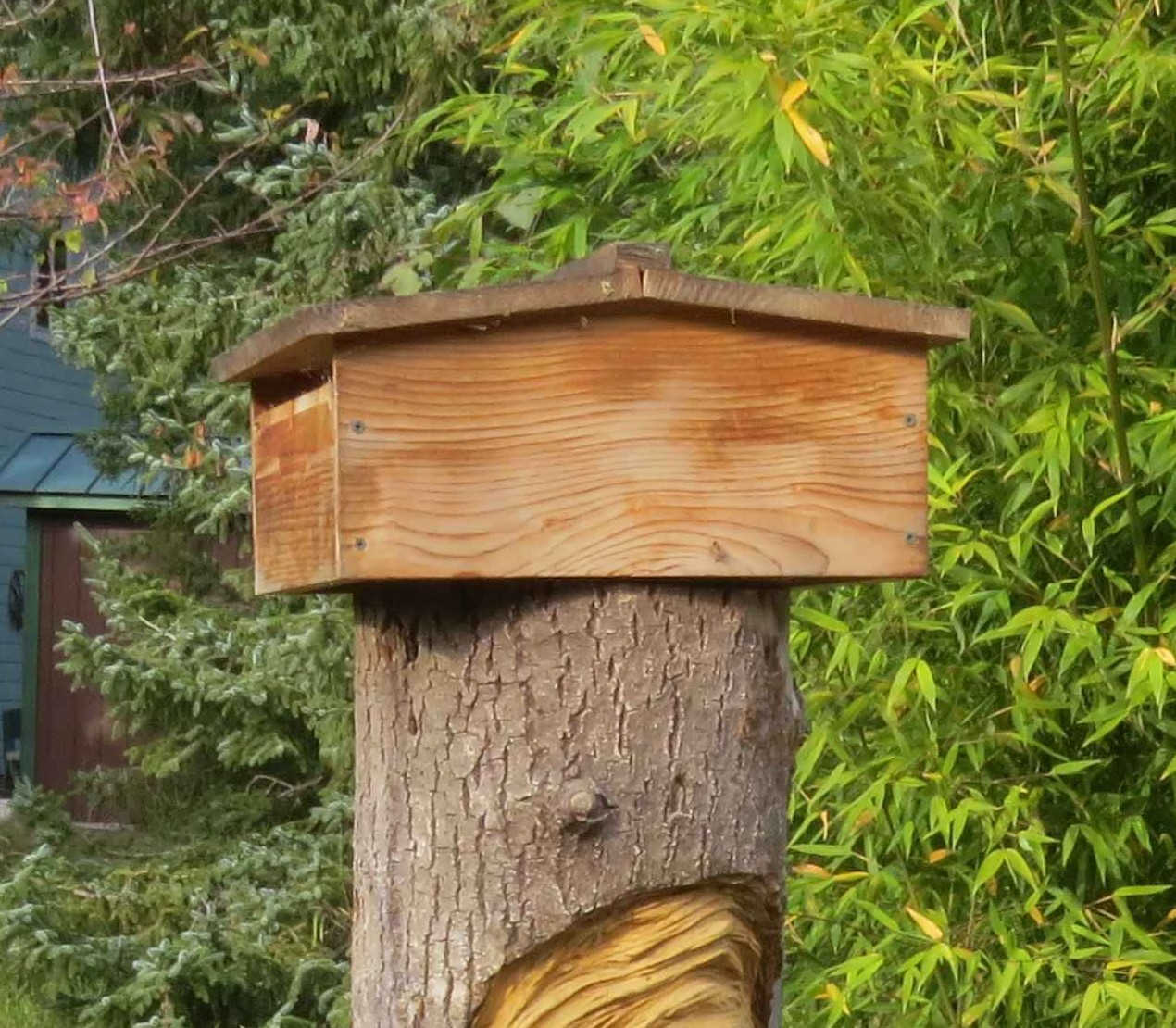
November 14…I finished her ‘bird house’ bonnet and set it on her head last night after all the foragers were in. I hope she likes it.

A closer look reveals the latest in the twigs and moss fashion.
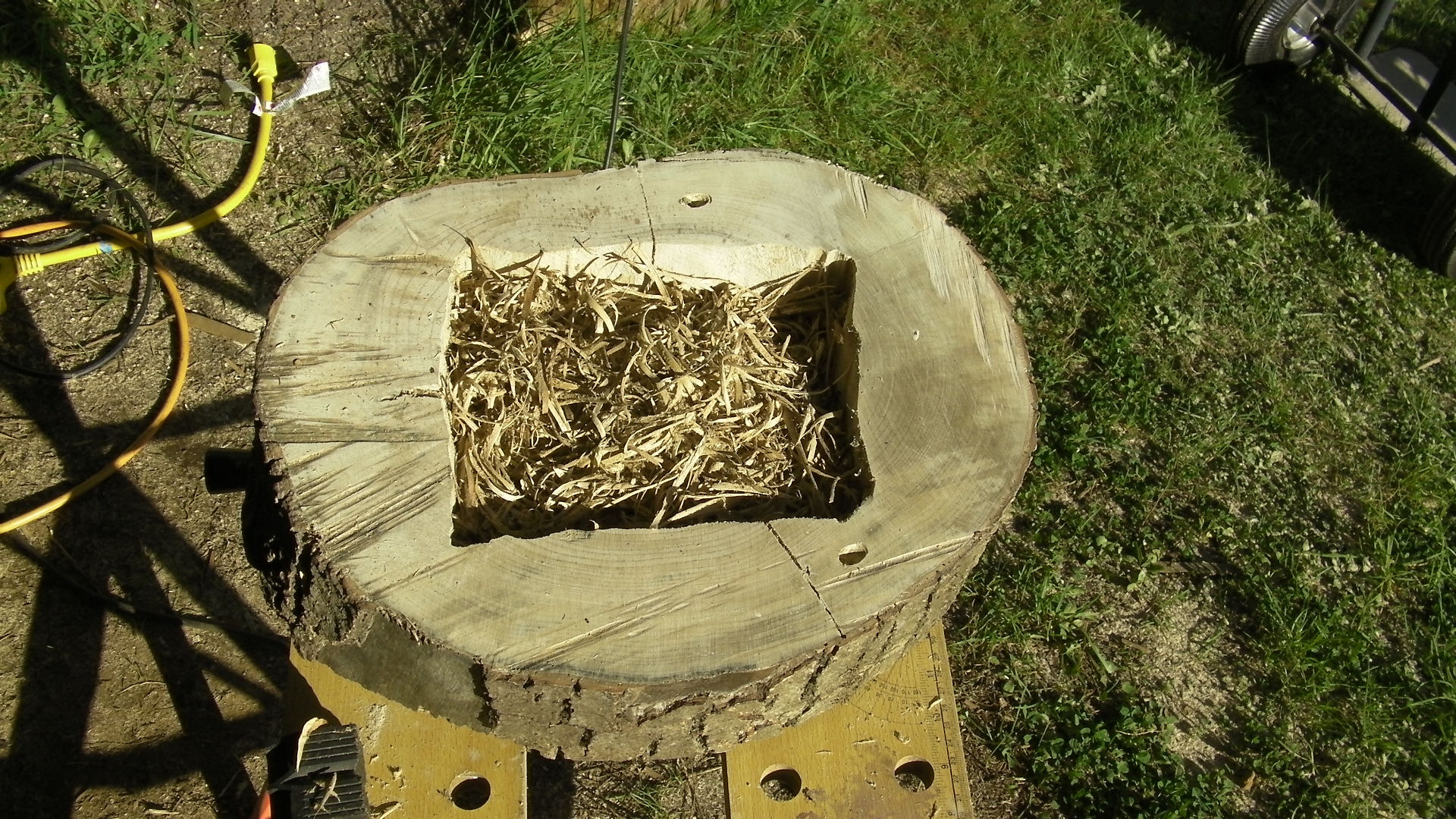
The bonnet fits on this quilt box filled with myrtlewood shavings. The quilt box keeps the ‘hive scent.’ The sides of the bonnet block the wind from entering the top crack between the quilt box and the top of the hive…the place the bees use to enter and leave the hive at this time.
I had tried to go the ‘easy way,’ by using a Warre cover, but it wasn’t ‘her style’ and she wasn’t afraid to complain about it. “It’s too plain,” she says. “I want something unique, like I am.”

Since the bees were not using this mouth entrance, I wanted to reduce the amount of cold winter air blowing into the hive. My wife says I’m not allowed to make any snide comments about it.
Posted in Bee-loving flowers, Bumblebees, Natural Beekeeping, Tower of Jewels, tagged bee-loving flowers, echium, Gardening, natural beekeeping, organic gardening, Tower of Jewels, Transplanting Tower of Jewels on November 13, 2013| 5 Comments »
But they ARE echium ‘trees’; more specifically, Towers of Jewels.

I spaded the this patch of turf, then kept finding more and more transplants to put in.
Last year the only one I had grew 10 feet (3 meters) in a single year. The bumblebees loved it. They worked it mid May til mid September. I kept thinking about collecting seeds, then forgot. Not to worry, I’ve got plenty of ‘upstarts’ now.
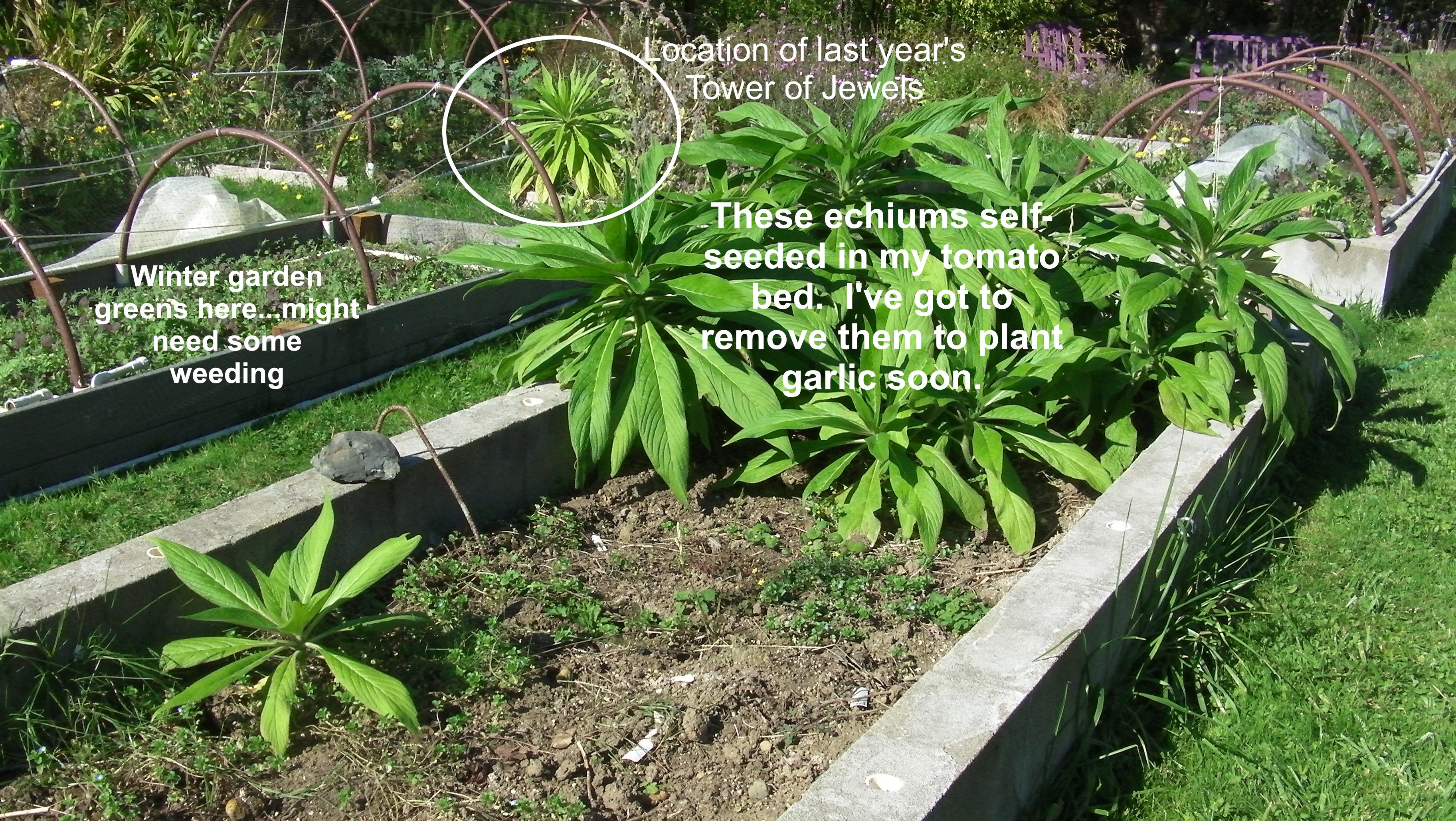
If I ever had any doubts that the Tower of Jewels would throw seeds, those doubts have vanished. I’ve got to get these out of here to plant garlic. If I don’t transplant them, my wife has threatened to ‘toss’ them. Why? We have so many.
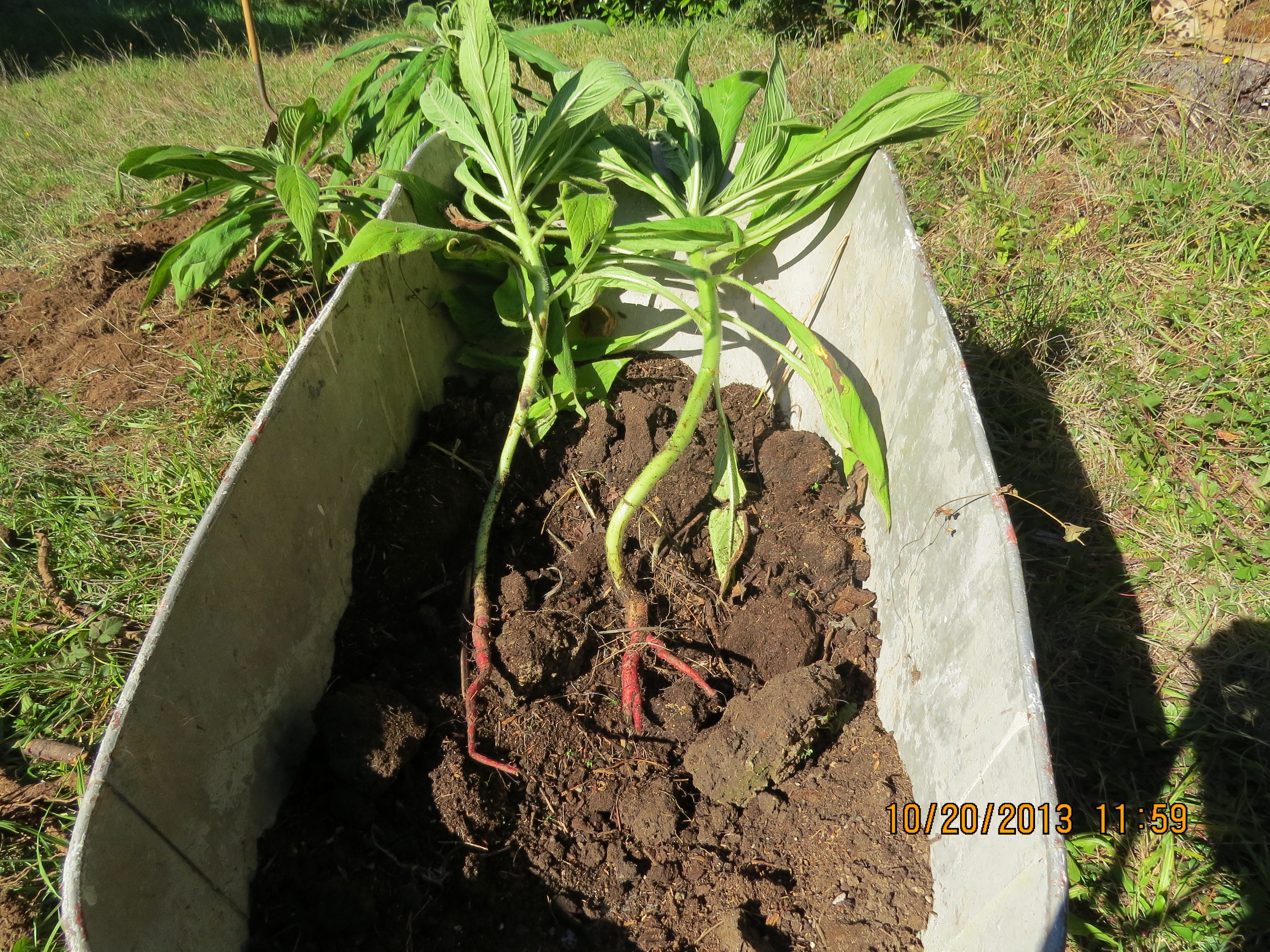
The plants don’t have big root balls. Hope they take.

October 20, hummm, they look a little wilty. I better water them.

November 9, 2013…They are starting to look better after I trimmed the lower leaves.
What are the tires for? They are to hold up a tarp to protect them from freezing.

November 13…Echium in the sun, looks good. This will be the area I’ll plant some of my “Bulbs for the Bees,” Snowdrops, Winter Aconite, and Siberian Scilla.
According to Palmbob, at Dave’s garden, trying to transplant it, ends up killing it, but these are still growing almost a month after transplanting. The Tower of Jewels is a member of the Boraginaceae family which includes borage (grows all year here) and comfrey which I planted 40 years ago and is still coming back. I’m hoping these will grow to be tall nectar sources for bees and butterflies.

11-24-13…I’ve had to take drastic action for the cold weather. Bags of leaves hold up the tarp, tires hold it down.

12-26-13…These echium have definitely taken a hit from the sub freezing temps we’ve been experiencing for a couple of weeks. I hope they make it.

February 5, 2014…Five out of six have survived so far. These sub freezing nights are NOT helping. I cover them with blankets and a plastic tarp every night.

February 5, 2014…new growth means it’s still alive! More cold nights forecast so I’ve got to keep them protected.

Feb. 5, 2014…These four echium in the backyard are slightly more protected. They were put here as a back up (Plan Bee). I didn’t think it was a very good spot because of the shade, but they are doing the best of the bunch.
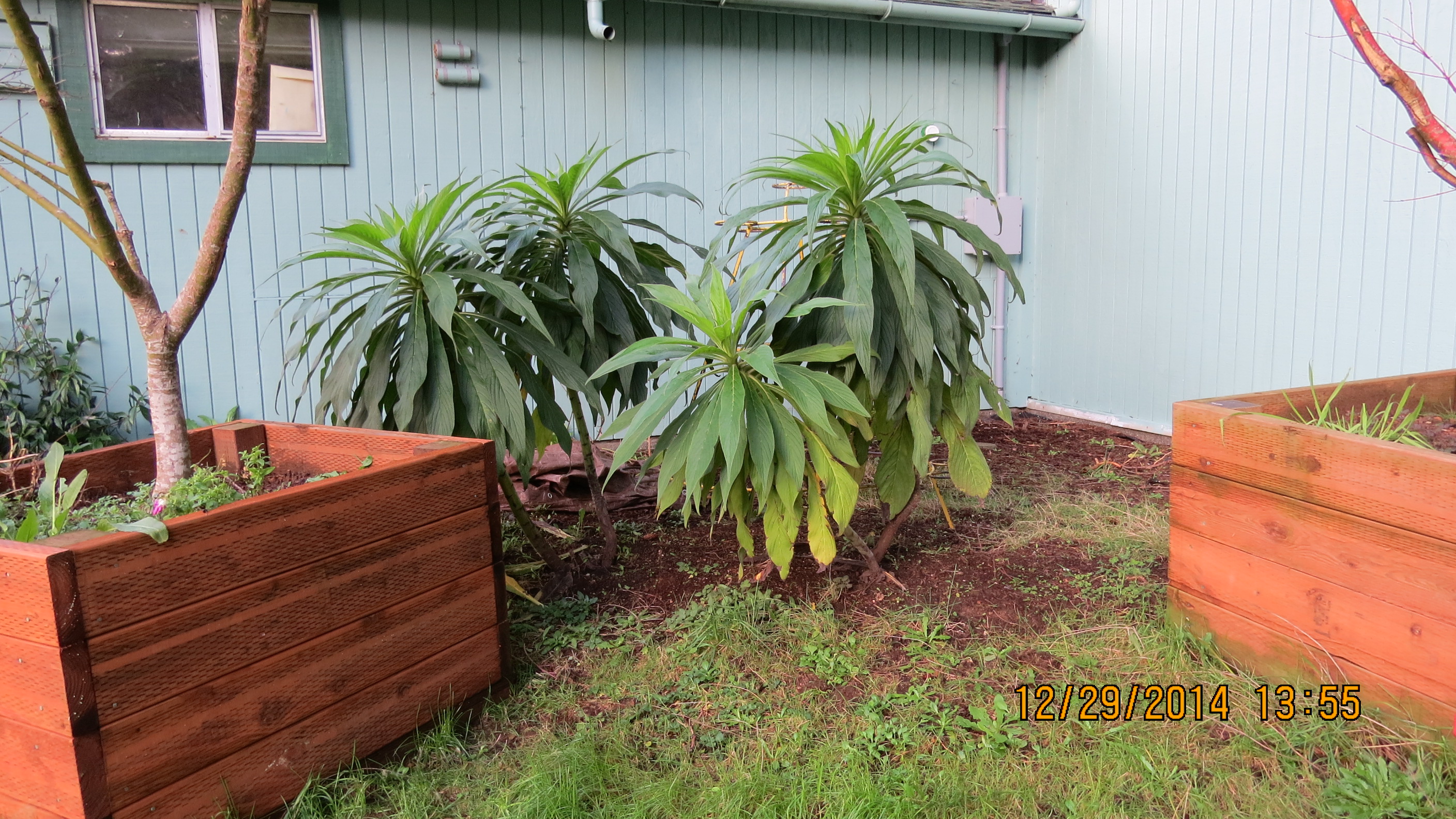
12-29-14…I shot these backyard echium to show the progress they have made. No blossoms in 2014 means they will blossom in 2015 (if they make it through the winter without frost damage.)

March 9, 2015…Is this the year the echium will bloom? I sure hope so. It’s putting on a spurt of growth.
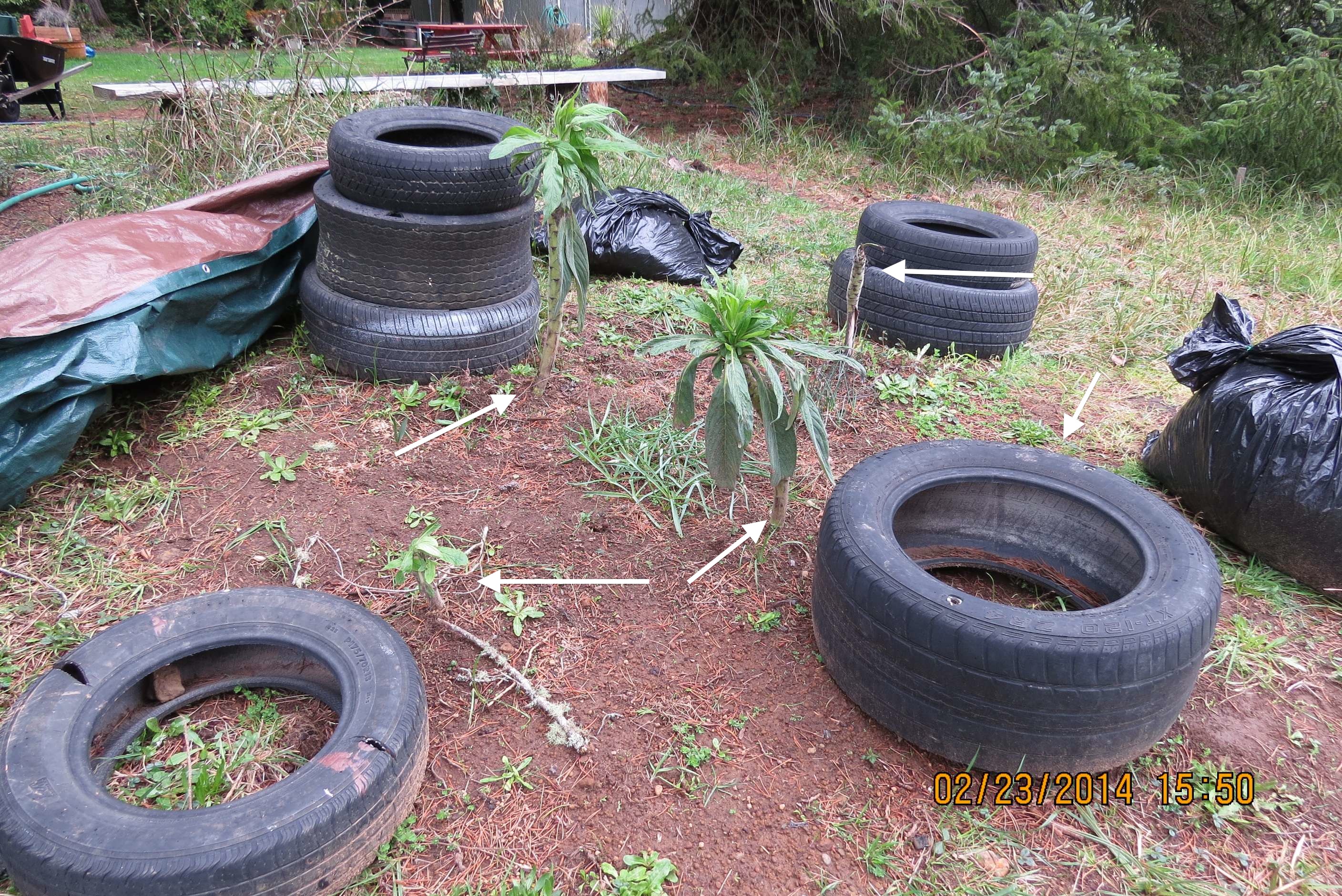
February 23, 2014…five echium still hanging on, barely.

February 23, 2014…This poor echium plant suffered in the cold temps, but it’s still showing signs of life. Footnote…it didn’t make it.
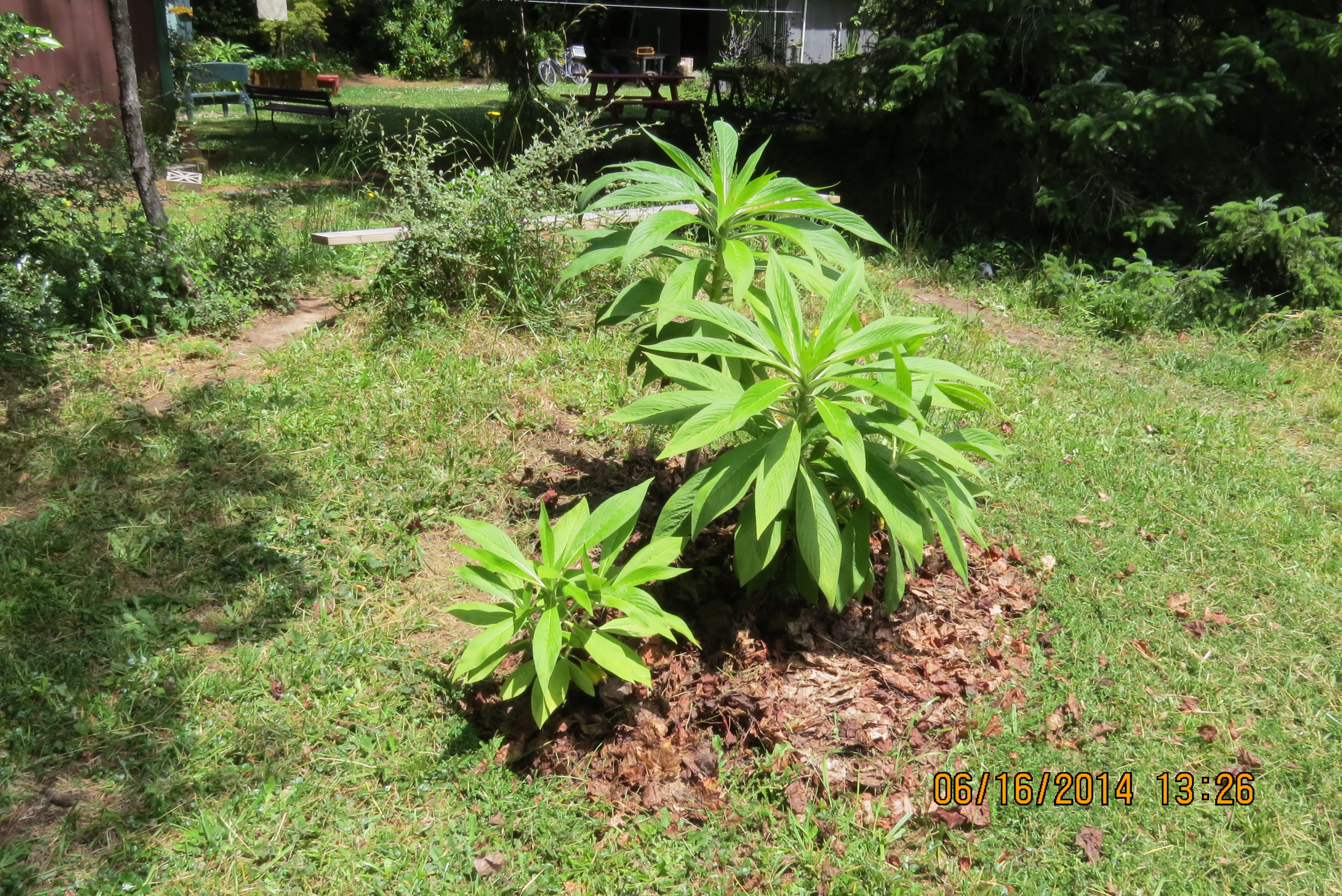
June 16, 2014…Three echiums made it through the winter, but it looks like they are not going to bloom this year. Sometimes it’s the second year and sometimes it’s the third year. I guess I’m going to have to wait a year. 😦

12-29-14…There are still 3 echium plants going into winter, although one looks a little sick. I wanted to shoot a photo before I covered them up with tarps prior to the big freeze this week.

March 9…This echium has also been adding height. I started noticing it when I tried to pull the tarp over the top to protect it from frost. We haven’t seen any bud starts yet.

March 19…I just noticed the tallest echium (in the picture above) is starting to send out bud starts. Hooray!
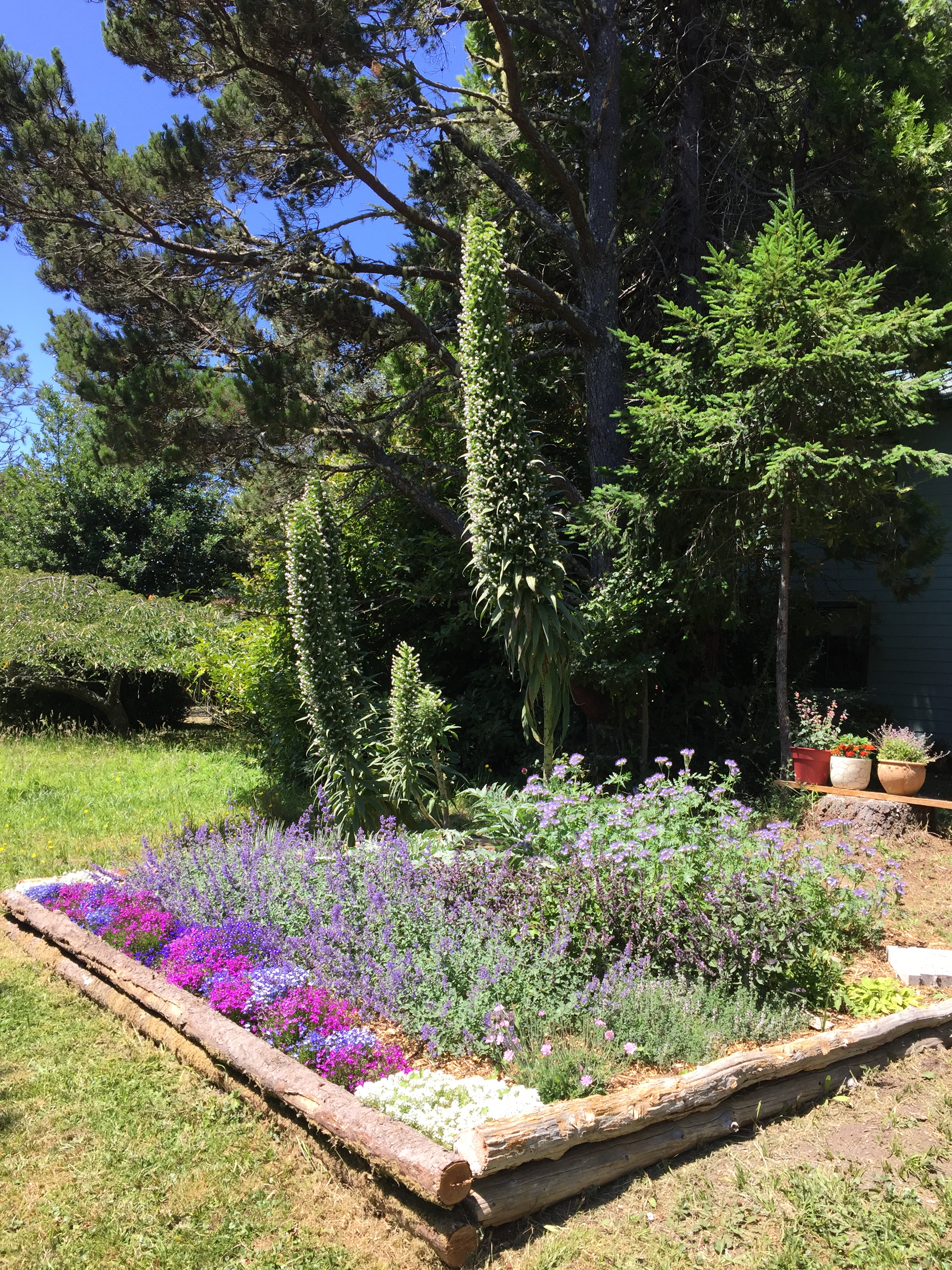
July 14, 2015…In the spring, we enlarged this bed and planted some bee-loving plants along with the Towers of Jewels echium plants shown in the background.
 Adventures in Natural Beekeeping