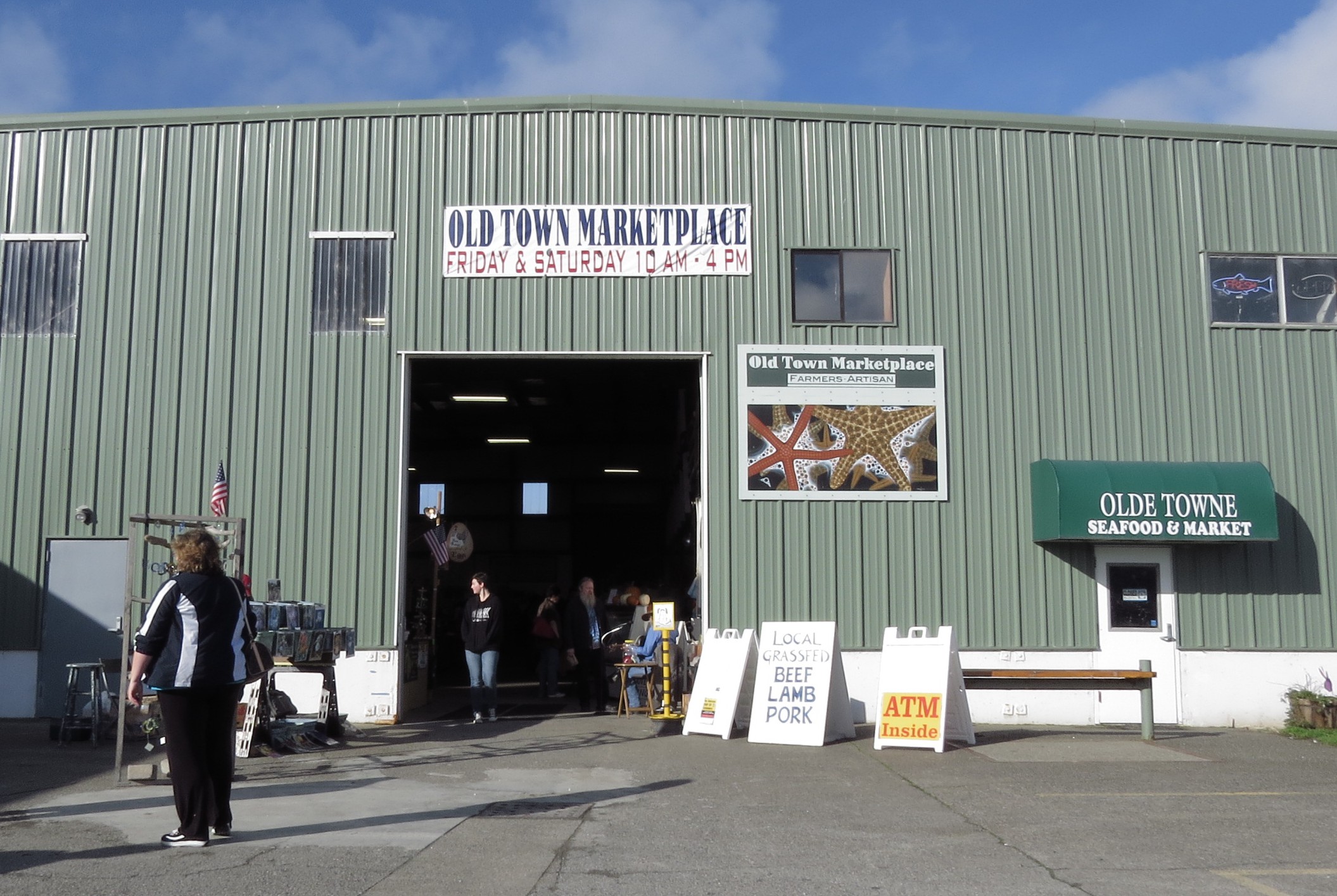
It was such an uncharacteristically warm day, we decided to bicycle down to the Port of Bandon to peruse the Old Town Marketplace.
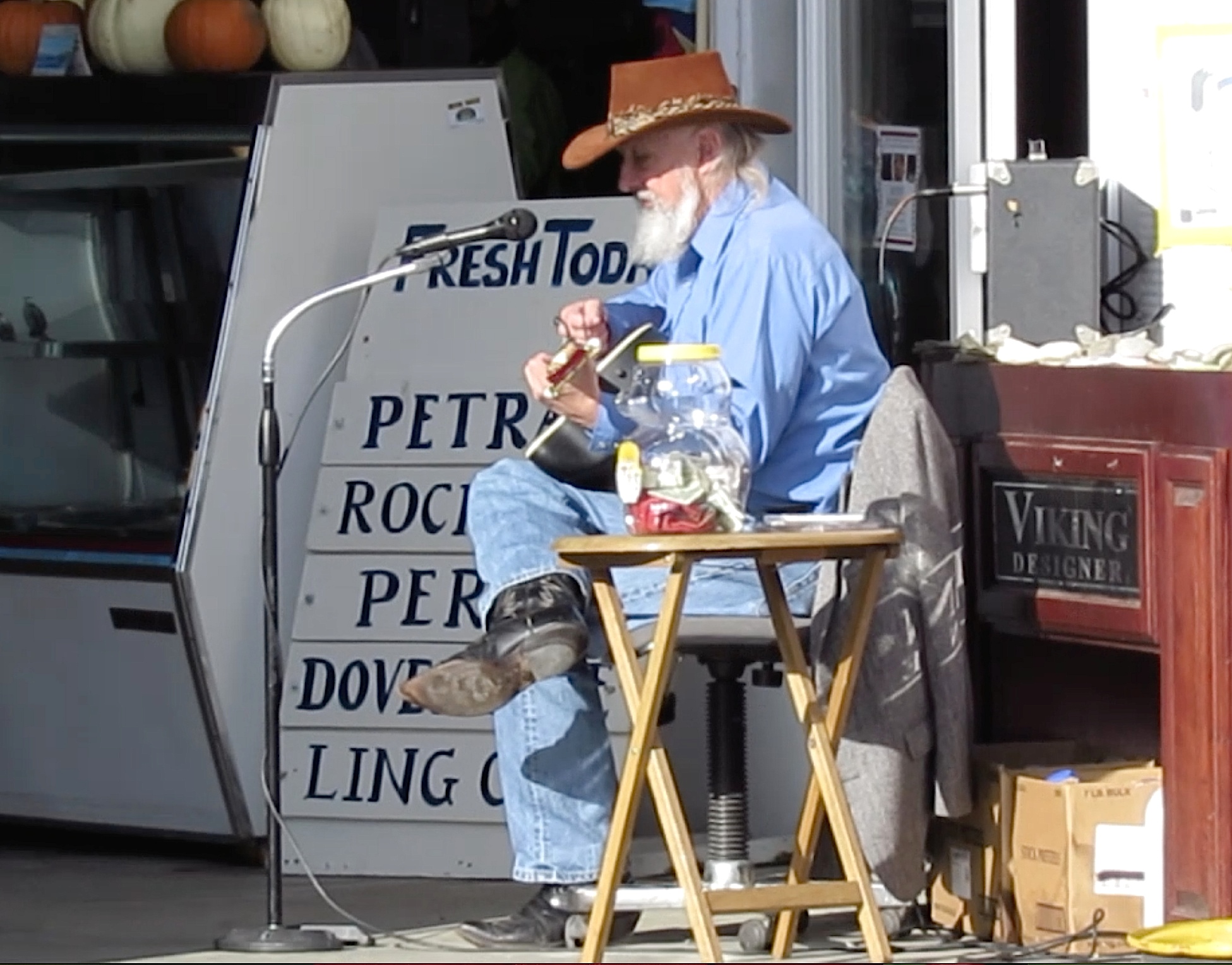
It was one of those perfect days when everyone was in a good mood with the weather being warm, farmers selling their veggies, and Kirk Schumacher strumming his guitar. I asked Kirk if he would sing one of my favorite summertime songs. Without missing a beat, he belted out “Summertime.”
Bandon Lighthouse
Crabbing at the dock, Bandon lighthouse in background.
I even got to watch a pelican swallow a fish, twice…possibly the same fish. 🙂
November 5, 2014…On an unusually warm November day, I spotted these hebes growing in front of Bill Sweet Insurance Agency. The bees were loving it. Thanks, Bill.
While the east coast is getting hammered by the polar vortex cold weather, the west coast is enjoying warm sunny days into early November. At this time of year there are very few sources of nectar, so it’s good that the honeybees are getting a lot from the hebes. Nectar provides an important energy source (carbohydrate) for the bees.
Many thanks to Steve Montana who has let me use his musical talents as background to the video. “GaelaMae On The Bluffs” was written by Steve and the banjo music was written by Buell Kasey back in the late 1800’s. Watch Steve Montana play banjo at the beginning of Sustainable World. Click on “Soldier’s Joy.”
June 29, 2014…Honeybees and hummingbirds get nectar from these little gems. We’ve decided to grow more alliums next year because the bees love them and the deer don’t.
June 23, 2014…We started these Cosmos seeds under lights in the house, hoping they would turn out well. We’re very happy with the results and the bees love them too.
June 10, 2014…Honeybee getting nectar on this Cosmos
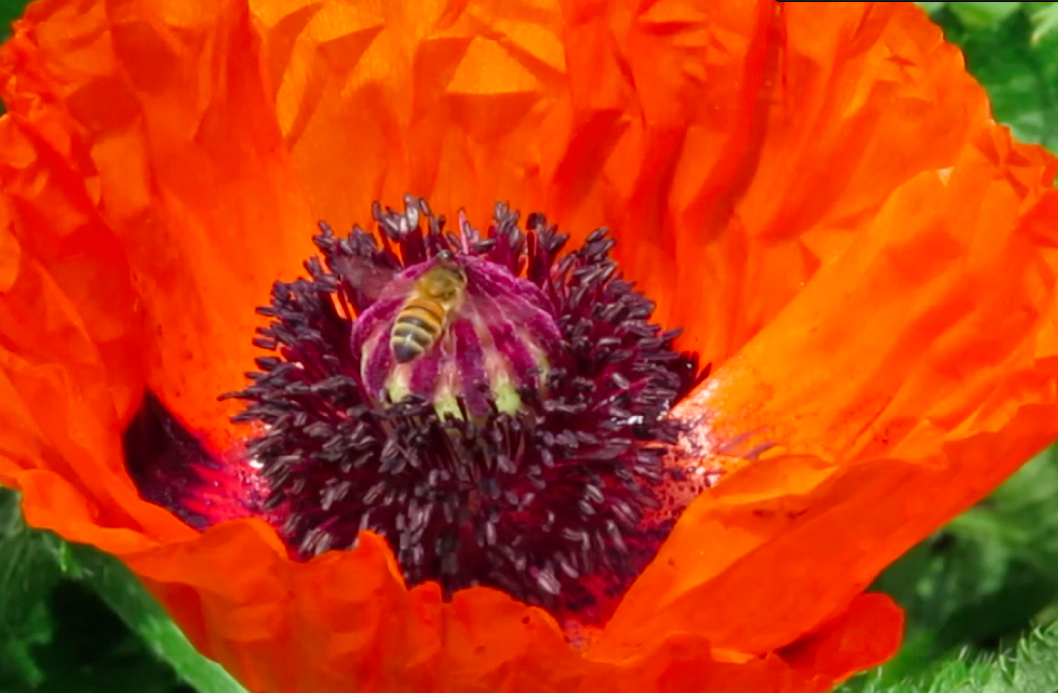
June 16, 2014…This little stand of California poppies planted itself on my Hugelkulture bed. In the background you can see some wallflowers (Erysimum).
A new type of poppy, called a Twister poppy. Attracts bumblebees and is a pay grade or two above the California poppy.
I started the Phacellia seeds to attract the honeybees, but rarely do I see honeybees on them. No problem, we need to help the bumblebee as well, in this case the Yellow-faced bumblebee. (bombus Vosnosenkii)
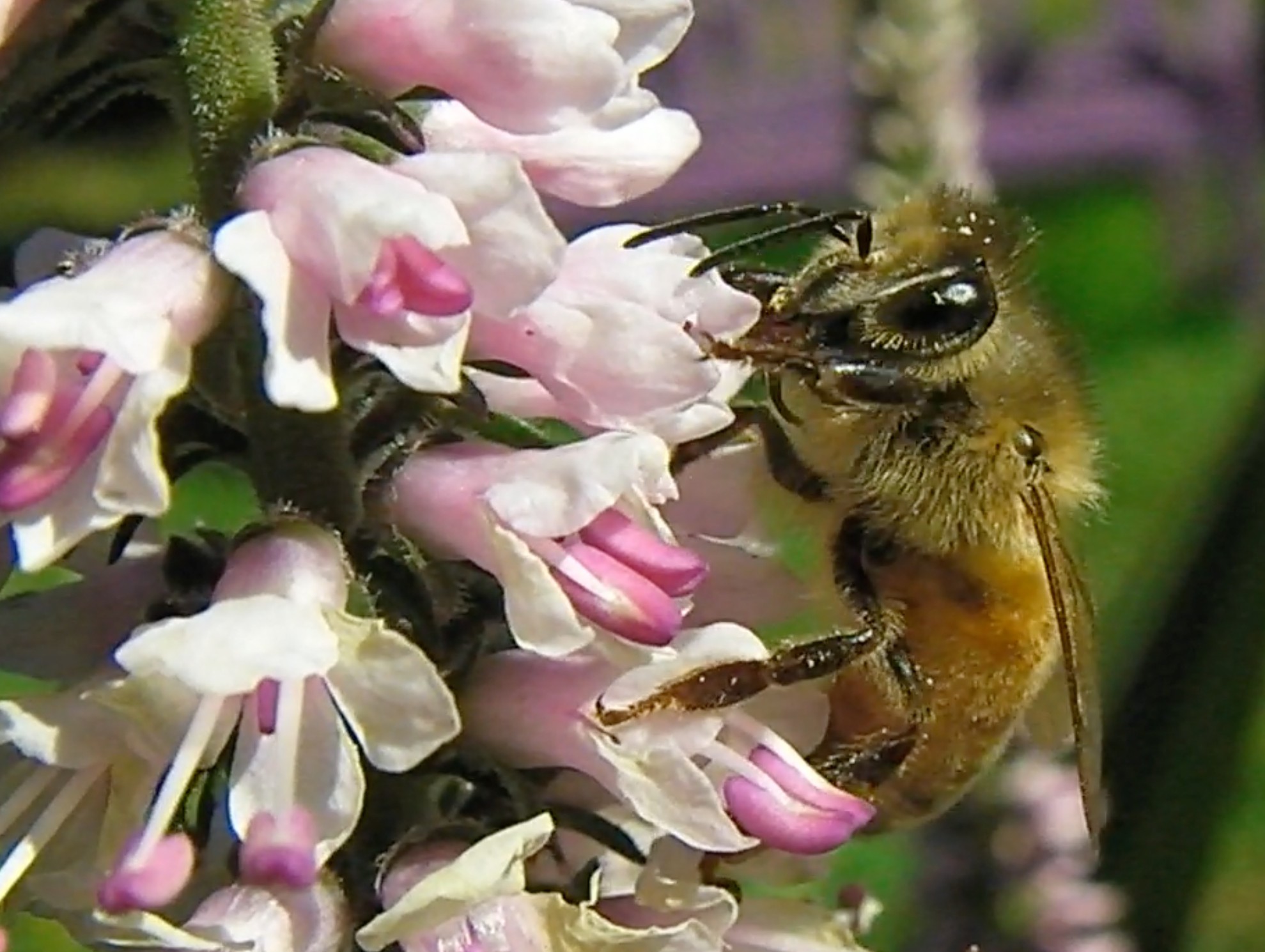
Relatively short-lived, (blossom wise) this Veronica Longifolia, ‘Pink Eveline’ served as a nectar source for a short time.
Speedwell, Veronica Spicata, ‘Royal Candles.’ The colors stand out well.
June 29, 2014…Sometimes when the bumblebee exits this blossom, it will pick up a streak of white pollen up it’s back.
May 29, 2014…My wife said there were five bees on this earlier, but when I grabbed the camera, I only caught one bee.
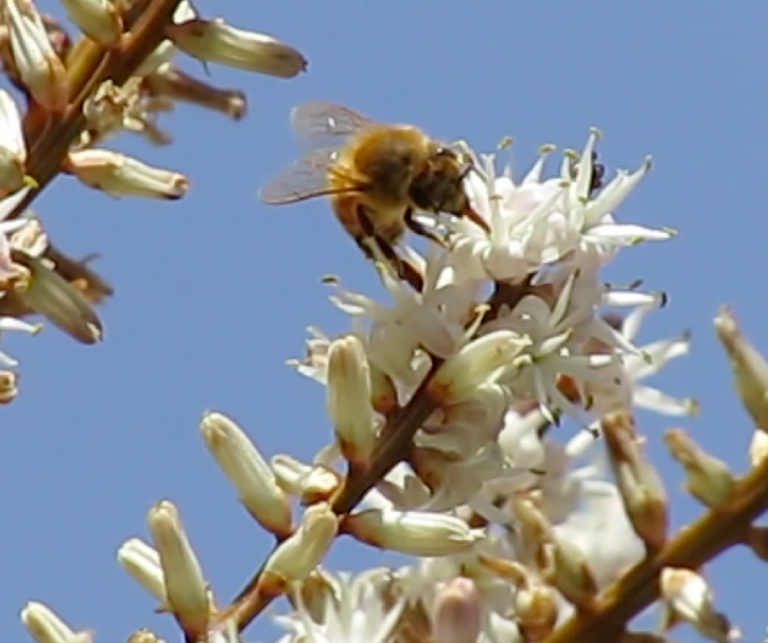
May 28, 2014…My neighbor’s New Zealand Cabbage trees are blooming. I’m glad it’s on someone else’s property because there is a strong odor associated with it. Our bees love it.
May 28, 2014…New Zealand Cabbage has been blooming awhile. Our bees are all over it, all day.
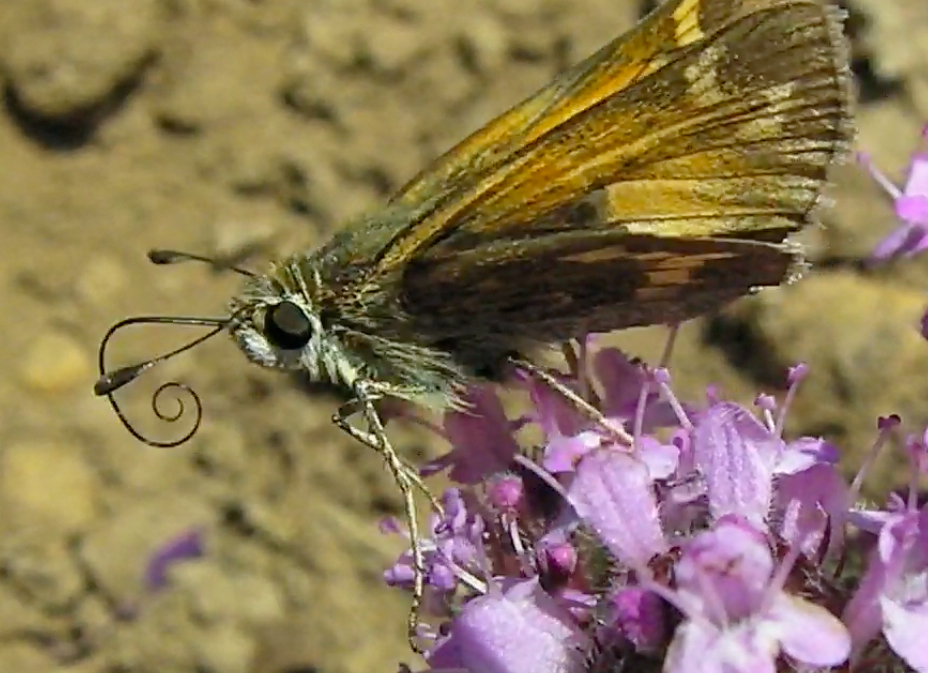
May 27, 2014…A skipper is probing the depths of this Pink Chintz Thyme for nectar. In the video, you can see it try several spots before finally succeeding. The bees love this plant as well.
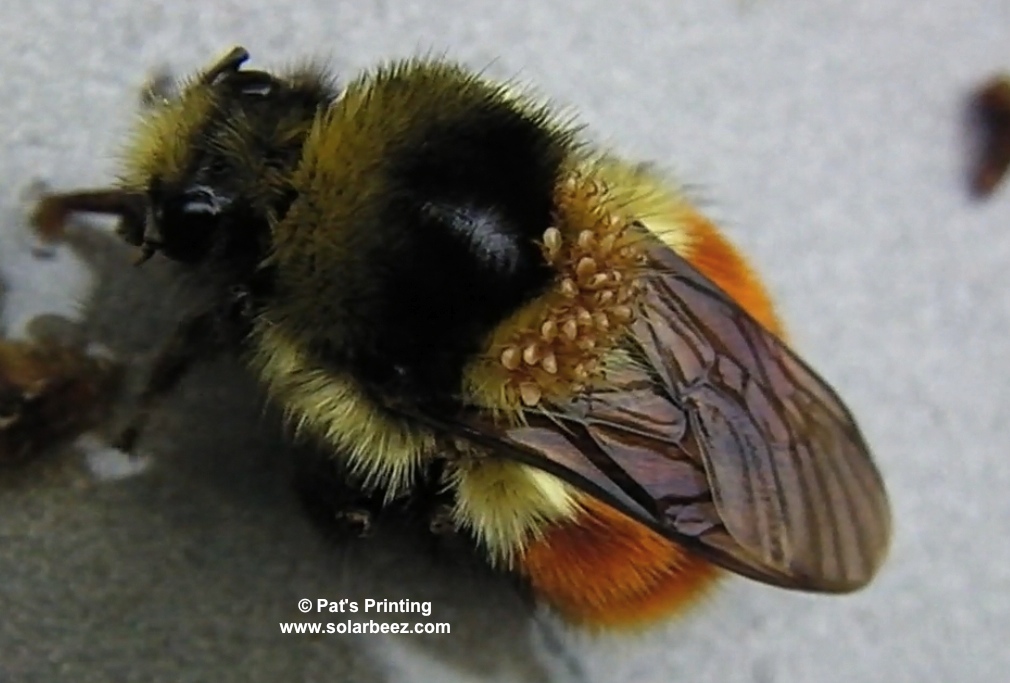
February 13, 2014…This bumble bee (bombus Melanopygus, I believe) was sipping honey when we noticed all the mites on her back. We would like to try to remove them…Does anyone have any ideas of how to accomplish that?
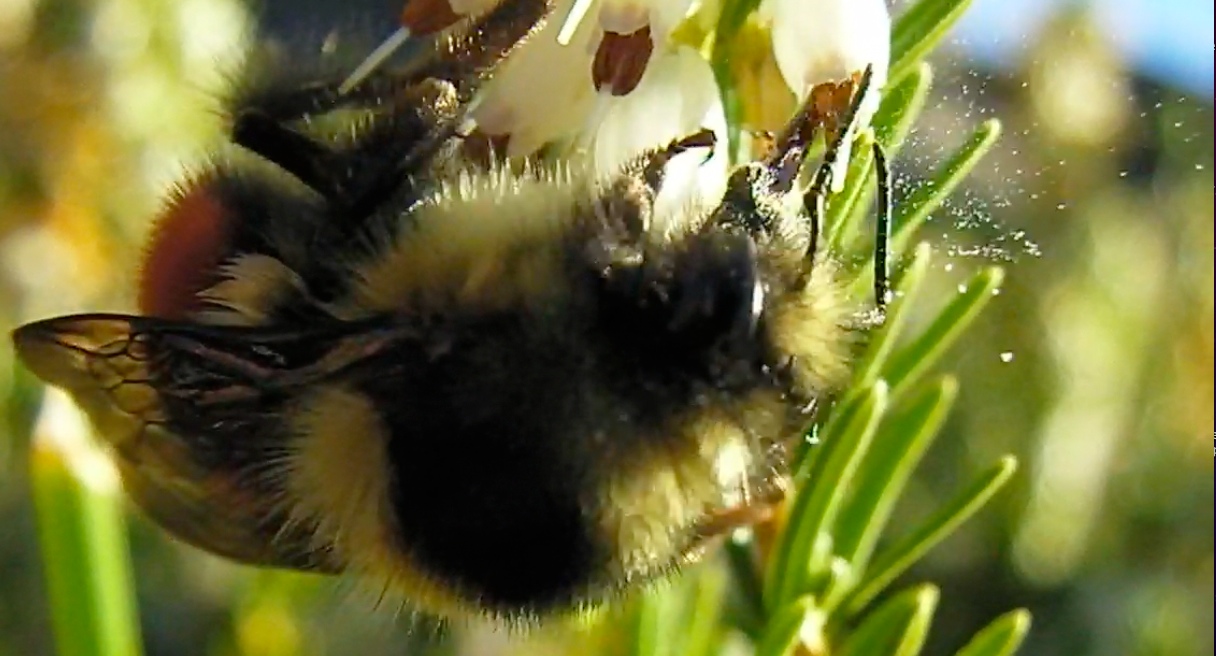
January 14, 2013…a beautiful warm day brought the bees out to the heather. I saw very few honeybees, but very many bombus Melanopygus (this one) and also Bombus vosnesenskii (yellow-faced bumbles)
Here you can see the pollen release. When the bee gets the nectar, the pollen shoots out.
As she grooms herself with her front legs, you can see what looks to be a static electricity charge on her bee fuzz…it shows up better on the video.
This short video shows a bumblebee (bombus Melanopygus) sipping nectar from heather in mid January. As she sips, pollen can be seen shooting out. Later she grooms herself. I noticed what looked to be a static electricity charge when her front legs combed her fuzzy head.
I didn’t want to interrupt the music so I added some video of my Bee-atrice log hive which didn’t make it through the sub freezing weather. I looked at a comb which had some capped honey as well as uncapped cells. I replaced the comb in the hopes that this hive will attract a swarm in spring.
It should be raining sideways this month. It’s not. After our cold snap, we’ve been enjoying daytime temperatures in the 50’s and 60’s F. (10’s and 20’s C) When I filmed this it was 71 F. (22 C). Our honeybees love it. They are bringing back yellow and orange pollen. I can’t figure where they’re getting it because the pussy willows aren’t blooming yet, but traffic is heavy as can bee seen on the video.
This is my second winter with bees. They don’t fly when it’s raining of course, but we do get breaks in the rain, the sun pops out and the bees are flying. I feel bad for the beekeepers that must tuck their charges to bed in the autumn and trust they will emerge when the weather warms up sometimes months later. I’m talking about people like Emily Heath among others in cold far away places. 🙂 I guess you could say I’m spoiled to be able to see them active during the winter. I don’t know what will happen in spring. It’s possible we’ll get our rain then…given the choice, I’d rather get it now. In any case the bees are making use of the warm weather.
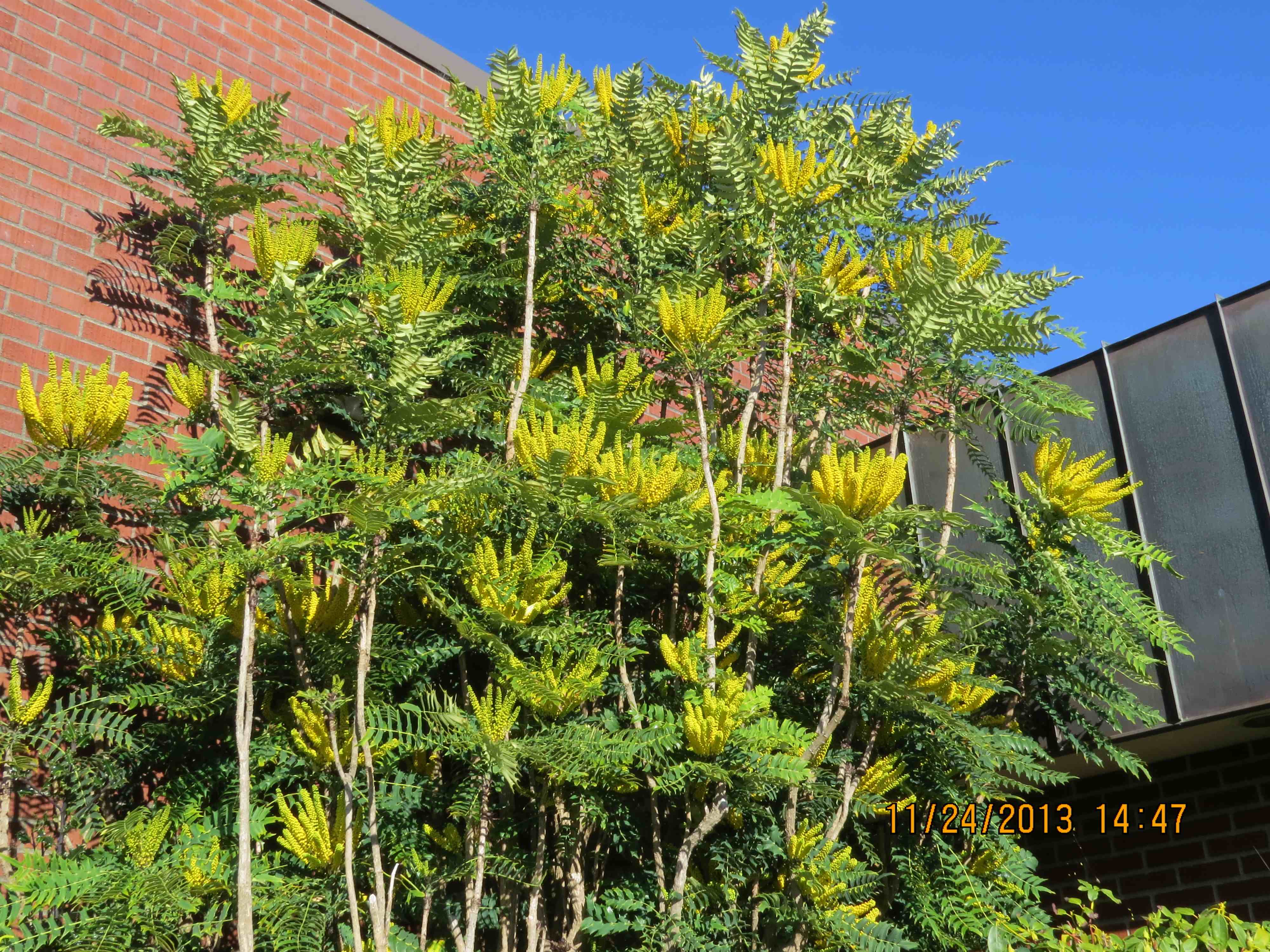
Most visitors to the post office go to get their mail. These visitors go to get nectar. The Oregon Grape Holly is in full bloom, offering nectar and nectar is what they got. Honeybees, bumblebees, even a couple of green hummingbirds partake in the feast.
What is the importance of nectar? My Biodiversity Garden states “Nectar is the fuel for our pollinators such as solitary bees, bumblebees, honeybees, butterflies, moths and bats. It is the only source of energy and without it, the pollinators cannot fly. Nectar is secreted by nectaries within the flower.”
According to Dave’s Gardens Mahonia Aquifolium blooms in mid spring. This is late November! The plant is growing against a brick wall, facing south, during an unseasonably dry autumn. In any case, the wild pollinators love it.
November 24th…This honeybee is getting nectar from an early blooming Oregon Grape Holly (Mahonia Aquifolium)
Sweet Thunder provides the delightful musical background for this video of hummingbirds, bees, and butterflies at work in my garden on the Oregon Coast.
Mid October…the bees are bringing in baskets loaded with orange pollen.
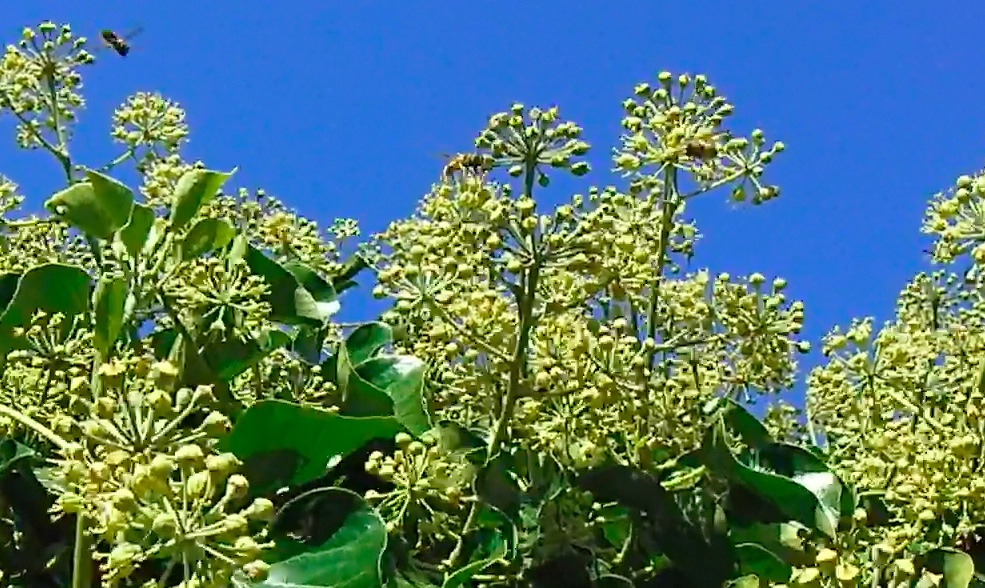
When I saw how much pollen was coming into Bee Beard log hive, I wanted to find out where it was coming from. I knew it had to be ivy because that’s the only thing in bloom this late. I set out to prove my theory.
I went to my known ivy patches, which just happened to be in the sun…perfect.
Mid October…An American Painted Lady (I think)
I didn’t see any bees at this first place, but this butterfly posed for me long enough to get a short video. She is sipping nectar through her long proboscis which acts like a flexible straw.
This looks like a bee, but the eyes are different. It’s a fly who is grooming herself in the sun. The video shows her rubbing her front legs and using them to scrape the pollen off the top of her body.
I see Barbara out walking her dogs. She knows I’m obsessive about bees and mentions an ivy covered wall that was buzzing with bees. I head over.
This ivy wall was buzzing with bees…I’m going to get lots of opportunities to shoot bee videos.
I knew something was weird with this when her proboscis touched the top anther and rubbed it. It’s another fly that resembles a bee.
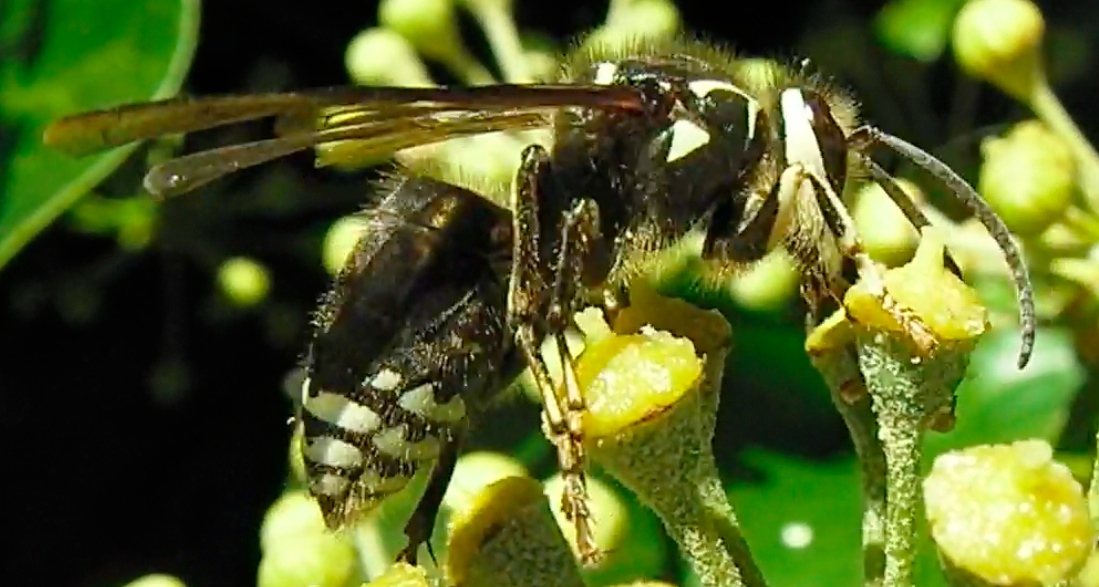
This looks like a white-trimmed black wasp, but it’s the wrong habitat for it. Can anyone ID it for sure? It’s another ‘buzzing insect’ working the ivy.
Celeste replied to my request to for an identification of this wasp… Pat, I am pretty sure that what you have are some lovely shots of the White-faced Hornet (Vespula maculata, also known as Dolichovespula maculata, not sure which name is the most current). The markings are quite distinctive, especially around the eyes and thorax, and this is the only West Coast wasp species that is white and black–all the others are yellow and black. These dudes are apparently aggressive little stingers, and the adults are predatory on small invertebrates, so I don’t think they’d be more than incidental pollinators. They make above-ground nests out of chewed wood pulp, but a colony only lasts for one year–they die off over the winter, except for females that mate at the end of summer and start new colonies the following spring. These are nice photos! Thanks, Celeste.
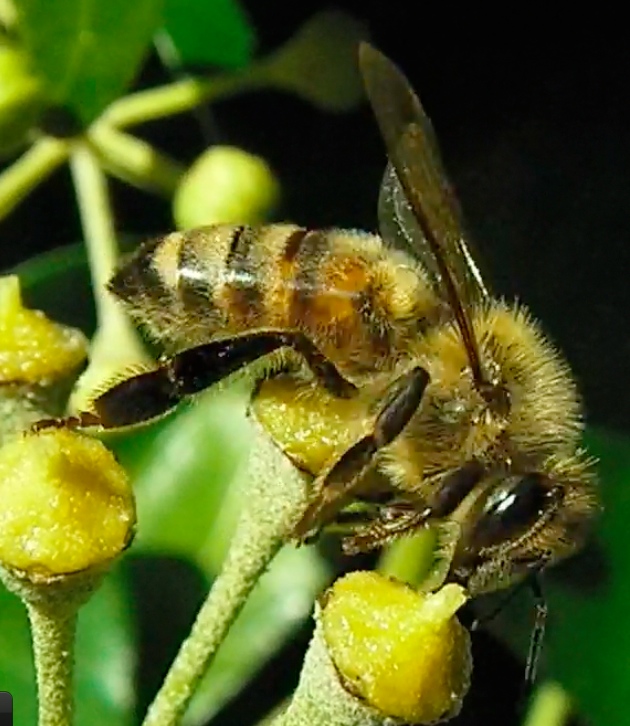
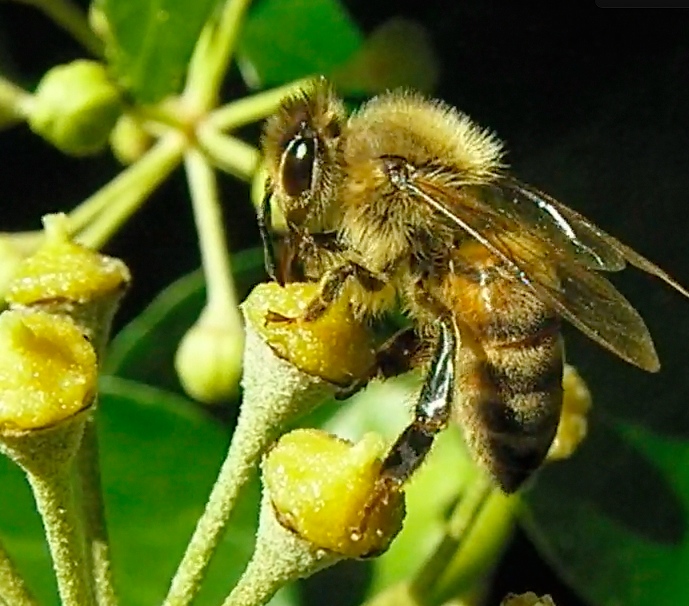
Finally I see an actual honeybee who is sipping nectar, but no pollen is evident.
Another look, but no pollen is visible.
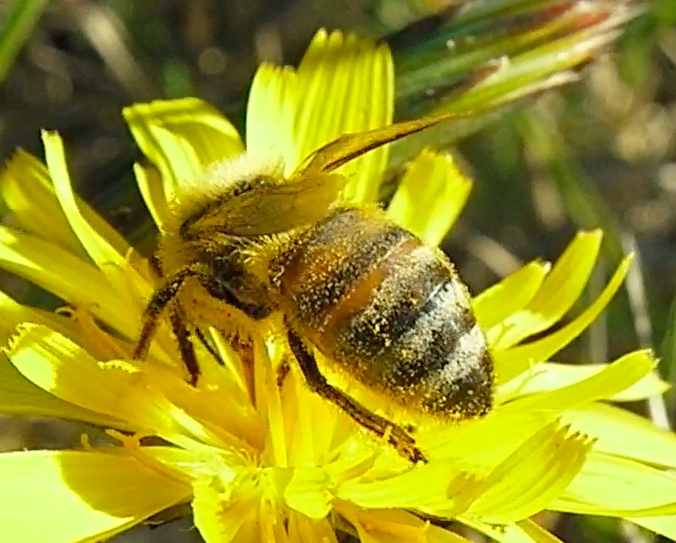
I spot a bee on a dandelion, pollen sprinkled on her abdomen. A close look revealed none in her pollen baskets.
I can see I was mistaken about the pollen going into my hives. It can’t be ivy just yet…not sure what it is, but I’ll keep looking.













 Adventures in Natural Beekeeping