Archive for the ‘Hives’ Category

After I added a frame of sugar on top of the single brood box, October 25, 2012, I figured that would do it for the winter.  But at the bee meeting in January, we were advised to keep feeding into the spring.  It was important because the bees would be flying more and using up the last of the honey stores…if the weather was bad, they wouldn’t be able to fly and could starve and all our efforts would be wasted.  Just to make sure I ask the natural beekeeping forum.  I was advised to super another box.

We opened the hive on a sunny February day, adding more sugar on top of the brood box, then added an empty box on top.  Inside the empty box hung a bit of comb on two top bars that measured about 2 inches (5 cm) down.  I figured the bees would come through the slits, eat the sugar which would give them energy to build more comb.

Sugar frame added 2-15-13.  Slits cut through newsprint to allow bees access to sugar from bottom box.

Feb. 15,  More sugar  added. Slits cut through newsprint to allow bees access to sugar from bottom box.  The chunks of sugar on the right of center was all that was left of the batch we placed in October.

 February 17, 2013  Bees feeding on new sugar above brood box

February 17, 2013 Bees feeding on new sugar above brood box

The bees came up through the slits no problem, ate at the sugar, but stopped there.  They would overnight on the sugar…soon it was covered in bees.  They didn’t have any desire to build on the comb slightly above their heads.  Meanwhile the bees were crowding out the single brood box.

The box is getting crowded...March 3, 13

March 3…This box is getting very crowded…

What to do???  Okay, here’s a plan…if they like the sugar so much, let’s place the sugar frame above the empty box.  They’ll sniff out the sugar, climb up the comb to the sugar, and build out their comb.
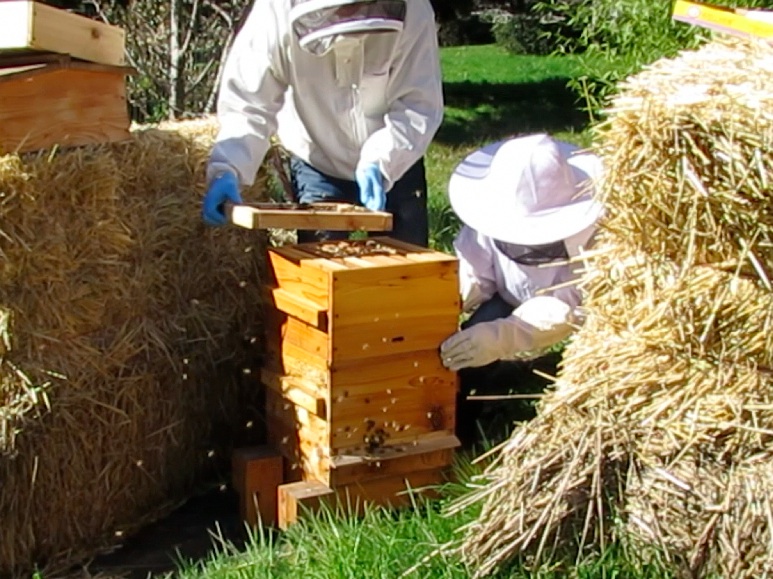
Placing sugar frame above both boxes

March 9…Adding more sugar to the frame and placing it above top boxes

We waited a few days before we realized the bees were NOT going up to the sugar and certainly NOT building up more comb.  Meanwhile the bees were getting even more crowded in the brood box.

I go back to the beekeeping forum and notice that Bernhard has added some info about using ‘ladders,’ along with some very excellent photos taken with his expensive macro lens.

Should I try to buy foundation for the Warre…I don’t want to use plastic in my ‘natural’ hive, and I don’t want to use wax that might carry disease, but I do have a bit of comb left over from a failed hive last year which had swarmed late, not queened successfully and was finished off by the wasps.  I piece it together.

Comb 'ladders' attached to bars.  This pathetic looking comb has been in the freezer for 4 to 5 months.  My wife will be happy to have the extra room

Comb ‘ladders’ attached to bars. This pathetic looking comb has been in the freezer for 4 to 5 months.   I don’t have much left so I hope this will encourage them to climb upstairs.
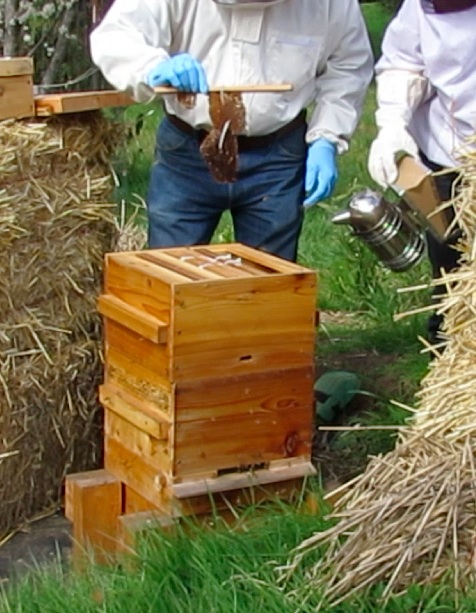
Adding the first ladder

March 24…Adding the first ladder

Adding the second ladder

And the second ladder…”Honey, how about trimming the grass in front of the hive?”

A short video showing the steps involved…

Read Full Post »

As a newbie beekeeper I thought the bees just kept within the hive during the winter, leaving the hive infrequently.  I know things are different on the coast because we rarely get snow, but we get loads of cold winds and driving rains.  So it’s to my surprise that the bees are so active.  They are actually bringing in pollen during January and early February.  I’m hoping the yellow pollen is gorse, because everyone around here hates gorse so much (with good reason…it’s blamed for burning the town down in 1936), I’d like to know gorse is good for something, especially since it usually blooms early February.

I’m concerned about the Warre hive. The top video shows the front of the hive with the bees bringing in yellow and orange pollen and through the observation window in back.   I’d like some advice from more knowledgeable beekeepers about what to do.  I almost nadired another box underneath, had planned for the forecasted hottest part of the day at 55 deg.F (12 deg.C) but then the temperature turned cool.  Should I add another box so they can grow into it before they swarm or should I wait for a few more weeks because the winter weather will return the latter part of February and into March?  Another box means they have to heat it.  I’ve got a dry sugar pad above the box as a just in case food source.

The log hive below looks very strong, lots of activity whenever the sun comes out and the temps are in the 50’s (10 C) bringing in pollen during January and February.  Those bees came from a feral tree hive.  I’m leaving them alone to fend for themselves.  I’m hoping the hive will act as an undisturbed ecosystem…bees adapting to survive mites and other pests.

Hope to have another log hive in place before they swarm.

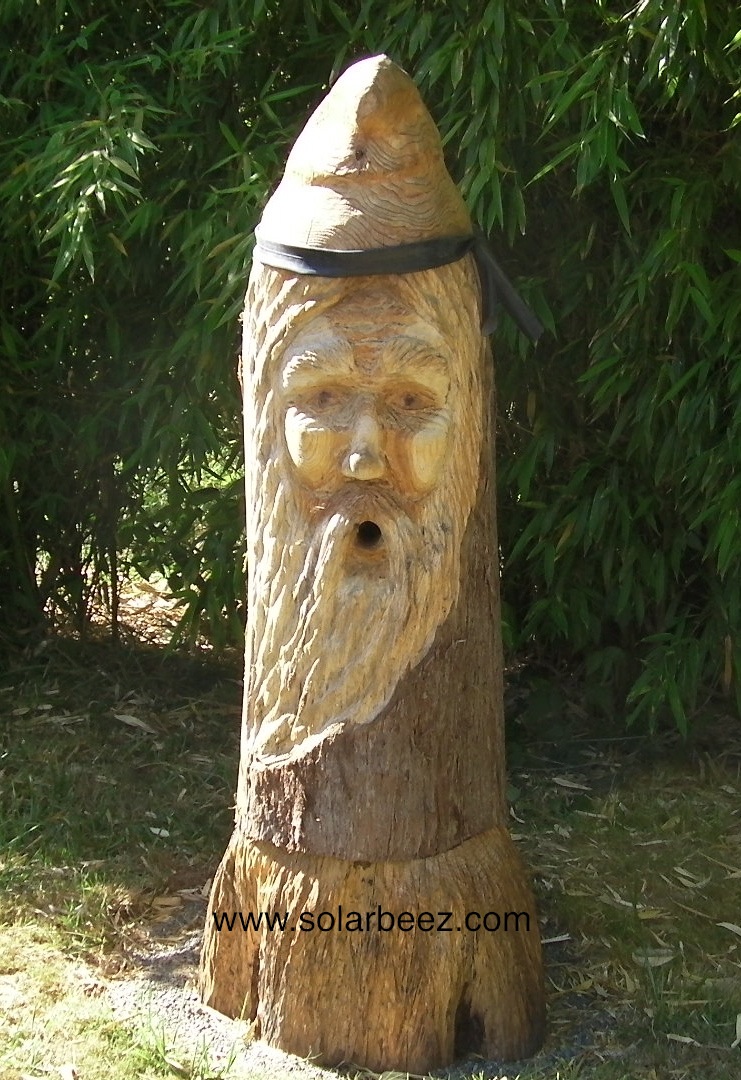
Hollowing out the log  Carving the log

Read Full Post »

A long time beekeeper in the bee association warned me to expect 50% winter losses.   I thought to myself which hive am I going to lose, the one I’m reluctantly feeding or the log hive?

I realize this is only the beginning of winter, but both hives have already come through hurricane-force winds, weeks of steady rain, and a few recent frosty mornings.  The sun finally came out this weekend and to my happy surprise, both hives are still flying, even though the temperature was a mere 50 deg. F (10 deg. C)  The log hive is still bringing in a surprising amount of pollen.

I was able to shoot the 2nd part of this video with my new camera that sports a 50x zoom.  I don’t have to get as close to the hive now. 🙂

Hollowing out the log     Constructing the base     Bee Beard Gets Bees

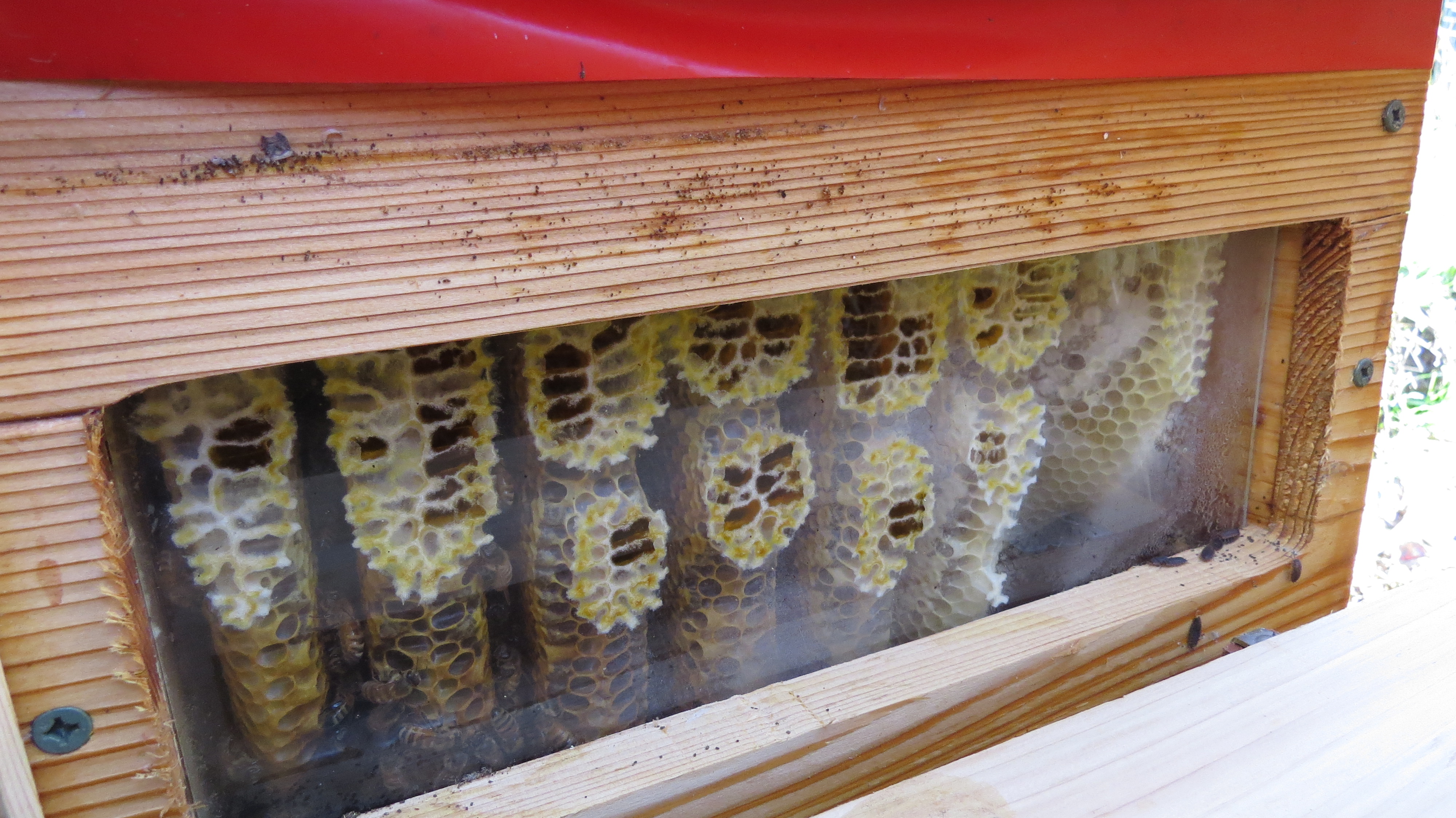
Here’s a photo of the bottom board taken the next day…Some more experienced beekeepers say you can tell what’s inside the hive by reading the bottom board.  I see flakes of wax, but I’m not sure about the rest of it…

Warre Hive Floor Board...Learning how to read the floor board.

Warre Hive Floor Board…Learning how to read the floor board.  The layout of the bars are parallel with the bottom of this board.  What do you see?

When it's cold the bees hang out in the lower left of hive.

When it’s cold the bees hang out in the lower left of hive.

Status of bee hives one year later.

Here is Bernhard Zaunreiter’s assessment of my little Warre Hive…

PostPosted: Thu Jan 03, 2013 8:09 am    Post subject:
It is a very small colony. But since they made it until now, they most probably make it through winter and until Spring. It will be a difficult time in Spring, when the old winter bees die off and have to be replaced with young bees just in time. Just make sure you protect them from robbing in Spring. A big colony will surely assault such a small colony and wipe them out of life. So reduce and watch the entrance.Such a moldy floor only can be found in small colonies. The black stuff on the right of the picture is mold. It won’t harm the bees for now. So no worries. The black dirt ist bug poo, I think the hive has quite some wax moths. The common woodlice are wintering within the hive, but won’t harm the bees much. You could clean the floor board regularily, so you can notice the differences over the time. Once the first stripes and pollen appear on the board, they started brooding. Wipe the mold off with some vinegar, washing and drying it afterwards with a hair dryer.Plenty of stores, so no worries about that. Maybe you scrape open some honey cells from above in Spring, so the honey draws moisture and can be eaten up more quickly, leaving empty cells to lay eggs into. Just some combs at a time. The most critical thingin Spring are empty cells.

You can see his example of a  more healthy bottom board here…http://www.biobees.com/forum/viewtopic.php?p=88786#88786 (as well as follow the thread)

Read Full Post »

Sandi works for a company that orders printing from me all the time.  Whenever she would call, I’d bore her with my excitement about bees.  At that point I didn’t have any bees and was building swarm bait hives, wondering where I could place them, and in general being hyper about getting some.  Eventually, I got some bees.  So when Sandi called in late June to say she had a swarm on her property and didn’t want them because she was allergic, I felt obligated to get them.  She had suffered through my bee-brain ramblings, so I better come through.  I was still smarting from the feral bee hive transfer to Bee Beard Log Hive and didn’t want a third hive, but there was a couple whose daughter had built them a top bar hive that needed bees.  I called them and yes, they still wanted bees.

I’m sure there are better ways to capture a swarm.  These bees were snug against the trunk of a small fir tree.  I couldn’t bend the tree over the bucket to shake them in so I just sort of ‘brushed’ them into the bucket…watching for the bees to stick there rear ends up and fan the pheramone…”the queen is in the bucket.”  Hearing the grandkids exclamations are priceless.

I don't understand it.  I got stung 25 times when transferring bees into Bee Beard and didn't swell up as much as this time with only 5 stings!

I don’t understand it. I got stung 25 times when transferring bees into Bee Beard and didn’t swell up as much as this time with only 5 stings!

Read Full Post »

I’m happy to report my Bee Beard log hive came through the hurricane-force winds without getting blown over.  The bamboo and ‘staked’ hay bales must have protected it enough.

Since we are new to beekeeping  we try to pay attention to the advice of more experienced beekeepers.  We have been warned about robber bees attacking the hive…robbing the honey.  I shot this video in an effort to find out if my log hive is getting robbed.  I don’t know whether these are robber bees or just the normal activity of the hive.  They are still bringing in pollen so I’m assuming (naively?) it’s all normal behavior.  The bees came from a feral hive in a tree on private property.  Maybe it’s strong enough to defend itself.

A short video of my Warre Hive is included.  Much less activity can be seen around the Warre.  Is it because I’m feeding them sugar?  Maybe the bees don’t feel the need to venture out.

Read Full Post »

It’s early November when the clouds parted and the sun popped out.  The day started warming and the bees started flying.  It had been overcast and rainy for about a week, so I guess the bees were anxious to get out, but I was surprised to see so much pollen coming back in.  The Warre hive had bees flying but not returning with the ‘gobs’ of pollen like the log hive…could it be because I’m feeding  sugar to the Warre hive and not to the log hive?

I have no idea what kind of pollen they are bringing back.  Nothing is blooming in the garden but rosemary and borage and I don’t see many bees on it.  Is this normal behavior this late in the year?  Comments are appreciated.

After reading the comment from Emily Heath, I started looking around the area for ivy.  To my surprise it was growing all over the place.  It’s one of those things that you don’t see until someone points it out to you.  I had to get close to see the blossoms and that’s when I saw the bees.  I hope some of them came from my hives.

Read Full Post »

Bee Beard Log Hive in front of Bamboo

When I decided to place my new Bee Beard Log Hive I considered many things.  I wanted it placed where it would get the morning sun shining into the entrance, well beyond the long reach of the tree shadows in winter, and protected from the raging winter winds that blast from the southwest.  Also I wanted the hive to be visible if possible, on the edge of the garden, so we could observe the bees whenever we worked outside. The placement of the hive in front of the bamboo satisfied all the requirements.  What I didn’t know is that bamboo attracts wasps.  When I started seeing all the wasps on the bamboo I started to panic.  What are they doing around my log hive?  I started recalling the stories at the bee meeting about all the hives that are lost to wasps.  How did I know bamboo attracts wasps?  Is that common knowledge?

Wasp on Bamboo leaf over Bee Beard log hive.

The bamboo was leaning over the log hive…are the wasps going to attack my bees?  What to do?

I plugged the last gap by stuffing the inner tube into it.  Wasps won’t  get in here

Found a piece of bamboo that fit the 1 1/2″ (3.81 cm) hole. This reduces the hole making it easier to guard against wasps.

After  consulting the internet about bamboo I found out that wasps gather fibers from the bamboo for their paper nests.  That’s what they are doing on the bamboo, not attacking the log hive,

Wasps are scary because they can sting again and again, but they also are beneficial because they prey on other pests like spiders, flies, bug, and caterpillers.

We feel that wasps have a place in our garden.  We won’t kill them because they really aren’t bothering us or the bees,   The ground hive is almost never used the next year and once the cold weather hits, it will be inactive.

I shot a short video showing the wasps on the bamboo as well as the very active ground hive.,,

Spider captures wasp.

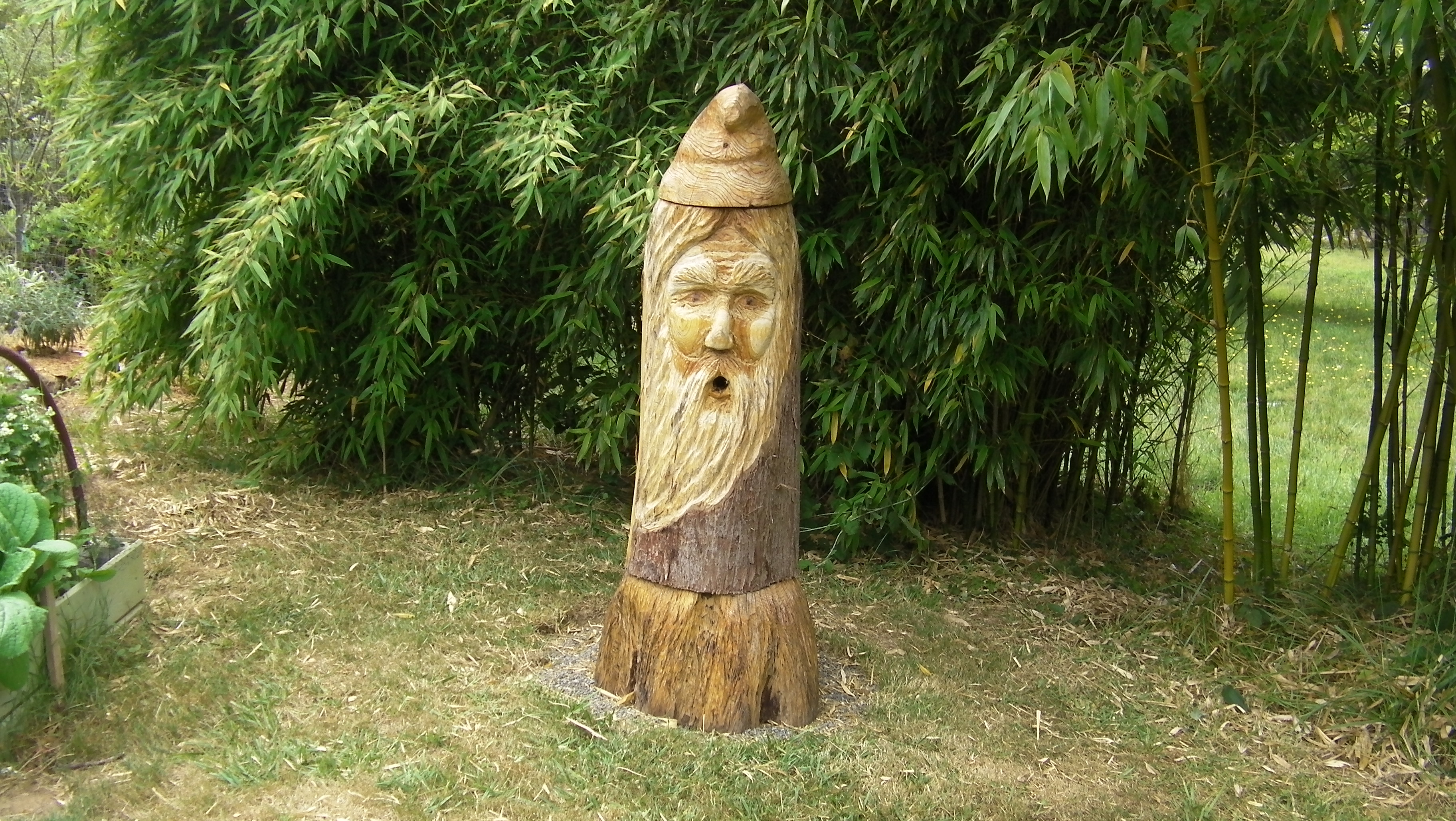
Chainsaw artist Brian Vorwaller, carving the face on the log here.

Read Full Post »

In anticipation of the wet stormy weather that the Oregon Coast is known for, I closed up some gaps on the log hive with a bicycle inner tube.

Bee Beard gets a headband to protect against the cold winter winds.

Bee Beard with headband as seen from side

Bee Beard as seen through the observation window 10-8-12. Bee-built tunnels provide access to the honey.

The large number of unfilled cells is a concern, but the bees are still packing pollen, so hopefully they will get filled with something.

This truck inner tube covers the gaps in the ‘wood plug’ that covers the observation window. It’s removable so I’ll be able to look through the window from time to time.

This log hive has exceeded my expectations for the summer.  It has built up fast, didn’t swarm like my hive last year, (swarmed two months after I got it), and has out performed the Warre hive even though I got it going about the same time.  Now for the real test…will it make it through the winter?  I haven’t taken any honey from it, I’m not going to medicate or hang miticides, and I’m not going to feed it.  It came from a natural living tree hive and made it through the winter last year without intervention so I feel it has a good chance.  The only intervention I have given it is to peer through the window from time to time.  If I get a swarm from it next year, I’ll count it as a success.  Maybe I’ll have my next log hive set up in time.

Read Full Post »

Quite a mouthful. This photo was taken the evening before.

The bees started being very active fairly early in the morning.  I ran to get the video camera to document what was going on.  They grouped up on the outside of the hive entrance.  The group slowly moved up the right side of the hive and then under the nose.  My wife thinks this was a bunch of drones hatching, because they look bigger.  I couldn’t get couldn’t get a good fix on the eye pattern.  The next day was normal activity.  Any ideas?  We welcome your comments.

Read Full Post »

Burying the very available crab shell and coffee grounds to spice up the soil is the first thing.  Warre hive is on the left and Bee Beard carved log hive on the right.  I’m in good company.

Potatoes…should we harvest now or leave them in to grow more?  If I leave them in, the voles might eat them…I better take them out.  Then I can plant buckwheat in both beds.

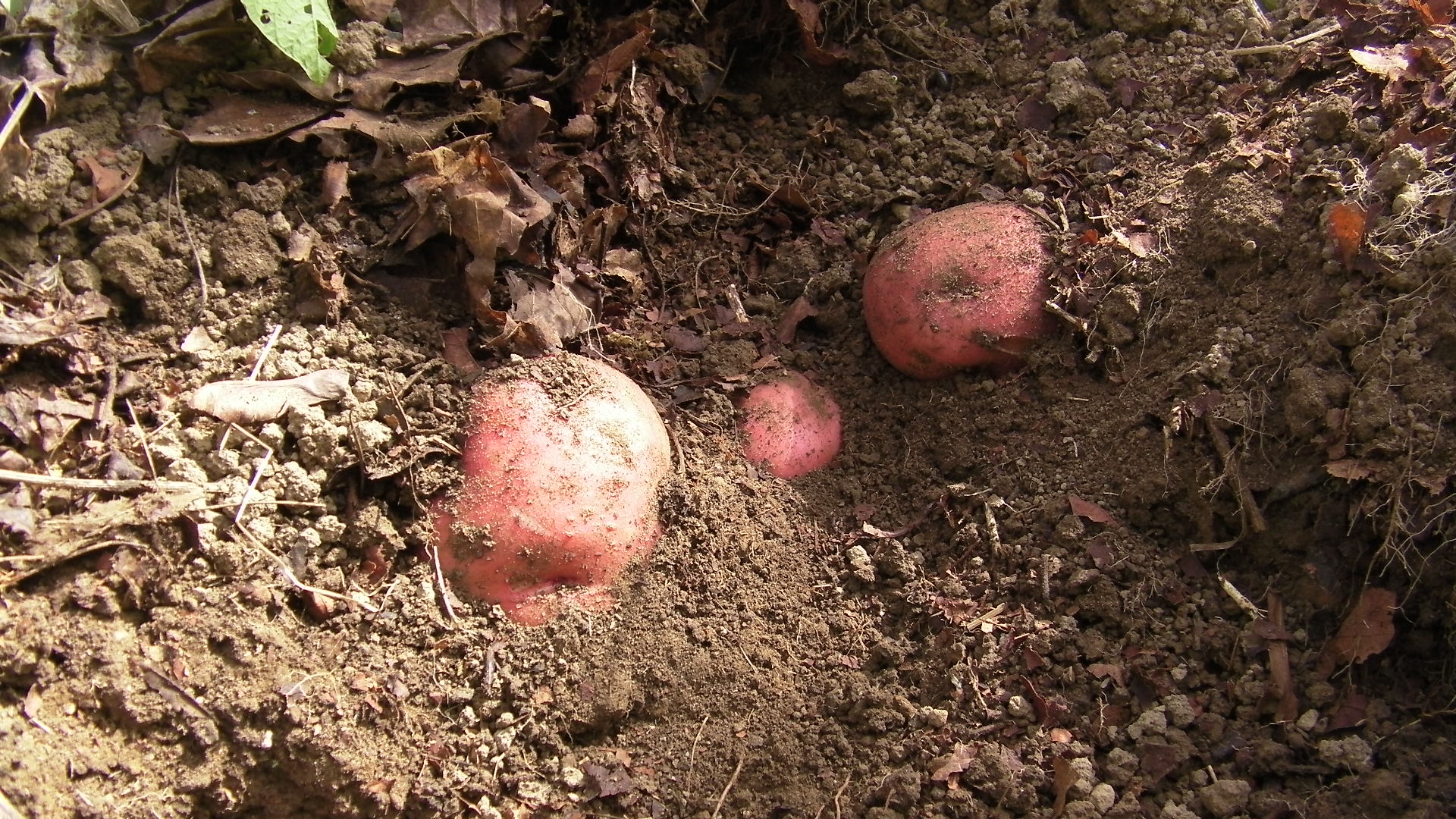
Red Pontiacs – Three at once

A mole tunnel…the moles dig the tunnels, the voles follow the tunnels to the potatoes. More than a few potatoes had been chewed on, so it was good idea to get them out of the ground.

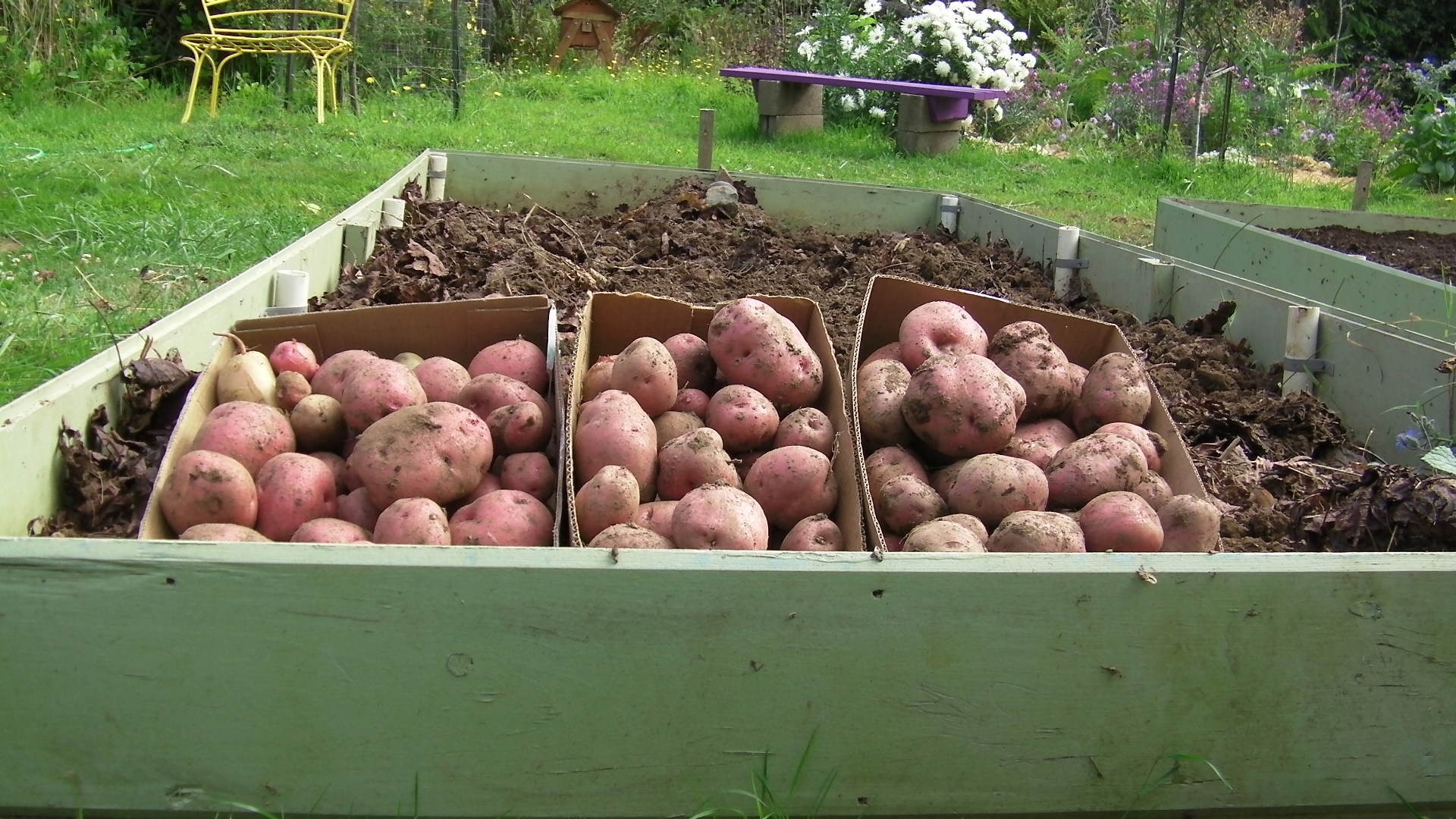
Some of the potatoes harvested from this first potato bed. We could have left them in to grow more, but the voles would have taken a big bite out of our harvest. This way we can grow buckwheat in both beds for the bees in September.

We’ve been fairly successful in the “no tilling” method for a few years.  We think it’s important to use less manufactured energy and more physical energy.  Is spading  ‘as good as’ using a  tiller?  Probably not, but it’s important to be able to grow food without using fossil fuel for the possible time when we don’t have any.

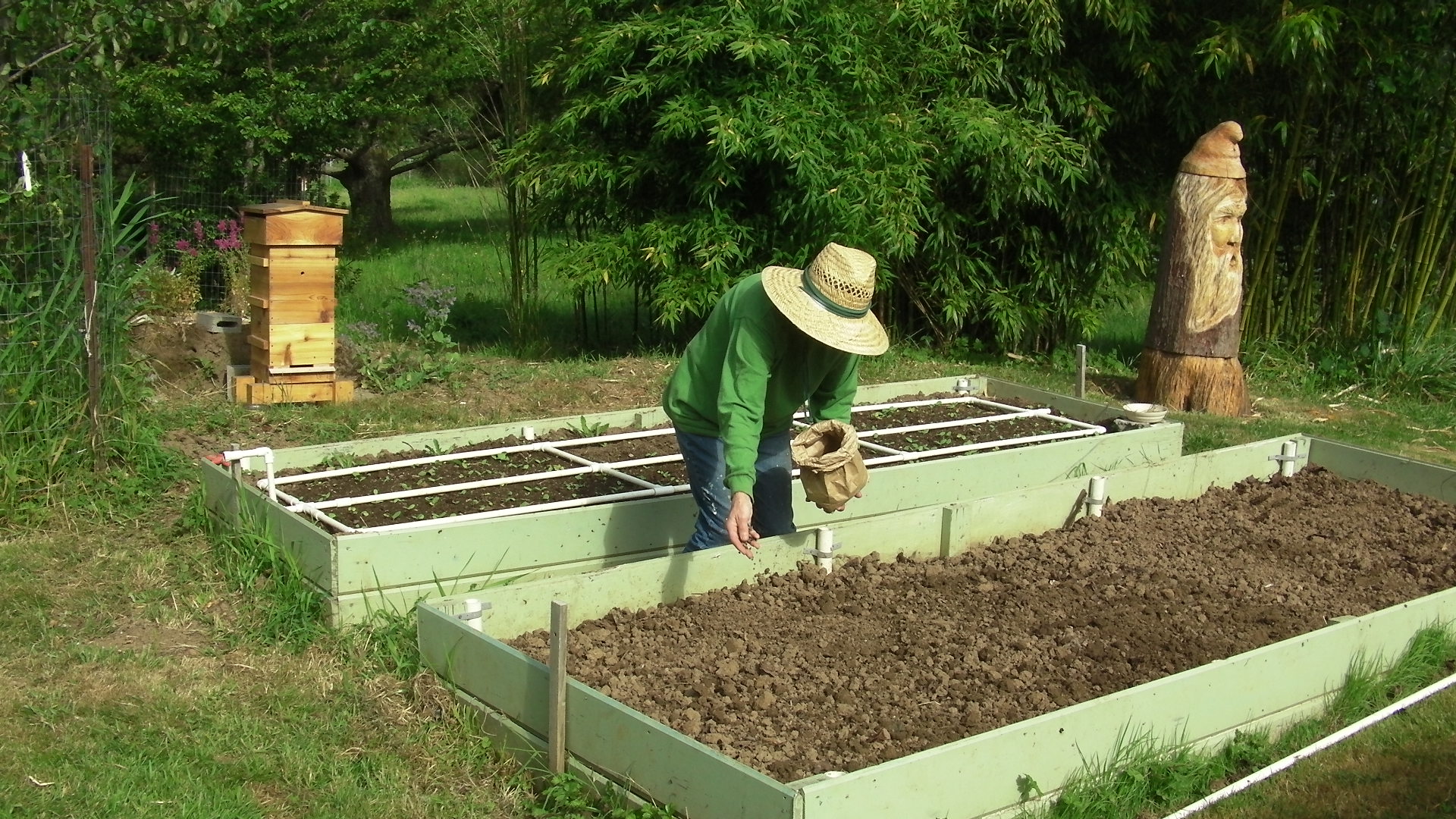
We have dug in crab shell, kitchen scraps (no meat), comfrey leaves, and coffee grounds to enhance the soil. Now we’re planting the buckwheat seed.

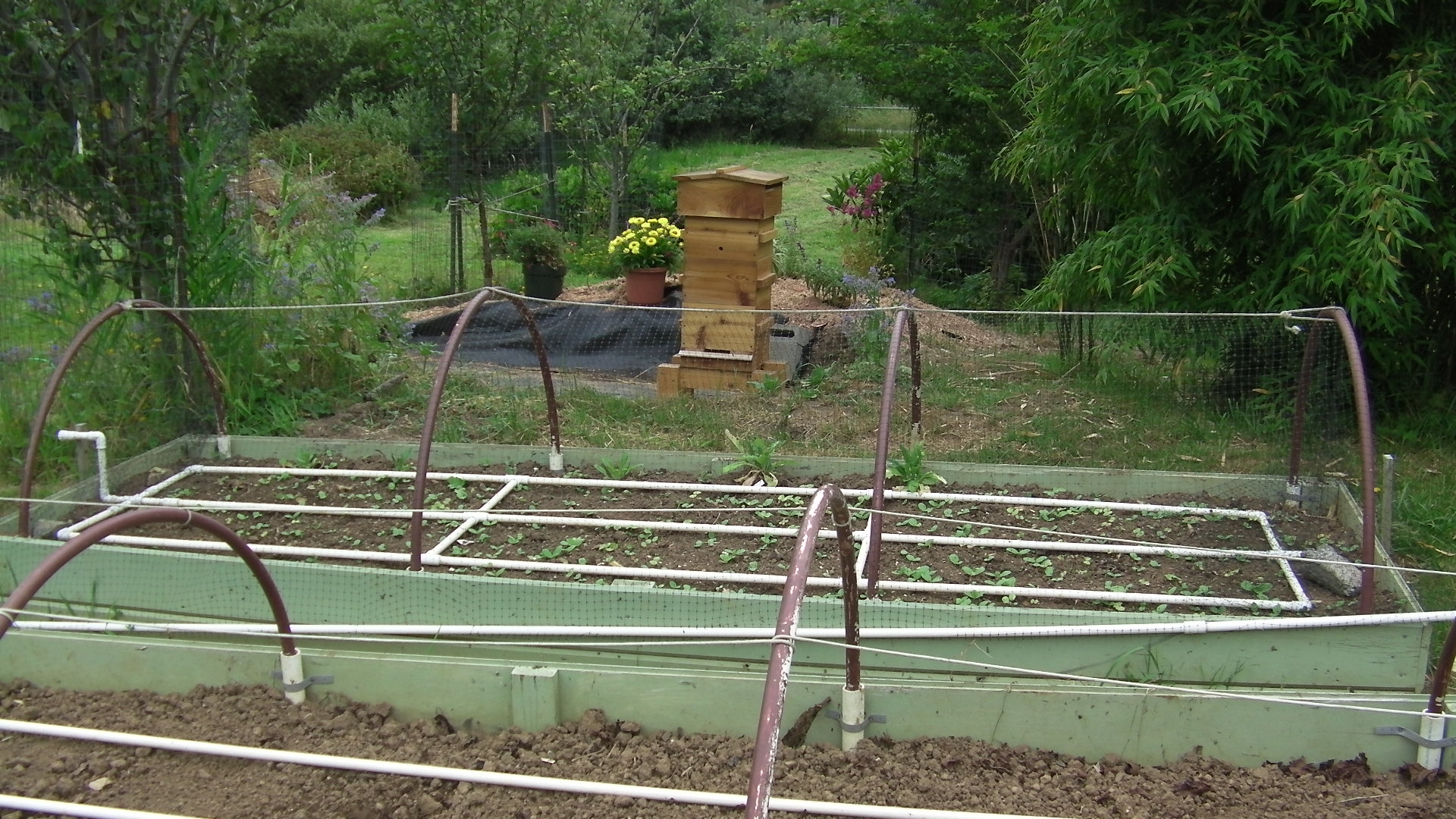
The drip irrigation grid and the deer netting are in place.

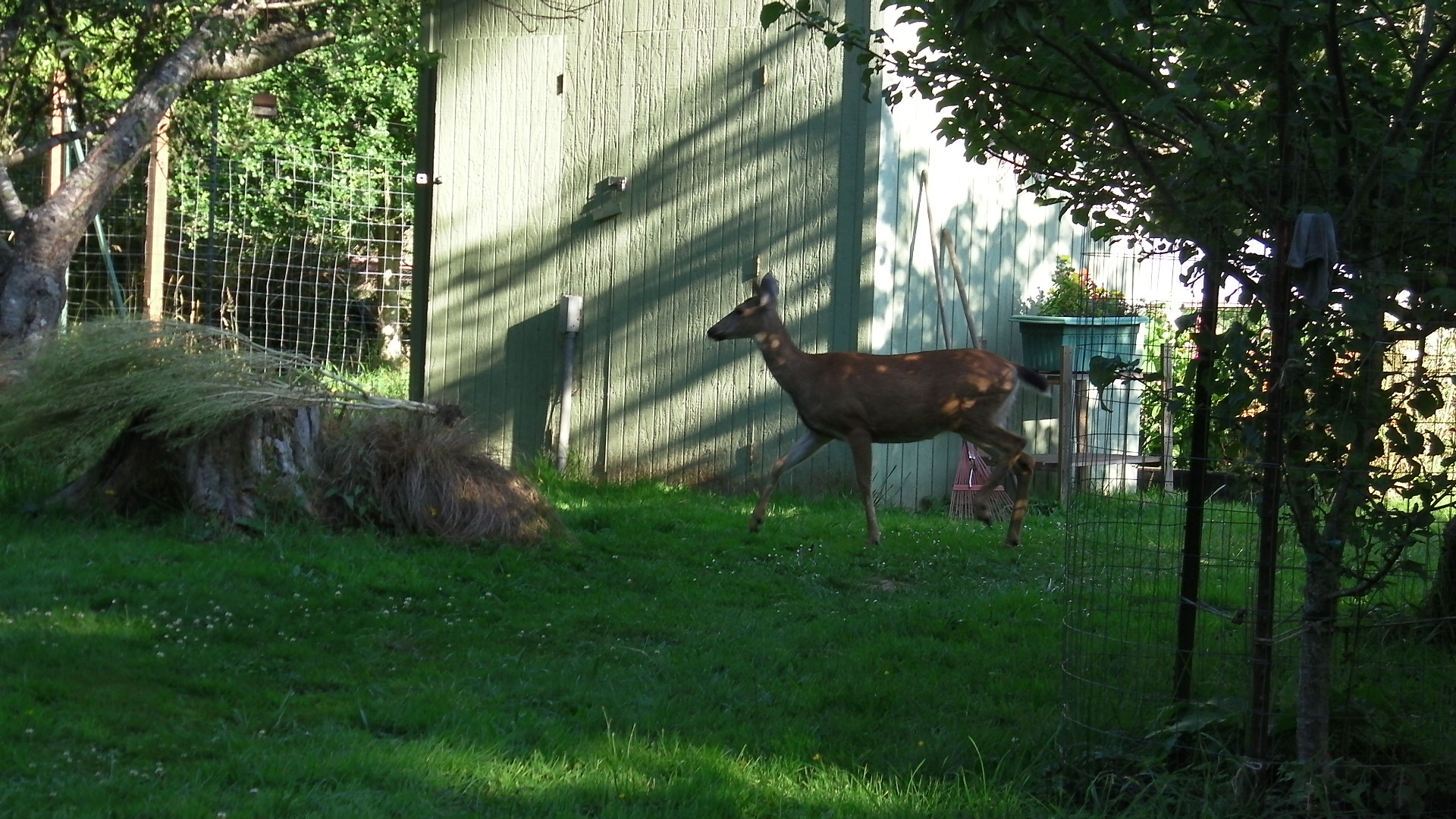
Why do we need deer netting? Because of her…and all her offspring!

According to this article by the Thomas Jefferson Agricultural Institute “…buckwheat crop seems to improve soil tilth, and is reported to make phosphorous more available as a soil nutrient, possible through root-associated mycorrhizae. Buckwheat flowers profusely, making it popular with bee keepers and an attractive crop in the landscape.”

Sept. 9, 2012...about 5 weeks after planting, buckwheat is looking good.  Bees are on the blossoms already.

Sept. 9, 2012…about 5 weeks after planting, buckwheat is looking good. Bees have been working the blossoms for a couple of weeks already.

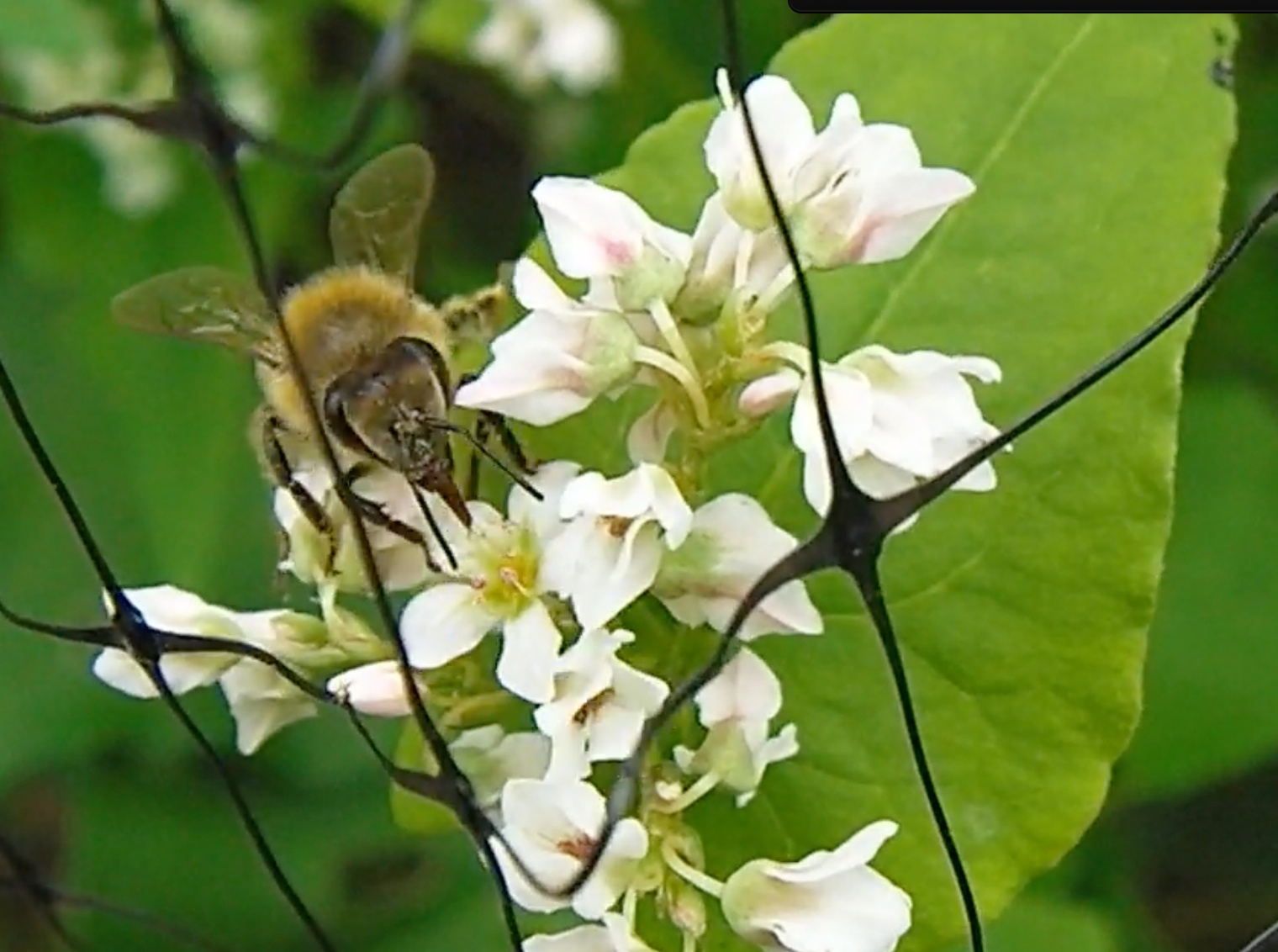
Sept. 9, 2012...Honeybees attending to the buckwheat blossoms.

Sept. 9, 2012…Honeybees attending to the buckwheat blossoms under the deer netting.

A fly mimicing a bee on the buckwheat blossom.

A fly mimicking a bee on the buckwheat blossom.

My wife saved me the ultimate embarrassment of thinking I found some kind of new bee. “Honey, that’s a FLY!”  “Ulp.”

Another fly, this time with a red abdomen.  My wife saved me the embarrassment of thinking I found some kind of new bee.  "Honey, that's a FLY!"

Another fly, this time with a red abdomen.

Read Full Post »

« Newer Posts - Older Posts »