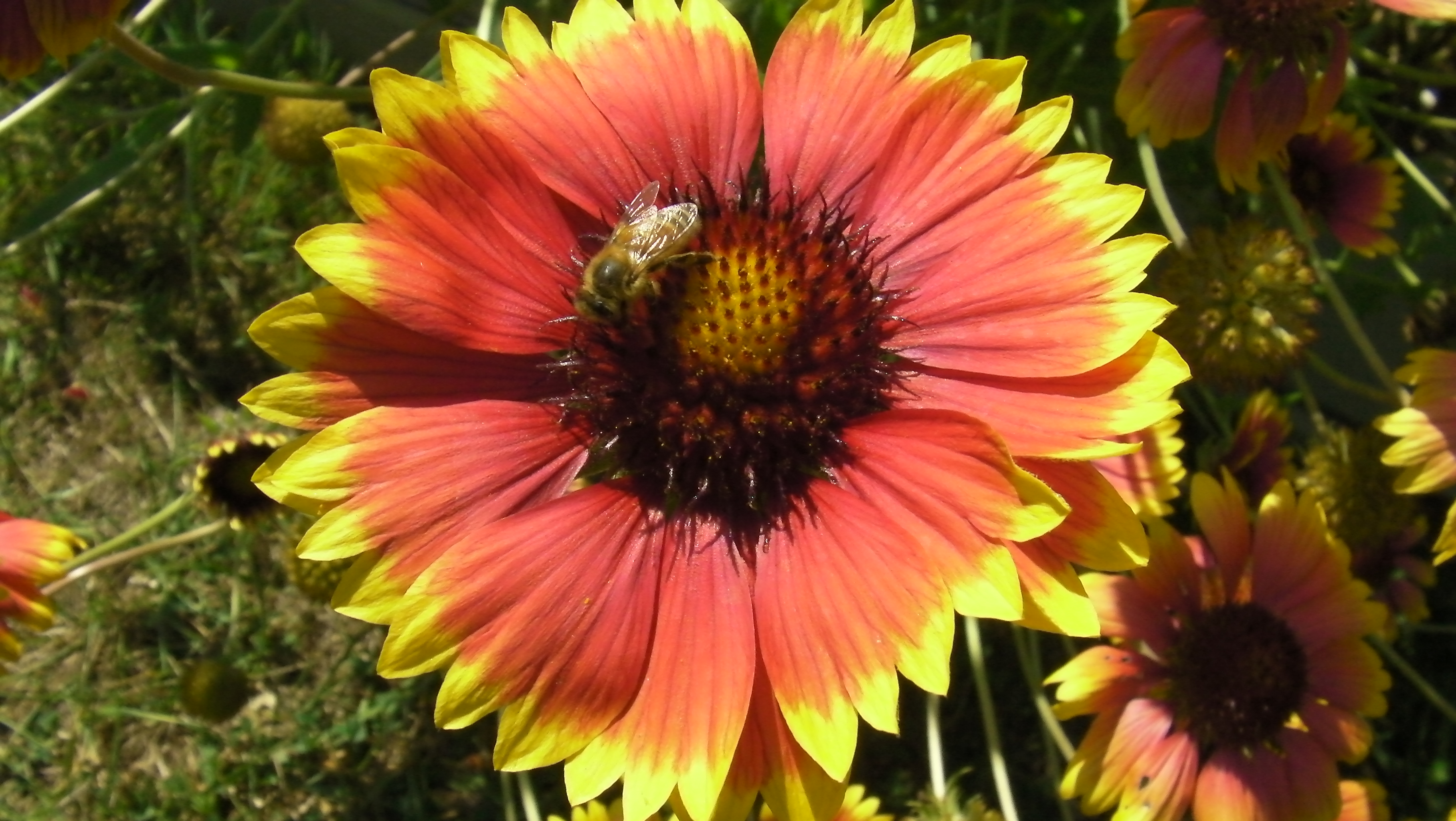
If you want to grow some very colorful flowers that will bloom in September and October, try the Arizona Sun Gallardia.
Watch the crafty crab spider emerge from below the curled petals bottom right. I’m wondering if the honeybee saw the spider. It almost looked like it was ‘daring’ the spider to come after it. I’ve seen enough honeybees that were trapped in the crab spider’s grip to know it’s foolish to tempt fate, but this one got away.
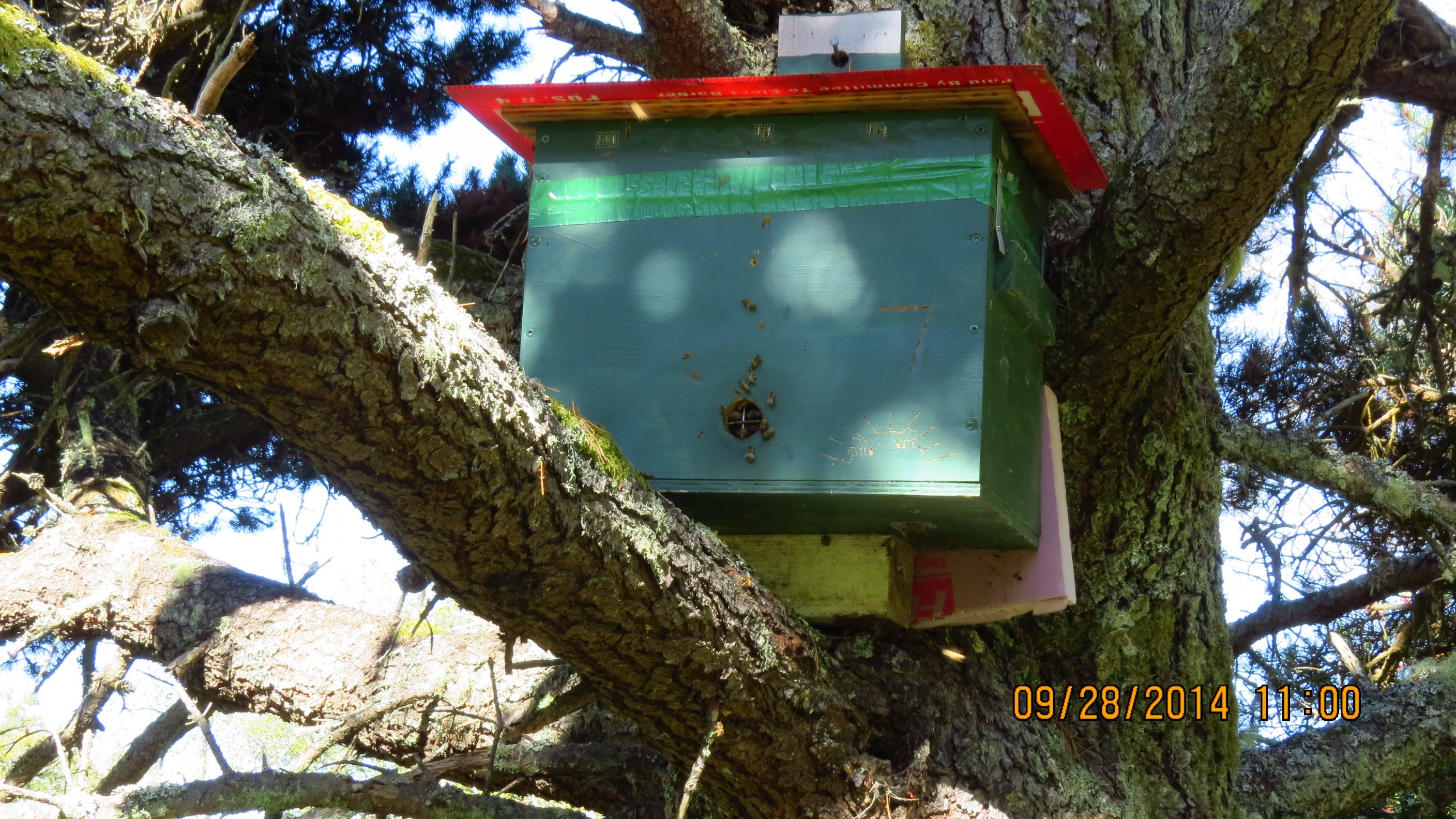
I added a quilt box on top complete with screened air holes and myrtlewood sawdust from my Bee-atrice log hive which was under construction at the time. When I realized I wouldn’t need that backup hive, my wife and I decided to leave it in the tree during winter as a sort of trial to see if bees could come through our mild winter without any intervention. I’m happy to say it came through the many wind and rain storms without me treating or feeding it. It threw three swarms (two at once) that we know about and is still going strong as you can see by the video.
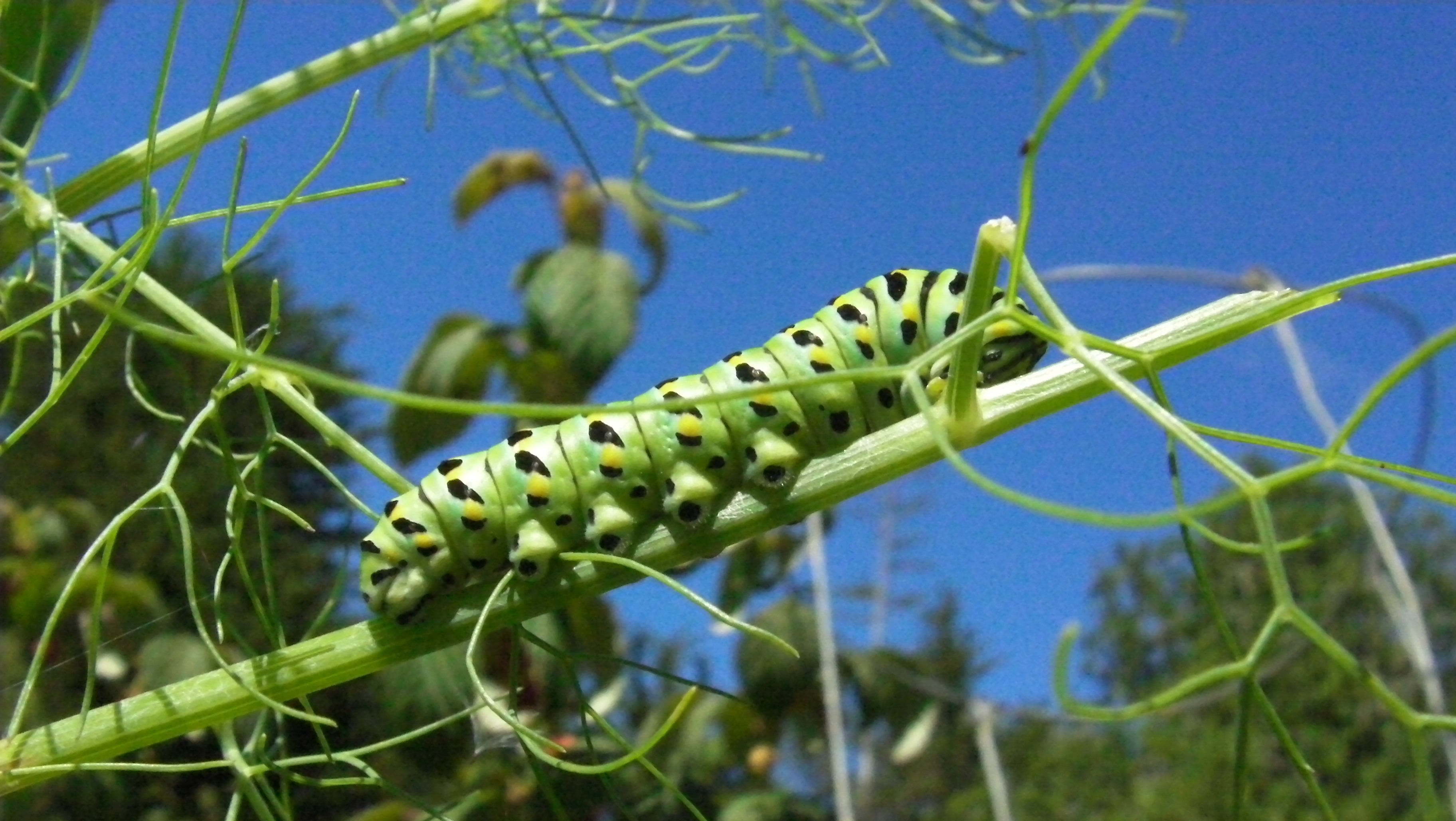
We planted fennel this year to attract bees and butterflies. We never saw the butterflies, but we spotted the caterpillars and later on the bees.
August 22, 2014…we started seeing caterpillars on the fennel.
Caterpillars are voracious eaters. Michael Marlow has an up close video of one eating a stem. It doesn’t waste any time. I started noticing my fennel branches were getting bare, then I saw the caterpillars.
This is could be one of the earlier stages of growth. The life cycle of the Black Swallowtail Butterflies can be found here.
Fennel can grow quite tall. This one is at least 7 ft. tall. I wonder if the chrysalis will be hidden in the undergrowth.
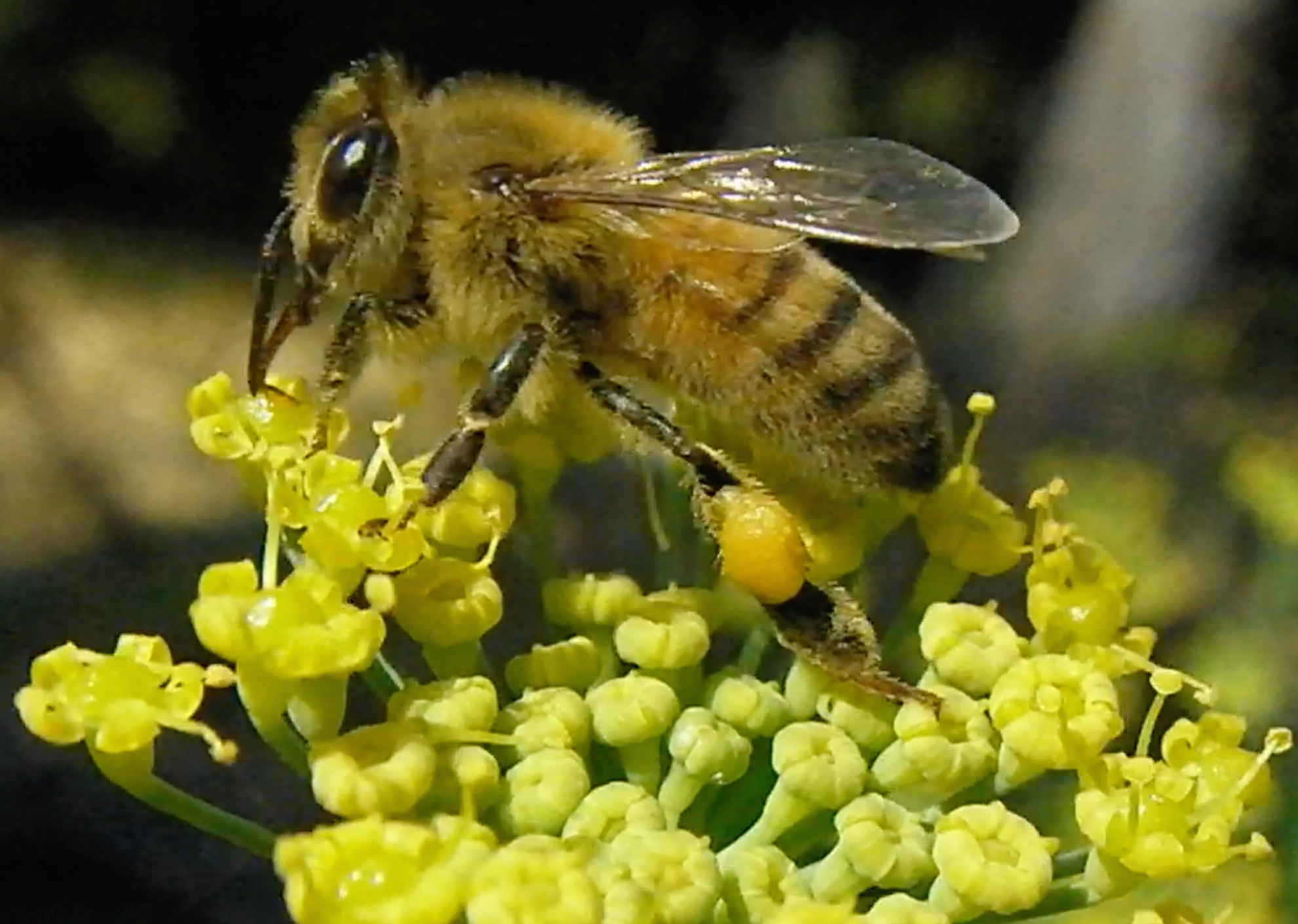
The honeybees have been visiting the fennel since early September. I don’t know what the insect at the top is, but it’s very colorful. My wife thinks its a Great Golden Digger Wasp.
As soon as the main nectar flow quit (blackberries), the bees started working the Phacelia. It was then that I noticed the blue pollen. I can see why they preferred blackberries…these blossoms are hard to work.
A bee works the borage in late July. A second batch of borage has reseeded itself and will hopefully bloom during autumn.
August 22, 2014…I finally visited Barbara’s Mock Orange tree. It was everything she said it was. Covered in white blossoms with bees all over it. Note: this might NOT be a Mock Orange. See below what Carol Quish of University of Connecticut had to say.
Two bees on Barbara’s Eucryphia Tree
August 29, 2014…When I think of summer, this is what I picture. SUNFLOWERS. Last year we had precious few. This year we grew a few more for the bees. It was hard to stay in the shop during the blue sky, bee-flying, sunny days.
September 1…I’m soooo glad I planted these Autumn Joy sedums a couple of years ago. The bees get nectar from it from late August through September. How many bees do you see? It’s easier to count them in the video. When we first got the notion to buy these Autumn Joy sedums, it was mid September, 2012. My wife was unloading the potted plants and the bees found them as she was carrying them out to the garden. If you have some space, plant some right away. Your bees will thank you. 🙂
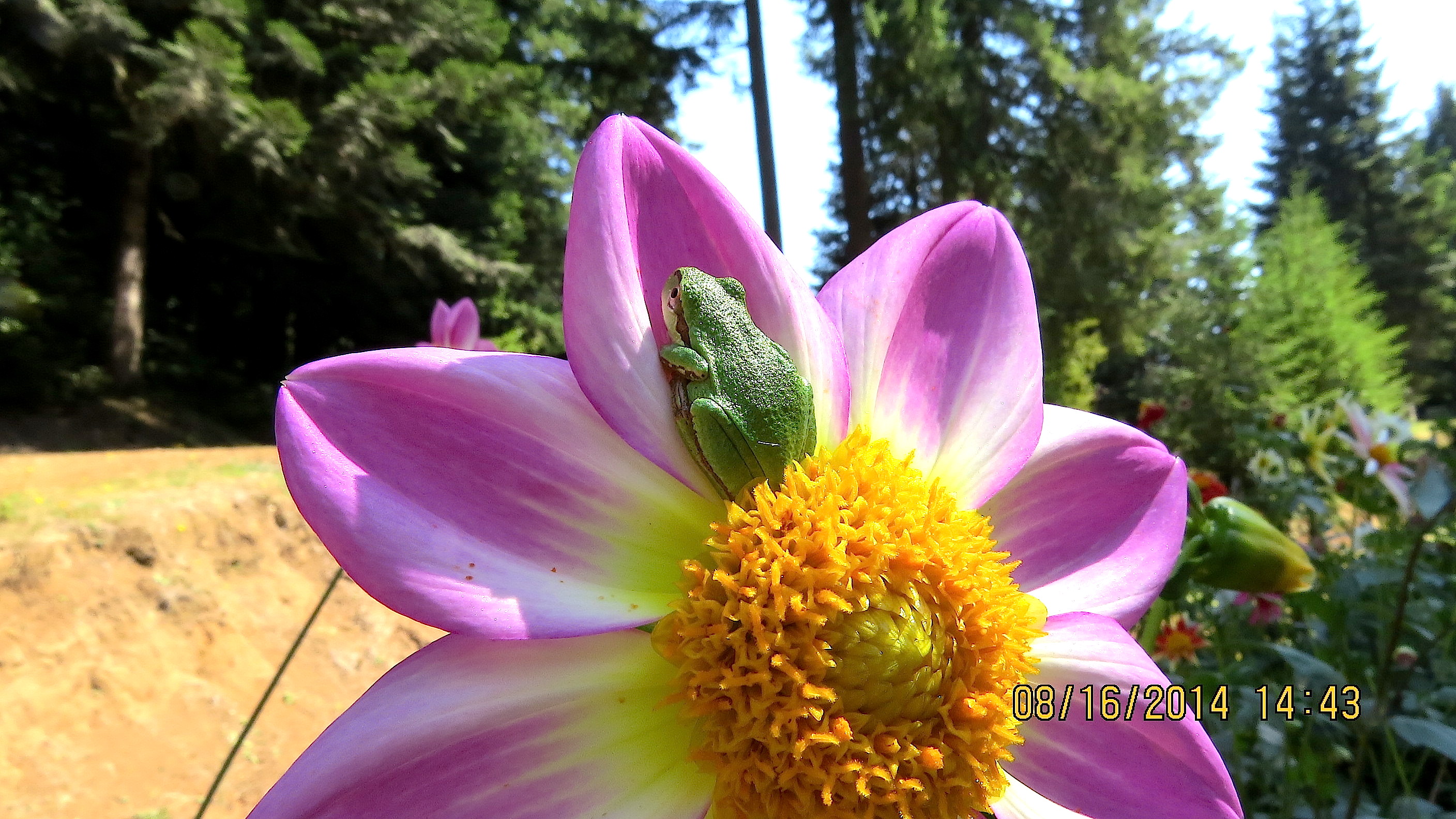
August 16, 2014…This anemone dahlia serves as a rest stop.
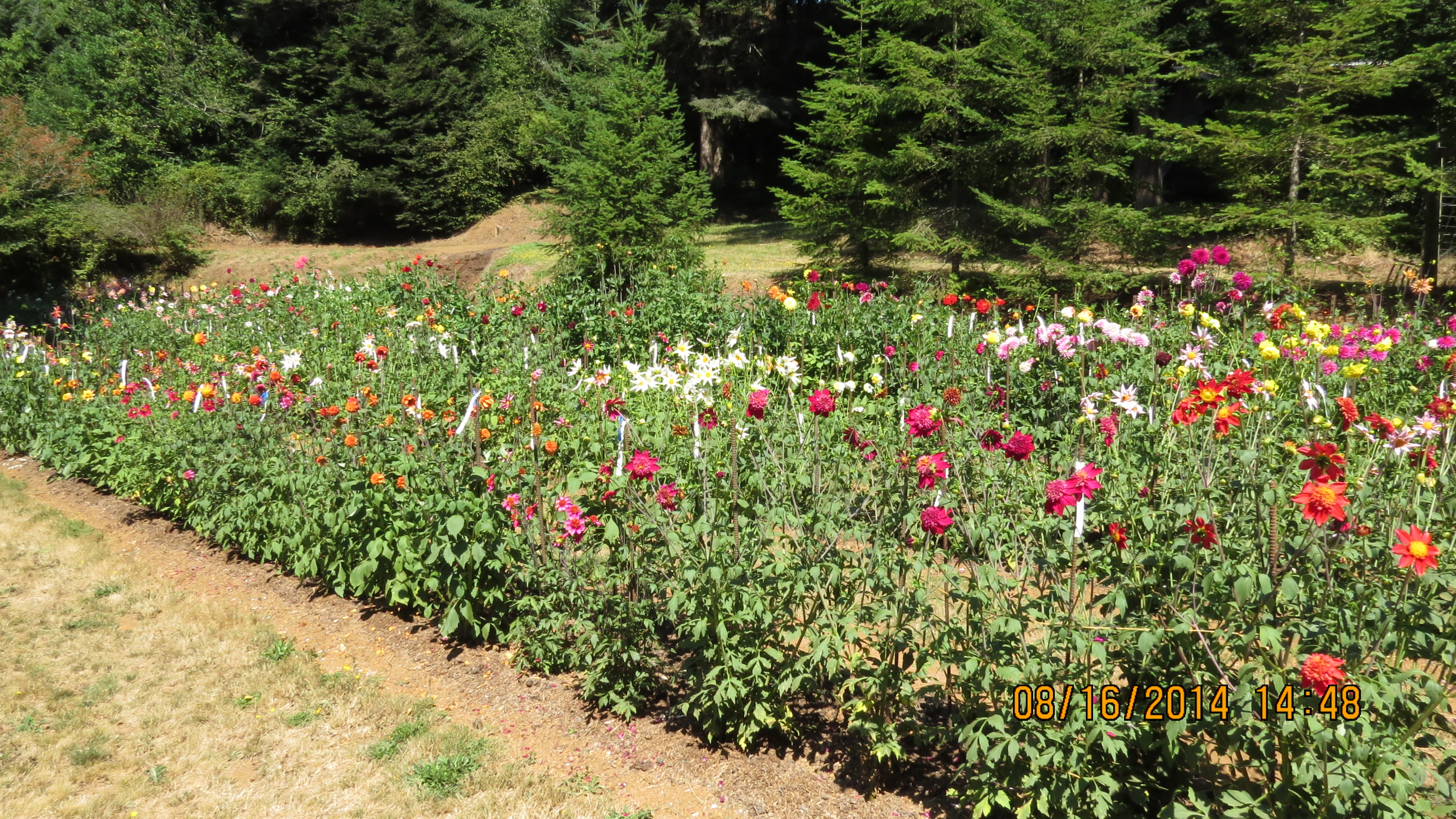
Looking over Kathy’s dahlias at some of the 2500 kinds that must be whittled down to 100.
Kathy grows dahlias…lots of them. Knowing of my interest in bees, she has explained how bees have helped her to grow different kinds of dahlias. For many years, she hand pollinated the dahlias she wanted to hybridize. About a year and a half ago, a swarm of bees chose a nearby cedar tree as their future home and started visiting her dahlias. Kathy says she gets much better results from the bees’ pollination. She collected the seeds after pollination and grew over 2500 kinds. Of the 2500, she will select only about 100 that make the grade. (I’m glad I don’t have to decide, I like them all.)
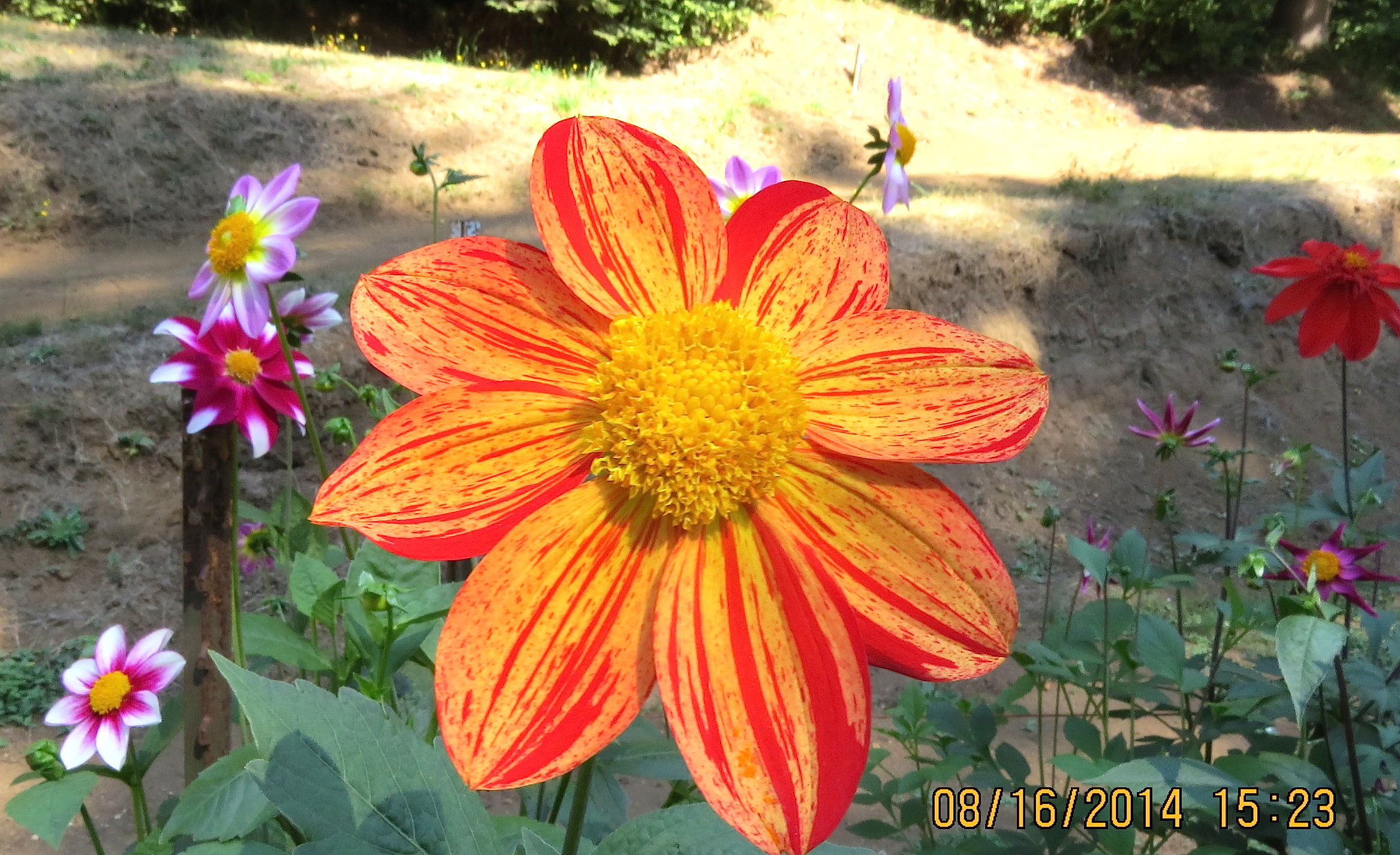
This is one of 2500 varieties that Kathy grew this year. She must whittle it down to about “100 keepers.”
This is known as a giraffe pattern dahlia. Kathy says she is indebted to the bees for their pollination services. I am intrigued by the variety of styles.
An orchid form dahlia
August 16, 2014…Since the bees adopted this high up cavity in a cedar tree, Kathy has benefited from them pollinating her dahlias. In the video you can see how high up it is with a steady stream of bees flying in and out.
Is this a keeper or will it go into the compost? Kathy hasn’t decided yet, but she does like what she sees. It started opening up yesterday and will look different tomorrow, “it’s promising,” she says.
Kathy says she is indebted to the bees for making this one which she is planning to keep.
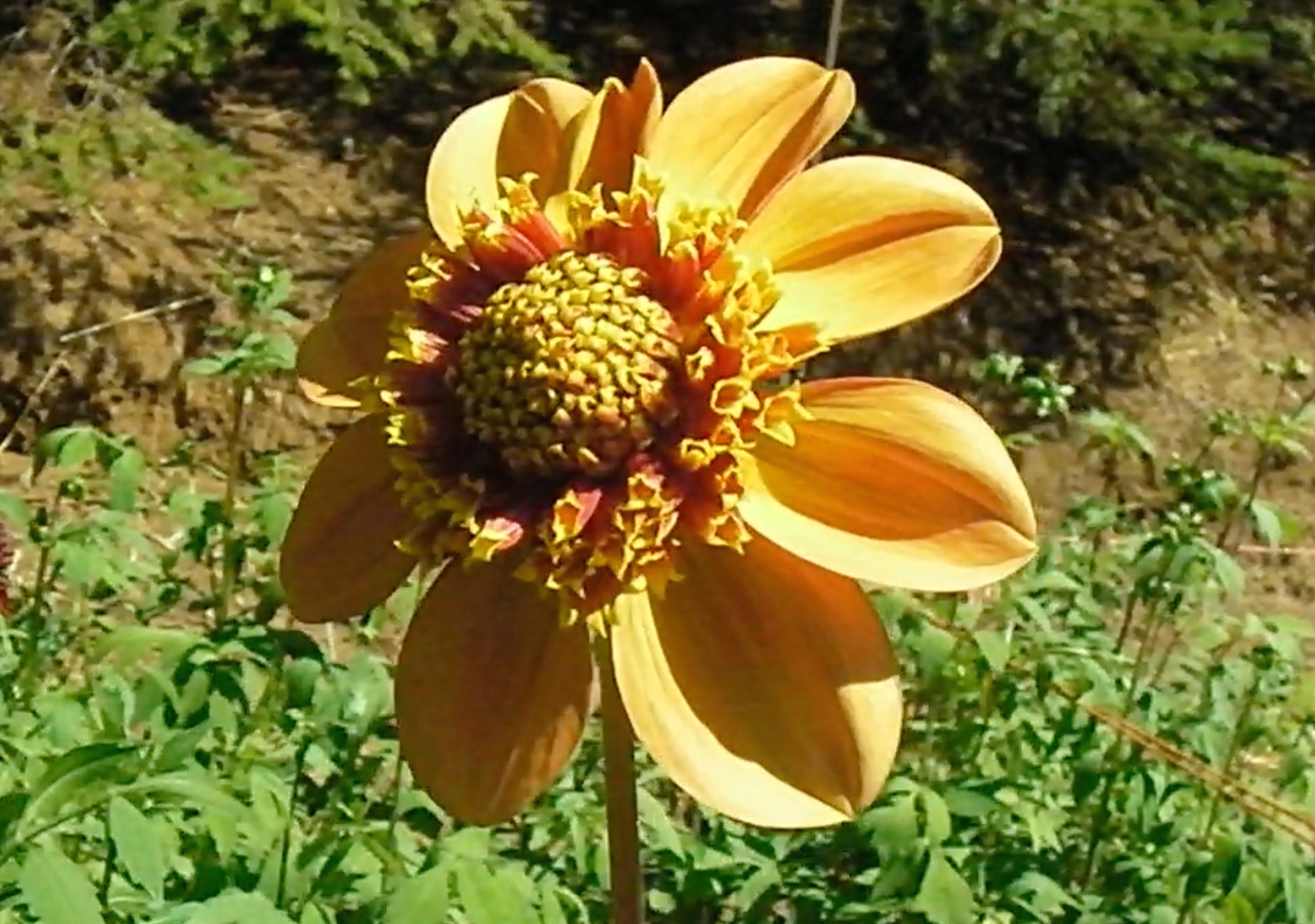
Sunspot…a mignon dahlia creation that Kathy has let us grow for our bees.
August 9, 2014, 10:34 am…Waggle dancing takes place.
After reading Honeybee Democracy, by Thomas Seeley, I sort of knew what to expect on swarm behavior. The scouts would each go out and report back to the swarm. They would indicate the direction of a possible future hive location by doing a waggle dance in relation to the sun. Straight up meant “in the direction of the sun,” or angled off from straight up meant that angle direction from the sun. If the scout bee thinks she’s got a real good location, she will dance more emphatically. Other scout bees will look the location over, actually measuring the sides, and judging if it’s a good location. They will report back to the swarm. This can take several days. This bee is waggling just a bit. I wouldn’t call it a real hard sell at this point.
11:15 am…I had been seeing some scout bees around Bee Beard log hive. More now.
Since it got robbed out last month, after several weeks in decline, I made the decision to take Bee Beard out of circulation, sort of retire it, let it rest up til March whereupon, I could introduce a new swarm to it. I was in the process of dismantling it, when this August swarm took place. I had to work like a mad man. My printing deadlines were just going to have to wait. I hope my customers understand. (Do I have any left?)
I scorched out the inside of the hive, shortened up the quilt box so it fit looser, and melted small bits of comb to the five top bars. I added new leaves and sawdust to the bottom cavity and new sawdust to the quilt box. This time I drove a fence post into the ground and fastened it to the log hive to keep the winter winds from toppling it.
August 8, 2014…fence post fastened to Bee Beard log hive.
As a natural beekeeper, I was hoping maybe, just maybe, the swarm would choose Bee Beard for their new place. I mean how much more natural is that?
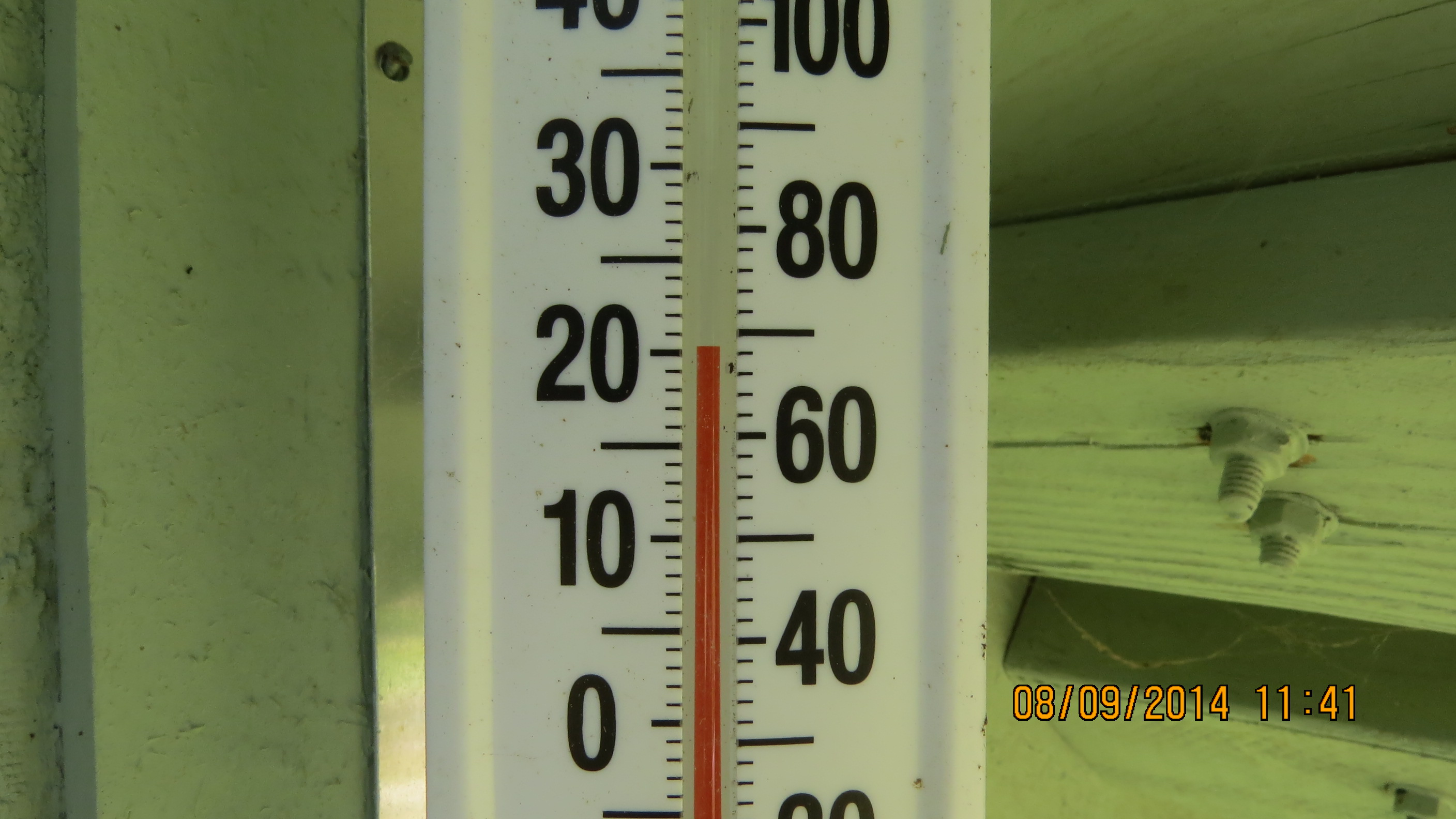
At 70F (20C) it’s a good day for a swarm.
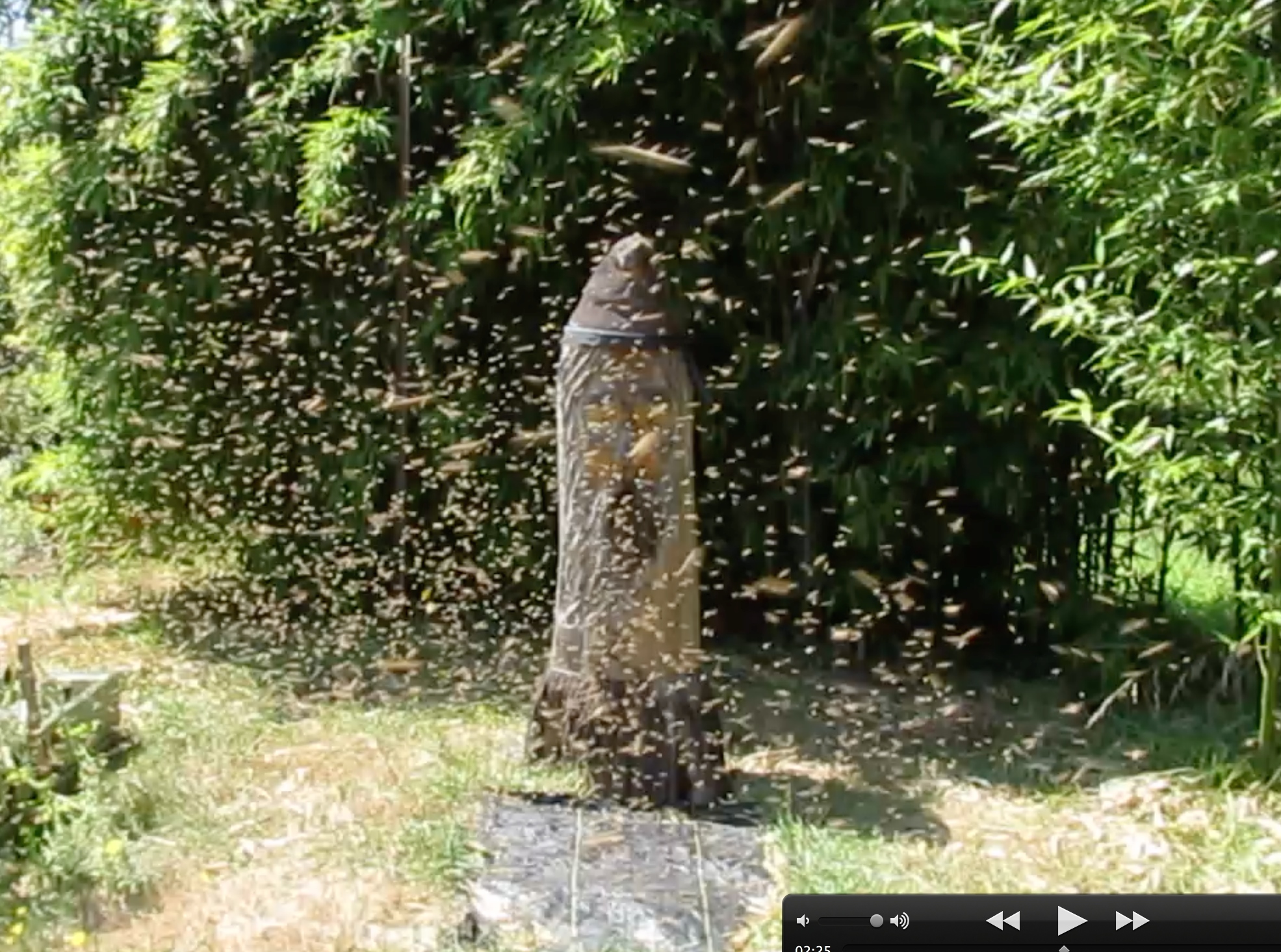
2:20 pm…As luck would have it, (and I do mean luck) the swarm broke up to relocate to Bee Beard. In the video you can feel the power of thousands of bees swirling around. I’m afraid I got a little emotional in talking about it.
2:30 pm…Bee Beard is covered in bees. In the video you can see the bees crawling upward and circling the mouth before entering.
I guess you could say we were ecstatic. We just stood there in the middle of all that bee energy and talked about it what we were witnessing.
August 10, 2014…The next day it was back to business with time out for reconnaissance flights.
August 10, 2014…the day after the swarm, shows the bees on the observation window. They’ve got to build their own comb so they are hanging out here for a while.
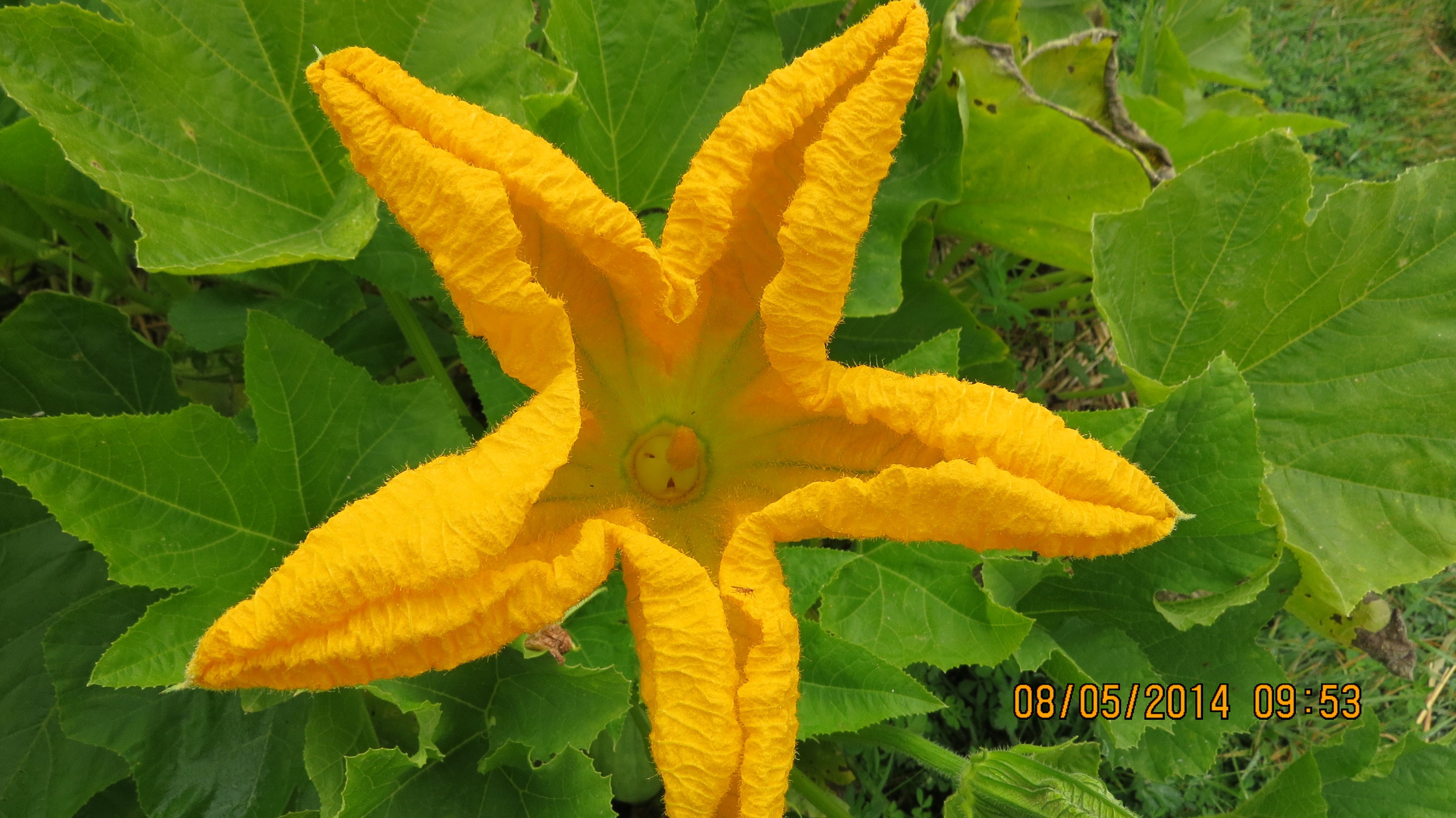
August 5, 2014…Male squash blossom (possibly an acorn squash) You can see the small sipping holes where the bees get the nectar. Male blossoms open earlier than female blossoms and stay open for days at a time.
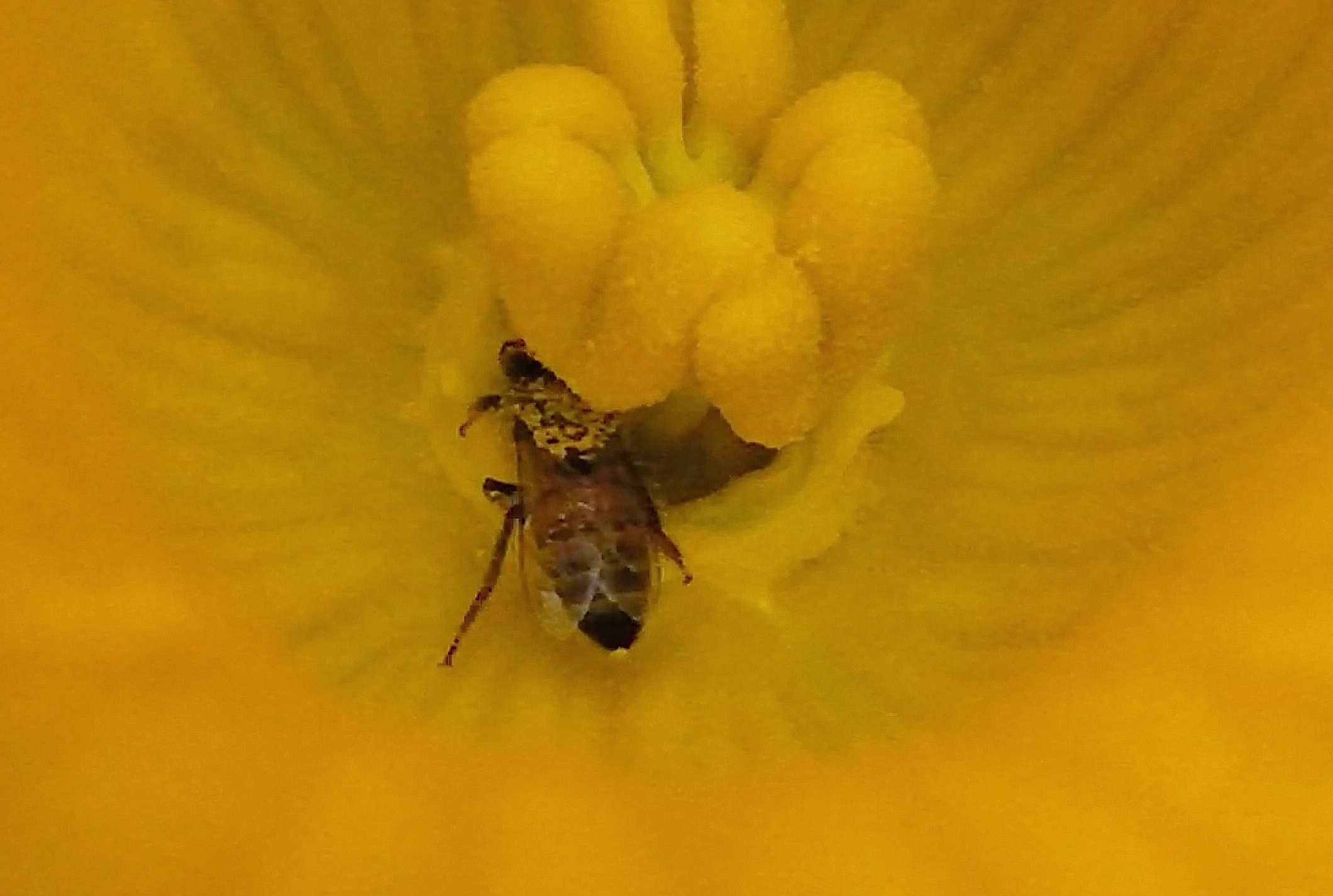
August 1, 2014…A honeybee sipping nectar from a male squash blossom. The bee picks up pollen from the anther to transfer to the female blossom.
The blossom provides nectar to attract pollinators. This honeybee is sipping from nectar fountain of the female squash blossom…rubbing pollen onto the stigma.
August 6, 2014…this female blossom just opened today. Already there is a bee in attendance.
Open at 9:29 am or before…
Closed at 7:04 pm…after being opened only one day, this female blossom closed up shop.
August 7, 2014…blossom closed yesterday and remains closed. A measurement of 1 3/16″ (30 mm) is made on the diameter of the tiny acorn squash.
June 29, 2014…Honeybees and hummingbirds get nectar from these little gems. We’ve decided to grow more alliums next year because the bees love them and the deer don’t.
June 23, 2014…We started these Cosmos seeds under lights in the house, hoping they would turn out well. We’re very happy with the results and the bees love them too.
June 10, 2014…Honeybee getting nectar on this Cosmos
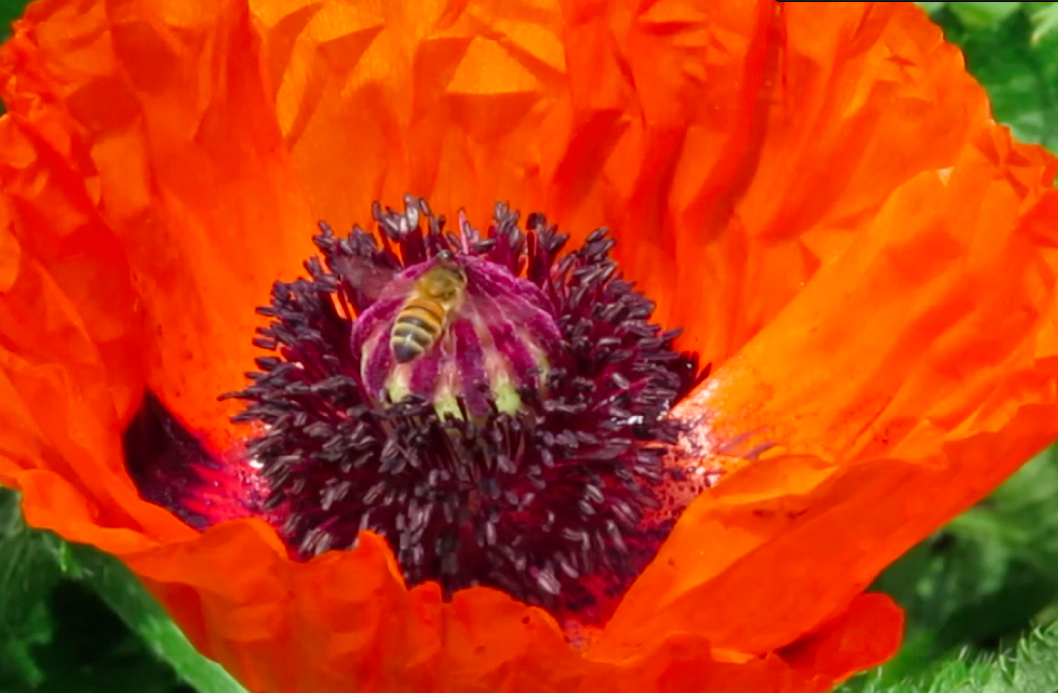
June 16, 2014…This little stand of California poppies planted itself on my Hugelkulture bed. In the background you can see some wallflowers (Erysimum).
A new type of poppy, called a Twister poppy. Attracts bumblebees and is a pay grade or two above the California poppy.
I started the Phacellia seeds to attract the honeybees, but rarely do I see honeybees on them. No problem, we need to help the bumblebee as well, in this case the Yellow-faced bumblebee. (bombus Vosnosenkii)
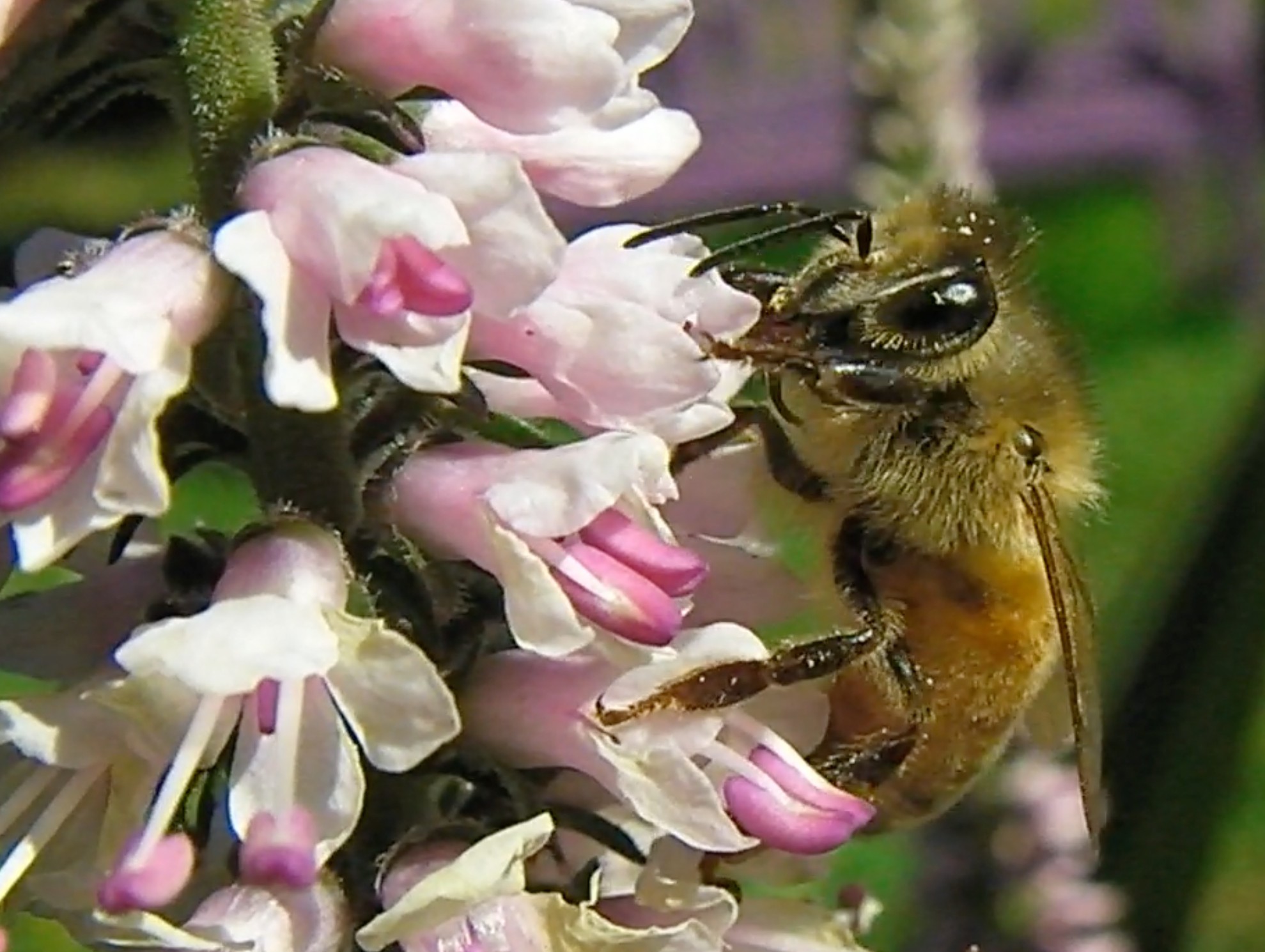
Relatively short-lived, (blossom wise) this Veronica Longifolia, ‘Pink Eveline’ served as a nectar source for a short time.
Speedwell, Veronica Spicata, ‘Royal Candles.’ The colors stand out well.
June 29, 2014…Sometimes when the bumblebee exits this blossom, it will pick up a streak of white pollen up it’s back.


















 Adventures in Natural Beekeeping