Archive for the ‘Bee-loving flowers’ Category

Growing poppies is a long term affair.  We planted these under lights in the house.  After two to three weeks in a plastic bag to keep it moist, the very fine seeds have sprouted.

Poppies ready to be transplanted into bigger pots.  The plants in the foreground are St. John’s Wort (Hypericum).

The poppy seed was planted in February.  It is just now blooming in September.  I think we’ll start earlier if we want poppies in spring or summer for the bees next year.

Here’s the beautiful result of our labor of love…

The poppy has finally opened up. I wonder when the bees will find it.

A couple of days after this first one opened up, we had a bee doing something strange (to me).  It faced away from the center of the flower, beating her wings rapidly, vibrating the pollen off the stamen and onto her body.  After getting a layer of purple pollen, she landed on the outside of the flower and groomed herself with her middle legs, pulling the pollen off her back and into her pollen baskets.  It was incredible.  I had my little pocket camera with me and got some video of it.

Read Full Post »

An added bonus to growing flowers for the bees is attracting different pollinators.  Dozens of butterflies fluttered onto our flowers.    The Wallflower, Erysimum has been blooming all summer and today it was visited by an American Lady.  Will Cook was kind enough to answer my late night email inquiry and identified it.

An American Lady shows off her two eye spots on the underside of her wings.

An American Lady sipping nectar

This short video shows the butterfly probing the flower with her proboscis.  Sometimes it takes a few tries before the nectar is located.

For more information about butterflies, check out this web site.

Read Full Post »

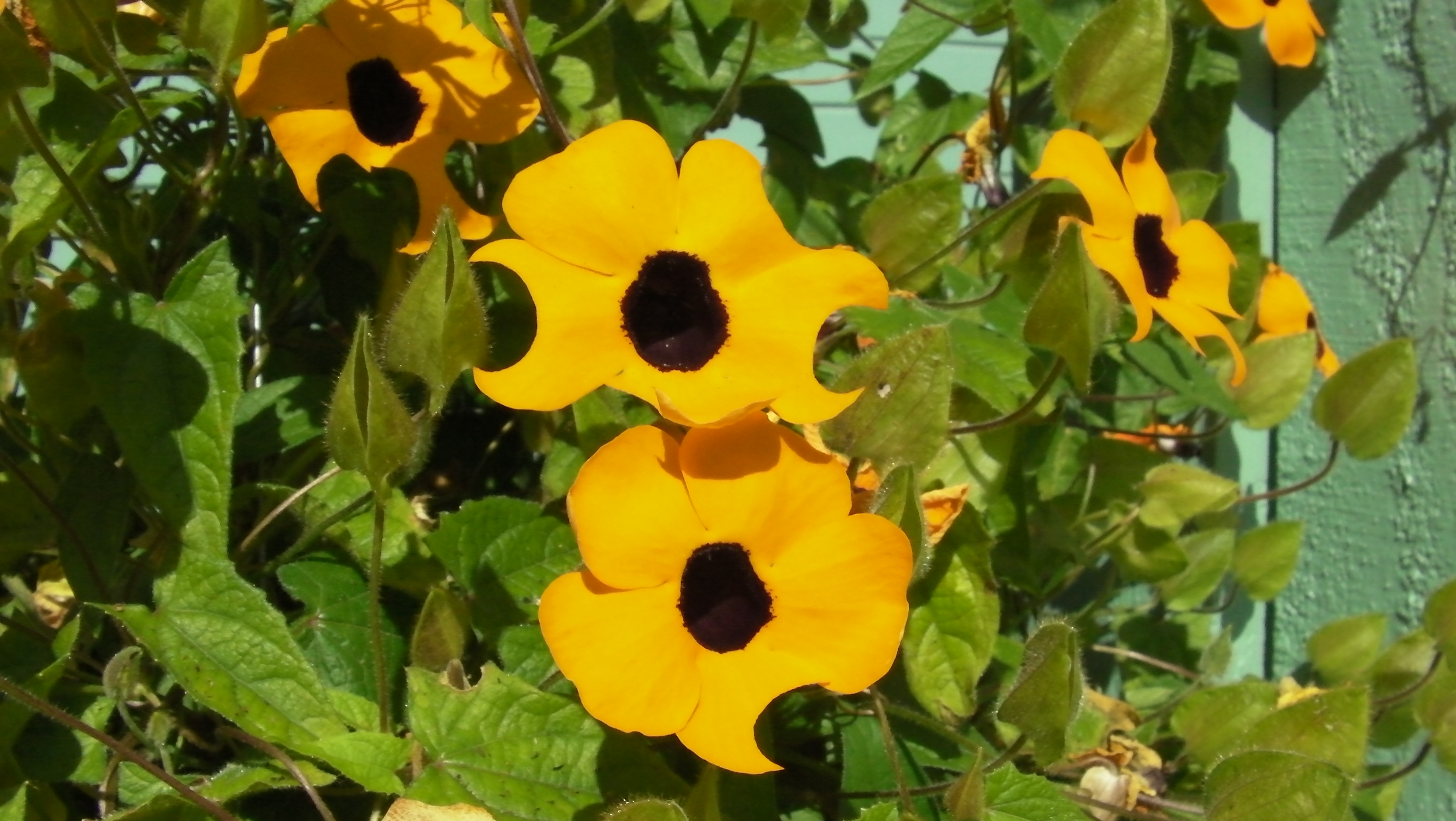
What is making these circular holes in the Black-Eyed Susan Vine? Slugs can’t get up that high and birds wouldn’t cut circles.

Last year my wife noticed circular holes in her Thunbergia’s petals.  She couldn’t figure out what could have made the holes.  We soon found out after spotting a bee carrying a leaf.  It flew into a hole in the side of the shop.

Dahlia blossom with circular holes

As I was looking for more evidence to photograph, a leaf cutting bee landed on this Dahlia plant and cut a segment out.  She was fast.  It took about 10 seconds to cut the petal and fly away.  I was able to point the camera and shoot away.  It wasn’t until the next day that I was able to catch the bees flying into a hole in the newly replaced shop wall, between two spider webs.  Both spiders failed to trap her…this time.

Here’s a short video showing all the action…

Read Full Post »

Burying the very available crab shell and coffee grounds to spice up the soil is the first thing.  Warre hive is on the left and Bee Beard carved log hive on the right.  I’m in good company.

Potatoes…should we harvest now or leave them in to grow more?  If I leave them in, the voles might eat them…I better take them out.  Then I can plant buckwheat in both beds.

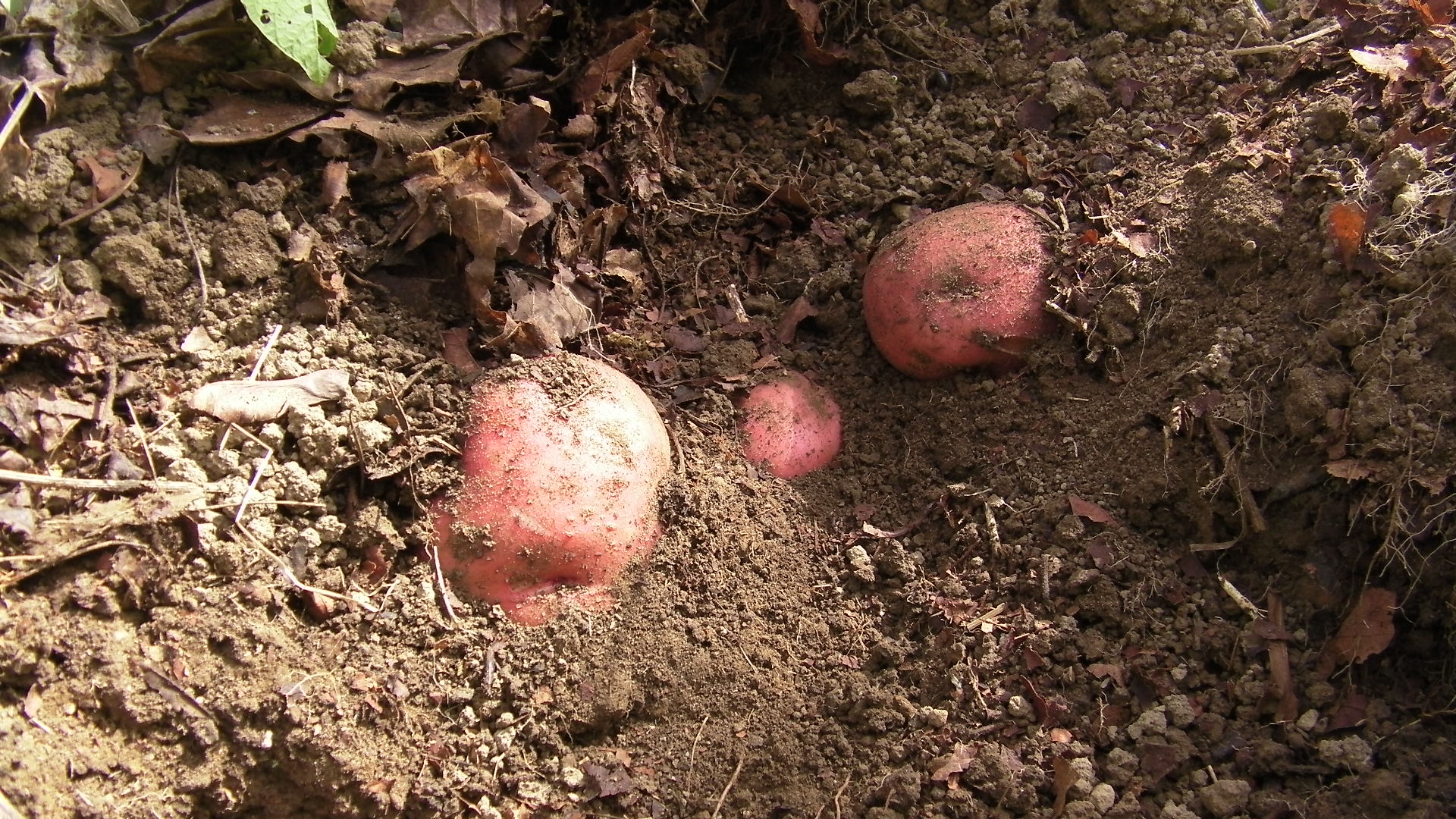
Red Pontiacs – Three at once

A mole tunnel…the moles dig the tunnels, the voles follow the tunnels to the potatoes. More than a few potatoes had been chewed on, so it was good idea to get them out of the ground.

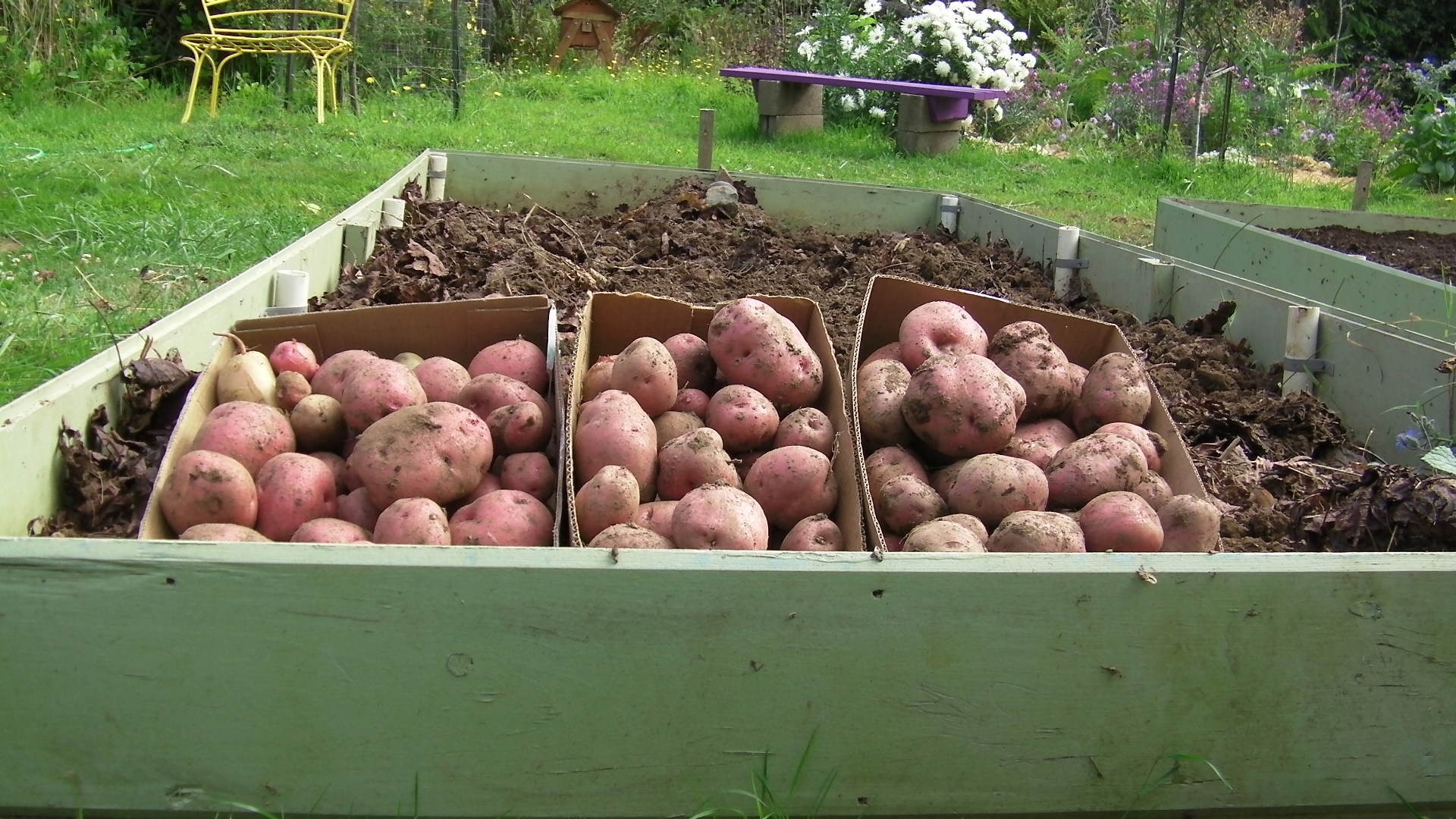
Some of the potatoes harvested from this first potato bed. We could have left them in to grow more, but the voles would have taken a big bite out of our harvest. This way we can grow buckwheat in both beds for the bees in September.

We’ve been fairly successful in the “no tilling” method for a few years.  We think it’s important to use less manufactured energy and more physical energy.  Is spading  ‘as good as’ using a  tiller?  Probably not, but it’s important to be able to grow food without using fossil fuel for the possible time when we don’t have any.

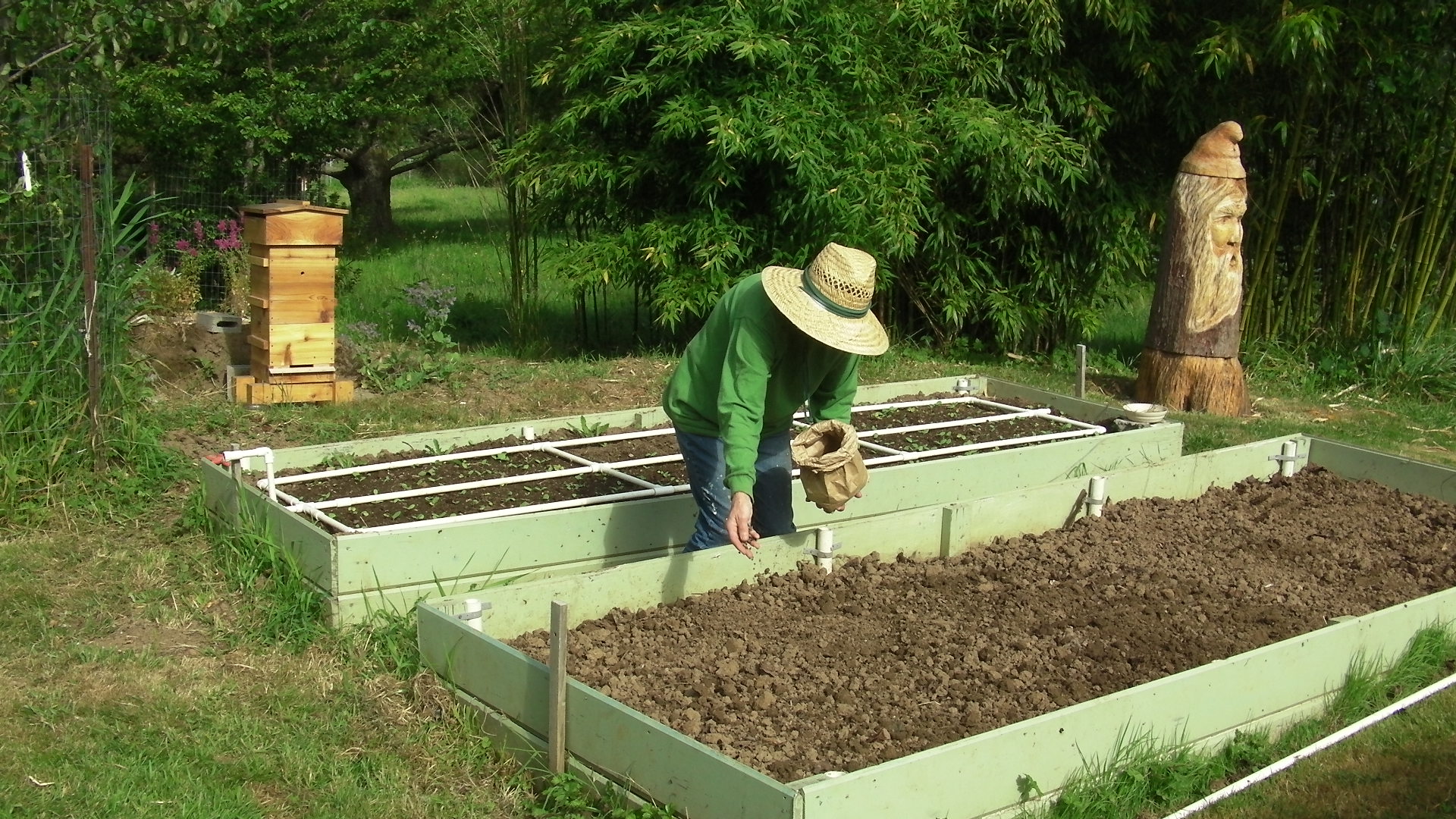
We have dug in crab shell, kitchen scraps (no meat), comfrey leaves, and coffee grounds to enhance the soil. Now we’re planting the buckwheat seed.

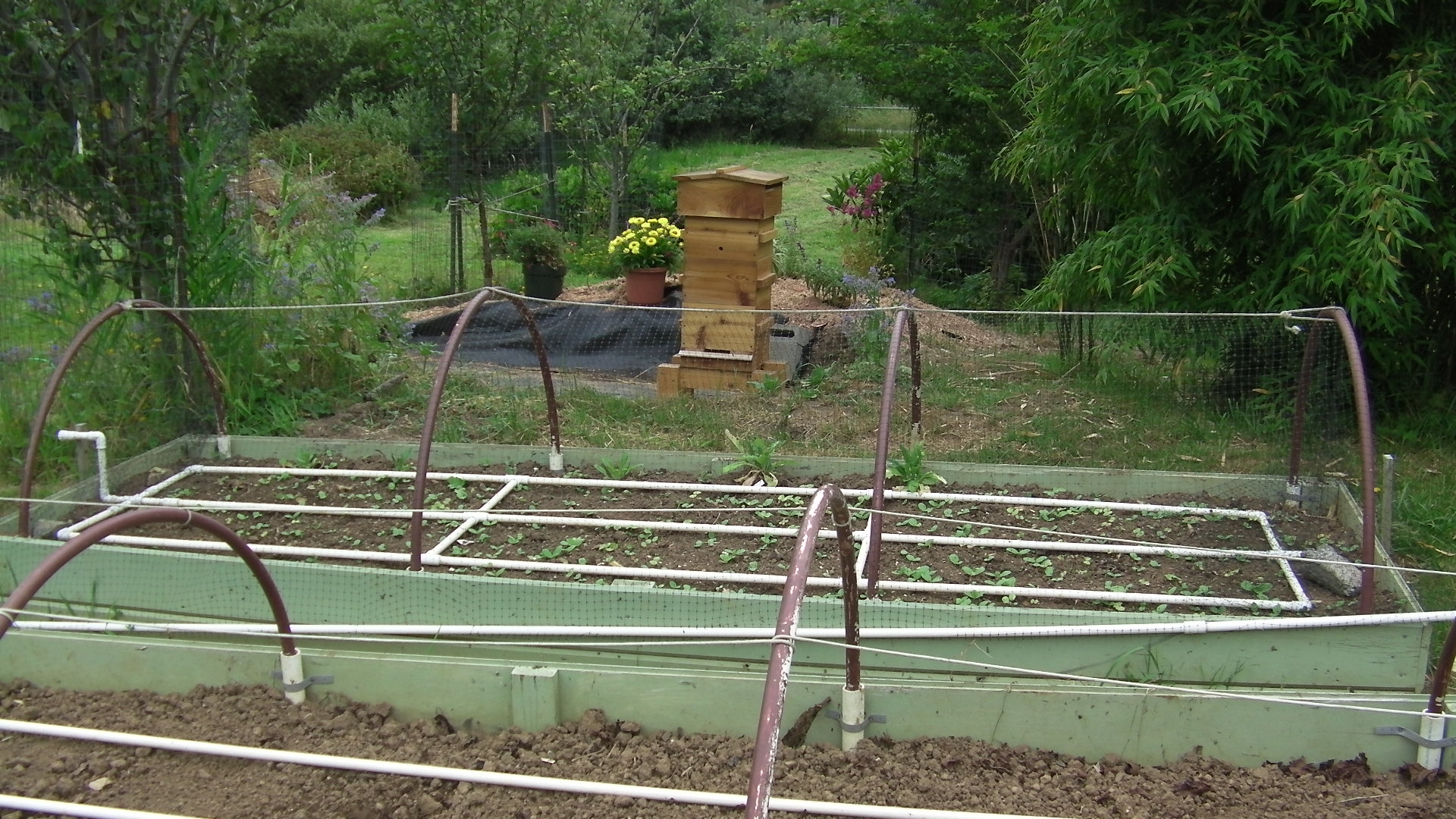
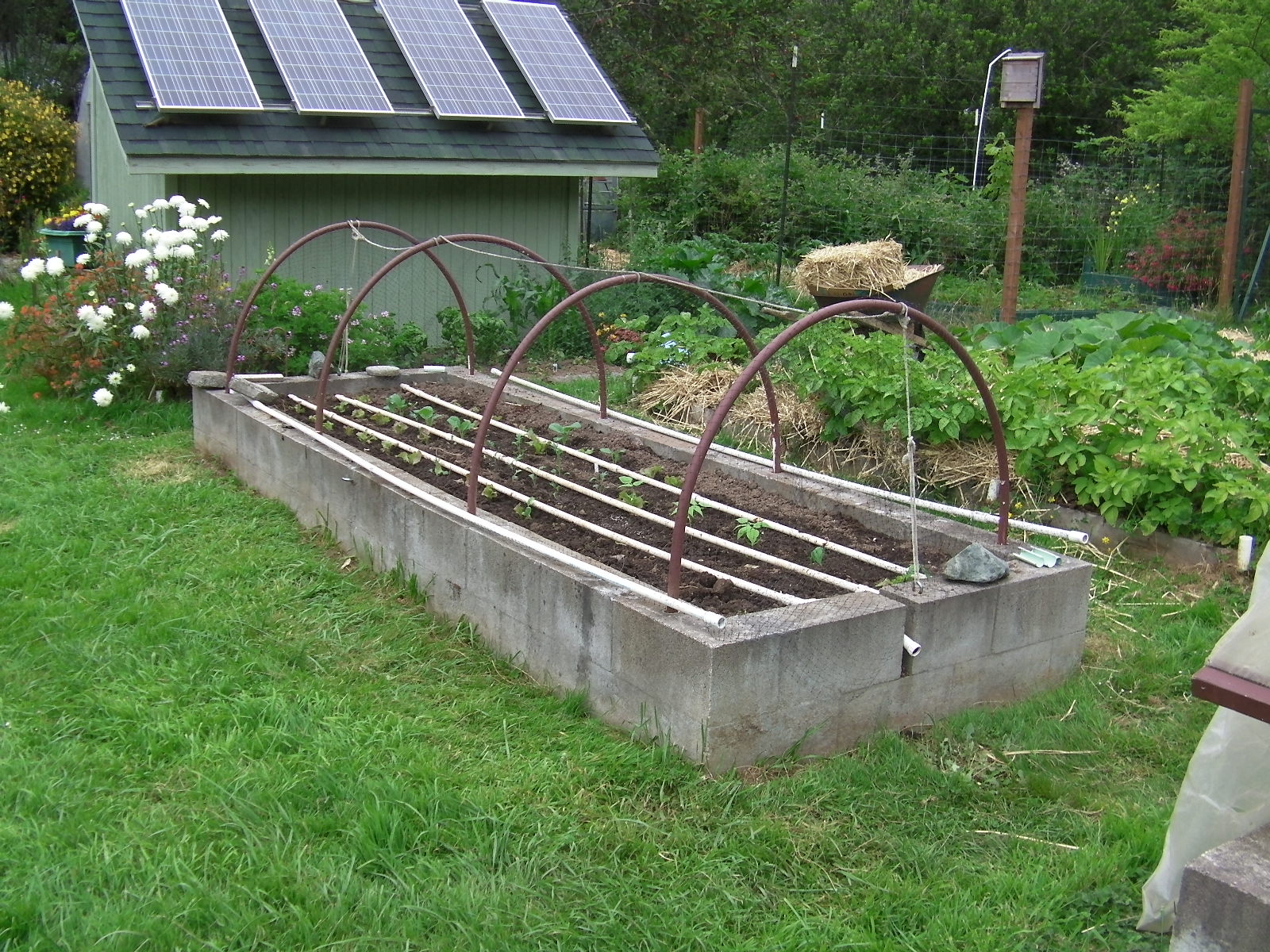
The drip irrigation grid and the deer netting are in place.

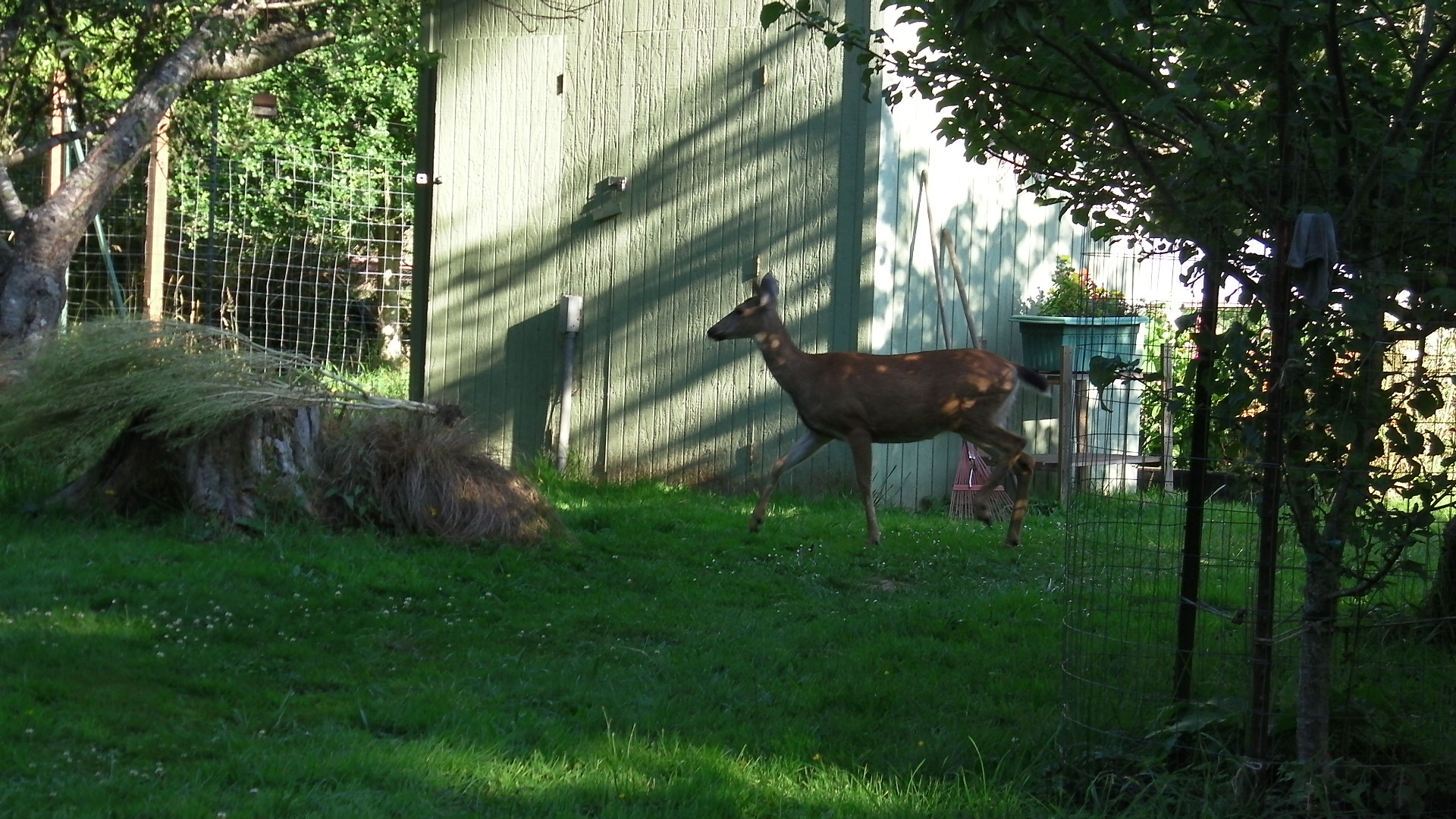
Why do we need deer netting? Because of her…and all her offspring!

According to this article by the Thomas Jefferson Agricultural Institute “…buckwheat crop seems to improve soil tilth, and is reported to make phosphorous more available as a soil nutrient, possible through root-associated mycorrhizae. Buckwheat flowers profusely, making it popular with bee keepers and an attractive crop in the landscape.”

Sept. 9, 2012...about 5 weeks after planting, buckwheat is looking good.  Bees are on the blossoms already.

Sept. 9, 2012…about 5 weeks after planting, buckwheat is looking good. Bees have been working the blossoms for a couple of weeks already.

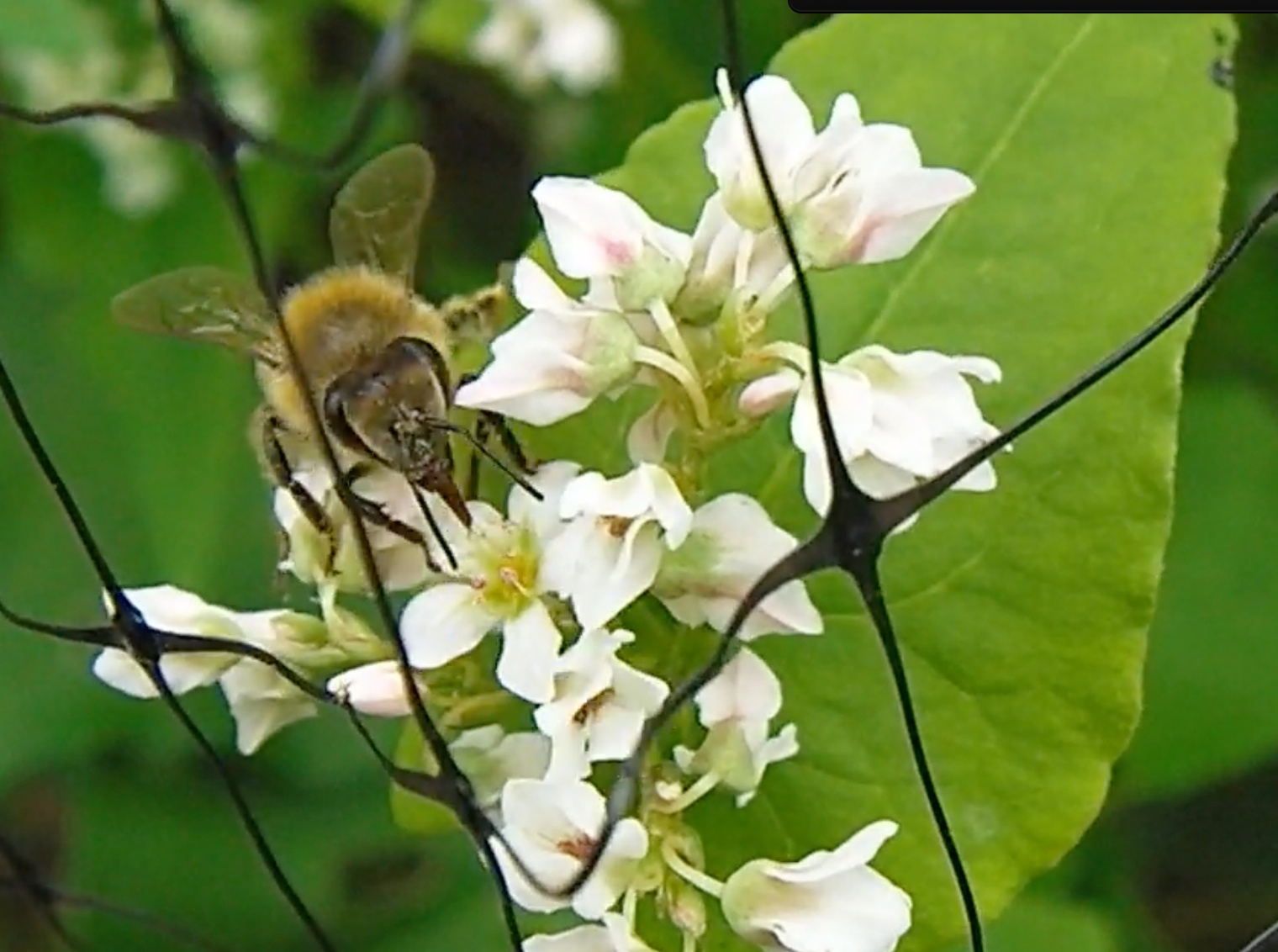
Sept. 9, 2012...Honeybees attending to the buckwheat blossoms.

Sept. 9, 2012…Honeybees attending to the buckwheat blossoms under the deer netting.

A fly mimicing a bee on the buckwheat blossom.

A fly mimicking a bee on the buckwheat blossom.

My wife saved me the ultimate embarrassment of thinking I found some kind of new bee. “Honey, that’s a FLY!”  “Ulp.”

Another fly, this time with a red abdomen.  My wife saved me the embarrassment of thinking I found some kind of new bee.  "Honey, that's a FLY!"

Another fly, this time with a red abdomen.

Read Full Post »

The first raised bed planted is usually the first to be harvested, enhanced, and replanted

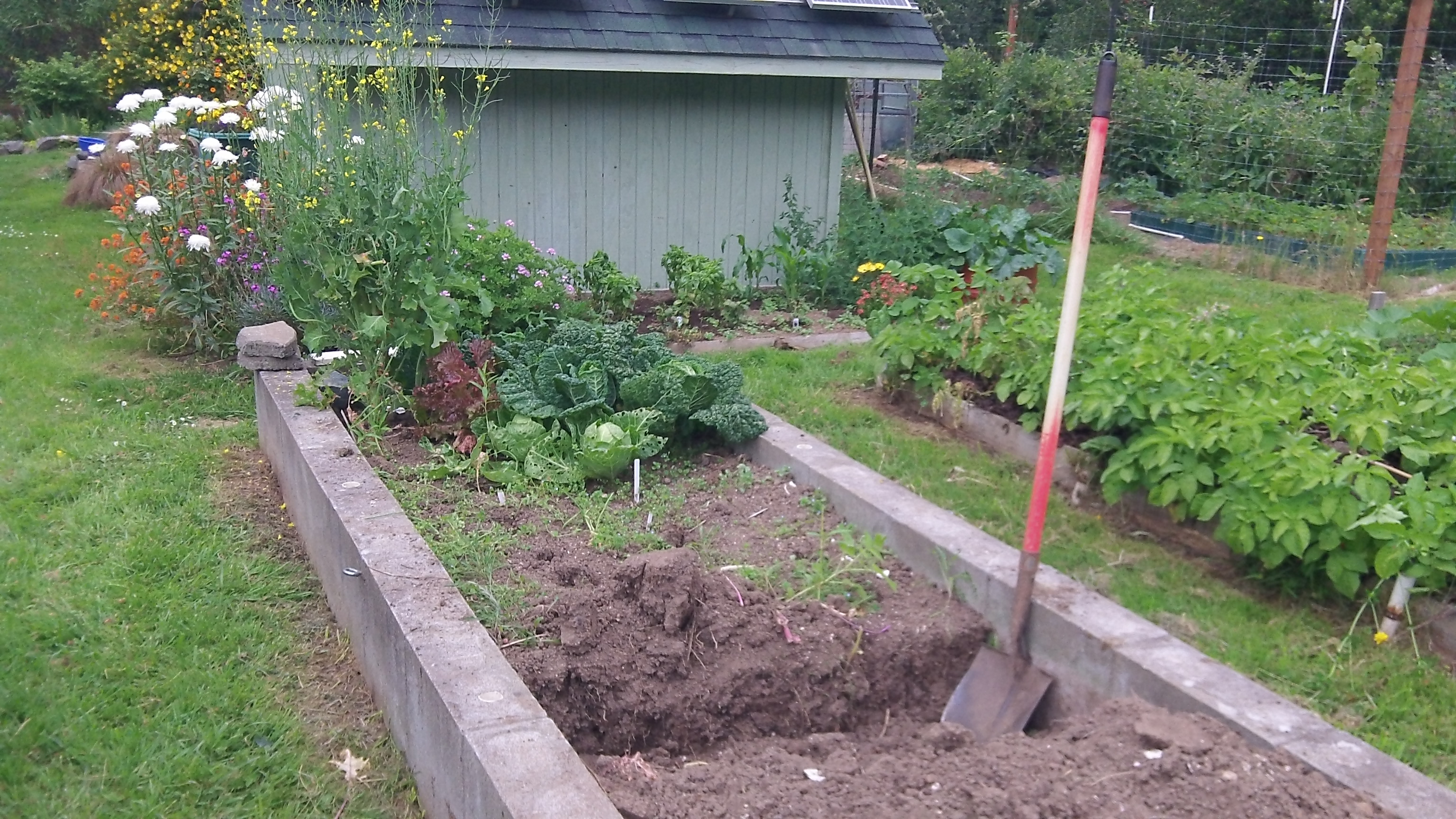
This raised bed was planted in late March.  It’s time to harvest the lettuce and cabbages, add soil amenities, and replant. We try to keep the use of a car to a minimum so today we’re getting the crab shell and coffee grounds using the bicycle and trailer.

Loading crab shell from Tony’s Crab Shack into bicycle trailer

We like to use whatever is naturally available.  We’ll use coffee grounds, crab shell, kitchen garbage, leaves when available (in the fall) and garden trimmings.

Scooping up coffee grounds to add to the soil

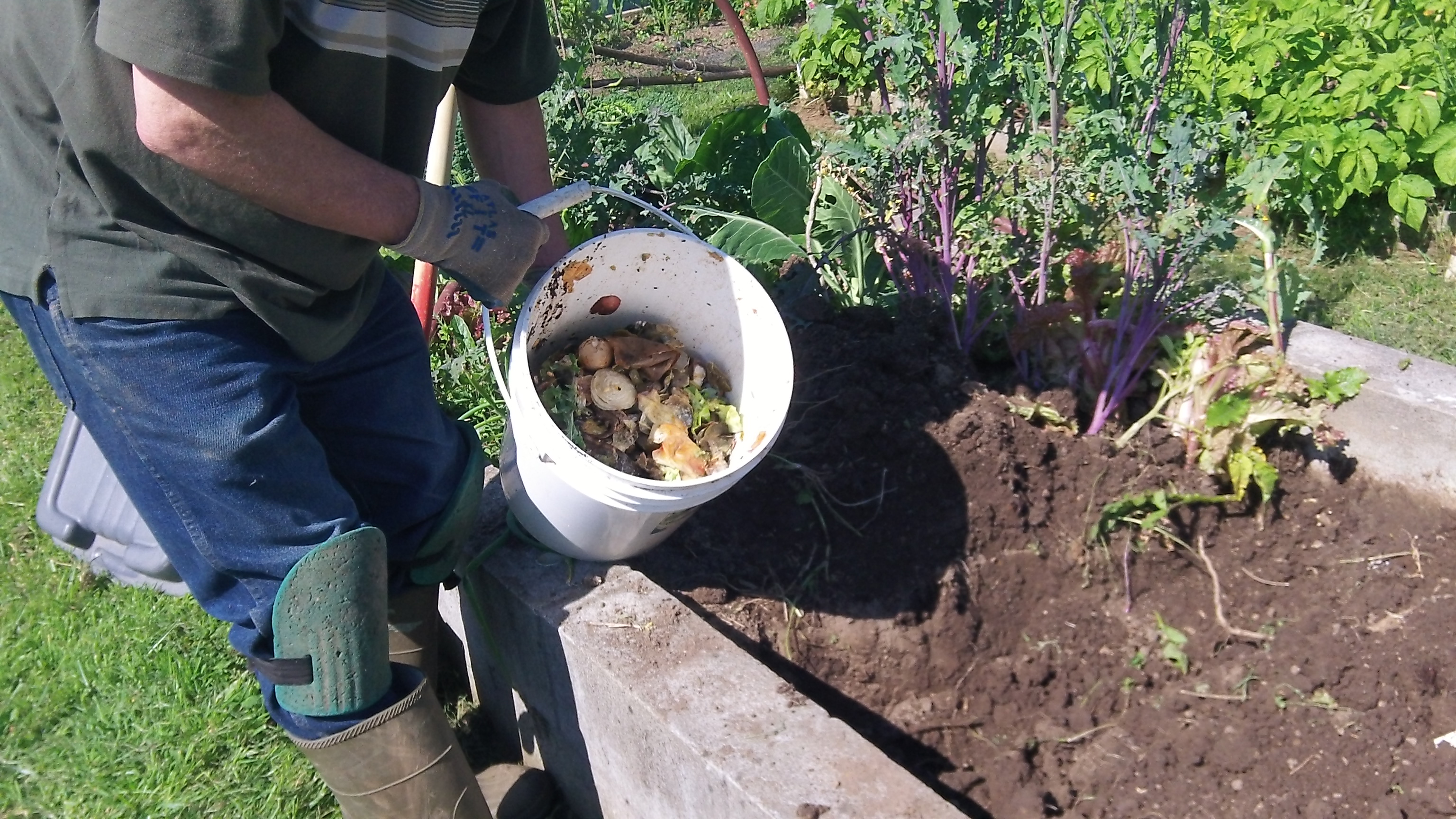
Kitchen garbage is a surprising source of nitrogen for the soil.

Fresh crab shell gets chopped up. The soft parts will decompose by the time the roots reach it. I’ll be planting this within 3 days…can’t waste any time.

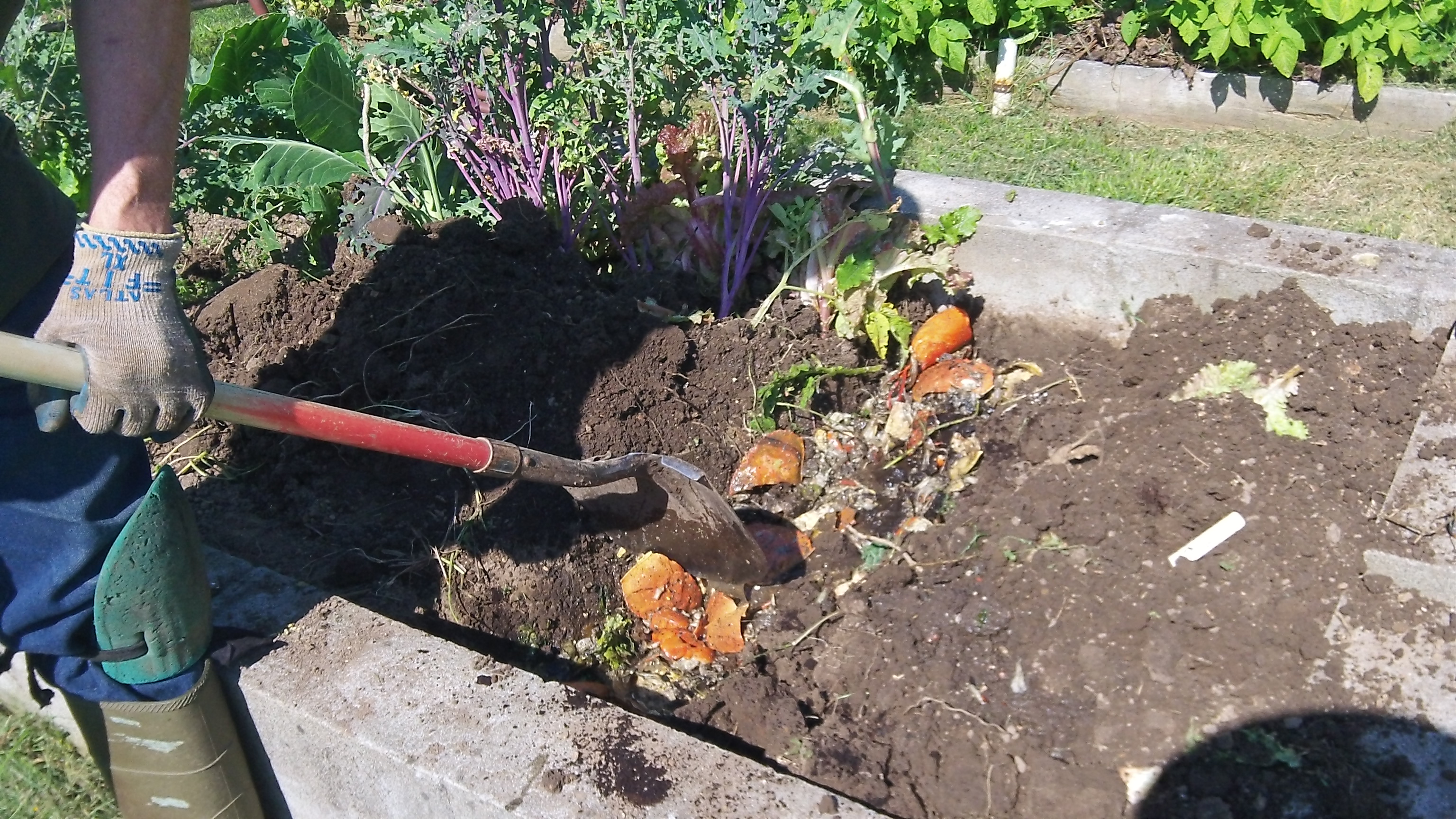
I’ve tried adding fresh crab shell to the compost pile…DON’T DO IT!!!  It stinks for days.  If you bury it, you won’t smell it, and you’ll be surprised by how fast the microorganisms in the soil will break it down.  Just keep the dogs out of it.
Getting filled up

I hate pulling out the kale flowers that the bees love so much, but if I don’t, the deer will get under the netting and eat up my little transplants.  I’ll hang it upside down in the greenhouse and save the seed.

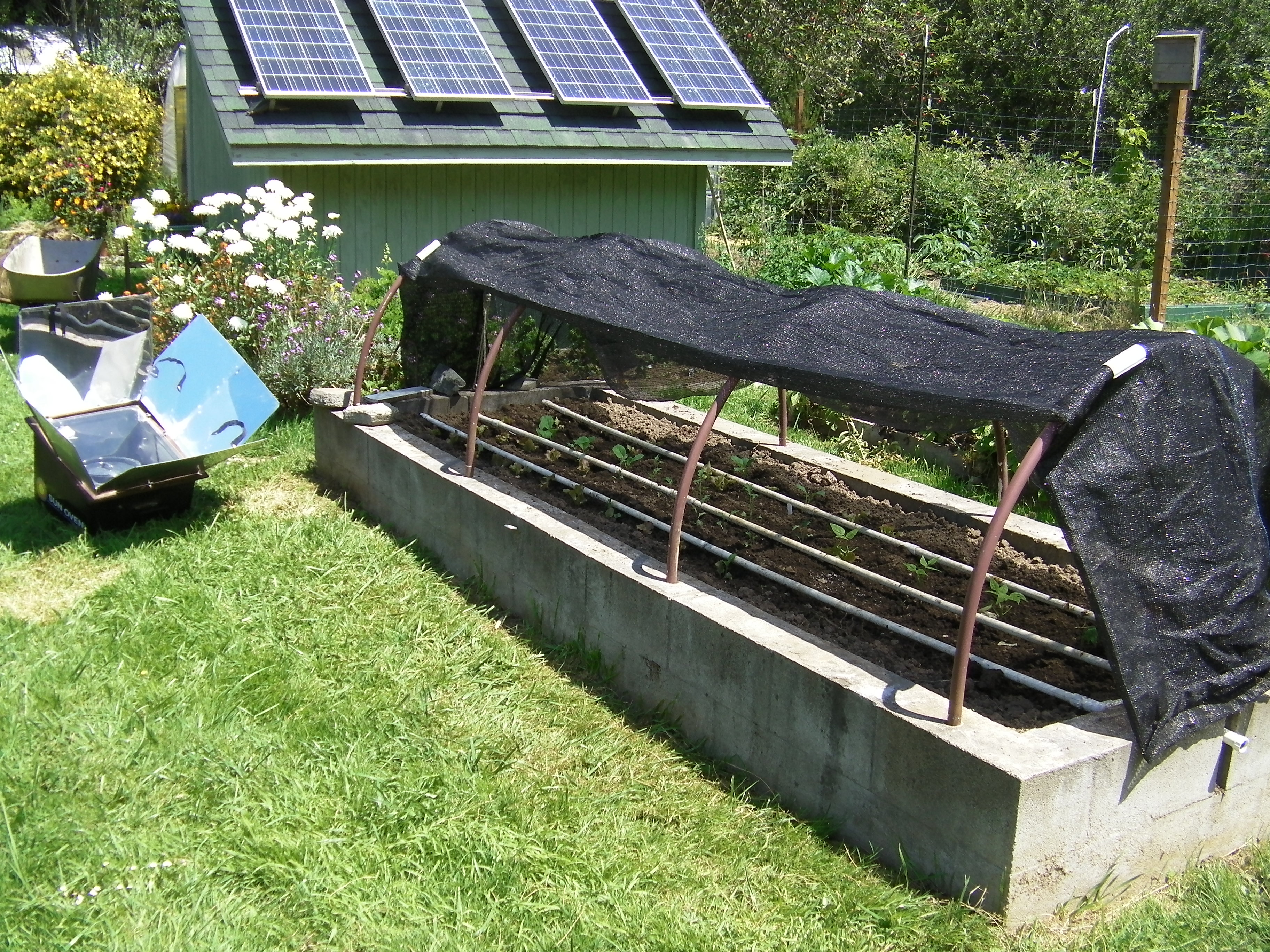
I can’t believe I actually needed the shade cloth, but the little transplants were wilting…it serves a dual purpose in preventing (I hope) the deer from investigating. The old netting got tangled in the kale and had to be cut away.

Soil enhanced, transplanted, protected from deer and ready for Prime Time…no more wimpy shade cloth needed here

We started working on this bed 5 days before we planted.  That may seem like we’re not leaving enough time for the scraps to break down, but there are 4 to 5 inches (10 to 12 cm) of soil and we figure by the time the roots get down there, it will be decomposed enough.  We’ve done it many times and it seems to work well.  The worms love it.

Tap into this web site for more info on the use of coffee grounds in the garden.

Here’s a video of digging a short trench in a raised bed and loading in the goodies…

Read Full Post »

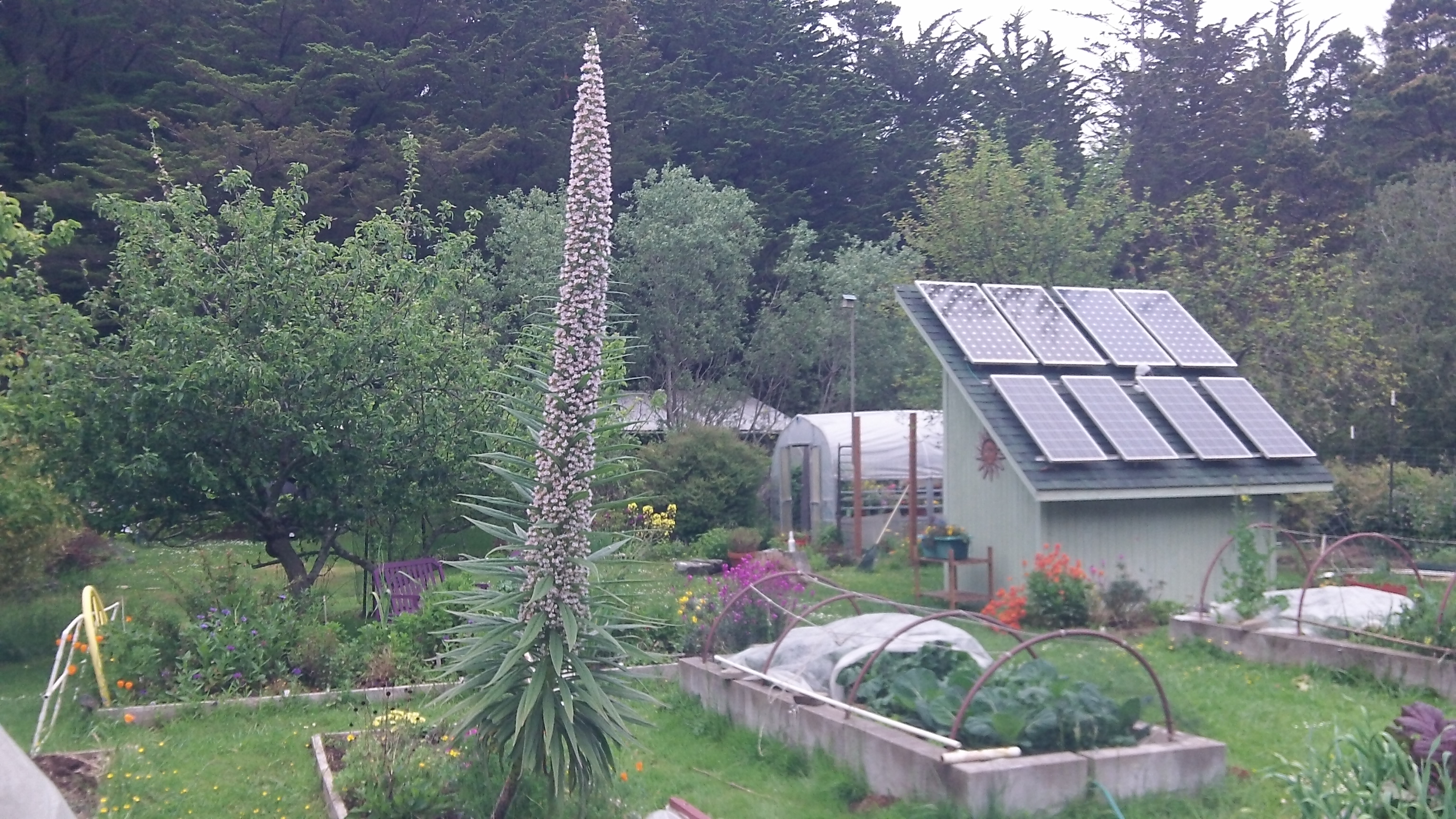
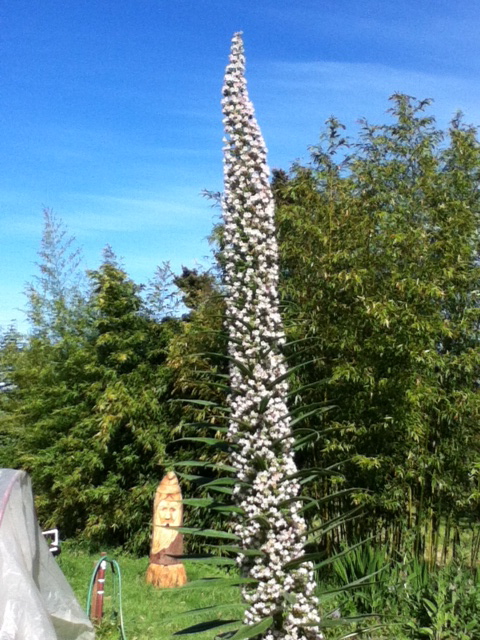
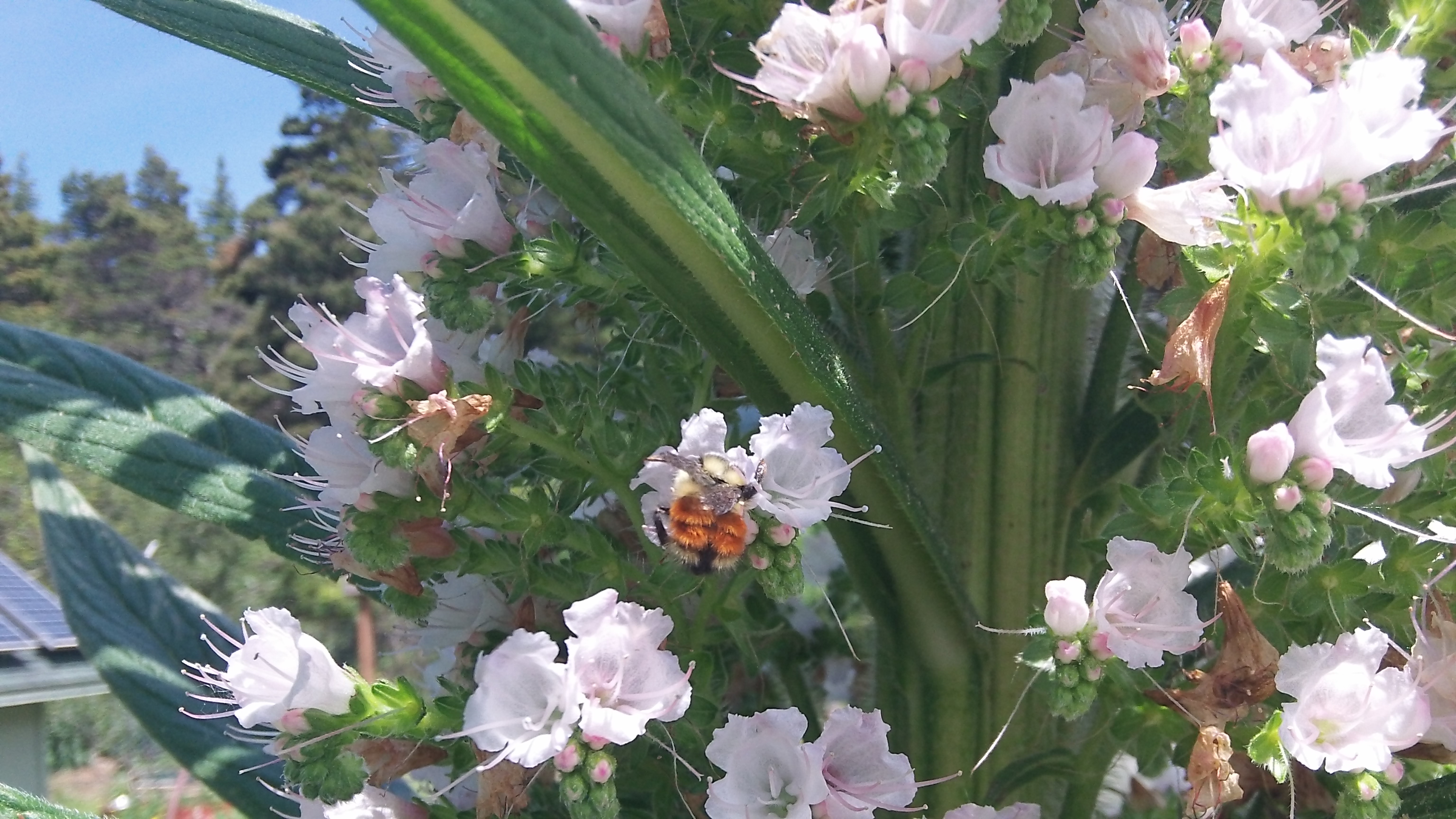
Echium tree demands attention…and gets it almost exclusively from the bumblebees.

We believe this is an Echium Pininana or Simplex. We bought it last year for the bees. It was supposed to have blue flowers. This one is more white tinted with a bit of red and is called the “Tower of Jewels.”  The bumble bees flock to it. We get all kinds…Bombus Melanopygus, Bombus Californicus, and others.

A lucky shot…press the button on a digital camera, wait an instant before it takes the shot. This one worked out well.

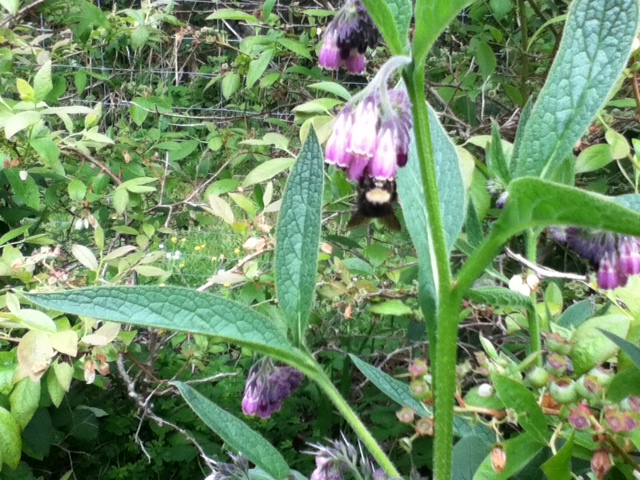
A Bombus Californicus works the Comfrey blossom

I was hoping the echium would throw some volunteers.  I didn't see them at first, but here they are, in my tomato bed.

September 30, 2013  I was hoping the echium tree “Tower of Jewels”  would throw some volunteers.  I wasn’t disappointed.  These will be “Towers” for 2014.

Following up on the transplants.

Read Full Post »

What flowers to plant/buy for our area of Zone 5? These flowers have done well for us…

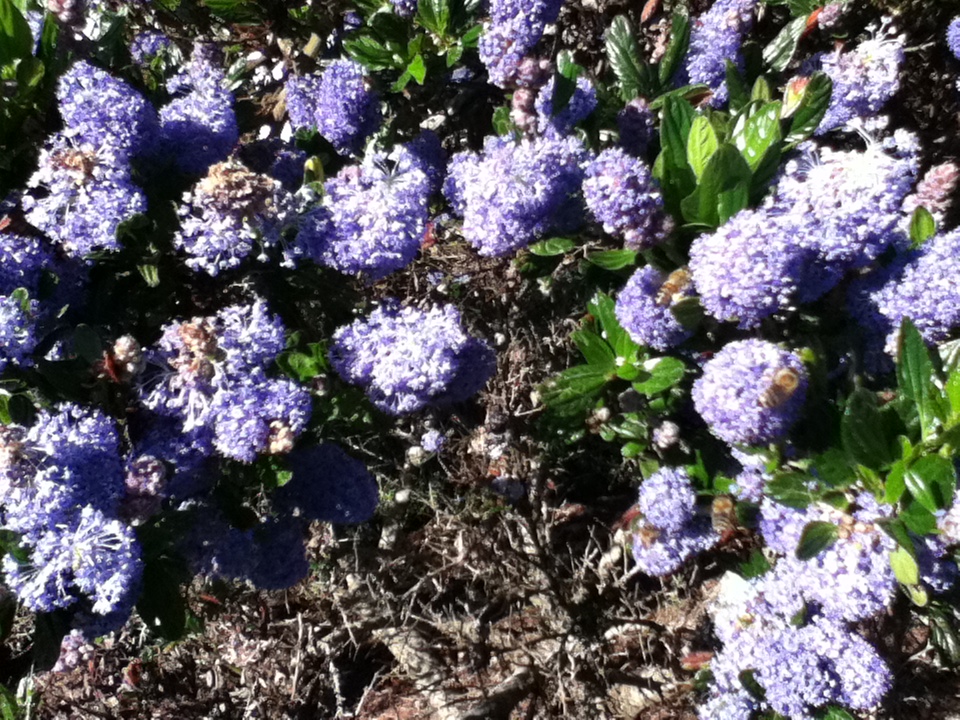
Bees love California Lilac which provides early nourishment for the bees

Bumble bee on the Comfrey, which can be considered invasive, but provides food for the bees.

Echium plant grew from 2 ft (.6 m) high last year to about 10 ft (3m) high this year

Bumble bees go for the Echium in a big way

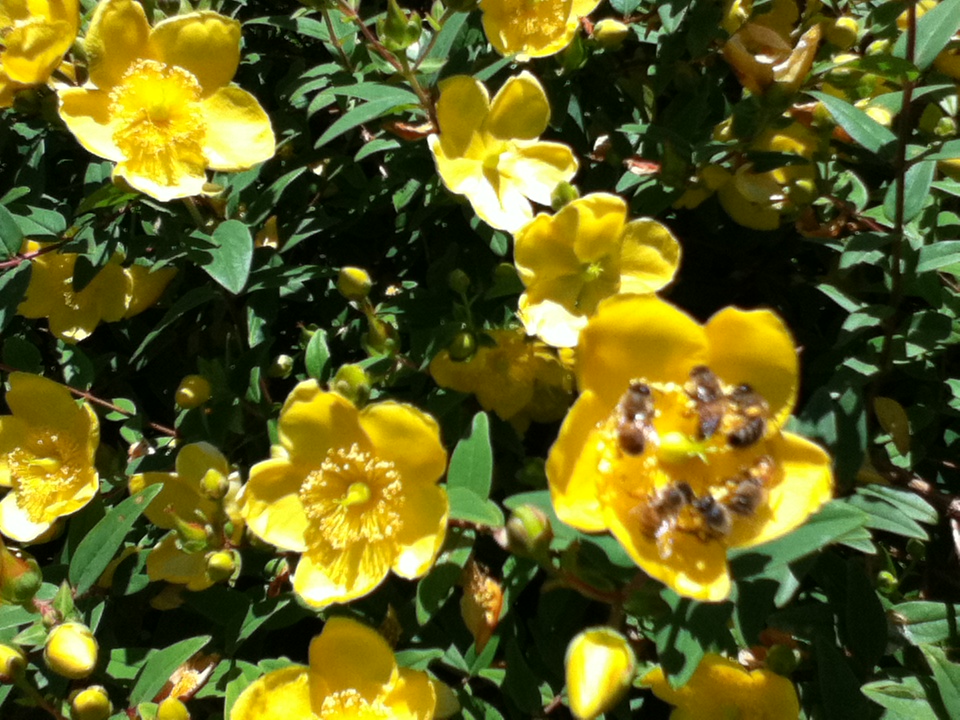
SIX BEES ON A SINGLE BLOSSOM

Bees go crazy on these blossoms (which I was under the impression were Island Bush Poppies) as can be seen in this fuzzy photo of six bees on a Hypericum.  It’s covered with bees mid June to late July.

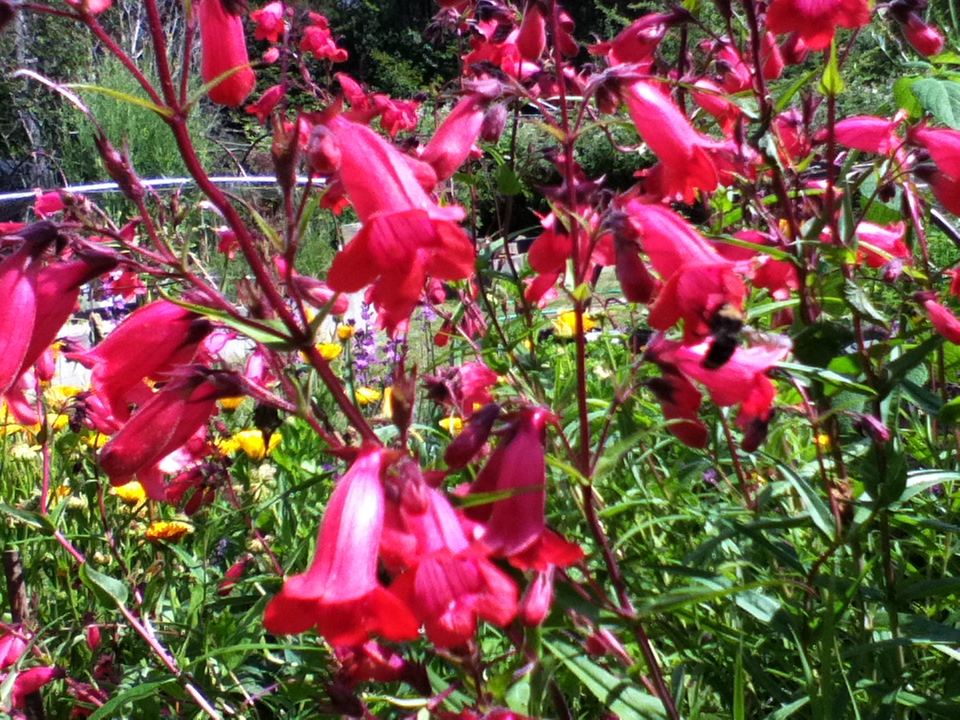
Bee diving into Penstemon blossom. These start blooming June.

Dahlias, blackberries (main Oregon crop for bees), sunflowers, wall flowers, rosemary are also good bets for bees, as well as cotoneaster which grows wild and provides food late in the season.

These are plants we’ve had in our garden. I’m sure there are many more. Please fill free to add to the list in the comments.

Many of these flowers serve as butterfly attractors also.   See Butterflies.

Read Full Post »

« Newer Posts