6-3-13 We’ve got a good start, though some sunflower seedlings got chewed down by the slugs
6-18-13 Lots of self-seeded borage. The bees like it, but I’m going to have to thin it. I want the other plants to grow and I’m especially excited about the meadowfoam which also is a self-seeding bee-loving flower. The bee hives and the new bee flower garden are in the background.
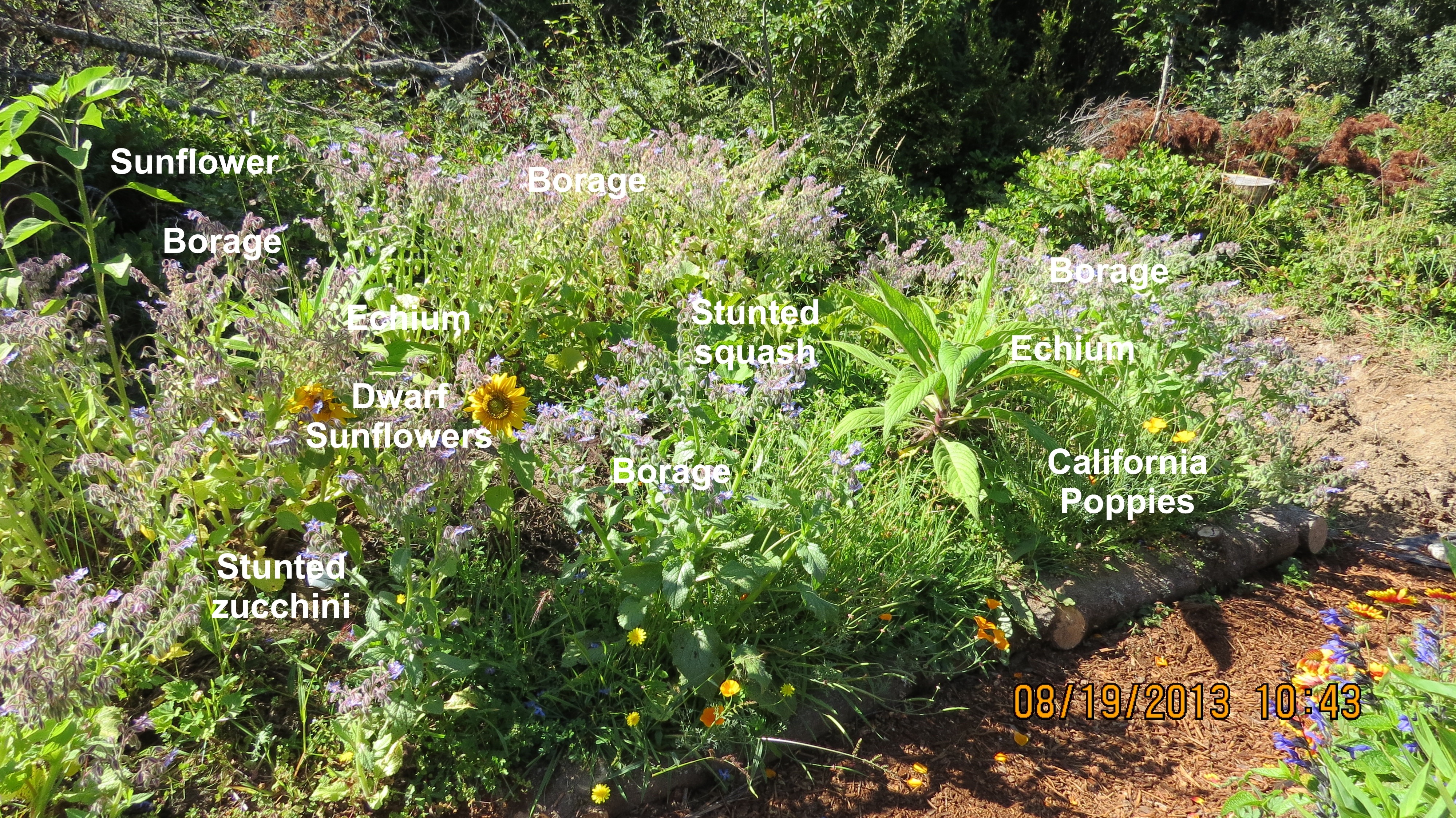
August 19, 2013…My new slogan is…”If the bees love it, leave it.” The bees LOVE borage. I let it grow in the Hugelkulture bed even though it’s not real pretty. The pretty flower, Poached Egg Meadowfoam was also well liked by the bees, then the deer spotted it, now it’s gone.
Looking at the north side. Clearly I should have listened to my wife when she warned me that squash wouldn’t do very well the first year. In that regard, it’s a failure…but the main goal was to grow plants that the bees love. Nasturtiums never made the list. Don’t let anyone tell you they are deer proof. They are not and I never saw a bee get close to one. The borage self-seeded itself and the bees love it, so rather than pull it, I’ll just let it grow. The bees will sip nectar until late in the evening, so in that regard, it’s a success. We also added 3 echium ‘trees’, which seem to be doing well. We hope they will all shoot up to be “Towers of Jewels.”
This is actually a fly…I didn’t know that while I was filming it, but I kept it in the movie so you could see the tongue. I’m wondering if it inspired ‘Alien.’
This is the tail end of the kale flowers. In April, the bees were so busy on the kale you could hear the happy humming. In June when I’m finally posting this, the kale has been pulled and hung so the seed pods can dry out.
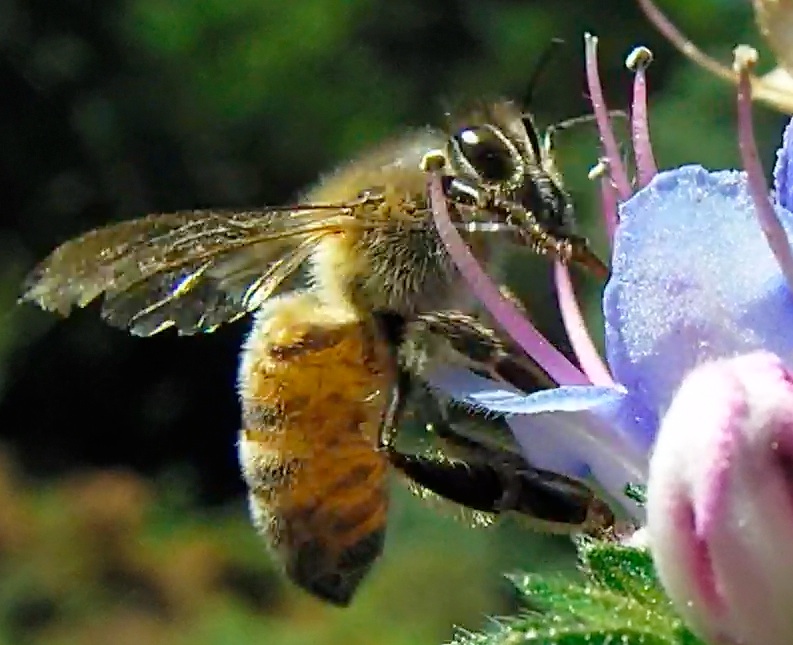
We’ve worked up a flower garden near the bee hives. This honeybee is working an Echium which was given to us by Shigeo who was very helpful with his “Big Dog” chainsaw carving out my Bee-atrice log hive.
I just love standing on this bridge and seeing all the work Hal and Patti have done. It’s so beautiful.
Hal called me up last week to say he took some video of a bee swarm flying INTO his unoccupied bee log. I’m thinking “Well, that’s a first. Whenever I see a swarm, they are flying OUT of something…like a hive.” I had to see this. While I was there I shot some photos of all the work they have done. I draw inspiration every time I visit. It was here that I learned about sedum and what a wonderful bee loving flower that is. There is so much color here, so many flowers. It surely takes hard work and dedication to keep everything looking so good.
When I first saw all the bees sipping nectar on these sedum, I knew I wanted a bunch. It’s clear it’s nectar they are after…I didn’t see a speck of pollen in their pollen baskets. This photo was shot at Patti’s garden in September 2012
It didn’t take long for the bees to set up home. They swarmed INTO this log, April 18.
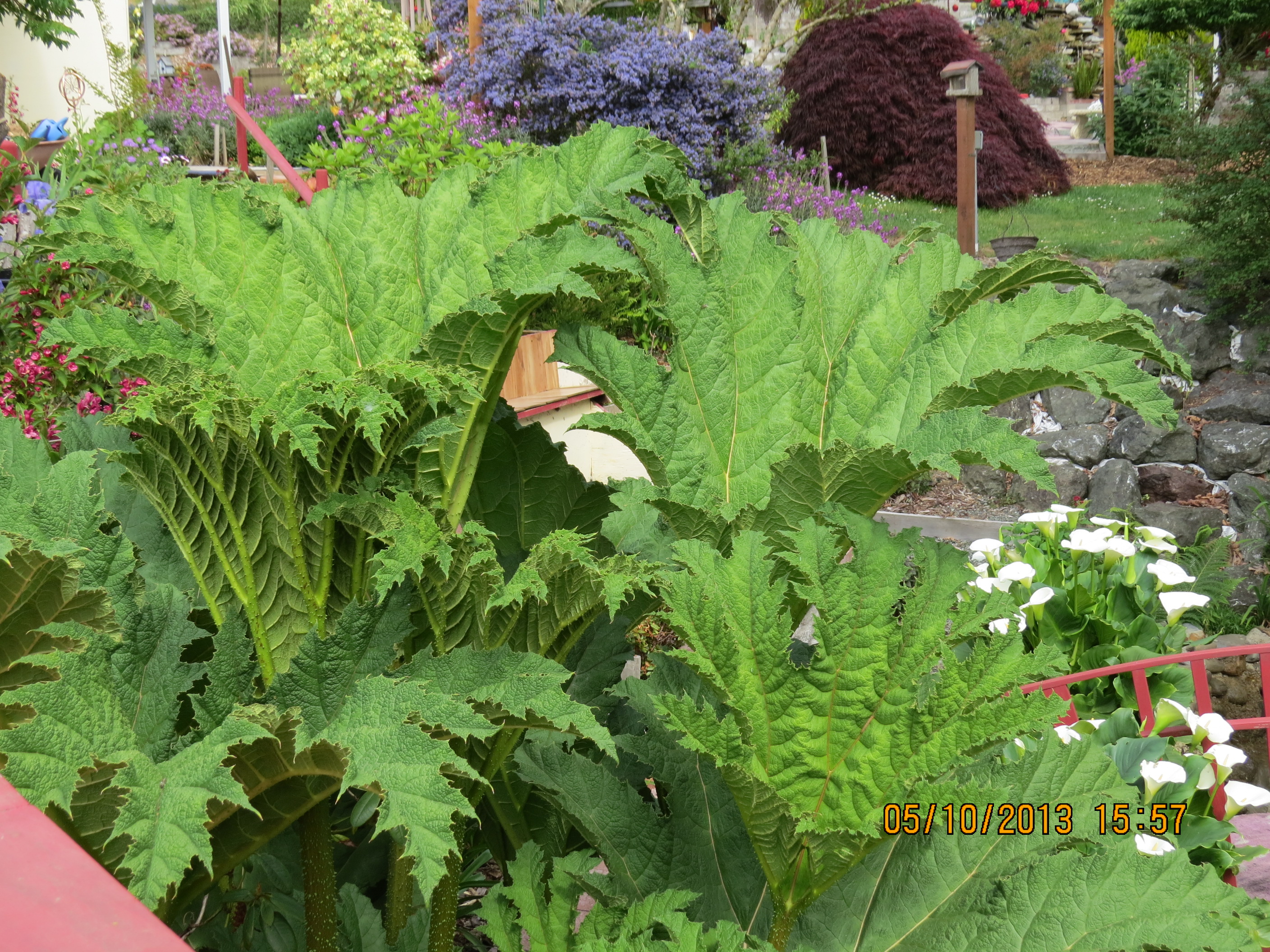
Patti’s gunnera is growing under the bridge
Hal and Patti on bridge, May 10, 2013
This video shows the swarm of bees moving INTO the vacated log hive. Hal explains what is going on as he shoots the video on his iPhone.
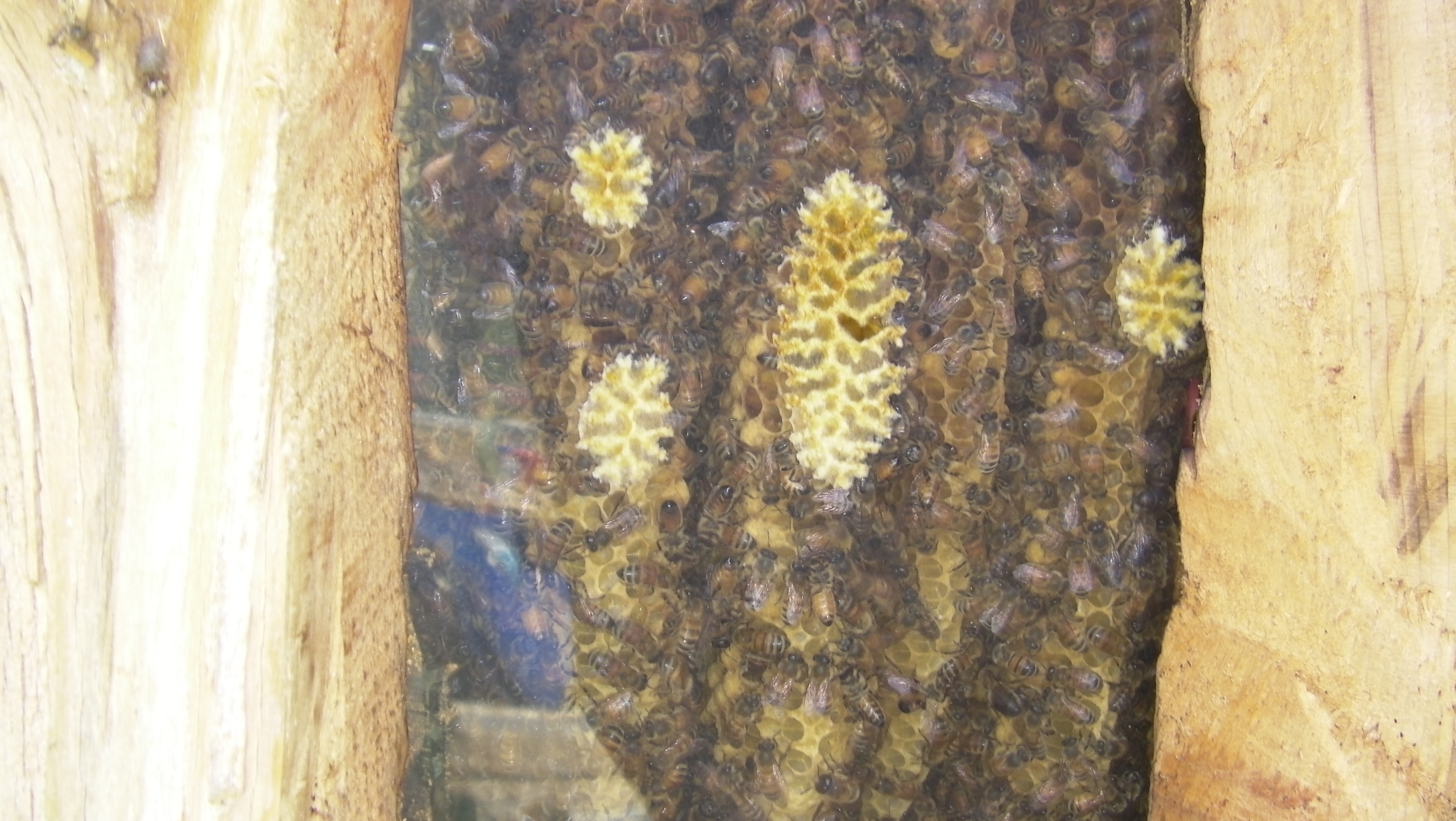
All this is natural comb, built in less than two months from when the bees swarmed INTO the log hive.
Last year I discovered a new bee-loving flower. My wife and I were visiting with Hal and Patti when I spotted a bunch of bee activity on some reddish blossoms. Patti said it was Sedum. I had heard of it, but I’ve never paid much attention to it. Now that I’m keeping bees, I’m all ears when it comes to flowers that attract bees.
So we bought some from our friendly nursery…bees started working it as my wife was carrying the potted plants out to the garden.
The plants will winter over, but protect them from the deer which will eat surely eat the blossoms as we found out.
This sedum has wintered over and is on it’s way to flowering in September. This time I’ve got it inside a deer fence.
I shot some video of the bees working the sedum. It’s a good time to plant some now hint, hint…:-)
George Bennett wasn’t the first to visit Bandon from Ireland, but he was the one who named the town in 1891, because it reminded him of his home town of Bandon, County Cork, Ireland. His friend, Henry Hewitt Baldwin was the first. Baldwin’s ship, the “Captain Lincoln” wrecked north of the Coos Bay bar in 1852 and he hiked into this area. Baldwin persuaded his home town friend, George Bennett to settle here. Lord Bennett and two sons arrived in 1873. It is unclear how and when the title “Lord” was bestowed on him. Some members of the Bandon Historical Society Museum are in agreement that he acquired the title on the journey from Ireland to here. The former name of the town was Averill which is now the name of the Pioneer Cemetery where Lord Bennett is buried.
Averill Pioneer Cemetery, where Lord Bennett is buried.
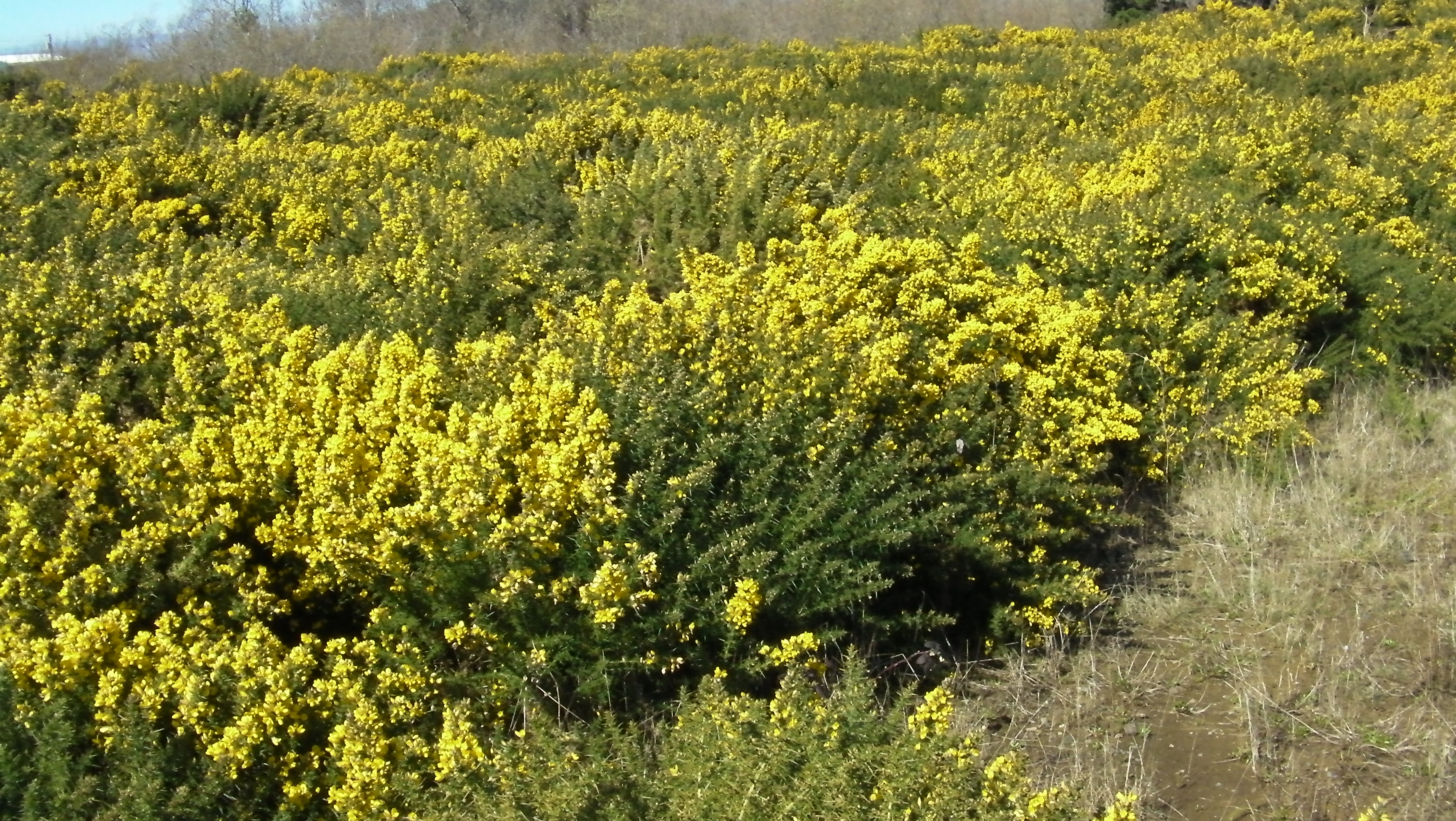
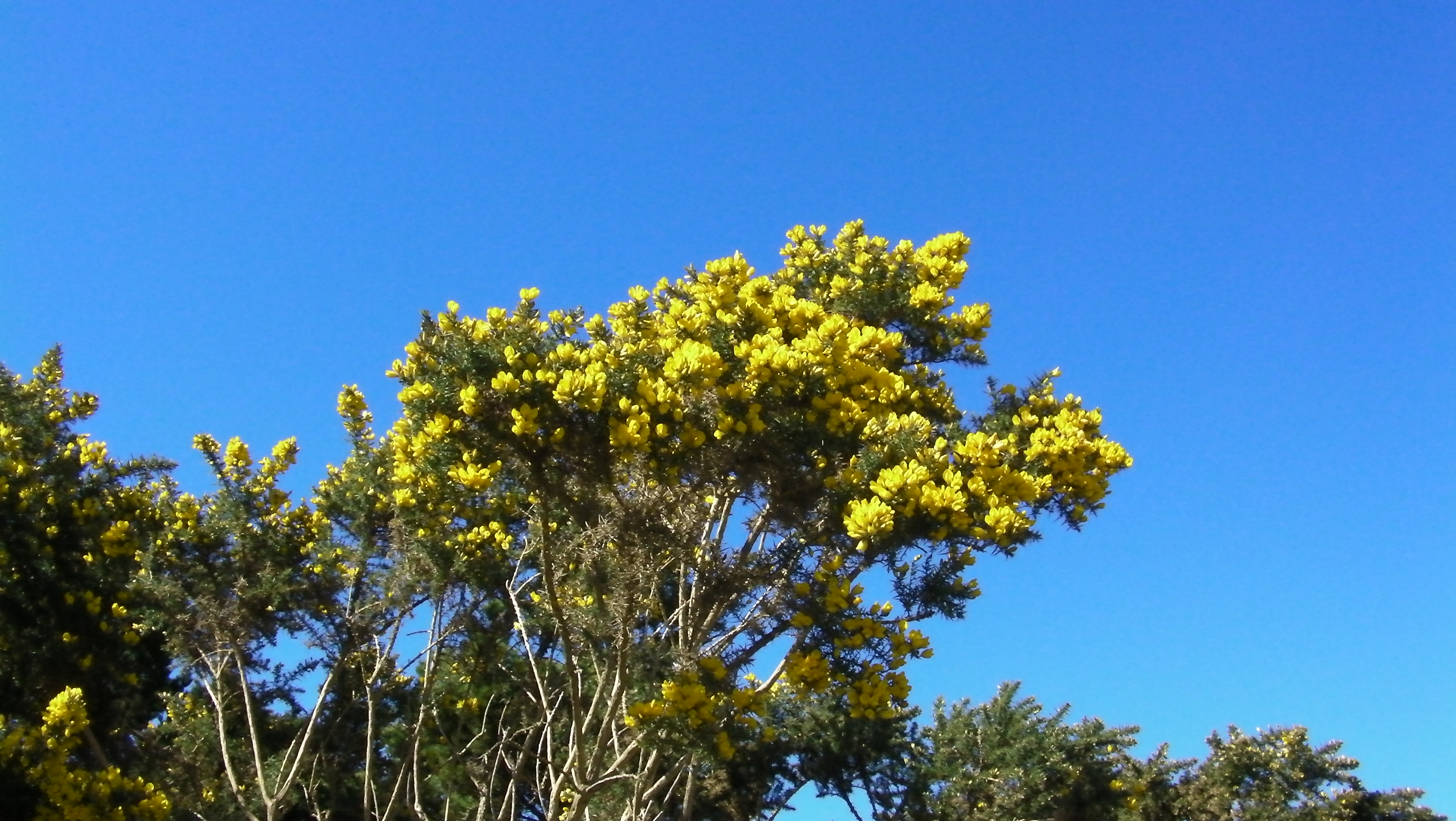
Lord Bennett is probably best known not for naming the town, but for bringing GORSE seeds to this area.
To say gorse is a nuisance plant is probably an understatement. It’s full of sharp spiny thorns, is impenetrable to walk through, and embodies an oil-type substance that makes it highly flammable.
In 1936, the Bandon Fire leveled the town, gorse being a contributing factor.
My new hobby of beekeeping has sparked an interest in gorse. When I joined the local bee club, I was advised that Bandon was not the best place for bees. “Too damp and windy.” I thought to myself maybe Bandon would have a slight advantage in the winter because of all the gorse growing here. It starts to bloom early to mid February and continues through late spring. This would be a definite advantage in giving my bees a nectar and pollen source mid winter.
Some photographs of gorse.
Gorse growing near town
Gorse can grow tall
Gorse pollen is orange…I had been hoping it was the yellow pollen I had seen going into the hive. February 13, 2013
Honey bee on gorse, up the road from me.
I love how the bees swagger when they are loaded with pollen…
I realize that without special techniques to properly identify pollen, I can’t say for certain that all the orange pollen is from gorse. Indeed, I could only find a small percentage of gorse with bees working it, but there is a lot of gorse that I don’t see. My bees were bringing in a gobs of orange pollen through February and early March. It’s possible this pollen could be coming from gorse. I’d like to think so.
These seeds are from last year’s Black-eyed Susan vine. Big and easy to plant.
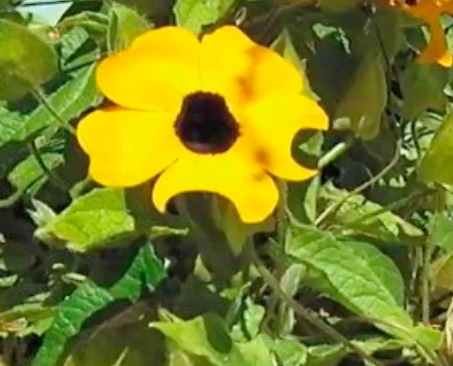
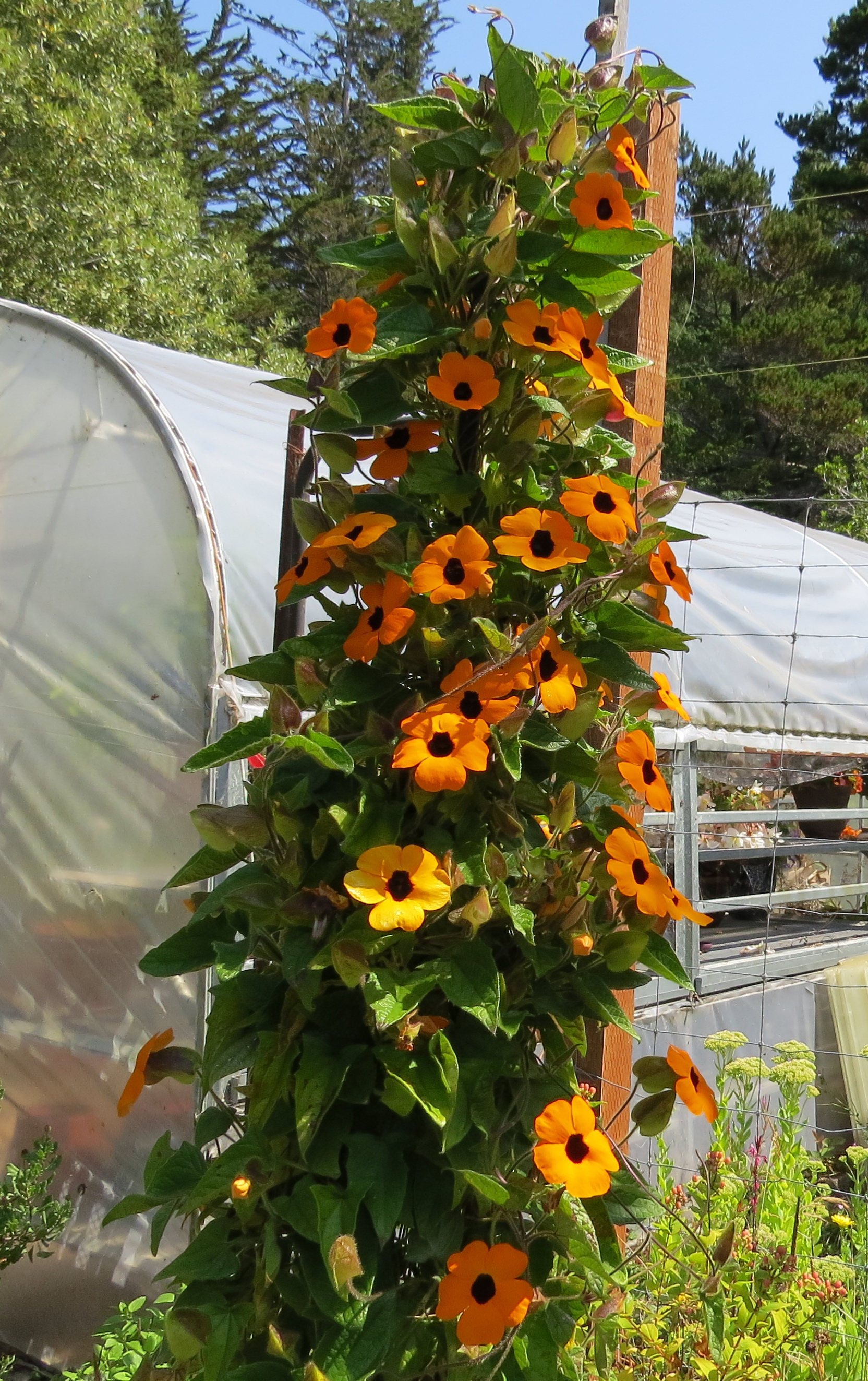
Thunbergia , also called Black-eyed Susan vines, attract leaf cutter bees.
These are not much to look at right now, but today we transplanted the Thunbergia seedlings into a hanging basket and left them under the fluorescent lights until the weather warms up. This year we’ll provide some bamboo tube housing near by.
This is what we are aiming for…last year’s vine…and where we saved seed from.
Black-Eyed Susan with leaf cutter ‘cut-outs
August 9, 2013 I haven’t seen any sign of the leaf cutter bees on this plant, but it’s not for lack of blossoms. We’re real happy with the way it turned out from our own saved seed.
August 27, 2013…This Thunbergia plant just keeps growing and growing. You can see an Echium in a pot below and the hop vine that my son-in-law said wouldn’t grow, at the top. I haven’t seen any “cut-outs” yet.
This is the video I shot last August of the Leaf Cutter Bees slicing up petals from the Thunbergia as well as a nearby Dahlia. I’m looking forward to getting more video this year. Hope they were planted early enough.
Could this be pollen from the laurel bush? It’s been blooming since Jan. 22. I know that you can’t tell by color alone, but at this time I don’t have the microscope or capability to properly identify pollen.
This is the first year I’ve had bees into winter. I was curious about all the types of pollen showing up on the bees entering the hive. I was sure some of it was gorse since we seem to have so much of it growing thanks to Lord Bennett of Ireland.
I made a 9 minute movie showing the bees on different types of flowers and Shigeo of the local bee association demonstrates how to transplant an Echium. I realize that some people can’t spare the time, so I’m offering ‘screen saves,’ as well.
Laurel blooming by Bonnie’s house
Bee on laurel, tannish-colored pollen…January 22, 2013
Bees on rosemary, at City Hall, February 8, 2013
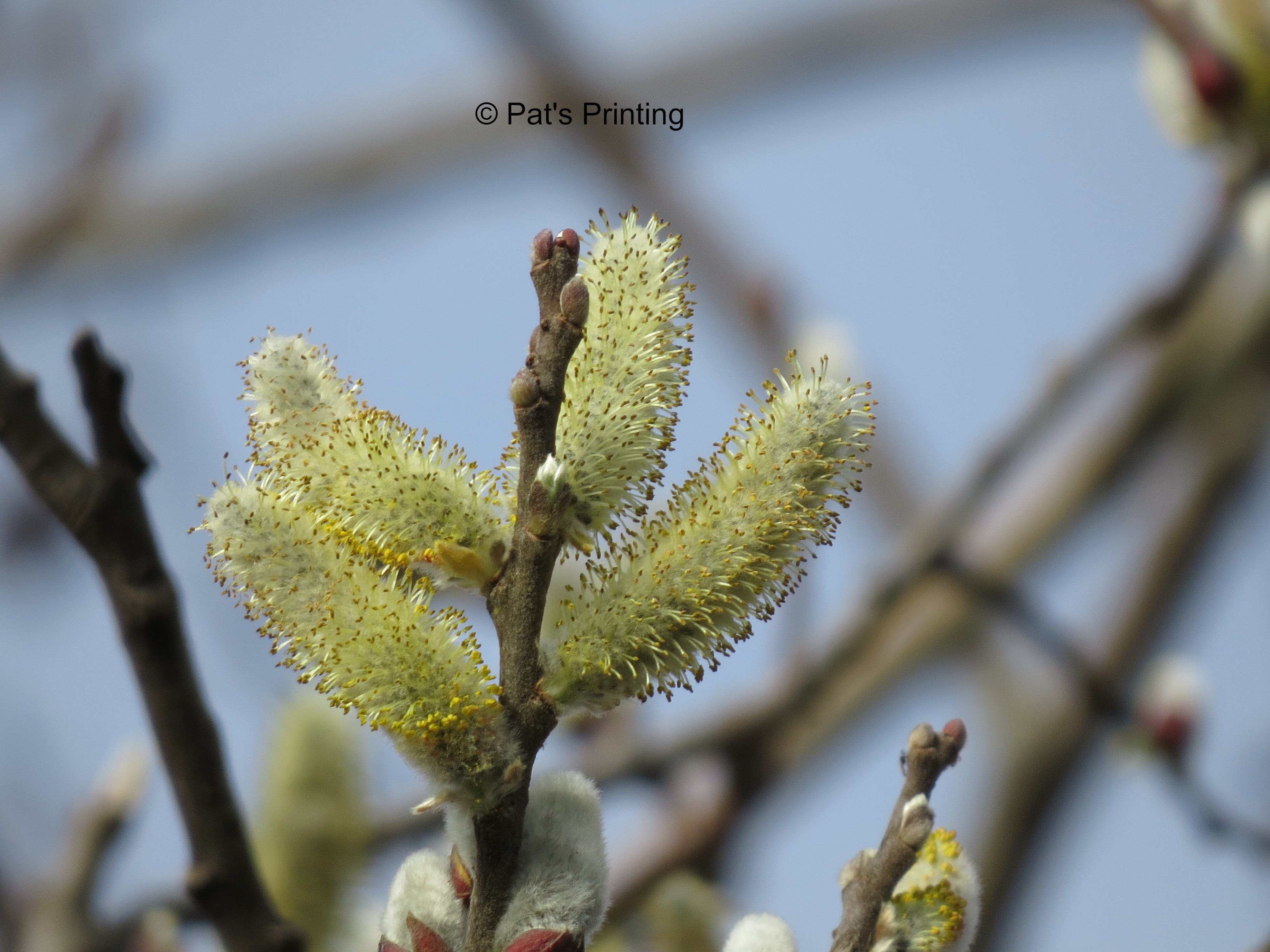
Willow catkins blooming near our hives…sun comes out…bees love it. February 8,2013
Gorse pollen is orange…I had been hoping it was the yellow pollen I had seen going into the hive. February 13, 2013
The video shows this bee in slow motion working the pollen back to it’s pollen sac. I didn’t see it at first until a more experience bee keeper showed me. February 13, 2013
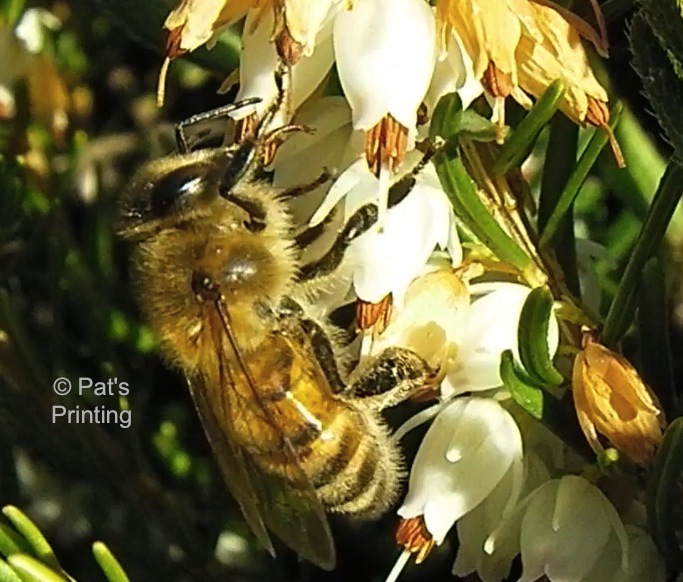
Bee on heather, 2-14-13, right up the street from Joe and Karen’s house.
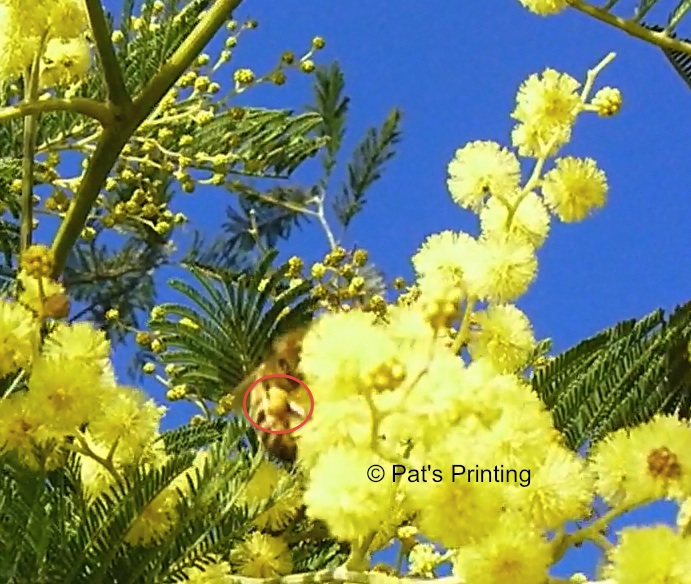
Bee on acacia, 2-15-13…Shigeo showed me this place to get some video. By the time we got to it, the bees were returning to home so I only got a short clip of it.
Shigeo shows how to transplant an Echium Tree.
Echium for 2013…I’m hoping this plant will shoot up 10 feet (3 m) starting about April or May. The tarp protects against freezing weather.
These are the plants that Shigeo demonstrated in the video, how to transplant. They are my hope for 2014
We planted this echium in late October 2011. It just stood still for several months. About April or May we noticed it had grown to about 10 feet. The bees worked it for 3 solid months.
The video shows the bees in action on the flowers. I used the Canon SX-50 (50x optical zoom) on the laurel as well as the willow catkins. My little pocket camera, a Sanyo Xacti performed admirably for the rest of the close ups…I love the ‘super macro’ feature.
In years’ past, we grew dozens of sunflowers of all types. This year…very few. Of the few that we planted, only four decided to grow. Of the four, only one was big enough to draw any visitors. This is the one.
My best sunflower this year
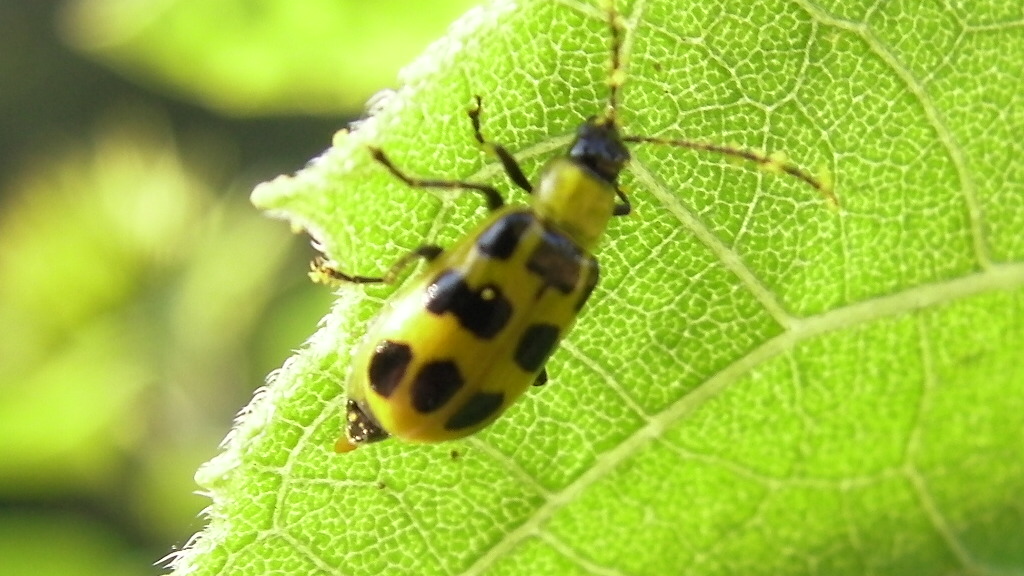
This might be the bug/beetle which appears in the video taken two days previous. It was on the flower part but jumped to the leaf while I was getting the camera switched on and focused.




















 Adventures in Natural Beekeeping