Archive for the ‘Bee-loving flowers’ Category

Mid October...the bees are bringing in baskets loaded with orange pollen.

Mid October…the bees are bringing in baskets loaded with orange pollen.

When I saw how much pollen was coming into Bee Beard log hive, I wanted to find out where it was coming from.   I knew it had to be ivy  because that’s the only thing in bloom this late.  I set out to prove my theory.

I went to my known ivy patches, which just happened to be in the sun…perfect.

Mid October...An American Painted Lady (I think)

Mid October…An American Painted Lady (I think)

I didn’t see any bees at this first place, but this butterfly posed for me long enough to get a short video.  She is sipping nectar through her long proboscis which acts like a flexible straw.

This looks like a bee, but the eyes are different.

This looks like a bee, but the eyes are different.  It’s a fly who is grooming herself in the sun.  The video shows her rubbing her front legs and using them to scrape the pollen off the top of her body.

I see Barbara out walking her dogs.  She knows I’m obsessive about bees and mentions an ivy covered wall that was buzzing with bees.  I head over.
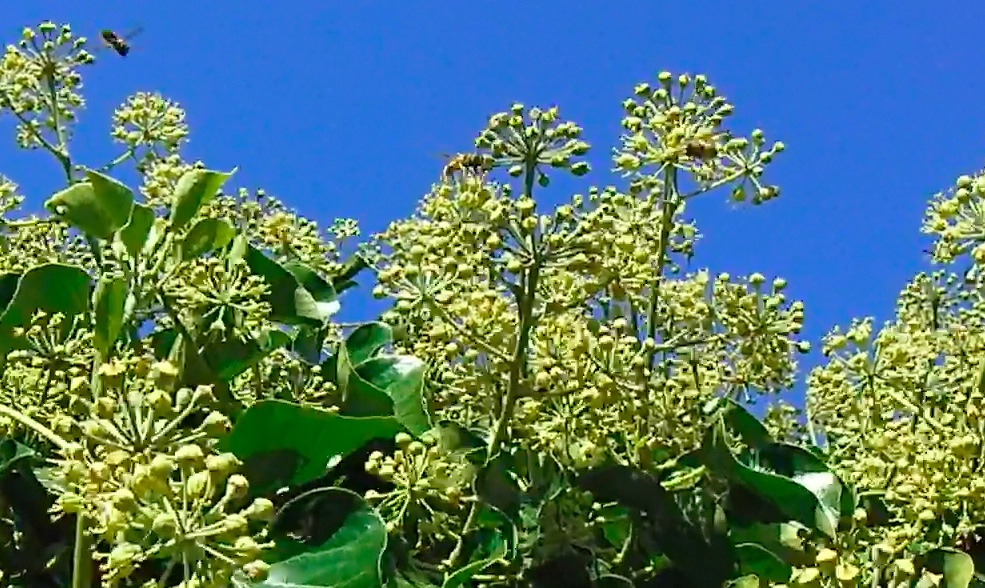
This ivy wall was buzzing with bees...I'm going to get lots of opportunities to shoot bee videos.

This ivy wall was buzzing with bees…I’m going to get lots of opportunities to shoot bee videos.

I knew something was weird with this when her proboscis touched the top of the stamen and rubbed it.

I knew something was weird with this when her proboscis touched the top anther and rubbed it.  It’s another fly that resembles a bee.
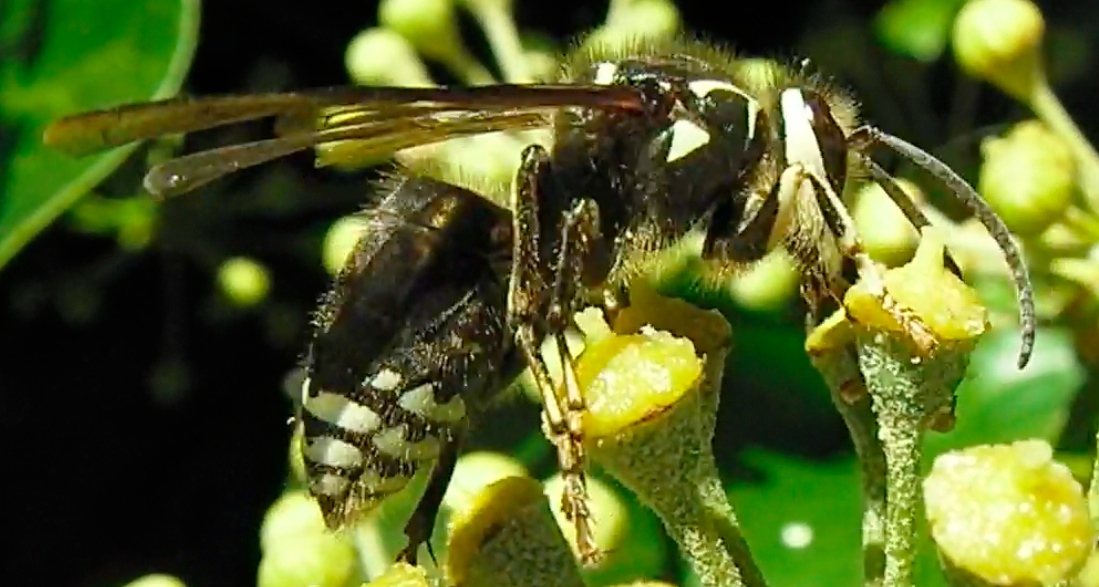
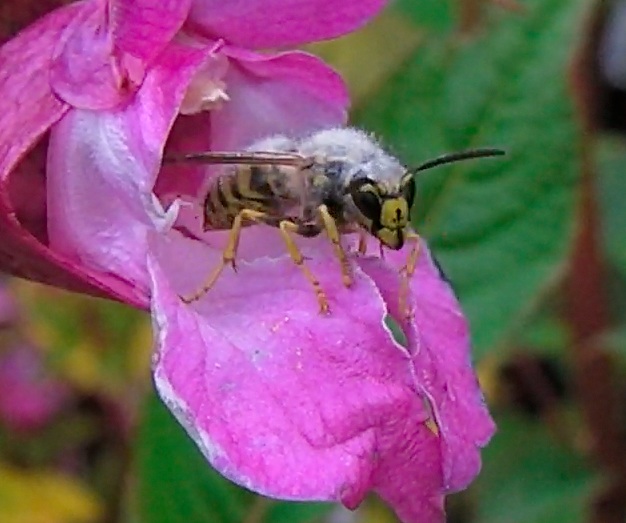
This looks like a white-trimmed black wasp, but it's the wrong habitat for it.  Can anyone ID it for sure?

This looks like a white-trimmed black wasp, but it’s the wrong habitat for it. Can anyone ID it for sure?  It’s another ‘buzzing insect’ working the ivy.

Celeste A. S. Mazzacano, Ph. D.
Staff Scientist / Aquatic Conservation Director, Xerces Society Project Coordinator, Migratory Dragonfly Partnership

Celeste replied to my request to for an identification of this wasp…
Pat, I am pretty sure that what you have are some lovely shots of the  White-faced Hornet (Vespula maculata, also known as Dolichovespula maculata,  not sure which name is the most current).  The markings are quite distinctive, especially around the eyes and thorax, and this is the only West Coast wasp species that is white and black–all the others are yellow and black.  These dudes are apparently aggressive little stingers, and the adults are predatory on small invertebrates, so I don’t think they’d be more than incidental pollinators.  They make above-ground nests out of chewed wood pulp, but a colony only lasts for one year–they die off over the winter, except for females that mate at the end of summer and start new colonies the following spring.  These are nice photos!     Thanks, Celeste.
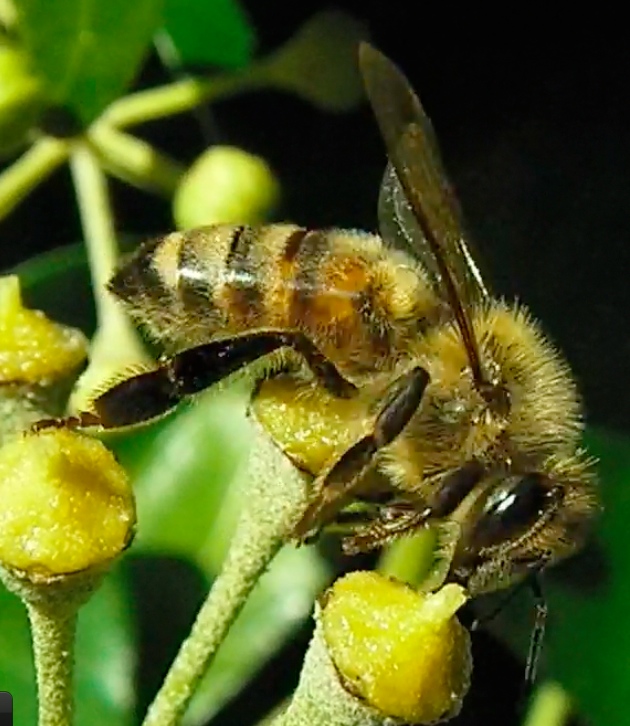
Finally I see an actual honeybee who is sipping nectar, but no pollen is evident.
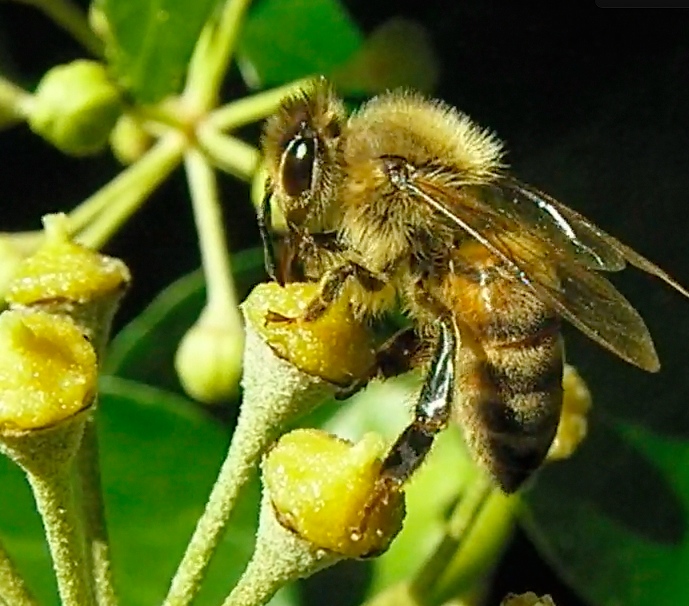
Finally I see an actual honeybee who is sipping nectar, but no pollen is evident.

Another look, but no pollen is visible.
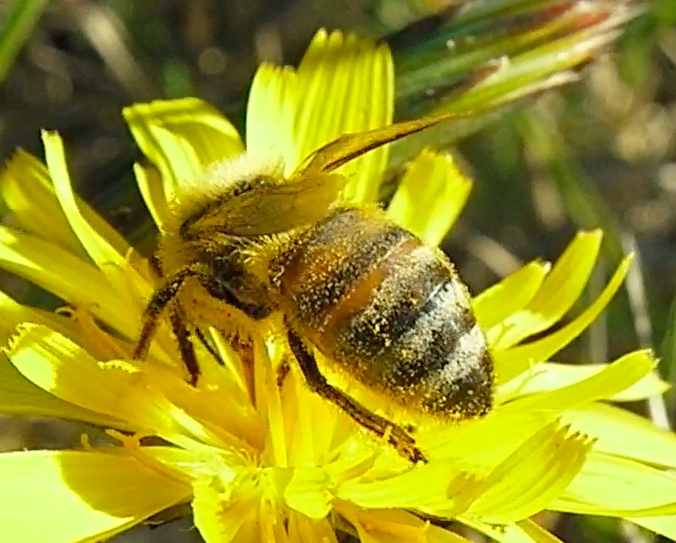
Another look, but no pollen is visible.

I spot a bee on a dandelion, pollen sprinkled on her abdomen.  A close look revealed none in her pollen baskets.

I spot a bee on a dandelion, pollen sprinkled on her abdomen. A close look revealed none in her pollen baskets.

I can see I was mistaken about the pollen going into my hives.  It can’t be ivy just yet…not sure what it is, but I’ll keep looking.

Important facts about ivy

Removing English Ivy from trees

Patricia talks about the importance of ivy as a nectar source for insects late in the year.

Read Full Post »

I asked Kiera O’hara, the composer and pianist of the background music, “Song for Earth Day.”
“I’ve got the melody replaying itself over and over again in my head. Since you wrote it can you describe the background of it? I’m always curious how a person comes up with music, probably because I’m so NOT musical.
There’s that little voice towards the end (at 3:10) that says to me, “But why can’t I?”  or “but what about this?”  It’s definitely a question. That’s how it sounds to me. :-)”

Her reply…

You’ve got it, exactly! That ending was meant to sound tentative–the vulnerability of the earth asking for help, and the question lingering for us humans, will we help?

Read Full Post »

Cemetery tree, July 1, 2013

Cemetery bush, July 1, 2013

In July I noticed honeybees were pollinating these bushes in the cemetery.  I took photos so I could show them to knowledgeable people to ID them.  I asked quite a few people who had no idea what those bushes were.  Jim, the  volunteer at the cemetery, said at first he thought they were planted, but later he realized the birds must have dropped seeds where the mower couldn’t reach and they just grew without being cut.

July 1, 2013  Bees love this bush.  Circle shows the color of pollen.

July 1, 2013 Bees love this bush. Circle shows the color of pollen.

October 26, 2013...we suddenly realize this is  a cotoneaster bush.  It's just so obvious with the red berries.  Thanks to the bees, the birds will benefit.

October 26, 2013…we suddenly realize this is a cotoneaster bush. It’s just so obvious with the red berries. Thanks to the bees the birds will benefit.

Facts about cotoneaster

I shot some video of the blossoms with the bees getting nectar.  If I see the birds eating berries, I’ll get a video on them.

Read Full Post »

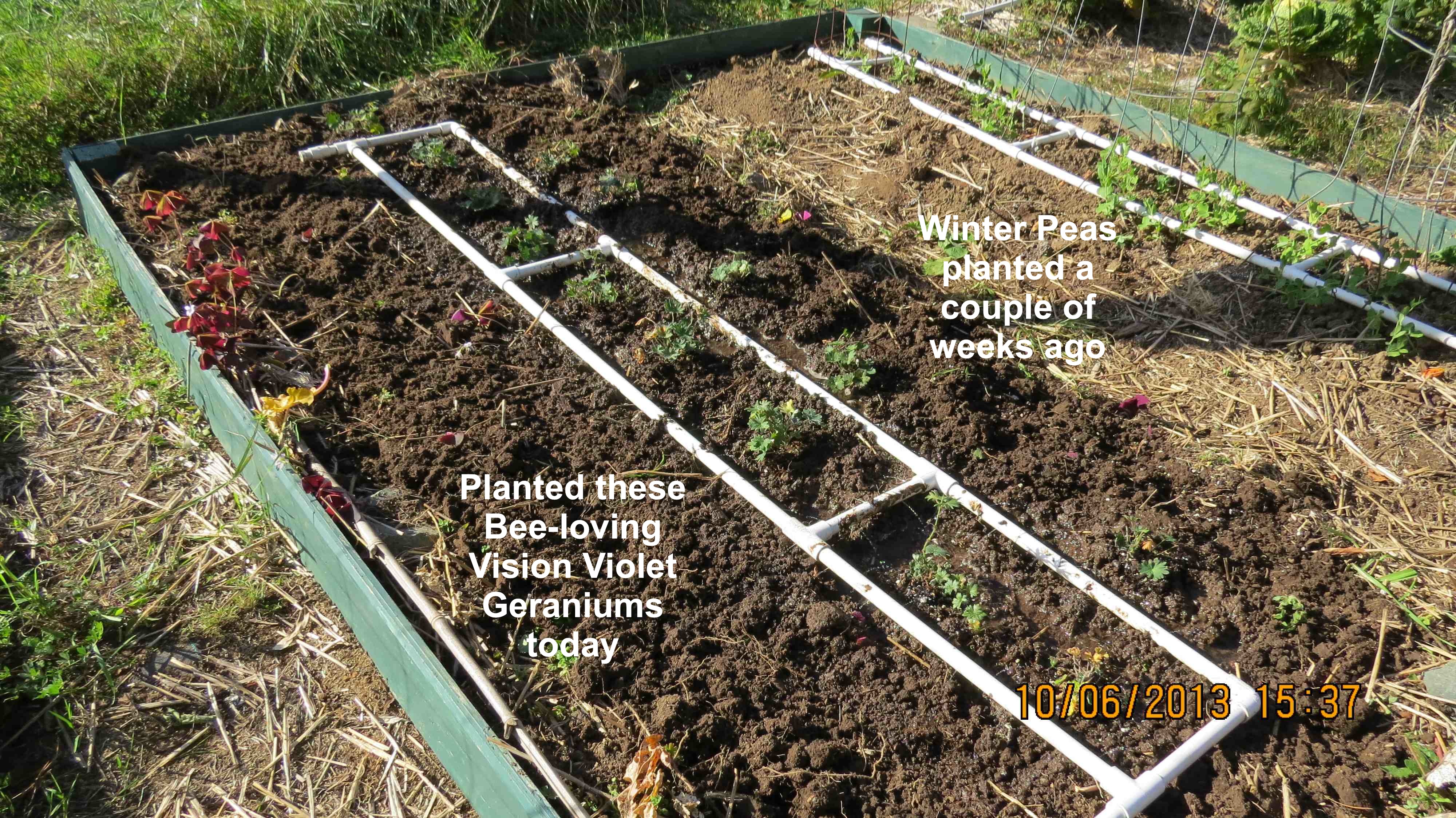
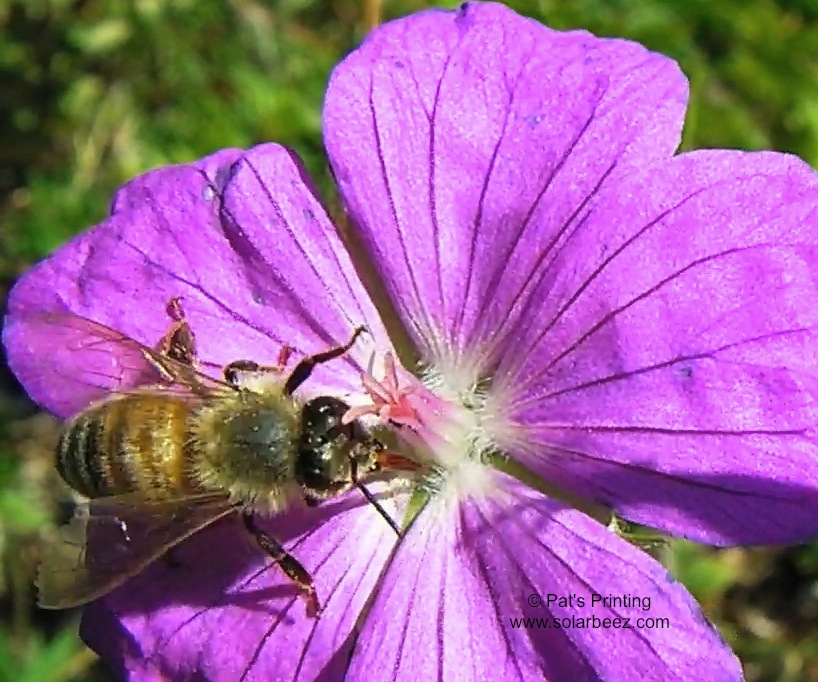
These bee-loving Vision Violet geraniums will bloom from early spring to late summer. Thanks to Bob and Carol Fischer for providing the starts for us.

These bee-loving Vision Violet geraniums will bloom from early spring to late summer.
Thanks to Bob and Carol Fischer for providing the starts for us.

Vision Violets attract bees.  They bloom from early spring to late summer...The bees love them and so do I.

Vision Violets attract bees. They bloom from early spring to late summer…The bees love them and so do I.

Want to see the bees on the flowers? 

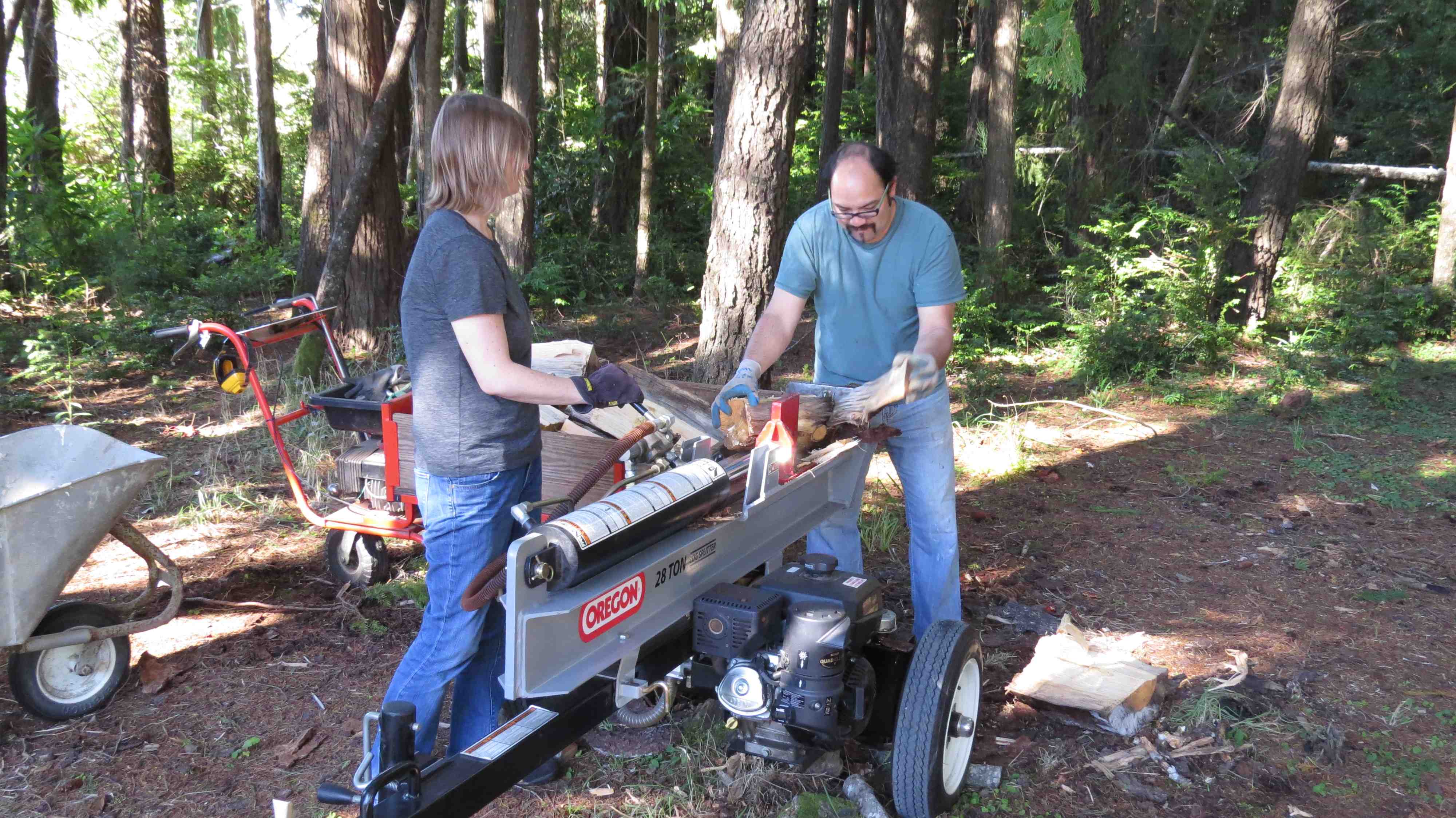
Daughter and son-in-law help us with firewood splitting and stacking every year.

Daughter and son-in-law help us with firewood splitting and stacking every year.

After several hours of lifting, splitting, carrying, and stacking, we treat ourselves to a walk on the beach.  We are greeted by the incoming tide washing in and over the mounds of seaweed.

Piles of seaweed get pummeled by the incoming tide.

Piles of seaweed get pummeled by the incoming tide.

Seastacks on a perfect sunny Sunday

Seastacks on a perfect sunny Sunday.  Why don’t we walk on the beach more often?

Birth of granddaughter 9 months ago

Read Full Post »

July 30, 2013...A pollen covered wasp takes off from the Poor Man's Orchid

July 30, 2013…A pollen covered wasp takes off from Barbara’s Poor Man’s Orchid

On our morning walk we pass Barbara’s well-maintained flower garden.  Today, Barbara called out, “Pat, did you see those white bees?”  I had never heard of white bees so we looked carefully.  They were certainly white, but I couldn’t get a good fix on them as they were darting in and out of the flowers so fast.  After I replayed the videos I could see what they were…wasps and bumblebees covered with white pollen.

This could be a Yellow-faced Bumble Bee,  Bombus vosnesenskii, or possibly a Bombus Californicus...I can't tell the difference.

This could be a Yellow-faced Bumble Bee, Bombus vosnesenskii, or possibly a Bombus Californicus…I can’t tell the difference.  The video shows this bee backing out of the flower and getting a trail of pollen up her back.

Poor Man's Orchids

Lots of nice bee flowers here…in the foreground are the Poor Man’s Orchids.

Read Full Post »

Who ever said plant biology was boring?  Certainly not me after shooting this video.

When I shot this video I didn't realize I was witness an intimate relationship between flower and bee.

When I shot this video I didn’t realize I was witnessing an intimate relationship between flower and bee.  The pistil is still showing here, but in the video, the petals clamp shut soon after the bee moves on.

The flower provides the nectar to attract the bee.  The bee lands on the flower, pulls the petals apart to reveal the pistil.  The flower shoots out pollen which the bee carries away.

The flower provides the nectar to attract the bee. The bee lands on the flower, pulling the petals apart to reveal the pistil. The flower makes pollen available which the bee carries away.

Since this is my 100th blog, I wanted to do something special.  I wanted to have some music in the background.   Sweet Thunder, a quartet in Portland, graciously gave me permission to use one of their tunes called, “Blues in the Barn.”  Kiera O’Hara, who composed the music, said “she wrote it when she lived on a tree farm in Michigan and her piano room was a refurbished nook in an old barn.”  “We are a collaborative bunch, so the sound of my tunes on the disk is very much the result of that collaboration.”

Thank you Sweet Thunder for the sweet music.

The video shows the bee and flower cooperation.  I never took biology in school, so I don’t know if they show this racy stuff, but this is an unrated Bee movie in the truest sense.

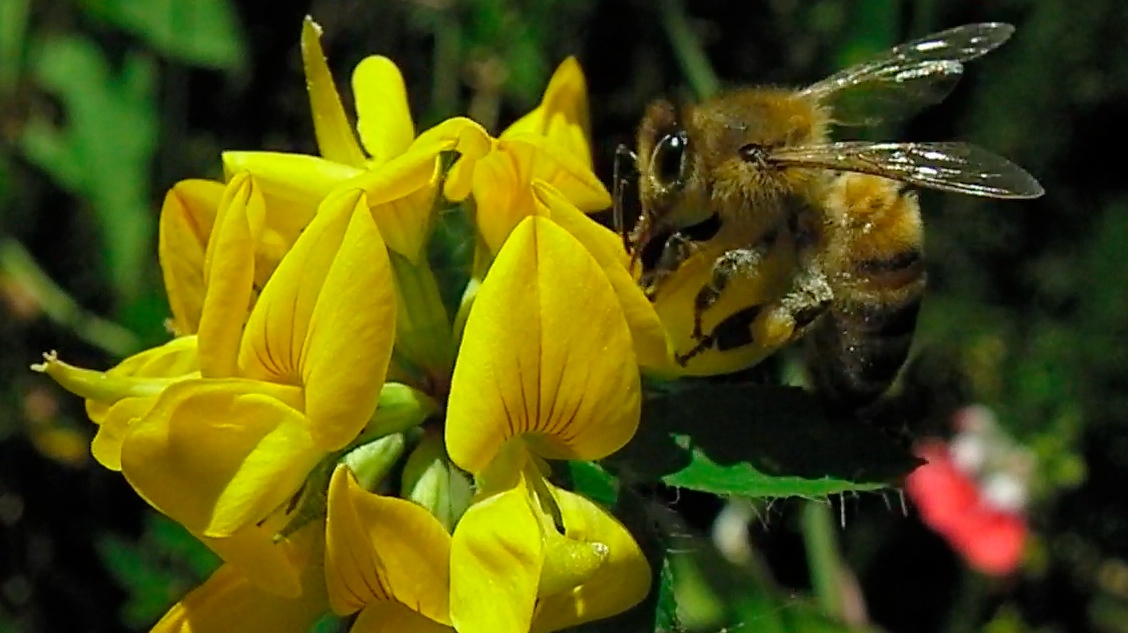
I was unsure what this blossom was.  I thought it might be a yellow vetch, so I asked Morris Ostrofsky.  Morris, a forty year beekeeper and scientist affiliated with the Oregon State Master Beekeeping Program positively identified this blossom as a Bird’s Foot Trefoil.
“The plant is indeed Birds Foot Trefoil. This plant ranks high on the bees’ favorite forage list.  If you go back in some of the older bee publications, it was actually encouraged as bee forage. However, it’s no longer encouraged because it has been found to be invasive. However, the bees’ still love it.”

Read Full Post »

Blackberries are considered to be Oregon's largest nectar flow, starting mid to late June.

Blackberries are considered to be Oregon’s largest nectar flow, starting mid to late June.

If you have clover in your yard, you have a ready excuse NOT to mow the lawn..."I'm just helping out the bees!"

If you have clover in your yard, you have a ready excuse NOT to mow the lawn…“I’m just helping out the bees!”

We see hedges of Escallonia on our morning walks.  If I bring a camera, it's easy to get pictures.

We see hedges of Escallonia on our morning walks. If I bring a camera, it’s easy to get pictures.

It looked like this bee was 'biting' the pollen grains off the anthers.  I slowed down the video to see better, but it's soft on focus.  Then the deer found it, now it's gone.

It looked like this bee was ‘biting’ the pollen grains off the anthers. I slowed down the video to see better, but it’s soft on focus. Then the deer found it, now it’s gone.

Wallflower, (Erysimum) blooms all summer...and the Bumblebee, honeybees, and butterflies can be seen sipping nectar.

Wallflower, (Erysimum) blooms all summer…and the Bumblebee, honeybees, and butterflies can be seen sipping nectar.

It took us a while to identify this moth.  It's a Ctenucha multifaria, appearing on our Echium tree, June 28, 2013

It took us a while to identify this moth. It’s a Ctenucha multifaria, appearing on our Echium tree, June 28, 2013.  I couldn’t find any videos on this, so mine might have to be the first one.

Read Full Post »

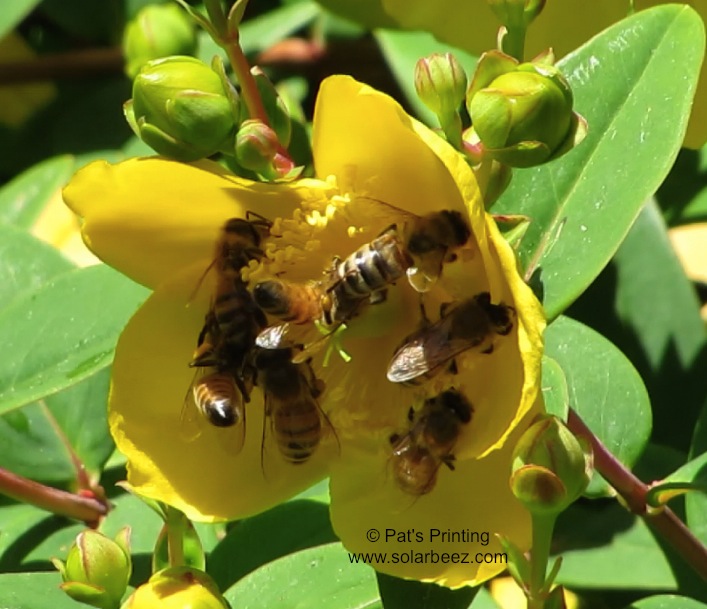
June 8, 2013  I feel like it ought to be stitched on my belt..."Seven bees on one blossom."

June 8, 2013 I feel like it ought to be stitched on my belt…”Seven bees on one blossom.”

This Hidcote hypericum, commonly called St. John’s Wort or Aaron’s Beard was given to us by my mother-in-law about 20 years ago.  We never knew how much bees like it until recently, when we started keeping bees…but like it they do.  I often stop to watch them in a frenzy hurriedly climbing over and through the anthers.  Hidcote hypericum grows in a bush unlike the Hypericum Calycinum, Creeping St. John’s Wort, that grows along the ground.

Hypericum Calycinum on left...Hidcote Hypericum on right

Hypericum Calycinum on left…Hidcote Hypericum on right.  I think the one on the left is much prettier, but I’ve never seen any honeybees on it.  The Hidcote Hypericum grows in a big bush about 8+ feet wide by 8+ feet tall.  (3 m x 3 m)

These two bees got into a disagreement over who gets to work the flower.  I didn't see it until I played the video on the laptop.  The bee on the left was working the blossom first.

These two bees got into a disagreement over who gets to work the flower. I didn’t see it until I played the video on the laptop. The bee on the left was working the blossom first.  I slowed down the action on the video so you could see it better.

I shot this short video to capture the action…

Harvesting hypericum seeds…

Another example of Bee-Havior and “Blossom Rights”

Bee sideswipes an innocent insect on side of crocus.

Read Full Post »

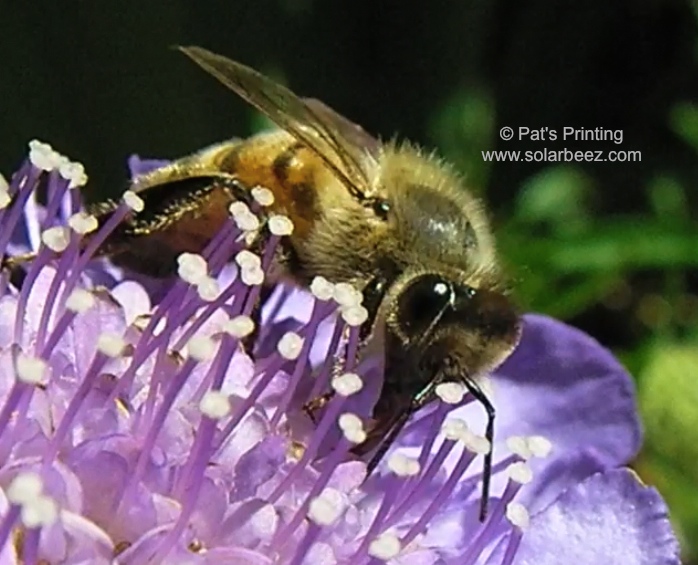
June 8, 3-13...Scabiosa, (Pin cushion flower) is a great bee-loving flower.  It fits in the home garden well, is easy to grow, and you'll never get tired of watching the bees get nectar from it.

June 8, 3-13…Scabiosa, (Pin cushion flower) is a great bee-loving flower. It fits in the home garden well, is easy to grow, and you’ll never get tired of watching the bees get nectar from it.

It helps to have a camera to look at the bees.

It helps to have a camera to look at the bees because they move so fast.  I slowed the video so you can see the bees better.

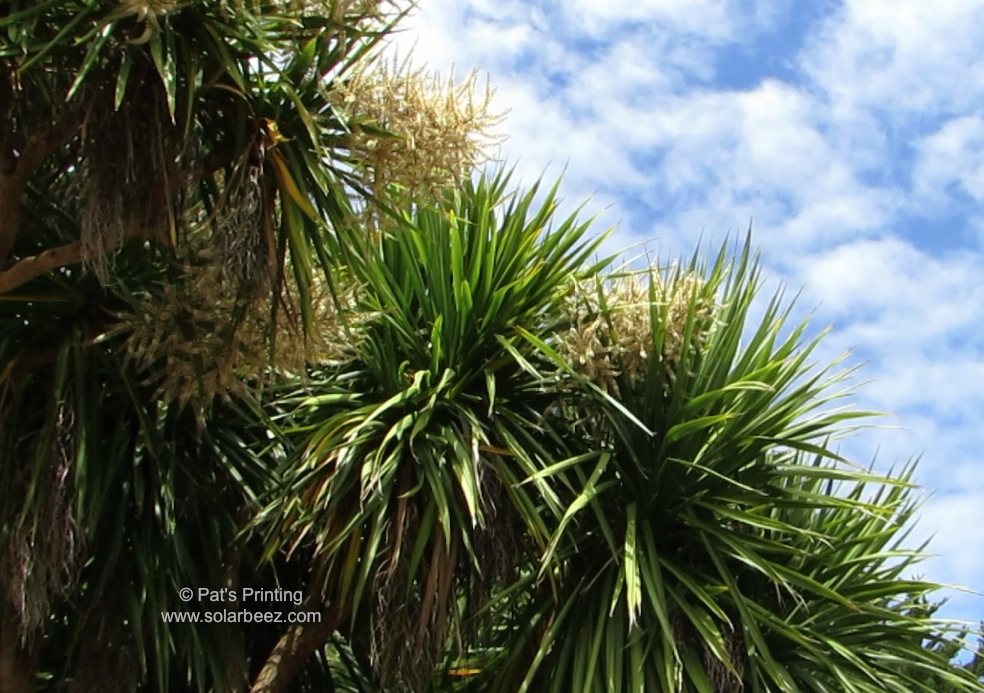
June 11, 2013...Yucca Trees started blooming a few days ago.

June 11, 2013…Yucca Trees started blooming a few days ago.  12-26-13…Just found out these are called New Zealand Cabbage Trees.

Footnote:  12-26-13 Jeff Ollerton,  a Professor of Biodiversity in the Department of Environmental and Geographical Sciences at the University of Northampton. says what I’m calling  “Yucca Trees” are more likely “New Zealand Cabbage Trees,” (Cordyline australis )

June 11, 2013...A bee with pollen baskets full heads back to the hive from the yucca tree.

June 11, 2013…A bee with pollen baskets full heads back to the hive from the  New Zealand Cabbage tree

June 11, 2013  The Wallflowers attract many different kinds of wild pollinators, including this bumblebee.

June 11, 2013 The Wallflowers attract many different kinds of wild pollinators, including this bumblebee which we think is a bombus Melonopygus.

Sometimes a bumblebee will stab a hole directly into the nectary, bypassing the pollination route...other bees will use that hole as well.  It's a good thing comfrey can spread by root propagation.

You’re CHEATING ON ME!!!   Sometimes a bumblebee will stab a hole directly into the nectary, bypassing the pollination route…other bees will use that hole as well. It’s a good thing comfrey can spread by root propagation.

A short video to show all the action…

Read Full Post »

June 3, 2013...bees on the Ceanothus (California Lilac) at Amy's house.  Everyday we walk past her house anticipating this bloom.  It finally happened.

June 3, 2013…bees on the Ceanothus (California Lilac) at Amy’s house. Everyday we walk past her house anticipating this bloom. It finally happened.

It seemed like June was really busting out all over.  Everyday there were opportunities to shoot videos.  It got so bad I was hoping for some rainy days so I could get some print work done.

I’ve taken  some screen shots to show some of the blossoms.  These are from the videos just in case you don’t have time to watch them.

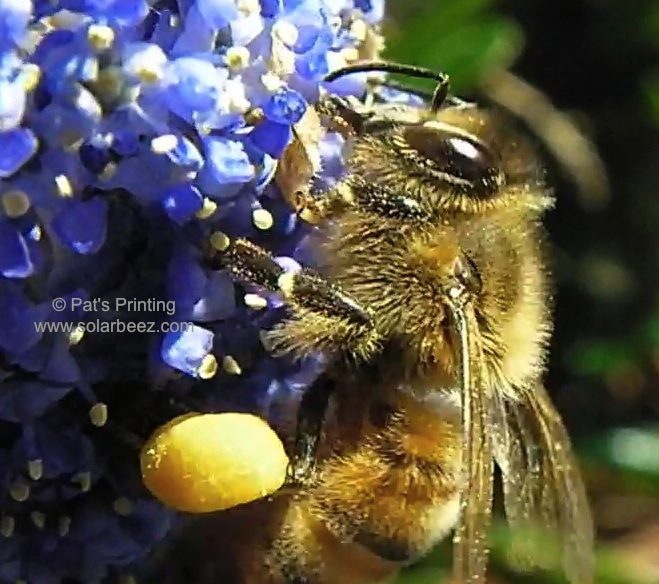
June 3, 2013...Ceanothus

June 3, 2013…Ceanothus with a honeybee.  Look at the pollen in her pollen basket.  I was surprised it was so yellow, but it you look closely the tips of the blossoms are the same color.

June 3, 2013...Since I had my camera out, I dropped by Bob and Carol's house.  They've got all kinds of flowers growing instead of a lawn.  Bob said I could take all the shots I wanted.

June 3, 2013…Since I had my camera out, I dropped by Bob and Carol’s house. They’ve got all kinds of flowers growing instead of a lawn. Bob said I could take all the shots I wanted, so I started on this Red Thyme growing low to the ground.

June 3, 2013...While I was at Bob and Carol's I spotted this little gem.

June 3, 2013…While I was at Bob and Carol’s I spotted this little gem.  It’s a geranium by the name, “Vision Violet.”

Read Full Post »

« Newer Posts - Older Posts »