Archive for the ‘Bee-loving flowers’ Category

After attending the funeral, I had just enough time to look for bees in a desert setting.  Just for a little variety, I wanted to photograph bees getting pollen in the Arizona desert where I grew up.
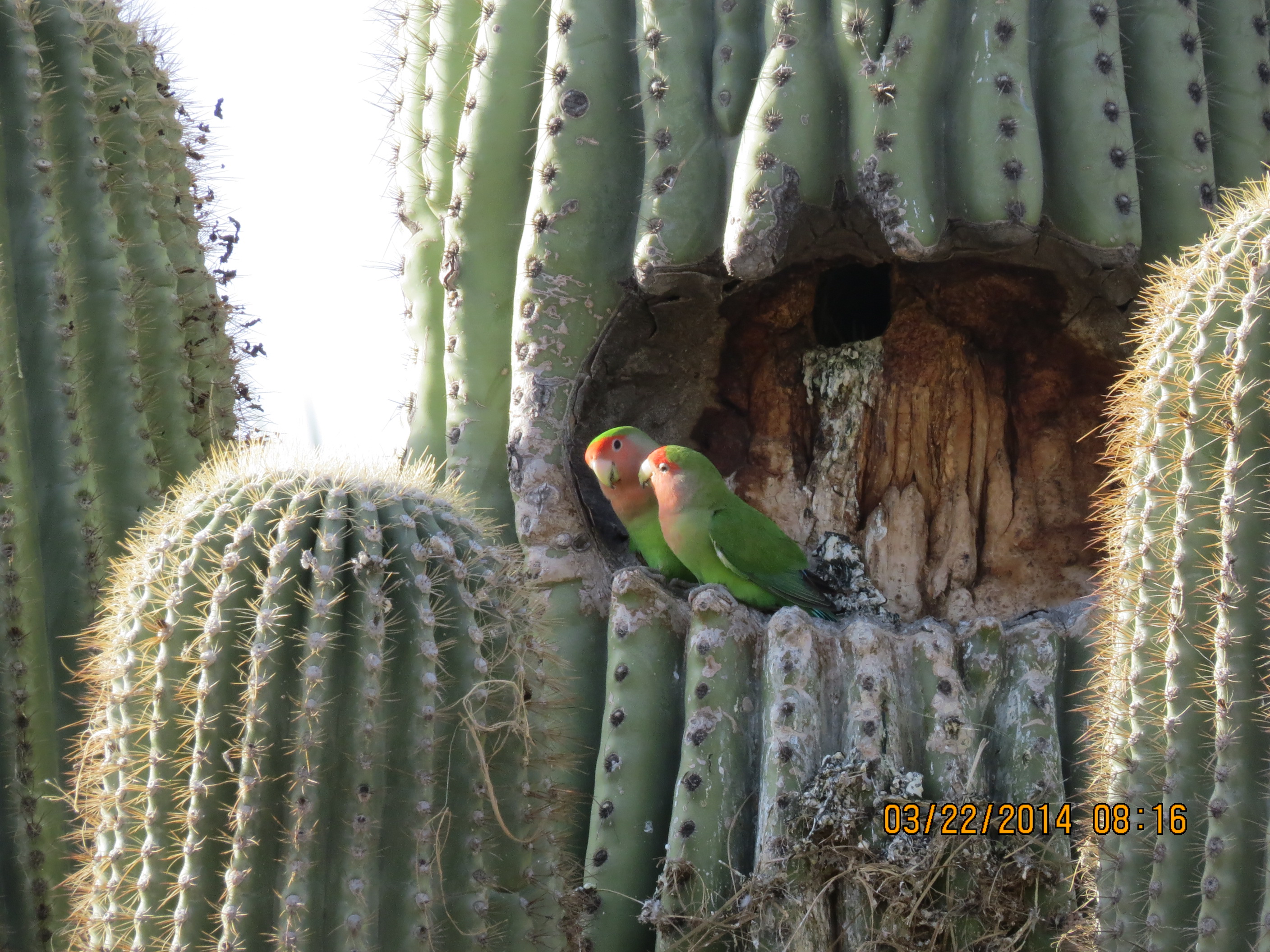
While looking for bees in the Scottsdale area, I found these two green parrots nesting in a saguaro cactus

                     In my quest for bees, I spied  these two green parrots nesting in a saguaro cactus.   Footnote, Lauren Harter has ID’ed these as Rosy-faced Lovebirds.

I so wanted to get some photos of bees on this bush, but I never saw them.

I so wanted to get some photos of bees on this bush, but I never saw a single one.

The Palo Verde trees (Parkinsonia aculeata ) were in full blossom at the airport, but there was no way I could get off the shuttle to set up a camera.

The Palo Verde trees (Parkinsonia aculeata ) were in full blossom at the airport, but it was impossible to get off the shuttle to set up a camera.  Out here, the trees were just coming into bloom, but still no bees on them.

Yellow blossoms on bush

Yellow blossoms…Is it Grey Desert Senna (Senna artemisioides subsp. sturtii)?  I don’t know, but it was a beautiful desert setting in someone’s front yard with Mexican Fence Post to the left, saguaro in the background, and prickly pear in foreground right…no bees, though.

A rock is embedded in this young saguaro.  As it grew it must have carried it upward.

A rock is embedded in this young saguaro. As it grew it must have carried it upward.

A desert bird.  My knowledge of birds is completely underwhelming.

A desert bird. My knowledge of birds is completely underwhelming.  “A Beehive Inside My Heart” says this looks like a Mourning Dove.

Jumping Cholla.

Jumping Cholla.  This cactus doesn’t really jump, but if you’re walking close enough to brush it, a piece will break off and attach itself to you.  It can penetrate a leather boot.  If there is moisture such as contact with skin the tips will curve and lock themselves under the skin.  There are actually two basketballs here, one slightly behind, left of the cactus.

I can picture a spirited basketball game where the ball gets away and bounces against this jumping cholla...and there it stays.

I can picture a spirited basketball game where the ball gets away and bounces against a jumping cholla…and there it stays, because who wants to risk getting stuck with the sharp needles.
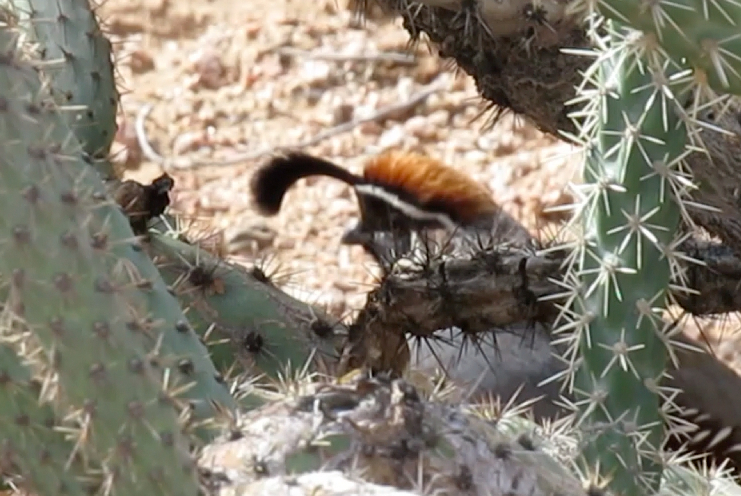
Gambel's Quail hiding. They run fast and hide when they are not running.

Gambel’s Quail hiding. They run fast out in the open, then hide under some cactus.  On the video you can see it run between hiding spots.

Could this be a cactus wren?  It's hanging on a palm tree.  If anyone knows, please advise.  You can hear it's song in the video.

Many thanks to Lauren Harter, Jim Fox, and “The Prospect of Bees” for identifying this Gila Woodpecker.   You can hear it’s song in the video.
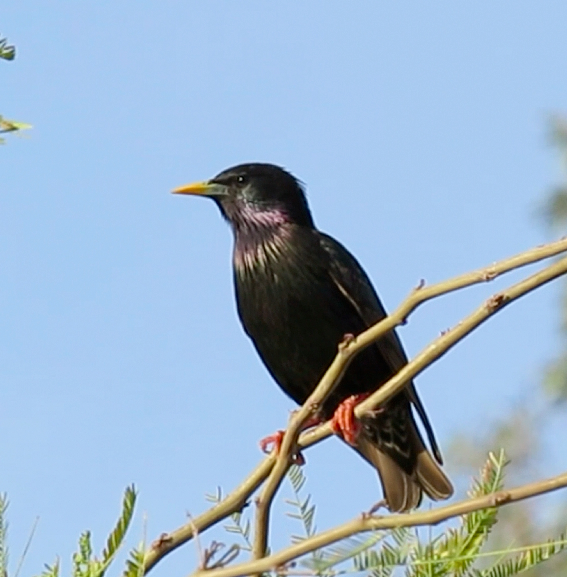
Thanks to Lauren Harter for the name of this European Starling.

Thanks to Lauren Harter for the name of this European Starling.  In the video the bird just sits on the branch as if to listen to the other bird calls.

In desperation, I asked these fence workers if they know where I can find some honeybees.

I asked the fence installers where I could find honeybees?  They pointed to a broken cinder block that I had just about stepped on.  There was my first sighting of bees.

At first I thought these were wasps, because I had never seen a ground hive of honeybees, but here they are with pollen baskets laden.
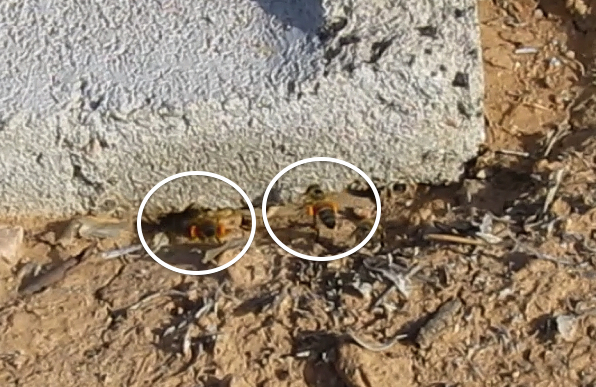
At first I thought these had to be wasps, because I had never seen a ground hive of honeybees, but here they are with pollen baskets laden.

Ground hive bees packing orange pollen.  I wonder where they're getting it?

Ground hive bees packing orange pollen. I wonder where they’re getting it?
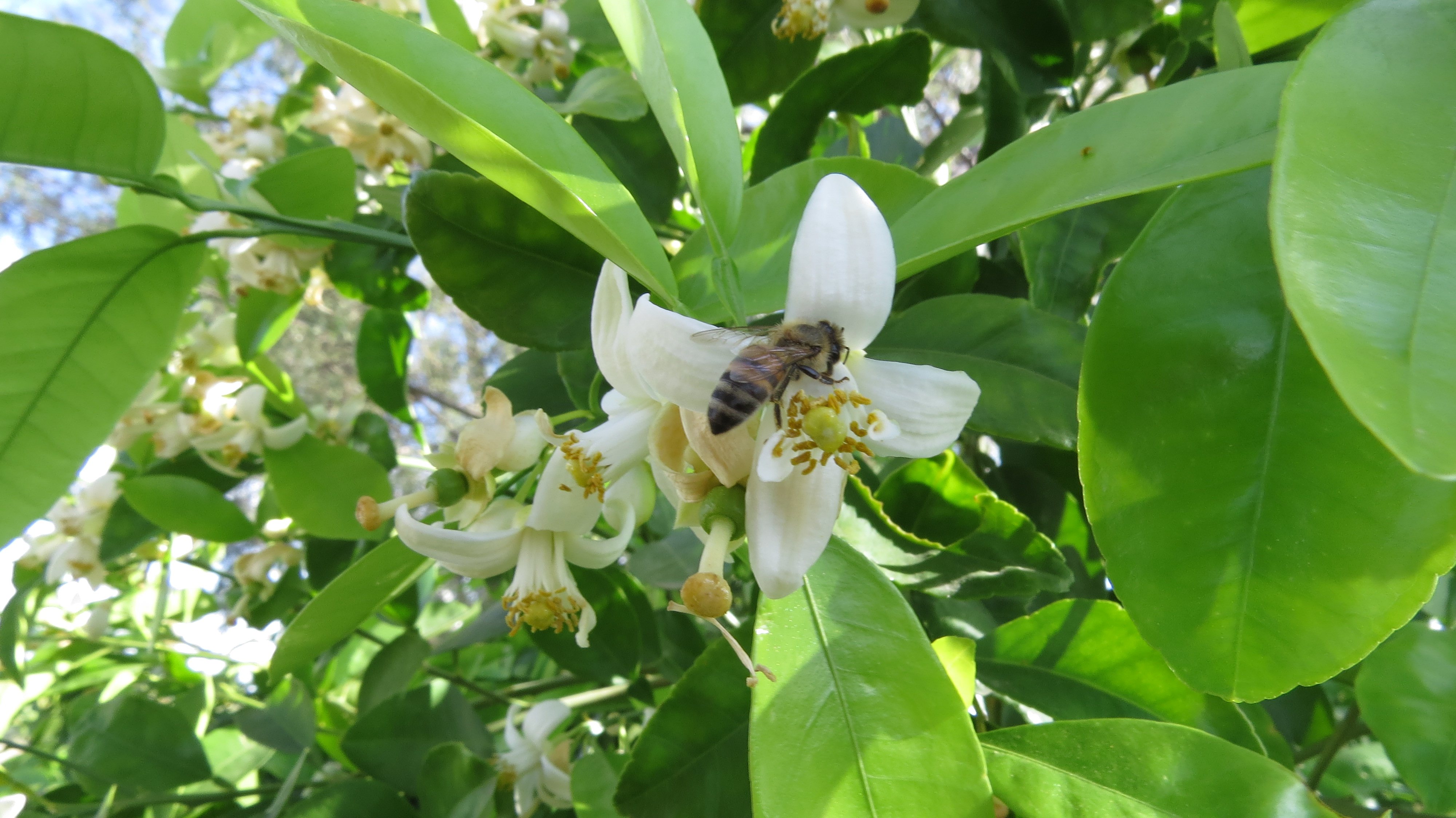
It's almost time to get packed up and head back to Oregon when my son-in-law mentions he saw bees on the grapefruit trees at the rental.

It’s almost time to get packed up and head back to Oregon when my son-in-law mentions he saw bees on the grapefruit trees at the house where we’re staying.
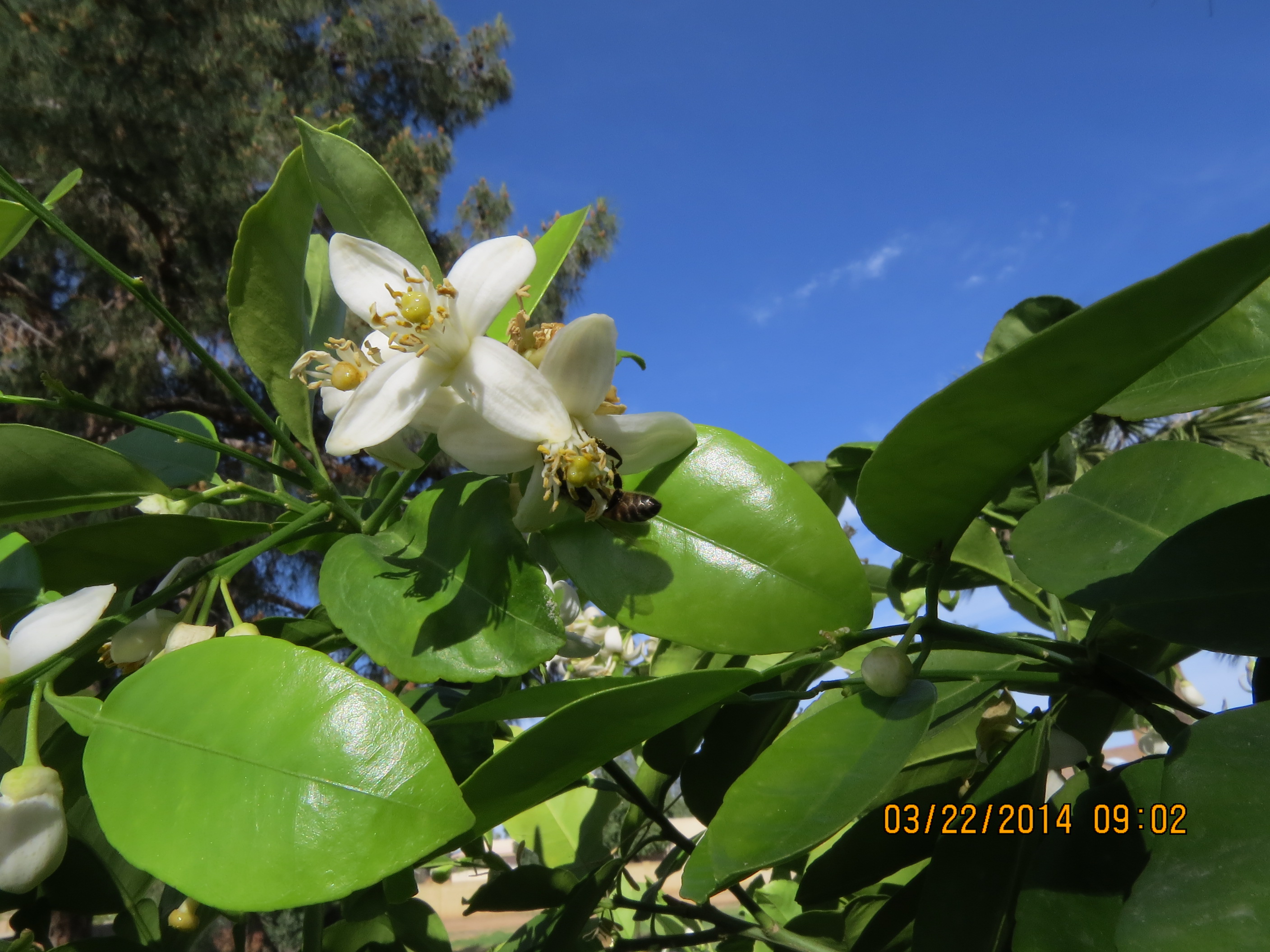
At last I find the bees, right in my own backyard.
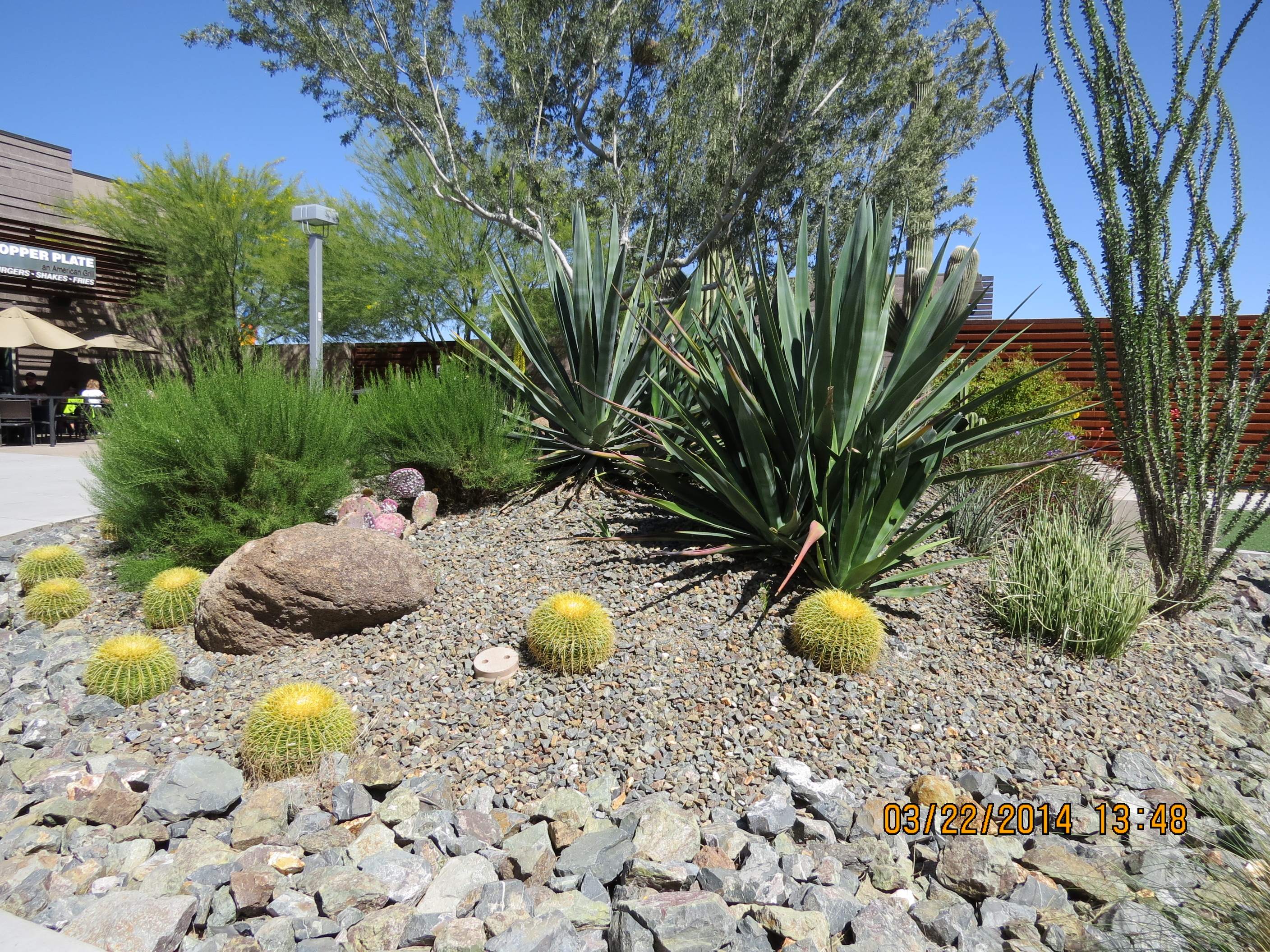
At last I find the bees, right in my own backyard.

One last desert setting at the airport.

One last desert setting at the Phoenix-Mesa airport.  It’s great to visit at this time of year and while I miss the desert colors and bird song in the spring, there is no chance I want to visit in the summer.

The video features a daybreak orchestra of bird calls.


If there is moisture, such as with skin, the tips actually curve once they have made contact, locking their spines in place just underneath the skins top layer. OUCH!

Read Full Post »

Another example of a ‘bully bee.’

A disagreement over blossom rights.

Our cat likes to play in this grass.  I have no idea why she likes it, but like it she does.  When I had the camera out shooting the bees on the pussy willow last week, I caught her in the act.

Read Full Post »

July 10, 2013...Spring veggies harvested, soil spaded and leveled, drip watering in place, this bed is ready to plant our winter garden.

July 7, 2013…Spring veggies harvested, soil spaded and leveled, drip watering in place, this bed is ready to plant our winter garden.

When we planted  turnips, lettuce and kale in July for our winter garden little did we know we were planting for the bees as well as ourselves.

July 28, 2013...turnips are growing nicely in the center, lettuce and kale are on the sides.

July 28, 2013…turnips are growing nicely in the center, lettuce and kale are on the sides. Deer netting over pvc hoops.

January 16, 2014...We had eaten most of the turnips and just left a few to go to seed.  We never thought the bees would be enjoying them in mid January.  What a welcome surprise.

January 16, 2014…We had eaten most of the turnips and just left a few to go to seed. We never thought the bees would be enjoying them in mid January. What a welcome surprise.

February 9, 2014...My apologies for posting such a fuzzy picture of a bee on the catkins,but it was rather high up.  I wanted to show where the pollen was coming from that is going into my log hive.

February 9, 2014…My apologies for posting such a fuzzy picture of a bee on the catkins,but it was rather high up. I wanted to show where the pollen was coming from that is going into my log hive.

February 9, 2014...Many colors of pollen entering the hive.  In the video you can see the bright yellow from the turnip flowers.  It's possible this is from the pussy willows that are just starting to blossom

February 9, 2014…Many colors of pollen can be seen entering the hive. In the video you can see the bright yellow pollen from turnip flowers. It’s possible this shot is from the pussy willows that are just starting to blossom.  The darker orange might be from early gorse.

February 10, 2014...Yellow turnip flowers have been flowering since mid January.  Pussy willows are starting to blossom already.

February 10, 2014…Yellow turnip flowers have been flowering since mid January. Pussy willows are starting to blossom already.  Second bed is producing greens for our salads.  We can eat them 15 minutes after they are picked…can’t get much fresher than that.  We cover them with plastic film (partially visible on far side) on nights of sub freezing temps.

Read Full Post »

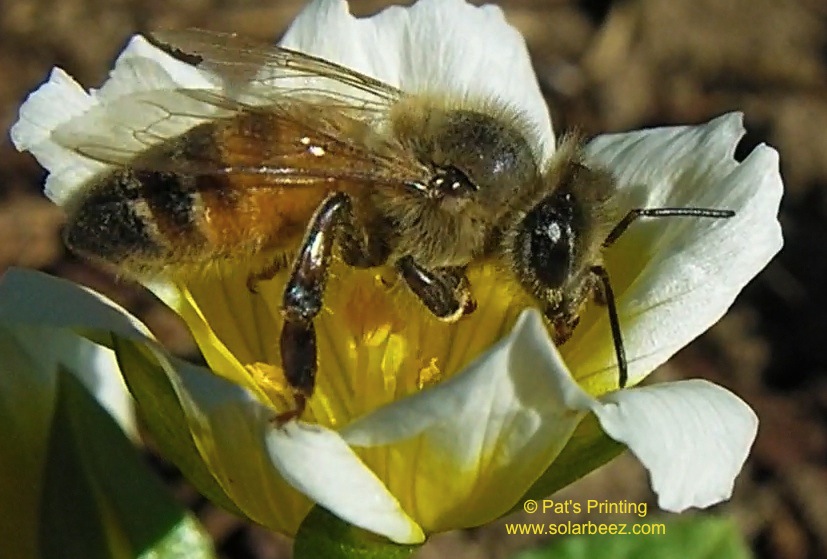
Last year in June, before the deer discovered it, the bees were on the Meadowfoam everyday.

Last year in June, before the deer discovered it, the bees were on the Meadowfoam everyday.

If you’ve ever watched the bees on a Poached Egg Meadowfoam (Limnanthes Douglasii),  you will want to grow some for your bees.    Last year I bought 12 plants from my friendly nursery (101 Plants).  The bees were on them everyday.  Unfortunately, the deer discovered them, and mowed them down.  This year I’m happy to say I found a source for seeds.  I’m buying 1000 seeds for under $5.00 from Outside Pride in Oregon.  With that many seeds, I can scatter them in quite a few areas (fenced in, this time).  The bees will love them and so will I.

aaaaa

Another photo taken shortly before the deer decided to sample it last year.

I was under the mistaken impression that Meadowfoam was grown mostly in Oregon and Northern California, but I see the Royal Horticultural Society in Great Britain has a listing for it as a Poached Egg Plant.

The oil from Limnanthes Alba is valuable…According to Oregon Meadowfoam Growers, meadowfoam oil is 20 times more stable than soybean oil, which means it does not deteriorate as readily when exposed to air. A gallon of meadowfoam oil is worth about $200 retail.

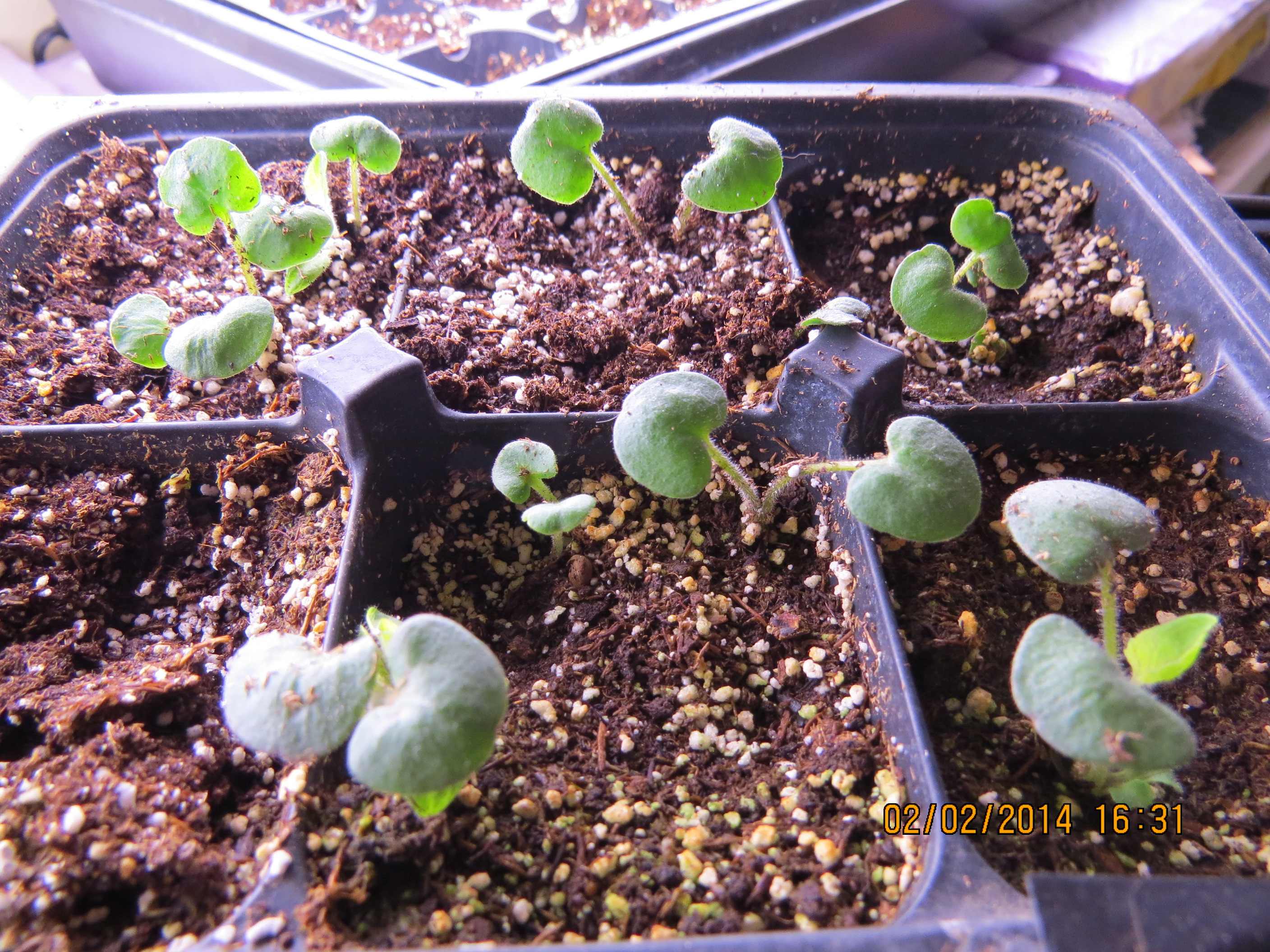
February 2, 2014...the salvia is looking strong.  Footnote...we replaced some bulbs with the full spectrum bulbs this year.  Hoping to lessen the legginess.

February 2, 2014…the salvia is looking strong. Footnote…we replaced some bulbs in the light stand with the full spectrum bulbs this year hoping to lessen the legginess. These look good.

June 28, 2013...Penstemon is a great bumblebee attraction.

June 28, 2013…Penstemon is a great bumblebee attraction.

Put date and caption here

June 9, 2013…Honeybees are getting nectar from the Pincushion Flowers (Scabiosa)

Don’t forget the butterflies!

February 3, 2014...received my Butterflyseed package today.  These bright flowers attract honeybees also.

February 3, 2014…received my Butterflyweed seed package today. These bright flowers attract honeybees also.

One of the beekeeping blogs I follow, written by Emma Sarah Tennant, featured a TED talk by Marla Spivak, showing the reasons why bees are disappearing and how we can help them by planting habitat.  We are proud to be a small part of a growing movement to help our wild pollinators.

Read Full Post »

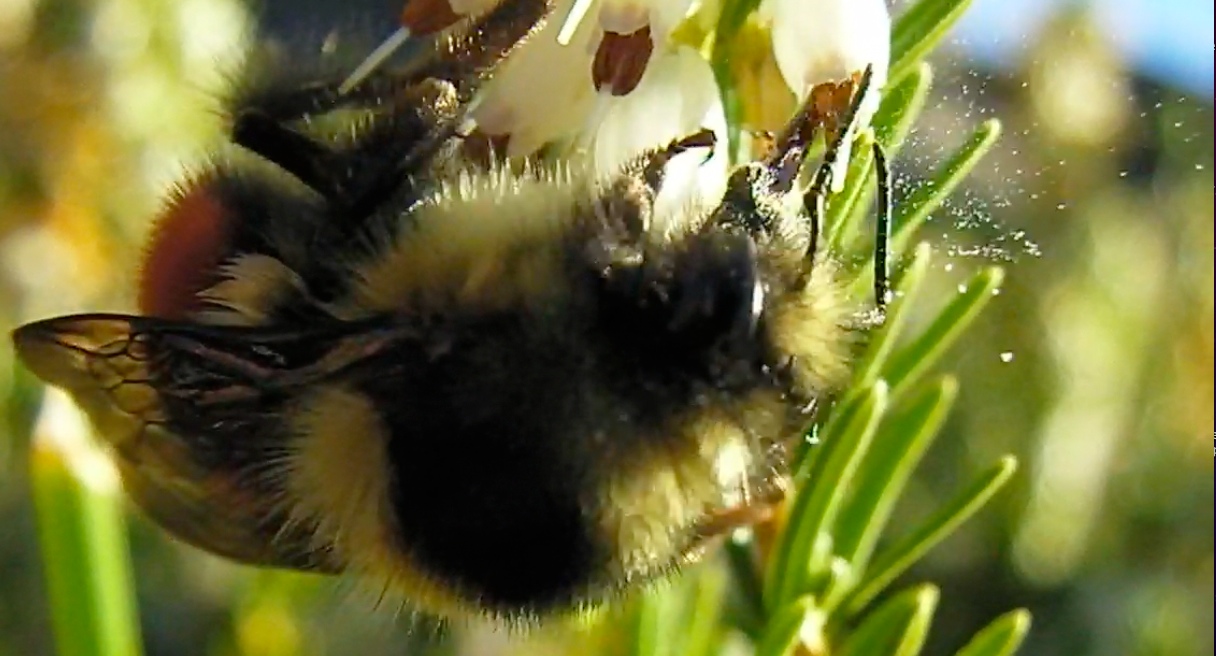
January 14, 2013...a beautiful warm day brought the bees out to the heather.  I saw very few honeybees, but very many bombus Melanopygus (this one) and also Bombus vosnesenskii (yellow-faced bumbles)

January 14, 2013…a beautiful warm day brought the bees out to the heather. I saw very few honeybees, but very many bombus Melanopygus (this one) and also Bombus vosnesenskii (yellow-faced bumbles)
Here you can see the pollen release.  When the bee gets the nectar, the pollen shoots out.

Here you can see the pollen release. When the bee gets the nectar, the pollen shoots out.

As she grooms herself with her front legs, you can see what looks to be a static electricity charge on her bee fuzz...shows up better on the video.

As she grooms herself with her front legs, you can see what looks to be a static electricity charge on her bee fuzz…it shows up better on the video.

This short video shows a bumblebee (bombus Melanopygus) sipping nectar from heather in mid January.  As she sips, pollen can be seen shooting out.  Later she grooms herself.  I noticed what looked to be a static electricity charge when her front legs combed her fuzzy head.

I didn’t want to interrupt the music so I added some video of my Bee-atrice log hive which didn’t make it through the sub freezing weather.   I looked at a comb which had some capped honey as well as uncapped cells.  I replaced the comb in the hopes that this hive will attract a swarm in spring.

It should be raining sideways this month.  It’s not.  After our cold snap, we’ve been enjoying daytime temperatures in the 50’s and 60’s F. (10’s and 20’s C)  When I filmed this it was 71 F. (22 C).  Our honeybees love it.  They are bringing back yellow and orange pollen.  I can’t figure where they’re getting it because the pussy willows aren’t blooming yet, but traffic is heavy as can bee seen on the video.

This is my second winter with bees.  They don’t fly when it’s raining of course, but we do get breaks in the rain, the sun pops out and the bees are flying.  I feel bad for the beekeepers that must tuck their charges to bed in the autumn and trust they will emerge when the weather warms up sometimes months later.  I’m talking about people like Emily Heath among others in cold far away places. 🙂 I guess you could say I’m spoiled to be able to see them active during the winter.   I don’t know what will happen in spring.  It’s possible we’ll get our rain then…given the choice, I’d rather get it now.  In any case the bees are making use of the warm weather.

How are your bees?

Read Full Post »

Oregon Grape-Holly

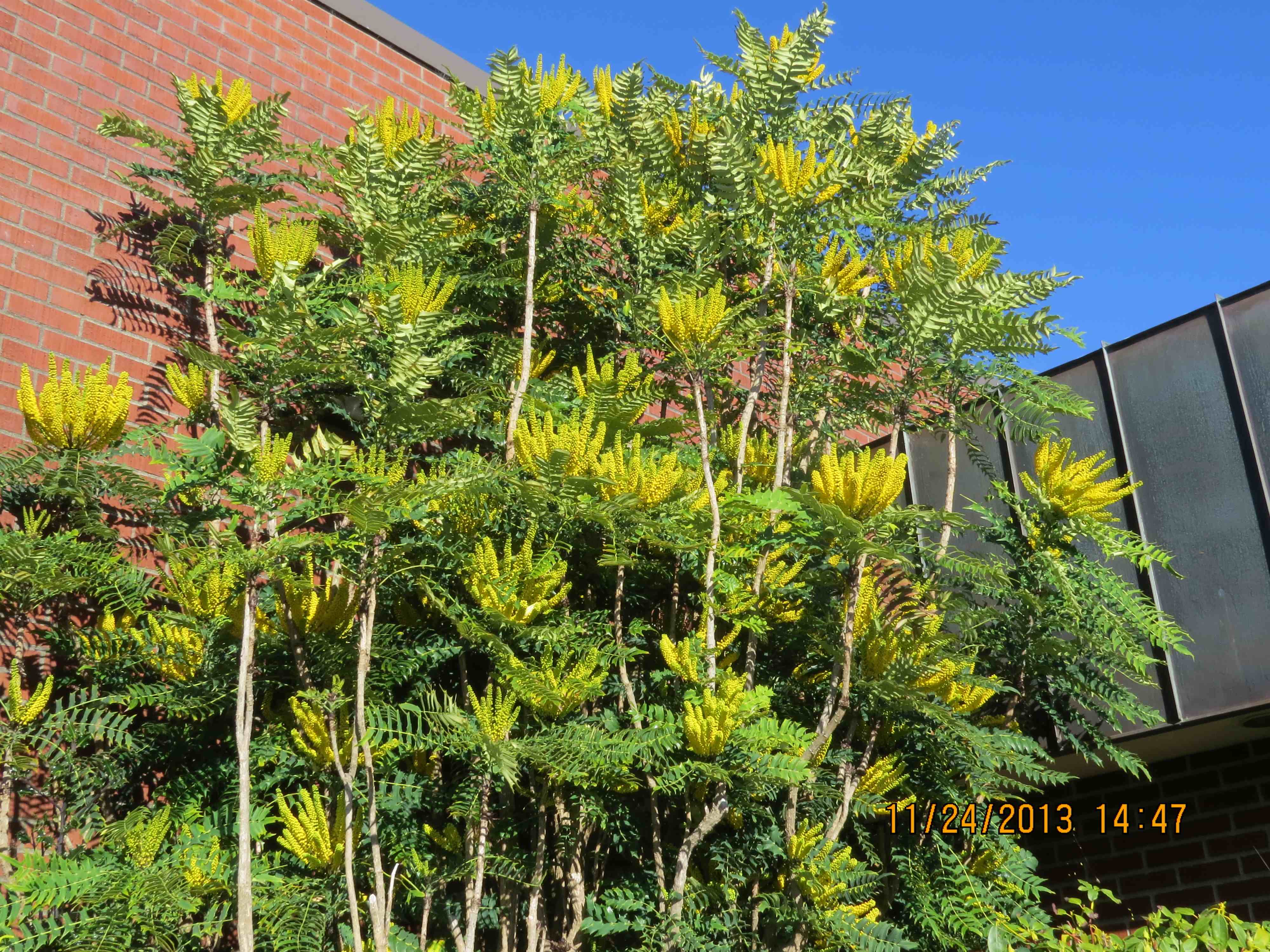
Oregon Grape-Holly blooming in late November

Most visitors to the post office go to get their mail.  These visitors go to get nectar.  The Oregon Grape Holly is in full bloom, offering nectar and nectar is what they got.  Honeybees, bumblebees, even a couple of green hummingbirds partake in the feast.

What is the importance of nectar?   My Biodiversity Garden states “Nectar is the fuel for our pollinators such as solitary bees, bumblebees, honeybees, butterflies, moths and bats. It is the only source of energy and without it, the pollinators cannot fly. Nectar is secreted by nectaries within the flower.”

According to Dave’s Gardens  Mahonia Aquifolium blooms in mid spring.  This is late November!  The plant is growing against a brick wall, facing south, during an unseasonably dry autumn.  In any case, the wild pollinators love it.

November 24th...This honeybee is getting nectar from an early blooming Oregon Grape Holly

November 24th…This honeybee is getting nectar from an early blooming Oregon Grape Holly (Mahonia Aquifolium)

Read Full Post »

Some of the bulbs being planted for the bees

Some of the bulbs being planted for the bees.  I was able to purchase these locally from my favorite nursery, 101 Plants and Gifts.

It’s possible that everyone already knows certain bulbs provide an early nectar source for bees.  I might be new to the game because, well, I’ve never really been overly appreciative of growing flowers.  “They take up space and use precious water.”  Being on a shallow well makes you a water miser.  But these grow during the rainy season.  Some can even be planted in the front lawn, not taking up space or using extra water as in the Siberian Squill.  Being a beekeeper has changed my attitude towards flowers.  Now my motto is, ” You can never have too many (bee-loving) flowers.”

Since I recently broke up a new patch of ground for the Towers of Jewel ‘trees’, I have some extra space I can dedicate to bulbs.  Che Guebuddha,  a blogger from Sweden,  mentioned even more bulbs like the white Snow Drops and the yellow Eranthis.  A quick call to find out I can’t get them locally, but I CAN get them from John Scheepers on the east coast.  I order another 150 more.  Looks like I’ll have to break more ground.  As an after thought I wonder if I have to worry about poisons on the bulbs.  Alicia at the customer service desk of John Scheepers, Inc. assures me “there are no sprays, poisons, or toxins associated with these bulbs.”  Good!  They are going in next weekend.

With the addition of bulbs, we'll provide early nectar as well as summer food.

Newly planted “Tower of Jewel ‘trees.  I’m counting on these plants to grow about 10 feet (3 meters) this spring.  With the addition of bulbs, we’ll be able to provide an early nectar source as well as mid summer nourishment for the honeybees and bumblebees.

12-26-13...Persian Blue Alliums are up already.  I don't know if that's a good thing or not!  I'm protecting this patch because the sub freezing temps are bad for the echium...something I didn't think about when I planted the bulbs. :-(

12-26-13…Drumstick Alliums are up already. I don’t know if that’s a good thing or not! I’m protecting this patch because the sub freezing temps are bad for the echium (Tower of Jewels)…something I didn’t think about when I planted the bulbs. 😦

February 5, 2014...Grape Hyacinth and 15 Drumstick Allium are up.  Giant Snowdrops just breaking.

February 5, 2014…Grape Hyacinth and 15 Drumstick Allium are up. Giant Snowdrops just breaking.

February 5, 2-14...close up of Grape Hyacinth.  My wife says I planted them too close together.  She might be right.

February 5, 2014…close up of Grape Hyacinth. My wife says I planted them too close together. She might be right.


Read Full Post »

But they ARE echium ‘trees’;  more specifically, Towers of Jewels.

I spaded the this patch of turf, then kept finding more and more transplants to put in.

I spaded the this patch of turf, then kept finding more and more transplants to put in.

Last year the only one I had grew 10 feet (3 meters) in a single year.  The bumblebees loved it.  They worked it mid May til mid September.  I kept thinking about collecting seeds, then forgot.  Not to worry, I’ve got plenty of ‘upstarts’ now.

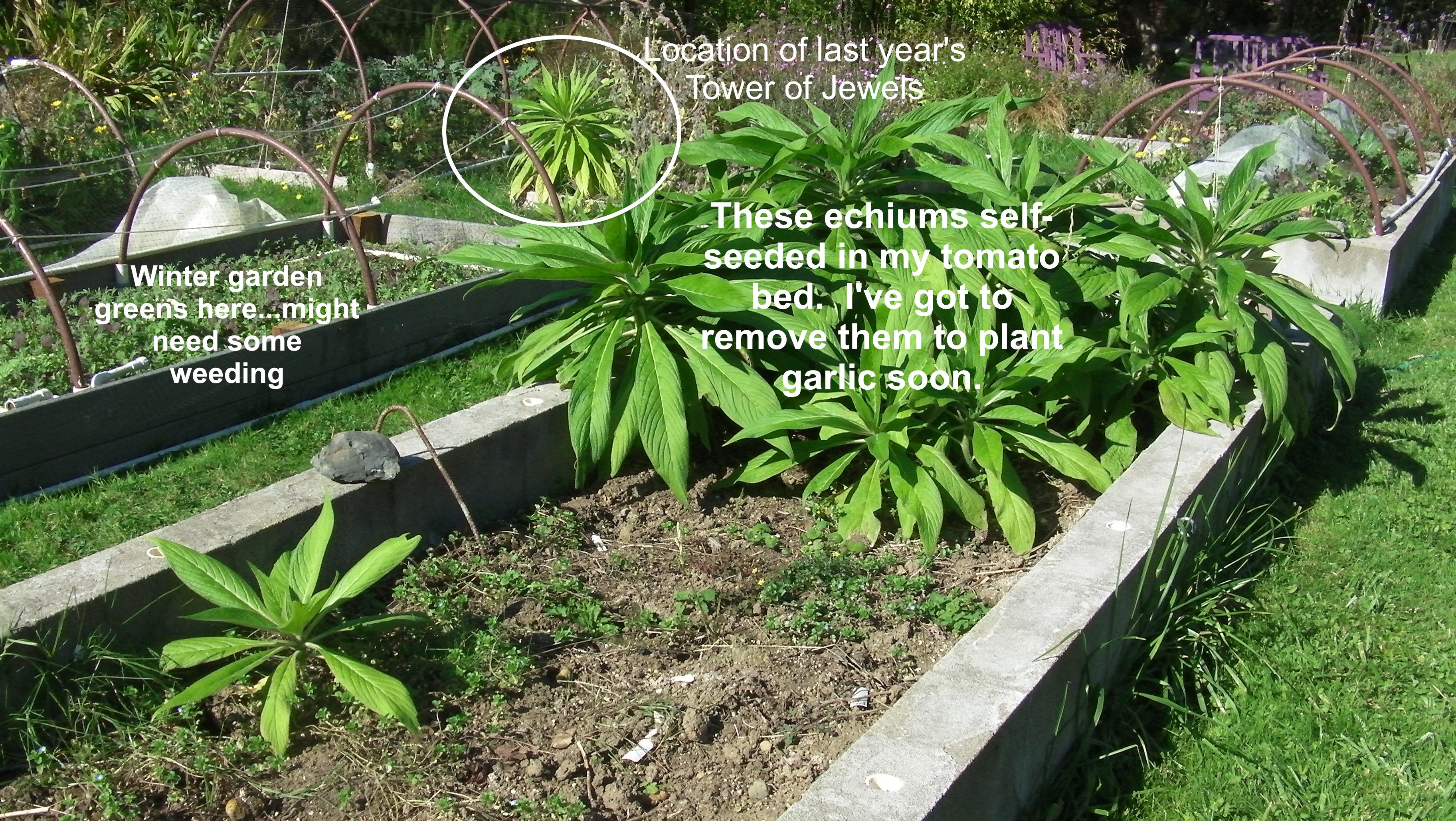
If I ever had any doubts that the Tower of Jewels would throw seeds, those doubts have vanished.  Self-seeded echium in garlic bed.

If I ever had any doubts that the Tower of Jewels would throw seeds, those doubts have vanished.      I’ve got to get these out of here to plant garlic.  If I don’t transplant them, my wife has threatened to ‘toss’ them.  Why?  We have so many.

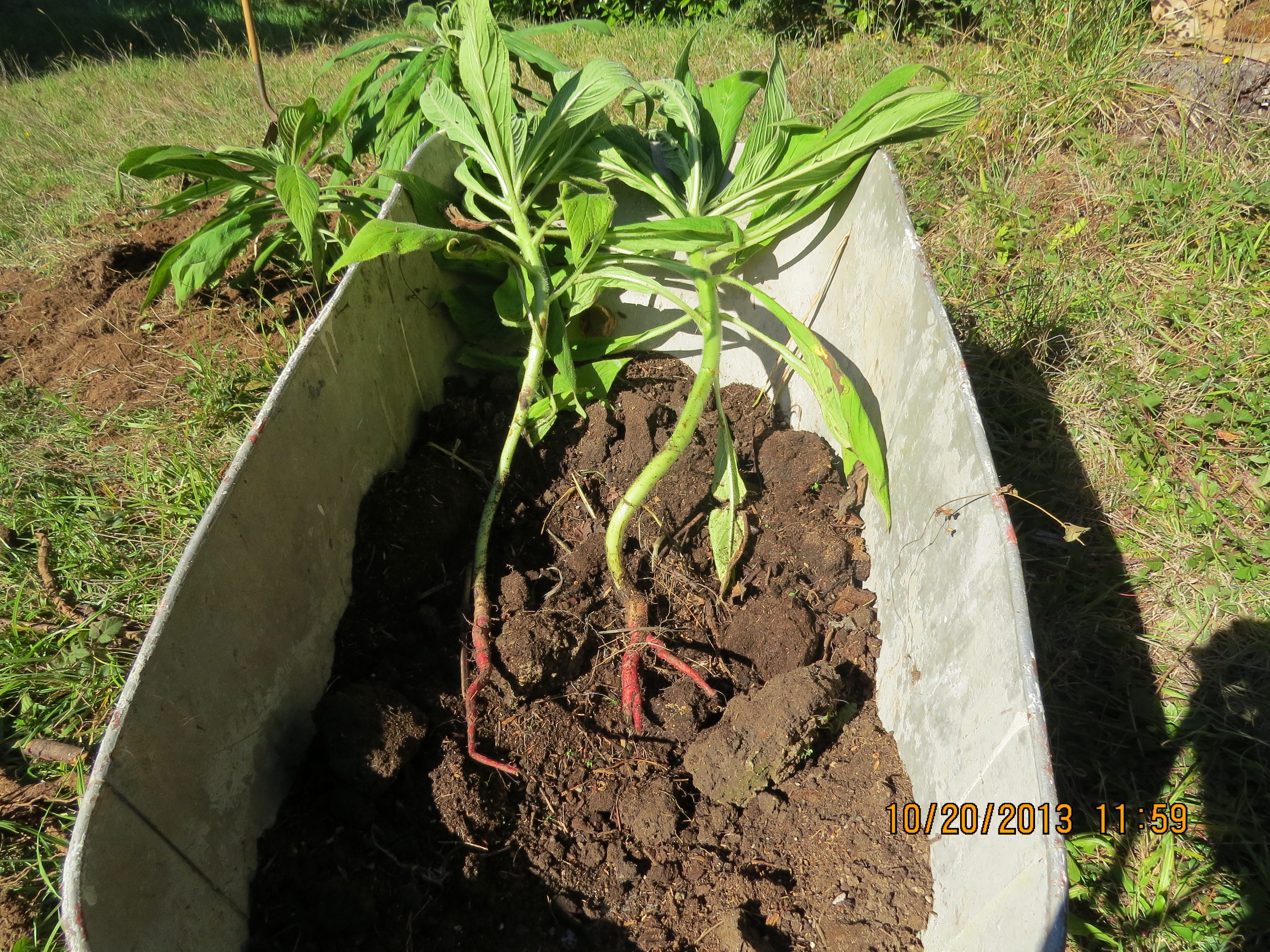
The plants don't have big root balls.   Hope they take.

The plants don’t have big root balls. Hope they take.

These look a little wilty.

October 20, hummm, they look a little wilty.  I better water them.

November 9, 2013...They are starting to look better after I trimmed the lower leaves. What are the tires for?  They are to hold up the tarp to protect them from freezing.  Not too hard to cover them when they are this short.

November 9, 2013…They are starting to look better after I trimmed the lower leaves.
What are the tires for? They are to hold up a tarp to protect them from freezing.

November 13...Echium in the sun, looks good.

November 13…Echium in the sun, looks good.  This will be the area I’ll plant some of my “Bulbs for the Bees,”  Snowdrops, Winter Aconite, and Siberian Scilla.

According to Palmbob, at Dave’s garden, trying to transplant it, ends up killing it, but these are still growing almost a month after transplanting.    The Tower of Jewels is a member of the Boraginaceae family which includes borage (grows all year here) and comfrey which I planted 40 years ago and is still coming back.  I’m hoping these will grow to be tall nectar sources for bees and butterflies.

11-24-13...I've had to take drastic action for the cold weather.  Bags of leaves hold up the tarp, tires hold it down.

11-24-13…I’ve had to take drastic action for the cold weather. Bags of leaves hold up the tarp, tires hold it down.

12-26-13...These echium have definitely taken a hit from the sub freezing temps we've been experiencing for a couple of weeks.  I hope they make it.

12-26-13…These echium have definitely taken a hit from the sub freezing temps we’ve been experiencing for a couple of weeks. I hope they make it.

February 5, 2014...Five out of six have survived so far.  These sub freezing nights are NOT helping.  I cover them with blankets and a plastic tarp every night.

February 5, 2014…Five out of six have survived so far. These sub freezing nights are NOT helping. I cover them with blankets and a plastic tarp every night.

February 5, 2014...new growth means it's still alive!  More cold nights forecast so I've got to keep them protected.

February 5, 2014…new growth means it’s still alive! More cold nights forecast so I’ve got to keep them protected.

Feb. 5, 2014...These four echium are more slightly more protected.  They were put here as a back up (Plan Bee)

Feb. 5, 2014…These four echium in the backyard are slightly more protected. They were put here as a back up (Plan Bee).  I didn’t think it was a very good spot because of the shade, but they are doing the best of the bunch.

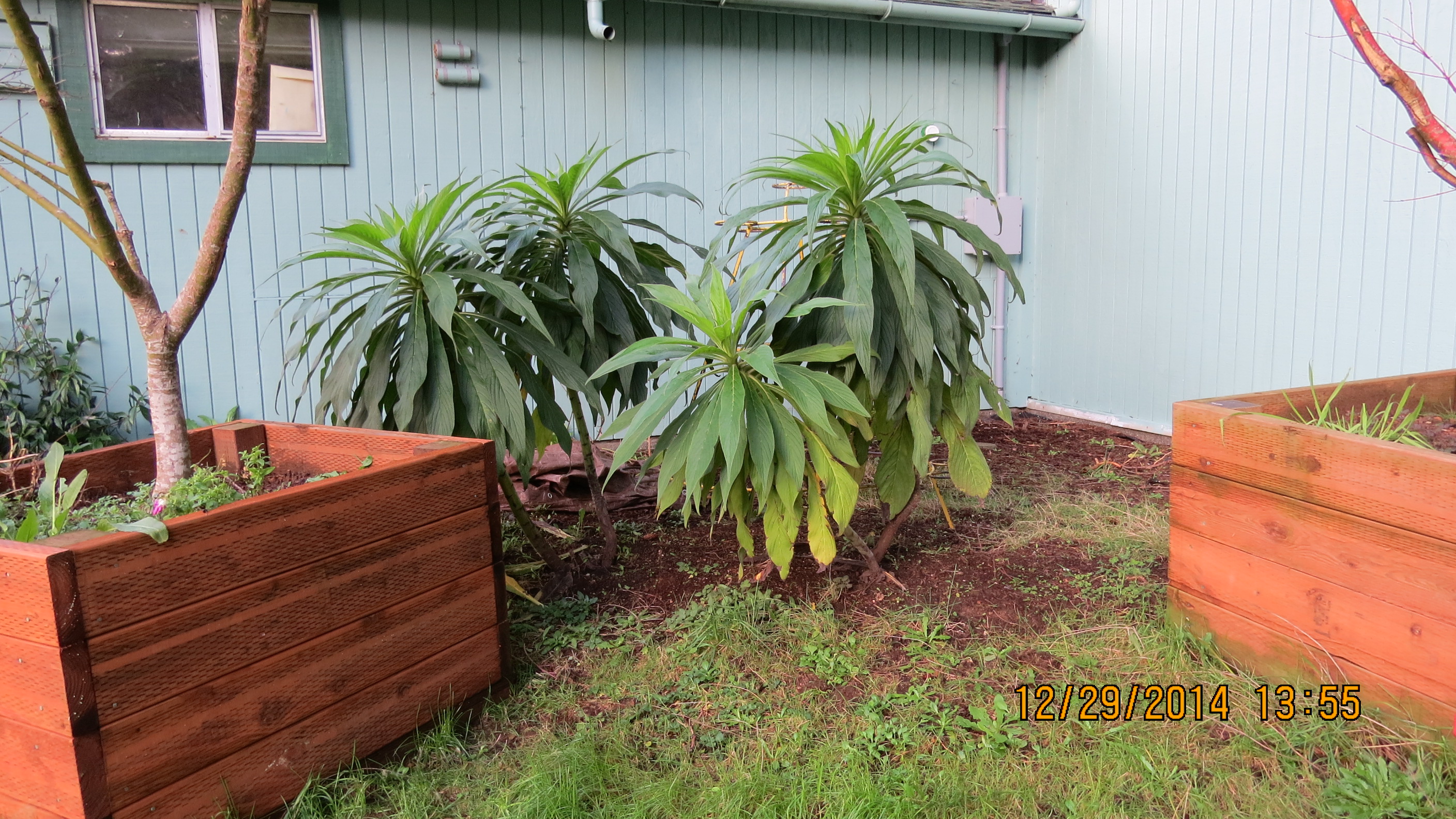
12-29-14...I shot these  back yard echium to show the progress they have made.  No blossoms in 2014 means they will blossom in 2015 (if they make it through the winter without frost damage.

12-29-14…I shot these backyard echium to show the progress they have made. No blossoms in 2014 means they will blossom in 2015 (if they make it through the winter without frost damage.)

March 9, 2015...Is this the year the echium will bloom?  I sure hope so.  It's putting on a spurt of growth.

March 9, 2015…Is this the year the echium will bloom? I sure hope so. It’s putting on a spurt of growth.

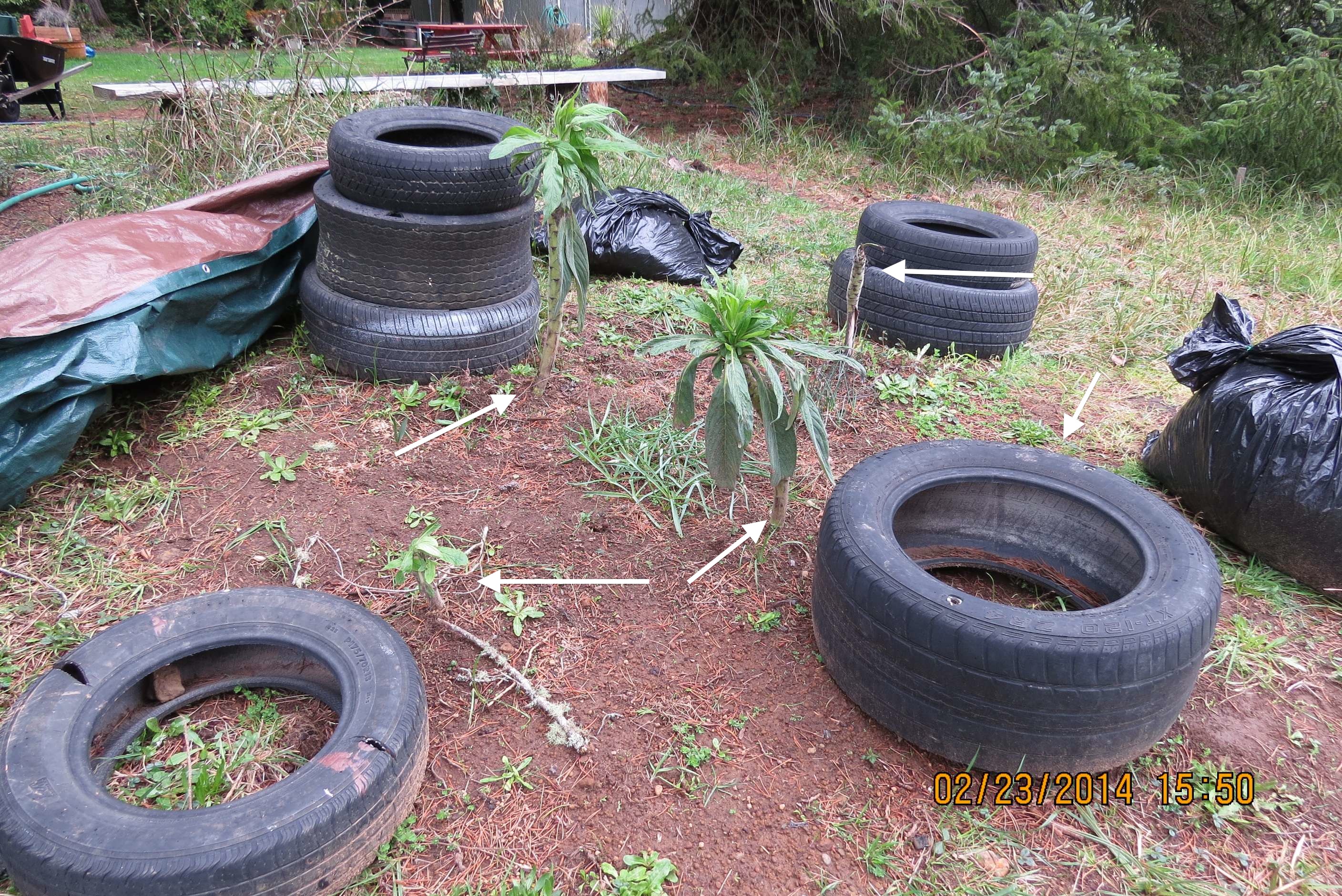
February 23, 2014...five echium still hanging on, barely.

February 23, 2014…five echium still hanging on, barely.

February 23, 2014...This poor echium plant suffered in the cold temps, but it's still showing signs of life.

February 23, 2014…This poor echium plant suffered in the cold temps, but it’s still showing signs of life.  Footnote…it didn’t make it.

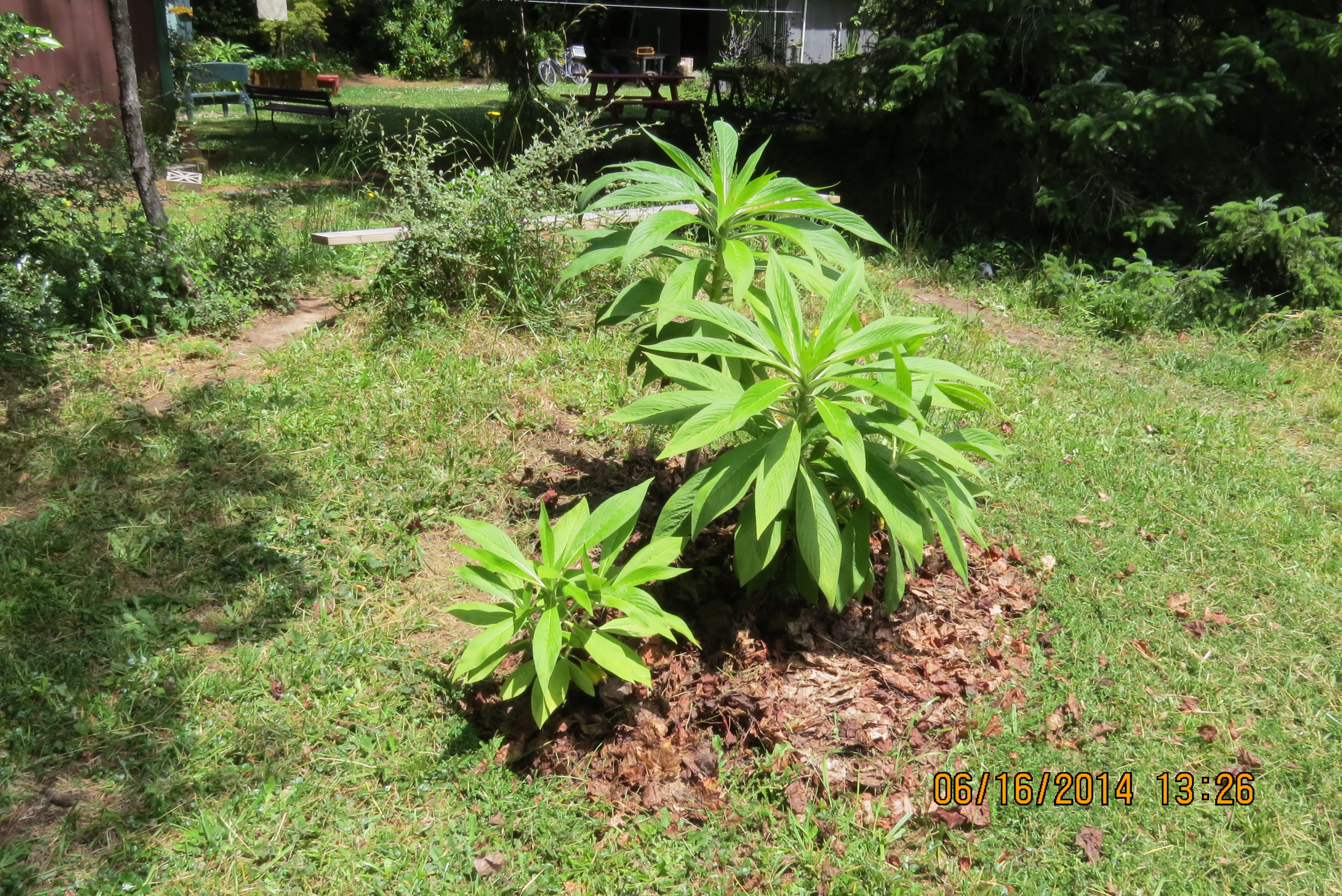
June 16, 2014...Three echiums made it through the winter, but it looks like they are not going to bloom this year.  Sometimes it's the second year and sometimes it's the third year.  It looks like I'm going to have to wait a year.

June 16, 2014…Three echiums made it through the winter, but it looks like they are not going to bloom this year. Sometimes it’s the second year and sometimes it’s the third year. I guess I’m going to have to wait a year.  😦

12-29-14...There are still 3 echium plants going into winter, although one looks a little sick.  I wanted to shoot a photo before I covered them up with tarps prior to the big freeze this week.

12-29-14…There are still 3 echium plants going into winter, although one looks a little sick. I wanted to shoot a photo before I covered them up with tarps prior to the big freeze this week.

March 9...This echium also has been adding height.  I notice it most when I try to pull the tarp over the top to protect it from frost.

March 9…This echium has also been adding height.  I started noticing it when I tried to pull the tarp over the top to protect it from frost.  We haven’t seen any bud starts yet.

March 19...I just noticed the tallest echium (in the picture above) is starting to send out blossoms.  Hooray!

March 19…I just noticed the tallest echium (in the picture above) is starting to send out bud starts. Hooray!

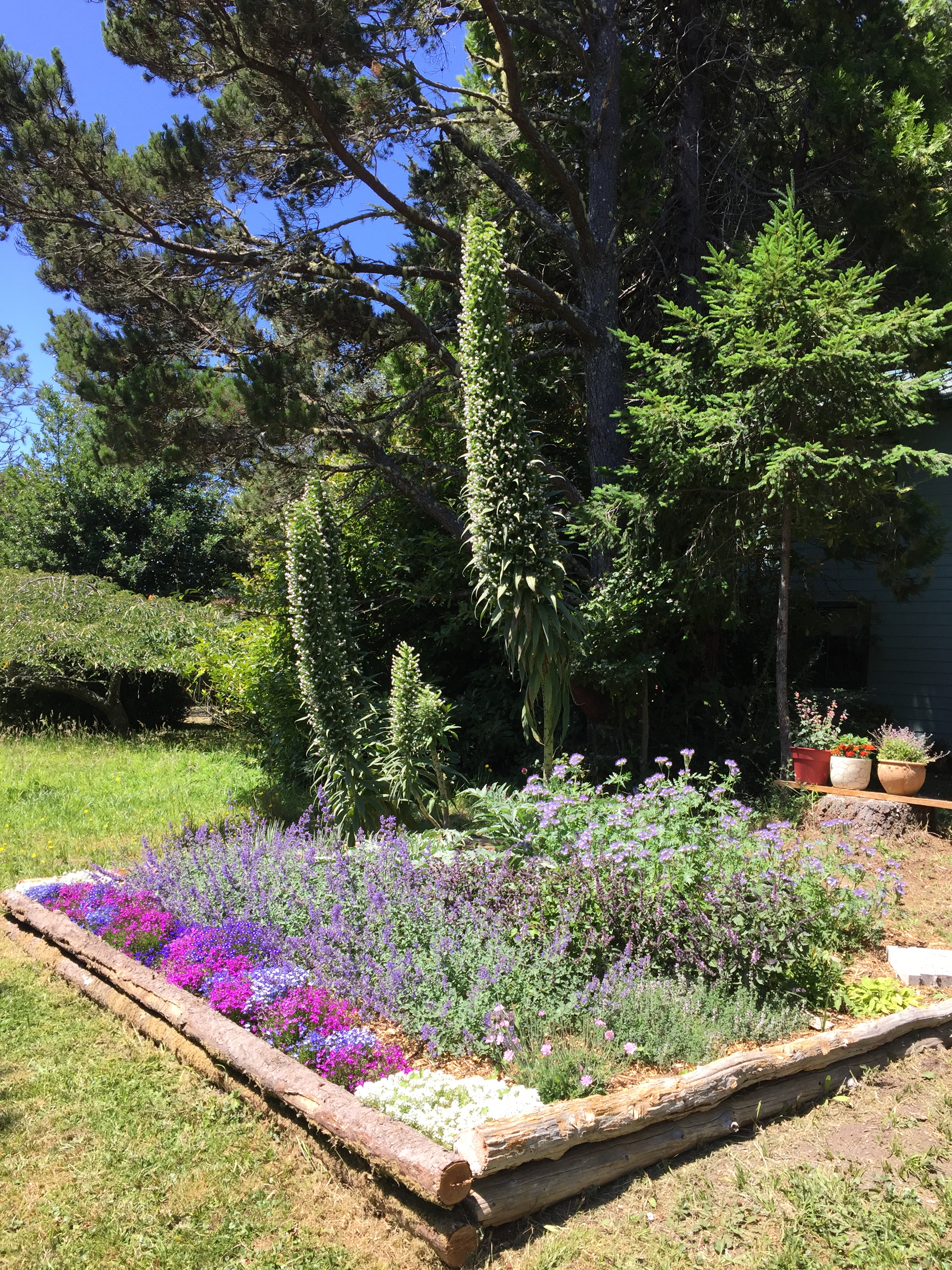
July 14, 2015...In the spring, we enlarged this bed and planted some bee-loving plants along with the echium.

July 14, 2015…In the spring, we enlarged this bed and planted some bee-loving plants along with the Towers of Jewels echium plants shown in the background.

Read Full Post »

Sweet Thunder provides the delightful musical background for this video of hummingbirds, bees, and butterflies at work in my garden on the Oregon Coast.

Read Full Post »

Siberian Squill, that is.

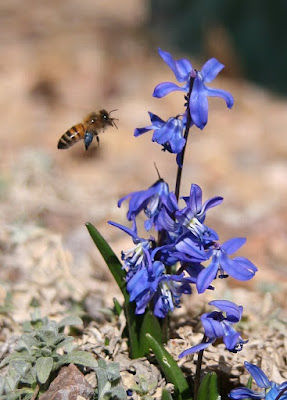
“An excellent source of blue pollen,” says BBHB, who has graciously given me permission to use his photo of Siberian Squill.

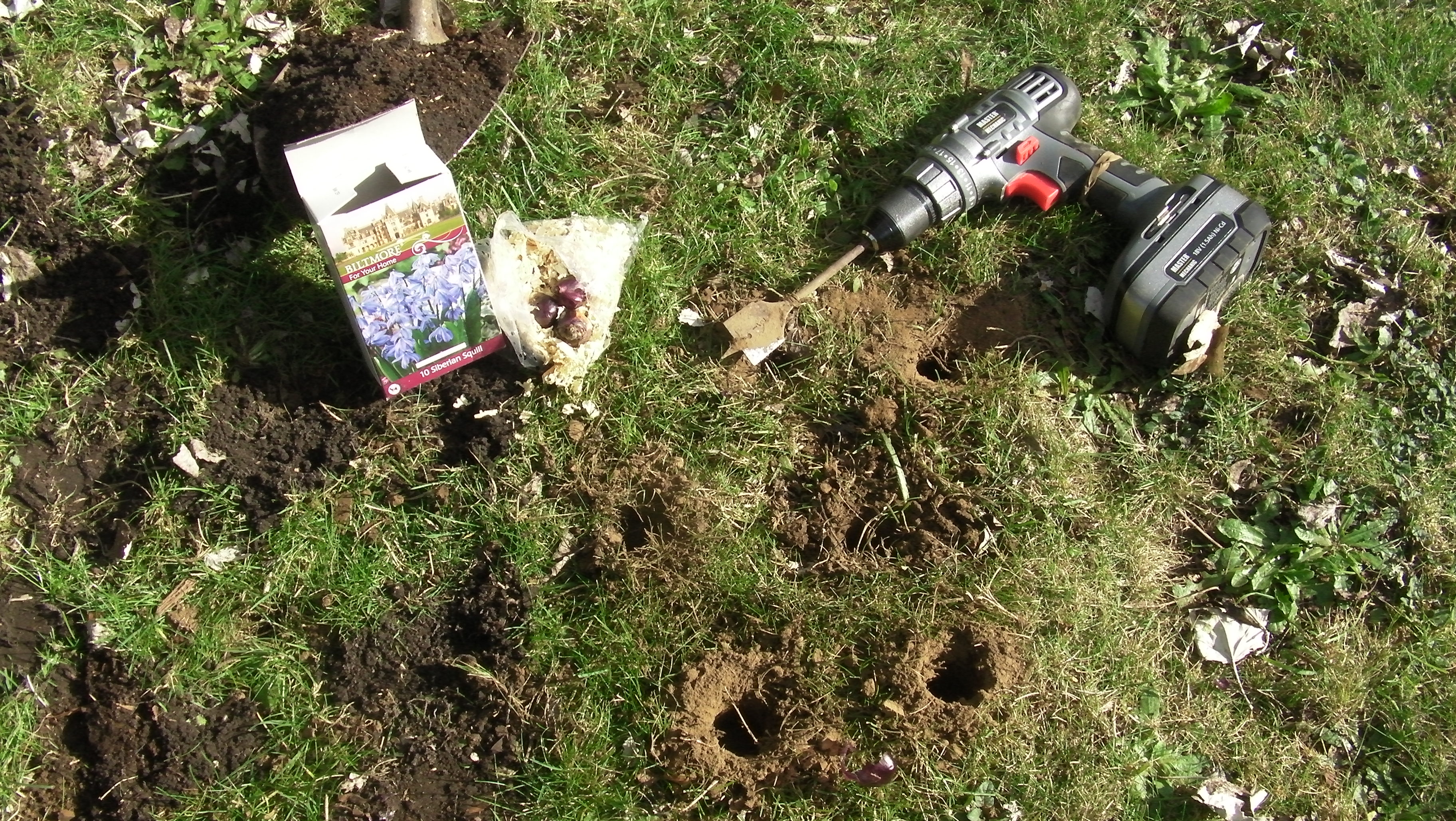
Planting instructions according to Wisconsin Master Gardening Program:  Plant the small bulbs in the fall, placing them 2 to 3 inches deep and 2 to 4 inches apart.  Because of the ephemeral nature of the foliage, this small bulb can easily be grown in sunny lawns. To plant Siberian squill in turf, scatter the bulbs randomly in the area you want them. Then punch or auger a hole in the sod, using a dibble or other implement (some people suggest a cordless drill with a large bit), wherever a bulb has fallen. Place the bulb (pointed side up) at the bottom of the hole and fill in with additional soil. Wait until the bulb’s foliage has started to die down in spring before resuming mowing the lawn.

That sounds easy enough.  I’m planting them tomorrow.

One of the first spring-flowering bulbs, easy to grow, cold hardy,  blue pollen for the bees..what’s not to like?  It’s considered invasive.

Discussion about Siberian Squill on beesource.com  Why is it that so many of the plants that bees like are considered invasive???  I’m planting anyway because it’s an early food source, good for the bees,  can grow in my lawn, is deer resistant, and will go dormant by mid May.

The cordless drill worked well.  I planted 50 bulbs hoping it would be enough to get videos of bees carrying blue pollen in March.

November 9, 2013…The cordless drill worked well. I planted 50 bulbs of Siberian Squill hoping it would be enough to get videos of bees carrying blue pollen in March.  Snowdrops will be going in as soon as I can find a source.

Read Full Post »

« Newer Posts - Older Posts »