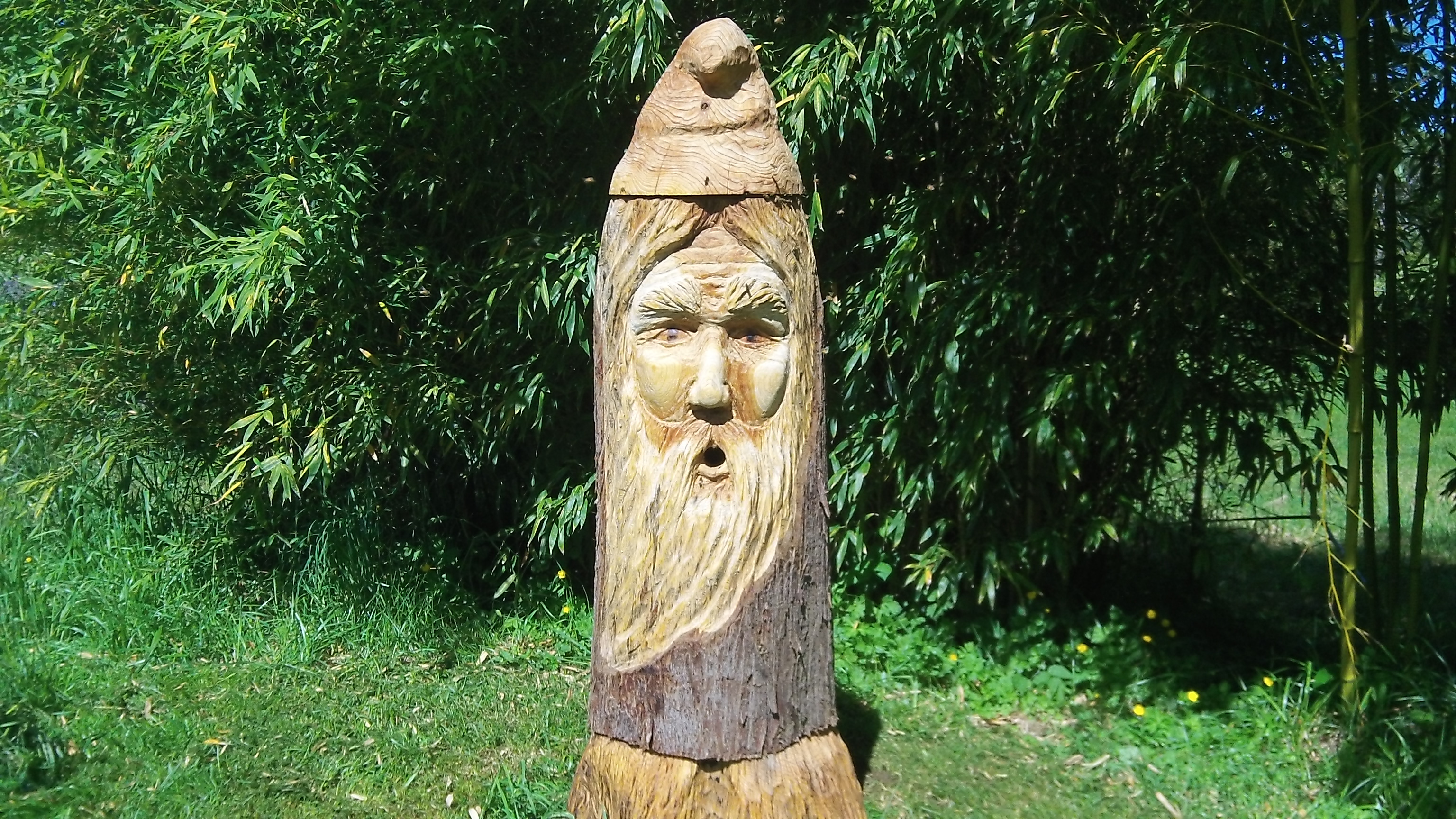
Bee Beard Gets a Life (20,000).
The creation of Bee Beard was influenced by many different people. Hal (The Story of Hal’s Bee Trees) was the main instigator. He started his first log hive around May or June 2011. I was impressed that a swarm had actually picked his log hive to live in. I liked his hands-off log hive credo…
“BEES WILL NOT BE MOVED, MEDICATED OR ROBBED OF HONEY
THE COLONY MAY SWARM AS DIRECTED BY NATURE”
I wanted to try the same thing, but not being retired I knew I wouldn’t be able to spend so much time hollowing it out. I looked up log hives on the web and came across Gaia Bees. I emailed Michael Thiele who gave me directions on hollowing out the log. It was about this time that a new beekeeping friend, Terry Kelly of Berkeley, a writer, top bar beekeeper, and mushroom log grower, started sending me packets of bee articles he liked. My log was partially hollowed out when another packet of articles came in the mail. The very first thing I saw were copies of Slovenian Bee Hive Art. Not only were there paintings but there was a face carved on the front of a hive that served as the entrance to the hive. The bees entered through the mouth, nose, and eyes into the hive. It took all of 10 seconds to decide I wanted to do something like that on my log hive.
I shared my idea of a wood carving with my wife, and she suggested I try the new chainsaw wood carver in town. I talked up the idea with Brian and Zada Vorwaller. He offered some suggestions and we came up with Bee Beard. His wife, Zada videotaped the carving and my son-in-law, Jim Montgomery edited, sped it up, and made it you-tube acceptable.
I wanted feral bees if possible, but commercial hives are placed in the bogs near me between late May into mid July. I knew I had to populate the hives before the bog bees got interested. How to get feral bees became an obsession. After reading McCartney Taylor’s book on Swarm Traps and Bait Hives, I built 9 bait hives. Hung them mostly on private property. I want to thank Bernhard Zaunreiter (see Swarm Trapping 2012) for posting a photographic “how-to prepare bait hives” post on the biobee.com forum,” and answering my bait hive questions.
I finally was rewarded after placing two boxes on or near feral bee hive trees. On one of the weekly inspections, both had caught swarms. This bottom tree supplied Bee Beard.
The transfer of bees from bait hive to Bee Beard was quite an adventure, but the bees are settling in now and the itching is subsiding.
I want to express my appreciation to Phil Chandler for creating biobees.com forum. I’ve got so much to learn and this is a very friendly, positive and informative place to do that. Thanks to those stalwart friends who gave me encouragement during my dark days of no bees, when I started regretting not ordering package bees and despairing that I wouldn’t get ANY bees for another year. Mobeek, Bugscouter, KittyLabyrinth, newwoman, baz, and jaywoo kept me going.
This short video shows the bees entering through the hat. I left a little gap in the quilt box to make it easier to pull out. I think that’s where they are going. A few enter through the mouth entrance. I’m hoping when the comb gets built down that far, they will use the mouth entrance more.
I noticed the bamboo is shading the hive too much in the afternoon…the Warre Hive, on the south side of the bamboo works 1-2 hours longer, so I’m going to trim back the bamboo to get more sun in late afternoon. After all, that could spell the difference between making it, or not making it.
Bee-atrice Log Hive Steps into Prime Time
Grand Kids Log Hive gets bees…two swarms almost at same time.


 Adventures in Natural Beekeeping