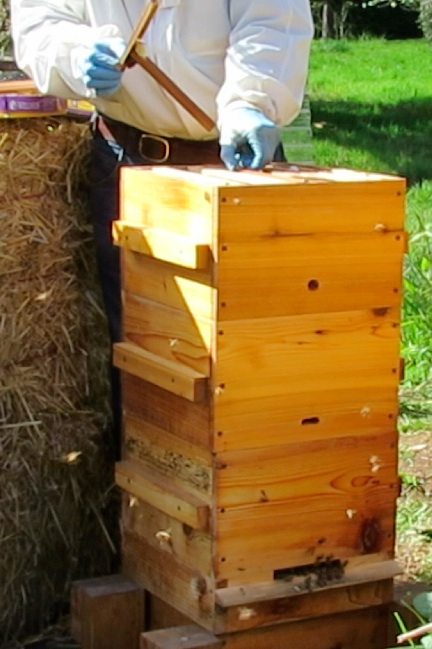
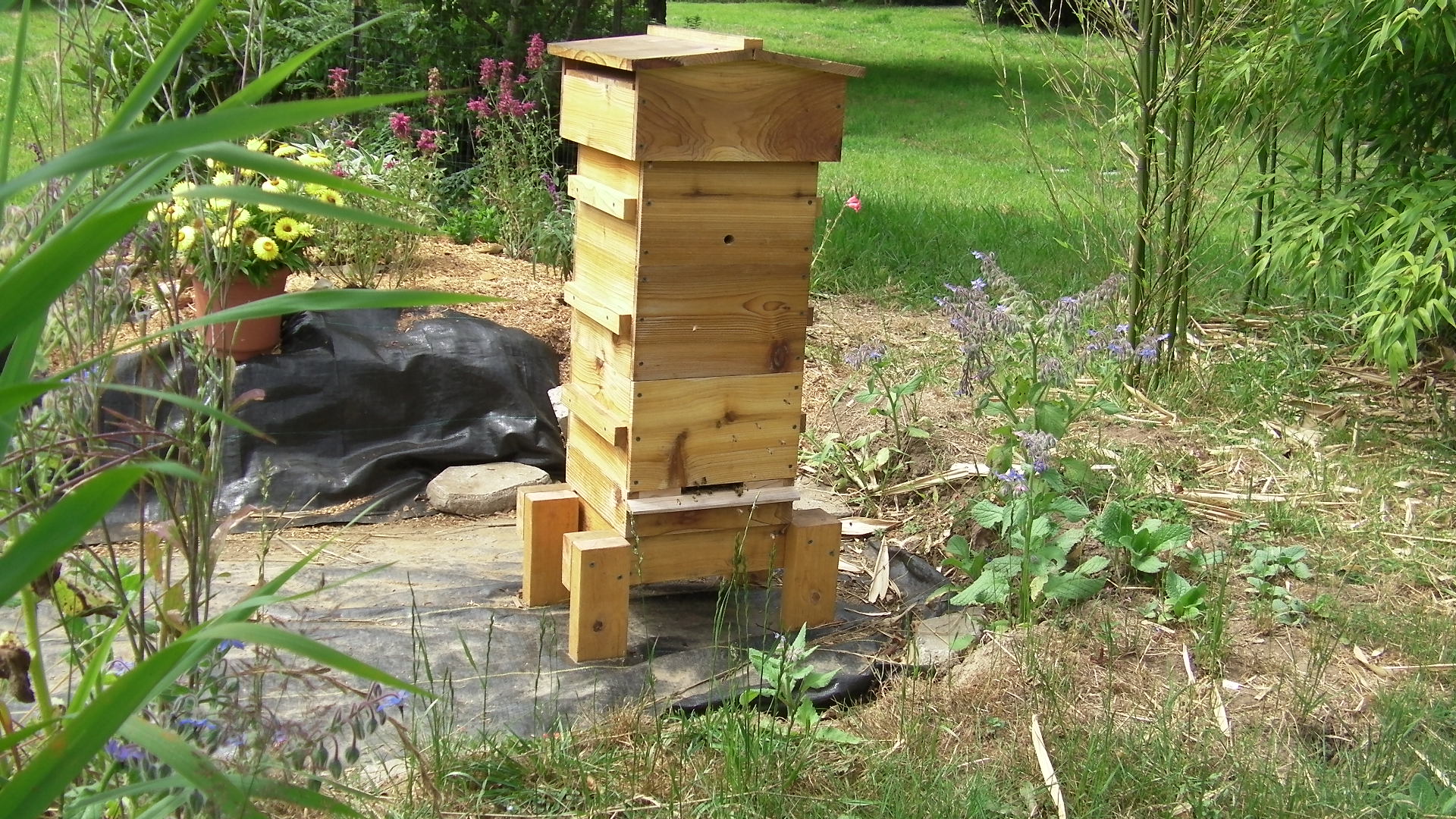
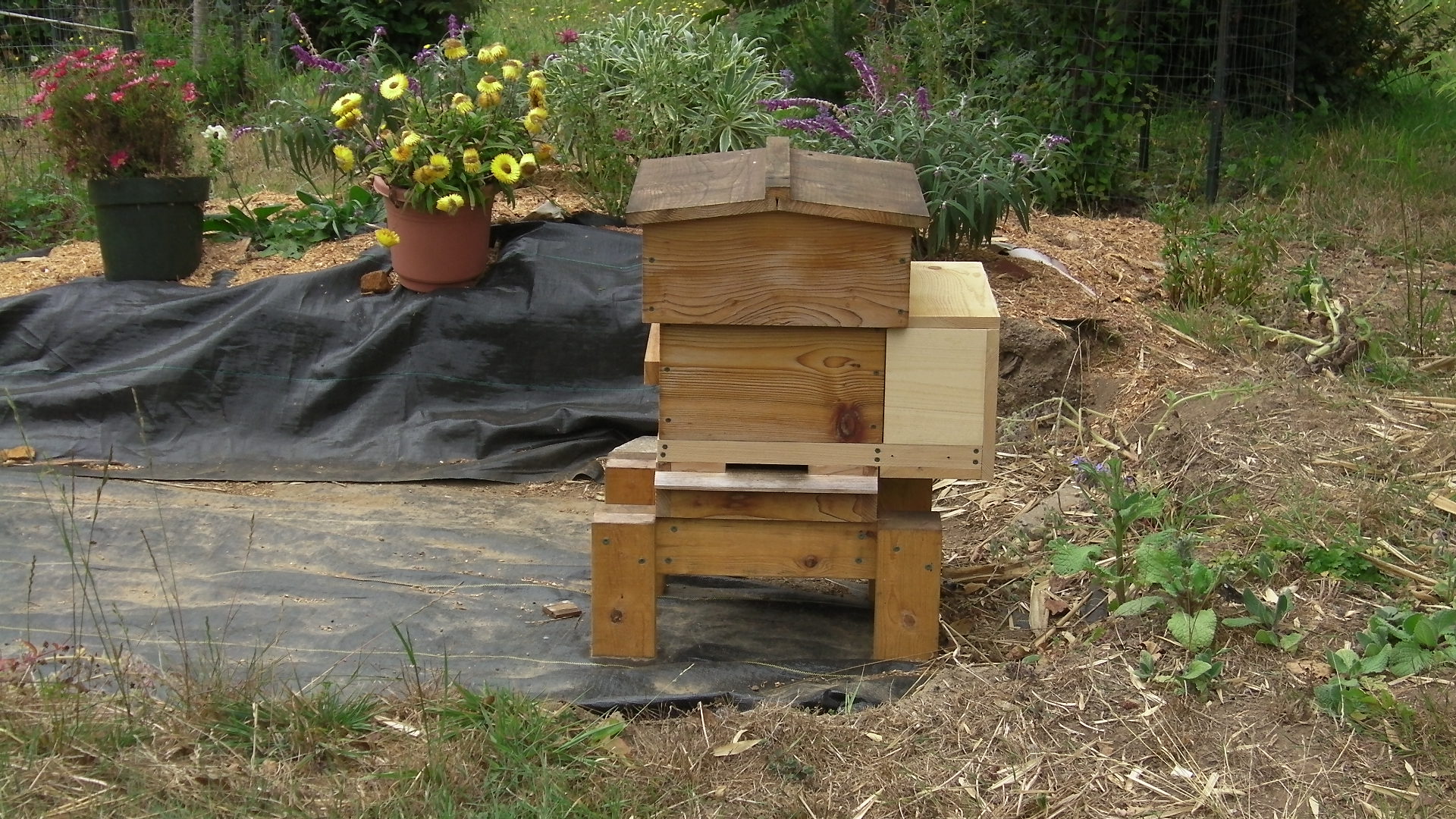
My first Warre is the one on the left. It’s the one I was really worried about not getting through the winter. It wintered over with only one box which is now on the bottom.
I don’t know why I was so skeptical when people talked about getting honey bound. I guess I never thought I’d get ANY honey at all because the summers on the coast are so windy and cool. Our main goal was to provide a place for the bees to live, let them pollinate our flower and vegetable garden, and just take pleasure in watching them do their thing.
When we captured a swarm last year to inhabit the Warre, it was a small one which seemed to build the first box very quickly and then just stopped building. I wintered over with just one box and on the advice of many more knowledgeable people, fed the bees a dry sugar paddy.
Bottom box (#1) over wintered successfully. So we added box #2 in February.
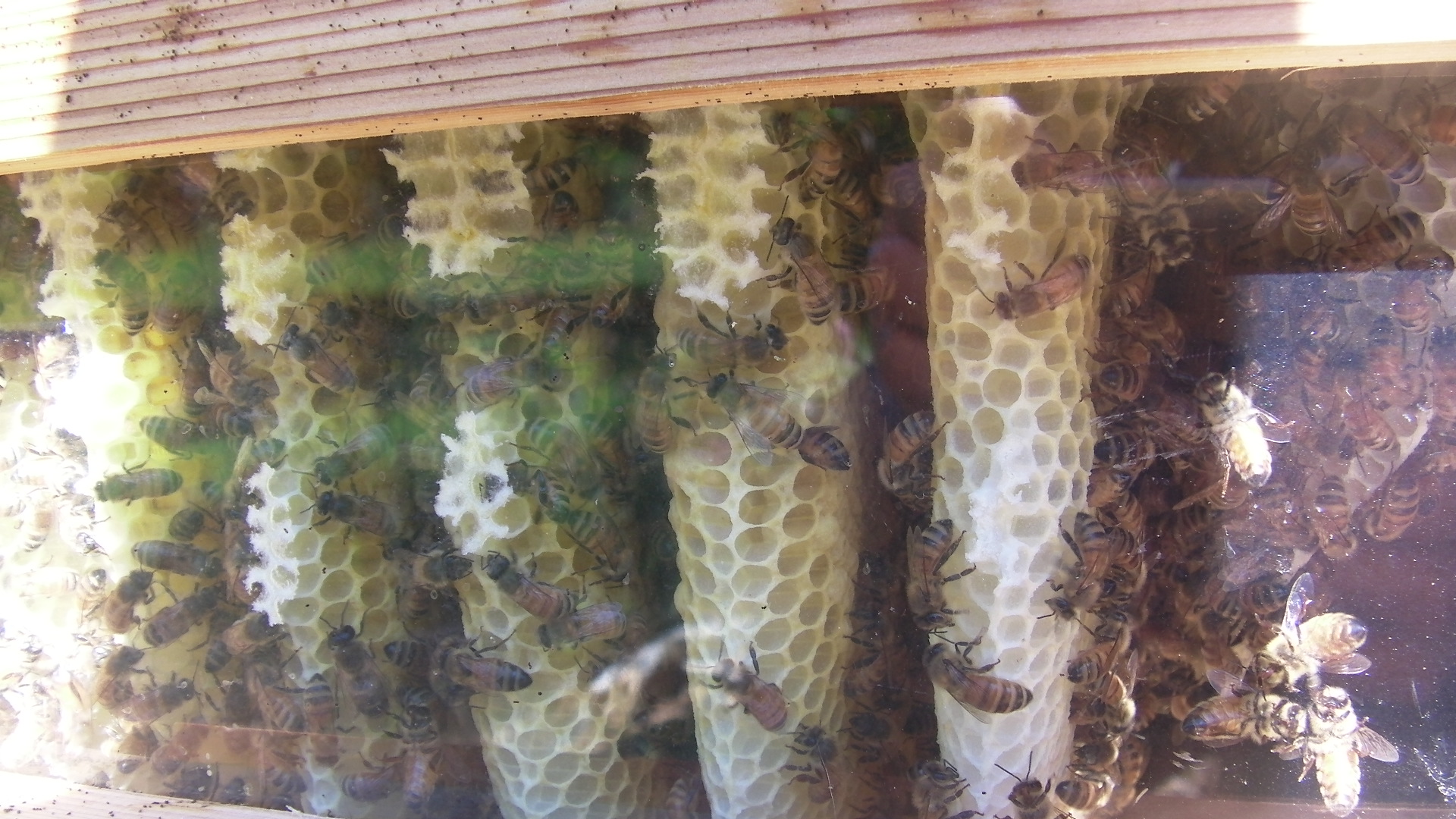
On February 15, I added a second box. When the bees wouldn’t fill it, I added some comb ladders on March 24th. The bees immediately started building comb which is full now as can be seen below.
Box #2 As soon as the comb ladders were added, the bees built fast so the queen could lay. When it was 3/4 full, I added a third box.
When box #2 was 3/4 full we added box #3, but comb was getting scarce so I tried using t-posts with a melted wax coating to act as a ladder. Small pieces of comb was ‘welded’ to the top bars.
Box #3…adding t-posts with small bits of comb ‘welded’ to them on April 2nd.
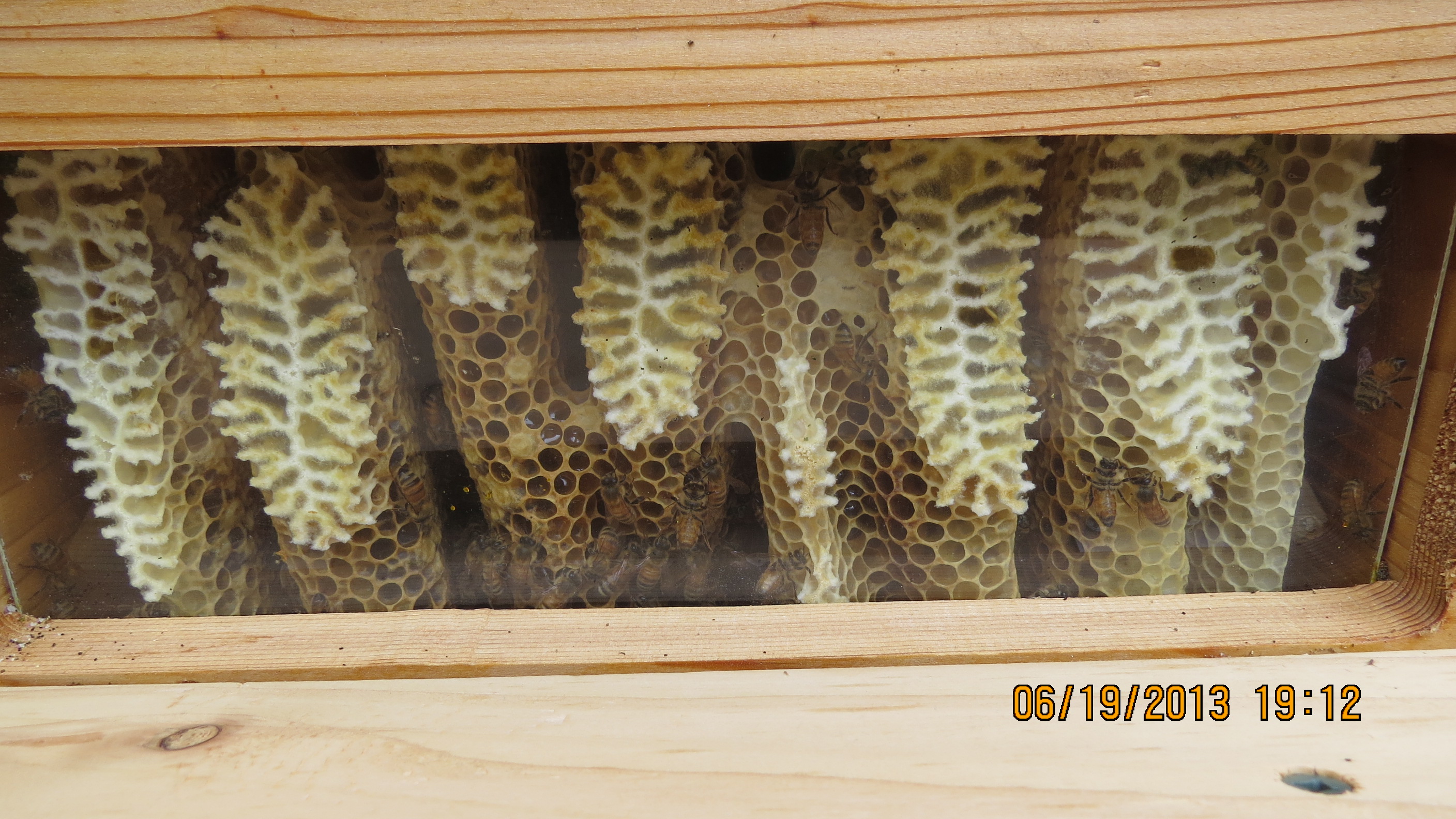
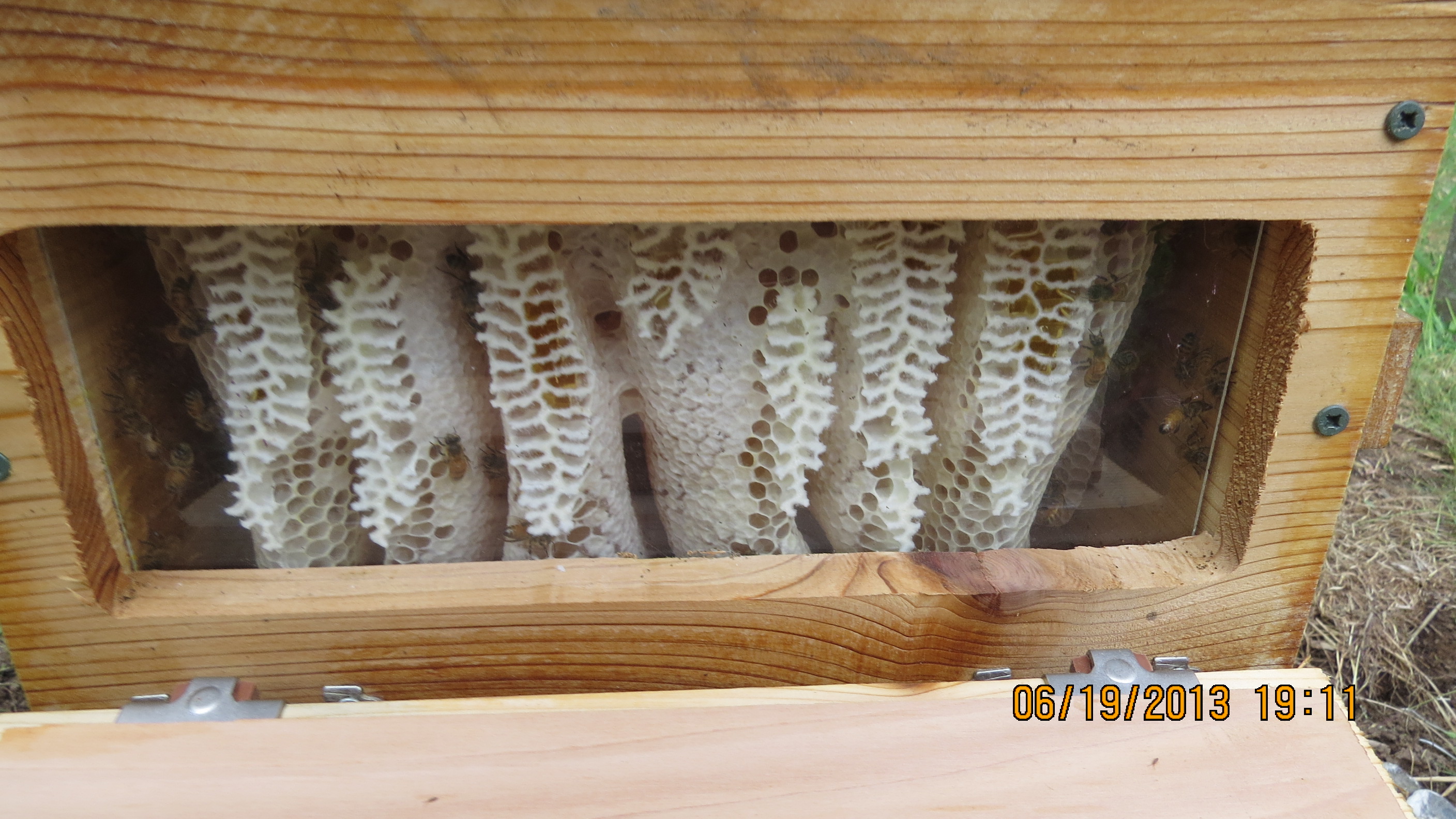
Box #3 built up so fast we added Box #4 on May 1. But now we have this honey bound problem as can be seen below…
Box #3 is so full of honey, it’s blocking the queen from getting into the top box. The t-posts worked well.
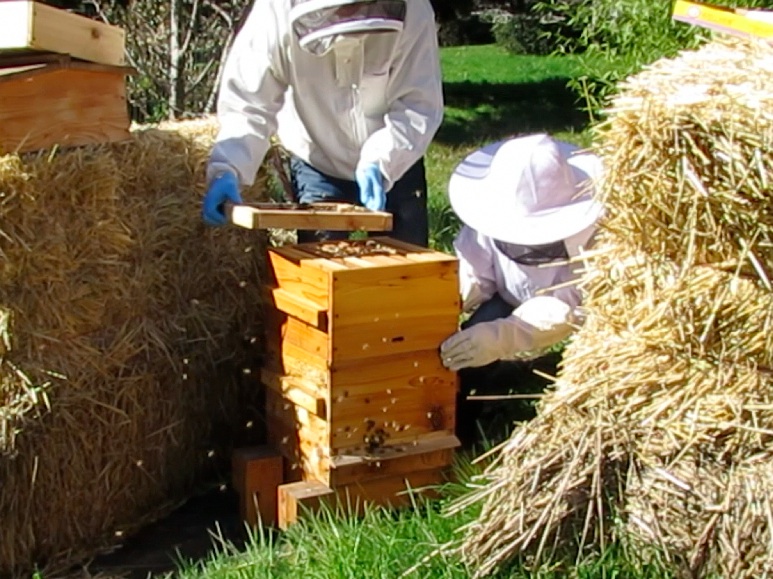
We didn’t realize we’d get any honey…and really didn’t want to take any…UNLESS there was an excess while a nectar flow was on. Oregon’s big nectar source of blackberries is going on right now, so we will put this box #3 on top and the empty box #4 will be inserted between #1 and #2. If they build that out, I’ll get to harvest the honey.
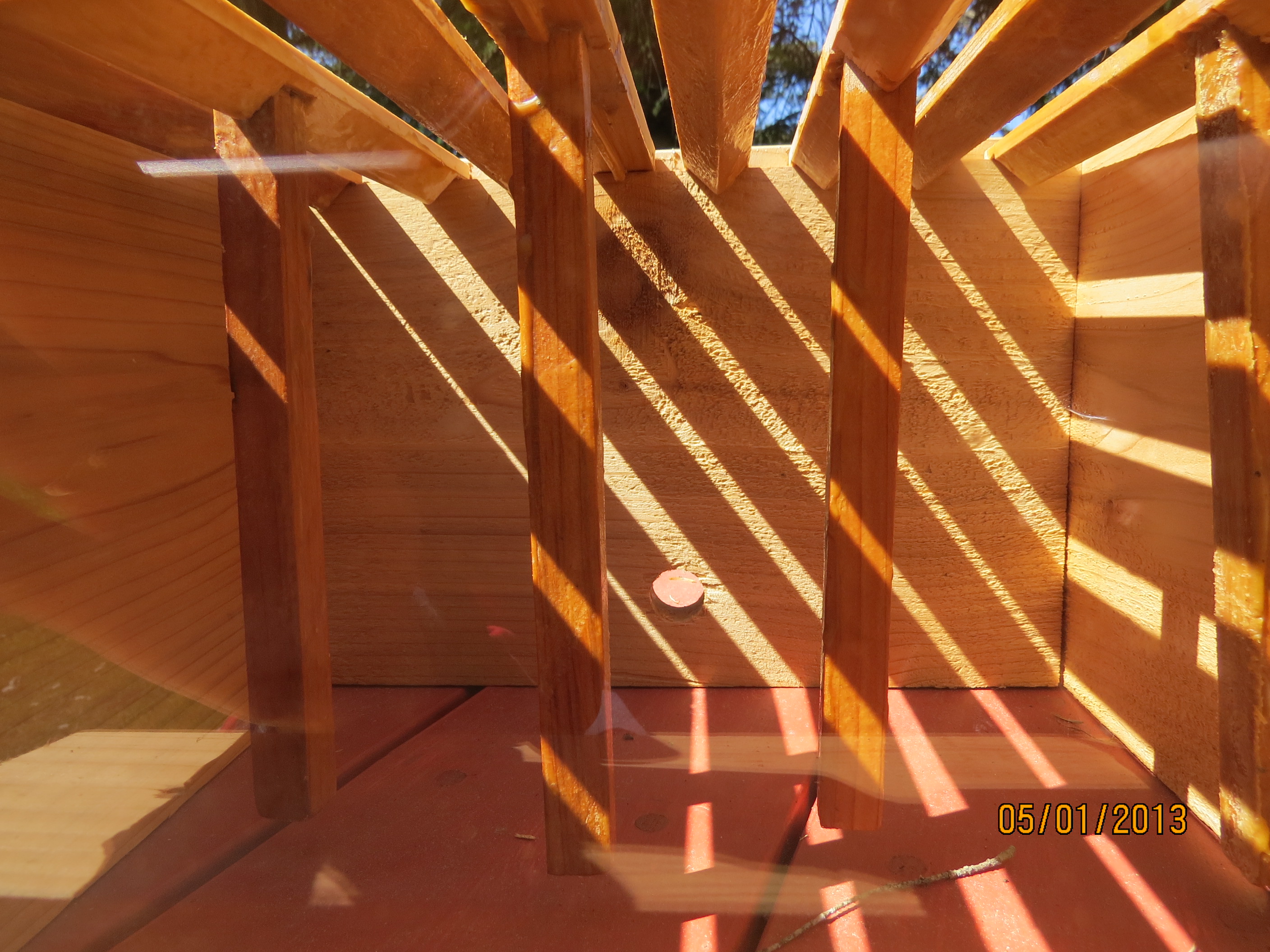
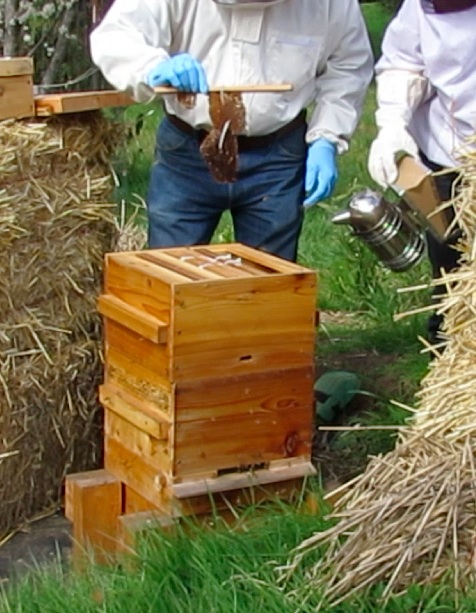
What to do if you need to add ‘ladders’ to your Warre box, but you don’t have any comb. I don’t want to use any plastic foundation or anyone else’s comb. So I’m using melted organic wax and painting it on posts hung from the top bars. It worked last time so I feel confident it’ll work this time.
It doesn’t take much wax, or much time to melt, so stick around when you do this.
Coating the bars and posts
These are how the t-post ladders will hang down once they are in the hive…trouble is I couldn’t remember if the bees build comb with less than 3/8 inch or more than 3/8 inch.
I started gathering the items together, went out to my bee hives and observed what looked like a swarm forming. I grabbed the melting pot and spoon and started tanging. Three days ago they headed back in when I tried tanging. Maybe this time too, then I’ll add the extra box and maybe they’ll be happy.
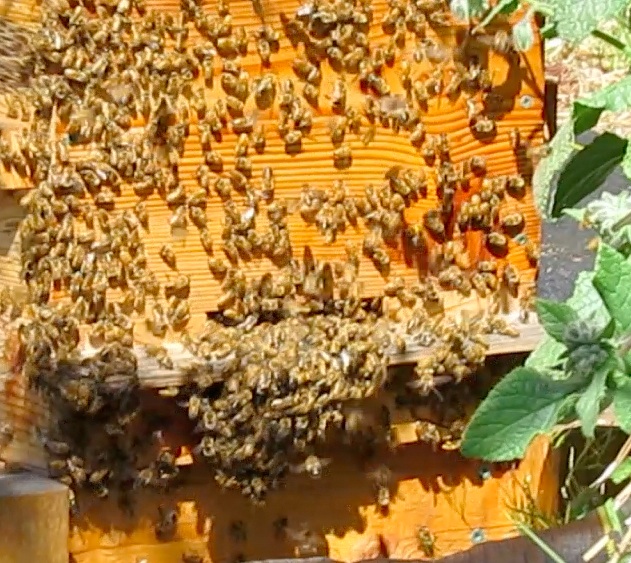
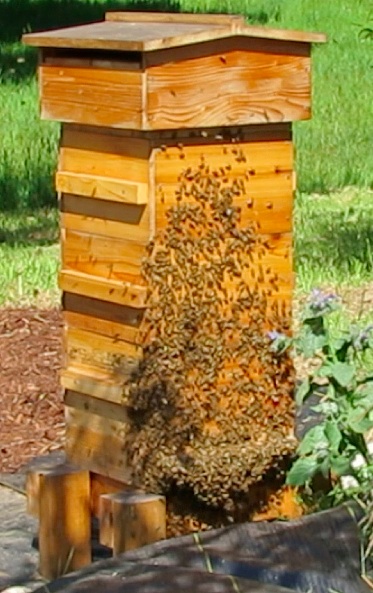
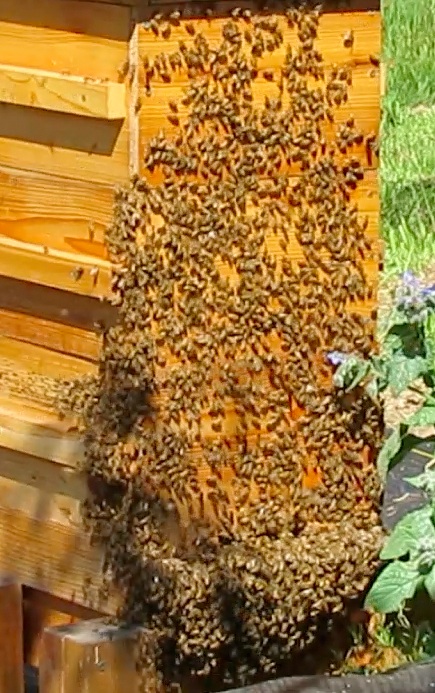
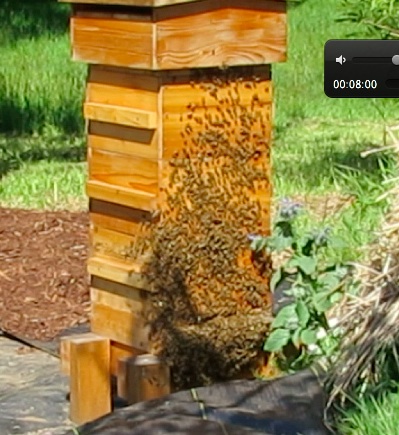
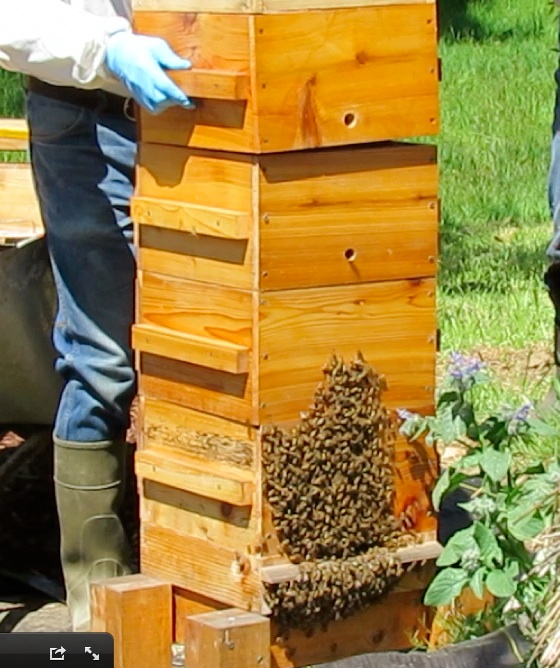
At 10:07 am It looks like a swarm is forming on the hive I want to add the box to
At 10;11 am Yep, a swarm is in the works…quick, get the wax melting pot and bang on it with a spoon
At 10:15 am, it’s still growing so I tang faster, wondering if I’m crazy
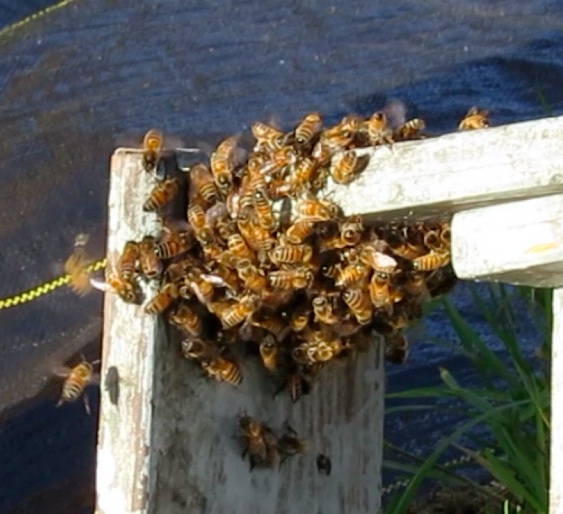
At 10:16 am, swarm bees are flying higher and higher
At 10:20 am, it almost looks like they are calming down
At 10:28 am after about 10-12 minutes of tanging, they are headed back in
At 10:35 am, they are definitely headed back in
At 10:44 am, they’ve calmed down for today…what about tomorrow?
At 10:58 am I add the box with t-post ladders. I’ve got to get a hive jack so I can do this right next time.
At 11:05 am, bees are crawling up t-post ladders already.
Day 3, the bees are still climbing the posts and a daisy-chain is visible.
This is what we were waiting for…Bee Beard’s Prime Swarm, but it was waaay out of reach
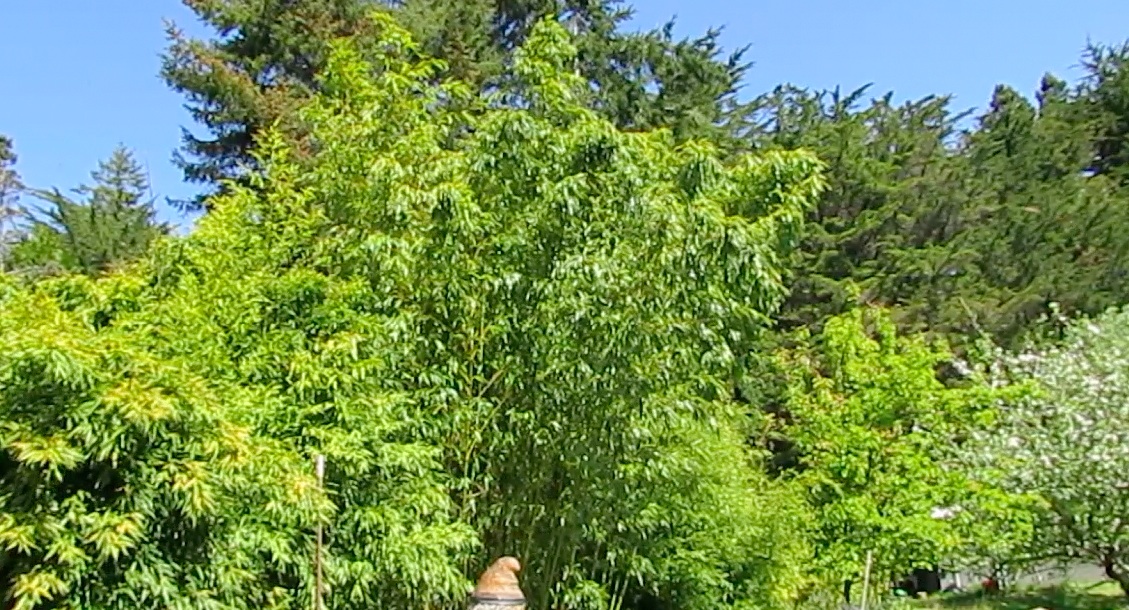
When we started keeping bees we read that a healthy hive will swarm, at least once every year. Our goal was to get through the winter without feeding, medicating, or miticiding. The swarm would be our sign of success. On a warm day March 30th, that’s what happened. We heard the loud buzzing, came out to witness the bees heading up to the top of a nearby spruce tree. I even tried ‘tanging,’ banging a spoon on a pan to create noise so they wouldn’t go far and would form near the ground. I was wildly unsuccessful. This would have been the swarm to get, but it was clearly out of reach.
Swarm #2, April 17 is within reach
Swarm number 2 is withing reach, but the 2nd log hive isn’t ready for it yet…I’ll have to stick it into the ‘back-up Warre.”
Let’s try out this bamboo swarm catcher so I won’t have to use a ladder
Well I ended up using a ladder to cut the bamboo and let the swarm drop into the white sail cloth basket.
My wife noticed some bees on the ladder…we brought it near the hive for them to crawl in, but looking closer, we noticed they were fanning. The queen must be here. We gathered them up and placed them into the hive.
After the bees were dropped in, we added the top bars with comb attached…hoping they would stay attached once I hung them in the hive.
Top bars with old comb melted on. Quilt box in background
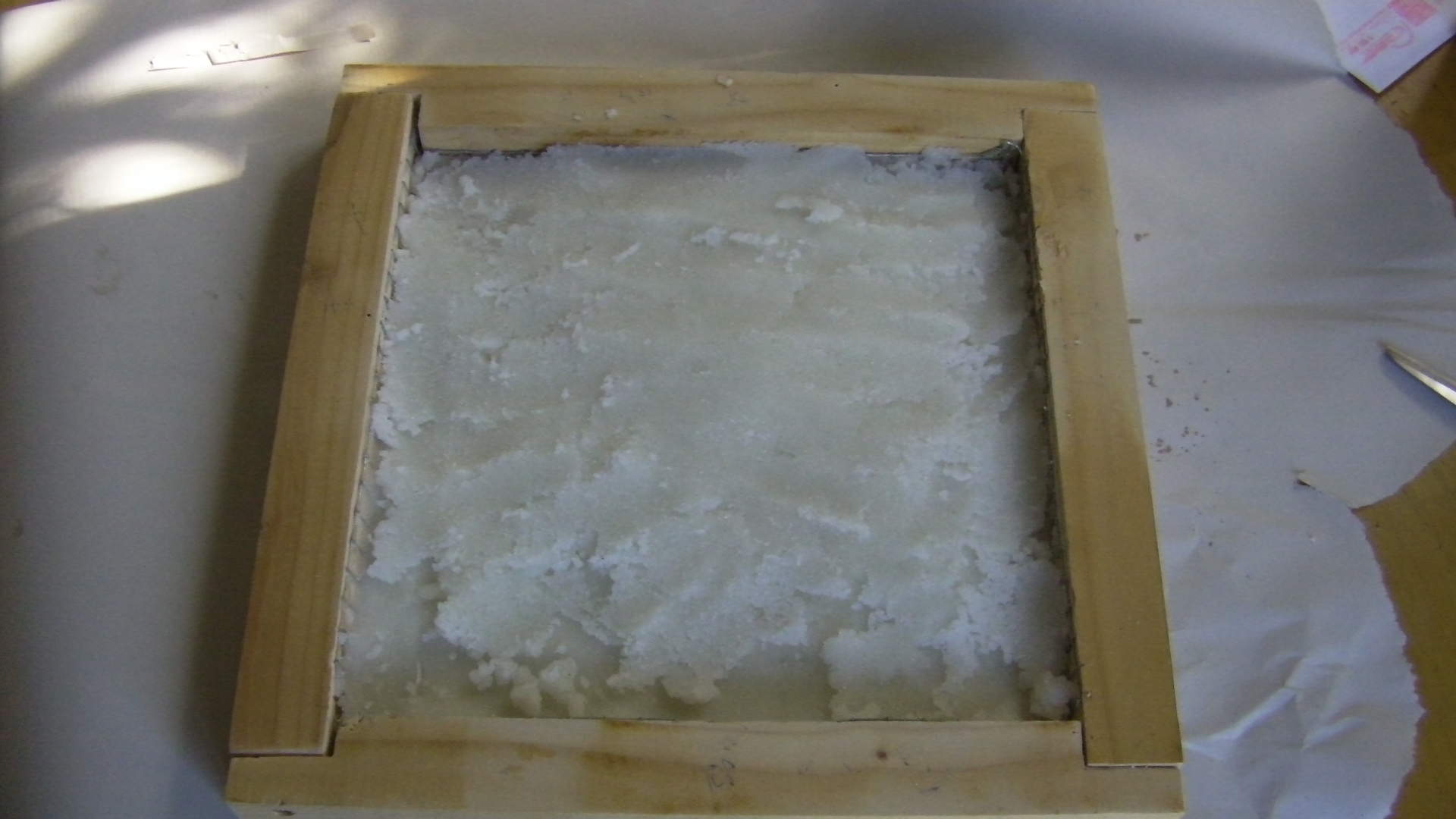
I had already built the sugar frame shown below.
1/2 inch hardware cloth will hold up sugar if using newsprint.
Premixed sugar laying on a couple sheets of blank newsprint for the Warre hive #2
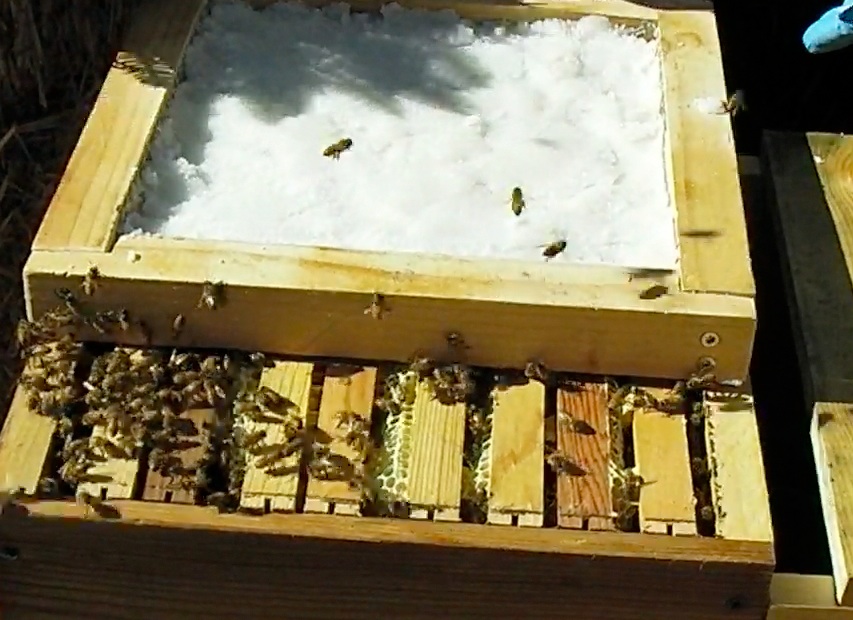
We slid the sugar frame into place.
Sliding the sugar frame into place
Next comes the quilt box.
Top it off with the roof. Matt Reed of beethinking.com, you made a nice hive kit.
Bees flying orientation flights.
April 23…through the observation window we can watch the bees working. No new natural comb can be seen yet, but it won’t be long.
After I added a frame of sugar on top of the single brood box, October 25, 2012, I figured that would do it for the winter. But at the bee meeting in January, we were advised to keep feeding into the spring. It was important because the bees would be flying more and using up the last of the honey stores…if the weather was bad, they wouldn’t be able to fly and could starve and all our efforts would be wasted. Just to make sure I ask the natural beekeeping forum. I was advised to super another box.
We opened the hive on a sunny February day, adding more sugar on top of the brood box, then added an empty box on top. Inside the empty box hung a bit of comb on two top bars that measured about 2 inches (5 cm) down. I figured the bees would come through the slits, eat the sugar which would give them energy to build more comb.
Feb. 15, More sugar added. Slits cut through newsprint to allow bees access to sugar from bottom box. The chunks of sugar on the right of center was all that was left of the batch we placed in October.
February 17, 2013 Bees feeding on new sugar above brood box
The bees came up through the slits no problem, ate at the sugar, but stopped there. They would overnight on the sugar…soon it was covered in bees. They didn’t have any desire to build on the comb slightly above their heads. Meanwhile the bees were crowding out the single brood box.
March 3…This box is getting very crowded…
What to do??? Okay, here’s a plan…if they like the sugar so much, let’s place the sugar frame above the empty box. They’ll sniff out the sugar, climb up the comb to the sugar, and build out their comb.
March 9…Adding more sugar to the frame and placing it above top boxes
We waited a few days before we realized the bees were NOT going up to the sugar and certainly NOT building up more comb. Meanwhile the bees were getting even more crowded in the brood box.
I go back to the beekeeping forum and notice that Bernhard has added some info about using ‘ladders,’ along with some very excellent photos taken with his expensive macro lens.
Should I try to buy foundation for the Warre…I don’t want to use plastic in my ‘natural’ hive, and I don’t want to use wax that might carry disease, but I do have a bit of comb left over from a failed hive last year which had swarmed late, not queened successfully and was finished off by the wasps. I piece it together.
Comb ‘ladders’ attached to bars. This pathetic looking comb has been in the freezer for 4 to 5 months. I don’t have much left so I hope this will encourage them to climb upstairs.
March 24…Adding the first ladder
And the second ladder…”Honey, how about trimming the grass in front of the hive?”
Back in February, I listened to a podcast interview with Matt Reed of Beethinking.com. He talked about the Warre Hive. Now I didn’t really want to get into another type of hive, but it sounded so intriguing and easy to use, I decided to give it a try. I liked the idea that the boxes stacked in a vertical orientation, mimicking a hollow tree. It sounded like the most ‘natural’ type of hive that wasn’t actually a tree. I also liked Matt’s approach of not using any chemicals inside his hives. So I ordered a kit with observation windows and a screened bottom in case I wanted to do a mite count.
I didn’t want to order package bees because they might not be acclimated to the wet area we have on the Oregon Coast. I had passed up the ordering date and was nervously waiting for my bait hives to catch a swarm, but nothing was happening. Then I got the call about a swarm that had just formed about an hour ago. I threw everything into the car and was on my way.
A Swarm in a Bush…A made-in-heaven low swarm for my first experience.
A Swarm in a Bucket…I was able to cut branches and shake most of the bees into this 5 gallon bucket.
A Swarm in the Warre Transferring the swarm into the Warre was easy…tap the bucket on the ground once or twice, then pour into the hive. I replaced the bars on top, installed the quilt box and the roof.
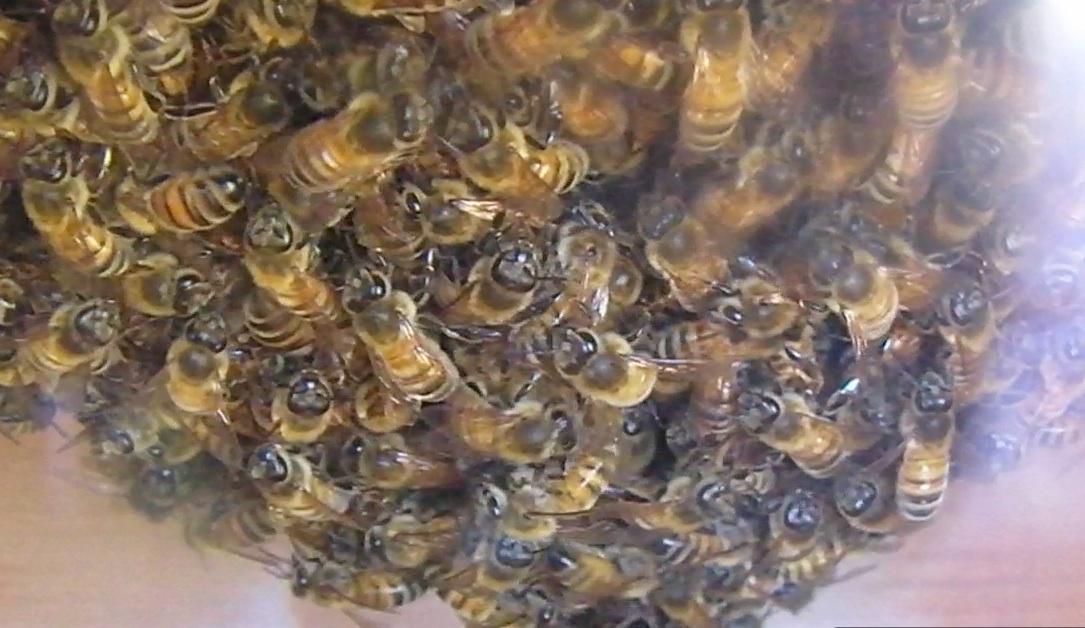
Did I get the queen? Bees can be seen fanning the pheramone that the queen is ‘in the building’!
July 7, 2012 This shows how much natural comb they built in about 5 weeks. I wonder when they will start on the bottom box.
I anxiously wait. The bees don’t build into the bottom box. I consult the forums where suggestions are made to add an empty box overhead. “The bees don’t like having an empty space over them.” On July 23, 2012, I add a third box, this time on top.
After I drilled a 3/4″ hole for the bees in the top box, I waxed up some top bars and put the whole thing in place.
July 24, 2012. I like this…I can get a view through the observation window looking down at the occupied middle box or up to the top bars in the top box.
August 3, 2012 A view of the comb in the middle box…still no building in the top or bottom box.
August 20,2012 Looking into the Warre, plenty of bees, plenty of honey,..but they are STILL not building any comb in either the top or bottom box.
I consult the forums…”can a Warre get through the winter on only one box?” It’s getting late in the summer and my efforts to get them to build either on top or in the bottom box have been fruitless. The answers seem to imply I’m a reckless beekeeper if I don’t consider feeding them.
Partially built feeder box for Warre
After looking at the forums, I found the answer. Build a feeder that is accessible from the outside. If it becomes necessary to feed the bees I can do it without opening the hive up to the cold air. The hive is kept intact with no extra holes drilled into it for the sugar water.
I want to thank Colobeekeep for providing photos of how he built this.
Front view of feeder box on right side of Warre
Back view of feeder box on Warre
Lid open, no jar yet. Bees can access the sugar water, but not the feeder box. Bottle can be changed without opening the hive. It’s placed near the rear of the hive to discourage robbing.
I really DON’T want to resort to feeding them. From what I read, sugar raises the pH of the hive making it more susceptible to Nosema, but I also don’t want to lose this little hive. I definitely won’t use High Fructose Corn Syrup because it is made from GM corn which is treated with clothianidin, a systemic insecticide highly toxic to bees. I’ll pay close attention to the honey stores by looking through the observation window. If they get low I’ll be able to supply either 1:1 or 1:2 sugar water without opening the hive.
This short video looks into the Warre hive through the observation window (slight reflection issues) to see waggle dancing and daisy-chaining. The last frame shows the natural comb built as a result of the daisy-chain.
More Waffling…After going to the work of building the ‘side feeder,’ I observed the comments made about moisture in the hive. Well, I’m not going to say we live in a rain forest, but we do get buckets in the winter time. Should I worry about the moisture issues…yes. Okay, I’ll build an over-the-top ‘dry sugar’ feed frame.
This shows the sugar resting on the 1/2″ hardware cloth. After this photo was taken, I dumped out the sugar and inserted a layer of blank newsprint between the sugar and the wire. That should hold up the sugar so it won’t drop down into the hive…I hope.
Sugar pressed into frame ready to slide into place
Installing sugar feeder Oct. 25, 2012. This will let the bees go upward to access the sugar from within the cluster. Quilt box goes on top. Then I wrapped with red tape to seal the cracks.
When I checked with some coastal beekeepers at the bee meeting, they said they feed with sugar syrup, no problem. “Don’t you worry about the moisture issues?” “No.”






















 Adventures in Natural Beekeeping