Posts Tagged ‘natural beekeeping’

January 15, 2014  I mentioned the mites this hive and what I was going to do about it..."NOTHING!" (...hoping the bees would know what to do)

January 15, 2014…I noticed a bunch of varroa mites on the bottom board.  What was I going to do about it?  “NOTHING!” (I was hoping the bees would know what to do)

A pile of dead bees that had been dumped out of the hive sometime earlier. This picture was taken from a video I shot in April. The dead bees had been there for a while, but I just couldn't bring myself to photograph them. Too depressing.  It's possible these are all drones with deformed wing virus. I wish I had looked closer and examined them.   I guess I should be happy that the other bees cleaned them out.

A pile of dead bees that had been dumped out of the hive sometime earlier. This picture was taken from a video I shot in April. The dead bees had been there for a while, but I just couldn’t bring myself to photograph them. Too depressing. It’s possible these are all drones with deformed wing virus. I wish I had looked closer and examined them. I guess I should be happy that the other bees cleaned them out of the hive.  It shows there are healthy bees that are cleaning up.
April 18, 2014...Box #3 is almost full, I'd better add a 4th box, which is what I did.

April 18, 2014…Box #3 is almost full, I’d better add a 4th box, which is what I did, but that was before the hive started to swarm.  Compare the numbers to May 20th below.

 May 10, 2014...The second swarm that came out of Warre2 in less than two weeks.  I was able to transfer this swarm into a third Warre hive which is doing fine as of this date.

May 10, 2014…The second swarm that came out of Warre2 in less than two weeks. I was able to transfer this swarm into a third Warre hive which is doing fine as of this date. (I just noticed some evidence of DWV bees being evicted in October ’14.)
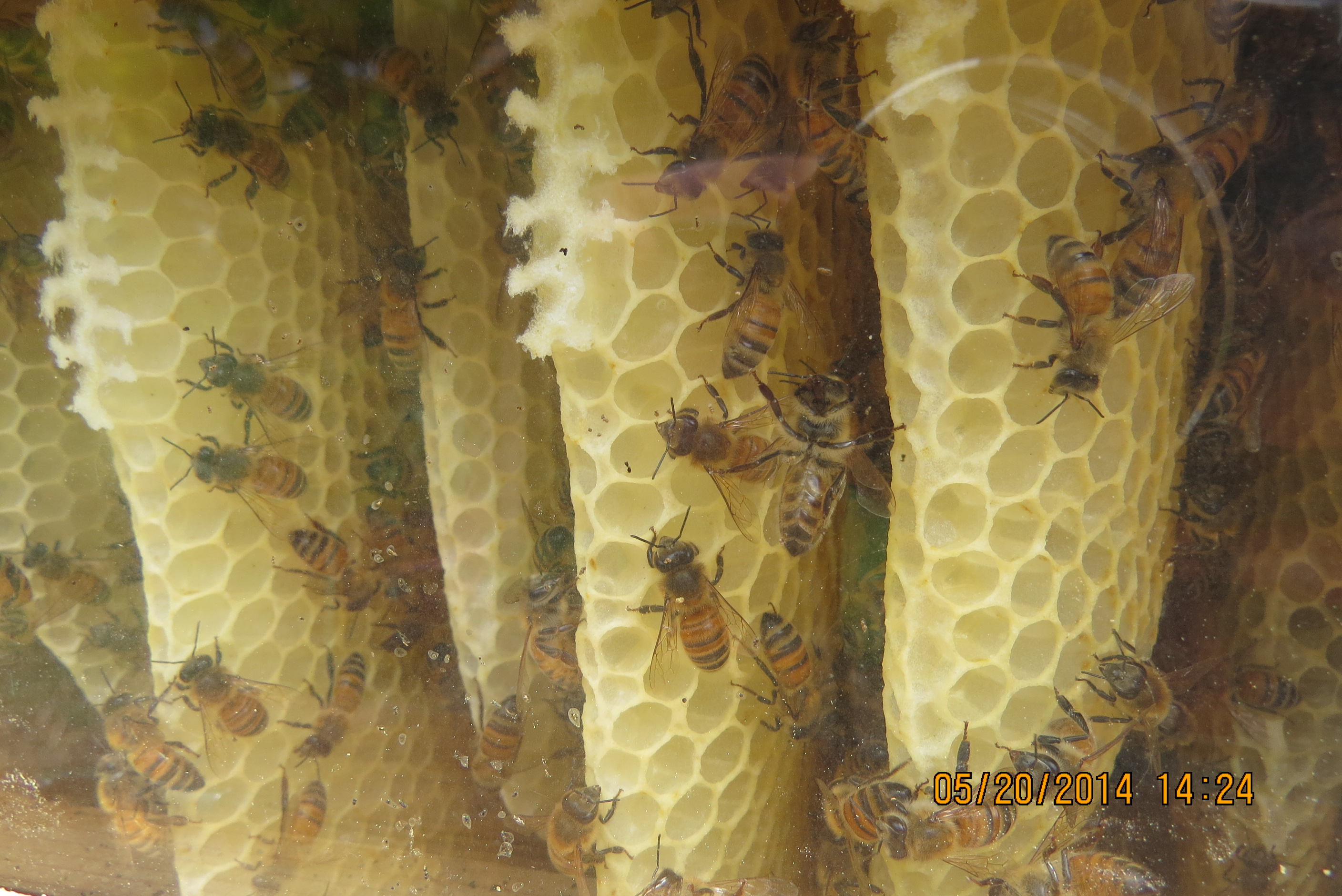
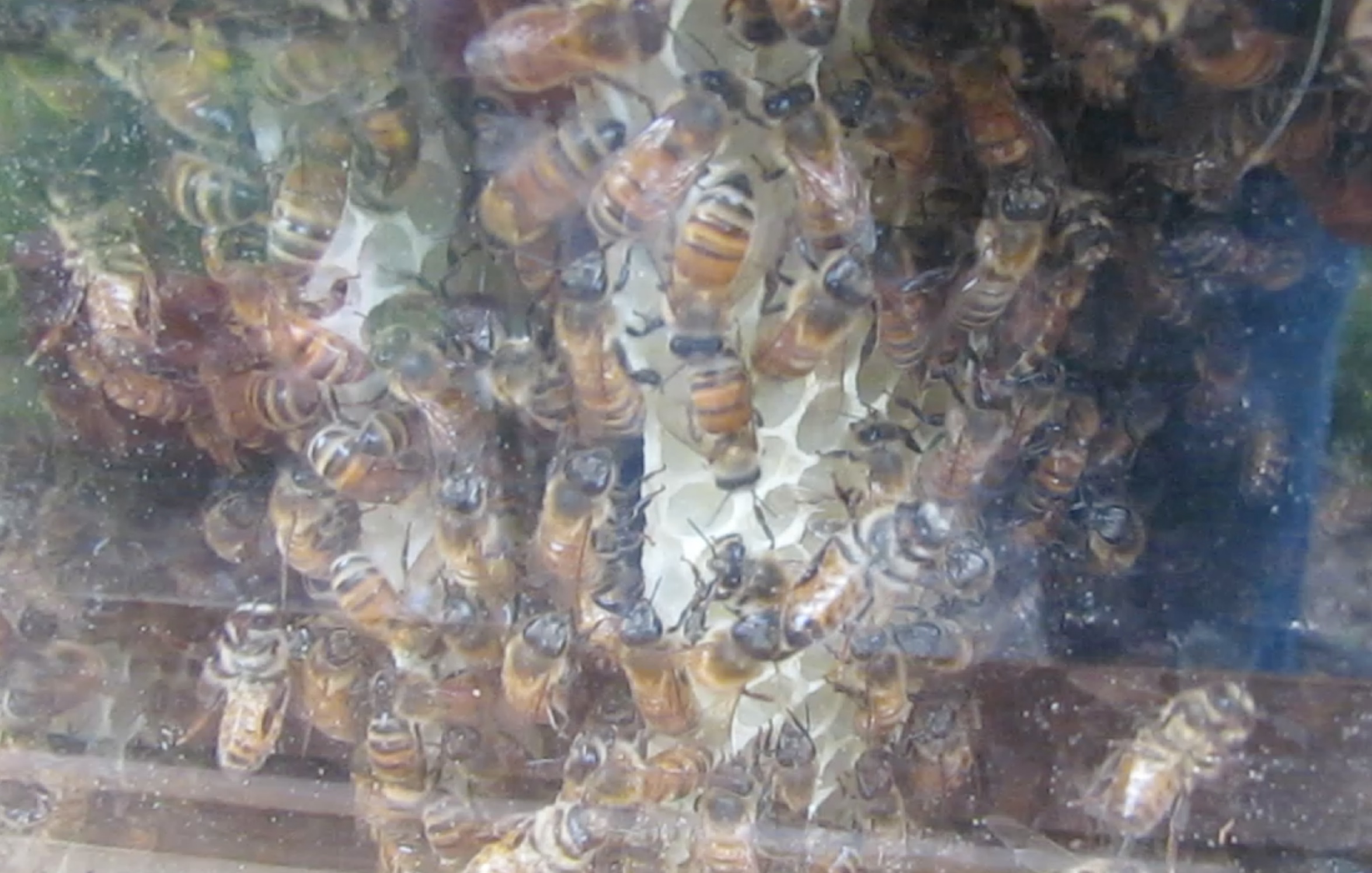
May 20...Elvis has left the building.  10 days after the second swarm, there's only a few bees left in this the third box.
May 20…Ten days after the second swarm, there’s only a few bees left in this the third box.

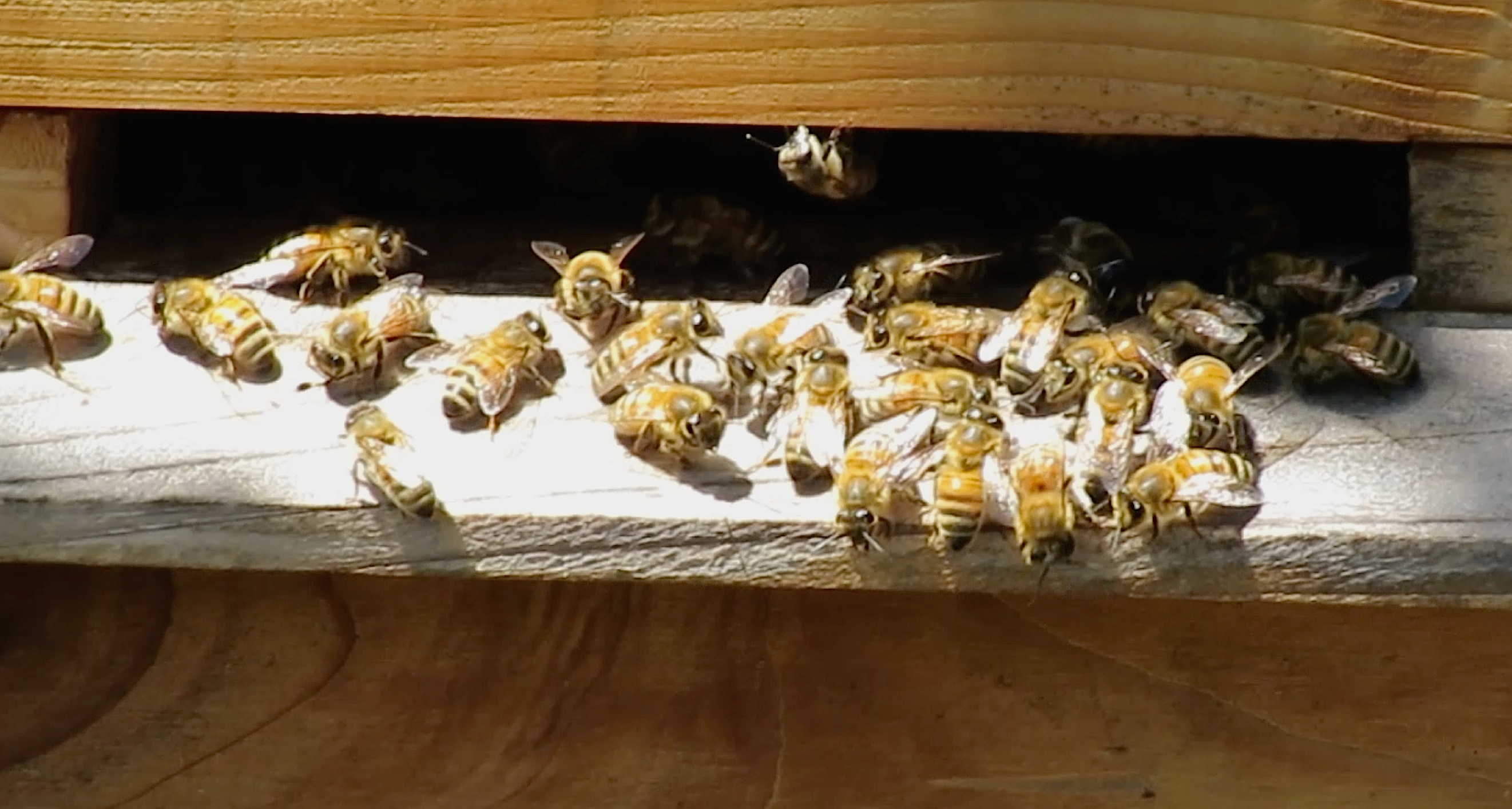
June 11...There's been a small group of bees milling around the entrance for weeks.

June 11…There’s been a small group of bees milling around the entrance for weeks.   They don’t seem to have any ambition.  Are they sick?  Maybe.

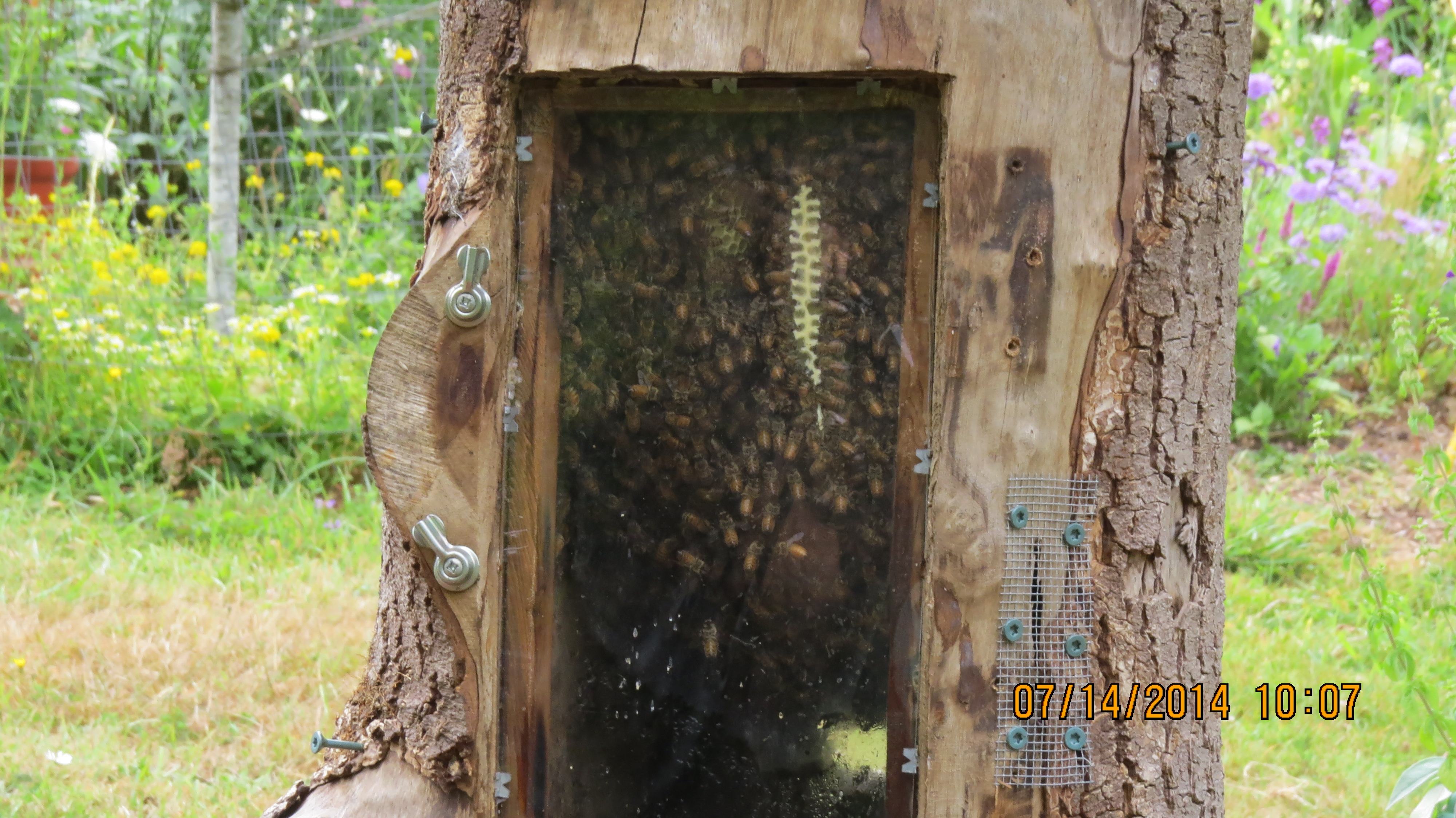
July 14...Even fewer bees in July.  That means (to me) only one thing.  This hive is going nowhere.  It's all over except for the robbing.

July 14…Even fewer bees in July. That means (to me) only one thing. This hive is going nowhere. It’s all over except for the robbing.
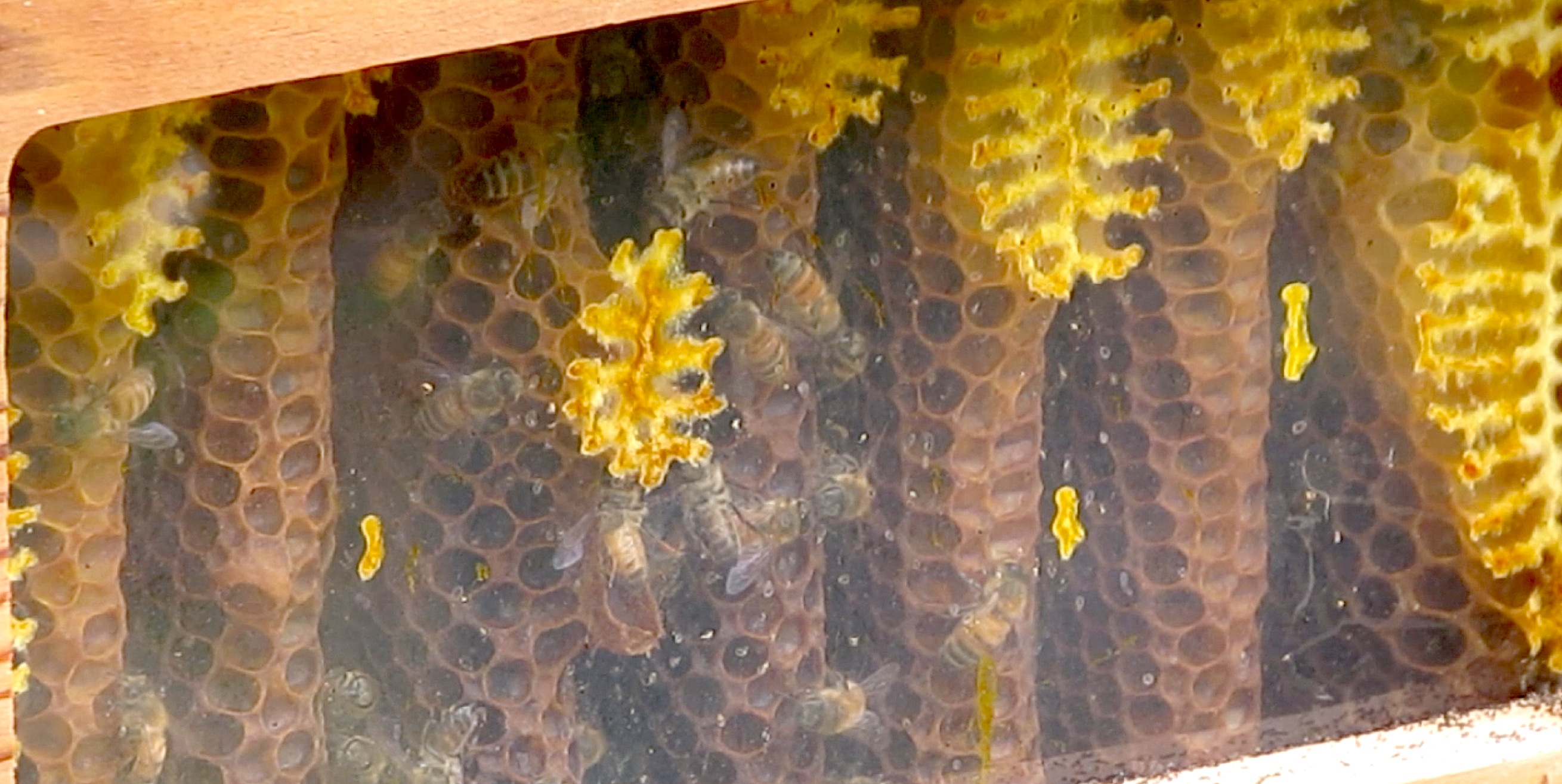
July 14...this is a shot at the middle box showing very few bees.  I'm just waiting for the robbing to start, but after tilting the hive, I realize there's really no honey to rob.

July 14…this is a shot at the middle box showing very few bees. I’m just waiting for the robbing to start, but after tilting the hive, I realize there’s really no honey to rob.

I’ve seen a hive get robbed.  It isn’t pretty.  Once it starts there’s no stopping it.  If it did get robbed, I was planning to take the new comb, freeze it (in case of wax moths), and save for future bait hives.

July and August came and went.  No robbing took place.  A swarm from my log hive presented itself on August 6.  I contemplated combining it with this weak hive, but in the end, that swarm went into Bee Beard log hive of it’s own accord.

September 20...It's possible there are a few more bees showing.

September 20…It’s possible there are a few more bees showing in this top box.

September 20...There are definitely more bees here.

September 20…There are definitely more bees here in the middle box than in the July 14 view.  The hive is building back up.
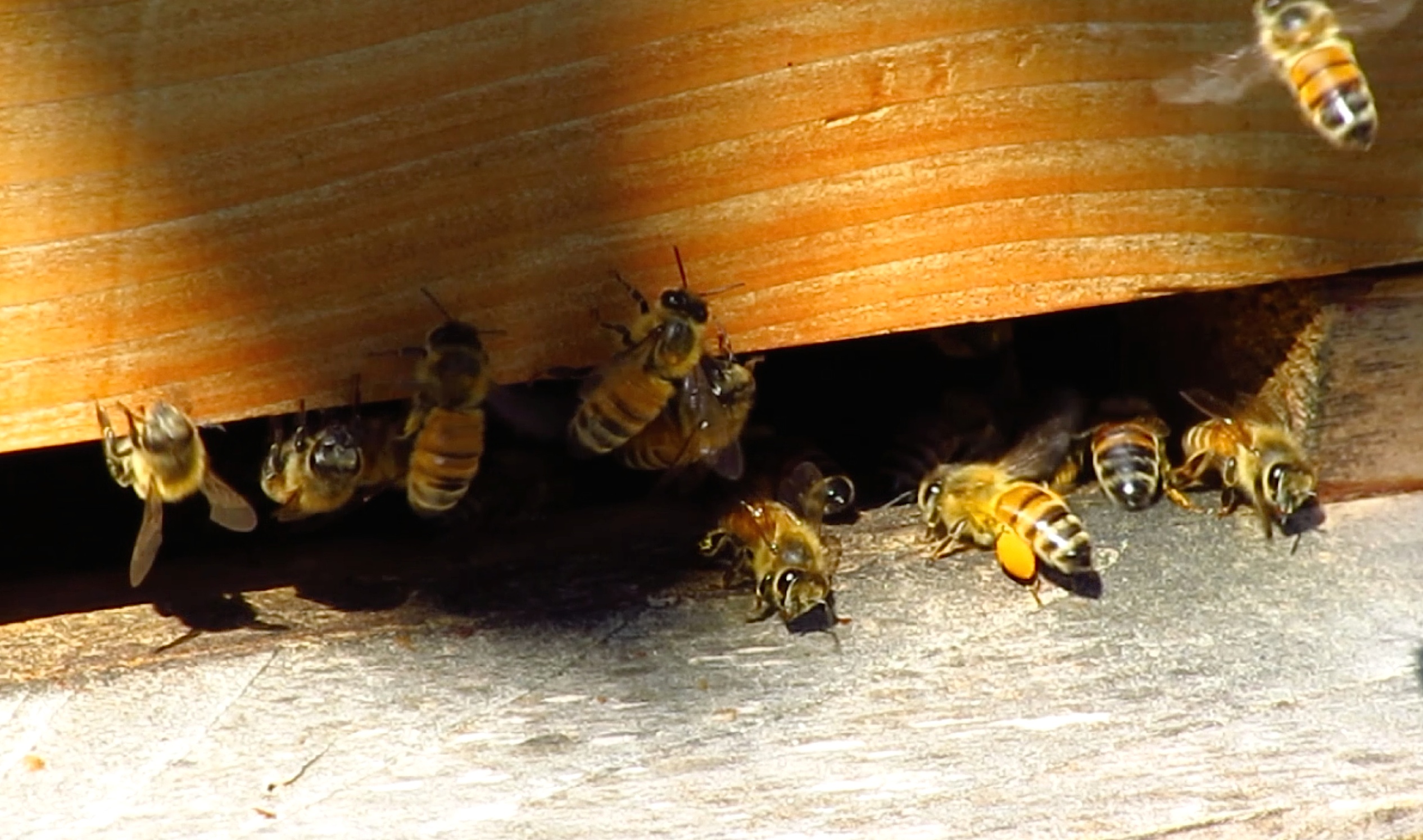
September 28...the activity around the hive has picked up dramatically.  No more milling about.  Bees are bringing in pollen.

September 28…the activity around the hive has picked up dramatically. No more milling about. Bees are bringing in pollen.

Could this mean the hive has come back?  Could it be that by taking this long brood break, the hive has reduced the varroa mite population naturally and now has started building up it’s numbers again?


A look through the observation windows in the back of the hive shows the top box full of empty comb, the middle box being full of bees and comb, and the bottom box with bees and old comb.  The question is…why aren’t the bees working the empty comb in the top box?

A short video showing how fast the honeycomb built up.  Luckily we are having an Indian summer into October.  I’m athinking I won’t have to feed this hive this year as our winters are fairly mild and they have honey stores now.
Read Full Post »

We planted fennel this year to attract bees and butterflies.  We never saw the butterflies, but we spotted the caterpillars and later on the bees.

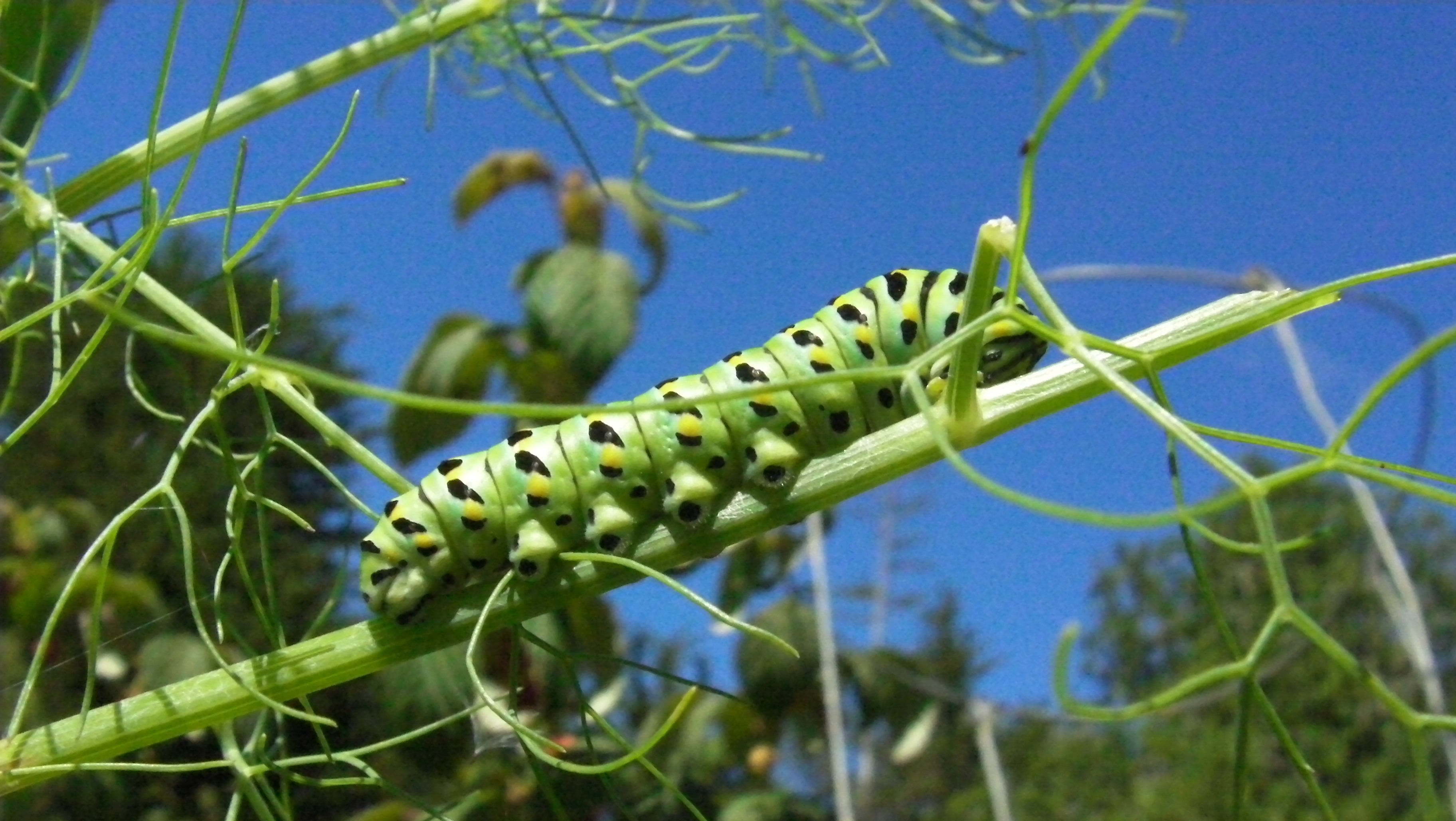
August 22, 2014...we started seeing caterpillars on the fennel.

August 22, 2014…we started seeing caterpillars on the fennel.

Caterpillars are voracious eaters.  Michael Marlow has an up close video of one eating a stem.  It doesn't waste any time.  I started noticing my fennel branches were getting bare, then I saw the caterpillars.

Caterpillars are voracious eaters. Michael Marlow has an up close video of one eating a stem. It doesn’t waste any time. I started noticing my fennel branches were getting bare, then I saw the caterpillars.

This is could be one of the earlier stages of growth.  More information about the many stages

This is could be one of the earlier stages of growth. The life cycle of the Black Swallowtail Butterflies can be found here.

Fennel can grow quite tall.  This one is at least 7 ft. tall.

Fennel can grow quite tall. This one is at least 7 ft. tall.  I wonder if the chrysalis will be hidden in the undergrowth.

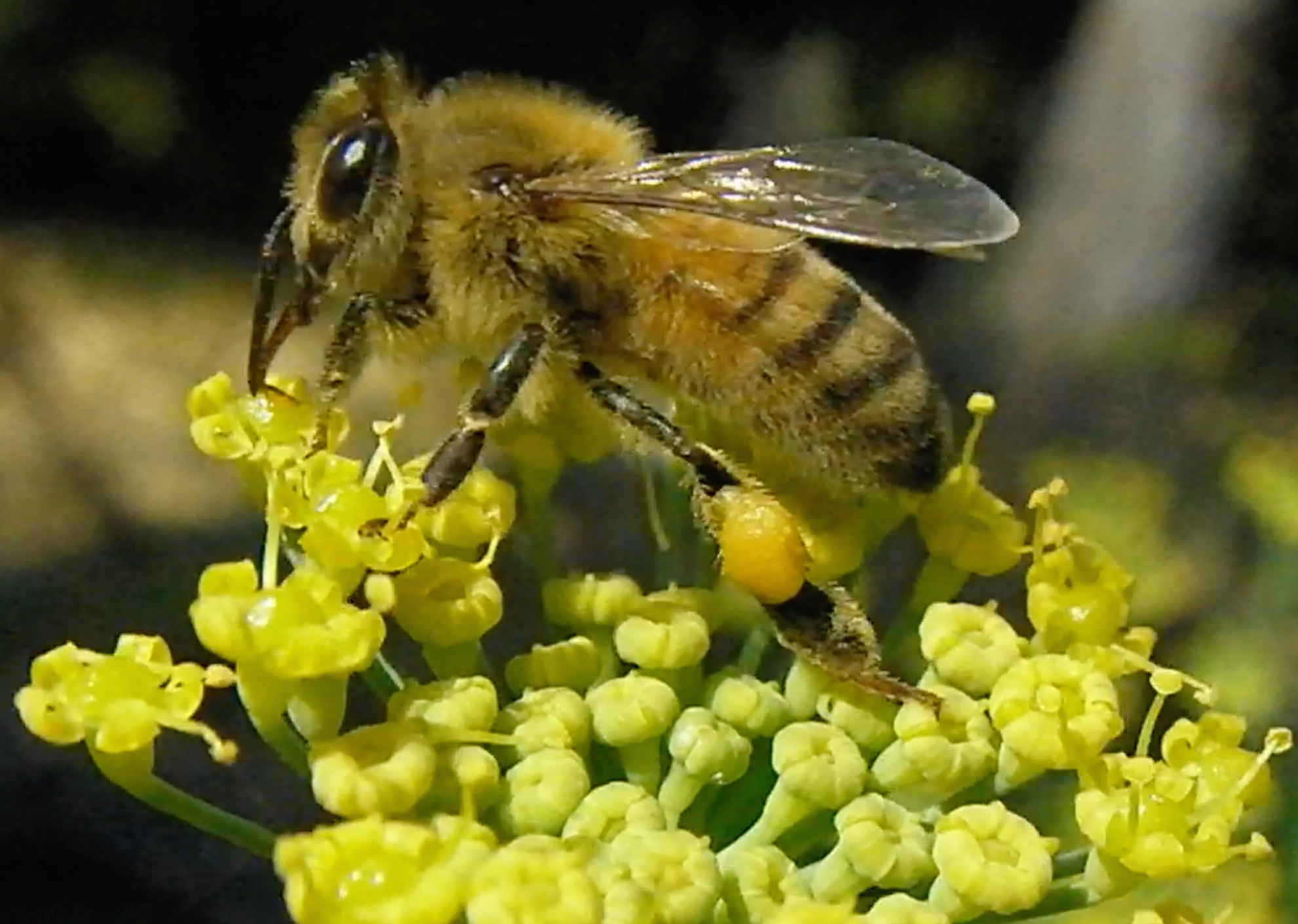
The honeybees have been visiting the fennel since early September.

The honeybees have been visiting the fennel since early September.  I don’t know what the insect at the top is, but it’s very colorful.  My wife thinks its a Great Golden Digger Wasp.

This shows the color of gathered pollen.

I’m happy the bees like fennel too.

The parsley muncher

October 8...more caterpillars seen last week and today.  I hope to see many Swallowtail butterflies next spring.

October 8…more caterpillars seen last week and today. I hope to see many Swallowtail butterflies next spring.


Read Full Post »

September 8, 2014...Post swarm day 33.  There's a shadow across her face.  I hope that's not a bad sign, but the bee math doesn't look good for her.

September 8, 2014…Post swarm day 33. There’s a shadow across her face. I hope that’s not a bad sign, but the bee math doesn’t look good for her.

I’ve looked at various charts explaining Bee Math, but I like the way Michael Bush puts it best…”If a hive just swarmed today, how long before the new queen is laying? Assuming this was the primary swarm, it usually leaves the day the first queen cell gets capped. So that means a new queen will emerge in 8 days. That queen may leave with another swarm or the workers may allow her to kill all the others and stay. Assuming she kills all the others (which are staggered in age, so they will emerge at different times if they do afterswarm) then she should be laying most likely two weeks later. So that’s about three weeks give or take a week. (two to four weeks).”

Bee-atrice swarmed a month and two days ago.  That makes it 33 days…(well past four weeks) She had built up fast having gotten occupied by a wild swarm only two months prior on June 6, 2014.

July 27, 2014...The most advanced stage of comb building before the swarm on August 7.  (I had planned to post a two month update on her strong progress, but she up and swarmed on me)

July 27, 2014…The most advanced stage of comb building before the swarm on August 7. (I had planned to post a two month update on her strong progress, but she up and swarmed on me)


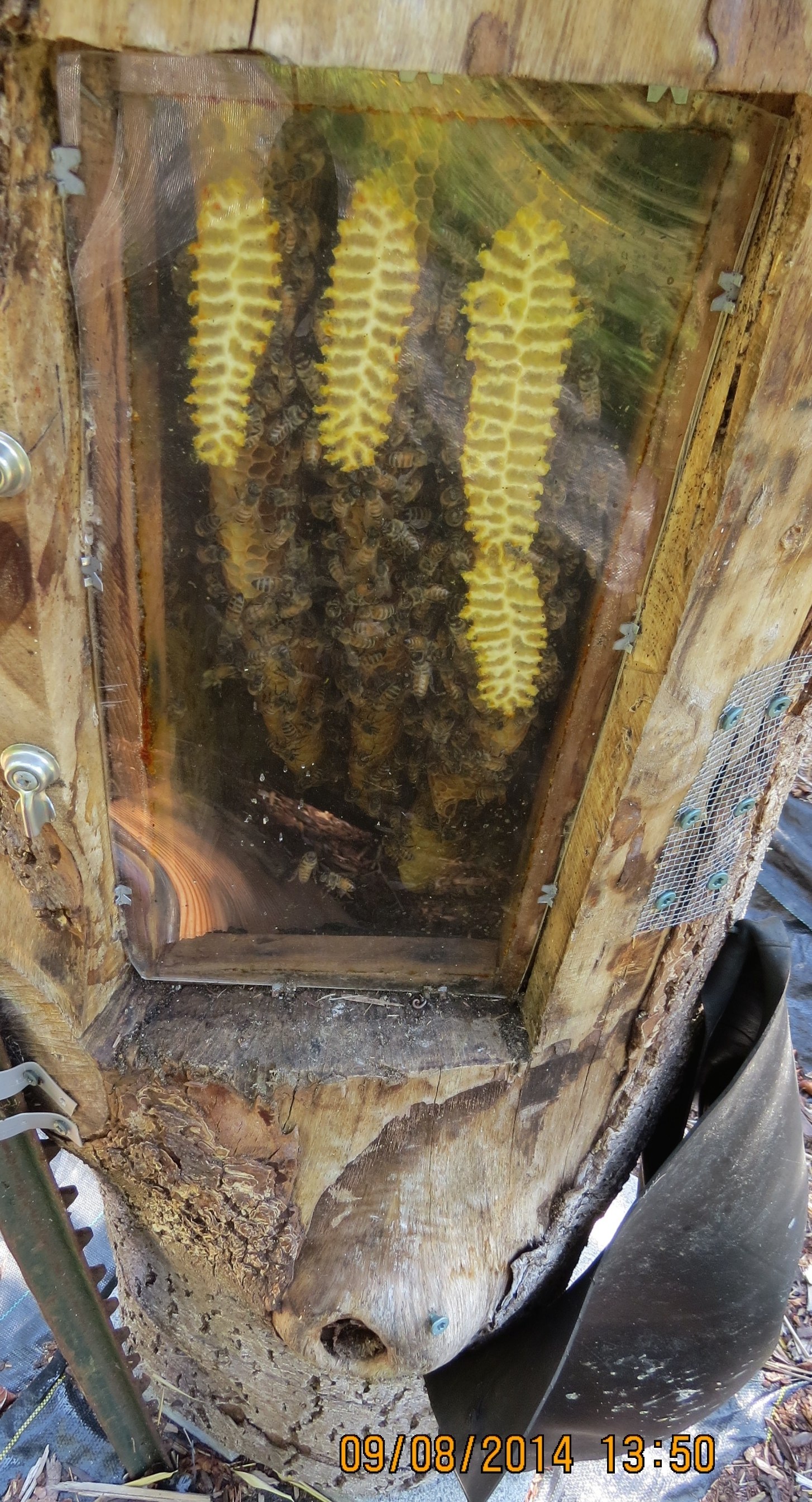
August 8, 2014...Bee-atrice through the observation window exactly one month ago.  This shows how much comb was built in the two months the wild swarm occupied her.  This is the day after she had swarmed.

August 8, 2014…Bee-atrice through the observation window exactly one month ago. This shows how much comb was built in the two months the wild swarm occupied her. This is the day after she had swarmed.

August 8, 2014...Temperature holding steady at 93F.

August 8, 2014…Temperature holding steady at 93F…good for brood rearing.

September 8, 2014...And this is today.  Doesn't look like any more comb has been built, The number of bees hasn't increased.

September 8, 2014…And this is today. Doesn’t look like any more comb has been built, The number of bees hasn’t increased, and…

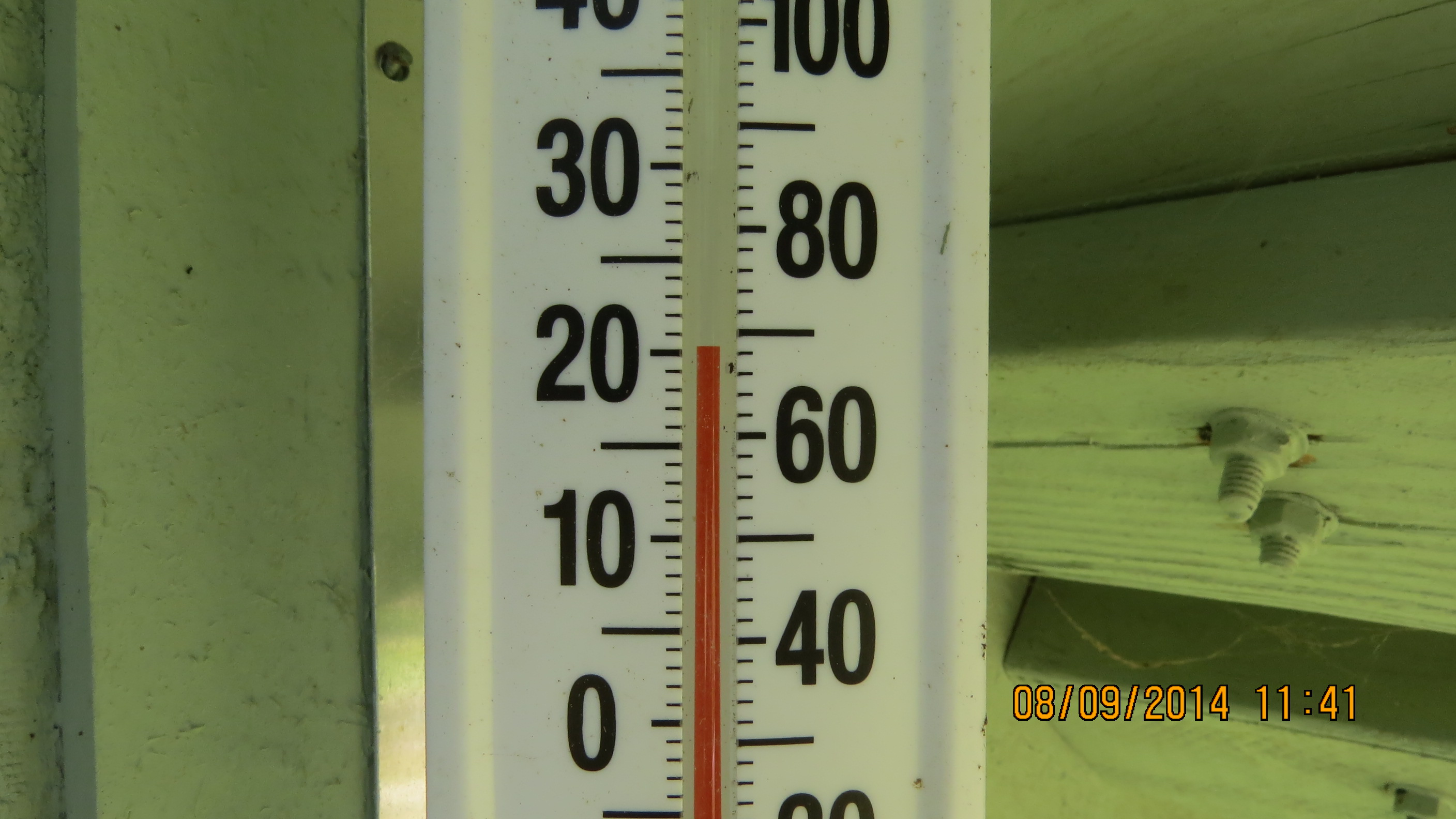
...and this is the awful final sign that things are not going well.  62F (16C) means there is no brood being laid.

…and this is the awful final sign that things are not going well. 62F (16C) means there are no eggs being laid.

Maybe I’m wrong, but math is math, and the numbers don’t look good for Bee-atrice.

Read Full Post »

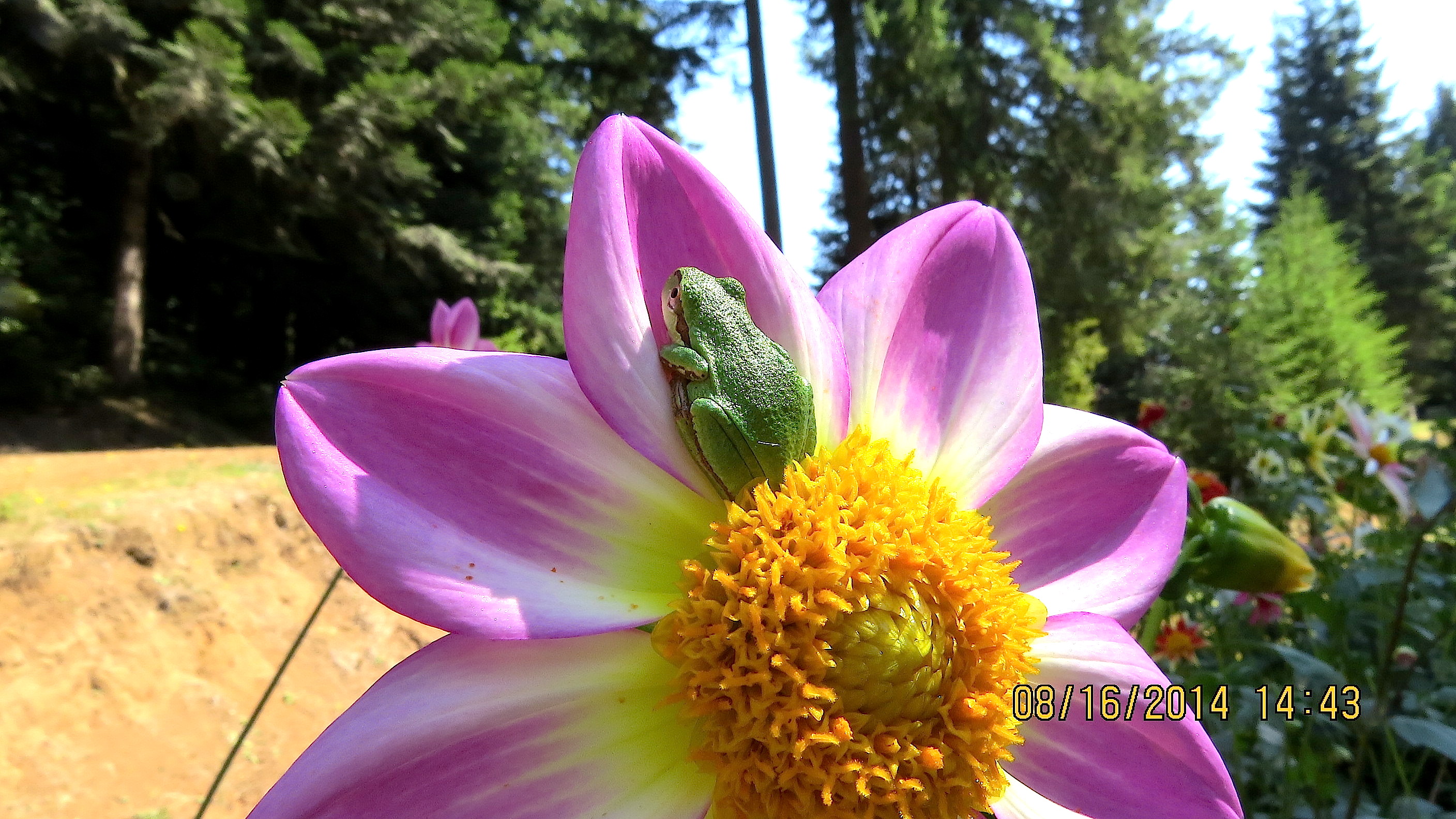
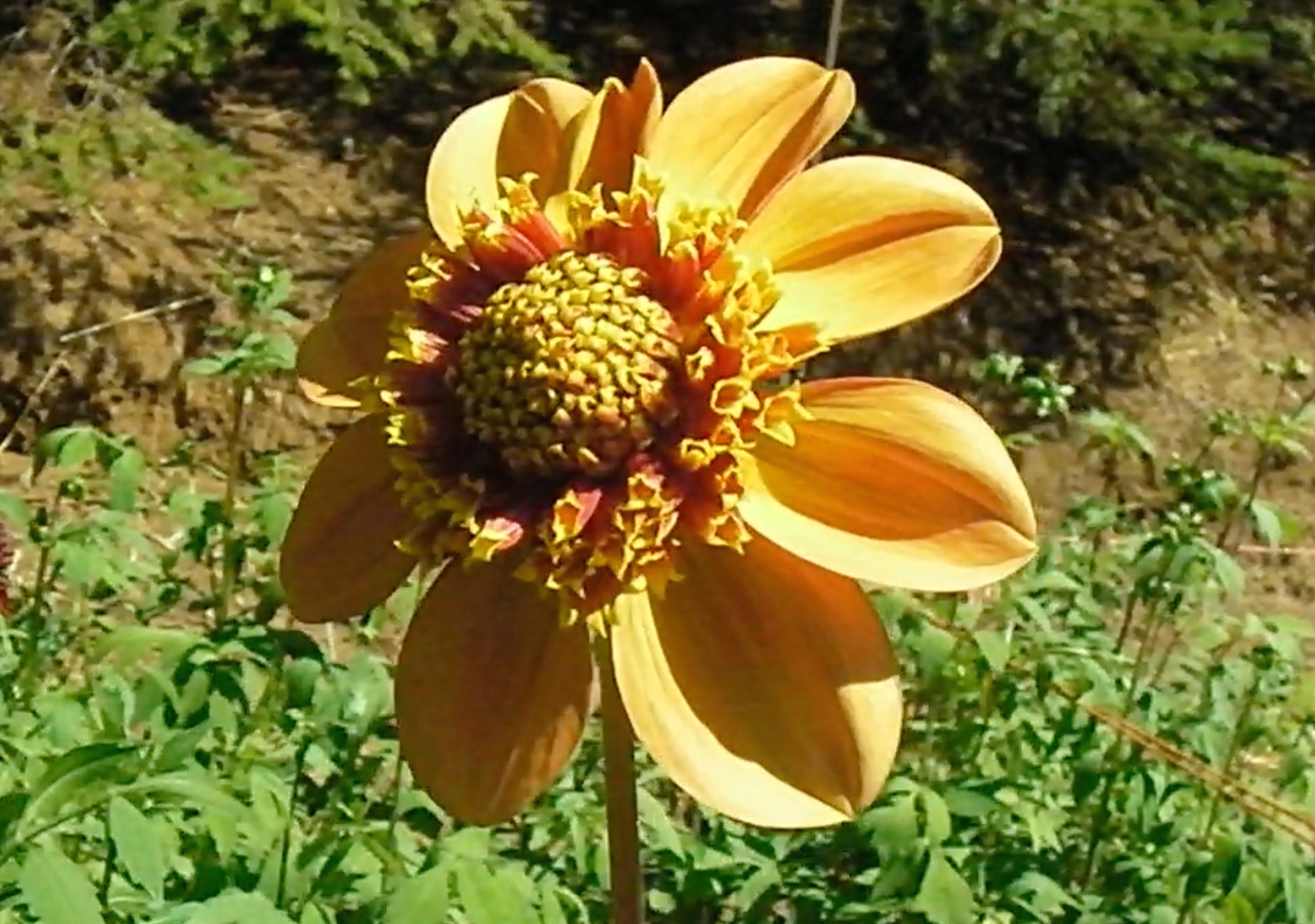
August 16, 2014...This anemone dahlia serves as a rest stop.

August 16, 2014…This anemone dahlia serves as a rest stop.

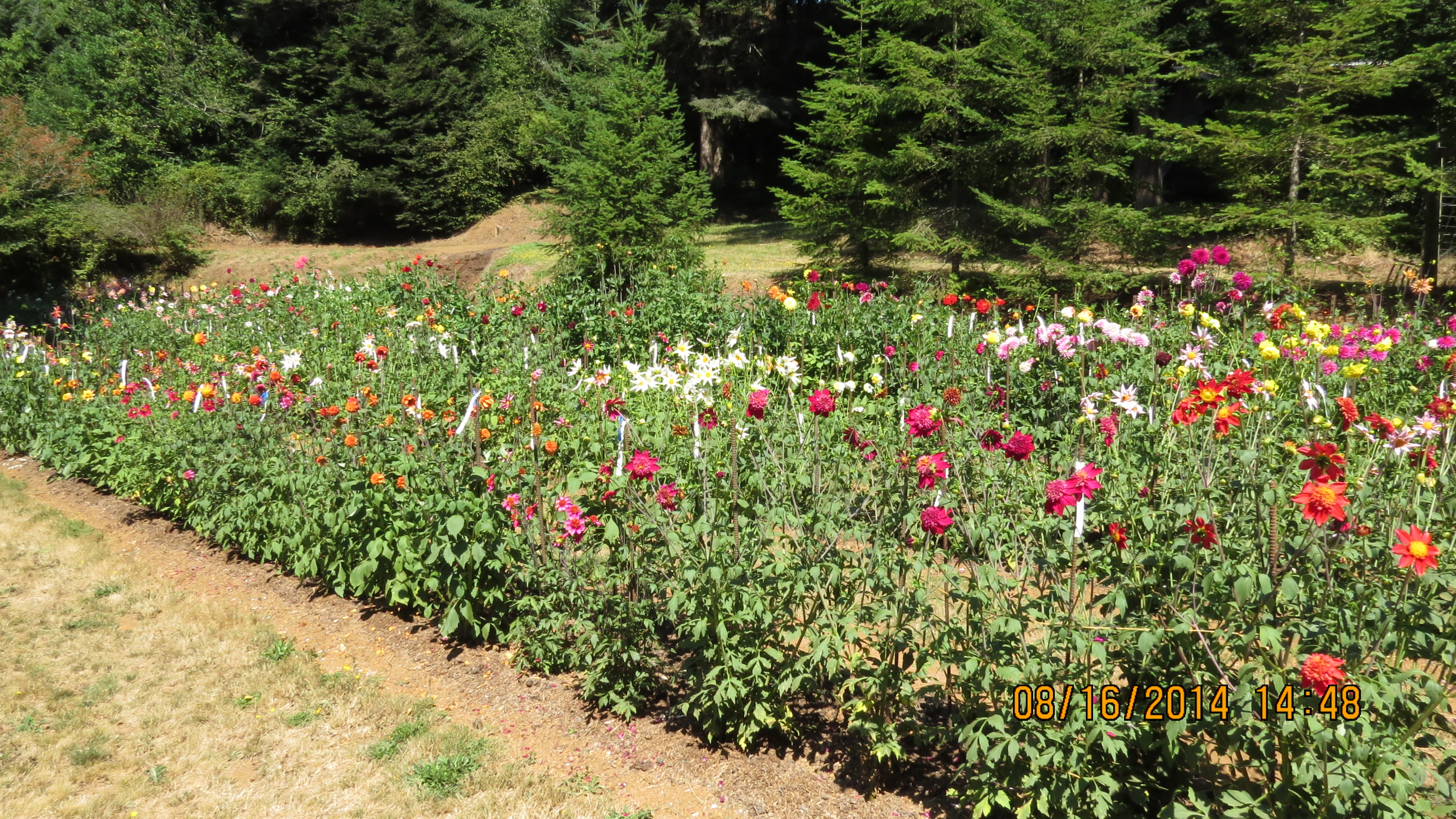
Looking over Kathy's dahlias at some of the 2500 kinds that must be whittled down to 100.

Looking over Kathy’s dahlias at some of the 2500 kinds that must be whittled down to 100.

Kathy grows dahlias…lots of them Knowing of my interest in bees, she has explained how bees have helped her to grow different kinds of dahlias.  For many years, she hand pollinated the dahlias she wanted to hybridize.  About a year and a half ago, a swarm of bees chose a nearby cedar tree as their future home and started visiting her dahlias.  Kathy says she gets much better results from the bees’ pollination.   She collected the seeds after pollination and grew over 2500 kinds.  Of the 2500, she will select only about 100 that make the grade.  (I’m glad I don’t have to decide, I like them all.)

This is one of 2500 varieties that Kathy grew this year.  She must whittle it down to about 100 keepers.

This is one of 2500 varieties that Kathy grew this year. She must whittle it down to about “100 keepers.”

This is known as a giraffe pattern.  Kathy says she is indebted to the bees for this one.

This is known as a giraffe pattern dahlia. Kathy says she is indebted to the bees for their pollination services.  I am intrigued by the variety of styles.

Orchette  Get this from Kathy.

An orchid form dahlia

August 16, 2014...Since the bees adopted this tree sometime last year, Kathy has let them pollinate her dahlias.

August 16, 2014…Since the bees adopted this high up cavity in a cedar tree, Kathy has benefited from them pollinating her dahlias.  In the video you can see how high up it is with a steady stream of bees flying in and out.

Is this a keeper or will it go into the compost?

Is this a keeper or will it go into the compost?  Kathy hasn’t decided yet, but she does like what she sees.  It started opening up yesterday and will look different tomorrow, “it’s promising,” she says.

Kathy says she is indebted to the bees for making this one.  She is planning to keep it.

Kathy says she is indebted to the bees for making this one which she is planning to keep.

Sunspot...a mignon dahlia creation that Kathy has let us grow for our bees.

Sunspot…a mignon dahlia creation that Kathy has let us grow for our bees.

Read Full Post »

August 9, 2014, 10:34 am...Waggle dancing takes place.

August 9, 2014, 10:34 am…Waggle dancing takes place.

After reading Honeybee Democracy, by Thomas Seeley, I sort of knew what to expect on swarm behavior.  The scouts would each go out and report back to the swarm.  They would indicate the direction of a possible future hive location by doing a waggle dance in relation to the sun.  Straight up meant “in the direction of the sun,” or angled off from straight up meant that angle direction from the sun.  If the scout bee thinks she’s got a real good location, she will dance more emphatically.  Other scout bees will look the location over, actually measuring the sides, and judging if it’s a good location.  They will report back to the swarm.  This can take several days.  This bee is waggling just a bit.  I wouldn’t call it a real hard sell at this point.

11:15 am...I had been seeing some scout bees around Bee Beard log hive.

11:15 am…I had been seeing some scout bees around Bee Beard log hive.  More now.

Since it got robbed out last month, after several weeks in decline, I made the decision to take Bee Beard out of circulation, sort of retire it, let it rest up til March whereupon, I could introduce a new swarm to it.  I was in the process of dismantling it, when this August swarm took place.  I had to work like a mad man.  My printing deadlines were just going to have to wait.  I hope my customers understand. (Do I have any left?)

I scorched out the inside of the hive, shortened up the quilt box so it fit looser, and melted small bits of comb to the five top bars.  I added new leaves and sawdust to the bottom cavity and new sawdust to the quilt box.  This time I drove a fence post into the ground and fastened it to the log hive to keep the winter winds from toppling it.

August 8, 2014...fence post fastened to Bee Beard log hive.

August 8, 2014…fence post fastened to Bee Beard log hive.

As a natural beekeeper, I was hoping maybe, just maybe, the swarm would choose Bee Beard for their new place.  I mean how much more natural is that?

At 70F (20C) it's a good day for a swarm.

At 70F (20C) it’s a good day for a swarm.

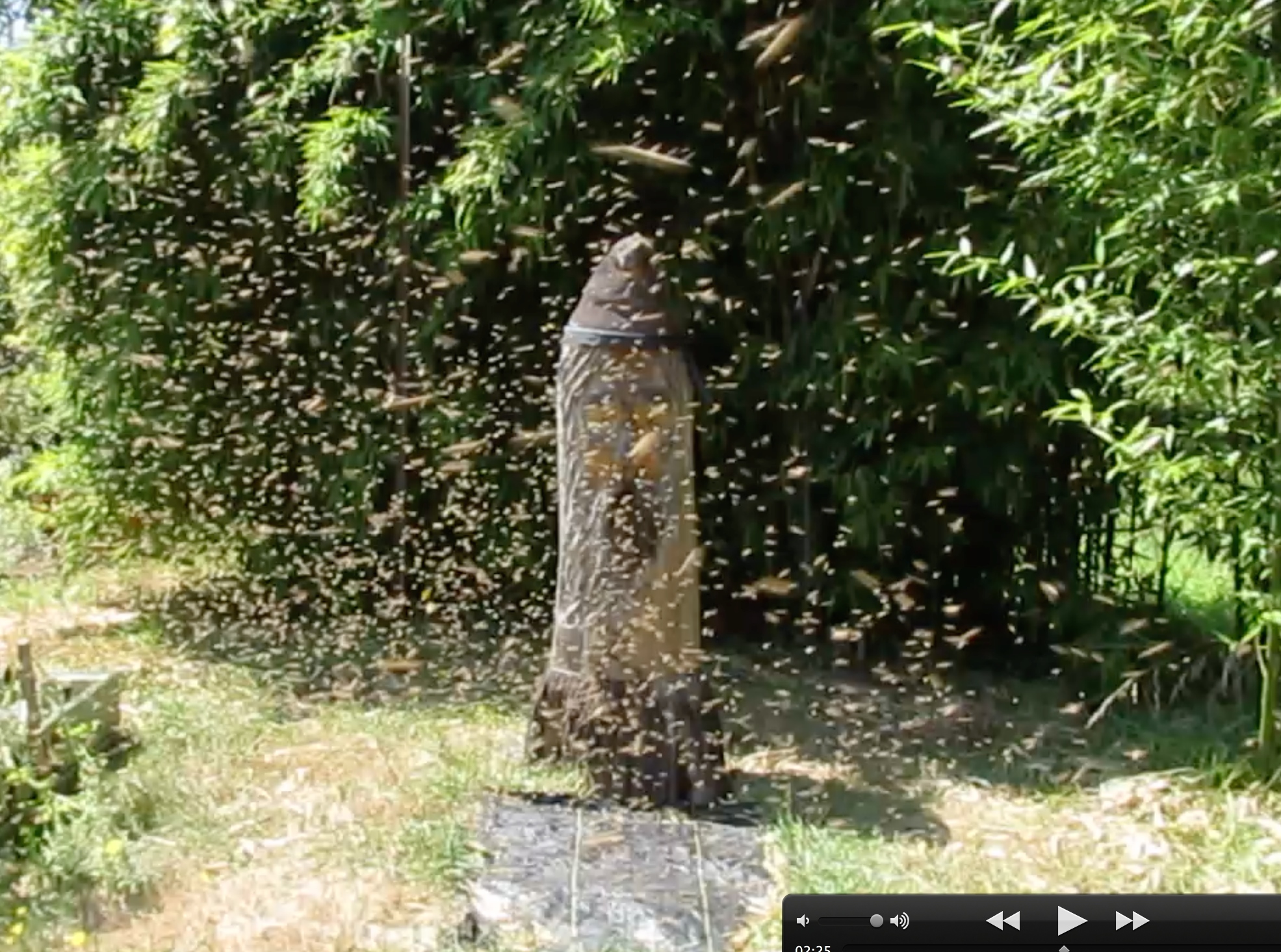
2:20 pm...As luck would have it, (and I do mean luck)  the swarm broke up to relocate to Bee Beard.

2:20 pm…As luck would have it, (and I do mean luck) the swarm broke up to relocate to Bee Beard.  In the video you can  feel the power of thousands of bees swirling around.  I’m afraid I got a little emotional in talking about  it.

2:30 pm...Bee Beard is covered in bees.  In the video you can see the bees crawling upward and circling the mouth before entering the mouth entrance.

2:30 pm…Bee Beard is covered in bees. In the video you can see the bees crawling upward and circling the mouth before entering.

I guess you could say we were ecstatic.  We just stood there in the middle of all that bee energy and talked about it what we were witnessing.

August 10, 2014...The next day was back to business with time out for reconnaissance flights.

August 10, 2014…The next day it was back to business with time out for reconnaissance flights.

August 10, 2014...the day after the swarm, shows the bees on the observation window.  They've got to build their own comb so they are hanging out here for a while.

August 10, 2014…the day after the swarm, shows the bees on the observation window. They’ve got to build their own comb so they are hanging out here for a while.

Bee Beard’s back story.

The swarm’s back story.

There’s a new hive in town!

Read Full Post »

August 7, 2014...Nobody wants to see an August swarm.  Yet here it is.

August 7, 2014…Nobody wants to see an August swarm. Yet here it is.

There was little doubt about where the swarm originated from.  It was parked in the plum tree behind Bee-atrice Log hive.  I just didn’t want to believe it was from Bee-atrice.  I had such high hopes for her.  The swarm that found her has been there for only two months to the day.  It was a big swarm that day on June 7th.  I had never seen bees build so fast as you can see by the pictures.

July 9, 2014...After only one month the comb has been built where it's becoming visible in the observation window.  These bees are serious.

July 9, 2014…After only one month the comb has been built where it’s becoming visible in the observation window. These bees are serious.

July 14, 2014...Comb is already touching the window

July 14, 2014…Comb is already touching the window.  The mouth entrance is seen at the lower middle.

July 18, 2014...Three combs are inching their way down the window.

July 18, 2014…Three combs are inching their way down the window.

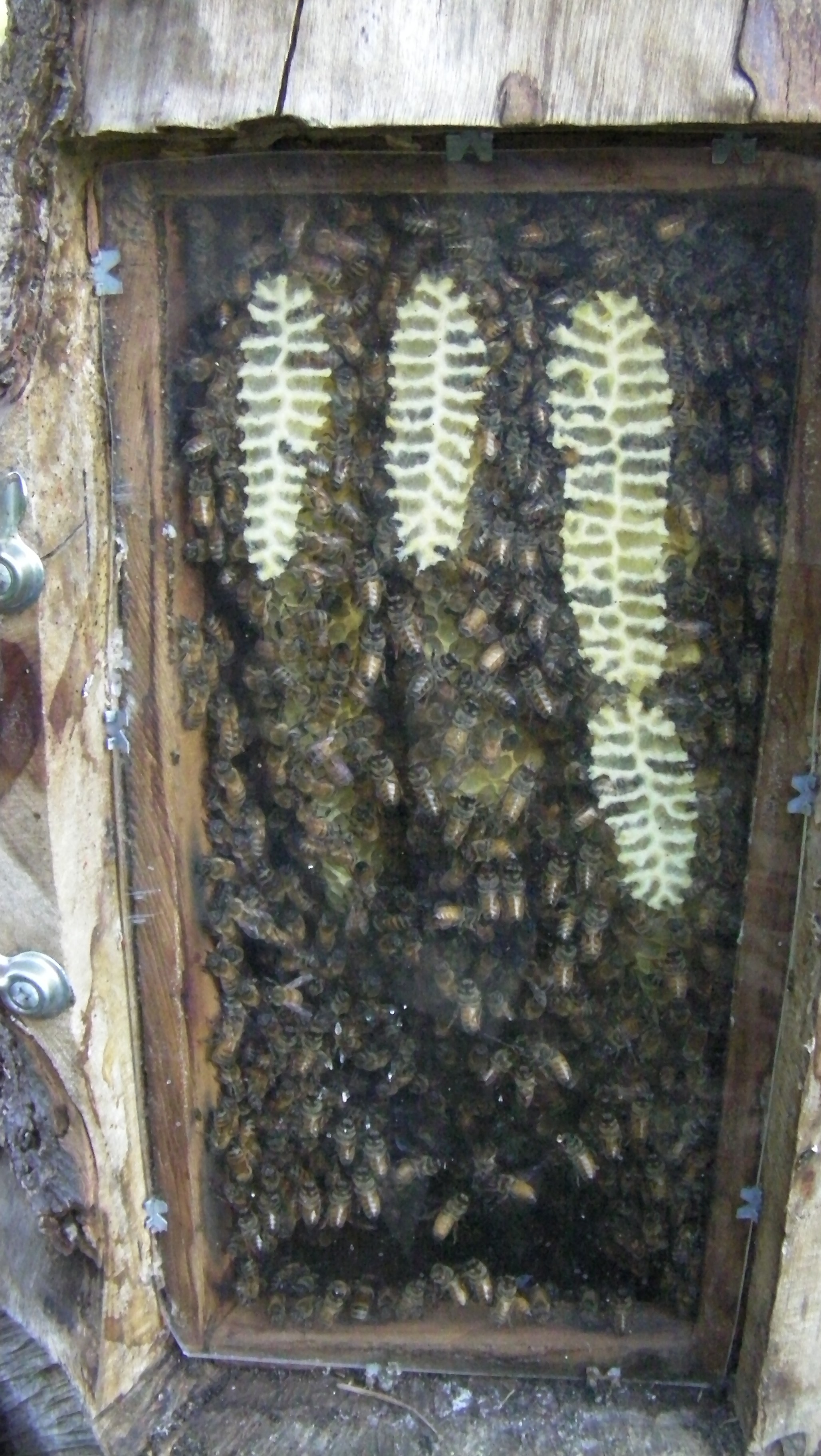
July 23, 2014...The observation window is filled with bees and comb.

July 23, 2014…The observation window is filled with bees and comb.


July 23, 2014...Bee-atrice's bees have settled in nicely.

July 23, 2014…Bee-atrice’s bees have settled in nicely.  This picture shows the bees and naturally built comb…no pink plastic foundation here!

I was just getting ready to shoot some videos of Bee-atrice’s two month anniversary over the weekend.  We were sitting at the dinner table when my wife wondered aloud about that brown spot in the plum tree.   I was hoping it was our eyes playing tricks on us, but noooooo, it was the real deal…an August swarm.

August 8, 2014...After Bee-atrice swarmed, brood temperature is holding steady.

August 8, 2014…After Bee-atrice swarmed, brood temperature is holding steady.

August 10, 2014...A look through the observation window shows many fewer bees after the swarm.

August 10, 2014…A look through the observation window shows many fewer bees after the big swarm left..

Now we wait and worry for the emerging virgin queen to come back alive and inherit the hive…fingers crossed.

Bee Math for Bee-atrice

Bee Beard is Back!!!

Read Full Post »

7-23-14...Bee Beard log hive is getting robbed by one of my other hives.  That's no surprise.  It's been on a downward path for awhile.  Is it because it robbed out a hive that had nosema ceranea?  I don't know but it's possible.

7-23-14…Bee Beard log hive is getting robbed by one of my other hives. That’s no surprise. It’s been going down  for a while. Is it because it robbed out a hive that had nosema ceranea? I don’t know but it’s possible.

I call myself a ‘natural beekeeper.’  A natural beekeeper doesn’t try to prevent the bees from swarming, lets the bees build their own natural comb, and intervenes as little as possible.  I never opened this hive up.  The bees came from a Myrtle tree hive, captured in a swarm bait box which I had hung on the tree.  The bees chose the bait hive in early June 2012.  A person could argue that’s not exactly natural, but my point is, these bees came from a tree…not a package.  Bee Beard was one of my very first hives.  It survived two winters without any intervention on my part…no feeding, no mite poisons, no antibiotics.  It was a strong hive with bees coming and going in strong numbers.  In the spring of 2013, it threw six swarms.  In 2014, it threw at least three swarms.  In early July, I started seeing decline.  I didn’t want to admit it, but the numbers were clearly going down.

I wondered if it had gotten infected with the nosema ceranea.  The bees had robbed a possibly infected hive in December.  Or maybe it had something to do with neonicotinoids in the bogs nearby.  It’s also possible the new queen never made it back to the hive after the three swarms.   Whatever the reason, I knew I would have to face the fact that it was time for Bee Beard to retire for a while.  The wax moths would find the hive, lay their eggs in the comb, the larvae would eat the wax and clean it out.  I’ve never seen it happen, but I’ve heard it’s the natural way.  When the wax is cleaned out, the bees will find it and start all over again.

August 3, 2014...I was resigned in my mind to let the wax moths clean out Bee Beard log hive until I saw this Bald Faced Hornet exiting the hive at the side entrance.

August 3, 2014…I was resigned in my mind to let the wax moths clean out Bee Beard log hive until I saw this Bald Faced Hornet exiting the hive at the side entrance.

When I saw the Bald Faced Hornet, I panicked.  What if wasps got in the log hive and built a nest.  Not knowing what it was or what kind of nest it preferred, I knew I wasn’t going to take a chance.

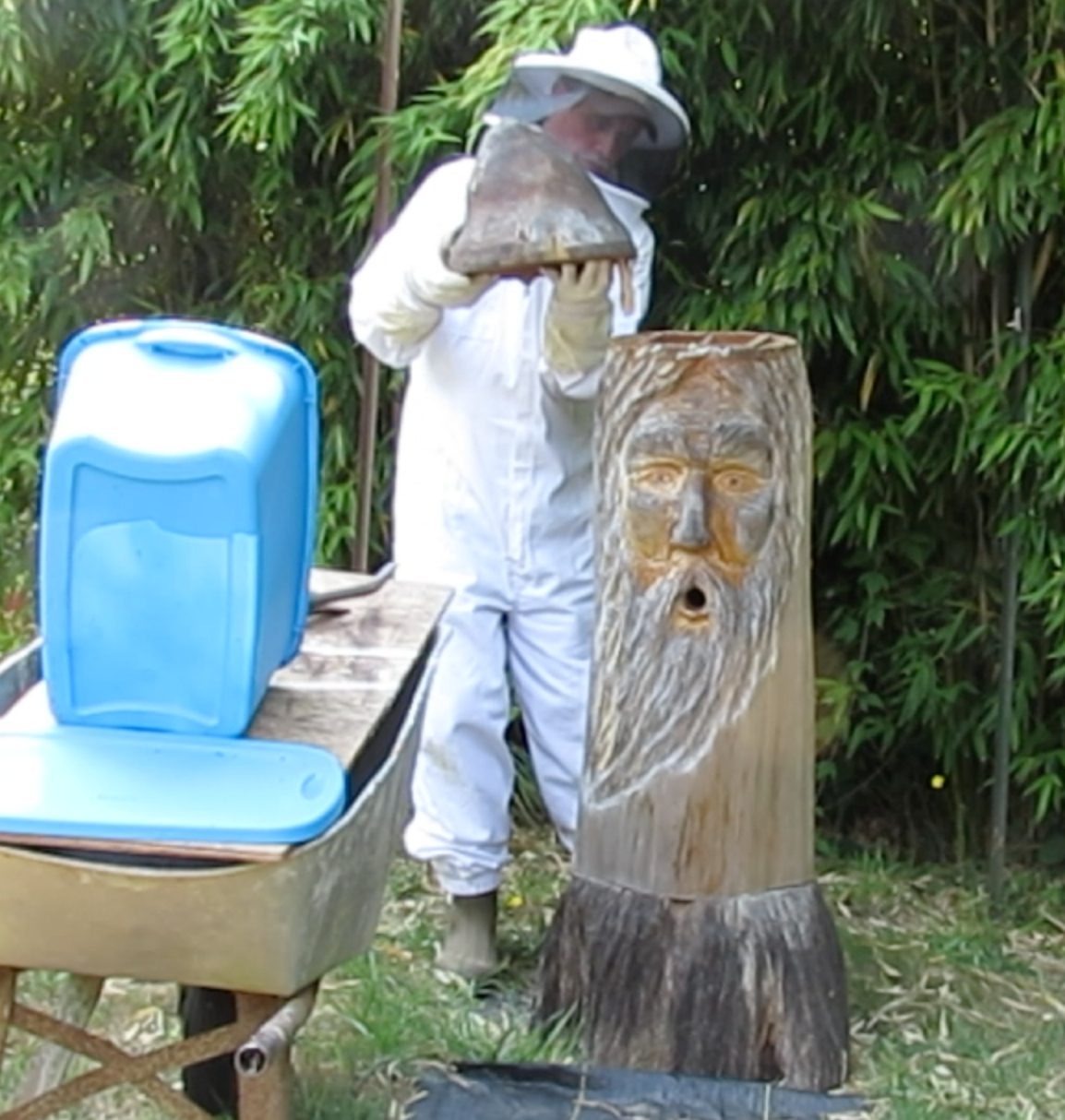
August 3, 2014...I started taking Bee Beard apart by pivoting the hat.  I was surprised it came apart so easily.

August 3, 2014…I started taking Bee Beard apart by pivoting the hat. I was surprised it came apart so easily.

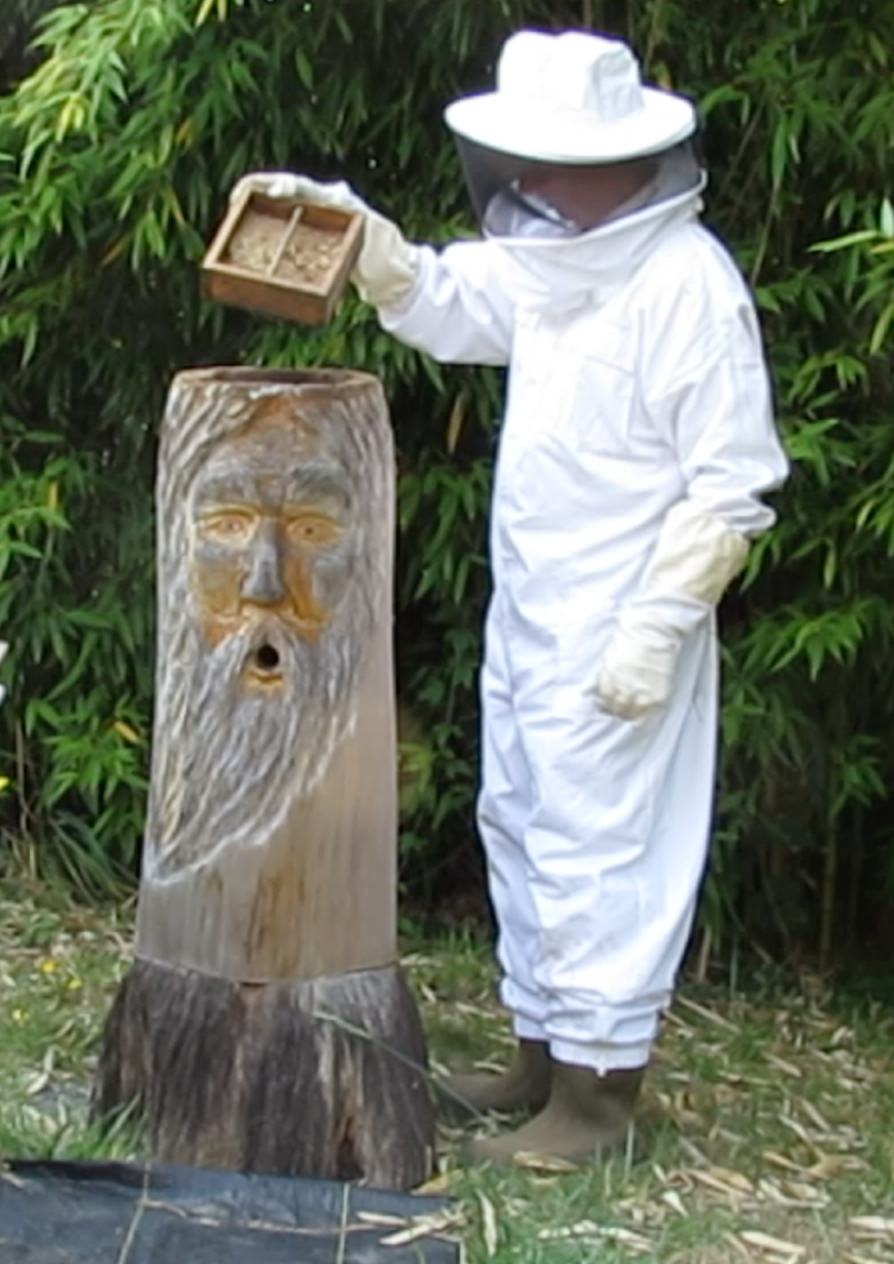
Getting the quilt box out proved to be difficult, more so than this picture implies.

Getting the quilt box out proved to be difficult, more so than this picture implies.

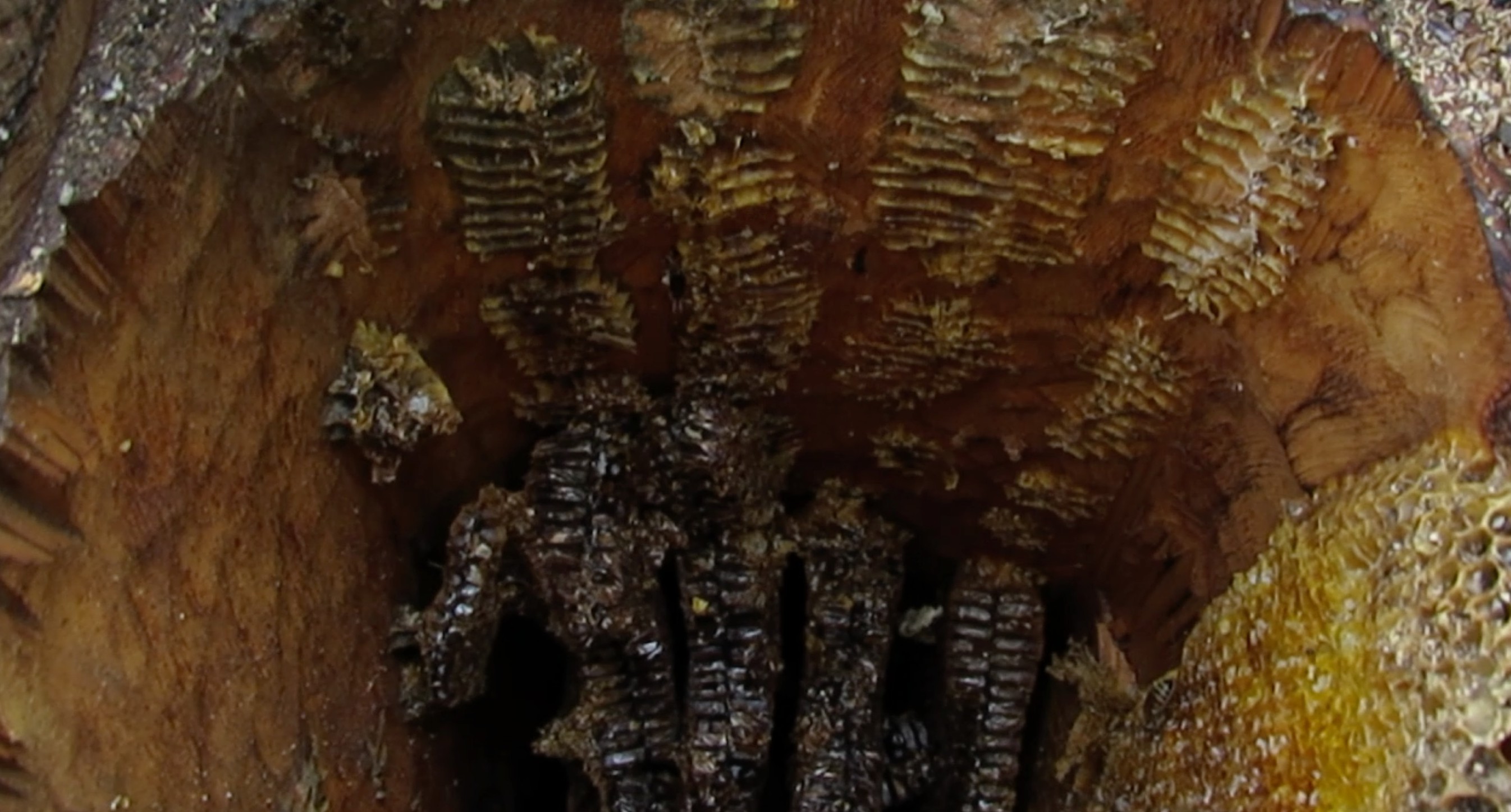
Inside Bee Beard with about half the comb dug out.  I decided to take it all out just in case it was infected with something.

Inside Bee Beard with about half the comb removed. I decided to take it all out just in case it was infected with something.

Bee Beard log hive, down for the count.  I had cleaned it out.

Bee Beard log hive, down for the count. I had cleaned it out.

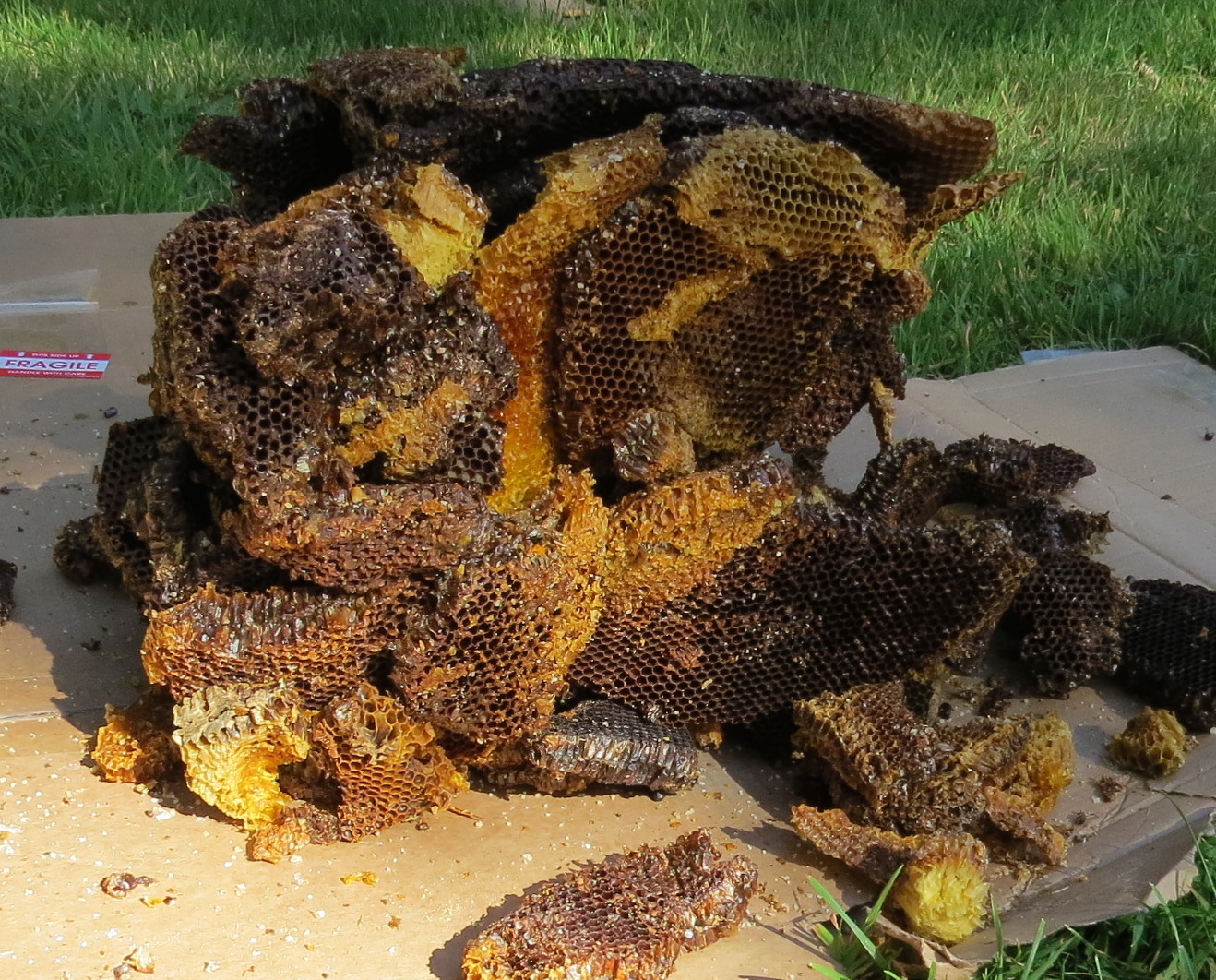
A pile of old comb came out of Bee Beard.  I considered saving it, but maybe it's infected...better not.  I'll build a solar wax melter.

A pile of old comb came out of Bee Beard. I considered saving it, but maybe it’s infected…I better not. I’ll build a solar wax melter.


My plan was to plug the hive up until March or April, torch out the insides, put in some fresh natural comb and bait it with Lemongrass oil.  Isn’t there a saying, “Plans are made to be changed?”  If there isn’t, there ought to be, because on returning from an out of town trip, my wife spotted something in the tree.  “What is that brown shape in the plum tree?”  “Whaaaat?  ANOTHER SWARM???  IN AUGUST???”

To BEE continued…

The Swarm’s Back Story…

Bee Beard is Back!


Read Full Post »

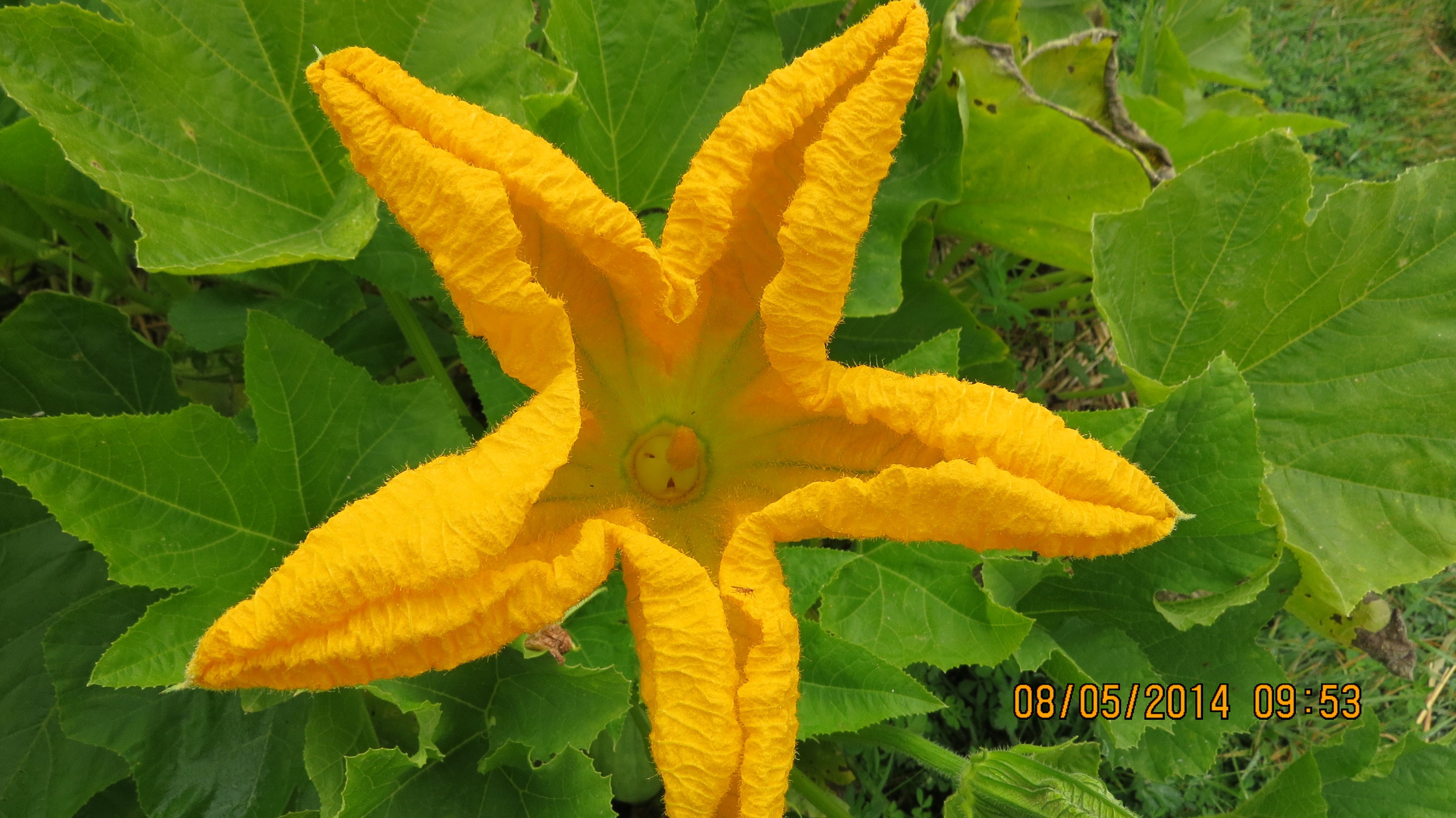
August 5, 2014...Male squash blossom (possibly an acorn squash)  You can see the small sipping holes where the bees get the nectar.

August 5, 2014…Male squash blossom (possibly an acorn squash) You can see the small sipping holes where the bees get the nectar.  Male blossoms open earlier than female blossoms and stay open for days at a time.

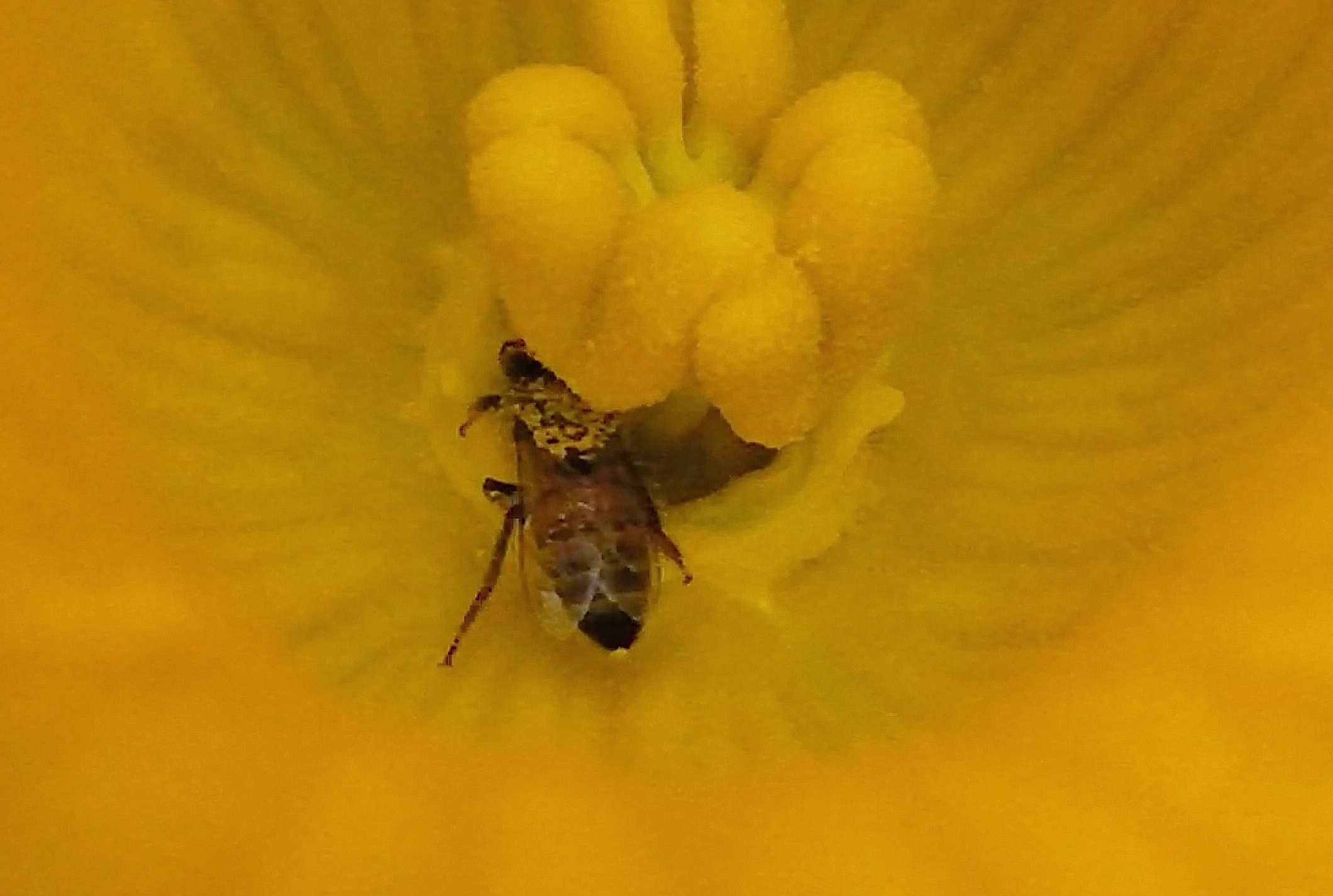
August 1, 2014...A honeybee sipping nectar from a male squash blossom.  This was a surprise to me, that male blossoms had nectar.

August 1, 2014…A honeybee sipping nectar from a male squash blossom.   The bee picks up pollen from the anther to transfer to the female blossom.

Honeybee sipping from nectar fountain of the female squash blossom...rubbing pollen upward onto the stigma (?)

The blossom provides  nectar to attract pollinators.  This honeybee is sipping from nectar fountain of the female squash blossom…rubbing pollen onto the stigma.

August 6, 2014...this female blossom just opened today.  Already there is a bee in attendance.

August 6, 2014…this female blossom just opened today. Already there is a bee in attendance.

I'll keep an eye on this acorn squash for a couple of days...it should start getting larger.

Open at 9:29 am or before…

After being opened one day only, this female blossom closed up shop.  Male blossoms open earlier than females and stay open for days at a time.

Closed at 7:04 pm…after being opened only one day, this female blossom closed up shop.


August 7, 2014...blossom closed yesterday and remains closed.  A measurement of 1 3/16" (30 mm) is made on the diameter.

August 7, 2014…blossom closed yesterday and remains closed. A measurement of 1 3/16″ (30 mm) is made on the diameter of the tiny acorn squash.


Read Full Post »

July 18, 2014...Although I walk past this plant just about every day, I never took notice of it until it started blooming about a week ago.  I became curious whether bees would be attracted to it.  Yes, there were...even as early as 8:30 am..

July 18, 2014…Although I walk past this New Zealand Flax  just about every day, I never took notice of it until it started blooming about a week ago. I became curious whether bees would be attracted to it. Yes, they were…even as early as 8:30 am..

July 17, 2014...bee going deep for nectar.  I recently read a website that honeybees can't get the nectar from New Zealand Flax, and yet I saw many honeybees attending these blossoms.

July 17, 2014…bee going deep for nectar. I recently read a website that stated honeybees can’t get the nectar from New Zealand Flax, and yet I saw many honeybees attending these blossoms.

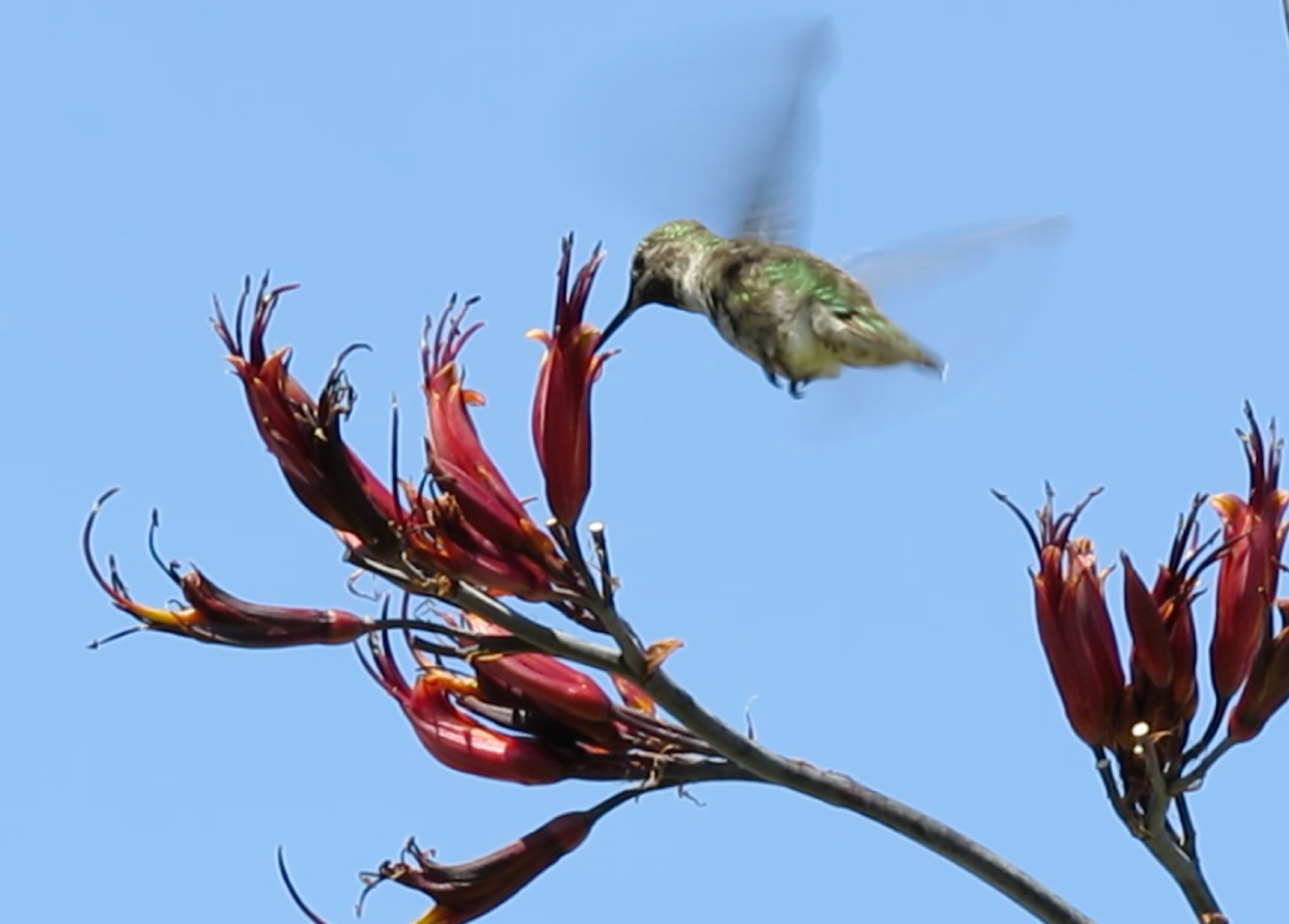
July 12, 2014...Hummingbirds also visited, but were often chased away by rivals.  Why is that?  There is plenty to go around.  "Why can't they cooperate for the common good," my wife asks? I have no answer...Why can't humans cooperate for the common good?  Looking at our blue planet from space, seeing nothing around that's inhabitable for light year distances, you'd think we'd want to work together for our mutual survival.  Just some thoughts in light of the current world affairs.

July 12, 2014…Hummingbirds also visited, but were often chased away by rivals. Why is that? There is plenty to go around. “Why can’t they cooperate for the common good,” my wife wonders?  I have no idea…Why can’t humans cooperate for the common good? Looking at our blue planet from space, seeing nothing around that’s habitable for light year distances, you’d think we’d want to work together for our mutual survival.
Just some random thoughts in light of the disturbing current world affairs.

July 14, 2014...July 14, 2014...When I saw reddish orange pollen coming into my Bee-atrice Log Hive, I wondered where it was coming from.being transported into the hive...perhaps nectar too?

July 14, 2014…When I saw reddish orange pollen coming into my Bee-atrice Log Hive, I wondered where it was coming from.

Reddish orange pollen.  I was wondering where that was coming from

Reddish orange pollen, coming from the New Zealand Flax.

Ants like it too.  When I was shooting the video I waited and waited until the ant emerged, then another, and another.

Ants like it too. When I was shooting the video I waited and waited until this ant emerged, then another came up,  and another.

History of flax use in New Zealand

The Short Story of Flax in New Zealand

How to clean and harvest New Zealand Flax

How to make a small purse using the leaves.

Read Full Post »

June 8, 2014...Bee-atrice has BEES.  It's been a rough time for her, but I think this one will take.

June 8, 2014…Bee-atrice has BEES. It’s been a rough time for her, but I think this one will take.

June 16, 2014...10th day of bees in Bee-atrice.  I think they will stay this time.

June 16, 2014…10th day of bees in Bee-atrice Log Hive.   I think they will stay this time.

While I was out of town, a huge prime swarm chose Bee-atrice Log Hive for a home.  I knew if we waited long enough, we’d get lucky…I just wish I could have witnessed the swarm moving in.  Bee-atrice was happy.  She had been rejected twice.  I had tried to console her after she had been rejected by two small swarms that I had given her.  I told her that “rejection” might more appropriately be referred to as “redirection.”  Those small swarms would not have made it anyway.  I told her that she just had to be patient until the right swarm came along.

April 27, 2014...Pat drops the little cast swarm into Bee-atrice.  They stay a total of two days, then take off to parts unknown.

April 27, 2014…I drop the little cast swarm into Bee-atrice log hive. They stay a total of two days, then take off for parts unknown.

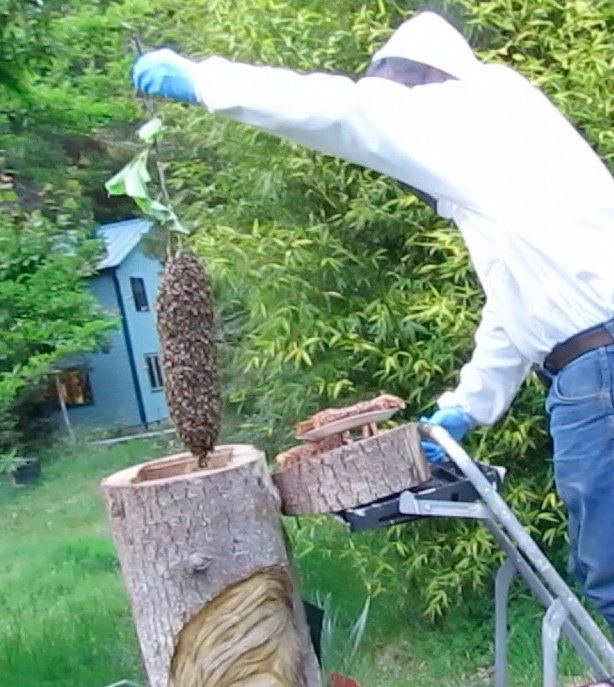
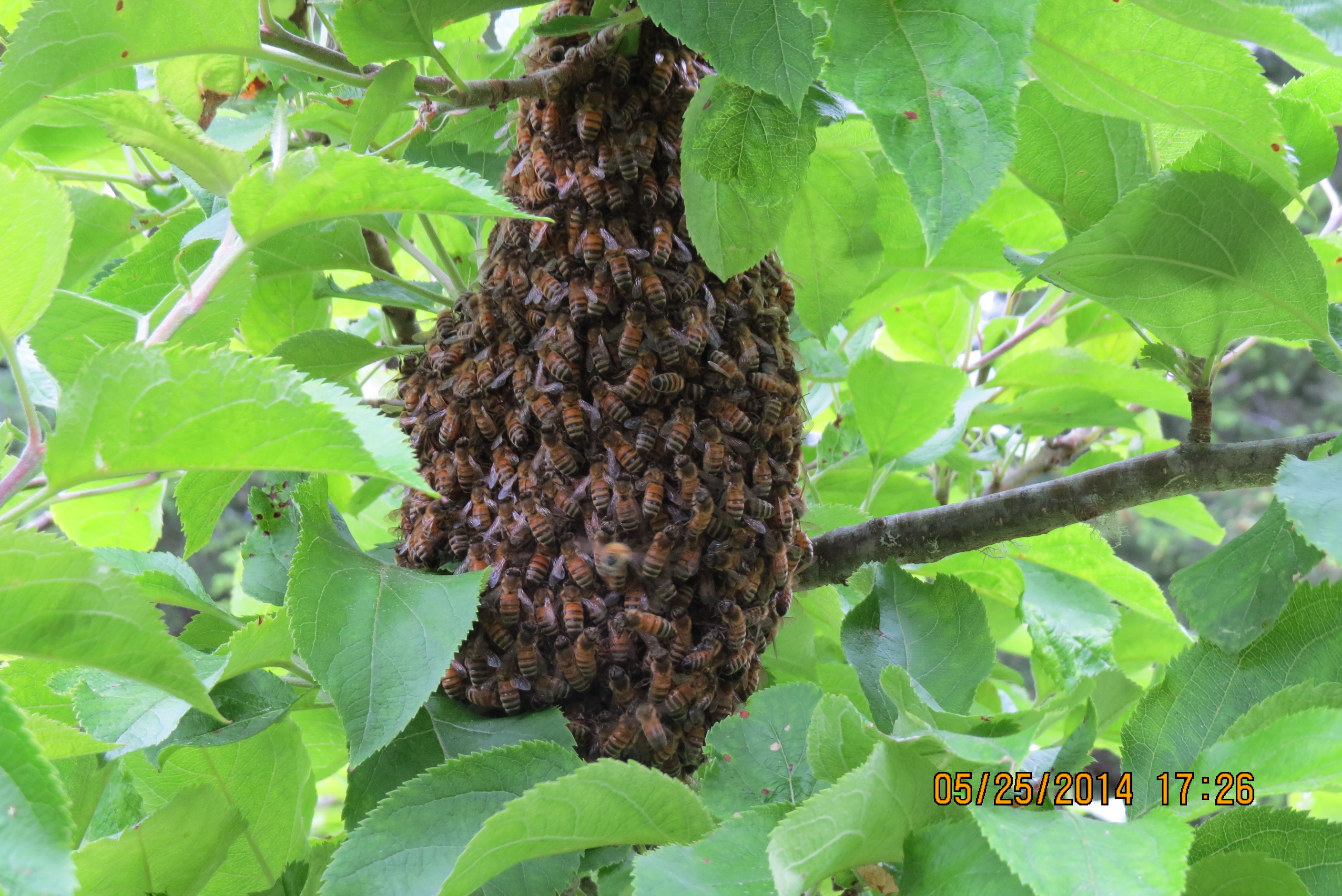
May 25, 2014...A second chance presents itself, in the form of a swarm in the apple tree.  I get the swarm bucket ready.

May 25, 2014…A second chance presents itself, in the form of a swarm in the apple tree.   I bag it and drop it into Bee-atrice.  I thought for sure it would stay, but after 8 days, it took off for the Asian Pear tree.  I started thinking something was wrong with Bee-atrice…then it dawned on me…maybe I was the problem.  Maybe I should just back off and let nature take it’s course…thirteen days later (while I’m away), a huge swarm picks out Bee-atrice.   She later tells me, SHE rejected those little swarms, not the other way around.  I guess she didn’t want to hurt my feelings.

June 9. 2014...lots of bee traffic at the entrance.

June 9. 2014…lots of bee traffic at the entrance.

June 10, 2014...This is the first time I've ever seen 94 degrees register on the thermometer.  This is the optimal temperature for brood.

June 10, 2014…This is the first time I’ve ever seen 94F degrees (34C) register on the thermometer. This is the optimal temperature for brood.  Three days ago it read 60 degrees (the ambient temperature)

June 9, 2014...the bees can be seen through the observation window.  If they stay, we'll be able to watch the comb building process.

June 9, 2014…the bees can be seen through the observation window.  If they stay, we’ll be able to watch the comb building process.

June 16, 2014...10th day, natural comb can be seen already, through the top side entrance.

June 16, 2014…10th day, natural comb can be seen already, through the top side entrance.

June 19, 2014...Day 13, this is where the bees hang out at night while they are waiting for the comb to be built.

June 19, 2014…Day 13, this is where the bees hang out at night while they are waiting for the comb to be built.

June 19, 2014...In this slightly out of focus shot, you can see how far the bees have built the natural comb...almost to the top of the observation window...a length of about 14 inches (35 cm).

June 19, 2014…Day 13, in this slightly out of focus shot, you can see how far the bees have built the natural comb…almost to the top of the observation window…a length of about 14 inches (35 cm).

Drones dropping down every time I uncover the observation window…

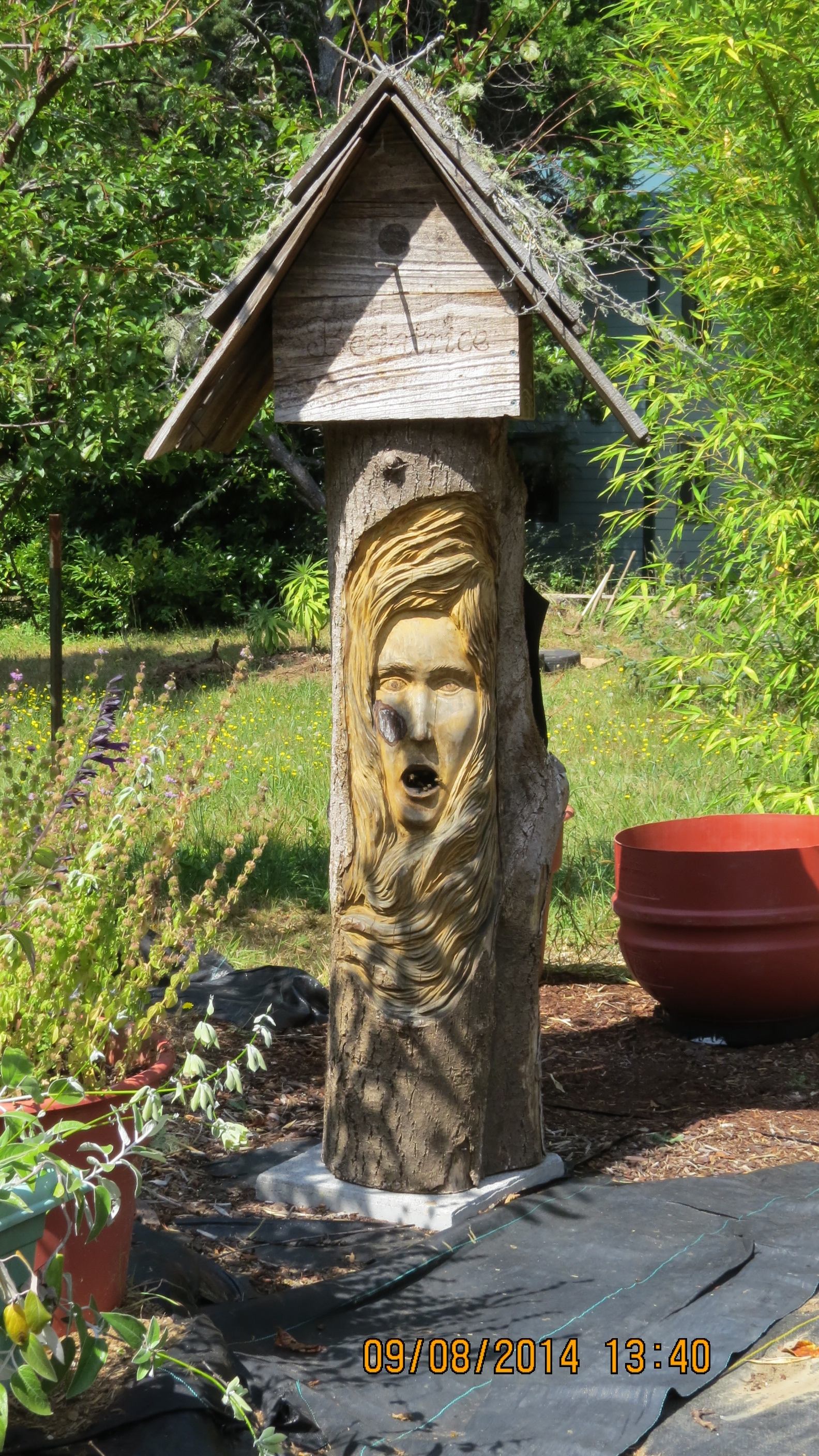
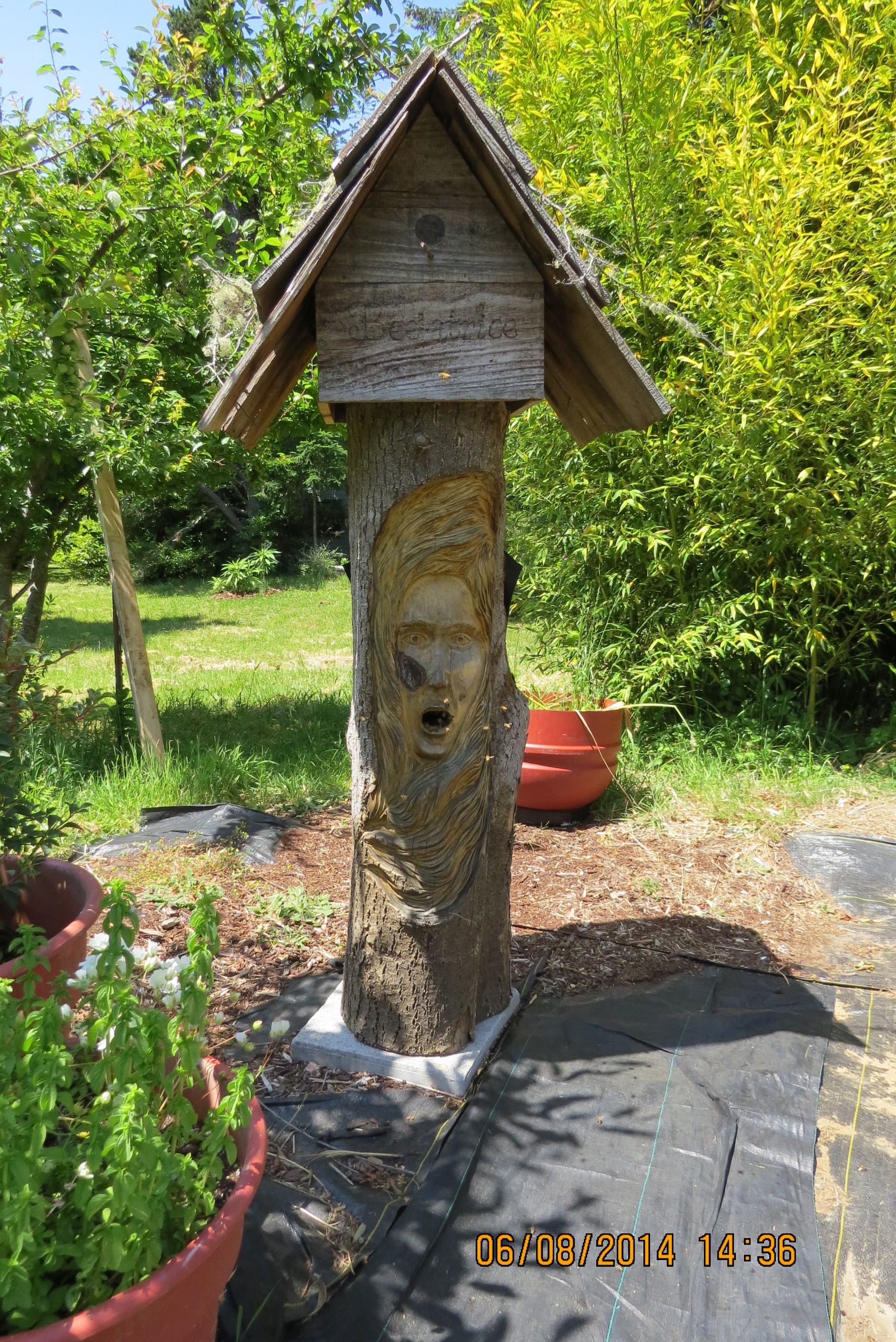
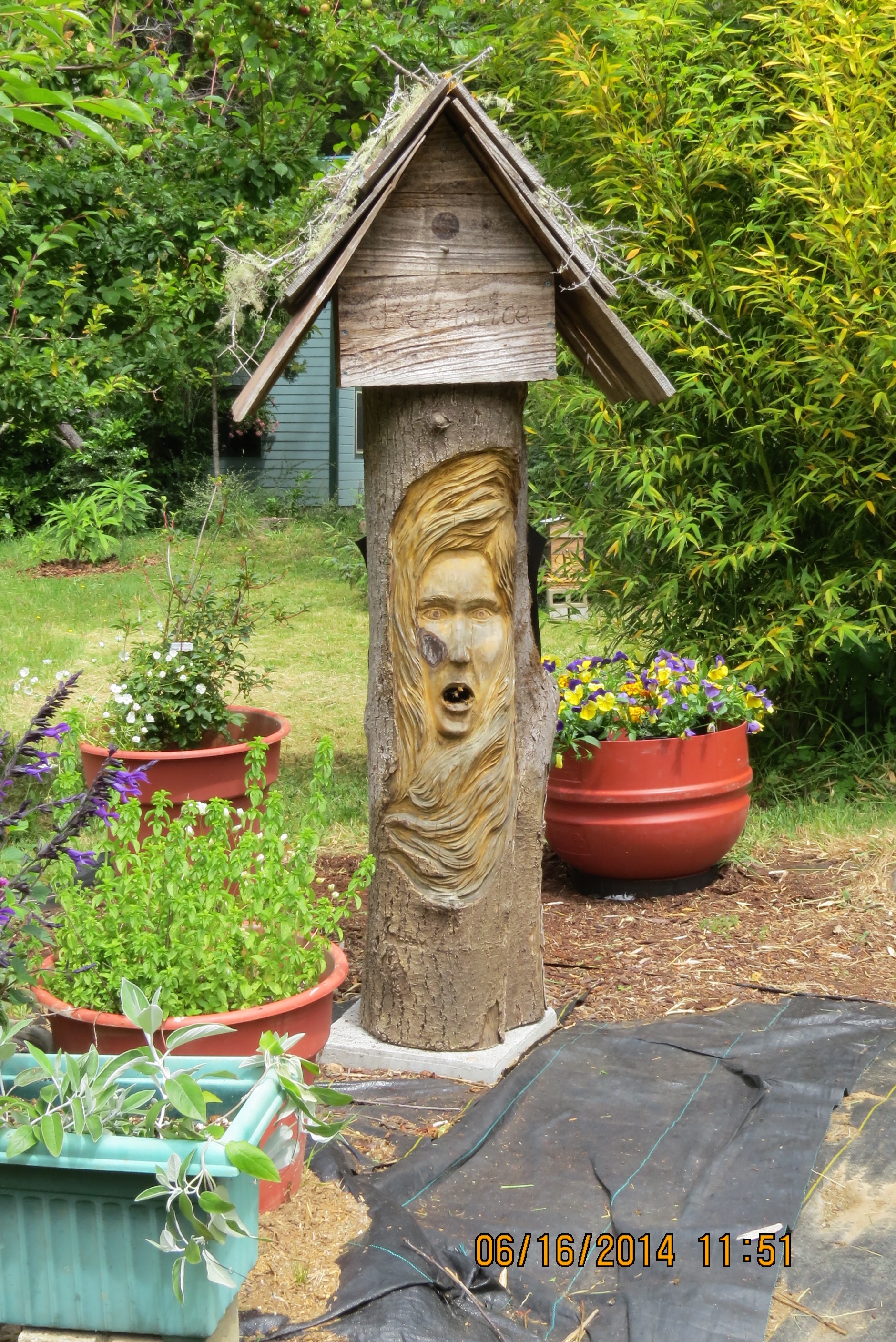
The carving of Bee-atrice.

Getting her ready for a swarm last year.

Bee-atrice’s debut

A Bonnet for Bee-atrice

Two month’s later Bee-atrice’s swarm chooses Bee Beard Log Hive


Read Full Post »

« Newer Posts - Older Posts »