Posts Tagged ‘honey bees’

Some of the bulbs being planted for the bees

Some of the bulbs being planted for the bees.  I was able to purchase these locally from my favorite nursery, 101 Plants and Gifts.

It’s possible that everyone already knows certain bulbs provide an early nectar source for bees.  I might be new to the game because, well, I’ve never really been overly appreciative of growing flowers.  “They take up space and use precious water.”  Being on a shallow well makes you a water miser.  But these grow during the rainy season.  Some can even be planted in the front lawn, not taking up space or using extra water as in the Siberian Squill.  Being a beekeeper has changed my attitude towards flowers.  Now my motto is, ” You can never have too many (bee-loving) flowers.”

Since I recently broke up a new patch of ground for the Towers of Jewel ‘trees’, I have some extra space I can dedicate to bulbs.  Che Guebuddha,  a blogger from Sweden,  mentioned even more bulbs like the white Snow Drops and the yellow Eranthis.  A quick call to find out I can’t get them locally, but I CAN get them from John Scheepers on the east coast.  I order another 150 more.  Looks like I’ll have to break more ground.  As an after thought I wonder if I have to worry about poisons on the bulbs.  Alicia at the customer service desk of John Scheepers, Inc. assures me “there are no sprays, poisons, or toxins associated with these bulbs.”  Good!  They are going in next weekend.

With the addition of bulbs, we'll provide early nectar as well as summer food.

Newly planted “Tower of Jewel ‘trees.  I’m counting on these plants to grow about 10 feet (3 meters) this spring.  With the addition of bulbs, we’ll be able to provide an early nectar source as well as mid summer nourishment for the honeybees and bumblebees.

12-26-13...Persian Blue Alliums are up already.  I don't know if that's a good thing or not!  I'm protecting this patch because the sub freezing temps are bad for the echium...something I didn't think about when I planted the bulbs. :-(

12-26-13…Drumstick Alliums are up already. I don’t know if that’s a good thing or not! I’m protecting this patch because the sub freezing temps are bad for the echium (Tower of Jewels)…something I didn’t think about when I planted the bulbs. 😦

February 5, 2014...Grape Hyacinth and 15 Drumstick Allium are up.  Giant Snowdrops just breaking.

February 5, 2014…Grape Hyacinth and 15 Drumstick Allium are up. Giant Snowdrops just breaking.

February 5, 2-14...close up of Grape Hyacinth.  My wife says I planted them too close together.  She might be right.

February 5, 2014…close up of Grape Hyacinth. My wife says I planted them too close together. She might be right.


Read Full Post »

I asked Kiera O’hara, the composer and pianist of the background music, “Song for Earth Day.”
“I’ve got the melody replaying itself over and over again in my head. Since you wrote it can you describe the background of it? I’m always curious how a person comes up with music, probably because I’m so NOT musical.
There’s that little voice towards the end (at 3:10) that says to me, “But why can’t I?”  or “but what about this?”  It’s definitely a question. That’s how it sounds to me. :-)”

Her reply…

You’ve got it, exactly! That ending was meant to sound tentative–the vulnerability of the earth asking for help, and the question lingering for us humans, will we help?

Read Full Post »

Cemetery tree, July 1, 2013

Cemetery bush, July 1, 2013

In July I noticed honeybees were pollinating these bushes in the cemetery.  I took photos so I could show them to knowledgeable people to ID them.  I asked quite a few people who had no idea what those bushes were.  Jim, the  volunteer at the cemetery, said at first he thought they were planted, but later he realized the birds must have dropped seeds where the mower couldn’t reach and they just grew without being cut.

July 1, 2013  Bees love this bush.  Circle shows the color of pollen.

July 1, 2013 Bees love this bush. Circle shows the color of pollen.

October 26, 2013...we suddenly realize this is  a cotoneaster bush.  It's just so obvious with the red berries.  Thanks to the bees, the birds will benefit.

October 26, 2013…we suddenly realize this is a cotoneaster bush. It’s just so obvious with the red berries. Thanks to the bees the birds will benefit.

Facts about cotoneaster

I shot some video of the blossoms with the bees getting nectar.  If I see the birds eating berries, I’ll get a video on them.

Read Full Post »

…reads the headline of my letter to the editor last week.

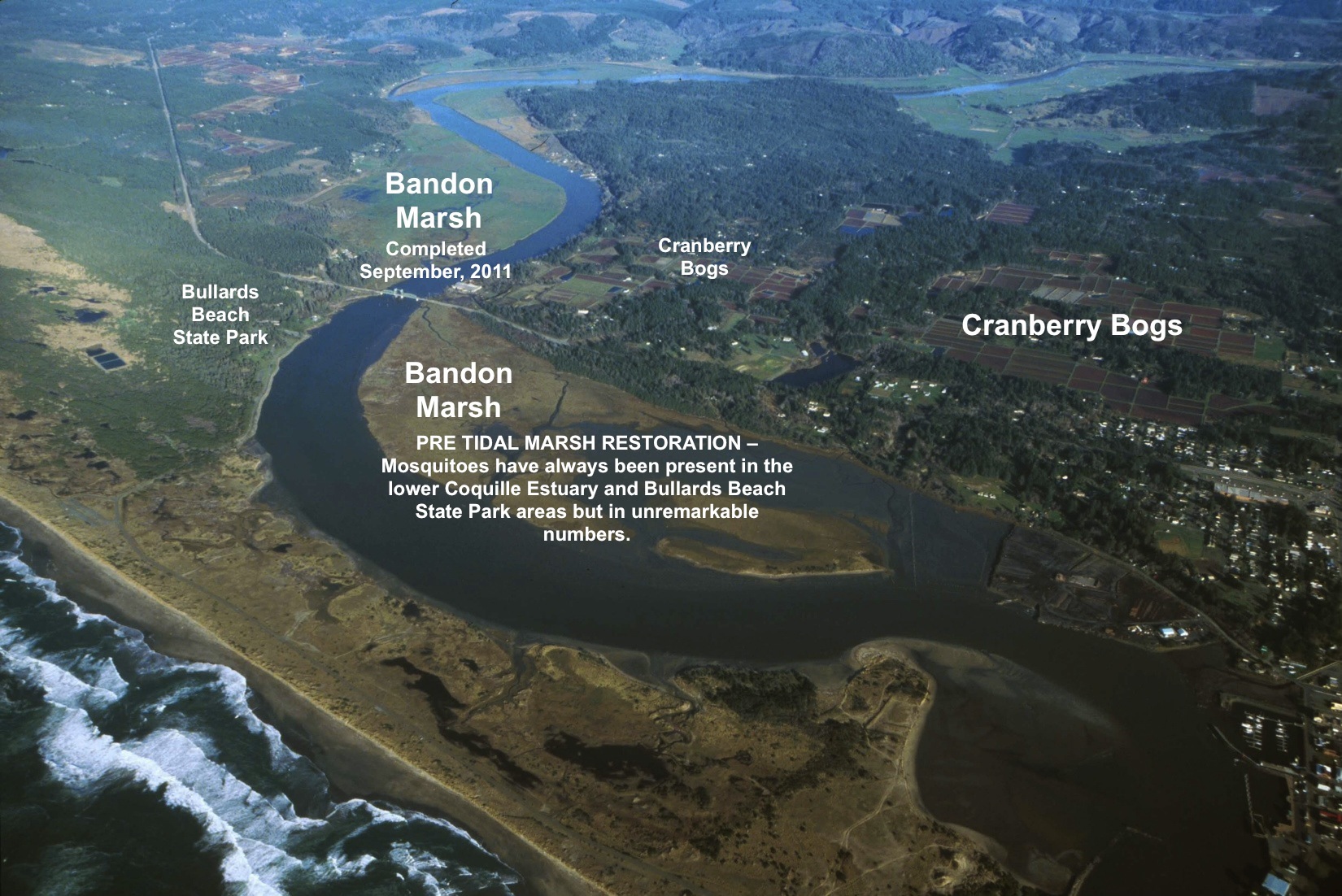
The Bandon Marsh National Wildlife Refuge

has a mosquito problem.  During summer high tides, water fills holes that don’t drain back out.  Pools provide habitat for the salt marsh mosquito, Aedes dorsalis.  People that live near the marsh complain that they can’t go outside without mosquitos biting them.  “It’s hard to get to the car from the back door without several mosquito bites.”  I can’t mow my yard without several layers of clothing.”  “I love to garden, but I feel like I’m under house arrest, because the mosquitos are so vicious.”  The motels have had cancellations, the real estate people can’t show houses, and the golfers are getting eaten alive.

Pressure to DO SOMETHING NOW drove the decision to aerial spray not just the 300 acres of the Marsh, but another 10,000 to 12,000 acres of outlying area.   That’s when I heard about it.  Shigeo Oku, vice-president of Coos County Beekeepers Association called  to warn me.  “Pat, they are going to spray near your place.  You better do something about it.”  I’m thinking “Whaaat?   The Marsh is a few miles away.  They wouldn’t spray all the way down here.”  Maybe I better call the newspaper and get a look at that spray map.

The Bandon Marsh is a few miles from me...why do they have to spray so close to me?

The Bandon Marsh is a few miles from me…why do they have to spray so close to me?

I called the county to confirm.  Yes, indeed, they are planning to spray, near my house (and hives) probably  next week!

“The spraying that will be done outside of the marsh targets grown mosquitos only (not larva). Also it (Dibrom) is in a very small concentration, ¾ ounce per acre, which will ensure that it is not strong enough to effect anything larger than a mosquito, it does not kill larva, and it cannot penetrate water.”

We look up Dibrom and get NoSpray.org   Hummm, that sounds pretty bad, let’s look up another one.  Uh-oh, it’s definitely BAD!  “Very toxic to bees.”  I call the county back.  “Hey, I’m a beekeeper.  That spray can drift over and kill my bees!”

“Just cover your hives for a while.  Put your phone number on the hot line and we’ll call you when we are planning to spray.”  The county sends me a fact sheet.   “Dibrom immediately begins to breakdown upon release of the spray droplets in the open air.  Dibrom also breaks down rapidly in water and in sunlight.”

Well, that doesn’t sound too bad, maybe it’ll be okay.  Just to make sure I’m calling the Oregon State University Honeybee Department.  I’m referred to Ramesh Sagili, (Honeybee Research and Extension Entomologist), who stated that “the residual toxicity for Dibrom is TWO DAYS!”  Sagili says if the pesticide lands on a blooming plant (like a dandelion) and if the honeybee forages on that plant, the honeybee will be poisoned, for up to two days after the pesticide has been sprayed.  I can’t cover my hives for two days.

That’s what prompted my letter to the editor.  When I read the newspaper next day, I see other people have written, most notably the Xerces Society  urging the US Fish and Wildlife Service NOT to spray.

Just about that time our friendly librarian, who knows how we feel about our bees, calls us with the name of a person who is actively monitoring the situation by attending all the meetings with the County Commissioners.  We call Chris Wiggins.  She tells us at a recent meeting, the County Public Health Official has offered to hold a town hall meeting to answer questions from the public.  We tell Chris we know of a friendly local printer who would be willing to print posters advertising the meeting.  Posters are posted, notices are handed out, radio stations are called.  We go to the meeting Monday evening hoping we get enough people to let the county know “WE DON’T WANT THE SPRAY!”  I bring copies of Dibrom MSDS sheets.   (See environmental Hazards on page 2)

Happily there were too many people for the scheduled room.  A bigger room was provided.  The meeting can be best described here.

Most of the people were against spraying.   A few people said “Please spray…My life has been turned upside down because of those (bleeped) mosquitos.”  I had to sympathize with them even though I was against the spraying.  I think the single argument that swayed the commissioners most came not from people wanting to save the bees and other wild pollinators and insects,  nor from the people worried about a health risk, but from the cranberry farmers.

The cranberries will soon be harvested.  If they show any pesticide residue, (they measure in parts per trillion) their entire crop can be rejected.  Several growers asked pointed questions…”Does that pesticide specifically state ‘safe for cranberries‘ in the literature?”  “We can’t spray anything past July.”  “Are you sure there won’t be any residue on my berries?”  “What if my crop is rejected?”

Two days later, again at the County Commissioner’s meeting at the Courthouse, it was announced the Dibrom (adulticide mosquito spray) was cancelled.  MetaLarv, which is highly toxic to a wide range of aquatic insects and crustaceans would still take place on only 300 acres directly on Bandon Marsh.  While we felt bad for the wildlife that would be poisoned by the larvacide, we breathed a huge sigh of relief knowing our bees dodged a bullet.  We are hoping the US Fish and Wildlife Service will now adopt an Integrated Pest Management system to prevent this from happening again.

I am not of the opinion of many people that we should replace the flood gates to keep that area for farming.  When we first came to the area that was a dairy farm.  We hauled truckloads of cow manure to our bountiful garden.  The dairy farm has been gone for many years now. If this spot is deemed good for wildlife protection and things like carbon storage then it’s a good thing. but please don’t let the mosquitos get out of control again.

Salt Marsh, a great place to store carbon.

Salt Marsh, a great place to store carbon.

Aerial map of Bandon Marsh showing close proximetry of cranberry bogs, Bullards Beach State Park, and Coquille Lower Estuary.

Aerial map of Bandon Marsh showing close proximetry of cranberry bogs, Bullards Beach State Park, and lower Coquille Estuary.  Photo courtesy of National Scenic Byways Online (www.byways.org)

Footnote:  In a conversation with a cranberry farmer, I learned that at least one of them uses the dreaded neonicotinoids on their crop.

Read Full Post »

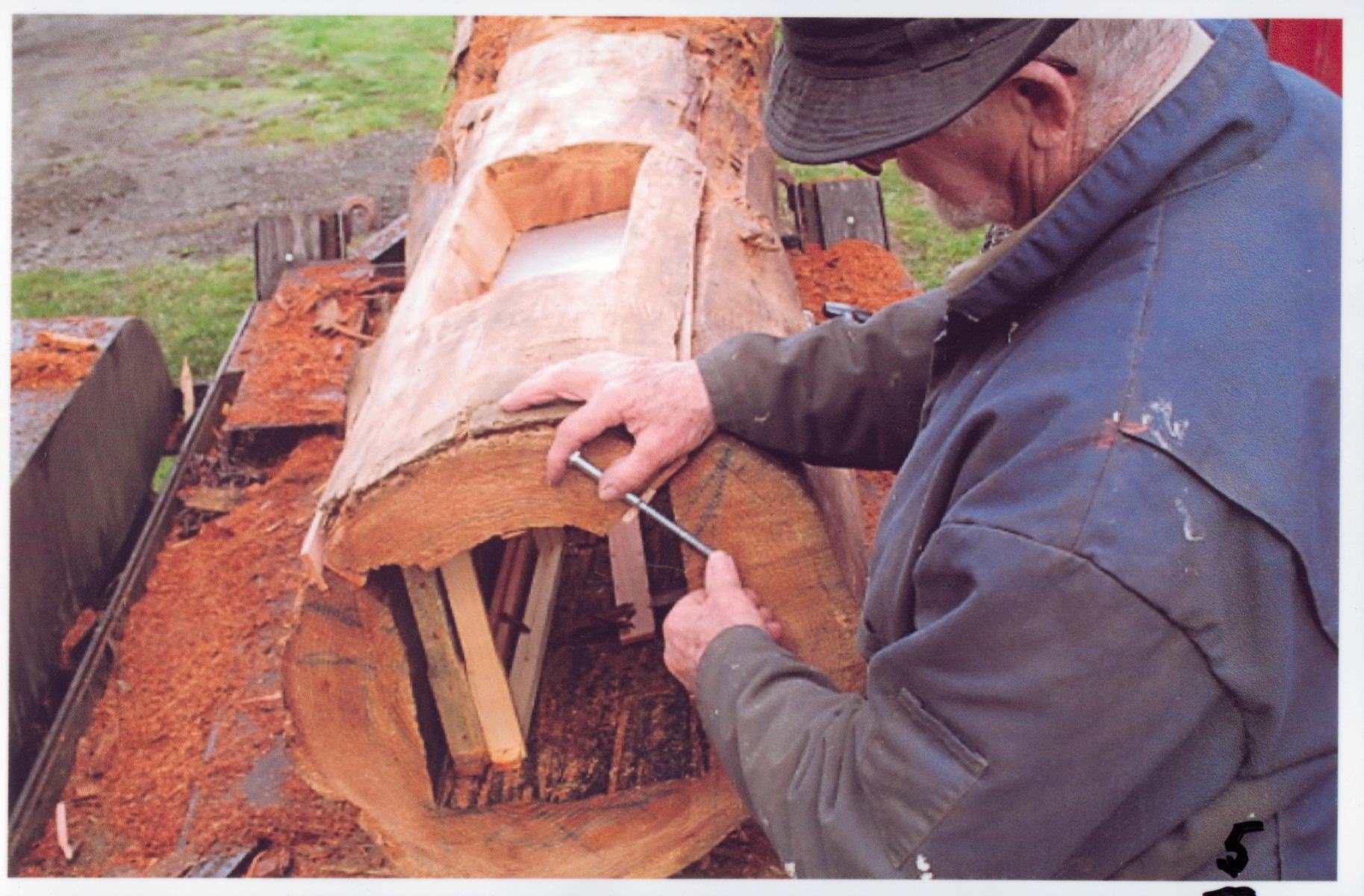
Now to get the observation window panel in place.

Early 2012…The foundation is in place, now Hal will fit the window panel on.

Measuring the bolts

Measuring the bolts

Fitting the window plug.

Fitting the window plug.

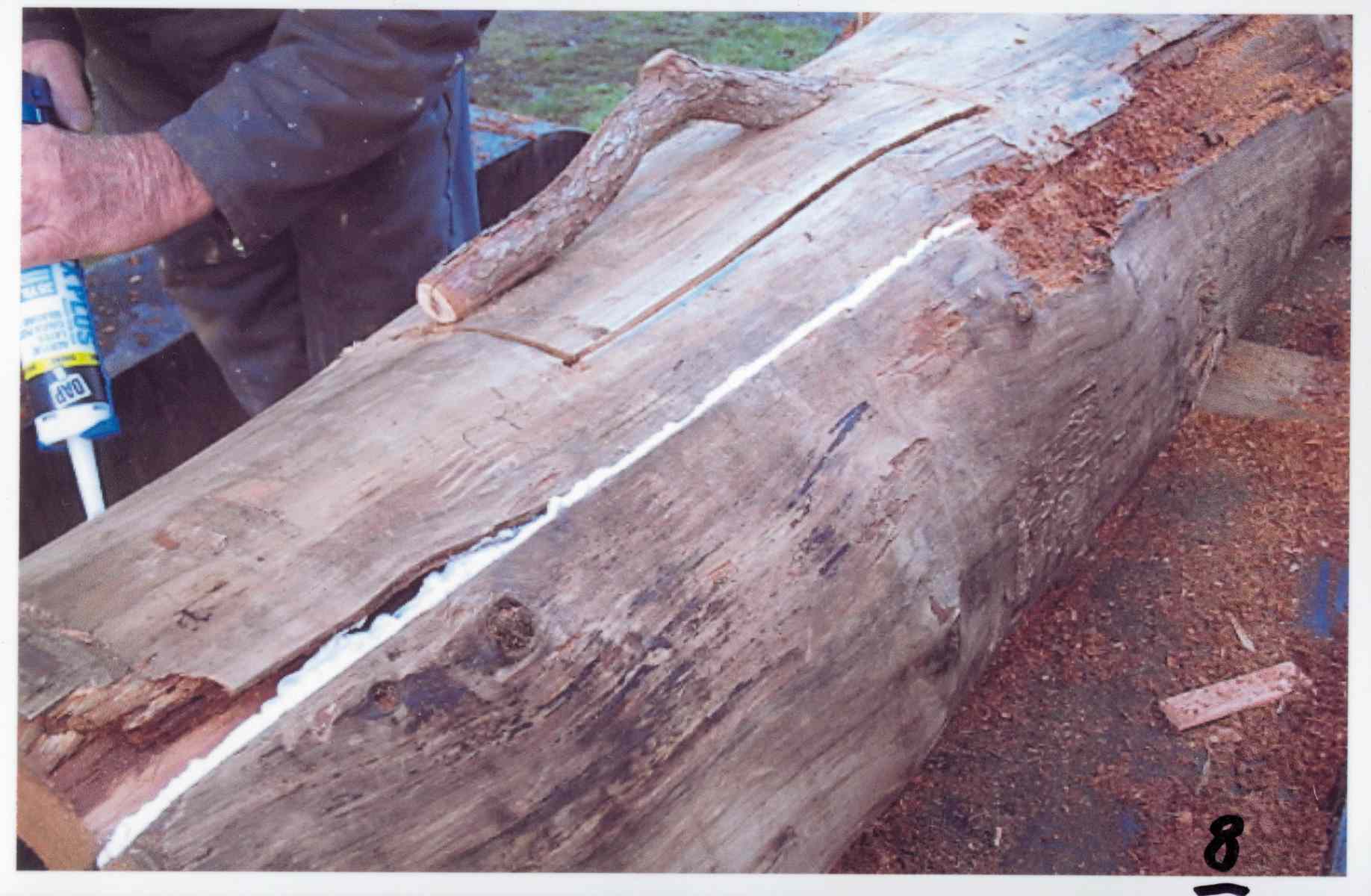
Hope this caulk lasts for a while.

Sealing up the cracks.

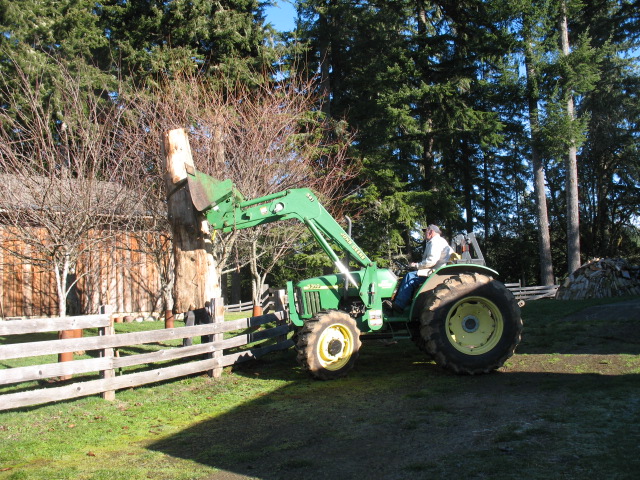
What do you use to lift a large log over fence?  A large tractor of course.  LG demonstrates how to do it without smashing your fence.

What do you use to lift a large log over a fence? A large tractor of course. LG demonstrates how to do it without smashing your fence.

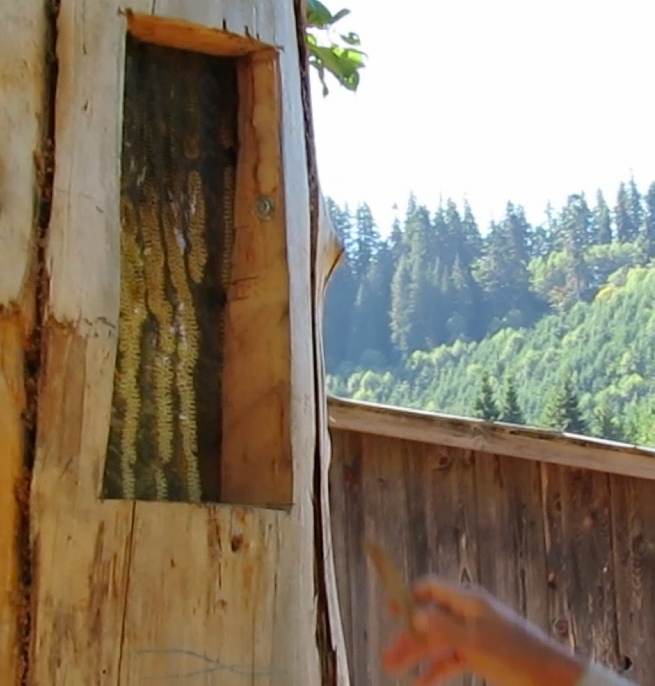
August 18, 2013 Log hive #2 built by Hal, owned by LG, is doing very well

August 18, 2013 Log hive #2 built by Hal, owned by LG, is doing very well

Log Hive #2 with lots of beautiful honey comb

Log Hive #2 with lots of beautiful honey comb

While visiting the 113 year old Gearhart ranch last week I had the occasion to ask LG, (the owner of the log hive) if he would show us the #2 log hive that Hal built for him last year.

The Story of Hal’s Bee Trees

Hal’s #3, #4, #5 Tall hives

Read Full Post »

Who ever said plant biology was boring?  Certainly not me after shooting this video.

When I shot this video I didn't realize I was witness an intimate relationship between flower and bee.

When I shot this video I didn’t realize I was witnessing an intimate relationship between flower and bee.  The pistil is still showing here, but in the video, the petals clamp shut soon after the bee moves on.

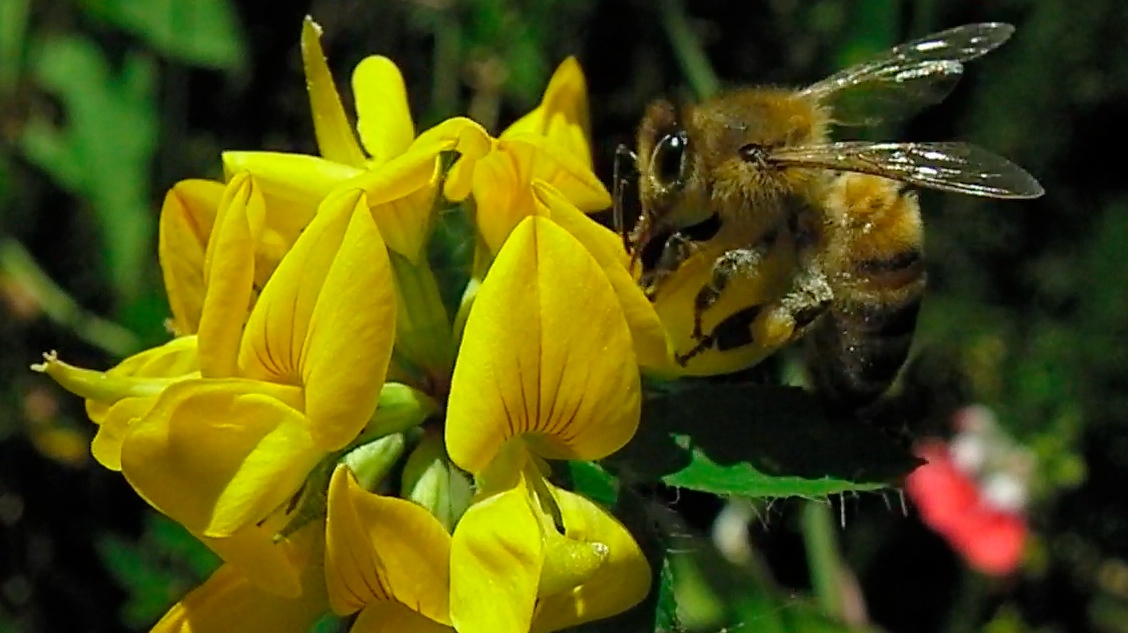
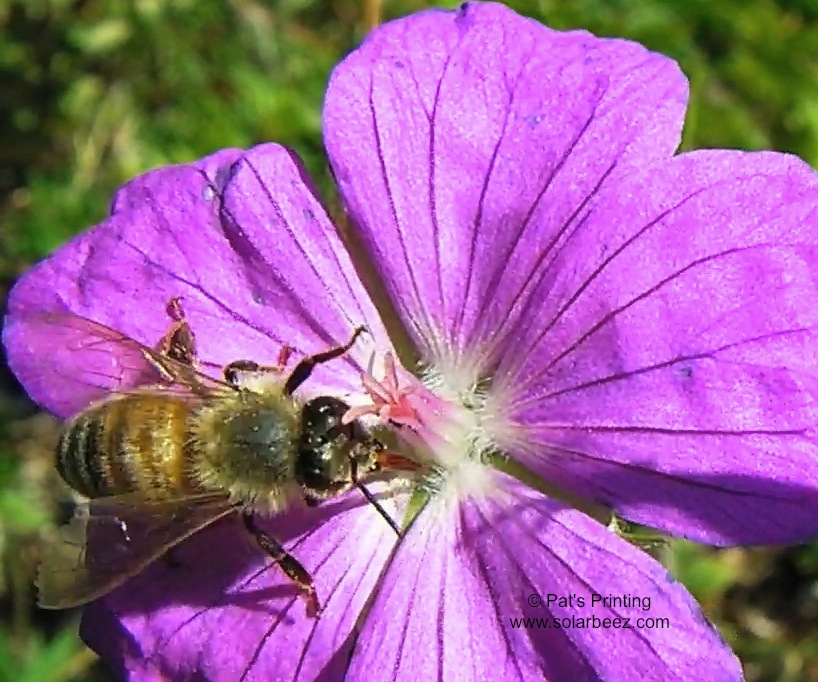
The flower provides the nectar to attract the bee.  The bee lands on the flower, pulls the petals apart to reveal the pistil.  The flower shoots out pollen which the bee carries away.

The flower provides the nectar to attract the bee. The bee lands on the flower, pulling the petals apart to reveal the pistil. The flower makes pollen available which the bee carries away.

Since this is my 100th blog, I wanted to do something special.  I wanted to have some music in the background.   Sweet Thunder, a quartet in Portland, graciously gave me permission to use one of their tunes called, “Blues in the Barn.”  Kiera O’Hara, who composed the music, said “she wrote it when she lived on a tree farm in Michigan and her piano room was a refurbished nook in an old barn.”  “We are a collaborative bunch, so the sound of my tunes on the disk is very much the result of that collaboration.”

Thank you Sweet Thunder for the sweet music.

The video shows the bee and flower cooperation.  I never took biology in school, so I don’t know if they show this racy stuff, but this is an unrated Bee movie in the truest sense.

I was unsure what this blossom was.  I thought it might be a yellow vetch, so I asked Morris Ostrofsky.  Morris, a forty year beekeeper and scientist affiliated with the Oregon State Master Beekeeping Program positively identified this blossom as a Bird’s Foot Trefoil.
“The plant is indeed Birds Foot Trefoil. This plant ranks high on the bees’ favorite forage list.  If you go back in some of the older bee publications, it was actually encouraged as bee forage. However, it’s no longer encouraged because it has been found to be invasive. However, the bees’ still love it.”

Read Full Post »

Blackberries are considered to be Oregon's largest nectar flow, starting mid to late June.

Blackberries are considered to be Oregon’s largest nectar flow, starting mid to late June.

If you have clover in your yard, you have a ready excuse NOT to mow the lawn..."I'm just helping out the bees!"

If you have clover in your yard, you have a ready excuse NOT to mow the lawn…“I’m just helping out the bees!”

We see hedges of Escallonia on our morning walks.  If I bring a camera, it's easy to get pictures.

We see hedges of Escallonia on our morning walks. If I bring a camera, it’s easy to get pictures.

It looked like this bee was 'biting' the pollen grains off the anthers.  I slowed down the video to see better, but it's soft on focus.  Then the deer found it, now it's gone.

It looked like this bee was ‘biting’ the pollen grains off the anthers. I slowed down the video to see better, but it’s soft on focus. Then the deer found it, now it’s gone.

Wallflower, (Erysimum) blooms all summer...and the Bumblebee, honeybees, and butterflies can be seen sipping nectar.

Wallflower, (Erysimum) blooms all summer…and the Bumblebee, honeybees, and butterflies can be seen sipping nectar.

It took us a while to identify this moth.  It's a Ctenucha multifaria, appearing on our Echium tree, June 28, 2013

It took us a while to identify this moth. It’s a Ctenucha multifaria, appearing on our Echium tree, June 28, 2013.  I couldn’t find any videos on this, so mine might have to be the first one.

Read Full Post »

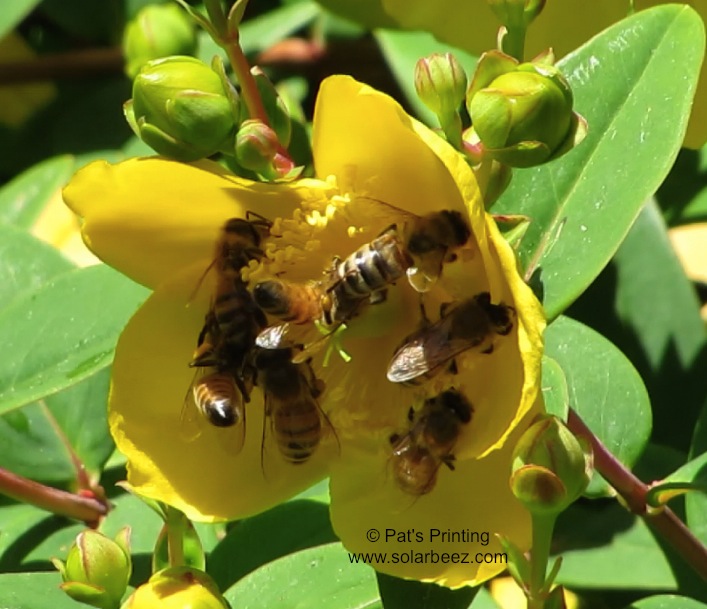
June 8, 2013  I feel like it ought to be stitched on my belt..."Seven bees on one blossom."

June 8, 2013 I feel like it ought to be stitched on my belt…”Seven bees on one blossom.”

This Hidcote hypericum, commonly called St. John’s Wort or Aaron’s Beard was given to us by my mother-in-law about 20 years ago.  We never knew how much bees like it until recently, when we started keeping bees…but like it they do.  I often stop to watch them in a frenzy hurriedly climbing over and through the anthers.  Hidcote hypericum grows in a bush unlike the Hypericum Calycinum, Creeping St. John’s Wort, that grows along the ground.

Hypericum Calycinum on left...Hidcote Hypericum on right

Hypericum Calycinum on left…Hidcote Hypericum on right.  I think the one on the left is much prettier, but I’ve never seen any honeybees on it.  The Hidcote Hypericum grows in a big bush about 8+ feet wide by 8+ feet tall.  (3 m x 3 m)

These two bees got into a disagreement over who gets to work the flower.  I didn't see it until I played the video on the laptop.  The bee on the left was working the blossom first.

These two bees got into a disagreement over who gets to work the flower. I didn’t see it until I played the video on the laptop. The bee on the left was working the blossom first.  I slowed down the action on the video so you could see it better.

I shot this short video to capture the action…

Harvesting hypericum seeds…

Another example of Bee-Havior and “Blossom Rights”

Bee sideswipes an innocent insect on side of crocus.

Read Full Post »

June 3, 2013...bees on the Ceanothus (California Lilac) at Amy's house.  Everyday we walk past her house anticipating this bloom.  It finally happened.

June 3, 2013…bees on the Ceanothus (California Lilac) at Amy’s house. Everyday we walk past her house anticipating this bloom. It finally happened.

It seemed like June was really busting out all over.  Everyday there were opportunities to shoot videos.  It got so bad I was hoping for some rainy days so I could get some print work done.

I’ve taken  some screen shots to show some of the blossoms.  These are from the videos just in case you don’t have time to watch them.

June 3, 2013...Ceanothus

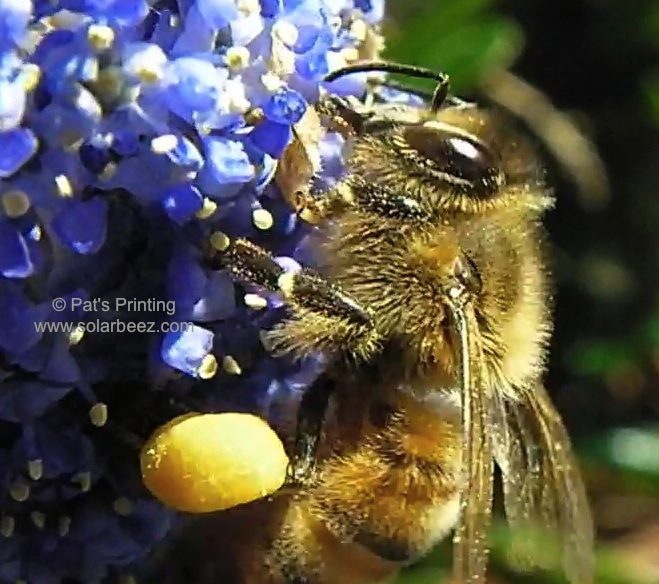
June 3, 2013…Ceanothus with a honeybee.  Look at the pollen in her pollen basket.  I was surprised it was so yellow, but it you look closely the tips of the blossoms are the same color.

June 3, 2013...Since I had my camera out, I dropped by Bob and Carol's house.  They've got all kinds of flowers growing instead of a lawn.  Bob said I could take all the shots I wanted.

June 3, 2013…Since I had my camera out, I dropped by Bob and Carol’s house. They’ve got all kinds of flowers growing instead of a lawn. Bob said I could take all the shots I wanted, so I started on this Red Thyme growing low to the ground.

June 3, 2013...While I was at Bob and Carol's I spotted this little gem.

June 3, 2013…While I was at Bob and Carol’s I spotted this little gem.  It’s a geranium by the name, “Vision Violet.”

Read Full Post »

This beautiful box of honeycomb is 'welded' to the box below...to move it, I've got to cut the bottom of the comb.  I'd like to do it without damaging it or killing bees.

This beautiful box of honeycomb is ‘welded’ to the box below…to move it, I’ve got to cut the bottom of the comb. I’d like to do it without damaging it or killing bees.

I only wanted to switch the third box (full of honeycomb) with the top box which was empty.  The box of honeycomb was blocking the empty, so it made sense to swap…but the honeycomb was attached to the bars in the box below.  If I just pried the box up, I might tear the combs apart leading to a real mess.  I consulted the forums…Bernhard suggests cracking the boxes a bit then taking a thin wire to slice through the bottoms of the combs to lift the box out.

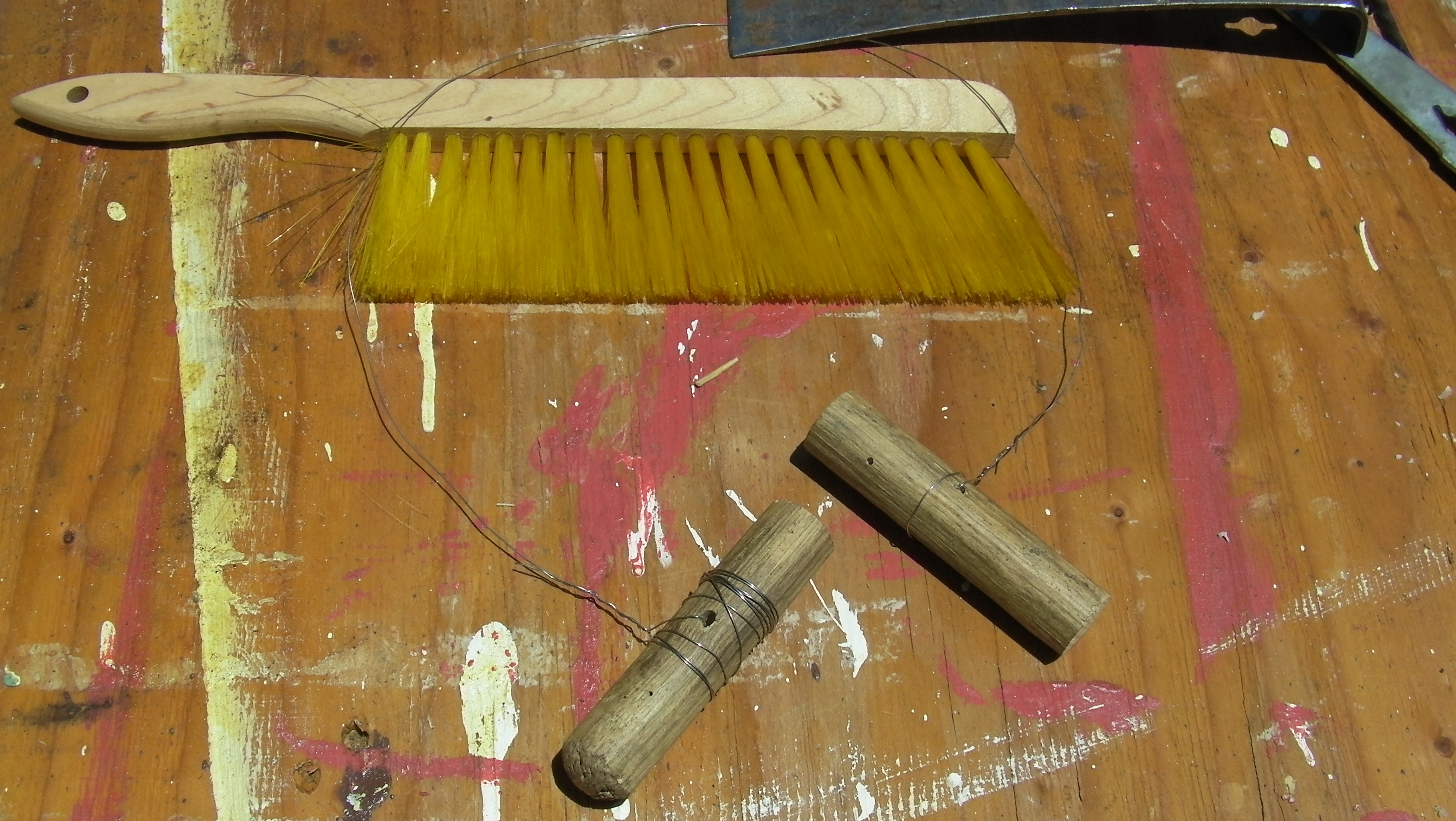
I wound some stainless steel wire around some cut broomstick ends.  I'll see-saw it back and forth to cut through comb.

I wound a short length of  stainless steel wire around some cut broomstick ends. I’ll see-saw it back and forth to carefully cut through comb.

After reading some of the experiences of beekeepers tearing apart combs I knew I wanted to avoid that.  The whole thing actually took less time than I thought…about 5 minutes.  It came apart with the minimum of damage.

I shot this video (sped up in parts to avoid the ‘yawn’ effect)

Warre hive details

Read Full Post »

« Newer Posts - Older Posts »