Posts Tagged ‘honey bees’

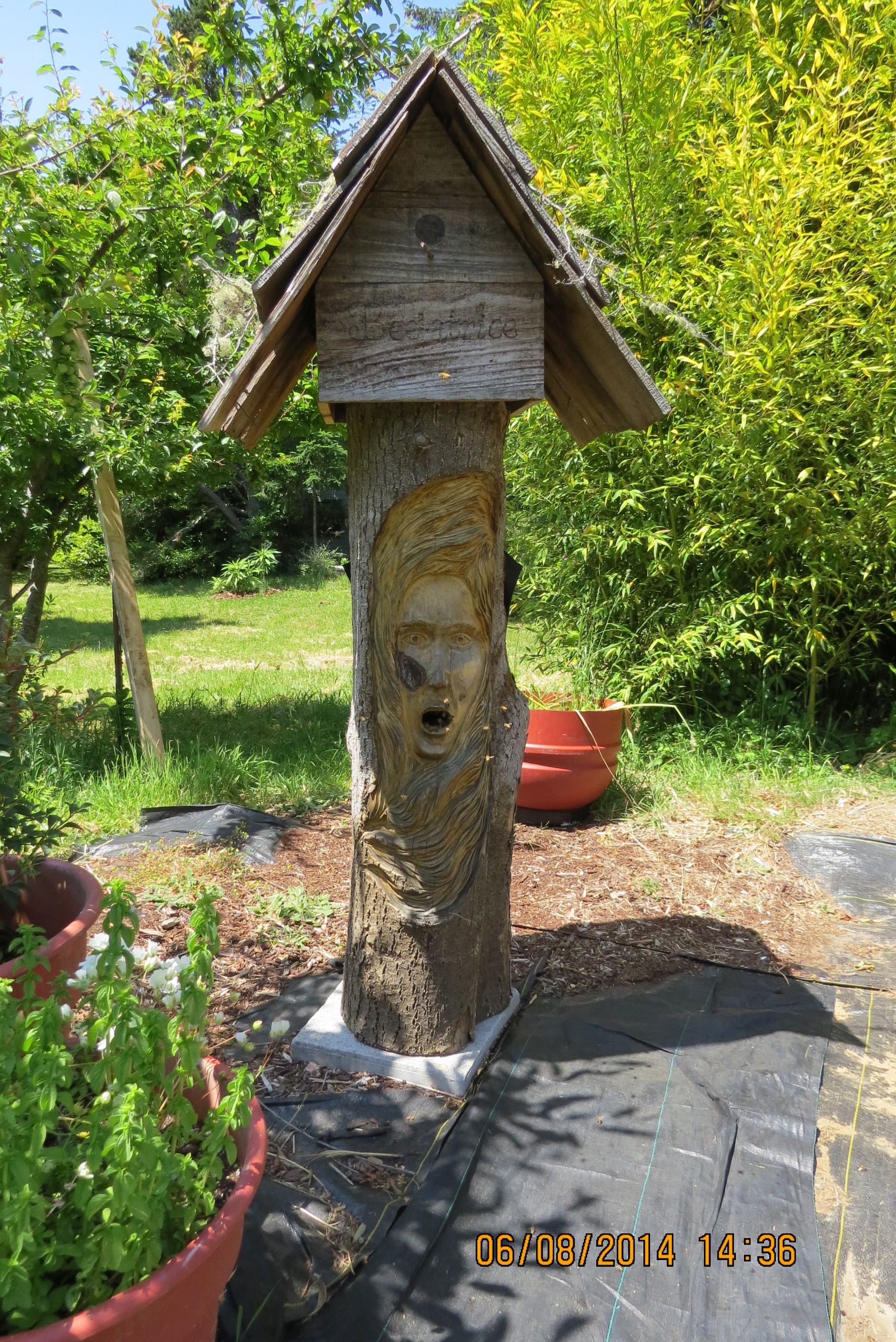
June 8, 2014...Bee-atrice has BEES.  It's been a rough time for her, but I think this one will take.

June 8, 2014…Bee-atrice has BEES. It’s been a rough time for her, but I think this one will take.
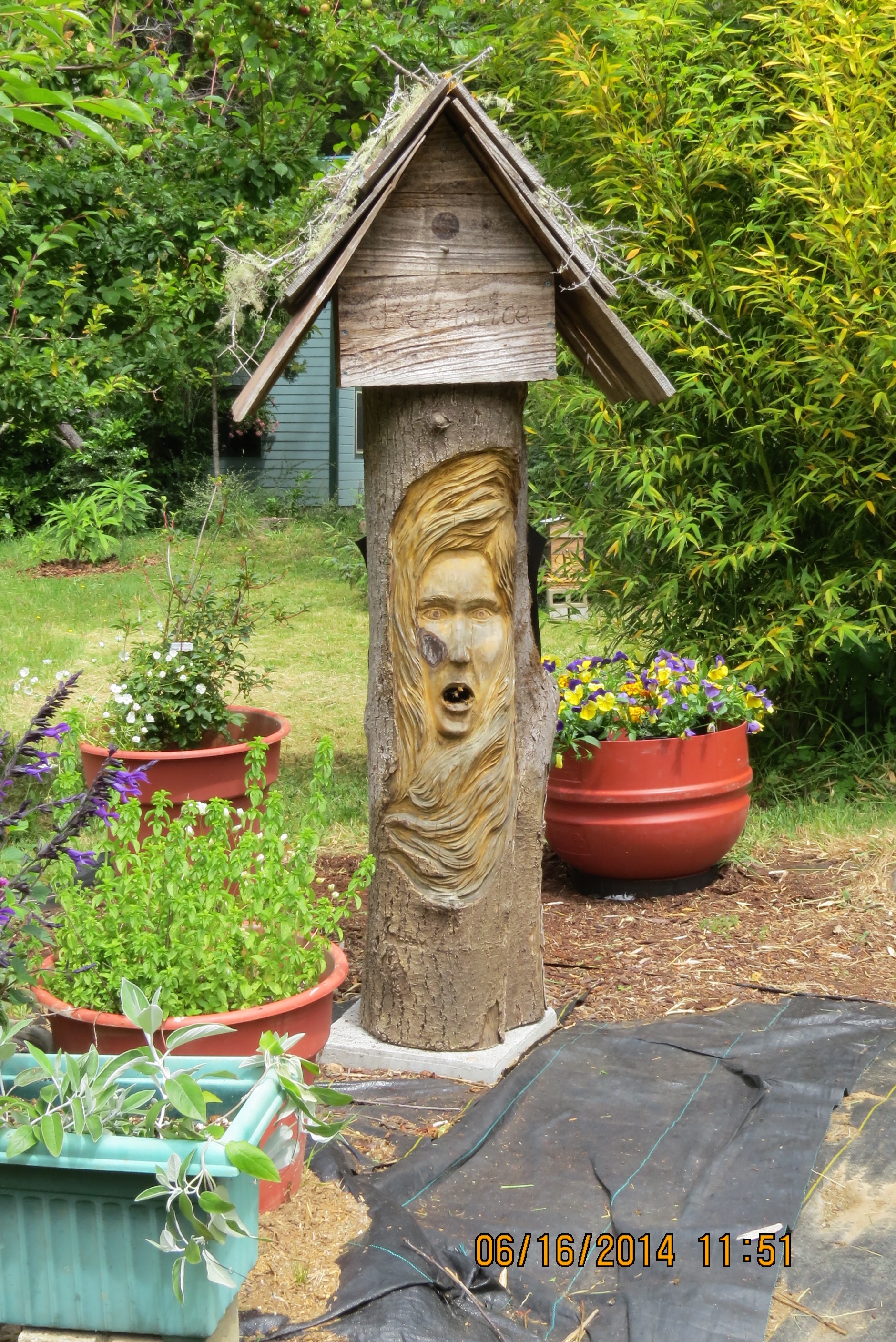
June 16, 2014...10th day of bees in Bee-atrice.  I think they will stay this time.

June 16, 2014…10th day of bees in Bee-atrice Log Hive.   I think they will stay this time.

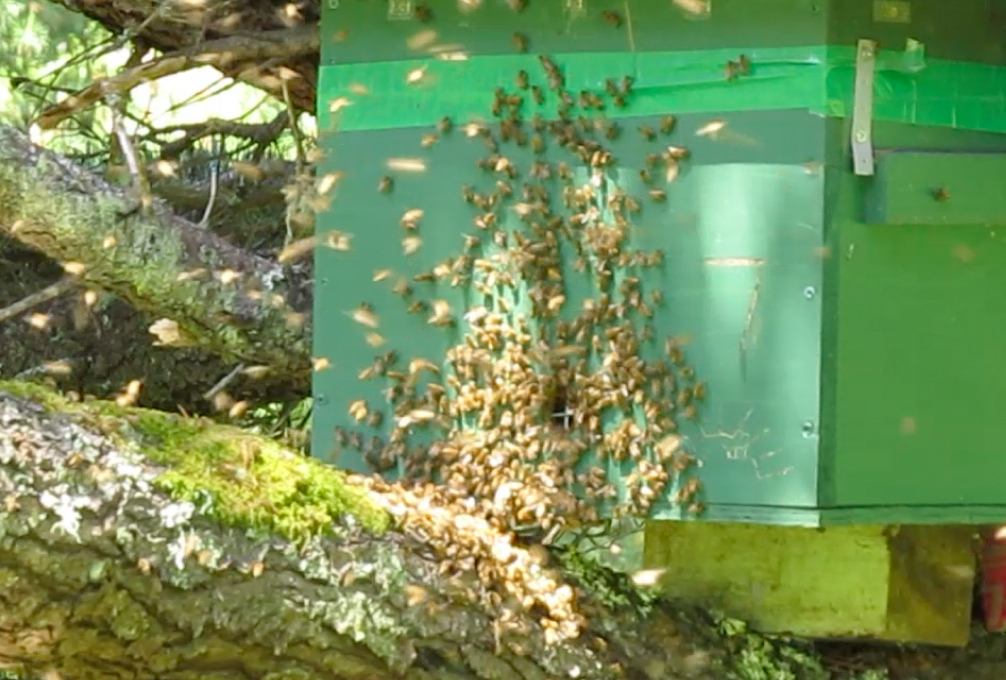
While I was out of town, a huge prime swarm chose Bee-atrice Log Hive for a home.  I knew if we waited long enough, we’d get lucky…I just wish I could have witnessed the swarm moving in.  Bee-atrice was happy.  She had been rejected twice.  I had tried to console her after she had been rejected by two small swarms that I had given her.  I told her that “rejection” might more appropriately be referred to as “redirection.”  Those small swarms would not have made it anyway.  I told her that she just had to be patient until the right swarm came along.
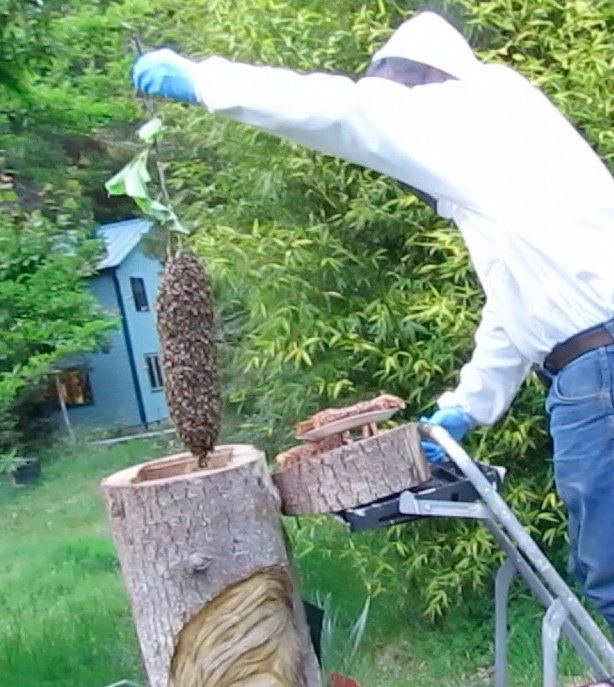
April 27, 2014...Pat drops the little cast swarm into Bee-atrice.  They stay a total of two days, then take off to parts unknown.

April 27, 2014…I drop the little cast swarm into Bee-atrice log hive. They stay a total of two days, then take off for parts unknown.
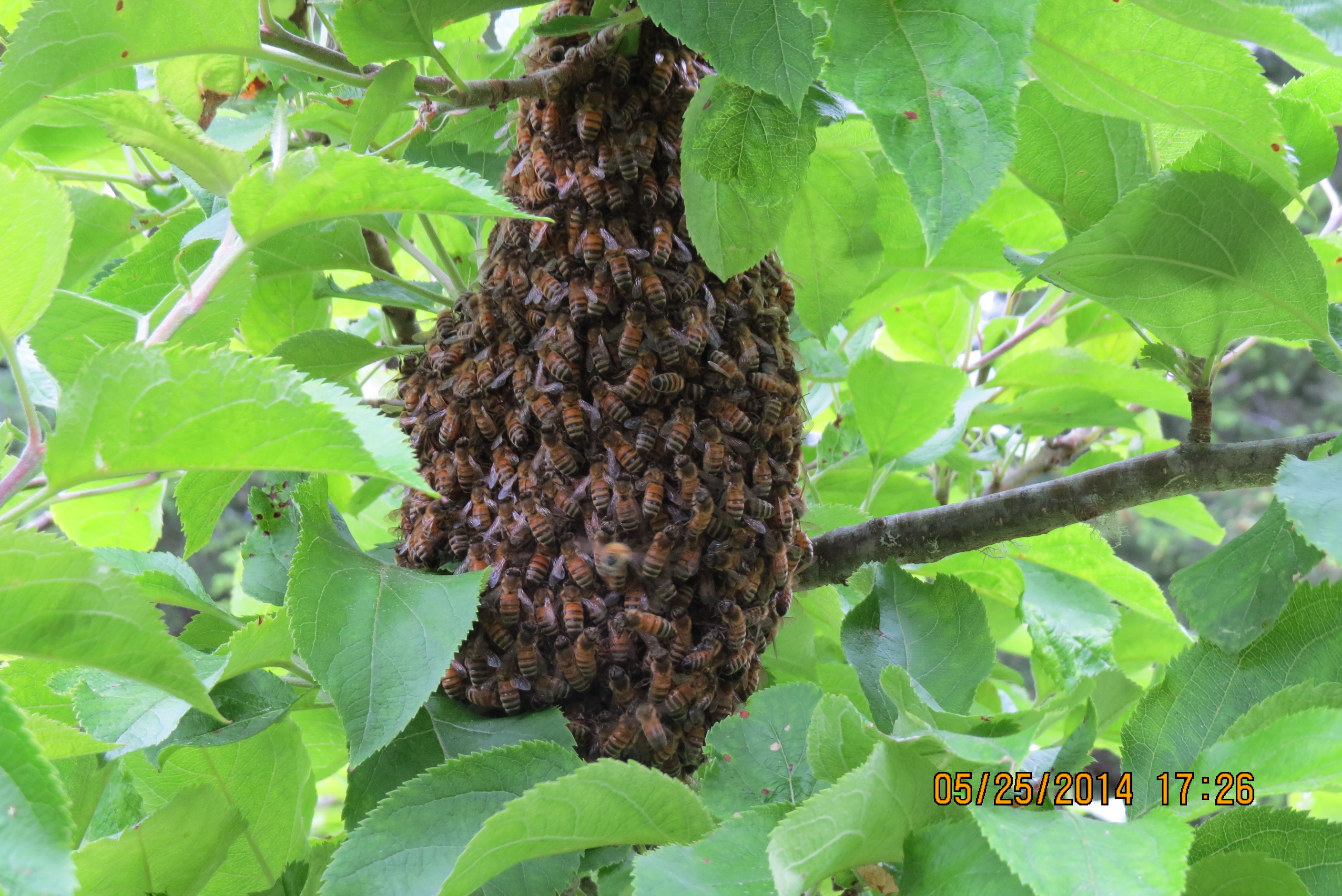
May 25, 2014...A second chance presents itself, in the form of a swarm in the apple tree.  I get the swarm bucket ready.

May 25, 2014…A second chance presents itself, in the form of a swarm in the apple tree.   I bag it and drop it into Bee-atrice.  I thought for sure it would stay, but after 8 days, it took off for the Asian Pear tree.  I started thinking something was wrong with Bee-atrice…then it dawned on me…maybe I was the problem.  Maybe I should just back off and let nature take it’s course…thirteen days later (while I’m away), a huge swarm picks out Bee-atrice.   She later tells me, SHE rejected those little swarms, not the other way around.  I guess she didn’t want to hurt my feelings.

June 9. 2014...lots of bee traffic at the entrance.

June 9. 2014…lots of bee traffic at the entrance.

June 10, 2014...This is the first time I've ever seen 94 degrees register on the thermometer.  This is the optimal temperature for brood.

June 10, 2014…This is the first time I’ve ever seen 94F degrees (34C) register on the thermometer. This is the optimal temperature for brood.  Three days ago it read 60 degrees (the ambient temperature)

June 9, 2014...the bees can be seen through the observation window.  If they stay, we'll be able to watch the comb building process.

June 9, 2014…the bees can be seen through the observation window.  If they stay, we’ll be able to watch the comb building process.

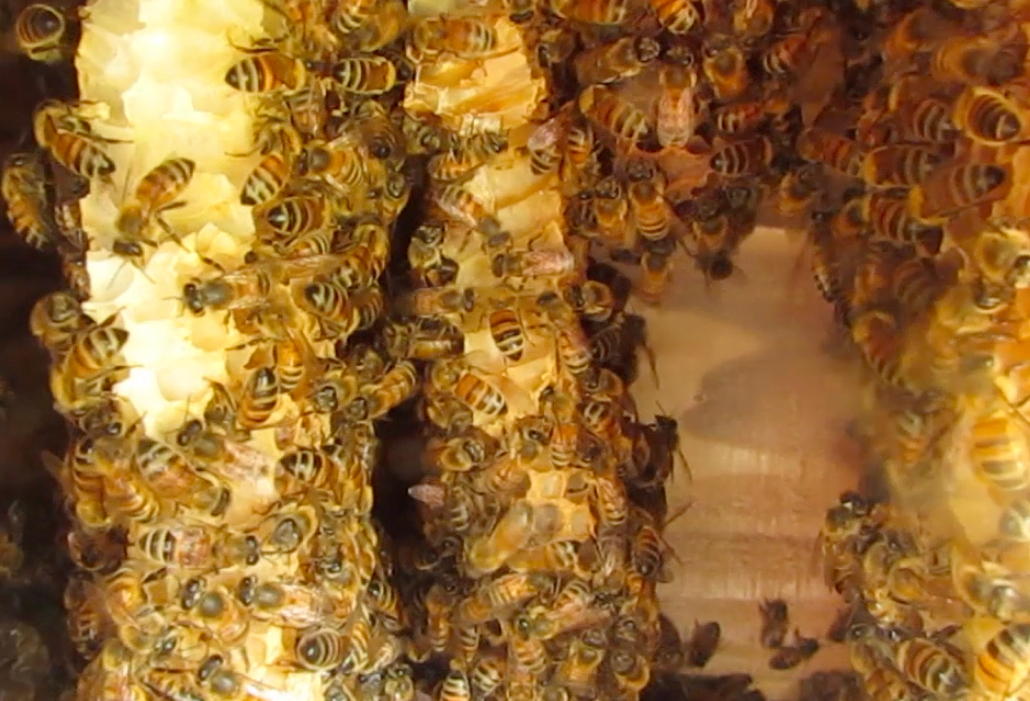
June 16, 2014...10th day, natural comb can be seen already, through the top side entrance.

June 16, 2014…10th day, natural comb can be seen already, through the top side entrance.

June 19, 2014...Day 13, this is where the bees hang out at night while they are waiting for the comb to be built.

June 19, 2014…Day 13, this is where the bees hang out at night while they are waiting for the comb to be built.

June 19, 2014...In this slightly out of focus shot, you can see how far the bees have built the natural comb...almost to the top of the observation window...a length of about 14 inches (35 cm).

June 19, 2014…Day 13, in this slightly out of focus shot, you can see how far the bees have built the natural comb…almost to the top of the observation window…a length of about 14 inches (35 cm).

Drones dropping down every time I uncover the observation window…

The carving of Bee-atrice.

Getting her ready for a swarm last year.

Bee-atrice’s debut

A Bonnet for Bee-atrice

Two month’s later Bee-atrice’s swarm chooses Bee Beard Log Hive


Read Full Post »

…and gets it from the honeybees!

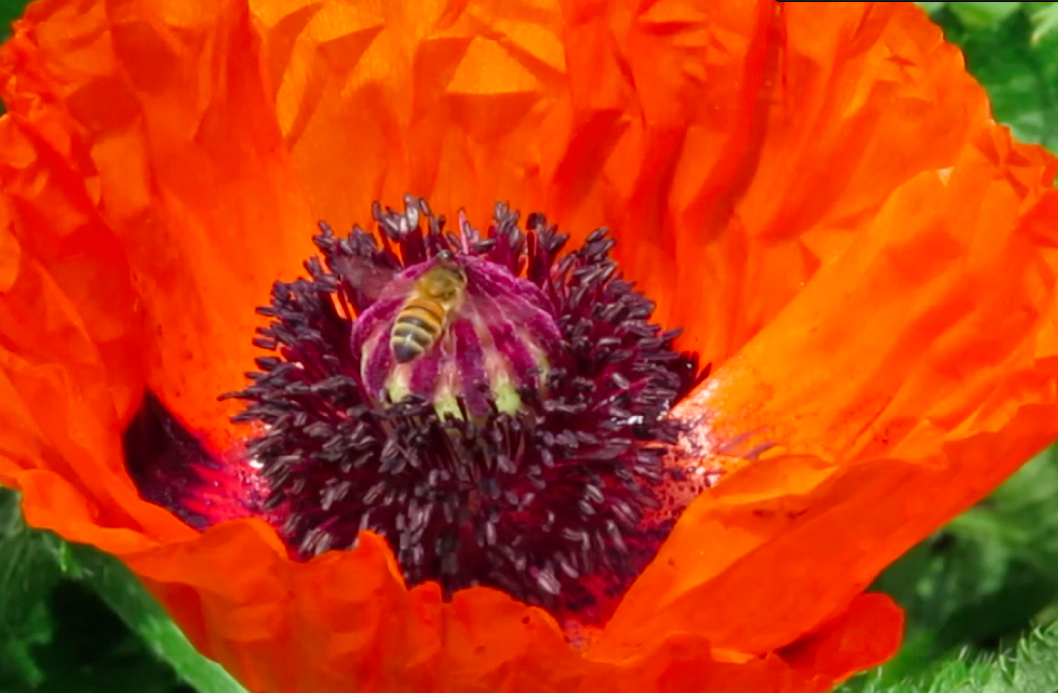
June 2, 2014...The pink poppy just opened up this morning.  Maybe that's why there are so many bees on it.  Many more than the red ones.

June 2, 2014…This pink poppy (Pink Princess) just opened up this morning. The honeybees seem to favor it over the red poppies..

By contrast, there is only one bee at a time on the red poppies.  Maybe they think it's more dignified. :-)

By contrast, there is only one bee at a time on the red poppies. Maybe they think it’s more dignified. 🙂

Read Full Post »

May 29, 2014...At one time there were five bees in here.  By the time I grabbed the camera they had all left the scene.

May 29, 2014…My wife said there were five bees on this earlier, but when I grabbed the camera, I only caught one bee.

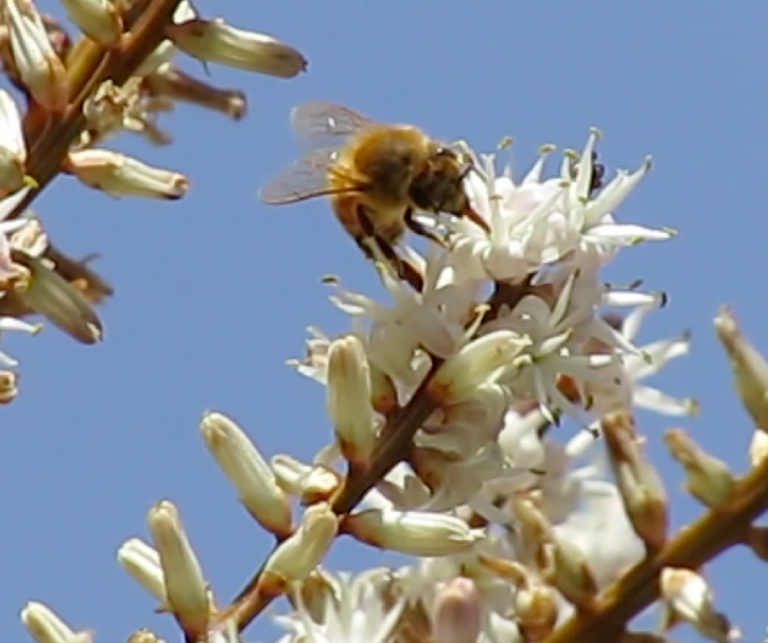
May 28, 2014...The New Zealand Cabbage trees are blooming.  Our bees love it.

May 28, 2014…My neighbor’s  New Zealand Cabbage trees are blooming. I’m glad it’s on someone else’s property because there is a strong odor associated with it.  Our bees love it.

May 28, 2014...New Zealand Cabbage has been blooming awhile.  There is  a strong odor that attracts the bees as they are numerous.

May 28, 2014…New Zealand Cabbage has been blooming awhile.  Our bees are all over it, all day.

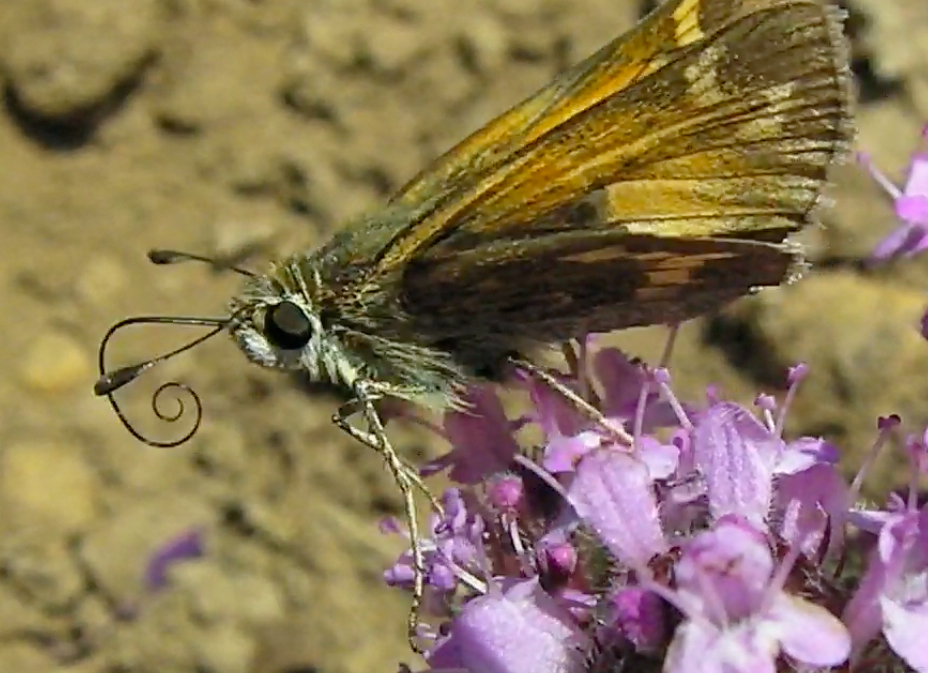
May 27, 2014...A skipper is probing the depths for nectar.  In the video, you can see it try several spots before finally succeeding.  The bees love this plant as well.

May 27, 2014…A skipper is probing the depths of this Pink Chintz Thyme for nectar. In the video, you can see it try several spots before finally succeeding. The bees love this plant as well.

Read Full Post »

May 11, 2014...This little nuc hive survived the winter without any help from me.  No sugar feeding or pollen paddies. (Tough love)

May 11, 2014…This little nuc hive survived the winter in a tree without any help from me. No sugar feeding or pollen paddies supplied. (Tough love) No honey was taken.  It came from a swarm on April 18, 2013.  Now it’s ready to swarm.

Bees revving it up to make their move

Bees revving it up to make their move

Ten minutes later, the bees appear to be headed back into the hive.

Ten minutes later, the bees appear to be headed back into the hive.  Later in the day, all was quiet.

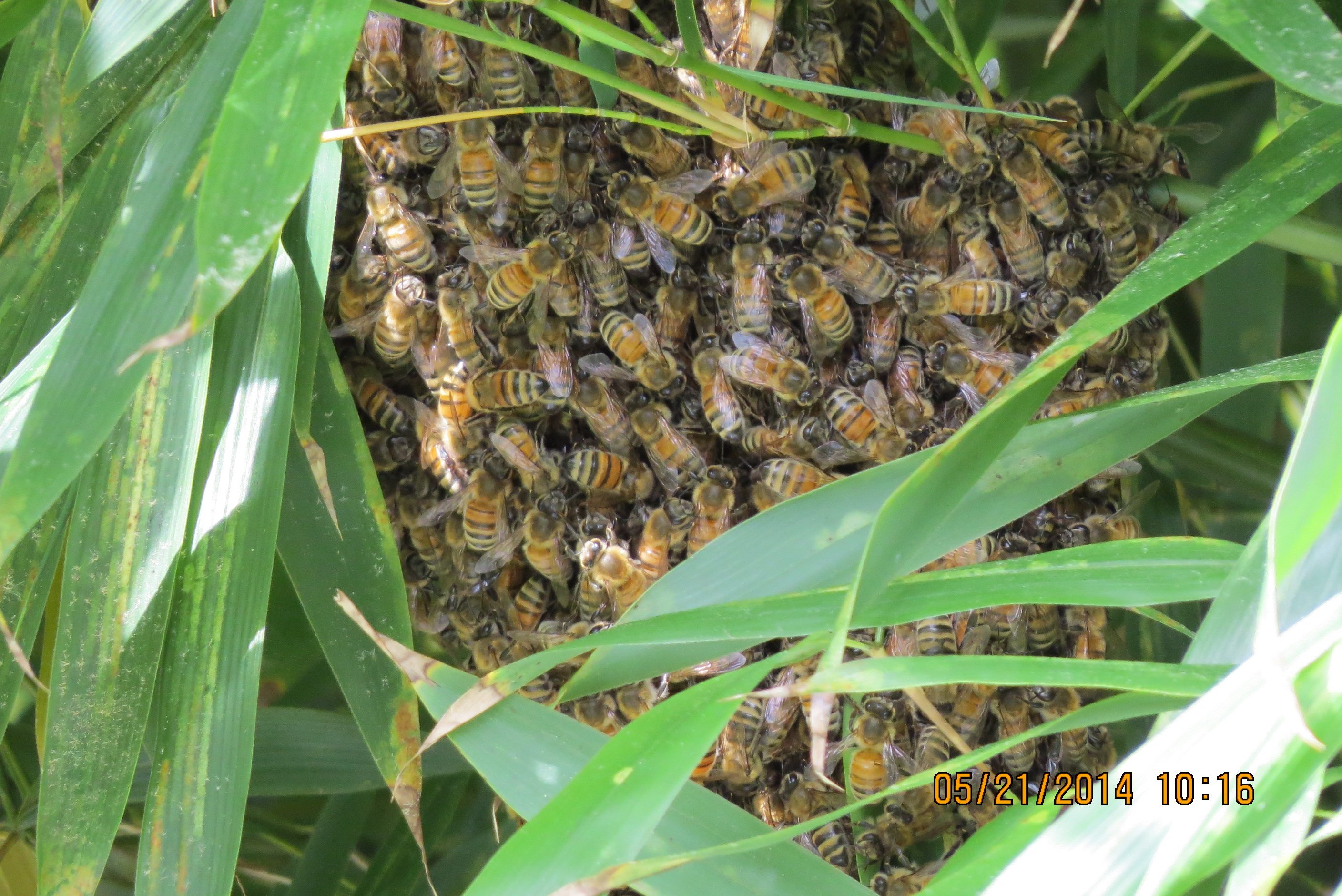
May 19, 2014 (8 days later)...A swarm starts to form in the bamboo.   Could this be two swarms from the same hive?

May 19, 2014 (8 days later)…A swarm starts to form in the bamboo.
Could this be two swarms from the same hive?

May 19, 2014...While the swarm is forming on the bamboo, bees are fanning at entrance to tree hive.

May 19, 2014…While the swarm is forming on the bamboo, bees are fanning at the entrance to the tree hive.

By late afternoon, all the bees returned to the tree hive.

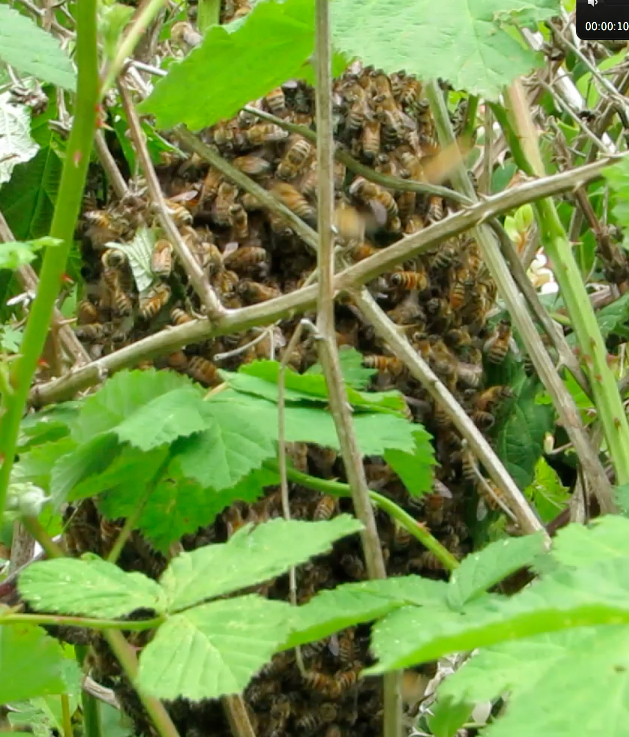
May 20, 2014 (next day)...A small swarm in the blackberries...

May 20, 2014 (next day)…A small swarm in the blackberries…

...and a small swarm in the bamboo.

…and a small swarm in the bamboo.

Again, a small group of bees are fanning at the entrance, while other bees are flying around the two swarms.

Again, a small group of bees are fanning at the entrance to the tree hive, while other bees are flying around the two swarms.

Could it be that the queen can’t/won’t fly?  It came from a swarm, so I know it’s wings haven’t been clipped.  I guess I’ll find out in the next few days what is going on, but if a more experienced beekeeper wants to hazard a guess, I’d be curious.

In looking back at where this swarm originated from…from my log hive, on April 18, 2013.  The swarm picked this patch of bamboo to settle in.

May 21...I checked to see if the swarm was still in the bamboo this morning.  It was.

May 21…I checked to see if the swarm was still in the bamboo this morning. It was.

A closer look reveals that while small, this swarm might be big enough to make it.

A closer look reveals that while small, this swarm might be big enough to make it.  I called Bob to see if he still was interested in getting  swarms for his Kenyan Top Bar Hives.  He was.

Bob bags his first swarm.

Bob bags his first swarm.  Bee Beard Log Hive looks on, as patient and quiet as ever.
Bob said he was interested in getting the blackberry swarm too.  It went very well.  Here the bees are fanning to indicate the queen is within.

Bob said he was interested in getting the blackberry swarm too. It went very well. Here the bees are fanning to indicate the queen is within.

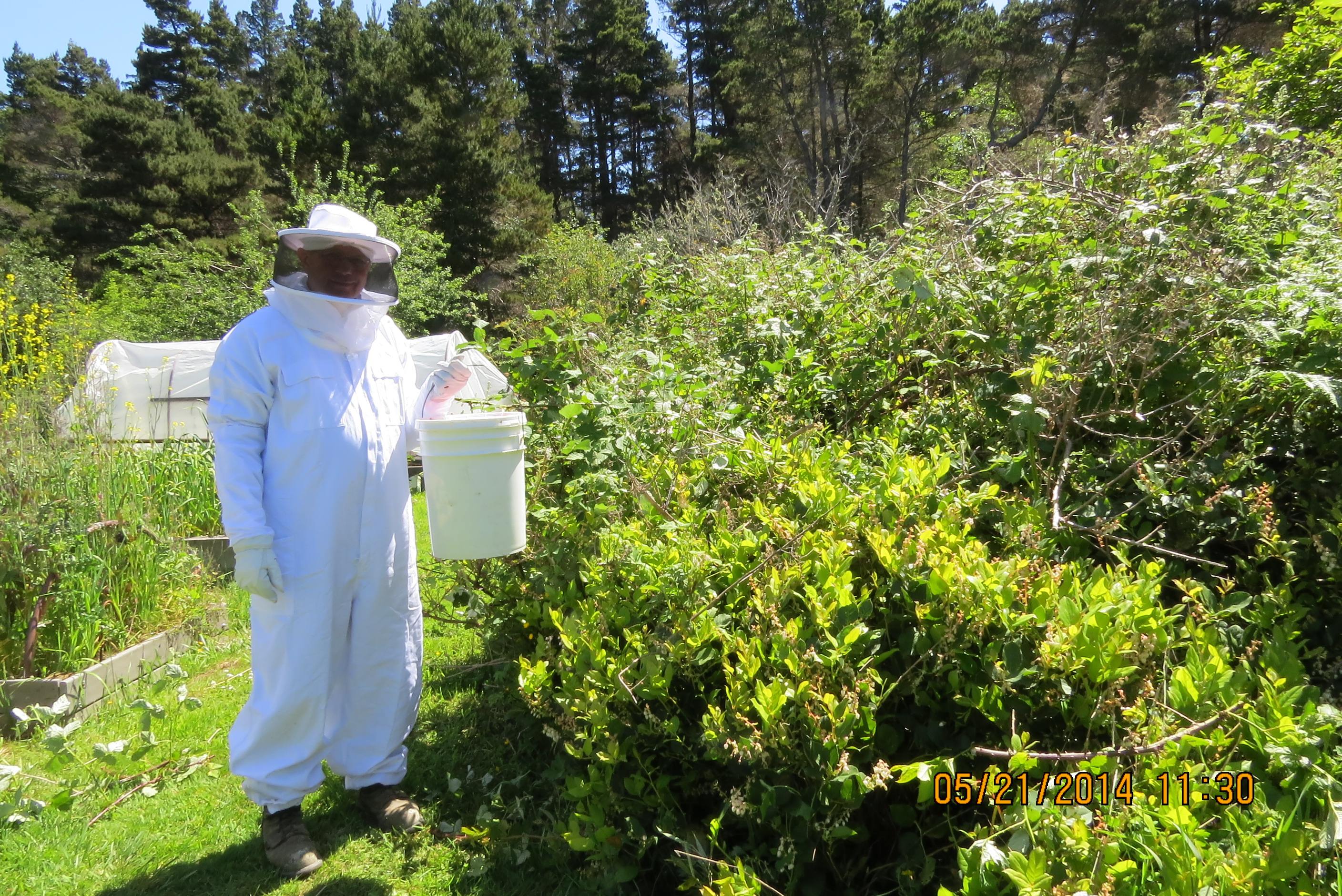
Bob was patient when I asked him to pose with the blackberry swarm in bucket...hey, I've got to bid them 'goodbye.'

Bob gets his second swarm.  “Two in one day,” not bad for a new beekeeper!

Read Full Post »

…that’s when she called me.

May 1, 2014 Mid afternoon...Photo by Mary Schamehorn.  I'm glad Mary got a shot of this.  When I got there, they were relatively peaceful.

May 1, 2014 mid afternoon…Photo by Mary Schamehorn. I’m glad Mary got a shot of this. When I got there, they were relatively peaceful.

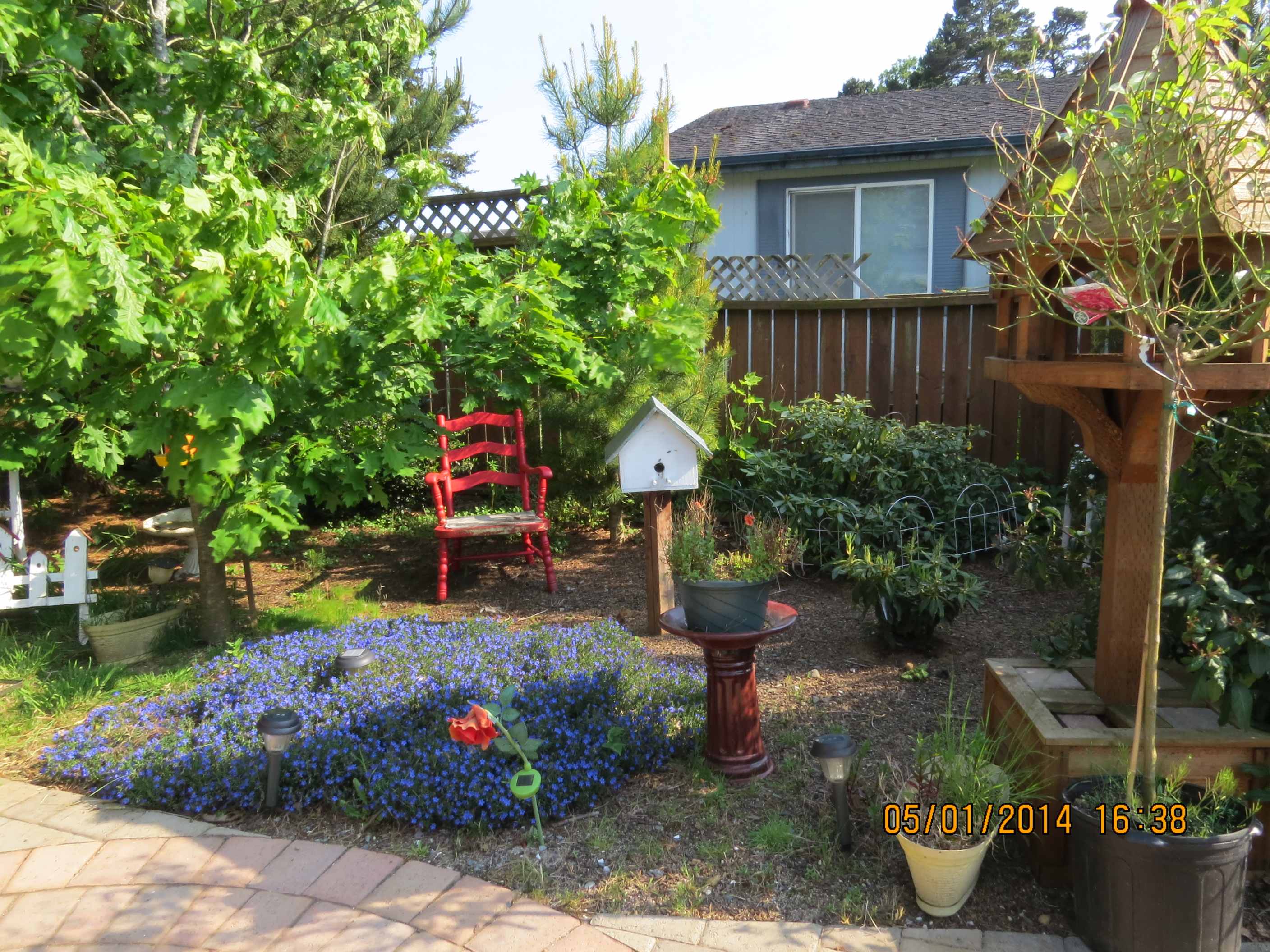
4:38 pm...By the time I got there, the bees had settled in.

4:38 pm…By the time I got there, the bees had settled within the birdhouse.  I looked at it, determined I could remove it from the post, and got my tools together.  Ha ha, the screws were rusty I couldn’t get them to budge before stripping them out.  I had to remove the post too.

I placed the birdhouse next to the newly assembled and baited  Warre hive.   I was hoping the bees would recognize a 4 star lodge with ample room to grow.

I placed it  next to the newly assembled and baited Warre hive in my bee garden.  I was hoping the bees would recognize a 4 star lodging with ample room to grow…they didn’t.  I gave them plenty of time to reconsider, but they weren’t having it.  I couldn’t leave them there, like that.  I didn’t want to grind the brackets off or pry the birdhouse floor off because it would have been too stressful.  “Dramatic and traumatic” are words I like to avoid in beekeeping.

Okay, I’ve got to move the birdhouse out of the bee garden because, well, we’ve got to be able to weed and water without the bees buzzing us.  After two days, I pre-dug a post hole, waited til night and ‘posted’ the birdhouse among the ferns about 20 feet away.  (Something most beekeepers would tell you NOT to do because the bees might not be able to find their way back to the hive.)  I stuffed tissue paper into the entrance hole so the bees would notice something was different.  They would have to make orientation flights all over again.  I’m thinking that maybe the Warre was too close to the birdhouse…if I move it away, maybe they will want it more.  My wife said I was crazy to think that.  I says, ‘maybe,’ but we’ve got to get it out of the way.


Next day, the birdhouse/hive is in it's new location.  The bees are aware something is different because of the tissue paper stuffed in the entrance hole.

Next day, the birdhouse/hive is in it’s new location. The bees are aware something is different because of the tissue paper stuffed in the entrance hole.


As I wife bicycled to town, I noticed a bunch of activity between the birdhouse and the Warre hive.  I got my camera to document my findings...I was going to have it on camera so I could show my wife I knew what I was doing.

As my wife bicycled to town, I noticed a bunch of activity between the birdhouse and the Warre hive. I got my camera to document my findings…I was going to have it on camera so I could show her I knew what I was doing.  They are fanning from the nasonov gland to indicate the queen is within.  Wow, that didn’t take long.  My wife is going to have to admit I was right, but I’ll be humble and admit it’s just a stroke of luck.  But it was too good to be true.  By the time she returned the crowd at the entrance was thinning and the bees rejected this hive once again.


Here is where they will stay.  It's the house they chose and while the location has changed a few times, the house is the same.

Here is where they will stay. It’s the house they chose and while the location has changed a few times, the house is the same.  I just wish I could have fastened it to a taller post.

Mary's bees have settled in now.  They have discovered the Poached egg meadowfoam.

Mary’s bees have settled in now. They have discovered the Poached egg meadowfoam.

Mary's bee cleaning off her antennae.  How do I know they are Mary's bees?  The abdomen colors are different.  I'm happy to get new genetics in my bee yard.

Mary’s bee cleaning off her antennae. How do I know they are Mary’s bees? The abdomen colors are different. I’m happy to get new genetics in my bee yard.

Mayor Mary’s side of the story…   (Scroll towards the bottom til you see the birdhouse swarm)

Read Full Post »

In an effort to get the bees to move up to box #3, I made some ladders.  The first two boxes were full.  I knew I better give them more room, but they wouldn’t move up…until I added ladders.

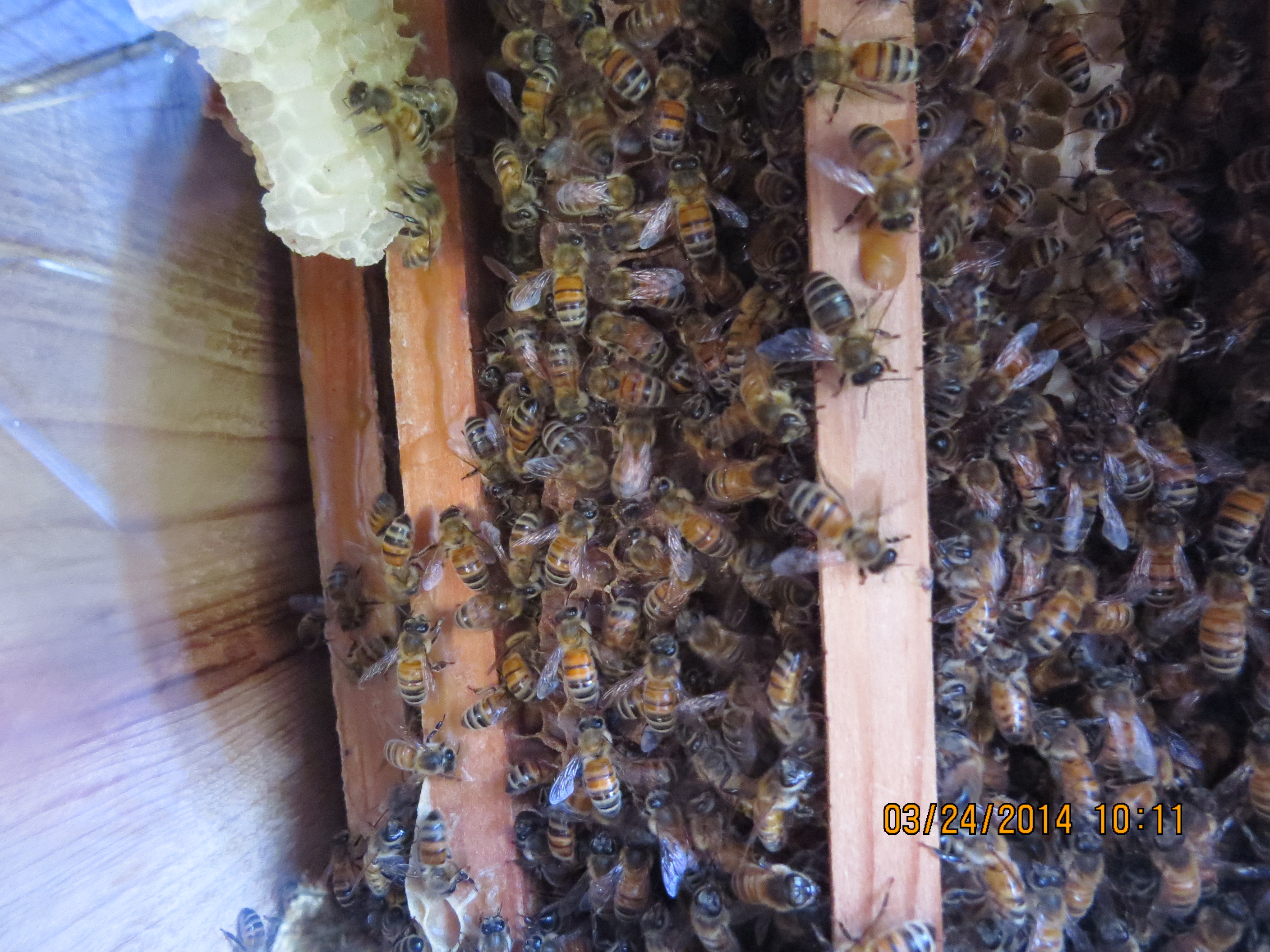
March 24, 2014...The bees would not move into the empty box.  I pulled out some bars so I could replace them with ladders.

March 24, 2014…I pulled out some bars so I could replace them with ladders.  I’m reluctant to use foundation, so I’m being miserly with what I have left in old comb…MY COMB which doesn’t contain any toxins from mite strips, meds, or antibiotics.  As long as the ladders are 7.5″ (19 cm) they work well.

Second ladder is added.  In all I placed about four ladders.

Second ladder is added. In all I placed about four ladders.  A 7.5″ (19 cm) length of wood is added for stability.  The remaining four bars have small pieces of comb melted on.  When I have no comb left, I just use the lengths of wood with wax melted on.

Looking up from underneath the box at the ladders and non ladders.

Looking up from underneath the box at the ladders and non ladders.

March 24, 2014...bees moved in right away.

March 24, 2014…bees moved in right away.

April 18, 2014...#3 box is 3/4 full, time to add box #4.

April 18, 2014…#3 box is 3/4 full, time to add box #4.

Box #4...bees move up with ladders.

April 18, 2014…I just added box #4, again with ladders…bees move up immediately.

Many thanks to Johann for the deft camera work.


Read Full Post »

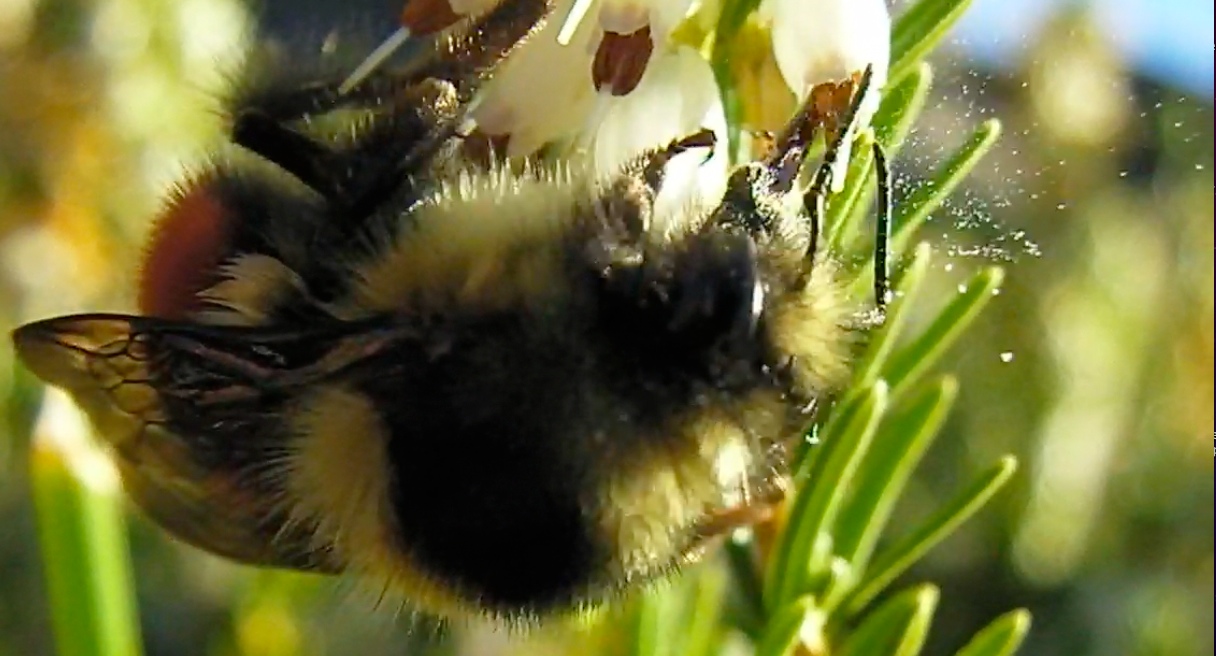
January 14, 2013...a beautiful warm day brought the bees out to the heather.  I saw very few honeybees, but very many bombus Melanopygus (this one) and also Bombus vosnesenskii (yellow-faced bumbles)

January 14, 2013…a beautiful warm day brought the bees out to the heather. I saw very few honeybees, but very many bombus Melanopygus (this one) and also Bombus vosnesenskii (yellow-faced bumbles)
Here you can see the pollen release.  When the bee gets the nectar, the pollen shoots out.

Here you can see the pollen release. When the bee gets the nectar, the pollen shoots out.

As she grooms herself with her front legs, you can see what looks to be a static electricity charge on her bee fuzz...shows up better on the video.

As she grooms herself with her front legs, you can see what looks to be a static electricity charge on her bee fuzz…it shows up better on the video.

This short video shows a bumblebee (bombus Melanopygus) sipping nectar from heather in mid January.  As she sips, pollen can be seen shooting out.  Later she grooms herself.  I noticed what looked to be a static electricity charge when her front legs combed her fuzzy head.

I didn’t want to interrupt the music so I added some video of my Bee-atrice log hive which didn’t make it through the sub freezing weather.   I looked at a comb which had some capped honey as well as uncapped cells.  I replaced the comb in the hopes that this hive will attract a swarm in spring.

It should be raining sideways this month.  It’s not.  After our cold snap, we’ve been enjoying daytime temperatures in the 50’s and 60’s F. (10’s and 20’s C)  When I filmed this it was 71 F. (22 C).  Our honeybees love it.  They are bringing back yellow and orange pollen.  I can’t figure where they’re getting it because the pussy willows aren’t blooming yet, but traffic is heavy as can bee seen on the video.

This is my second winter with bees.  They don’t fly when it’s raining of course, but we do get breaks in the rain, the sun pops out and the bees are flying.  I feel bad for the beekeepers that must tuck their charges to bed in the autumn and trust they will emerge when the weather warms up sometimes months later.  I’m talking about people like Emily Heath among others in cold far away places. 🙂 I guess you could say I’m spoiled to be able to see them active during the winter.   I don’t know what will happen in spring.  It’s possible we’ll get our rain then…given the choice, I’d rather get it now.  In any case the bees are making use of the warm weather.

How are your bees?

Read Full Post »

This hive swarmed the very next day.  Then it went on to throw 5 more swarms that we know about.  Today, (mid January, 2014) it's our strongest hive.

This hive swarmed the very next day. Then it went on to throw 5 more swarms that we know about. Today, (mid January, 2014) it’s still our strongest hive with no intervention.

Whenever the subject of making splits, pulling off queen cells, or otherwise trying to prevent the hive from swarming comes up at the bee meeting, I am always reluctant to entertain the idea.  To me it just didn’t sound natural.  What guarantee would I have that I am selecting the best queen cells.  But I can’t argue with the more experienced beekeepers because, well, I’m a new beekeeper with no experience.  Recently I came across an article in Simple Bees,  written  by John Haverson, a British Beekeeper.  He presents some compelling reasons why we should let the bees decide for themselves.  Swarming Bees Healthy Bees Haverson

Read Full Post »

December 27...Bees in Bee Beard Log Hive have found a pollen source late in the year.

December 27…Bees in Bee Beard Log Hive have found a pollen source late in the year.  Natural comb can be seen in the rear.  In the video, the bees can be seen entering the hive and moving downward in front of the comb.

December 27...Warre Hive is being fed with a dry sugar mix consisting of green tea, chamomile tea, nettle leaf extract oil, and a few other little gems.  The sugar was placed on a 2" x 2" frame and positioned between the brood box and the quilt box, then sealed with red tape.
December 27…Warre Hive is being fed with a dry sugar mix consisting of green tea, chamomile tea, nettle leaf extract oil, cane sugar, and a few other little gems. The sugar was placed on a 2″ x 2″ frame and positioned between the brood box and the quilt box, then sealed with red tape.  I’m not real excited about  feeding sugar to the bees.  It’s possible that I won’t do that next year, but that’s what I said last year too.  It’s the only hive that is being fed this year.

December 27...Even this little hive was flying today.  The pink insulation is meant to cut the cold wind, but it still lets the hive breathe through the quilt box on top.
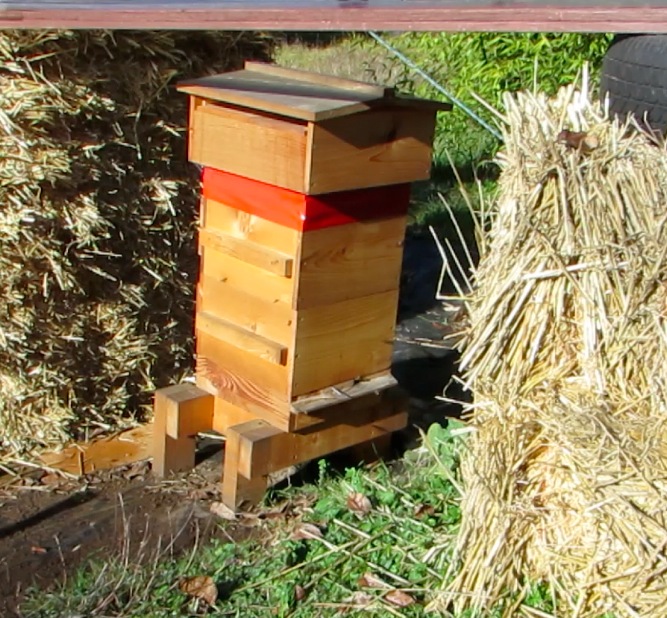
December 27…Even this little hive was flying today. The pink insulation is meant to cut the cold wind, but it still lets the hive breathe through the quilt box on top.

Status of hives one year ago

This short video shows the bees bringing in gobs of orange pollen.

Read Full Post »

Oregon Grape-Holly

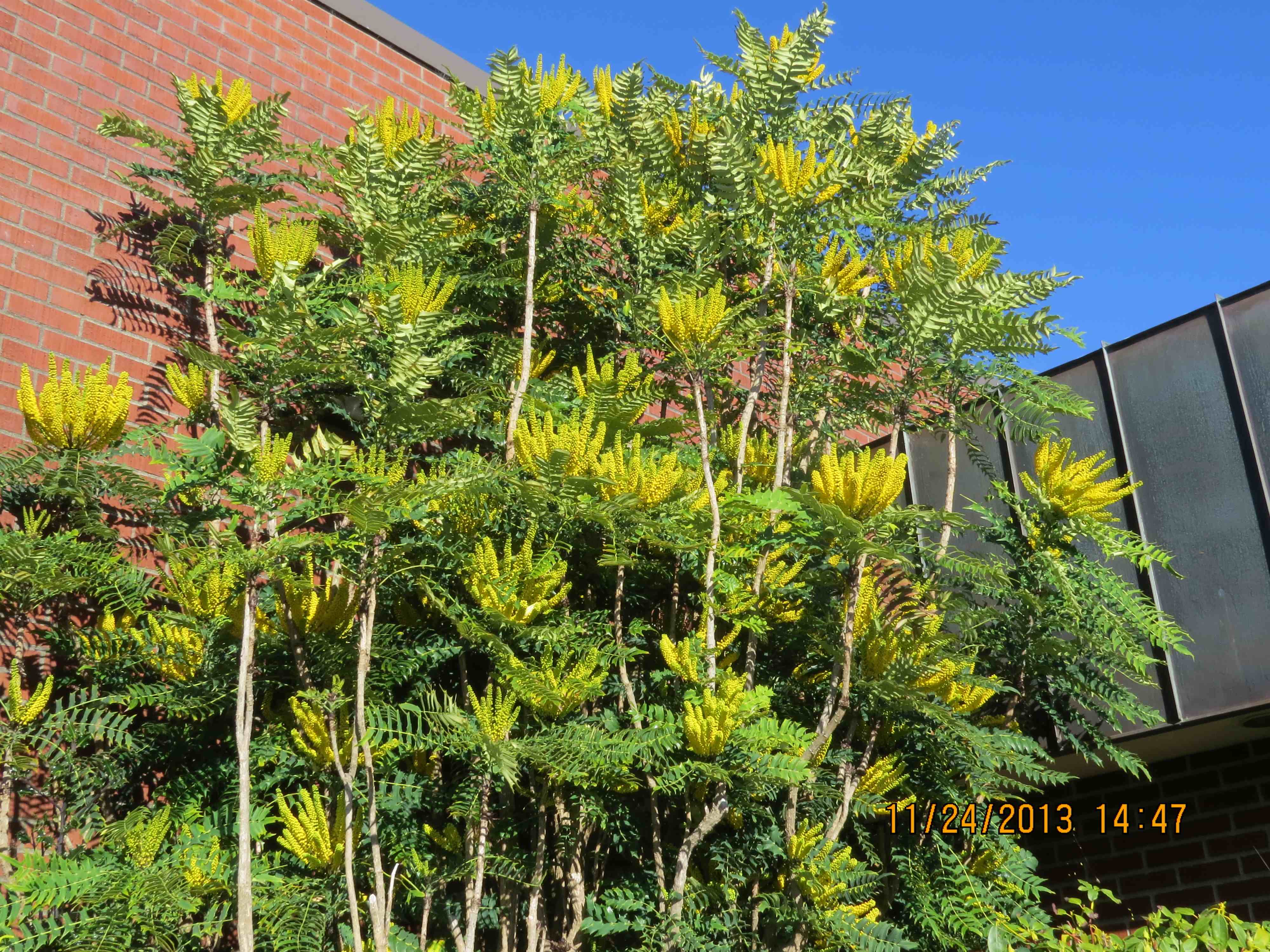
Oregon Grape-Holly blooming in late November

Most visitors to the post office go to get their mail.  These visitors go to get nectar.  The Oregon Grape Holly is in full bloom, offering nectar and nectar is what they got.  Honeybees, bumblebees, even a couple of green hummingbirds partake in the feast.

What is the importance of nectar?   My Biodiversity Garden states “Nectar is the fuel for our pollinators such as solitary bees, bumblebees, honeybees, butterflies, moths and bats. It is the only source of energy and without it, the pollinators cannot fly. Nectar is secreted by nectaries within the flower.”

According to Dave’s Gardens  Mahonia Aquifolium blooms in mid spring.  This is late November!  The plant is growing against a brick wall, facing south, during an unseasonably dry autumn.  In any case, the wild pollinators love it.

November 24th...This honeybee is getting nectar from an early blooming Oregon Grape Holly

November 24th…This honeybee is getting nectar from an early blooming Oregon Grape Holly (Mahonia Aquifolium)

Read Full Post »

« Newer Posts - Older Posts »