Gary showed me where these amanitas were. I think he felt bad for harvesting the beautiful King Boletus that I had planned to photograph that very morning.
Walking the dogs in the morning gives us a chance to observe nature. I’ve been itching to take my camera sans dogs and shoot some photos of the different types of mushrooms. I got my chance on Thanksgiving Day during a brief break in the rain.
If the sun hadn’t been shining, I would have walked right past these without noticing them.
I found it interesting that these little brown mushrooms grew in a circle around a Eucalyptus tree in someone’s front yard.
At first these blended in with the gravel. My wife says, “They look like gravel.” I says, “They are gravel,” and scraped them with my boot. Ooops.
Another type of mushrooms growing on old gravel road.
Chanterelles…the only type of wild mushroom we will eat, except for the King Boletus, but in my humble opinion, the Chanterelle is the best.
I
Another chanterelle. This mushroom is so tasty, if you know where to find them, you don’t usually tell anyone else. I protected my spot by harvesting all I could find.
Mushroom growing on very old tree trunk
King boletus, a few days old
You can tell how wet it’s been here.
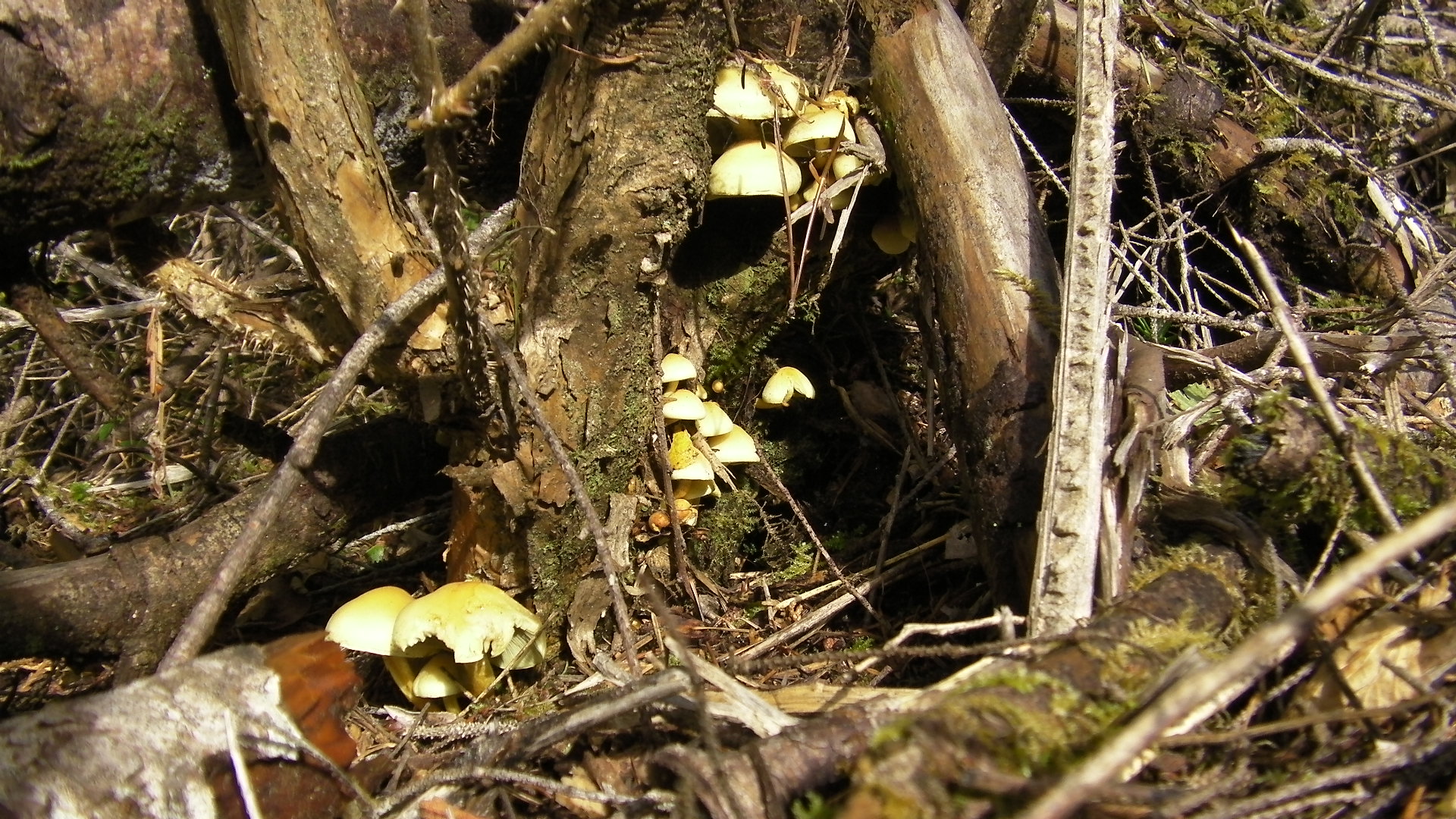
A big bunch of mushrooms growing on a log. I wish I knew if I could eat them.
More mushrooms on a log
It’s amazing how many kinds of mushrooms there are if you just open your eyes in a wet wooded area.
Salamander climbing over a branch
These mushrooms appeared abundantly in an area logged about a year ago.
Ironically these cultivated logs have been staring blankly at me for over two years. I don’t know how many 5/16″ holes I drilled, tapped spore plugs into, and melted a wax seal on, but it was a bunch of them…I had to keep letting the drill bit cool down.
There are Terry’s successful mushroom logs. He probably followed the directions.
A real beauty
A look at a shitaki from the top
Looks like these logs popped out a bunch of tasty mushrooms.
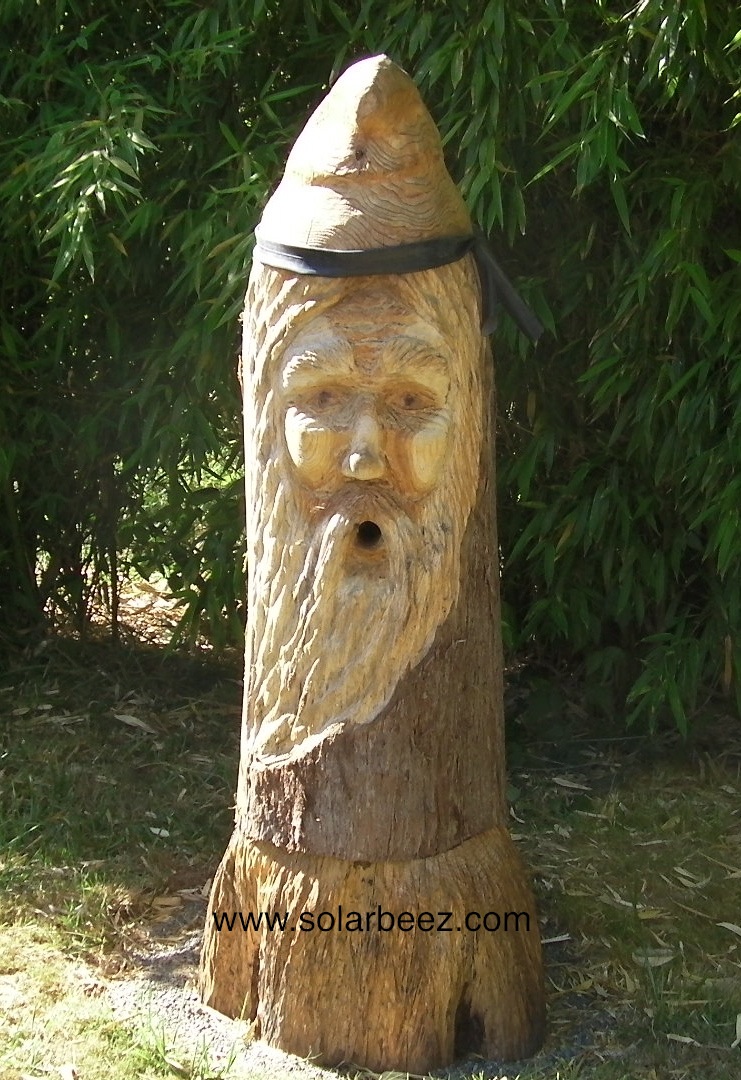
My daughter introduced me to Terry after meeting him and his wife at the coffee shop she worked at when she lived in the San Francisco Bay area. “Dad, this guy is into Top Bar Beekeeping AND mushroom logs.” (A rare combination, I thought.) “I’ve got to meet him.” He often sent packets of bee information to me. One of those packets contained Slovenian Beehive art. The photo of bees crawling in and out of a carved face as a front of a hive led to my Bee Beard log hive.
For more very fascinating mycelium check out the hugelkulture bed.
Terry mentioned Paul Stamets. I love the guy. Okay, I don’t really know him, but give a listen to this TED talk and you will love him too.
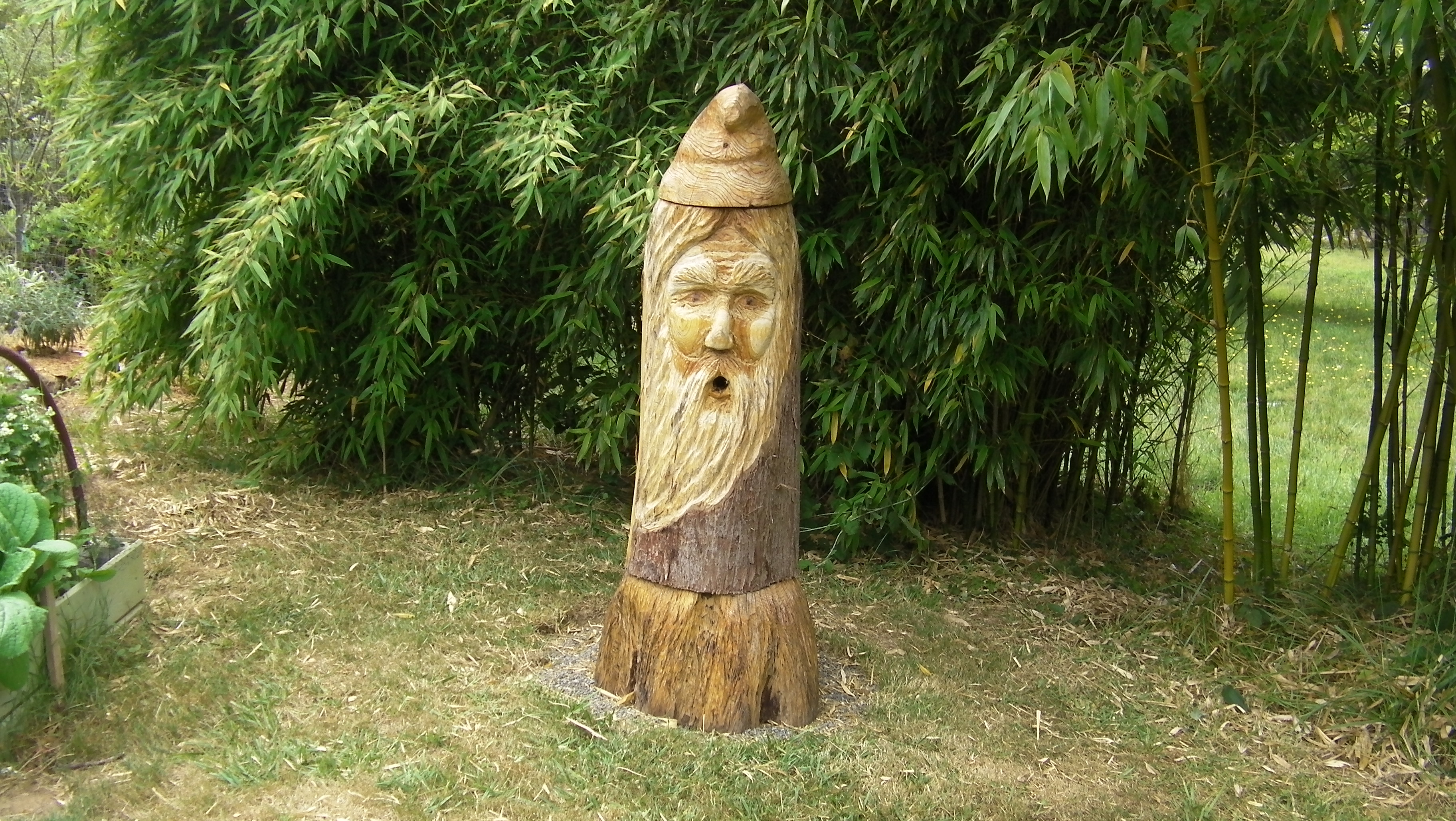
I’m happy to report my Bee Beard log hive came through the hurricane-force winds without getting blown over. The bamboo and ‘staked’ hay bales must have protected it enough.
Since we are new to beekeeping we try to pay attention to the advice of more experienced beekeepers. We have been warned about robber bees attacking the hive…robbing the honey. I shot this video in an effort to find out if my log hive is getting robbed. I don’t know whether these are robber bees or just the normal activity of the hive. They are still bringing in pollen so I’m assuming (naively?) it’s all normal behavior. The bees came from a feral hive in a tree on private property. Maybe it’s strong enough to defend itself.
A short video of my Warre Hive is included. Much less activity can be seen around the Warre. Is it because I’m feeding them sugar? Maybe the bees don’t feel the need to venture out.
It’s early November when the clouds parted and the sun popped out. The day started warming and the bees started flying. It had been overcast and rainy for about a week, so I guess the bees were anxious to get out, but I was surprised to see so much pollen coming back in. The Warre hive had bees flying but not returning with the ‘gobs’ of pollen like the log hive…could it be because I’m feeding sugar to the Warre hive and not to the log hive?
I have no idea what kind of pollen they are bringing back. Nothing is blooming in the garden but rosemary and borage and I don’t see many bees on it. Is this normal behavior this late in the year? Comments are appreciated.
After reading the comment from Emily Heath, I started looking around the area for ivy. To my surprise it was growing all over the place. It’s one of those things that you don’t see until someone points it out to you. I had to get close to see the blossoms and that’s when I saw the bees. I hope some of them came from my hives.
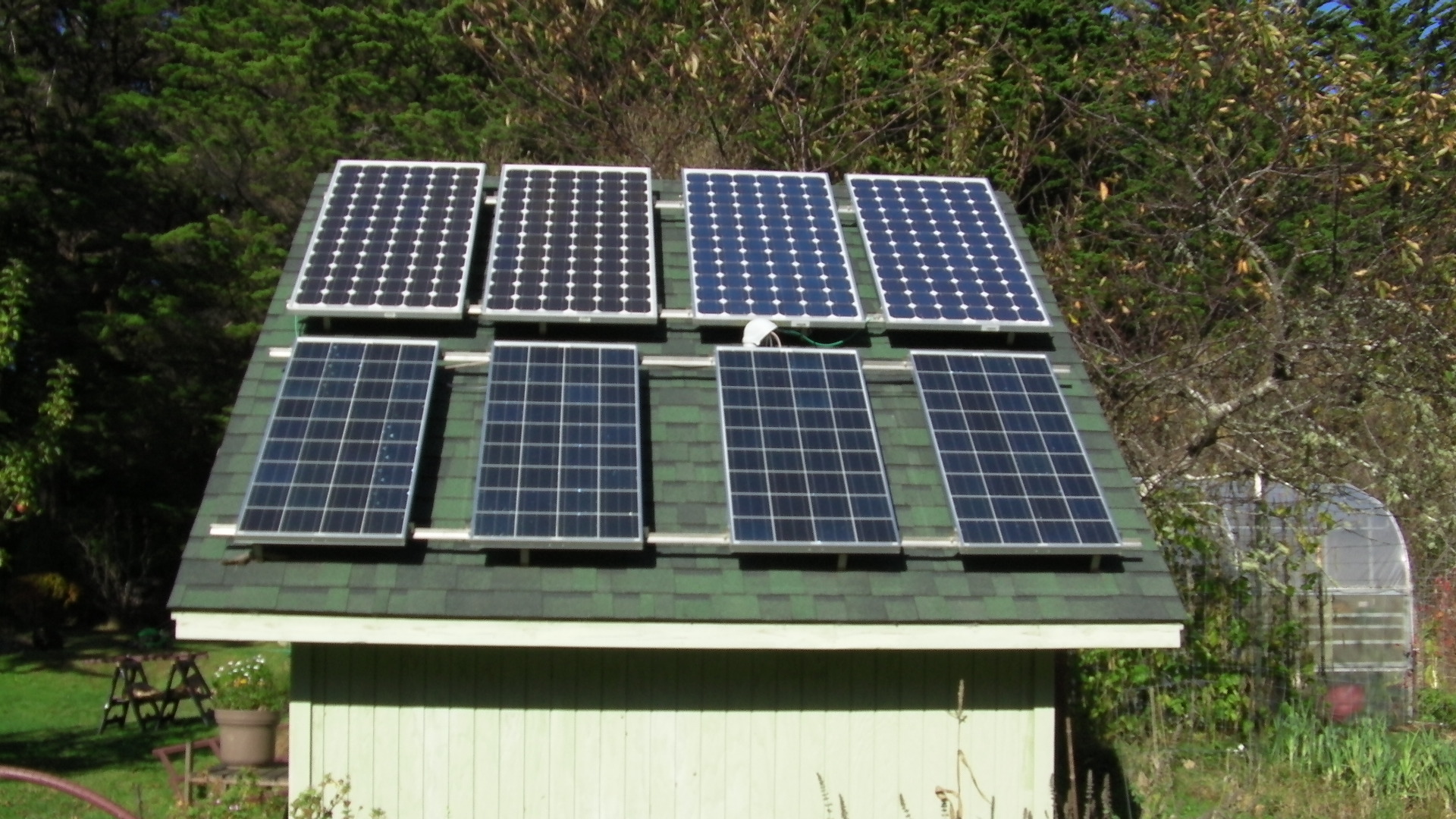
If it looks like these panels were not purchased all at the same time it’s because they weren’t. I bought them as I could afford them. The bottom four were purchased first. When I wanted more I was told that Brazil was buying all they could make…just wait a few months. I didn’t want to wait but found some compatible ones built by Solar World right here in the US.
I wanted to be able to produce my own electricity for “just in case” scenarios. Since we get all our water from a well, if the power grid goes out, we can’t get water. While the power doesn’t go out very often, when it does, we are without both water and electricity for several days. I wanted to be able to power those ‘critical load’ items like the well pump, a few lights, the refrigerator and freezer. Plus I wanted to prove that solar power can be used even in cloudy climates in states that are “north.” I live on the Oregon Coast. If it works here, it can work in 75% of the US.
In fact, this system works so well that in the summer time, I have so much extra power I can run my printing presses with it.
This is a sticker I apply to everything I print with solar electricity. I would be surprised if any other printers in the US could claim that.
During the rainy season it’s a different story. Our rainy season is roughly mid October to late May, so it was a big surprise when we had an unexpected sunny day a couple days ago. We had had rainy weather for about a week and my batteries were down. The meter said I was a MINUS 109 amp hours. I was going to have to do some serious charging.
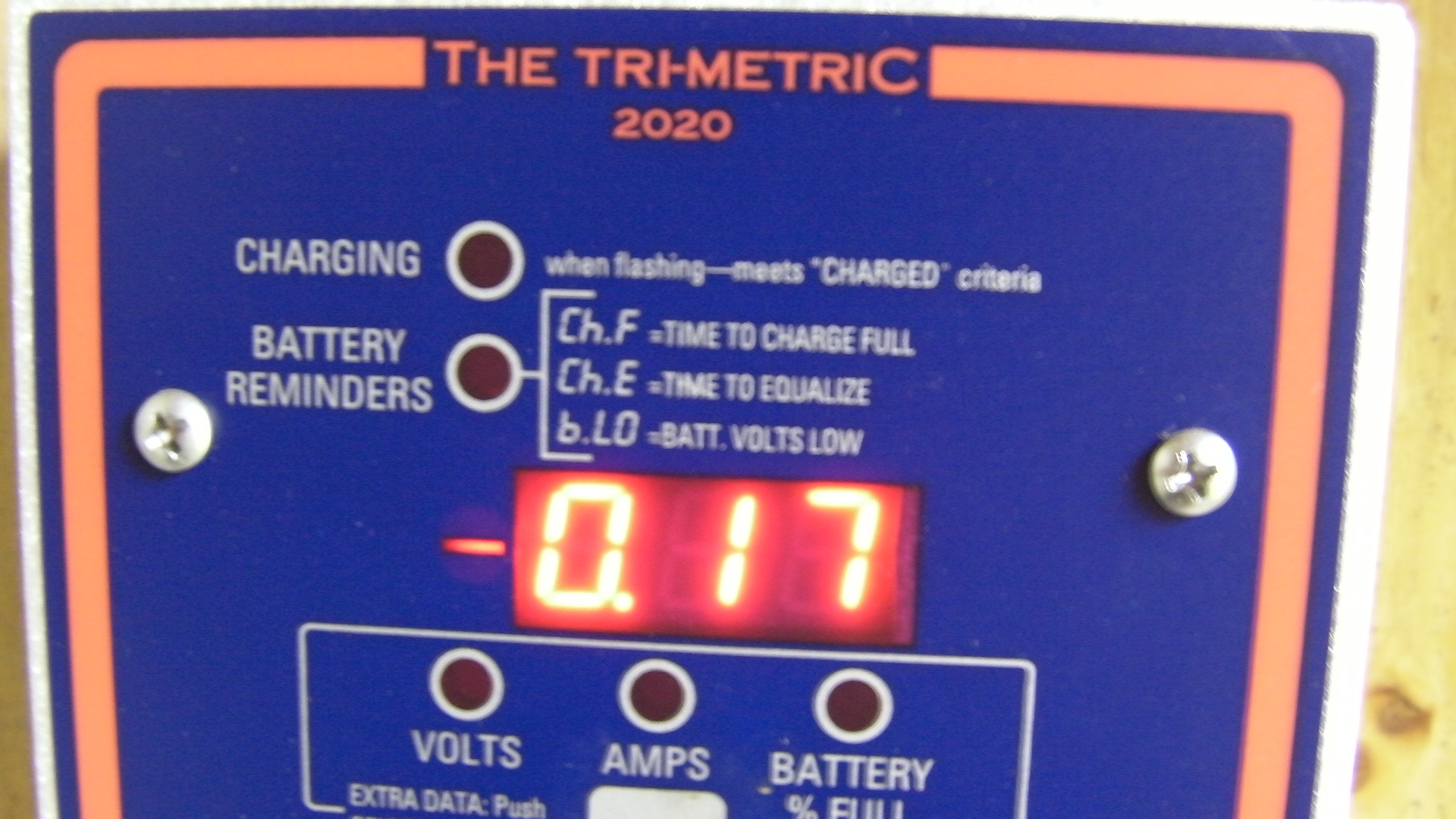
Minus 109 amp hours before noon
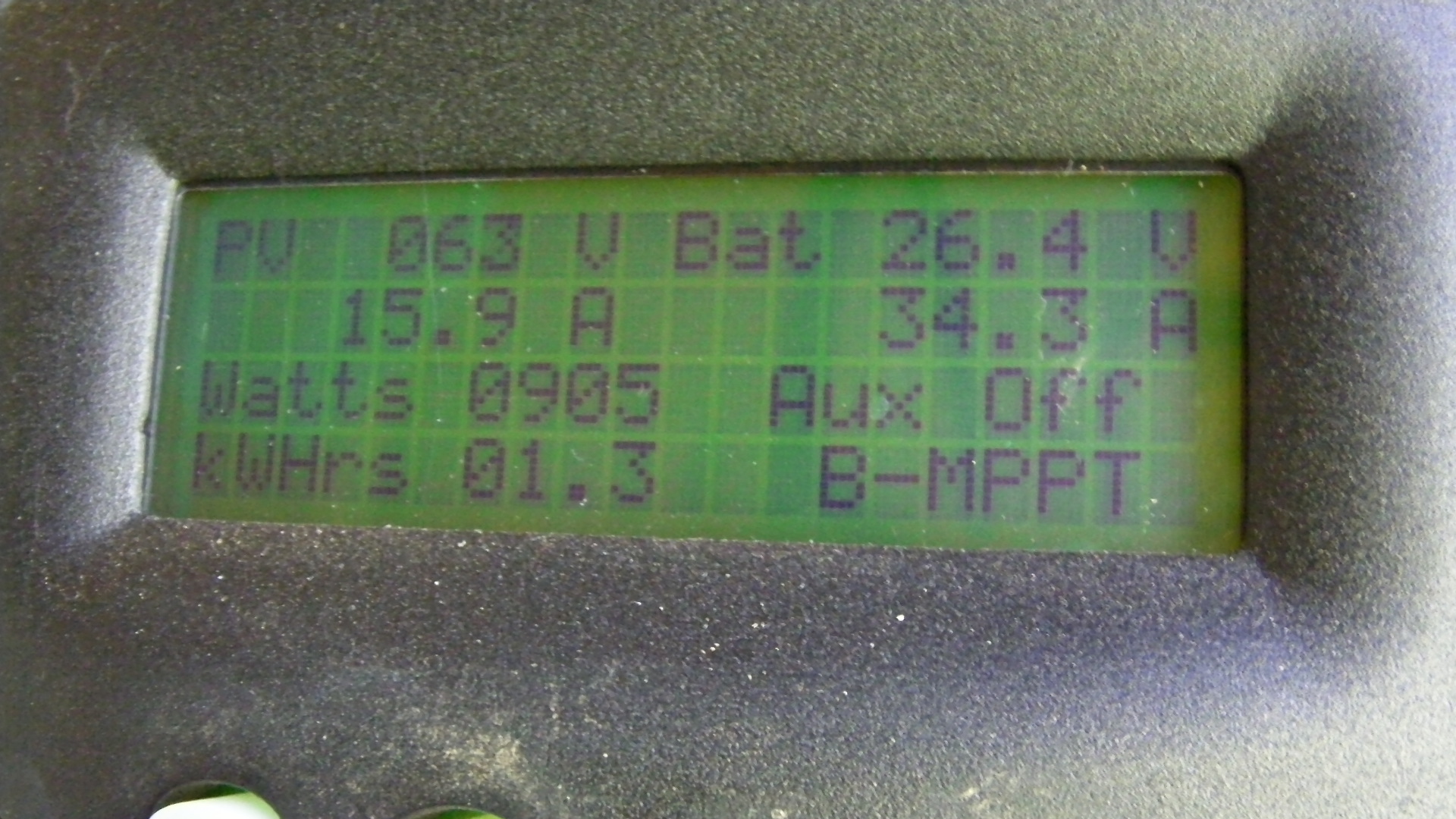
The charge controller shows we have 34.3 amps coming in right now. If we can keep that going, it’ll take a little over 3 hours to charge up. I hope the sun stays out.
Minus 57.9 Amp Hours at about 2:20 pm. We are catching up while producing power at the same time.
We’ve already produced 134 amp hours and the sun is still shining!
170 amp hours produced by the end of the day.
The sun stayed out and the batteries are full. Not bad for an autumn day.
When I decided to place my new Bee Beard Log Hive I considered many things. I wanted it placed where it would get the morning sun shining into the entrance, well beyond the long reach of the tree shadows in winter, and protected from the raging winter winds that blast from the southwest. Also I wanted the hive to be visible if possible, on the edge of the garden, so we could observe the bees whenever we worked outside. The placement of the hive in front of the bamboo satisfied all the requirements. What I didn’t know is that bamboo attracts wasps. When I started seeing all the wasps on the bamboo I started to panic. What are they doing around my log hive? I started recalling the stories at the bee meeting about all the hives that are lost to wasps. How did I know bamboo attracts wasps? Is that common knowledge?
Wasp on Bamboo leaf over Bee Beard log hive.
The bamboo was leaning over the log hive…are the wasps going to attack my bees? What to do?
I plugged the last gap by stuffing the inner tube into it. Wasps won’t get in here
Found a piece of bamboo that fit the 1 1/2″ (3.81 cm) hole. This reduces the hole making it easier to guard against wasps.
After consulting the internet about bamboo I found out that wasps gather fibers from the bamboo for their paper nests. That’s what they are doing on the bamboo, not attacking the log hive,
We feel that wasps have a place in our garden. We won’t kill them because they really aren’t bothering us or the bees, The ground hive is almost never used the next year and once the cold weather hits, it will be inactive.
I shot a short video showing the wasps on the bamboo as well as the very active ground hive.,,
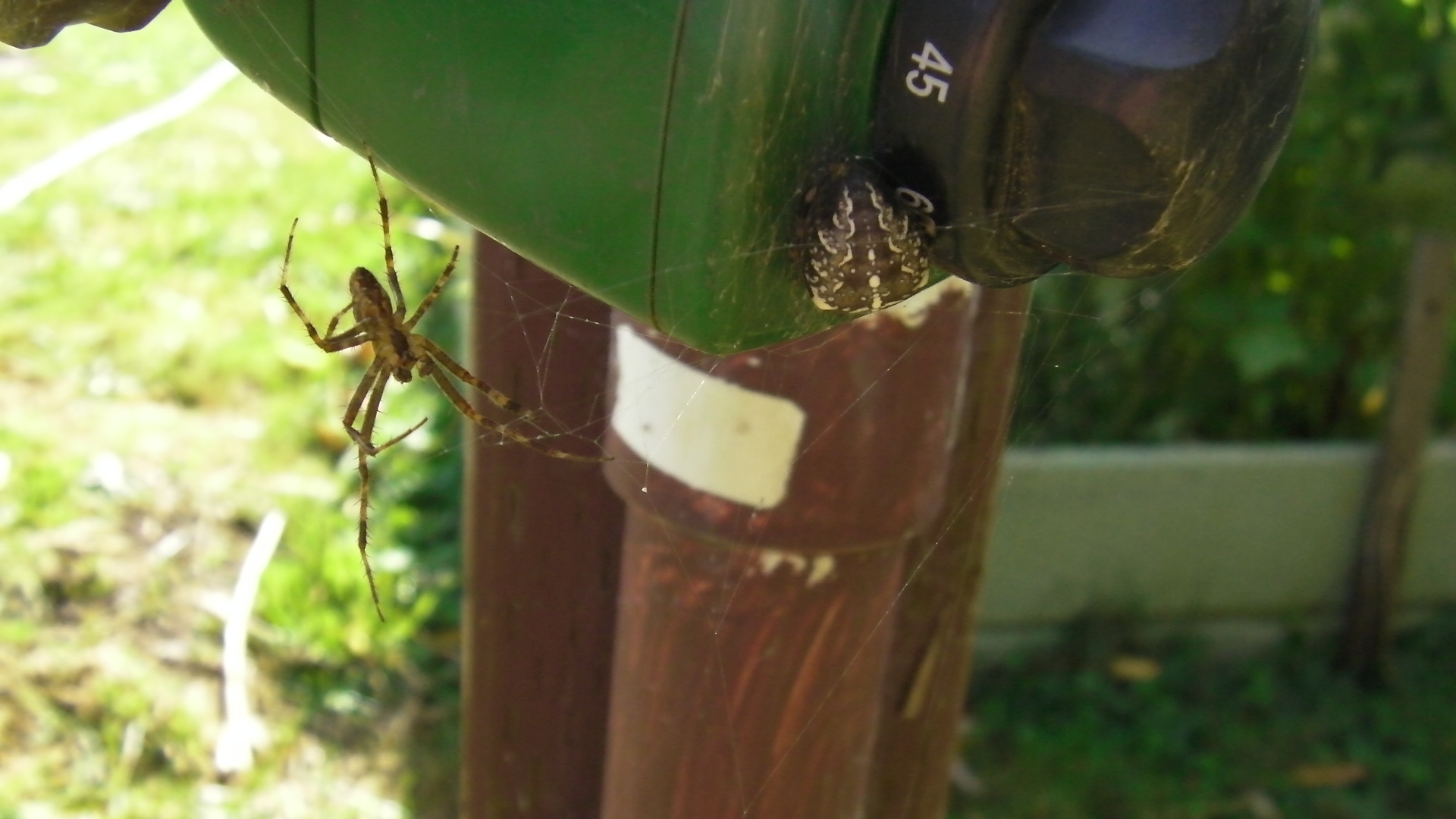
When I first saw the insect in this web, I thought it was one of my bees because it’s in the flight path to the Bee Beard Log Hive. I was much relieved when I realized it was a wasp. Over the next few days of checking her web I was able to capture some very close up video of “Fang” wrapping her victims and injecting them with her venom. Here’s a creepy video accompanied by some creepy music provided by my brother, Elliott.
If you hate wasps, you’ll love this video…if you hate spiders, you’ll be happy they are smaller than we are.
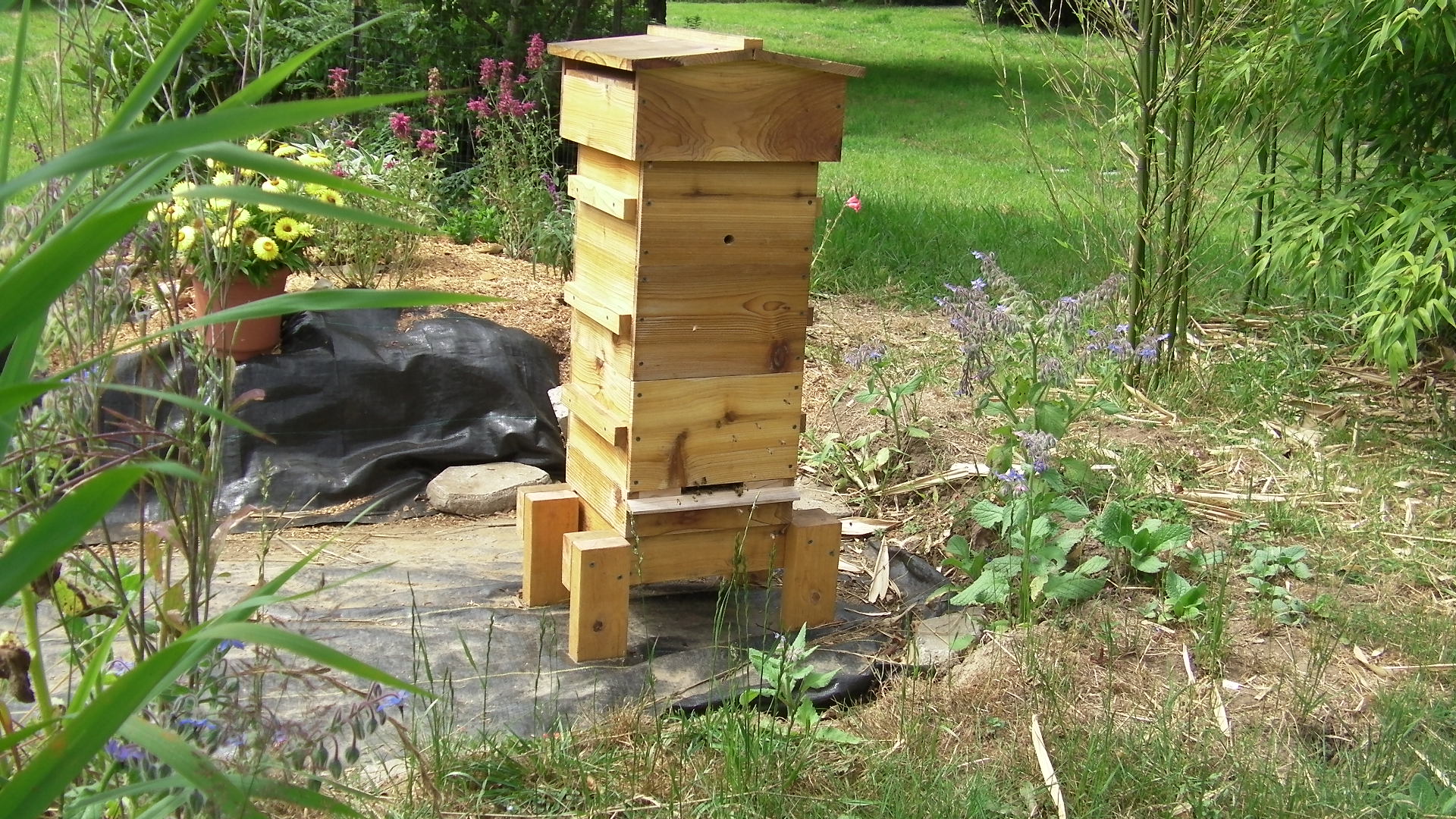
Back in February, I listened to a podcast interview with Matt Reed of Beethinking.com. He talked about the Warre Hive. Now I didn’t really want to get into another type of hive, but it sounded so intriguing and easy to use, I decided to give it a try. I liked the idea that the boxes stacked in a vertical orientation, mimicking a hollow tree. It sounded like the most ‘natural’ type of hive that wasn’t actually a tree. I also liked Matt’s approach of not using any chemicals inside his hives. So I ordered a kit with observation windows and a screened bottom in case I wanted to do a mite count.
I didn’t want to order package bees because they might not be acclimated to the wet area we have on the Oregon Coast. I had passed up the ordering date and was nervously waiting for my bait hives to catch a swarm, but nothing was happening. Then I got the call about a swarm that had just formed about an hour ago. I threw everything into the car and was on my way.
A Swarm in a Bush…A made-in-heaven low swarm for my first experience.
A Swarm in a Bucket…I was able to cut branches and shake most of the bees into this 5 gallon bucket.
A Swarm in the Warre Transferring the swarm into the Warre was easy…tap the bucket on the ground once or twice, then pour into the hive. I replaced the bars on top, installed the quilt box and the roof.
Did I get the queen? Bees can be seen fanning the pheramone that the queen is ‘in the building’!
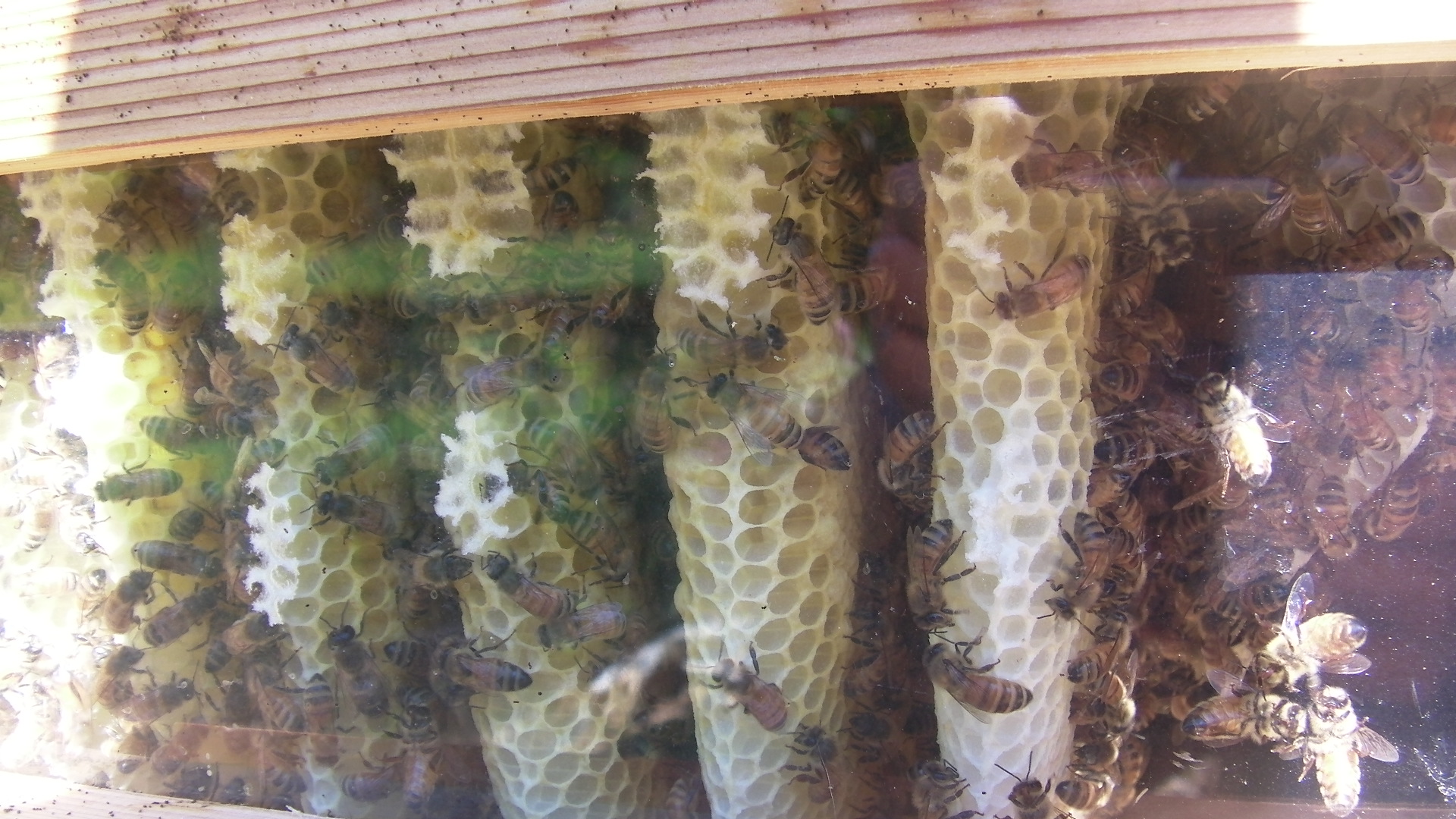
July 7, 2012 This shows how much natural comb they built in about 5 weeks. I wonder when they will start on the bottom box.
I anxiously wait. The bees don’t build into the bottom box. I consult the forums where suggestions are made to add an empty box overhead. “The bees don’t like having an empty space over them.” On July 23, 2012, I add a third box, this time on top.
After I drilled a 3/4″ hole for the bees in the top box, I waxed up some top bars and put the whole thing in place.
July 24, 2012. I like this…I can get a view through the observation window looking down at the occupied middle box or up to the top bars in the top box.
August 3, 2012 A view of the comb in the middle box…still no building in the top or bottom box.
August 20,2012 Looking into the Warre, plenty of bees, plenty of honey,..but they are STILL not building any comb in either the top or bottom box.
I consult the forums…”can a Warre get through the winter on only one box?” It’s getting late in the summer and my efforts to get them to build either on top or in the bottom box have been fruitless. The answers seem to imply I’m a reckless beekeeper if I don’t consider feeding them.
Partially built feeder box for Warre
After looking at the forums, I found the answer. Build a feeder that is accessible from the outside. If it becomes necessary to feed the bees I can do it without opening the hive up to the cold air. The hive is kept intact with no extra holes drilled into it for the sugar water.
I want to thank Colobeekeep for providing photos of how he built this.
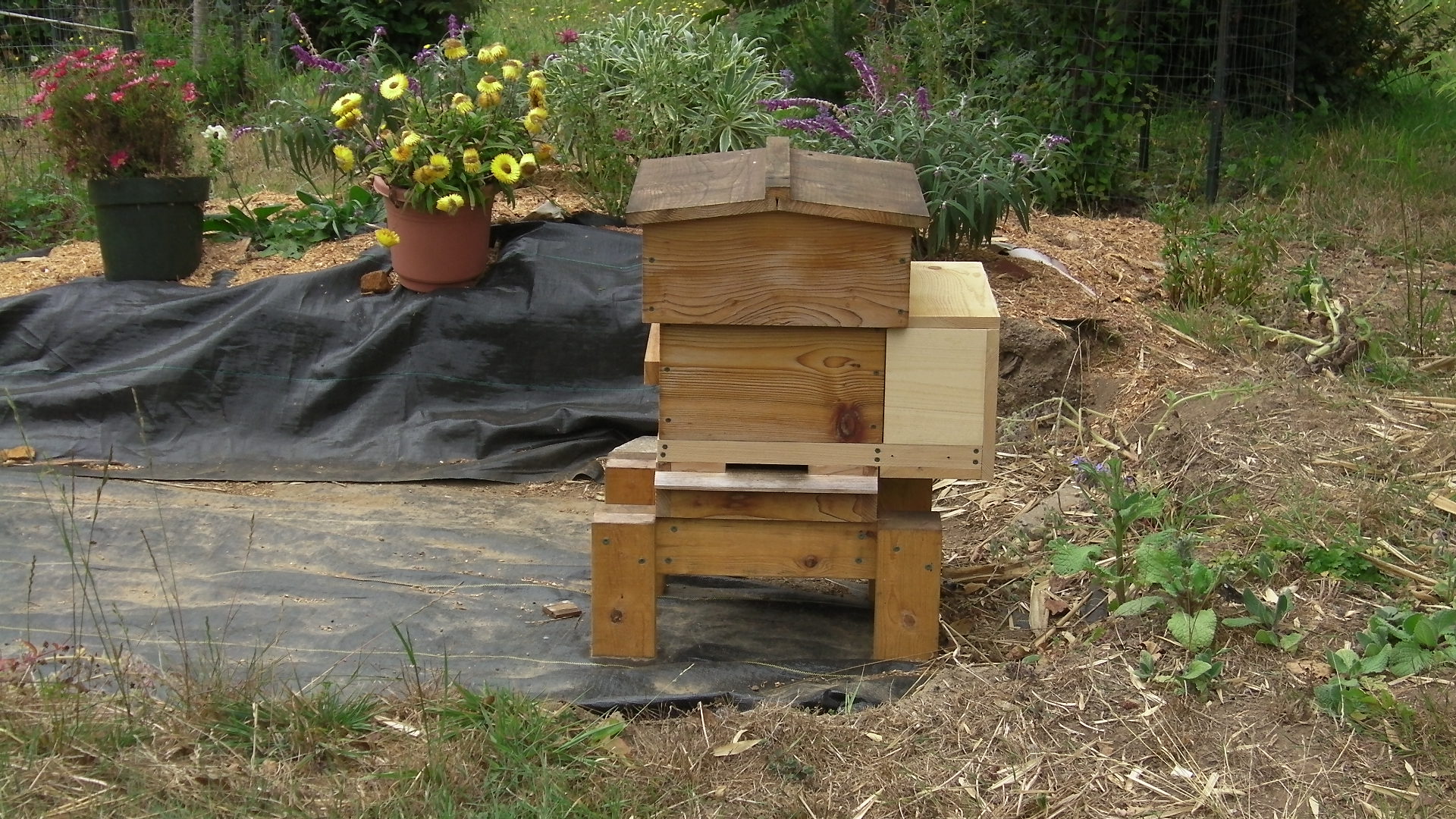
Front view of feeder box on right side of Warre
Back view of feeder box on Warre
Lid open, no jar yet. Bees can access the sugar water, but not the feeder box. Bottle can be changed without opening the hive. It’s placed near the rear of the hive to discourage robbing.
I really DON’T want to resort to feeding them. From what I read, sugar raises the pH of the hive making it more susceptible to Nosema, but I also don’t want to lose this little hive. I definitely won’t use High Fructose Corn Syrup because it is made from GM corn which is treated with clothianidin, a systemic insecticide highly toxic to bees. I’ll pay close attention to the honey stores by looking through the observation window. If they get low I’ll be able to supply either 1:1 or 1:2 sugar water without opening the hive.
This short video looks into the Warre hive through the observation window (slight reflection issues) to see waggle dancing and daisy-chaining. The last frame shows the natural comb built as a result of the daisy-chain.
More Waffling…After going to the work of building the ‘side feeder,’ I observed the comments made about moisture in the hive. Well, I’m not going to say we live in a rain forest, but we do get buckets in the winter time. Should I worry about the moisture issues…yes. Okay, I’ll build an over-the-top ‘dry sugar’ feed frame.
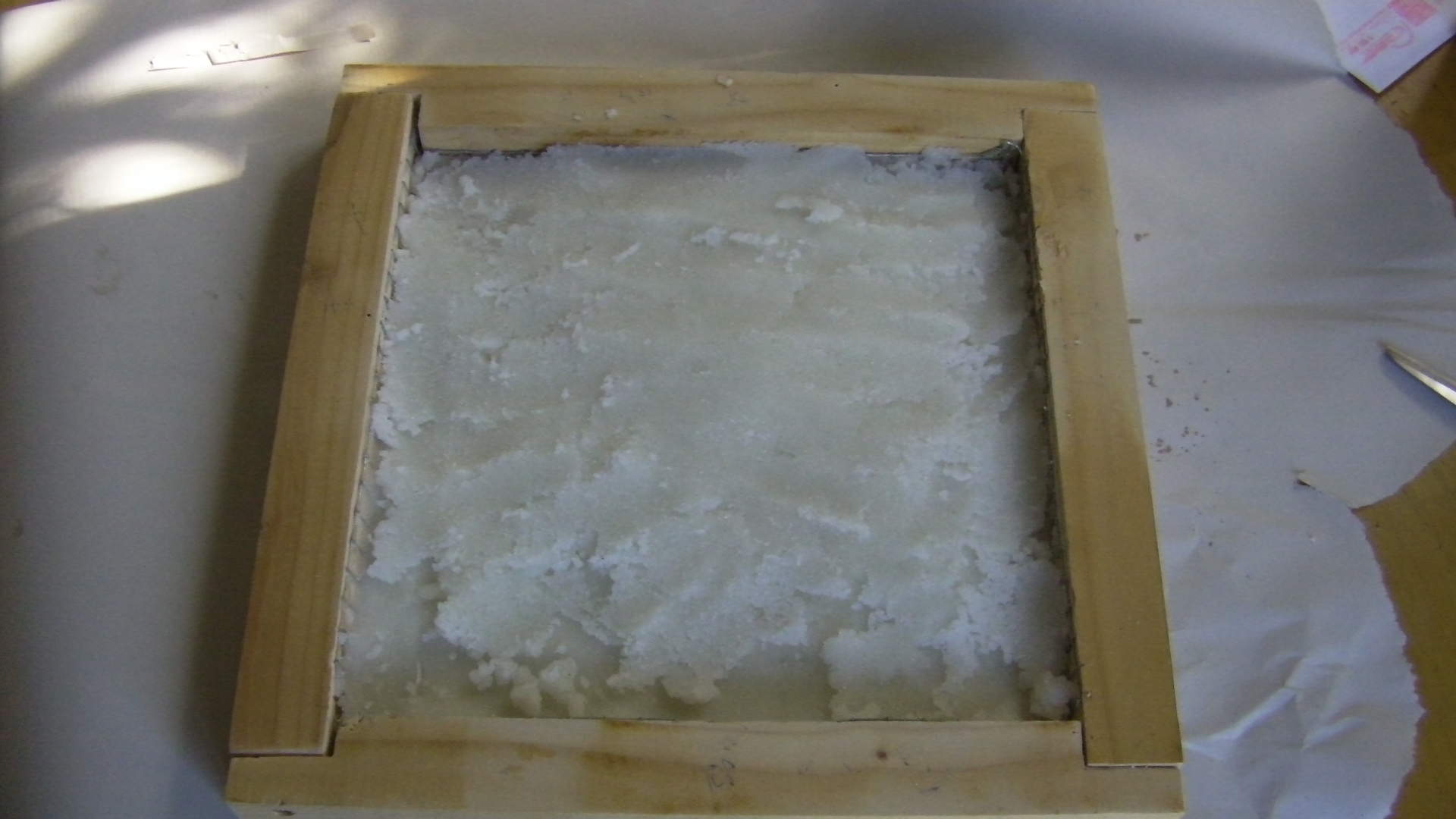
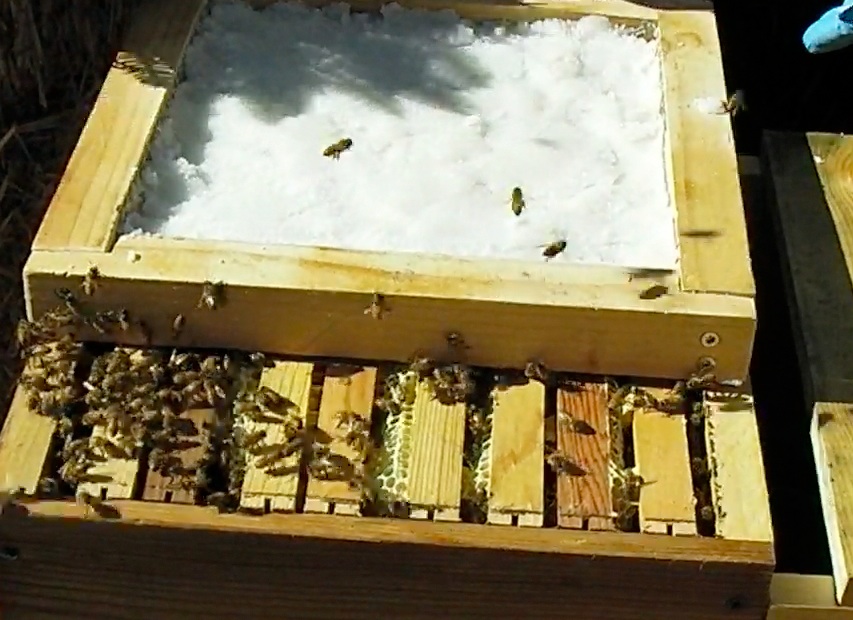
This shows the sugar resting on the 1/2″ hardware cloth. After this photo was taken, I dumped out the sugar and inserted a layer of blank newsprint between the sugar and the wire. That should hold up the sugar so it won’t drop down into the hive…I hope.
Sugar pressed into frame ready to slide into place
Installing sugar feeder Oct. 25, 2012. This will let the bees go upward to access the sugar from within the cluster. Quilt box goes on top. Then I wrapped with red tape to seal the cracks.
When I checked with some coastal beekeepers at the bee meeting, they said they feed with sugar syrup, no problem. “Don’t you worry about the moisture issues?” “No.”
In anticipation of the wet stormy weather that the Oregon Coast is known for, I closed up some gaps on the log hive with a bicycle inner tube.
Bee Beard gets a headband to protect against the cold winter winds.
Bee Beard with headband as seen from side
Bee Beard as seen through the observation window 10-8-12. Bee-built tunnels provide access to the honey.
The large number of unfilled cells is a concern, but the bees are still packing pollen, so hopefully they will get filled with something.
This truck inner tube covers the gaps in the ‘wood plug’ that covers the observation window. It’s removable so I’ll be able to look through the window from time to time.
This log hive has exceeded my expectations for the summer. It has built up fast, didn’t swarm like my hive last year, (swarmed two months after I got it), and has out performed the Warre hive even though I got it going about the same time. Now for the real test…will it make it through the winter? I haven’t taken any honey from it, I’m not going to medicate or hang miticides, and I’m not going to feed it. It came from a natural living tree hive and made it through the winter last year without intervention so I feel it has a good chance. The only intervention I have given it is to peer through the window from time to time. If I get a swarm from it next year, I’ll count it as a success. Maybe I’ll have my next log hive set up in time.
In years’ past, we grew dozens of sunflowers of all types. This year…very few. Of the few that we planted, only four decided to grow. Of the four, only one was big enough to draw any visitors. This is the one.
My best sunflower this year
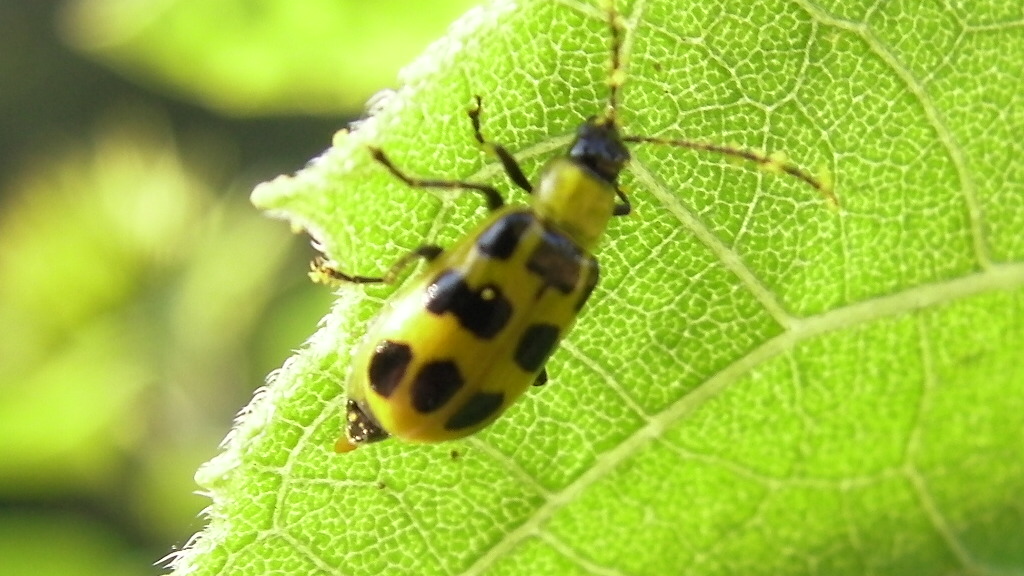
This might be the bug/beetle which appears in the video taken two days previous. It was on the flower part but jumped to the leaf while I was getting the camera switched on and focused.