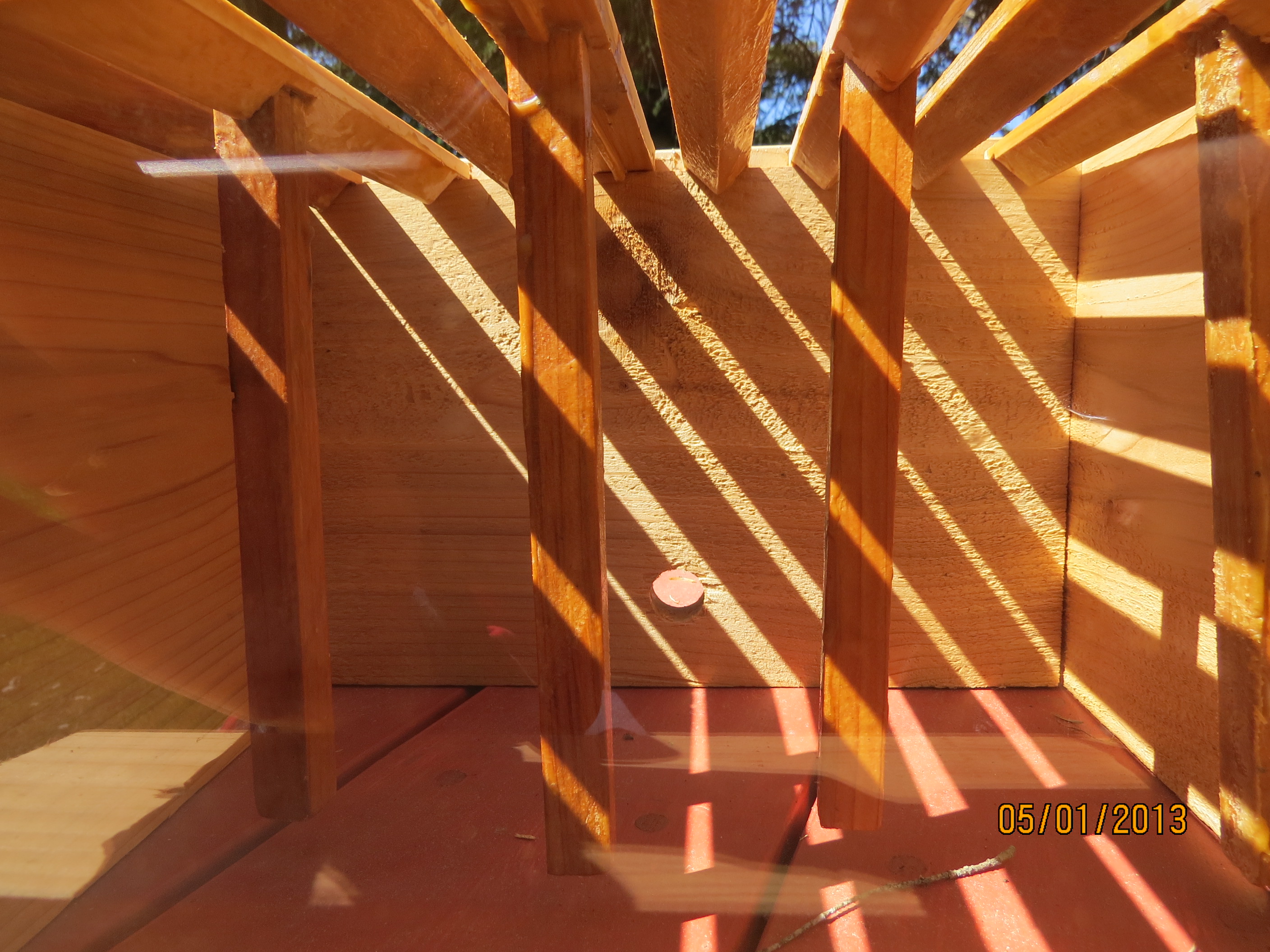
What to do if you need to add ‘ladders’ to your Warre box, but you don’t have any comb. I don’t want to use any plastic foundation or anyone else’s comb. So I’m using melted organic wax and painting it on posts hung from the top bars. It worked last time so I feel confident it’ll work this time.
It doesn’t take much wax, or much time to melt, so stick around when you do this.
Coating the bars and posts
These are how the t-post ladders will hang down once they are in the hive…trouble is I couldn’t remember if the bees build comb with less than 3/8 inch or more than 3/8 inch.
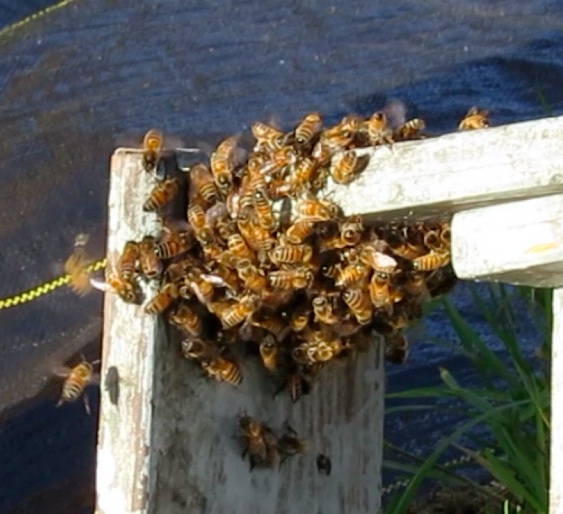
I started gathering the items together, went out to my bee hives and observed what looked like a swarm forming. I grabbed the melting pot and spoon and started tanging. Three days ago they headed back in when I tried tanging. Maybe this time too, then I’ll add the extra box and maybe they’ll be happy.
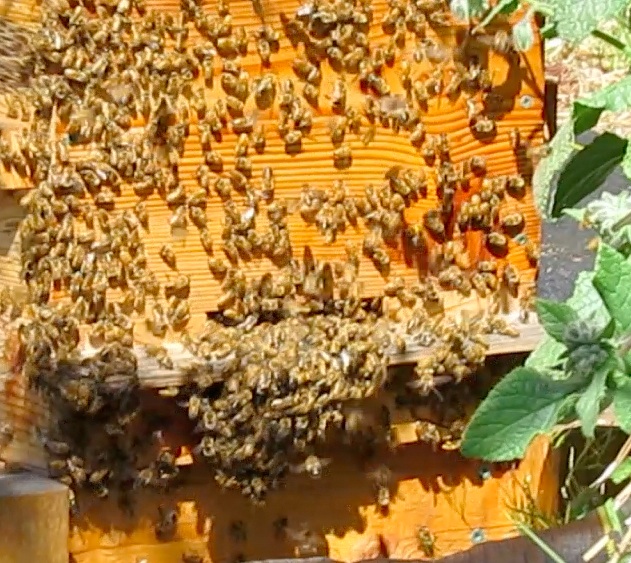
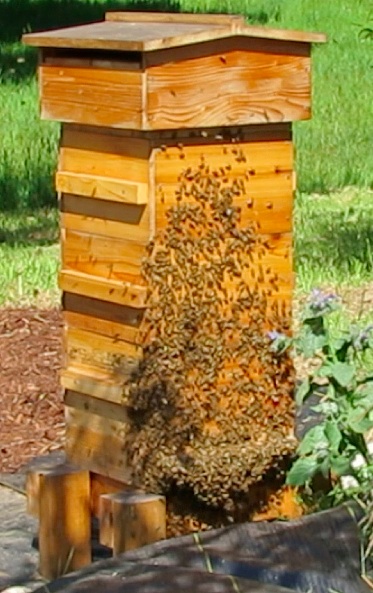
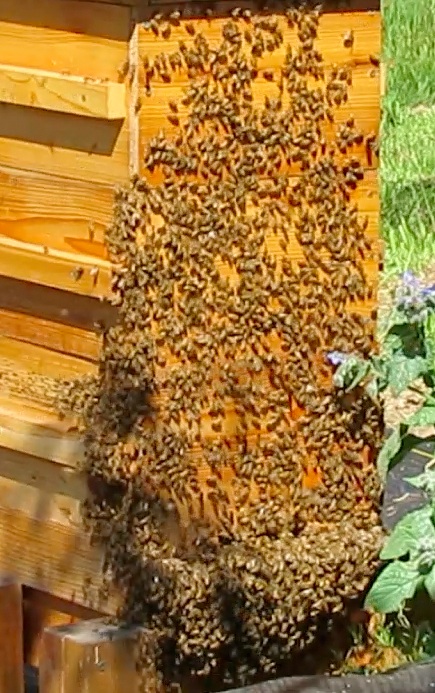
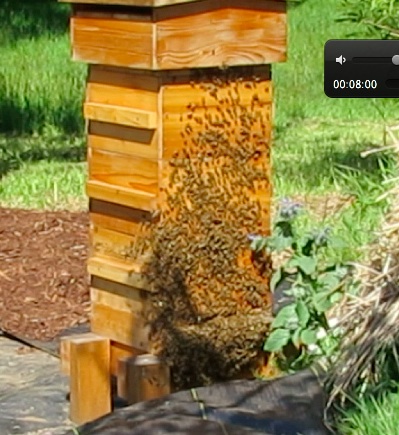
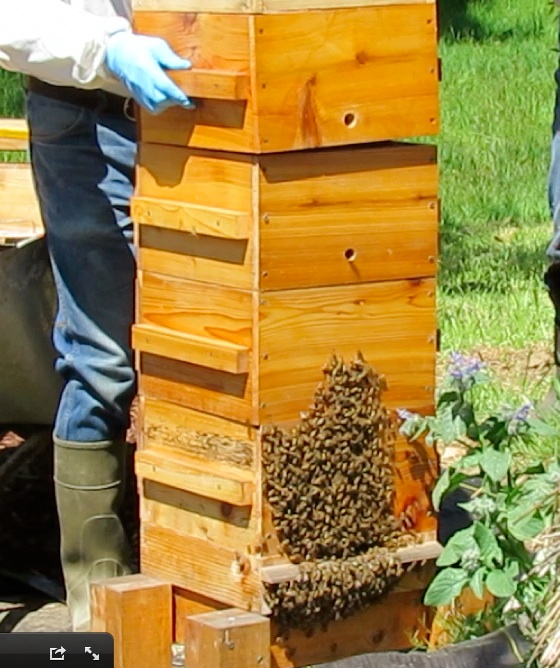
At 10:07 am It looks like a swarm is forming on the hive I want to add the box to
At 10;11 am Yep, a swarm is in the works…quick, get the wax melting pot and bang on it with a spoon
At 10:15 am, it’s still growing so I tang faster, wondering if I’m crazy
At 10:16 am, swarm bees are flying higher and higher
At 10:20 am, it almost looks like they are calming down
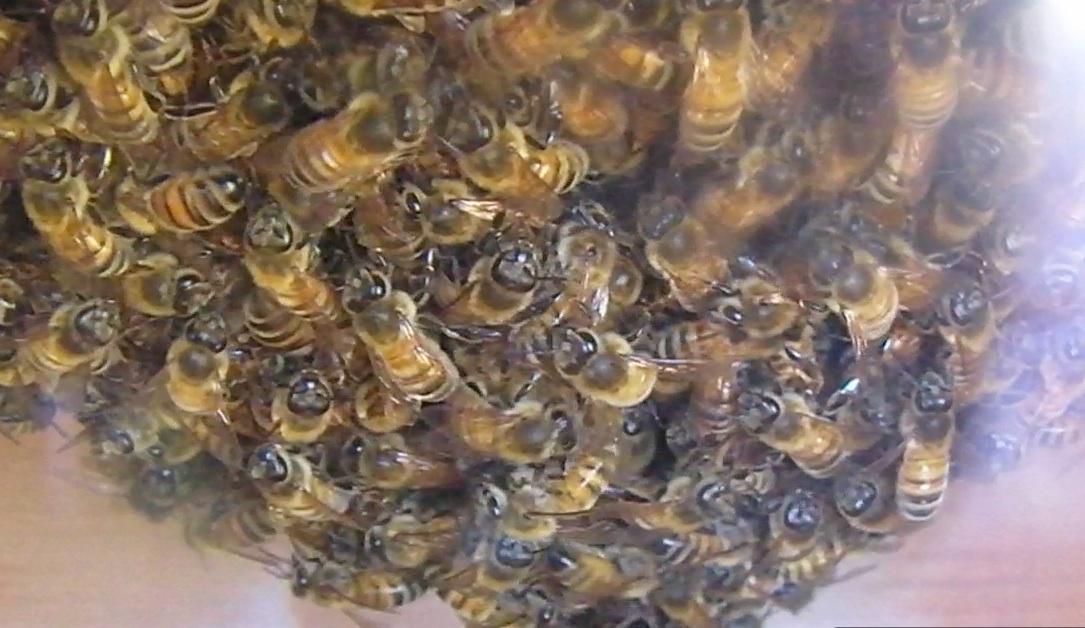
At 10:28 am after about 10-12 minutes of tanging, they are headed back in
At 10:35 am, they are definitely headed back in
At 10:44 am, they’ve calmed down for today…what about tomorrow?
At 10:58 am I add the box with t-post ladders. I’ve got to get a hive jack so I can do this right next time.
At 11:05 am, bees are crawling up t-post ladders already.
Day 3, the bees are still climbing the posts and a daisy-chain is visible.
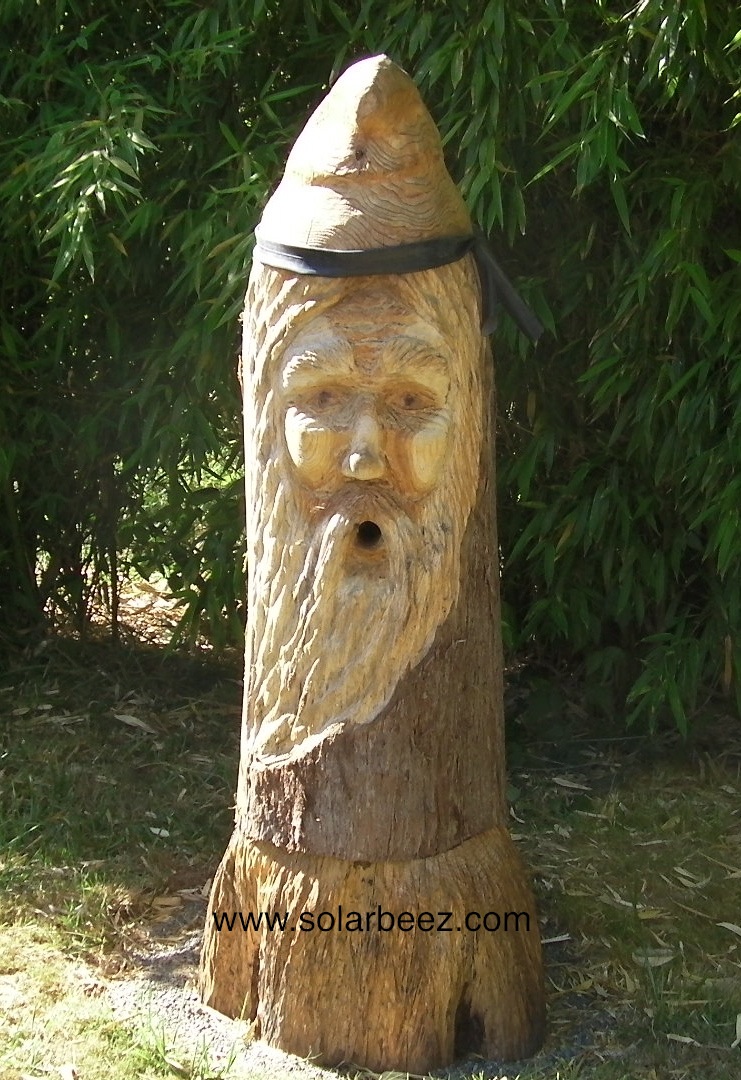
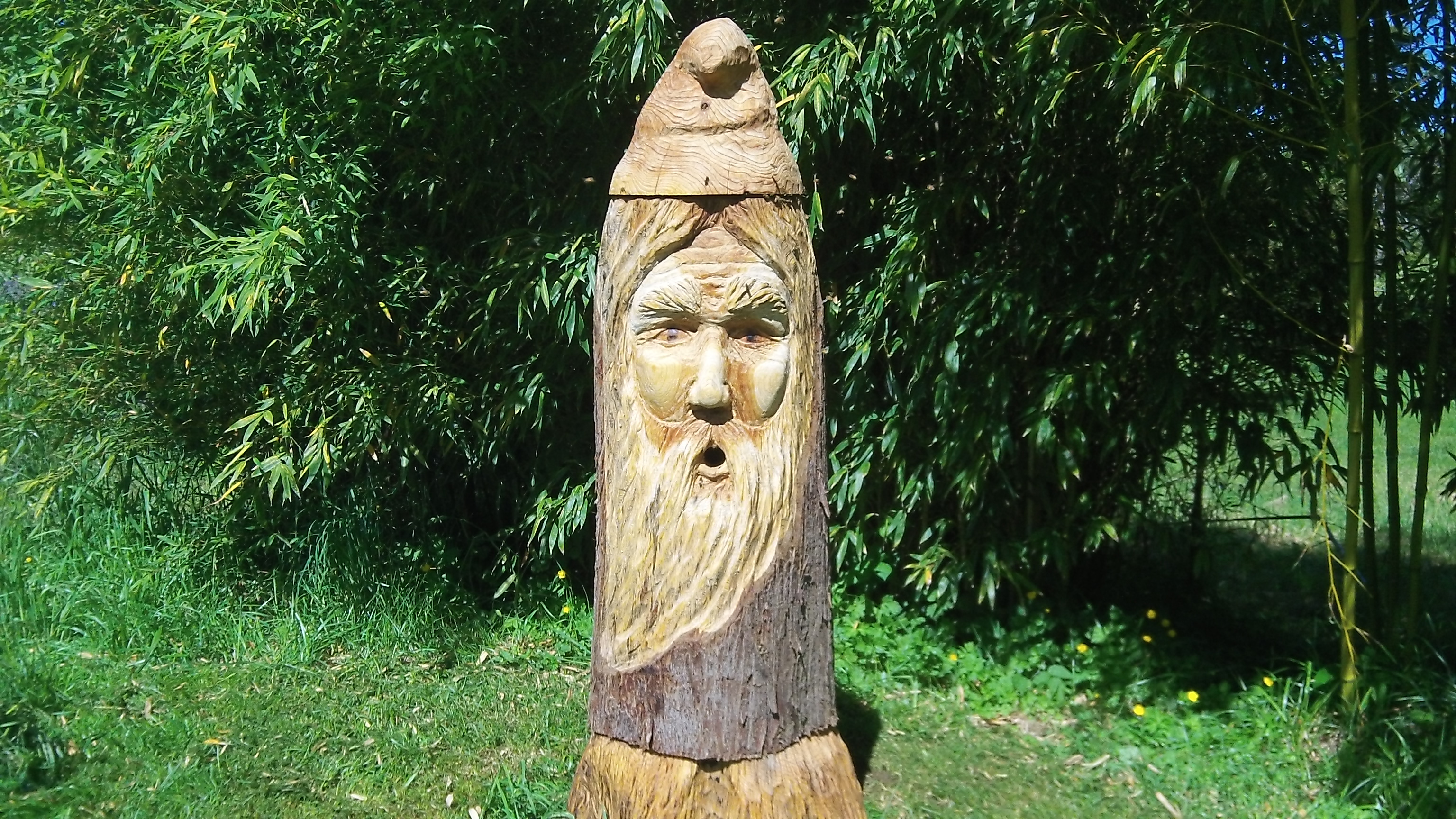
Bee-atrice is looking good. Okay, the yard sign on her head isn’t too flattering, but it was all I could come up with in a hurry. We will fix that later.
When Bee-atrice became aware of her beauty she developed a real attitude. Her long golden hair, the color of the setting sun, a beauty mark on her face, and the fact that she was carved out of a hard wood by a professional wood carver made her vain. In conversations, the iPod would always be pulled out to show how she was carved. She would tell people. “I’m special. I was carved out of myrtlewood which only grows on the Oregon Coast and in the Holy Land.” We told her the brochures weren’t exactly true, myrtlewood also grew along the California Coast, and the kind in the Holy Land was a different variety. She would counter with the fact that “Myrtlewood” is the only wood still in use as a base “metal” for legal tender, “besides my mouth was carved ‘open’ so I can sing.” I think she fashioned herself as some kind of diva or something.
We decided to place her near Bee Beard. We just figured they’d hit it off because they had so much in common. One look at Bee Beard and she realized her open mouth was carved to let bees pass in and out. She was shocked and humiliated…stomped off in a huff. I couldn’t figure it out. Bee Beard has never complained about anything, not even once. He’s been through a whole year of wind, rain, and bees. It’s true we’ve never smoked him or bothered him much, I just figured Bee-atrice would be the same. Not so…“I don’t want to be next to him and I don’t like bamboo.It attracts wasps. “ We ended up promising her a one of a kind Easter hat and face her into the sun so it could shine on her beautiful golden hair. She gave in to the flattery, but there was no way she would agree to be near Bee Beard or even to look at him.
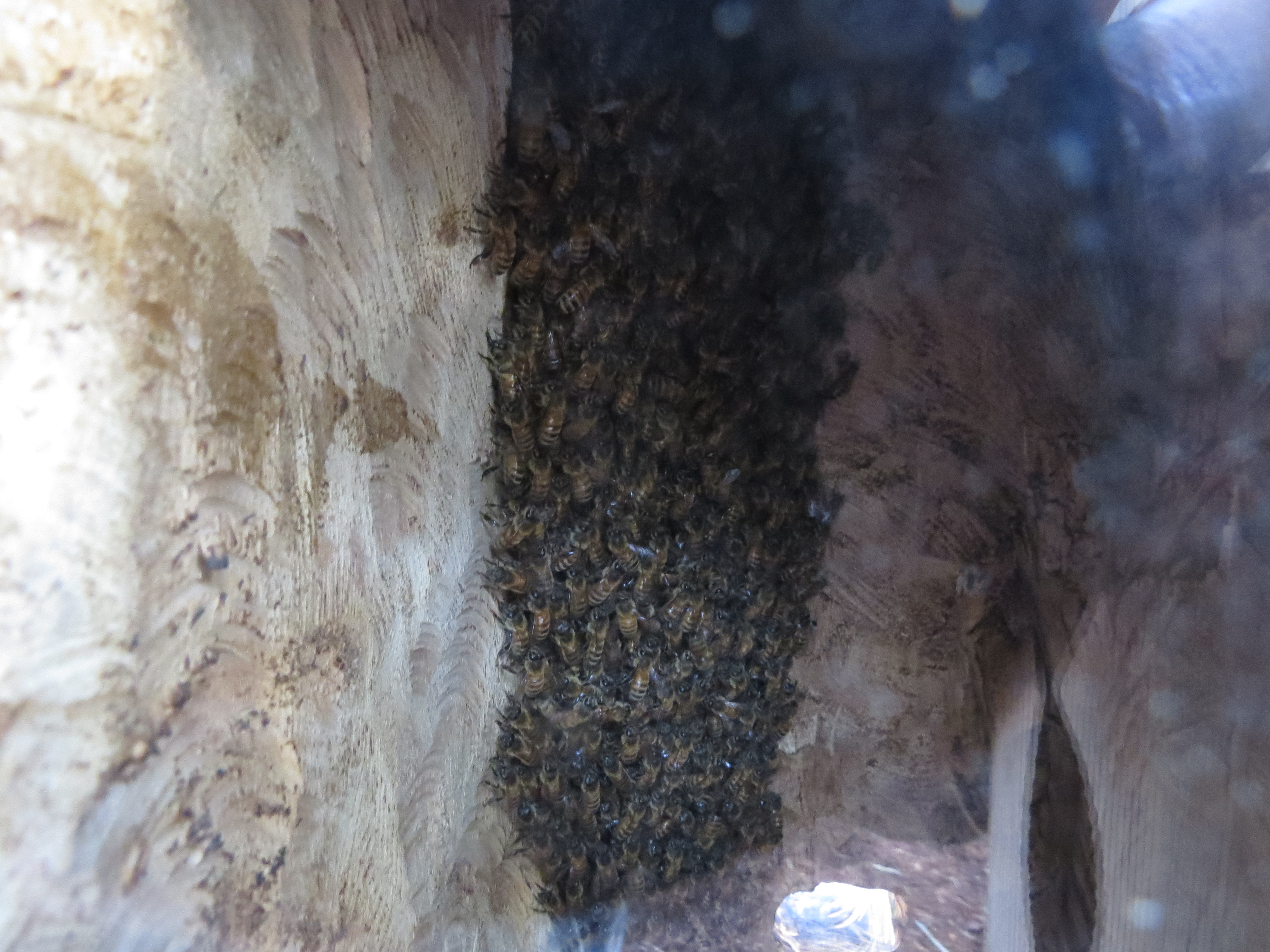
The bees first couple of nights were spent here in the corner of log.
I’ve always wanted to note the temperature of the hive.
I’m surprised the temp is only 83 F (28 C) I wish I could see inside better, but I’ll have to wait until the combs are visible in the observation window.
A short video show bees already bringing in pollen on Day 6
This tight #8 screen will hold the burlap. The wood shavings and sawdust will fill it up.
Quilt box with burlap
Filled with myrtlewood shavings and sawdust.
Scorching inside of hive cavity…mouth entrance can be seen below
Myrtle leaves and sawdust are for the bottom of the hive.
Bees live in Myrtle Trees. The wood smells good and the leaves are like bay leaves…you can use them in place of bay leaves, but in smaller quantities. According to wikipedia,the leaf has been used as a cure for headache, toothache, and earache—though the volatile oils in the leaves may also cause headache.
I used cedar sawdust in the bottom of my first log hive. Phil Chandler of biobees.com was discussing the importance of hive ecosystem…“that it might be beneficial to have wood shavings and possibly dry leaves in the hope of stimulating an ecosystem similar to the natural environment where perhaps earwigs and woodlice etc. would live below the bees and maybe eat any falling varroa.” Since my first log hive survived the winter intact, without me feeding or medicating them, I think I’ll try the sawdust option again. This time I’ll add myrtle leaves to the mix.
I’ve been saving the last of the old comb in the freezer. It’s time has come.
The plan is to remove the bars, drop the swarm in, then replace bars
Fence post anchor…two were planned, but the swarm came first.
We left town to visit the grandkids. It was just a day trip, but when we got back a little package was waiting for us…hanging from a tree.
Because of the angle the picture was taken, this swarm looks bigger than it is. Tree hive in background.
Thankfully I was prepared. All that I had to do as it was getting dark was to snip the branch with a bucket under it and carry it to the log…remove the top bars and drop the swarm into the log. This is swarm #5 from Bee Beard Log hive. It probably does not have a mated queen, but the weather looks good for the next 7-10 days, so it should be a safe bet that the queen will be able to fly out.
I thought I had some time to finish my second log hive before another swarm would take place. Not so. On April 18 two more swarms came out. These are cast swarms…more than likely the queen has not been mated yet. What to do? I had already used my back-up Warre and there were some work responsibilities staring me in the face…deadlines that couldn’t be put off any longer because “people are depending on you, Pat!” Okay, I’ll get the deadlines done first and get the bees figured out in the morning…it rained all night. My wife suggested I adapt a bait box. Last year after reading McCartney Taylor’s book on swarm bait hives, I had built nine swarm bait boxes and placed them in different spots hoping to attract a swarm. I was successful in two of them. One I gave away and lucky number 7 went into my new log hive.
After some initial resistance, I realized she had a good idea. The box is already built. I just need to add some Warre length top bars…it’s also a good size of 40 liters as recommended by Tom Seeley in his book “Honeybee Democracy.”
First job is to wax up some top bars…
Painted melted wax on top bars
Three waxed top bars installed into former swarm bait box after scorching the inside.
The above picture shows only three top bars. I added a total of 12 because I wasn’t sure when I’d get another Warre and at the time I wanted to be able to add these bees to my next log hive if I ever get it done. I also tapped some panel nails in to keep the bars from sliding when I tilt hive with bees into the tree. The bars have a slot for the nails, so they will lift out easily.
I like the idea of a ‘quilt box,’ so I cut another bait hive down to make one.
Hardware cloth on the bottom keeps the burlap ‘quilt’ from getting glued to the bars. That way the sawdust won’t spill into the brood box.
I drilled several holes into the quilt box covering them with screen. That way the hive can breathe and keep the hive scent. I used myrtlewood sawdust for two reasons…feral bees live in myrtlewood trees and I had a lot of it left over from hollowing out my next log hive. Actually some of my bees came from a feral hive in a myrtlewood tree last year.
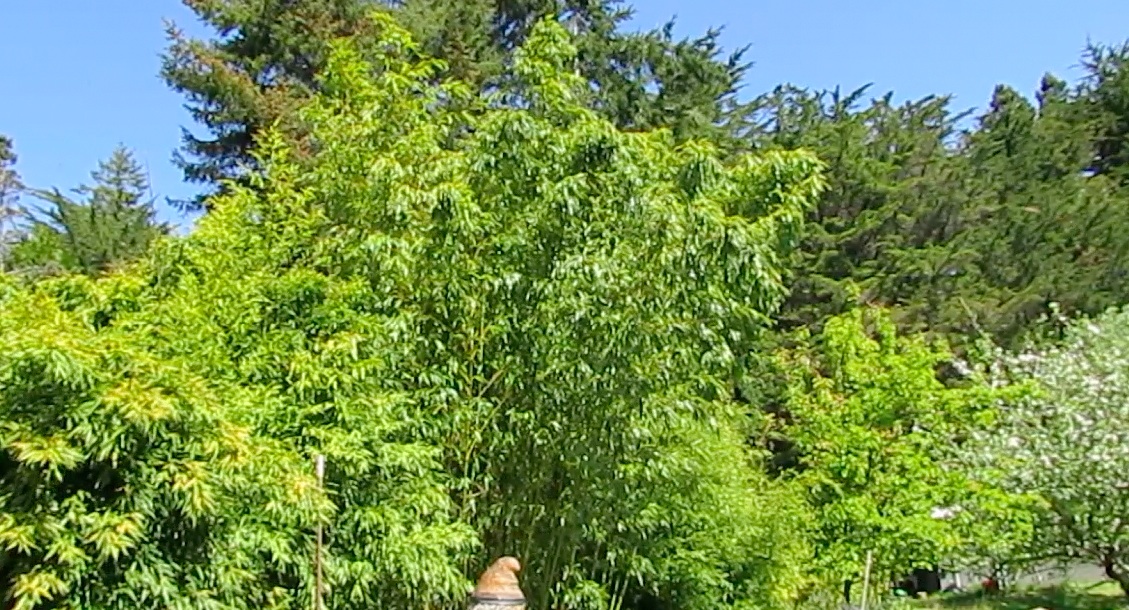
I’m beginning to think bamboo is the ideal swarm catcher…this is the fourth swarm to land in it.
After bending branches and snipping them, we managed to get the majority of bees into the box.
This is what we were waiting for…Bee Beard’s Prime Swarm, but it was waaay out of reach
When we started keeping bees we read that a healthy hive will swarm, at least once every year. Our goal was to get through the winter without feeding, medicating, or miticiding. The swarm would be our sign of success. On a warm day March 30th, that’s what happened. We heard the loud buzzing, came out to witness the bees heading up to the top of a nearby spruce tree. I even tried ‘tanging,’ banging a spoon on a pan to create noise so they wouldn’t go far and would form near the ground. I was wildly unsuccessful. This would have been the swarm to get, but it was clearly out of reach.
Swarm #2, April 17 is within reach
Swarm number 2 is withing reach, but the 2nd log hive isn’t ready for it yet…I’ll have to stick it into the ‘back-up Warre.”
Let’s try out this bamboo swarm catcher so I won’t have to use a ladder
Well I ended up using a ladder to cut the bamboo and let the swarm drop into the white sail cloth basket.
My wife noticed some bees on the ladder…we brought it near the hive for them to crawl in, but looking closer, we noticed they were fanning. The queen must be here. We gathered them up and placed them into the hive.
After the bees were dropped in, we added the top bars with comb attached…hoping they would stay attached once I hung them in the hive.
Top bars with old comb melted on. Quilt box in background
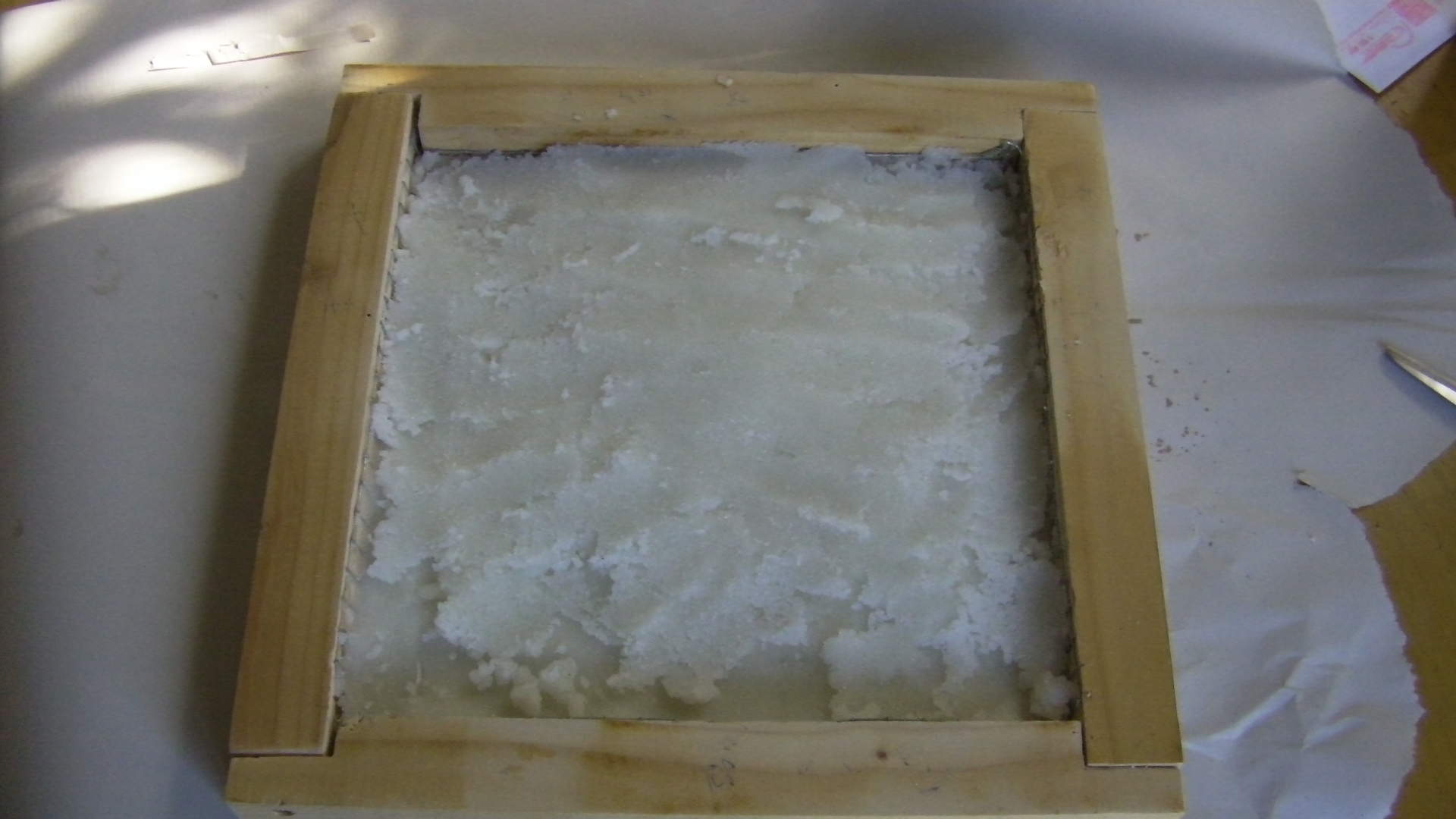
I had already built the sugar frame shown below.
1/2 inch hardware cloth will hold up sugar if using newsprint.
Premixed sugar laying on a couple sheets of blank newsprint for the Warre hive #2
We slid the sugar frame into place.
Sliding the sugar frame into place
Next comes the quilt box.
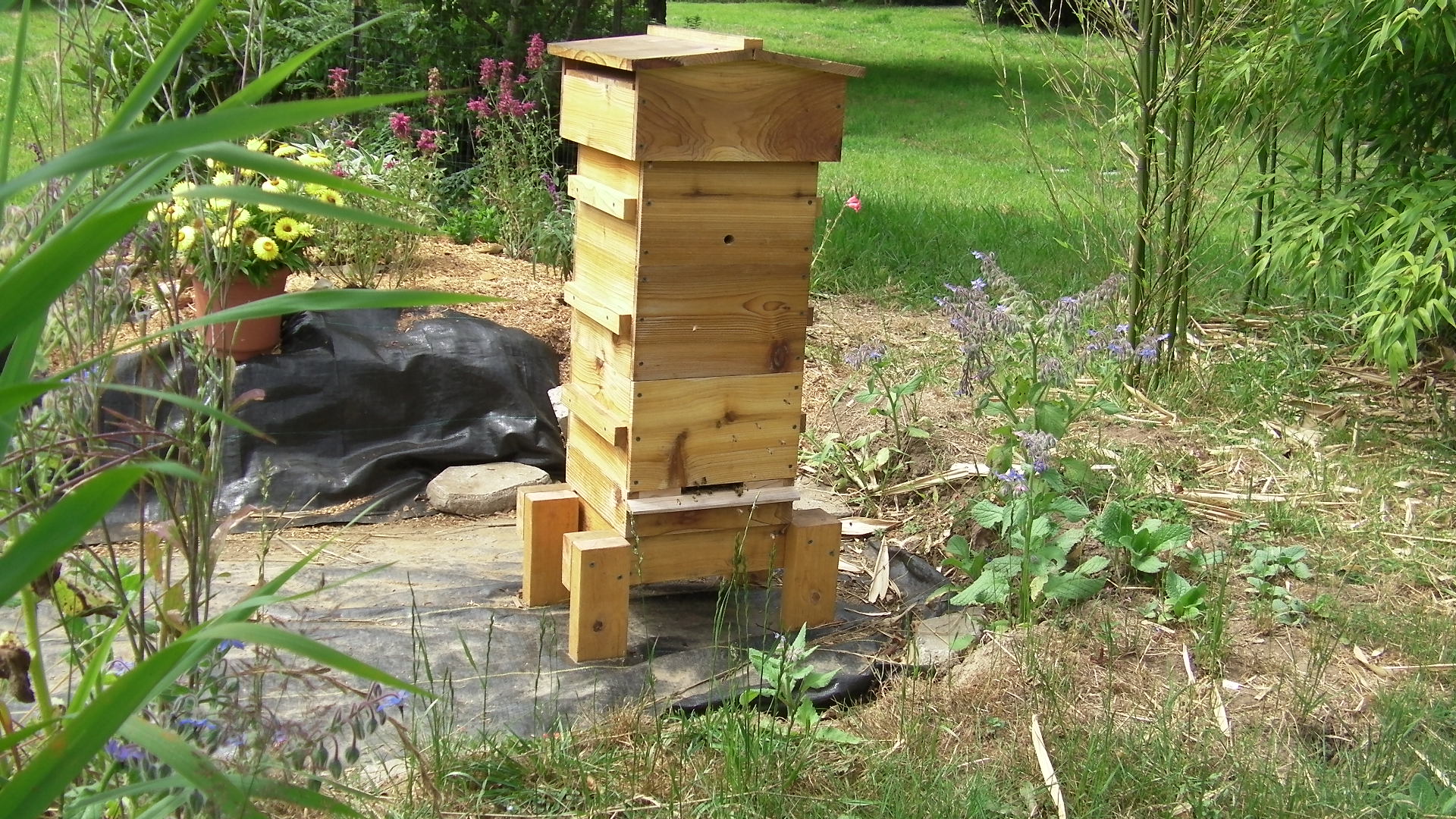
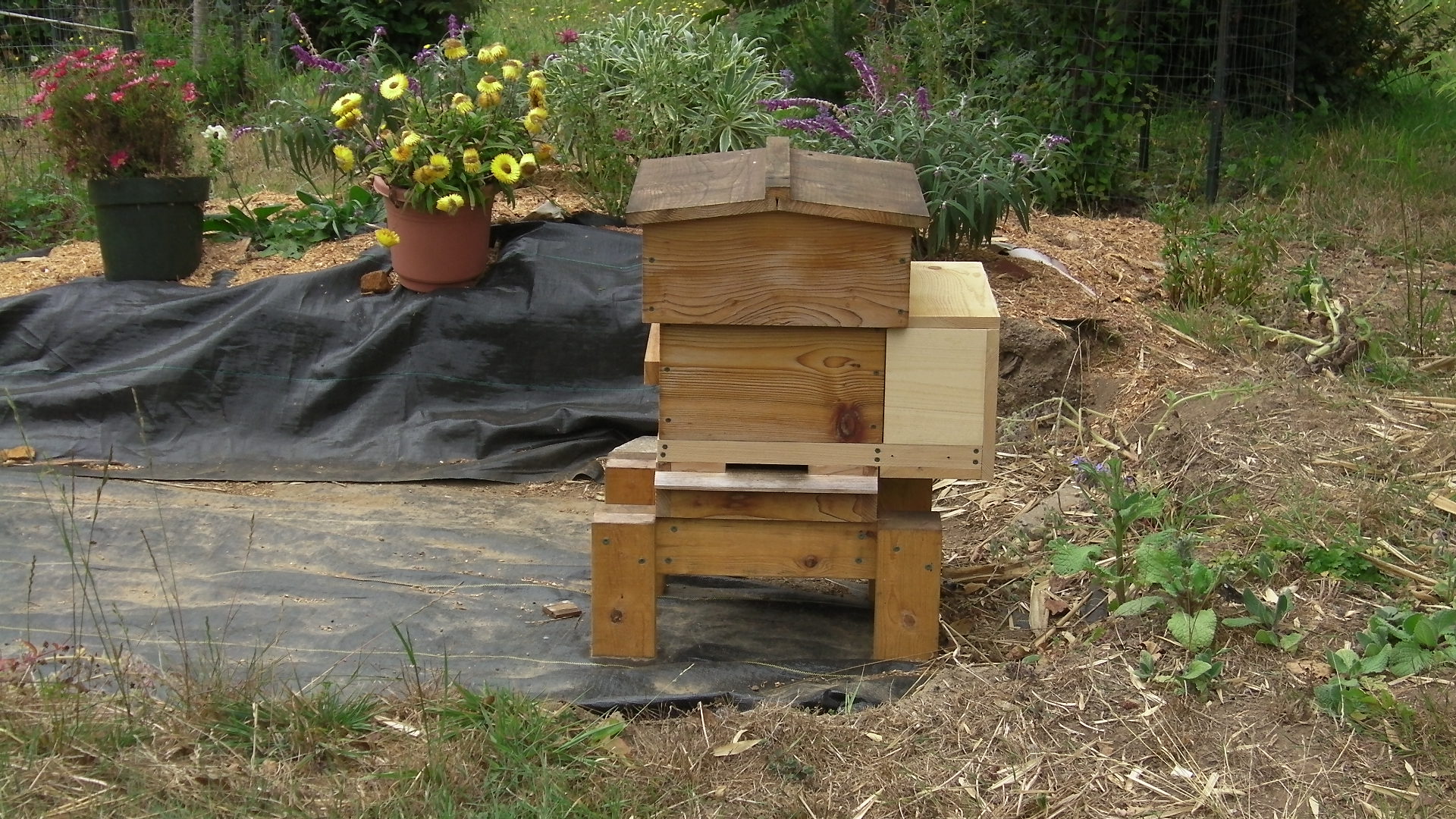
Top it off with the roof. Matt Reed of beethinking.com, you made a nice hive kit.
Bees flying orientation flights.
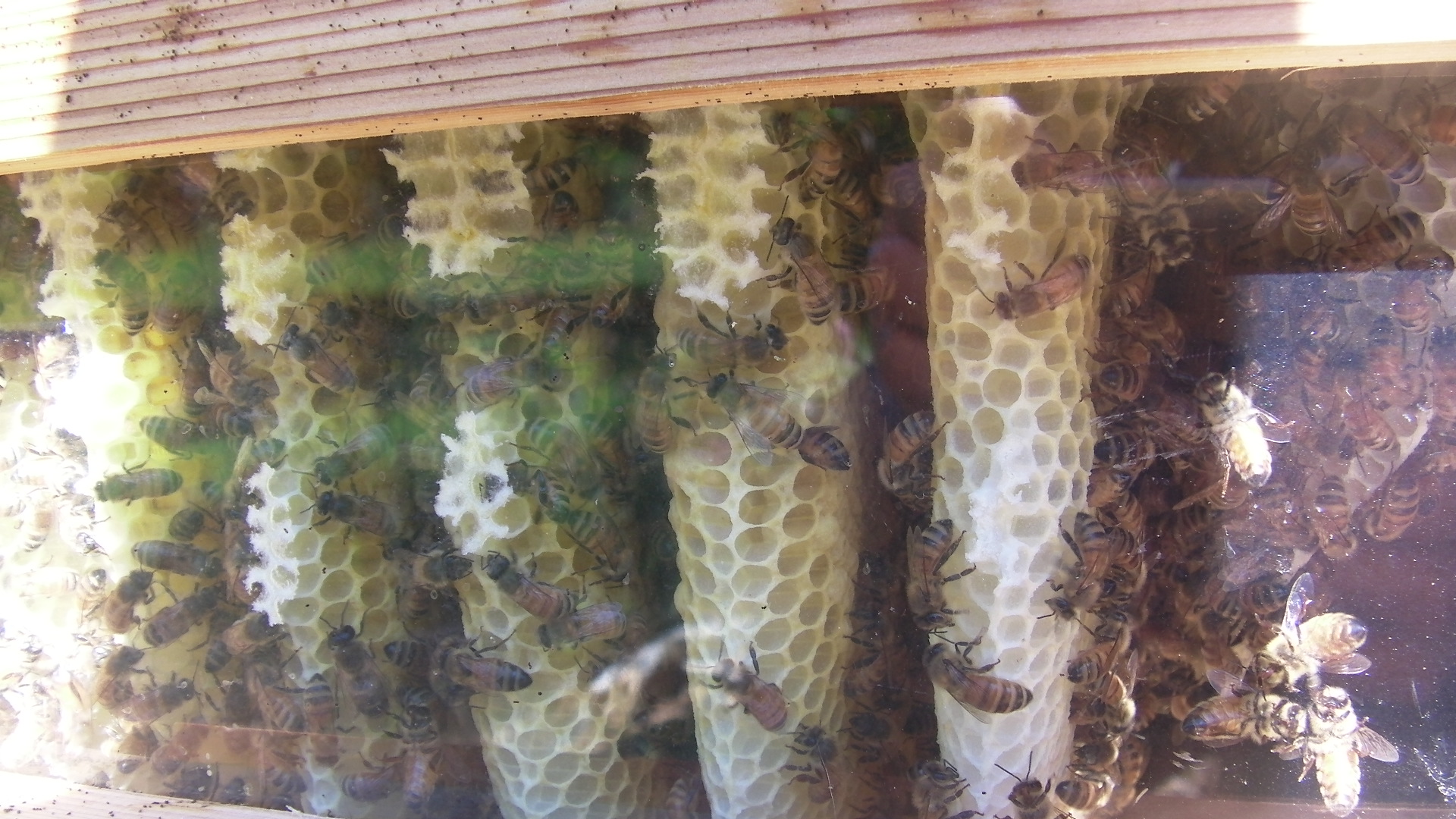
April 23…through the observation window we can watch the bees working. No new natural comb can be seen yet, but it won’t be long.
Sandi works for a company that orders printing from me all the time. Whenever she would call, I’d bore her with my excitement about bees. At that point I didn’t have any bees and was building swarm bait hives, wondering where I could place them, and in general being hyper about getting some. Eventually, I got some bees. So when Sandi called in late June to say she had a swarm on her property and didn’t want them because she was allergic, I felt obligated to get them. She had suffered through my bee-brain ramblings, so I better come through. I was still smarting from the feral bee hive transfer to Bee Beard Log Hive and didn’t want a third hive, but there was a couple whose daughter had built them a top bar hive that needed bees. I called them and yes, they still wanted bees.
I’m sure there are better ways to capture a swarm. These bees were snug against the trunk of a small fir tree. I couldn’t bend the tree over the bucket to shake them in so I just sort of ‘brushed’ them into the bucket…watching for the bees to stick there rear ends up and fan the pheramone…”the queen is in the bucket.” Hearing the grandkids exclamations are priceless.
I don’t understand it. I got stung 25 times when transferring bees into Bee Beard and didn’t swell up as much as this time with only 5 stings!
Back in February, I listened to a podcast interview with Matt Reed of Beethinking.com. He talked about the Warre Hive. Now I didn’t really want to get into another type of hive, but it sounded so intriguing and easy to use, I decided to give it a try. I liked the idea that the boxes stacked in a vertical orientation, mimicking a hollow tree. It sounded like the most ‘natural’ type of hive that wasn’t actually a tree. I also liked Matt’s approach of not using any chemicals inside his hives. So I ordered a kit with observation windows and a screened bottom in case I wanted to do a mite count.
I didn’t want to order package bees because they might not be acclimated to the wet area we have on the Oregon Coast. I had passed up the ordering date and was nervously waiting for my bait hives to catch a swarm, but nothing was happening. Then I got the call about a swarm that had just formed about an hour ago. I threw everything into the car and was on my way.
A Swarm in a Bush…A made-in-heaven low swarm for my first experience.
A Swarm in a Bucket…I was able to cut branches and shake most of the bees into this 5 gallon bucket.
A Swarm in the Warre Transferring the swarm into the Warre was easy…tap the bucket on the ground once or twice, then pour into the hive. I replaced the bars on top, installed the quilt box and the roof.
Did I get the queen? Bees can be seen fanning the pheramone that the queen is ‘in the building’!
July 7, 2012 This shows how much natural comb they built in about 5 weeks. I wonder when they will start on the bottom box.
I anxiously wait. The bees don’t build into the bottom box. I consult the forums where suggestions are made to add an empty box overhead. “The bees don’t like having an empty space over them.” On July 23, 2012, I add a third box, this time on top.
After I drilled a 3/4″ hole for the bees in the top box, I waxed up some top bars and put the whole thing in place.
July 24, 2012. I like this…I can get a view through the observation window looking down at the occupied middle box or up to the top bars in the top box.
August 3, 2012 A view of the comb in the middle box…still no building in the top or bottom box.
August 20,2012 Looking into the Warre, plenty of bees, plenty of honey,..but they are STILL not building any comb in either the top or bottom box.
I consult the forums…”can a Warre get through the winter on only one box?” It’s getting late in the summer and my efforts to get them to build either on top or in the bottom box have been fruitless. The answers seem to imply I’m a reckless beekeeper if I don’t consider feeding them.
Partially built feeder box for Warre
After looking at the forums, I found the answer. Build a feeder that is accessible from the outside. If it becomes necessary to feed the bees I can do it without opening the hive up to the cold air. The hive is kept intact with no extra holes drilled into it for the sugar water.
I want to thank Colobeekeep for providing photos of how he built this.
Front view of feeder box on right side of Warre
Back view of feeder box on Warre
Lid open, no jar yet. Bees can access the sugar water, but not the feeder box. Bottle can be changed without opening the hive. It’s placed near the rear of the hive to discourage robbing.
I really DON’T want to resort to feeding them. From what I read, sugar raises the pH of the hive making it more susceptible to Nosema, but I also don’t want to lose this little hive. I definitely won’t use High Fructose Corn Syrup because it is made from GM corn which is treated with clothianidin, a systemic insecticide highly toxic to bees. I’ll pay close attention to the honey stores by looking through the observation window. If they get low I’ll be able to supply either 1:1 or 1:2 sugar water without opening the hive.
This short video looks into the Warre hive through the observation window (slight reflection issues) to see waggle dancing and daisy-chaining. The last frame shows the natural comb built as a result of the daisy-chain.
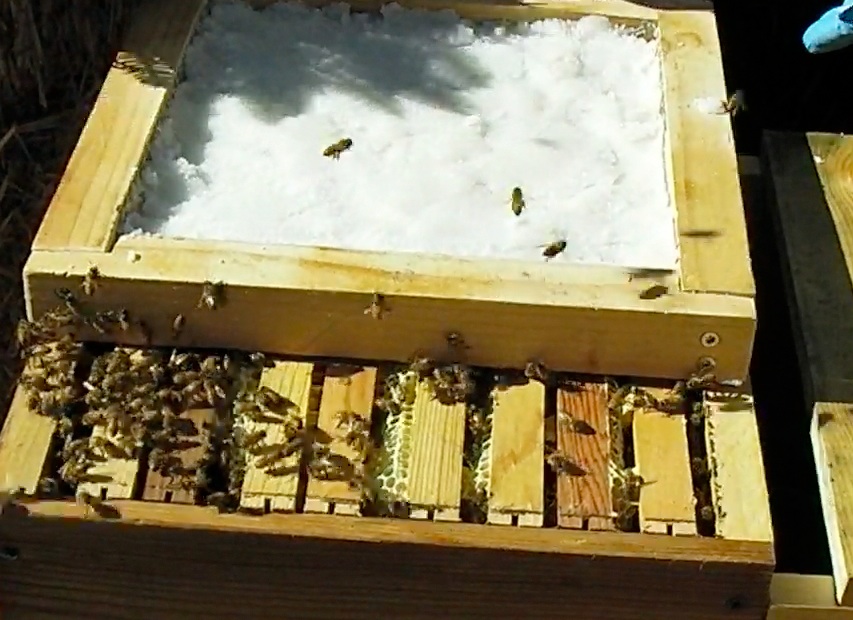
More Waffling…After going to the work of building the ‘side feeder,’ I observed the comments made about moisture in the hive. Well, I’m not going to say we live in a rain forest, but we do get buckets in the winter time. Should I worry about the moisture issues…yes. Okay, I’ll build an over-the-top ‘dry sugar’ feed frame.
This shows the sugar resting on the 1/2″ hardware cloth. After this photo was taken, I dumped out the sugar and inserted a layer of blank newsprint between the sugar and the wire. That should hold up the sugar so it won’t drop down into the hive…I hope.
Sugar pressed into frame ready to slide into place
Installing sugar feeder Oct. 25, 2012. This will let the bees go upward to access the sugar from within the cluster. Quilt box goes on top. Then I wrapped with red tape to seal the cracks.
When I checked with some coastal beekeepers at the bee meeting, they said they feed with sugar syrup, no problem. “Don’t you worry about the moisture issues?” “No.”
In anticipation of the wet stormy weather that the Oregon Coast is known for, I closed up some gaps on the log hive with a bicycle inner tube.
Bee Beard gets a headband to protect against the cold winter winds.
Bee Beard with headband as seen from side
Bee Beard as seen through the observation window 10-8-12. Bee-built tunnels provide access to the honey.
The large number of unfilled cells is a concern, but the bees are still packing pollen, so hopefully they will get filled with something.
This truck inner tube covers the gaps in the ‘wood plug’ that covers the observation window. It’s removable so I’ll be able to look through the window from time to time.
This log hive has exceeded my expectations for the summer. It has built up fast, didn’t swarm like my hive last year, (swarmed two months after I got it), and has out performed the Warre hive even though I got it going about the same time. Now for the real test…will it make it through the winter? I haven’t taken any honey from it, I’m not going to medicate or hang miticides, and I’m not going to feed it. It came from a natural living tree hive and made it through the winter last year without intervention so I feel it has a good chance. The only intervention I have given it is to peer through the window from time to time. If I get a swarm from it next year, I’ll count it as a success. Maybe I’ll have my next log hive set up in time.
This short video shows the progress of the swarm that was transferred from the bait hive to Bee Beard on June 2nd. Now after 7 weeks, viewing through the observation window, you can see the bottom of the bee cluster is below the level of the mouth entrance. Initially, bee beard would face southwest into the winter wind. For that reason, an alternate entrance was drilled towards the north rear. When we decided to locate Bee Beard facing east, that alternate entrance was plugged with tissue paper. To my surprise, the bees have just pulled out that tissue paper and you can see a bee flying out with a bit. In the slightly out of focus video through the observation window, you can see bees carrying out bits of paper. Also seen are bees carrying pollen from blackberries and St. John’s Wort…my bees won’t suffer from depression!
The creation of Bee Beard was influenced by many different people. Hal (The Story of Hal’s Bee Trees) was the main instigator. He started his first log hive around May or June 2011. I was impressed that a swarm had actually picked his log hive to live in. I liked his hands-off log hive credo…
“BEES WILL NOT BE MOVED, MEDICATED OR ROBBED OF HONEY
THE COLONY MAY SWARM AS DIRECTED BY NATURE”
I wanted to try the same thing, but not being retired I knew I wouldn’t be able to spend so much time hollowing it out. I looked up log hives on the web and came across Gaia Bees. I emailed Michael Thiele who gave me directions on hollowing out the log. It was about this time that a new beekeeping friend, Terry Kelly of Berkeley, a writer, top bar beekeeper, and mushroom log grower, started sending me packets of bee articles he liked. My log was partially hollowed out when another packet of articles came in the mail. The very first thing I saw were copies of Slovenian Bee Hive Art. Not only were there paintings but there was a face carved on the front of a hive that served as the entrance to the hive. The bees entered through the mouth, nose, and eyes into the hive. It took all of 10 seconds to decide I wanted to do something like that on my log hive.
I shared my idea of a wood carving with my wife, and she suggested I try the new chainsaw wood carver in town. I talked up the idea with Brian and Zada Vorwaller. He offered some suggestions and we came up with Bee Beard. His wife, Zada videotaped the carving and my son-in-law, Jim Montgomery edited, sped it up, and made it you-tube acceptable.
I wanted feral bees if possible, but commercial hives are placed in the bogs near me between late May into mid July. I knew I had to populate the hives before the bog bees got interested. How to get feral bees became an obsession. After reading McCartney Taylor’s book on Swarm Traps and Bait Hives, I built 9 bait hives. Hung them mostly on private property. I want to thank Bernhard Zaunreiter (see Swarm Trapping 2012) for posting a photographic “how-to prepare bait hives” post on the biobee.com forum,” and answering my bait hive questions.
I finally was rewarded after placing two boxes on or near feral bee hive trees. On one of the weekly inspections, both had caught swarms. This bottom tree supplied Bee Beard.
The transfer of bees from bait hive to Bee Beard was quite an adventure, but the bees are settling in now and the itching is subsiding.
I want to express my appreciation to Phil Chandler for creating biobees.com forum. I’ve got so much to learn and this is a very friendly, positive and informative place to do that. Thanks to those stalwart friends who gave me encouragement during my dark days of no bees, when I started regretting not ordering package bees and despairing that I wouldn’t get ANY bees for another year. Mobeek, Bugscouter, KittyLabyrinth, newwoman, baz, and jaywoo kept me going.
This short video shows the bees entering through the hat. I left a little gap in the quilt box to make it easier to pull out. I think that’s where they are going. A few enter through the mouth entrance. I’m hoping when the comb gets built down that far, they will use the mouth entrance more.
I noticed the bamboo is shading the hive too much in the afternoon…the Warre Hive, on the south side of the bamboo works 1-2 hours longer, so I’m going to trim back the bamboo to get more sun in late afternoon. After all, that could spell the difference between making it, or not making it.




















 Adventures in Natural Beekeeping