Archive for the ‘Log hives’ Category

Mid October...the bees are bringing in baskets loaded with orange pollen.

Mid October…the bees are bringing in baskets loaded with orange pollen.

When I saw how much pollen was coming into Bee Beard log hive, I wanted to find out where it was coming from.   I knew it had to be ivy  because that’s the only thing in bloom this late.  I set out to prove my theory.

I went to my known ivy patches, which just happened to be in the sun…perfect.

Mid October...An American Painted Lady (I think)

Mid October…An American Painted Lady (I think)

I didn’t see any bees at this first place, but this butterfly posed for me long enough to get a short video.  She is sipping nectar through her long proboscis which acts like a flexible straw.

This looks like a bee, but the eyes are different.

This looks like a bee, but the eyes are different.  It’s a fly who is grooming herself in the sun.  The video shows her rubbing her front legs and using them to scrape the pollen off the top of her body.

I see Barbara out walking her dogs.  She knows I’m obsessive about bees and mentions an ivy covered wall that was buzzing with bees.  I head over.
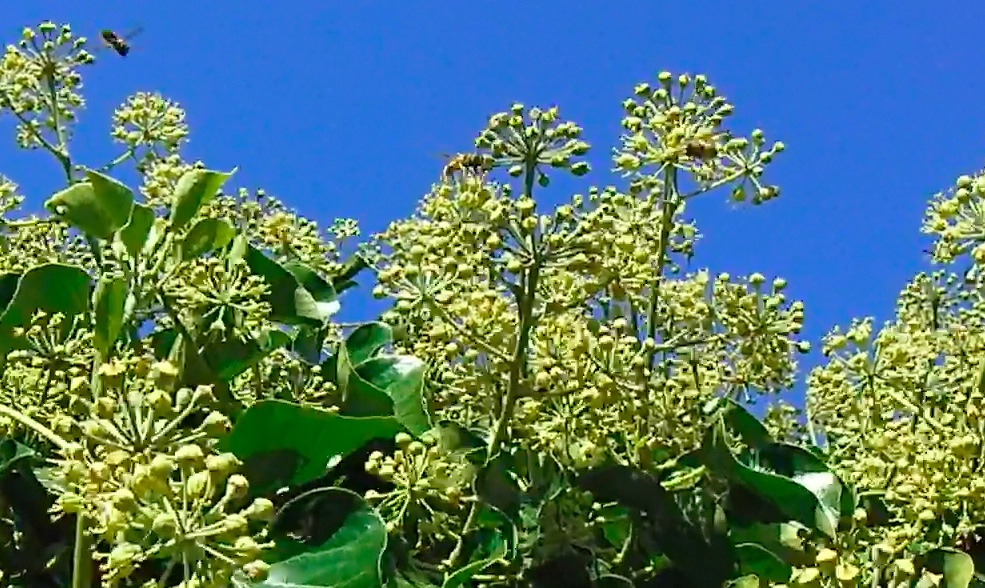
This ivy wall was buzzing with bees...I'm going to get lots of opportunities to shoot bee videos.

This ivy wall was buzzing with bees…I’m going to get lots of opportunities to shoot bee videos.

I knew something was weird with this when her proboscis touched the top of the stamen and rubbed it.

I knew something was weird with this when her proboscis touched the top anther and rubbed it.  It’s another fly that resembles a bee.
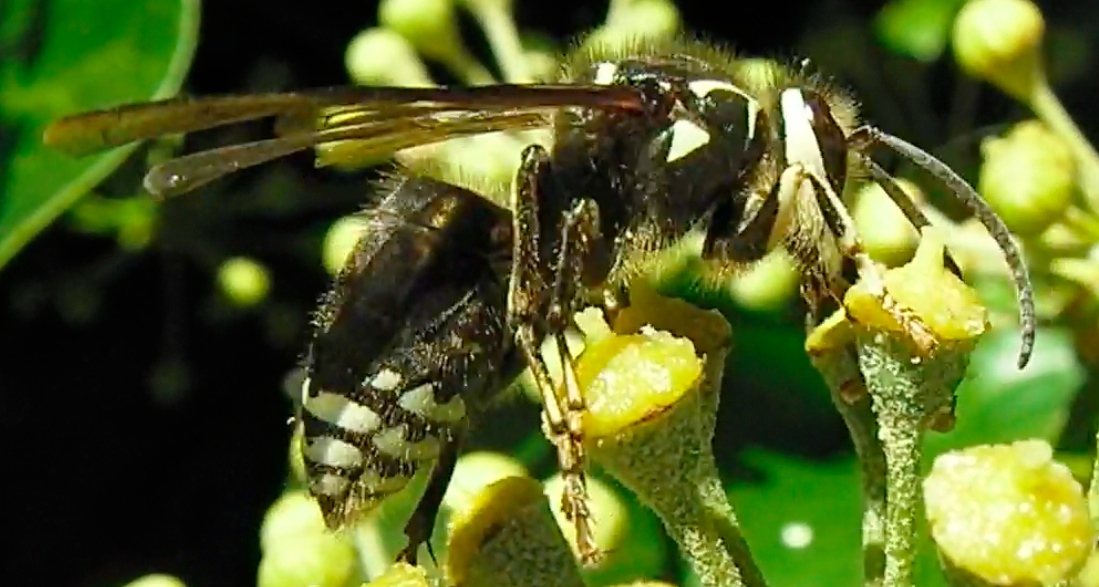
This looks like a white-trimmed black wasp, but it's the wrong habitat for it.  Can anyone ID it for sure?

This looks like a white-trimmed black wasp, but it’s the wrong habitat for it. Can anyone ID it for sure?  It’s another ‘buzzing insect’ working the ivy.

Celeste A. S. Mazzacano, Ph. D.
Staff Scientist / Aquatic Conservation Director, Xerces Society Project Coordinator, Migratory Dragonfly Partnership

Celeste replied to my request to for an identification of this wasp…
Pat, I am pretty sure that what you have are some lovely shots of the  White-faced Hornet (Vespula maculata, also known as Dolichovespula maculata,  not sure which name is the most current).  The markings are quite distinctive, especially around the eyes and thorax, and this is the only West Coast wasp species that is white and black–all the others are yellow and black.  These dudes are apparently aggressive little stingers, and the adults are predatory on small invertebrates, so I don’t think they’d be more than incidental pollinators.  They make above-ground nests out of chewed wood pulp, but a colony only lasts for one year–they die off over the winter, except for females that mate at the end of summer and start new colonies the following spring.  These are nice photos!     Thanks, Celeste.
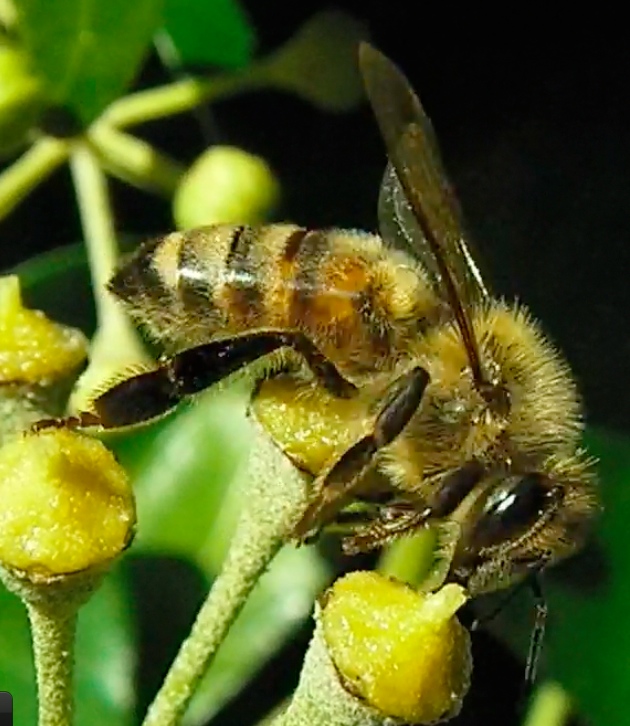
Finally I see an actual honeybee who is sipping nectar, but no pollen is evident.
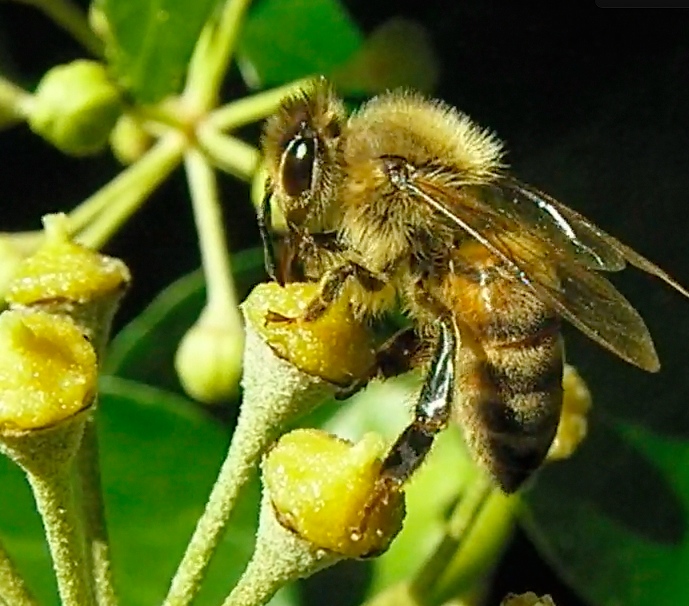
Finally I see an actual honeybee who is sipping nectar, but no pollen is evident.

Another look, but no pollen is visible.
Another look, but no pollen is visible.

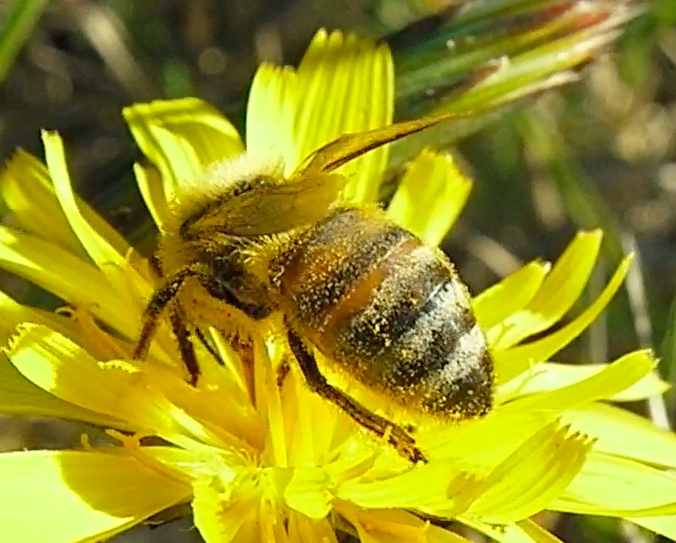
I spot a bee on a dandelion, pollen sprinkled on her abdomen.  A close look revealed none in her pollen baskets.

I spot a bee on a dandelion, pollen sprinkled on her abdomen. A close look revealed none in her pollen baskets.

I can see I was mistaken about the pollen going into my hives.  It can’t be ivy just yet…not sure what it is, but I’ll keep looking.

Important facts about ivy

Removing English Ivy from trees

Patricia talks about the importance of ivy as a nectar source for insects late in the year.

Read Full Post »

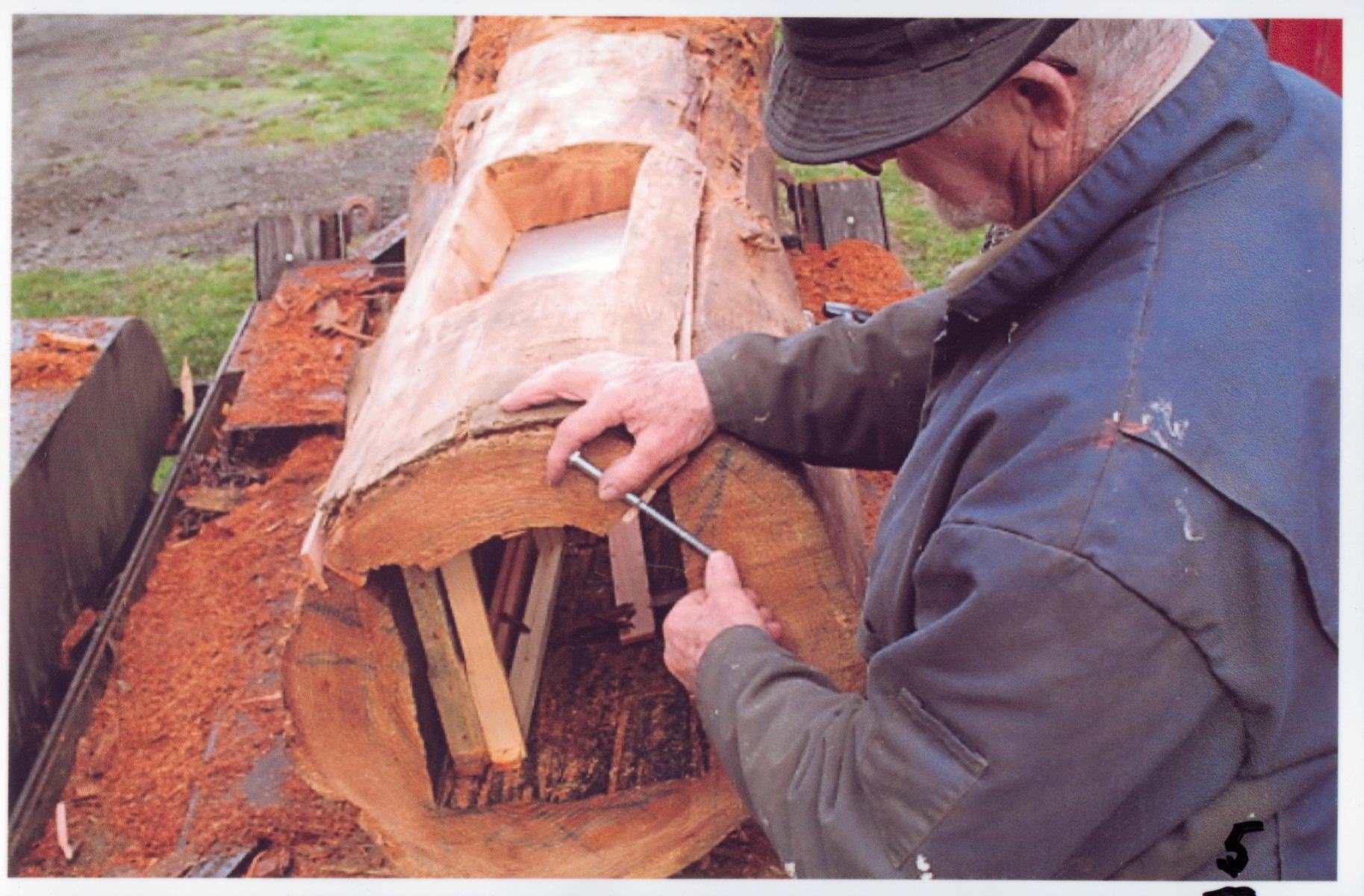
Now to get the observation window panel in place.

Early 2012…The foundation is in place, now Hal will fit the window panel on.

Measuring the bolts

Measuring the bolts

Fitting the window plug.

Fitting the window plug.

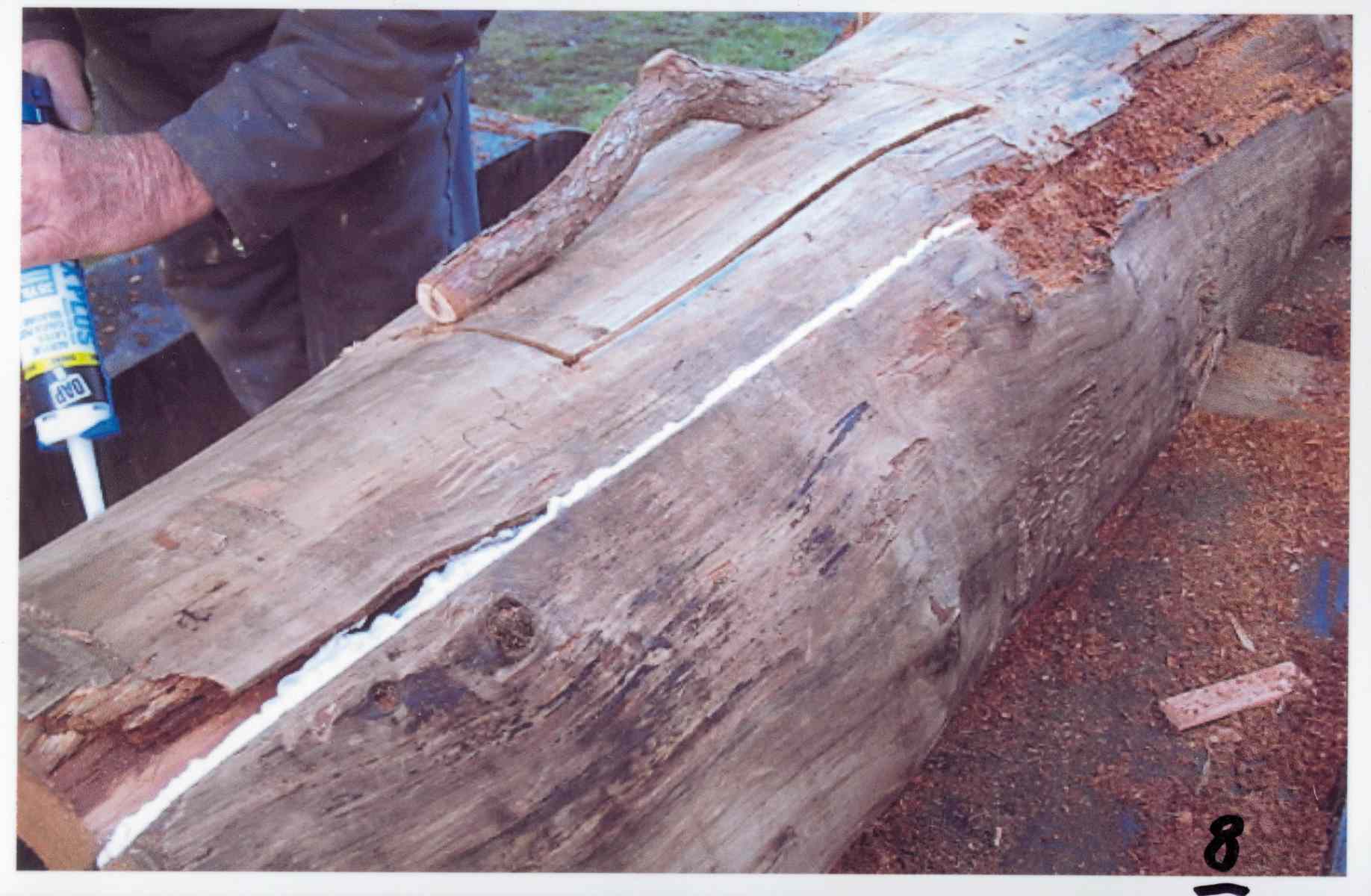
Hope this caulk lasts for a while.

Sealing up the cracks.

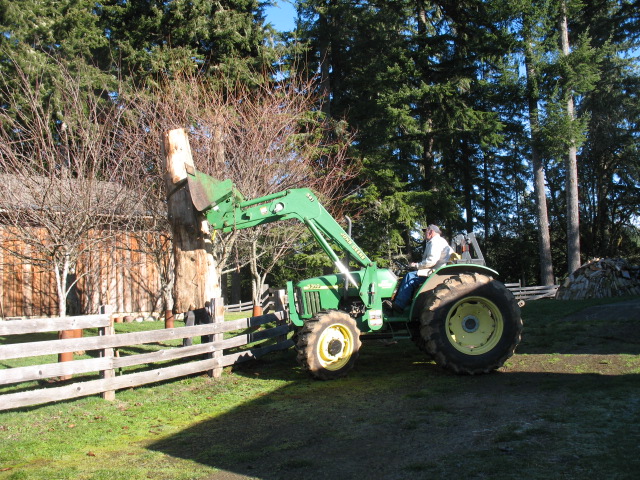
What do you use to lift a large log over fence?  A large tractor of course.  LG demonstrates how to do it without smashing your fence.

What do you use to lift a large log over a fence? A large tractor of course. LG demonstrates how to do it without smashing your fence.

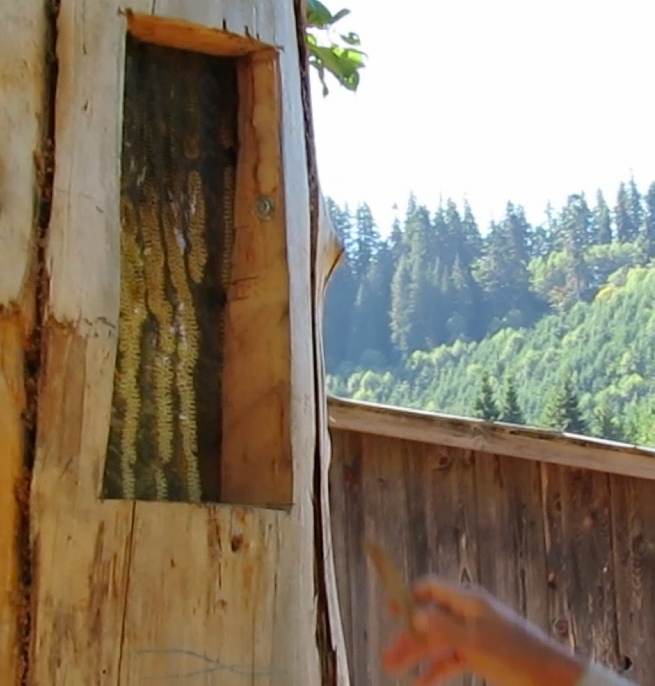
August 18, 2013 Log hive #2 built by Hal, owned by LG, is doing very well

August 18, 2013 Log hive #2 built by Hal, owned by LG, is doing very well

Log Hive #2 with lots of beautiful honey comb

Log Hive #2 with lots of beautiful honey comb

While visiting the 113 year old Gearhart ranch last week I had the occasion to ask LG, (the owner of the log hive) if he would show us the #2 log hive that Hal built for him last year.

The Story of Hal’s Bee Trees

Hal’s #3, #4, #5 Tall hives

Read Full Post »

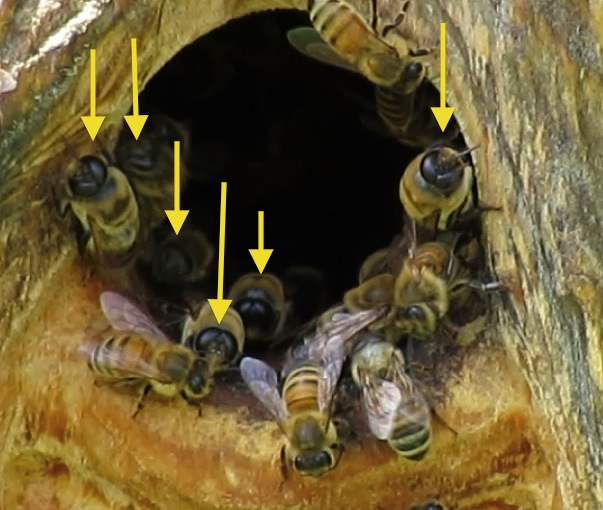
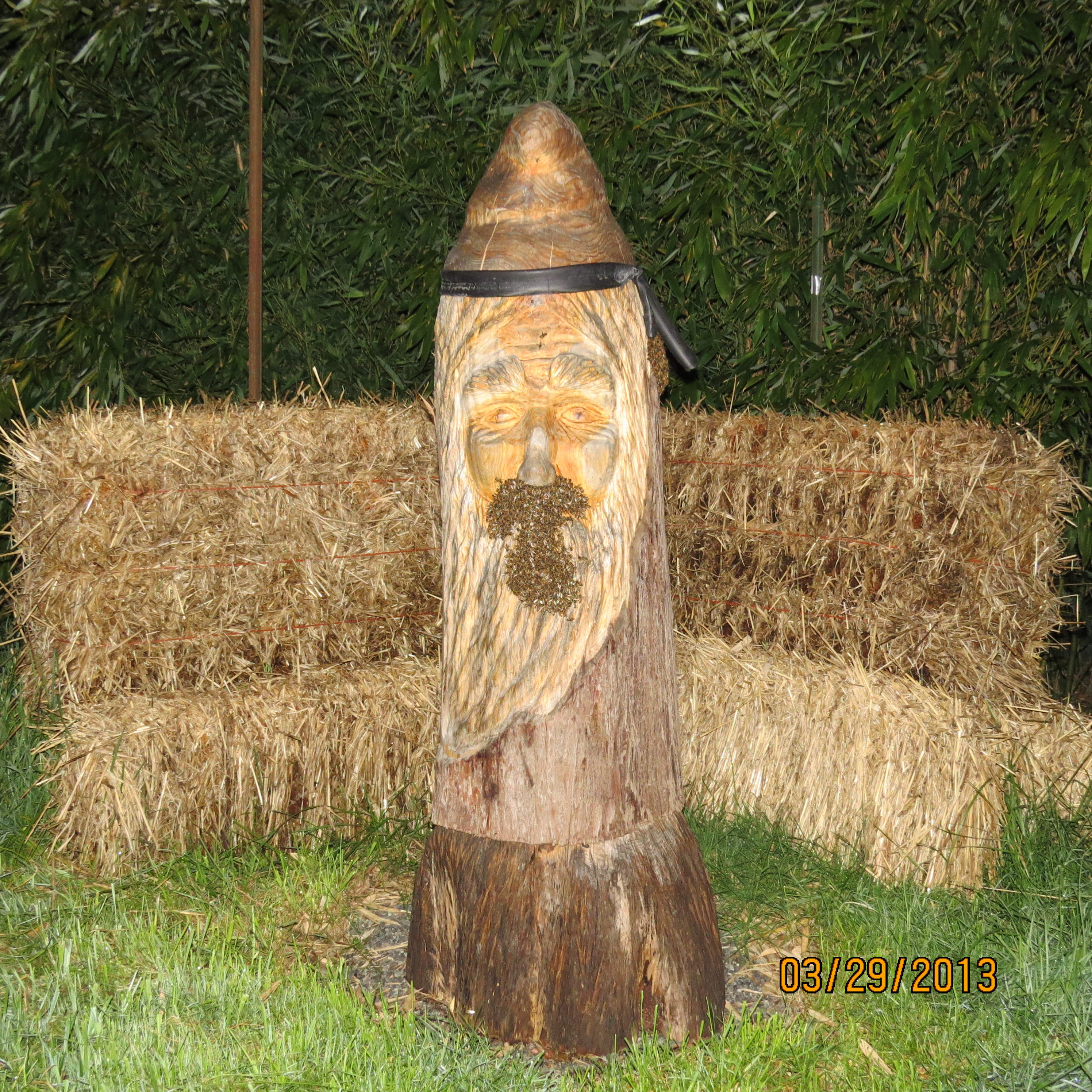
Bee Beard...August 1, 2013.  The bees always fly around at the entrance between 1:30 and 3:30.  I'm not sure why, the outside temperature is only 68 F (15C)

Bee Beard…August 1, 2013. The bees always fly around at the entrance between 1:30 and 3:30. I’m not sure why, the outside temperature is only 68 F (15C)

After it threw six swarms, I wondered if Bee Beard had anything left.  Yes, there were bees but was there a laying queen?  Then in the beginning of April,  I started watching in horror as drones were being tossed out of the entrance.  Drones with reddish colored eyes and ‘chewed up’ wings.  I checked the bee literature and learned that I was looking at a good example of “Deformed Wing Virus,” thought to be caused by the dreaded varroa mite.

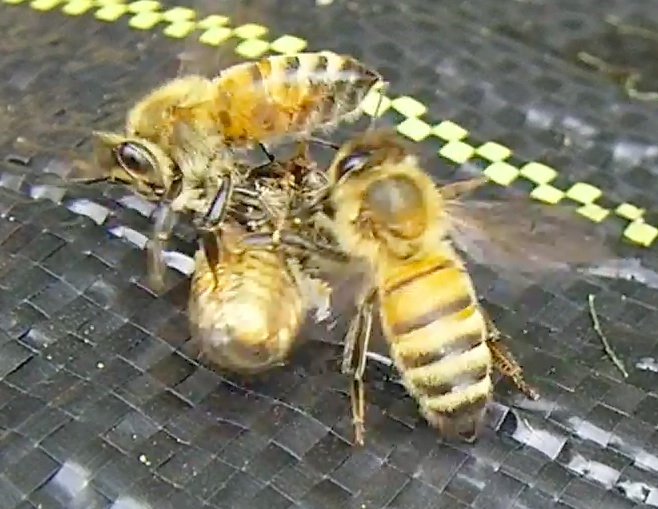
Two bees evicting one with Deformed Wing Virus

April 1, 2013…I was filming the bees at the entrance when I heard a thump on the landscape cloth. Two bees were evicting one with Deformed Wing Virus

It started in the beginning of April and continued through the end of the month.  Then came Drone Awareness Month.  I thought for sure, this would be the end of the hive because I had a “laying worker.”

April 25, 2013...SIX DRONES visible.  I have never seen so many drones at the entrance.

April 25, 2013…SIX DRONES visible. I have never seen so many drones at the entrance.

You can notice these bees because of their eyes.  The tops of their eyes meet in the middle.  Also drones are big.  In the video you’ll notice how much bigger they are then the worker bees.  I wasn’t worried about their size however, I was worried there was no queen.  For this many drones in one place, it meant (to me) only one thing…a laying worker.  If there’s no fertilized queen (possibly because of all the swarms) then sometimes a worker bee will start to lay.  If you inspect the combs, you’ll see the eggs laid on the side of the cell or multiple eggs in an individual cell…the sign of a laying worker (or more than one)   Workers are not fertile and can only lay drones.  If they are only laying drones, the colony will die out, because drones don’t work.  Since I didn’t want to open the hive and intervene,  I was going have to sweat it out.

August 4, 2013...I see lots of bee activity and pollen going in.  Is it possible my fears were unfounded?

August 4, 2013…I see lots of bee activity and pollen going in. Is it possible my fears were unfounded?

Bee Beard Log Hive is an experiment in what happens with no intervention.  I don’t medicate, miticide, or treat the bees with anything.  That includes essential oils and powdered sugar.  I don’t take any honey.  These bees came from a myrtlewood tree last June.  They’ve never even been smoked.  We grow many bee-loving flowers, but I know that bees also go elsewhere for foraging.  Is it possible the Varroa mite and deformed wing virus are still around?  Of course…but as long as the bees can adapt, that’s as much as anyone can want.  I guess I’ll know more by next spring, but right now they look good.

Bee Beard looked a little sharper last year when it finally got some bees.

Read Full Post »

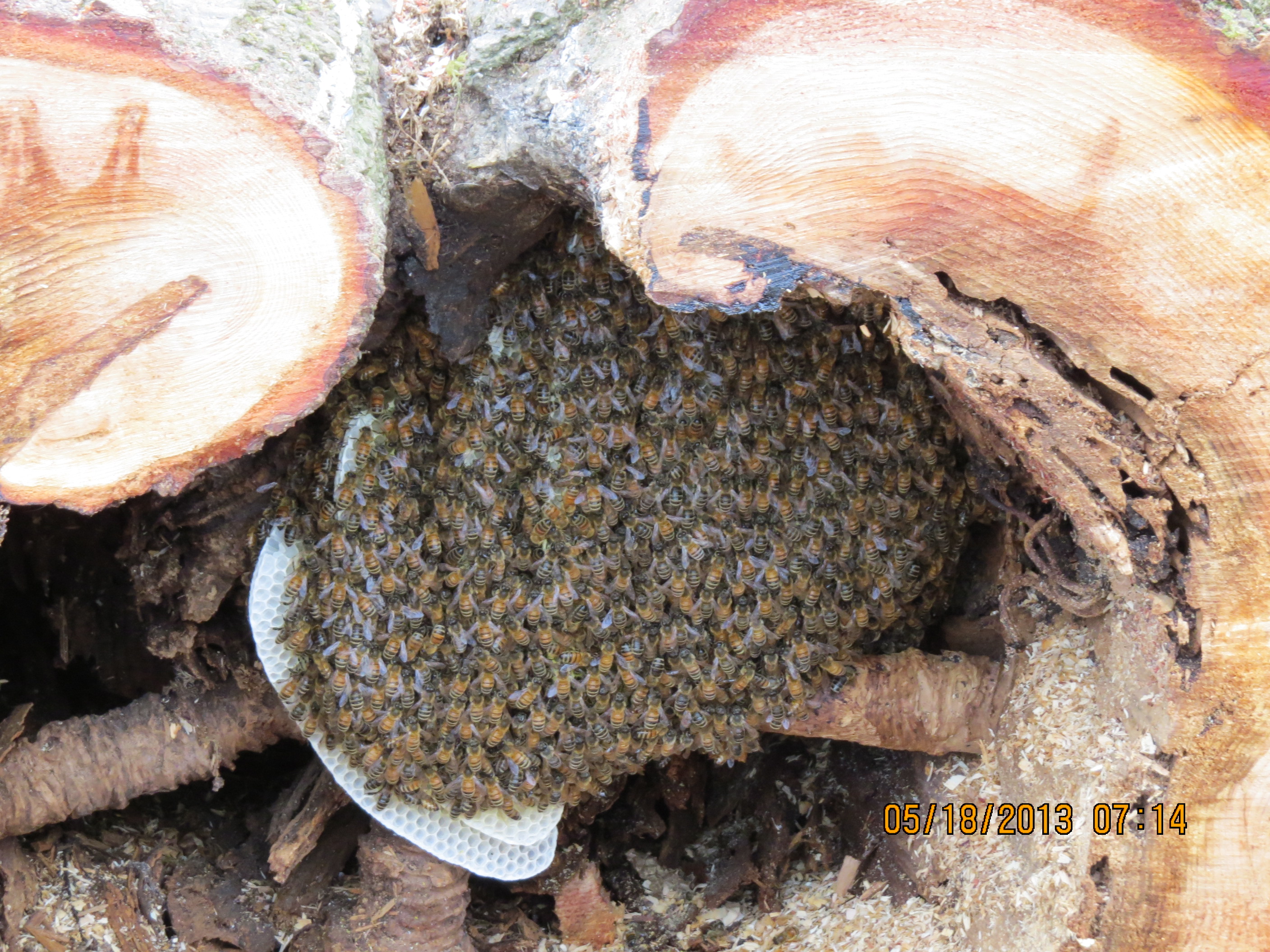
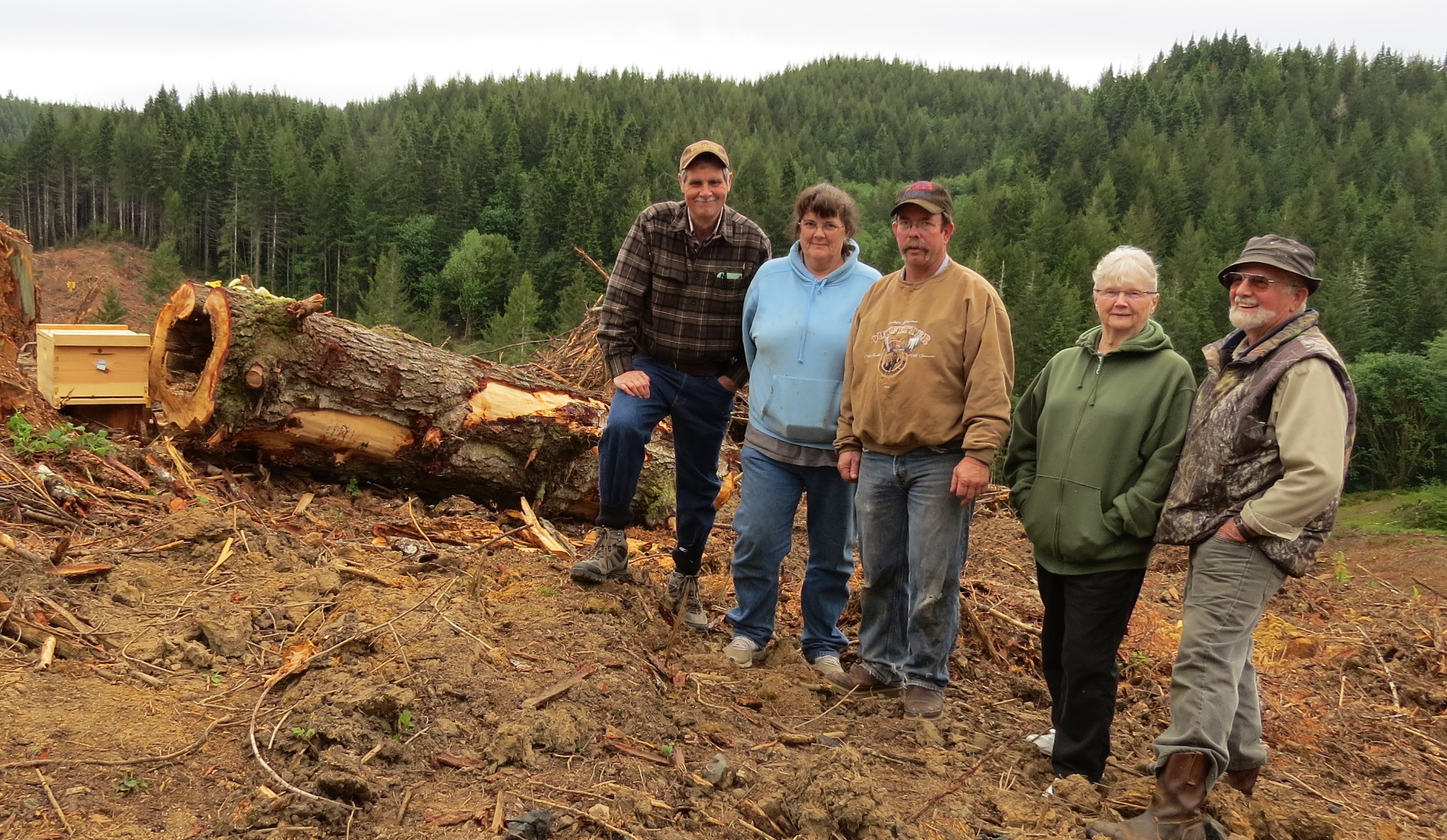
This large hollow tree was found during a logging operation along the Oregon Coast.

During a logging operation along the Oregon Coast this Hemlock was found to have a bee hive.

If you’ve ever built anything using wood, chances are it came from a forest in the Pacific Northwest.  Douglas Fir, (scientific name Pseudotsuga menziesii),  is an incredibly valuable commercial timber, widely used in construction and building purposes.  A high percentage of Doug Fir grows in Oregon and is brought to the mills by loggers.  Logging is the 2nd most dangerous job in America.

During a logging operation, one of the heavy equipment operators noticed a hive of bees in a hollow log. Wanting to follow in the footsteps of his beekeeping mother, he asked Hal to transfer the bees to a hive box.  I’ve never been involved with a ‘cut-out,’ so when Hal asked if I was interested, I jumped at the chance.

I've never been involved with a 'cut-out,' so when Hal asked if I was interested, I jumped at the chance.

Natural comb can be seen in his hollow log.

Hal reaches in to cut out the first comb

Hal reaches in to cut out the first comb

The first comb is put into the Lang.

The first comb is put into the Lang.

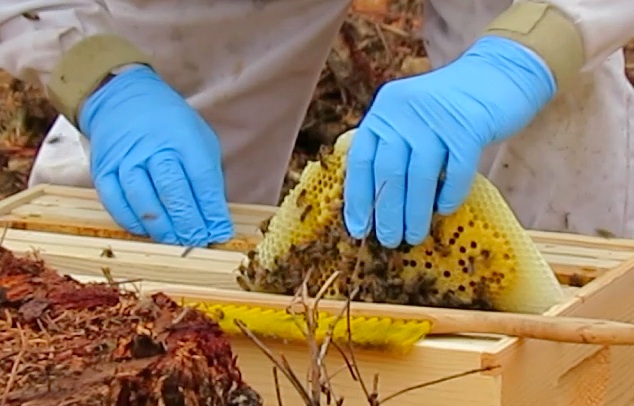
One comb at a time is transferred to the Langstroth frames.

One comb at a time is transferred to the Langstroth frames.  The pre-mounted  rubber bands around the frame hold the comb in place.

Hal, extreme right, did the 'heavy lifting,'  reaching in and cutting the combs out.  Patti and Amber helped with the  frames and tied string loops and Rod worked the smoker.  Pat is on the left, but all he did was work the camera.

Hal, extreme right, did the ‘heavy lifting,’ reaching in and cutting the combs out. Patti and Amber helped with the frames and tied string loops while Rod worked the smoker. The cameraman  is on the left.

Pollen-packing bees after a long rainy spell, 5-31-13

Pollen-packing bees after a long rainy spell, 5-31-13

A video shows all the action.

The next challenge…

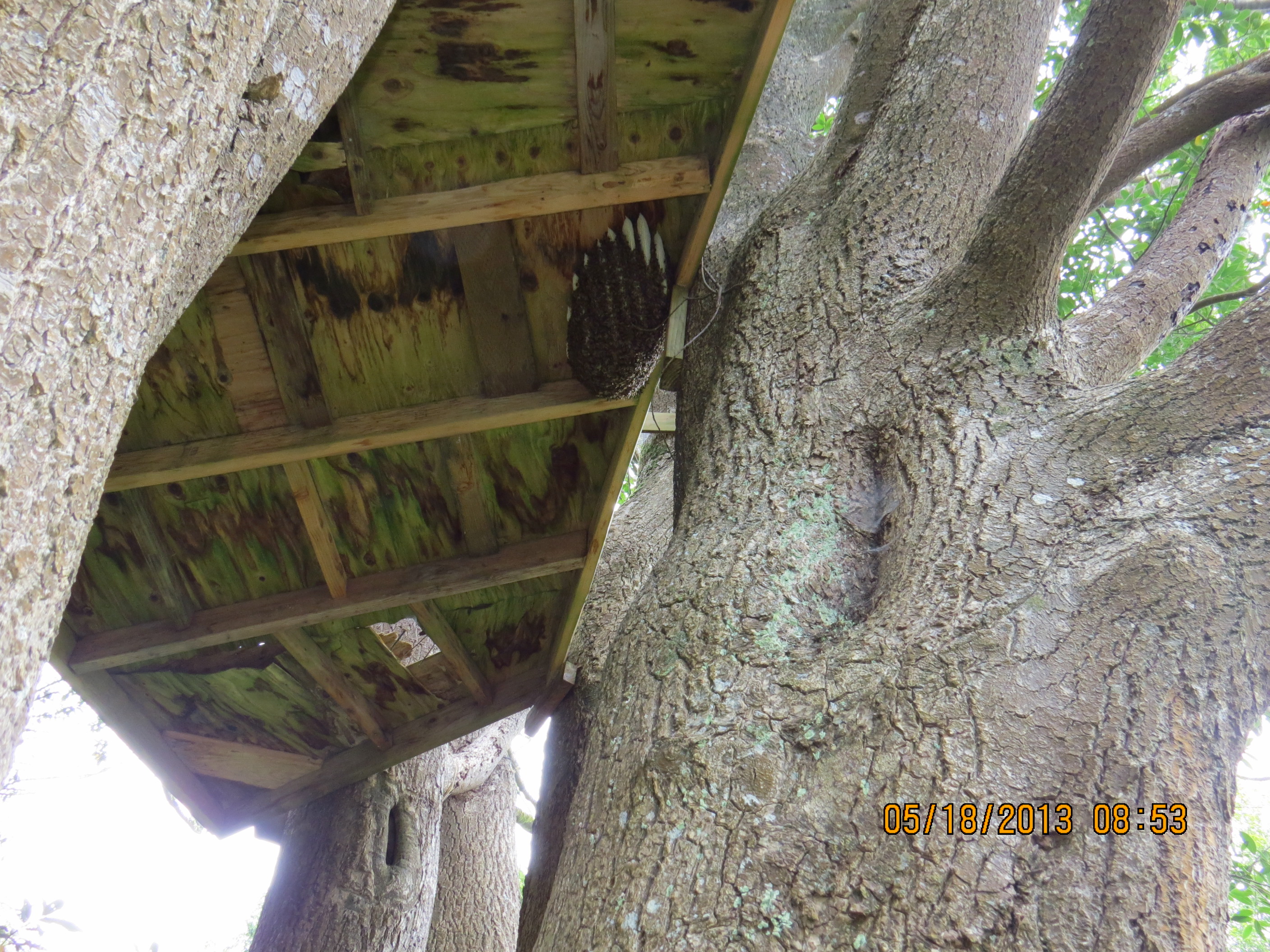
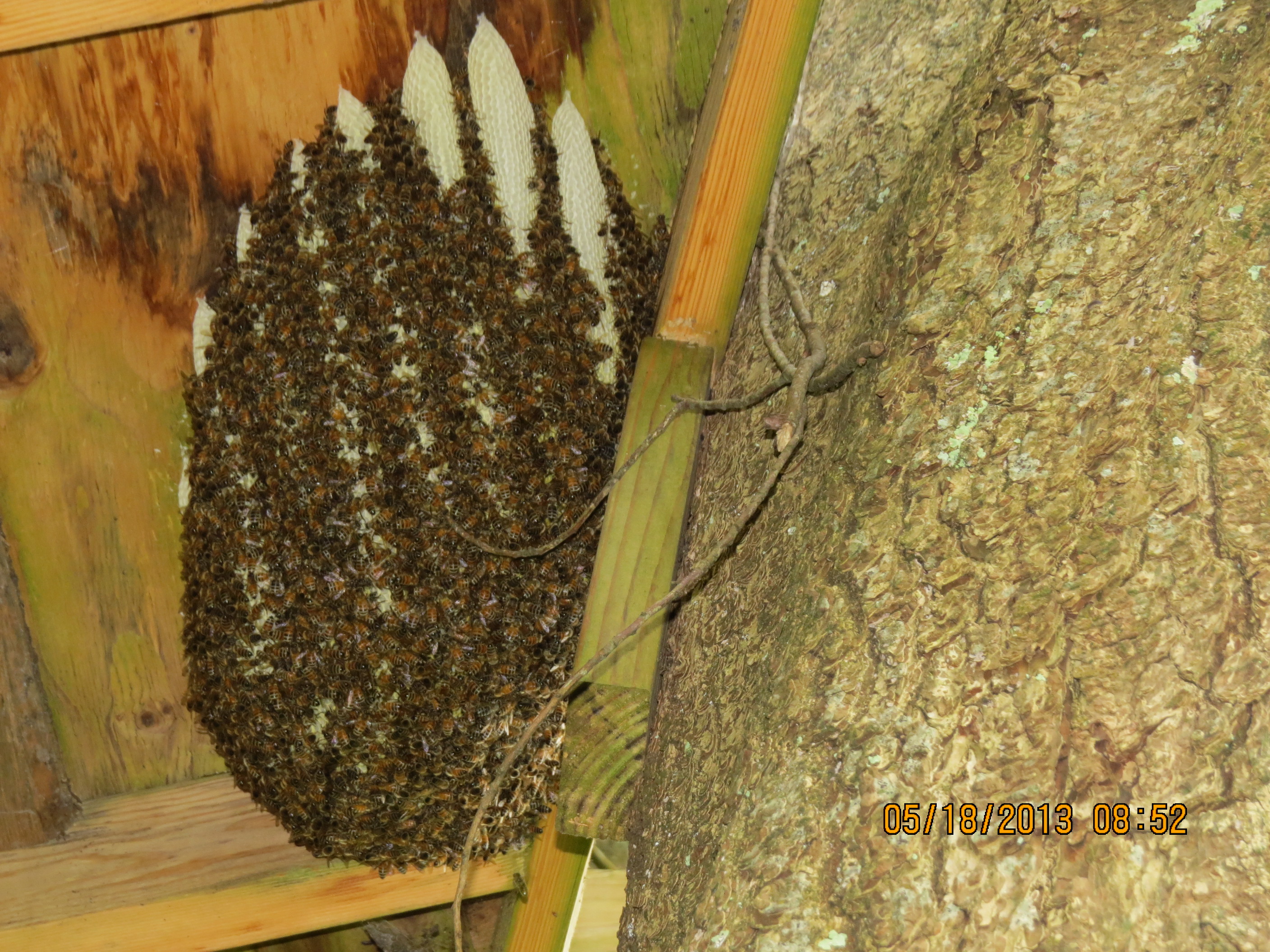
A hive under tree house on steep slope

A hive under tree house on steep slope

These bees swarmed up here "not that long ago and built comb like crazy" according to the owner.  He'd like to get it removed so the kids can feel safe in the tree house above.

These bees swarmed up here “not that long ago and built comb like crazy” according to the owner. He’d like to get it removed so the kids can feel safe in the tree house above.

Read Full Post »

I just love standing on this bridge and seeing all the work Hal and Patti have done.  It's so beautiful.

I just love standing on this bridge and seeing all the work Hal and Patti have done. It’s so beautiful.

Hal called me up last week to say he took some video of a bee swarm flying INTO his unoccupied bee log.  I’m thinking “Well, that’s a first.  Whenever I see a swarm, they are flying OUT of something…like a hive.”  I had to see this.  While I was there I shot some photos of all the work they have done.  I draw inspiration every time I visit.  It was here that I learned about sedum and what a wonderful bee loving flower that is. There is so much color here, so many flowers.  It surely takes hard work and dedication to keep everything looking so good.

When I first saw all the bees sipping nectar on these sedum, I knew I wanted a bunch.  It's clear it's nectar they are after...I didn't see a speck of pollen in their pollen baskets.

When I first saw all the bees sipping nectar on these sedum, I knew I wanted a bunch. It’s clear it’s nectar they are after…I didn’t see a speck of pollen in their pollen baskets.  This photo was shot at Patti’s garden in September 2012

It didn't take long for the bees to set up home. They  swarmed INTO this log, April 18.

It didn’t take long for the bees to set up home. They swarmed INTO this log, April 18.

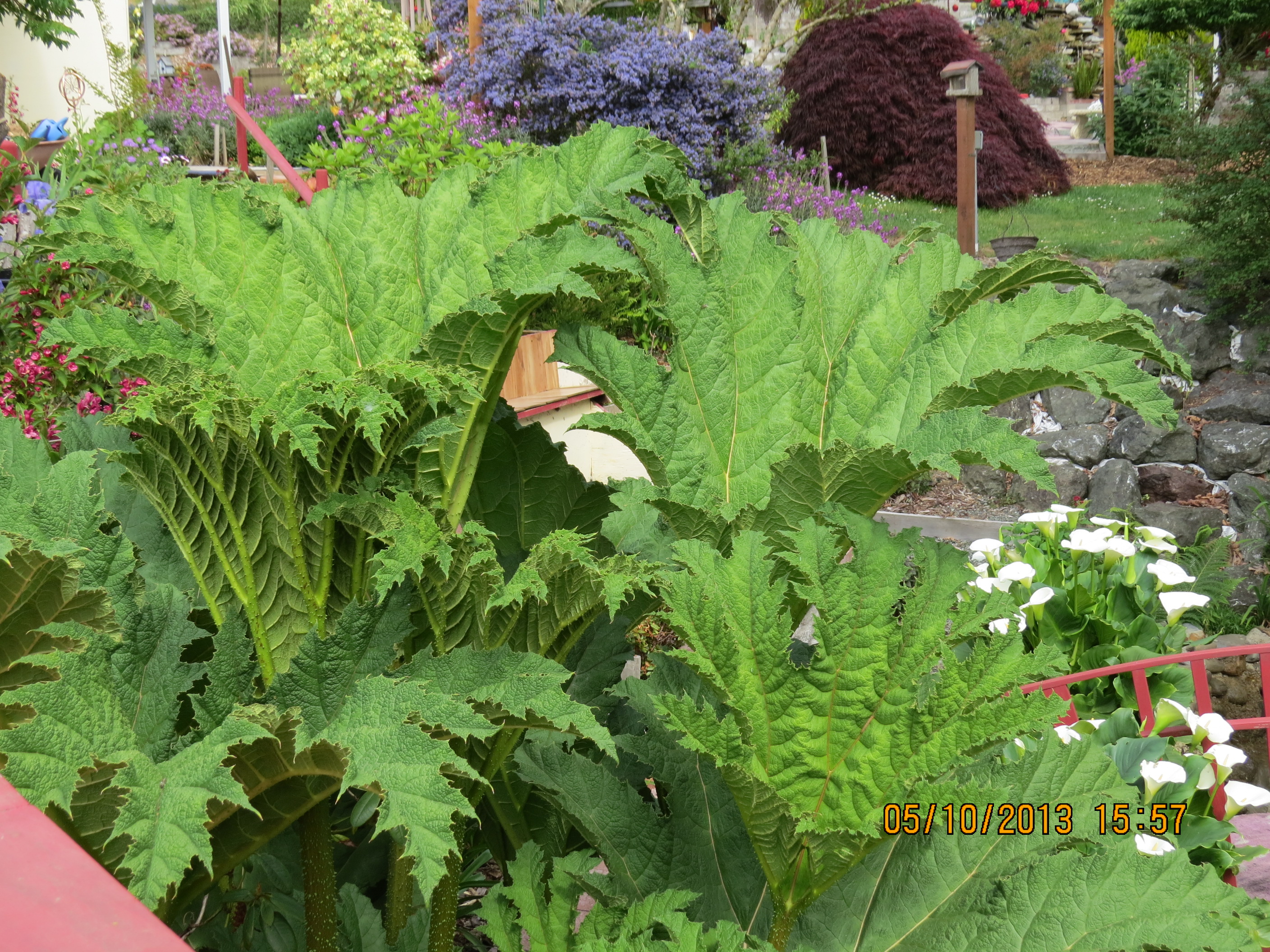
Patti's gunnera growing under the bridge

Patti’s gunnera is growing under the bridge

Hal and Patti on bridge, May 10, 2013

Hal and Patti on bridge, May 10, 2013

This video shows the swarm of bees moving INTO the  vacated log hive.  Hal explains what is going on as he shoots the video on his iPhone.

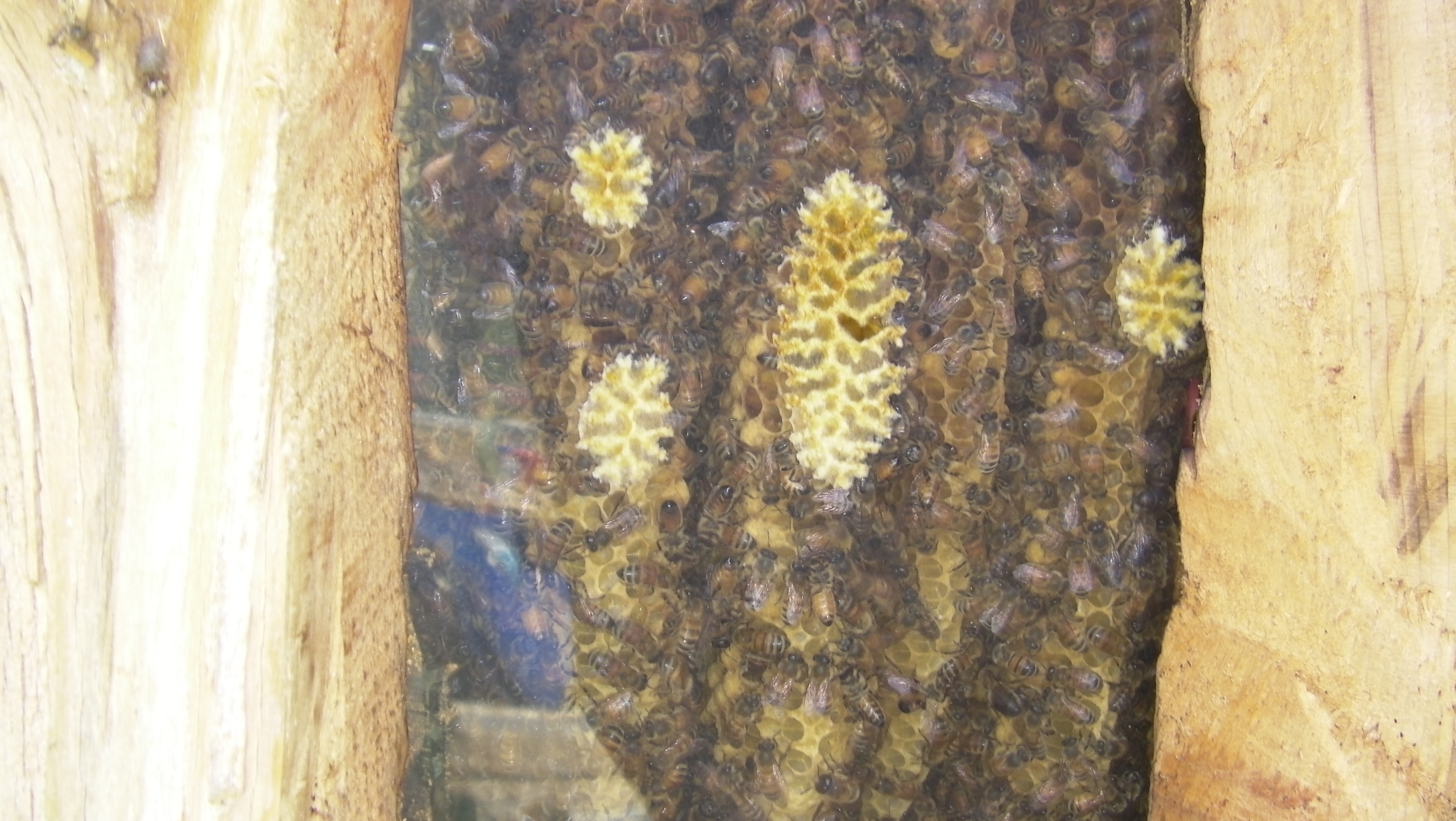
All this is natural comb, built in less than two months from when the bees swarmed INTO the log hive.

All this is natural comb, built in less than two months from when the bees swarmed INTO the log hive.

Hal’s first log hives

Hal talks about his log hive

Read Full Post »

Bee-atrice is looking good.

Bee-atrice is looking good.  Okay, the yard sign on her head isn’t too flattering, but it was all I could come up with in a hurry.  We will fix that later.

 When Bee-atrice became aware of her beauty she developed a real attitude.  Her long golden hair, the color of the setting sun, a beauty mark on her face, and the fact that she was carved out of a hard wood by a professional wood carver made her vain.  In conversations, the iPod would always be pulled out to show how she was carved. She would tell people.  “I’m special.  I was carved out of myrtlewood which only grows on the Oregon Coast and in the Holy Land.”  We told her the brochures weren’t exactly true, myrtlewood also grew along the California Coast, and the kind in the Holy Land was a different variety.  She would counter with the fact that “Myrtlewood” is the only wood still in use as a base “metal” for legal tender,  “besides my mouth was carved ‘open’ so I can sing.”  I think she fashioned herself as some kind of diva or something.

We decided to place her near Bee Beard.   We just figured they’d hit it off because they had so much in common.  One look at Bee Beard and she realized her open mouth was carved to let bees pass in and out.  She was shocked and humiliated…stomped off in a huff. I couldn’t figure it out.  Bee Beard has never complained about anything, not even once.  He’s been through a whole year of wind, rain, and bees.   It’s true we’ve never smoked him or bothered him much, I just figured Bee-atrice would be the same.  Not so…“I don’t want to be next to him and I don’t like bamboo.  It attracts wasps.  We ended up promising her a one of a kind Easter hat and face her into the sun so it could shine on her beautiful golden hair.  She gave in to the flattery, but there was no way she would agree to be near Bee Beard or even to look at him.

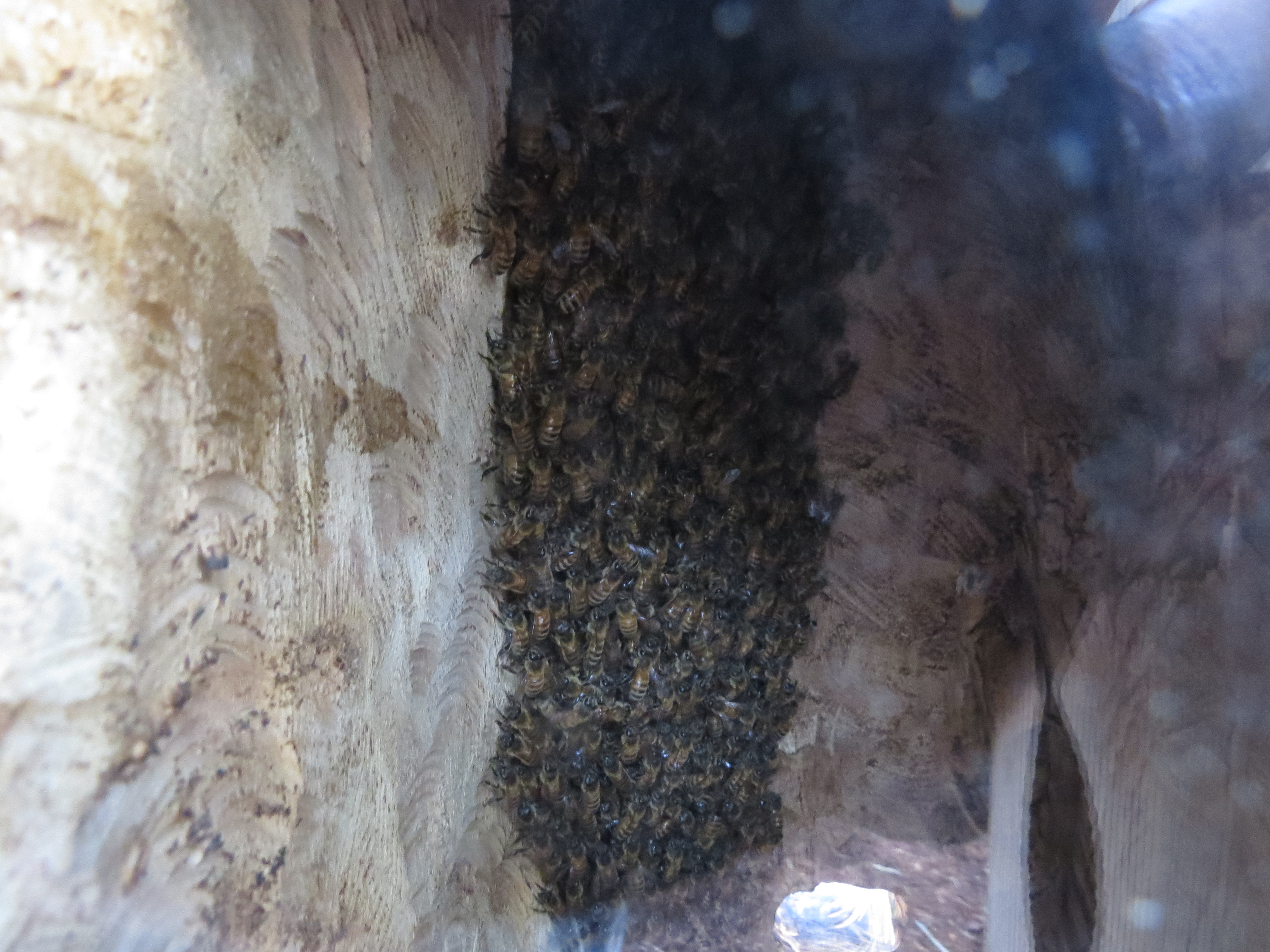
The bees first couple of nights were spent here in the upper corner of log.

The bees first couple of nights were spent here in the corner of log.

I've always wanted to note the temperature of the hive.

I’ve always wanted to note the temperature of the hive.

I'm surprised this is only 83 F (28 C)  I wish I could see inside better, but I'll have to wait until the combs are visible in the observation window.

I’m surprised the temp is only 83 F (28 C) I wish I could see inside better, but I’ll have to wait until the combs are visible in the observation window.

A short video show bees already bringing in pollen on Day 6

Bee-atrice gets a bonnet

The start of the project

Bee-atrice…the Carving

Preparing Bee-atrice Log Hive for Prime Time

Hal started it all

Read Full Post »

This tight #8 screen will hold the burlap.  The wood shavings and sawdust will fill it up.   No wasps allowed!

This tight #8 screen will hold the burlap. The wood shavings and sawdust will fill it up.

Quilt box with burlap

Quilt box with burlap

Filled with myrtlewood shavings and sawdust.

Filled with myrtlewood shavings and sawdust.

Scorching inside of hive cavity

Scorching inside of hive cavity…mouth entrance can be seen below

Myrtle leaves and sawdust for the bottom of the hive.

Myrtle leaves and sawdust are for the bottom of the hive.

Bees live in Myrtle Trees.  The wood smells good and the leaves are like bay leaves…you can use them in place of bay leaves, but in smaller quantities.   According to wikipedia, the leaf has been used as a cure for headache, toothache, and earache—though the volatile oils in the leaves may also cause headache.

I used cedar sawdust in the bottom of my first log hive.  Phil Chandler of biobees.com was  discussing the importance of hive ecosystem…“that it might be beneficial to have wood shavings and possibly dry leaves in the hope of stimulating an ecosystem similar to the natural environment where perhaps earwigs and woodlice etc. would live below the bees and maybe eat any falling varroa.”  Since my first log hive survived the winter intact, without me feeding or medicating them, I think I’ll try the sawdust option again.  This time I’ll add myrtle leaves to the mix.

I've been saving the last of the old comb in the freezer.  It's time has come.

I’ve been saving the last of the old comb in the freezer. It’s time has come.

The plan is to remove bars,  add a swarm when it becomes available, then replace bars

The plan is to remove the bars, drop the  swarm in, then replace bars

Fence post anchor

Fence post anchor…two were planned, but the swarm came first.

We left town to visit the grandkids.  It was just a day trip, but when we got back a little package was waiting for us…hanging from a tree.

Because of the angle the picture was taken, this swarm looks bigger than it is.  Tree hive in background.

Because of the angle the picture was taken, this swarm looks bigger than it is. Tree hive in background.

Thankfully I was prepared.   All that I had to do as it was getting dark was to snip the branch with a bucket under it and carry it to the log…remove the top bars and drop the swarm into the log.  This is swarm #5 from Bee Beard Log hive.  It probably does not have a mated queen, but the weather looks good for the next 7-10 days, so it should be a safe bet that the queen will be able to fly out.

Unfortunately this small swarm never quite made it.  It was slow to build up and just didn’t have the numbers to survive the week of freezing nights we had in December.  Good news though.  A prime swarm picked out Bee-atrice for their home on or about June 6, 2014.

Beginning of the log hive

Bee-atrice, the Carving

Meet Bee-atrice, A Female Companion for Bee Beard

Read Full Post »

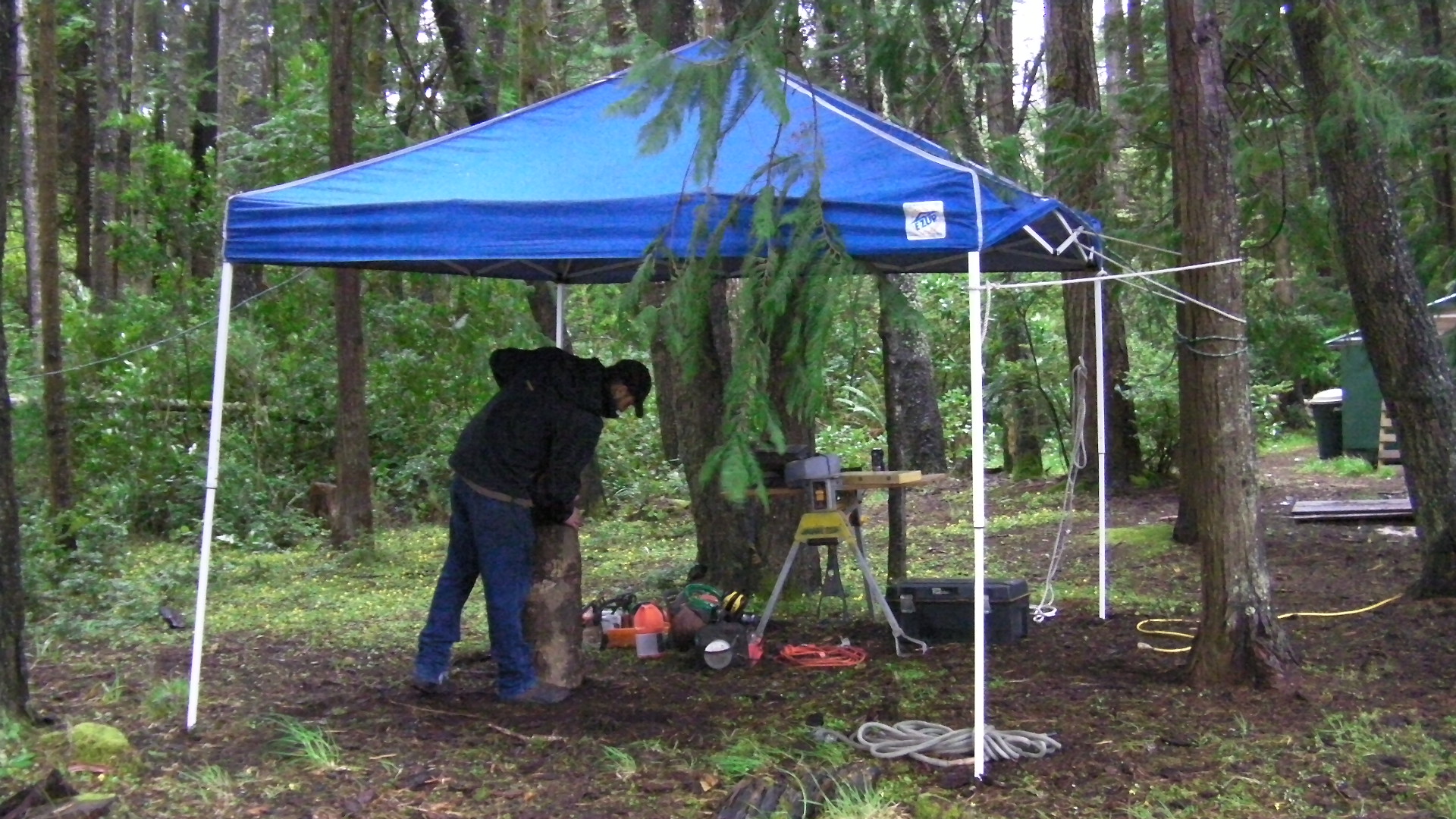
Brian brought his own tent awning to use.

Brian brought his own tent awning to use.

When I talked about carving another face on a log hive, I wasn’t sure what I wanted.  I had looked at hundreds of google images, wood carvings, even some Northwest totems, but I didn’t see anything that ‘jumped out’ at me.  I told Brian and Zada Vorwaller they had done such a great job with Bee Beard that I wanted something along the same lines, but slightly different.  Brian suggested a female companion.  He said he’d been thinking about how he could accomplish it and was up to the task.  I thought for a minute how Bee Beard was one of a kind, but in that role, there was a certain loneliness.  It might be good to have a companion…and yes, a female one at that.  Little did I know what I was getting myself into.

Brian rolled into my driveway about 10:30 am on a windy, rainy day.  He’d brought a tent awning which he set up in the woods not seeming to mind the dead trees swaying above him.  We propped up the log and he started feeling out the wood.  I held my breath.

After about 15-20 minutes he says “I’m beginning to see her.”  I had given him a real challenge.  The big chainsaws had dug deep into the wood.

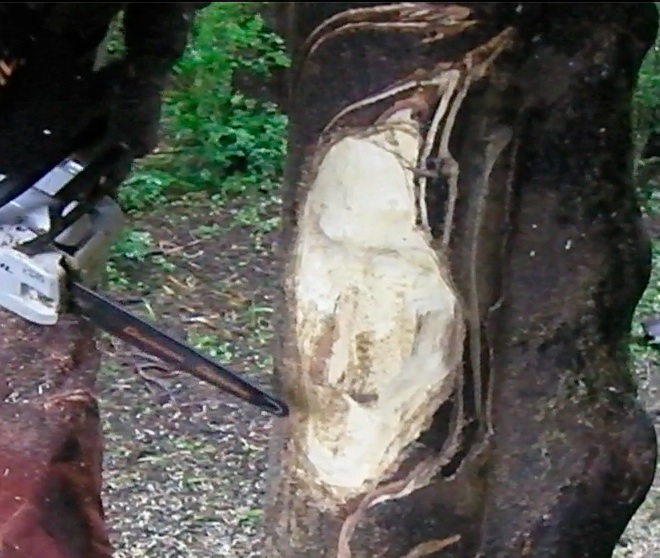
These deep grooves must be smoothed out.  Bees don't like sharp edges.
These deep grooves must be smoothed out. Bees don’t like sharp edges.

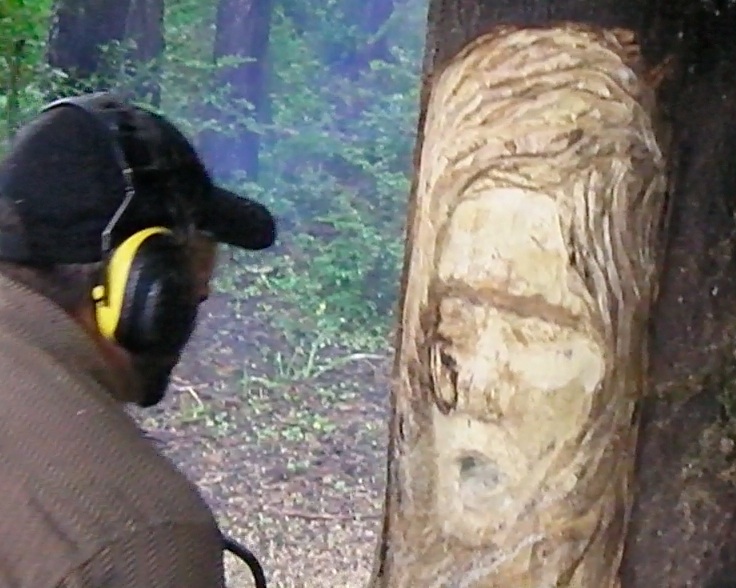
When I used my Sa-burr wood grinder to smooth out the chainsaw grooves, it became apparent the wood was ‘thin’ at some points.  So I was much relieved that he could visualize the image.  He starts to work.

Not being an artist myself, I can't see how anyone can visualize something by 'taking away' instead of adding to.

The lines are drawn…it has begun!

Not being an artist, it's hard for me to

Not being an artist, it’s hard for me to understand how a person can visualize an image and then make it appear by sawing parts away.

Slowly taking shape

Slowly taking shape

Carving mouth

Carving the mouth

Artist and subject, eye to eye

Artist and subject, eye to eye

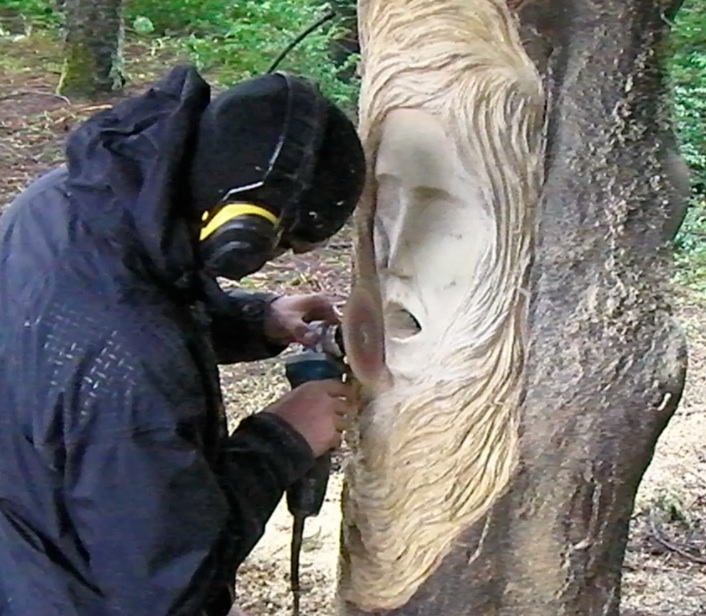
Sanding the cheeks...give her good cheek bones, Brian!

Sanding the cheeks…give her good cheek bones, Brian!

Sanding the mouth

Sanding the mouth

For eight hours he works, taking a short lunch break, but mostly sawing and sanding, sanding and shaping.  A true artist absorbed in his work.  Gradually she comes to life, but still has a blank look on her face…

A blank look on her face

A blank look on her face

then he adds the eye brows and eye lashes and voila…she appears!

He's done!

The artist is done!

The Artist…

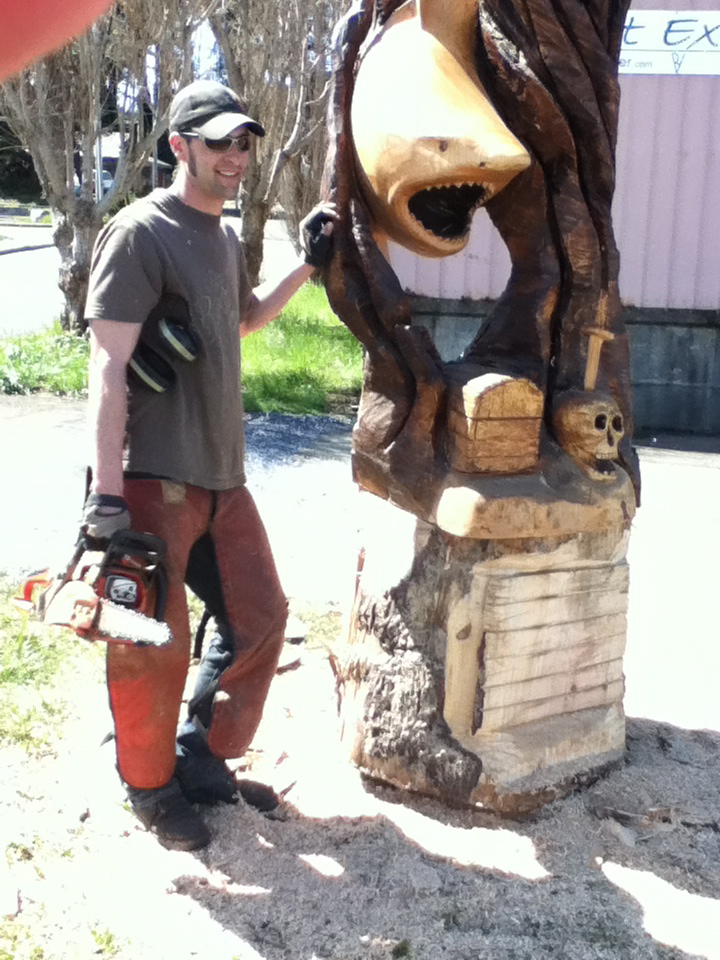
Brian Vorwaller of Artist Extreme, poses in front of his shark carving.  It was all carved from one chunk of wood.

Brian Vorwaller of Artist Extreme, poses in front of his shark carving. It was all carved from one chunk of wood.

The beginning of the log hive.

Preparing Bee-atrice for prime time

Meet Bee-atrice…A Female Companion for Bee Beard

Who is Bee Beard?

Read Full Post »

She was but a gleam in her father's eyes.

She was but a gleam in her father’s eyes.

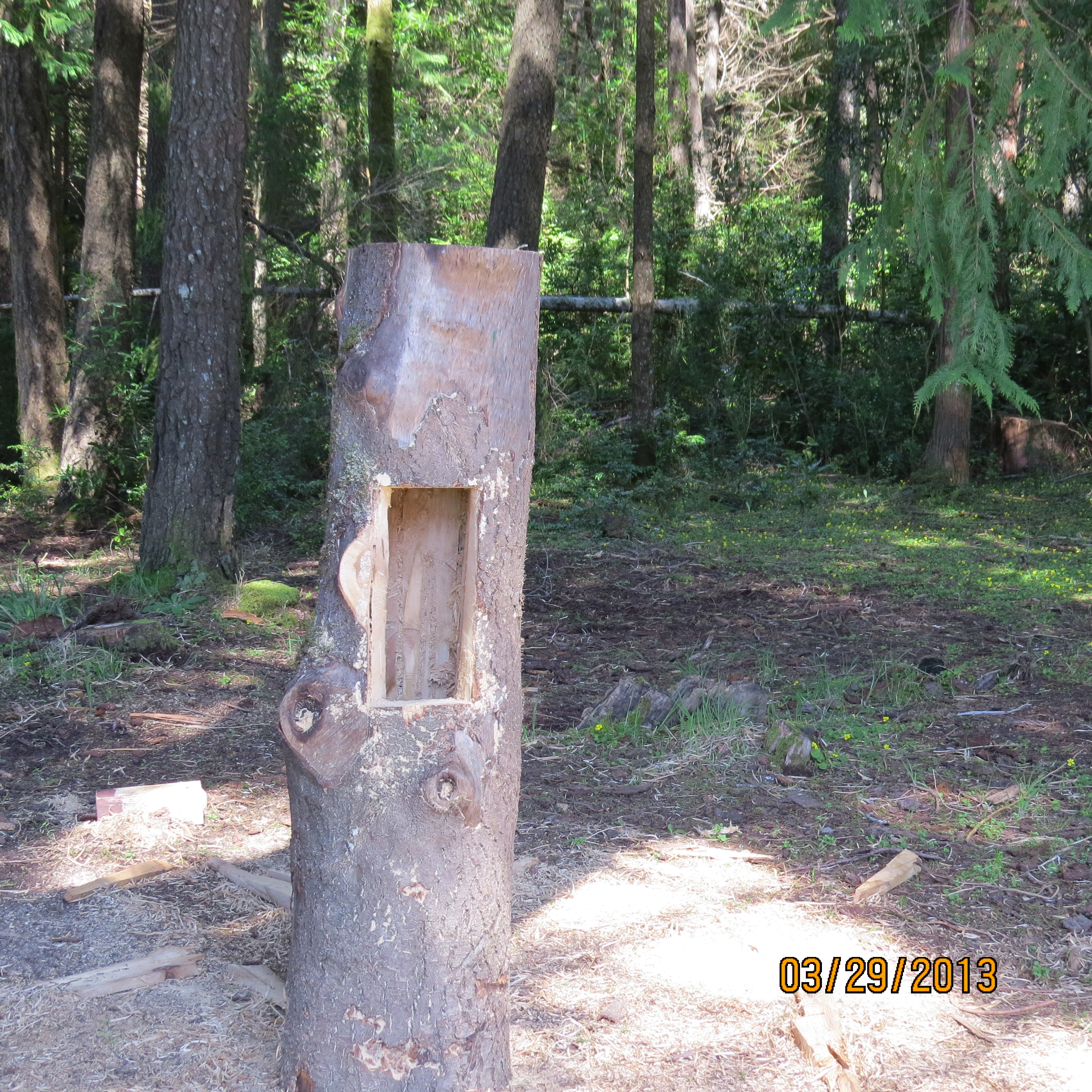
When Shigeo found out I wanted to build another log hive, he offered me a myrtlewood log.  Myrtlewood is a hardwood that excels all other hardwoods in variety of color and beauty of grain.  I was excited by the prospect because bees live in myrtlewood trees.  In fact, my other log hive, Bee Beard,  is occupied by feral  bees from a Myrtlewood tree.

Off to a good start.  Log is carved out about 18" from both ends

Off to a good start. Log is carved out about 18″ from both ends

Shigeo brings his 'big dog' to help out

Shigeo brings his ‘big dog’ to help out

Shigeo gets to work on lengthening the cavity

Shigeo gets to work on lengthening the cavity

This is so familiar...when the chain saw cuts don't meet in the middle, we've got to do it the hard way.

This is so familiar…when the chain saw cuts don’t meet in the middle, we’ve got to do it the hard way.

Progress...Shigeo pulls out some wood.

Progress…Shigeo pulls out some wood.

Hollow all the way through, finally.

Hollow all the way through, finally.

Shigeo cuts the top to use as a possible quilt box

Cut the top to use as a possible quilt box

Starting the cut on the observation window

Starting the cut on the observation window

This was a lot of work.  I'm glad my son did most of it.

My son brought his Sawz-all to the task

Observation cut-out for window is completed.  This was a lot of work...I'm glad my son was able to do most of it.

Observation cut-out for window is completed. This was a lot of work…I’m glad my son was able to do most of it…I was able to visit with my grandson.

Good…I think we’re ready for Brian Vorwaller, the professional chainsaw artist who will be in town next week on April 4th.   I wonder what kind of face he will want to carve.

The carving…

Getting Bee-atrice ready for prime time

Meet Bee-atrice…a Female Companion for Bee Beard


Read Full Post »

On a hot day in late March, the bees step out for some fresh air and dancing.

On a hot day in late March, the bees step out for some fresh air and dancing.

It's a hot day for us on the Oregon Coast in late March.

It’s unusably warm on the Oregon Coast today.

The lower bee has been fanning for awhile.  While I was photographing, this other bee came out and fed her?  I don't know if that's what it is, but from here, that's what it looked like.

The lower bee has been fanning for awhile. While I was photographing, this other bee came out and fed her? I don’t know if that’s what it is, but from here, that’s what it looked like.

Pat's next log hive progresses...much work still to be done before ready for bees.

Pat’s next log hive progresses…much work still to be done before ready for bees.

Some bees are still outside the hive, at 10 pm. and 49 deg. F (9.4C)

Some bees are still outside the hive, at 10 pm. and 49 deg. F (9.4C)

This hive swarmed the next day.  I missed the prime swarm but got the second swarm into a back-up Warre.

Swarm number 4 went into a tree hive.

Swarm #3 got mixed into swarm #5 that went into Bee-atrice log hive.

Read Full Post »

« Newer Posts - Older Posts »