I could have shot a bunch of stills of these bees pollinating flowers, but the video together with the music conveys so much more.
I hope you especially enjoy the leaf cutter bees demonstrating their petal cutting abilities and the crab spider attacking the honeybee…and missing! Hooray!
I shot some more video today (August 7) to show that the bees are still going strong on the African Blue Basil in August. It’s good to have something for them after the main nectar flow of blackberries. Jeff Kerker says that the African Blue Basil will produce flowers all summer.
May 31…The Bee Garden is shaping up after Sue added her brick work. We like it so much we’re going to add more on the other side. The photo shows just some of the bee-loving plants we’re growing…some from seed, some from our favorite nursery.
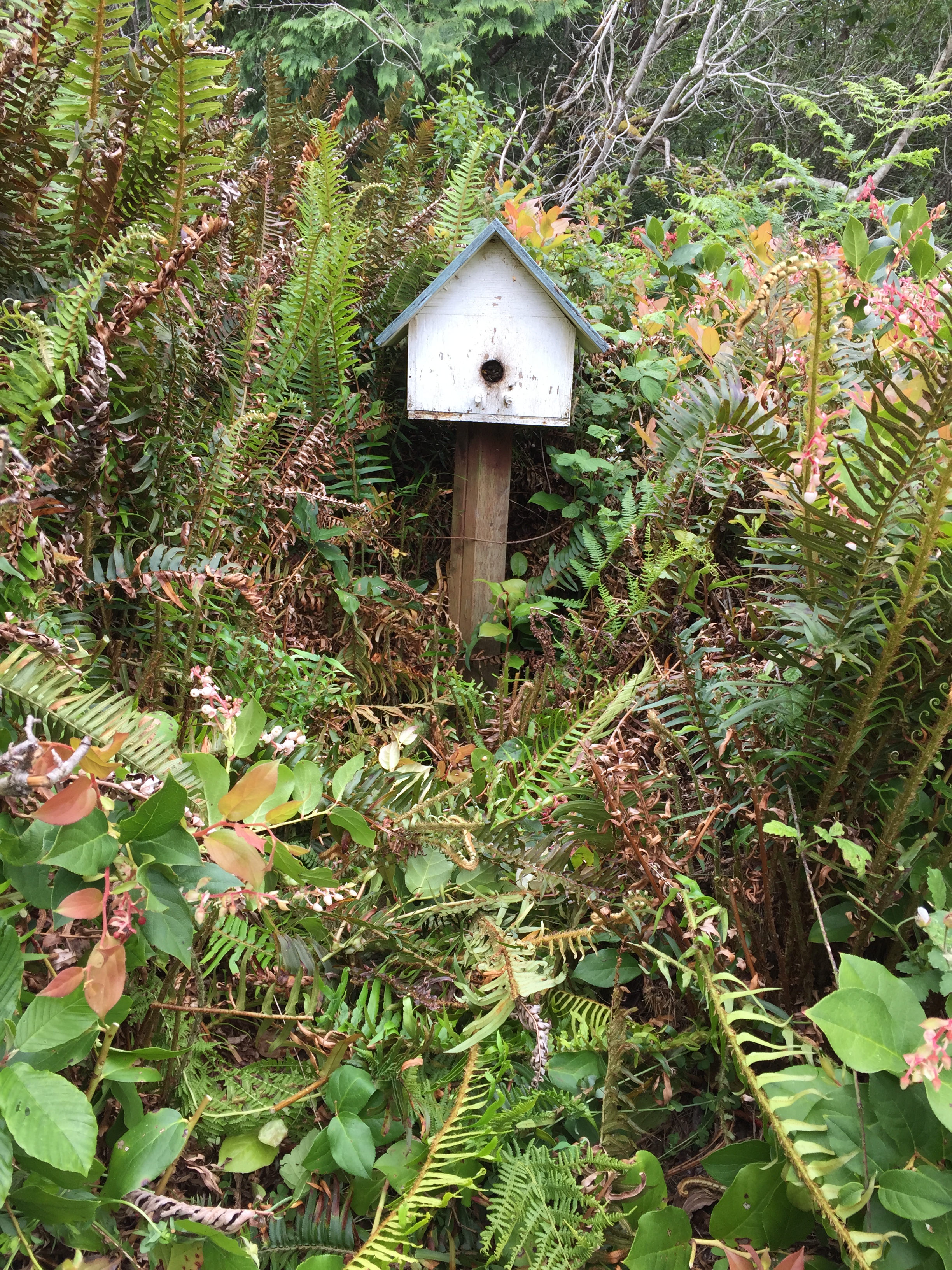
I just noticed these ferns practically overgrowing the little Birdhouse Bee hive.
I successfully trimmed the ferns without getting stung. The bees probably don’t care one way or the other, but it gives me a clear shot with the camera.
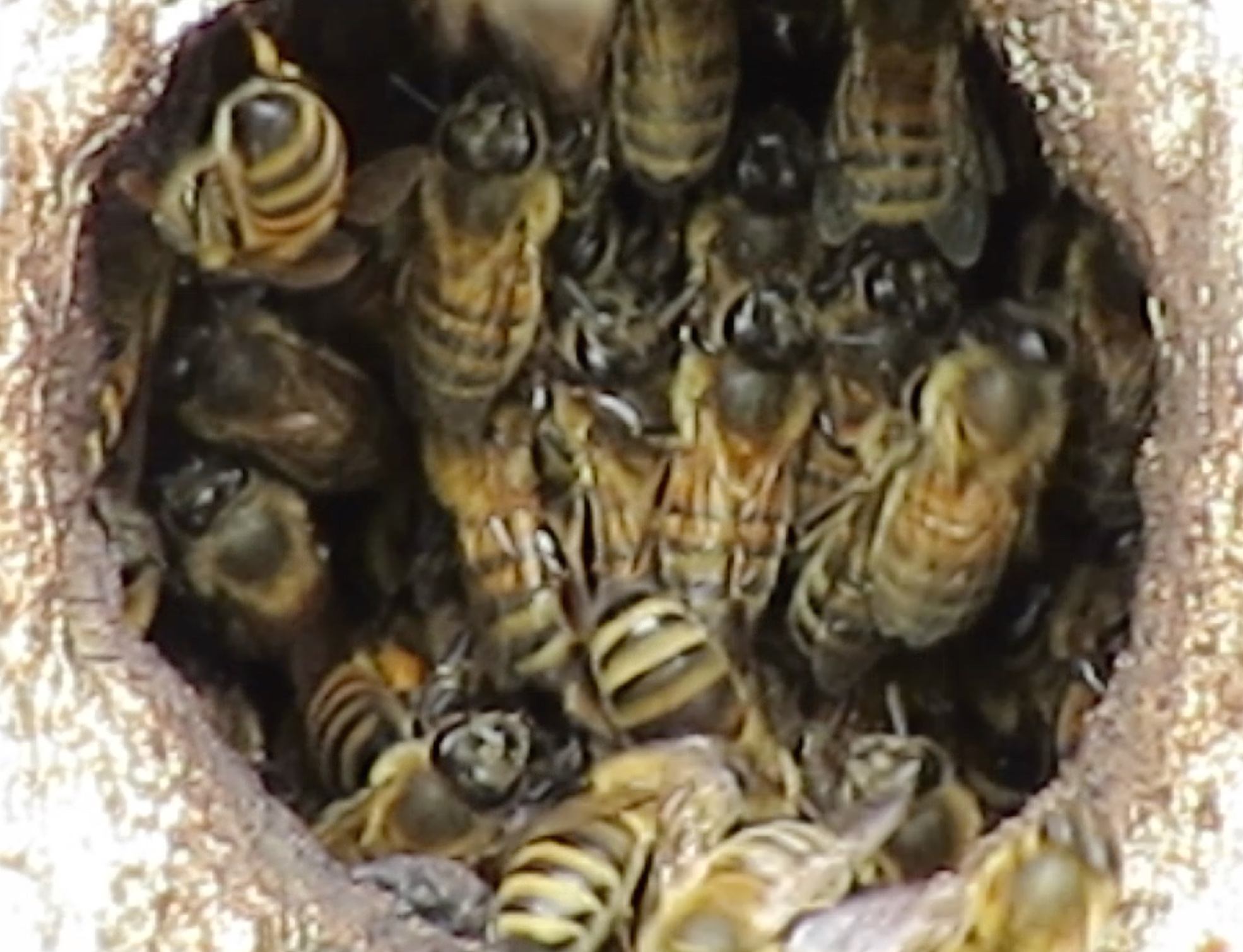
Are these drones? It almost looks like it. Drones sometimes mean swarms (before or after)…I’m hoping this is before so I can encourage them into an empty Warre hive with their name on it. 🙂
May 31…The hugelkulture bed needs a little more work for sure. This is a ‘before’ picture. I’d like to make a little path going past the hive and circling back past the sunflowers I just planted (if the slugs don’t eat them first.
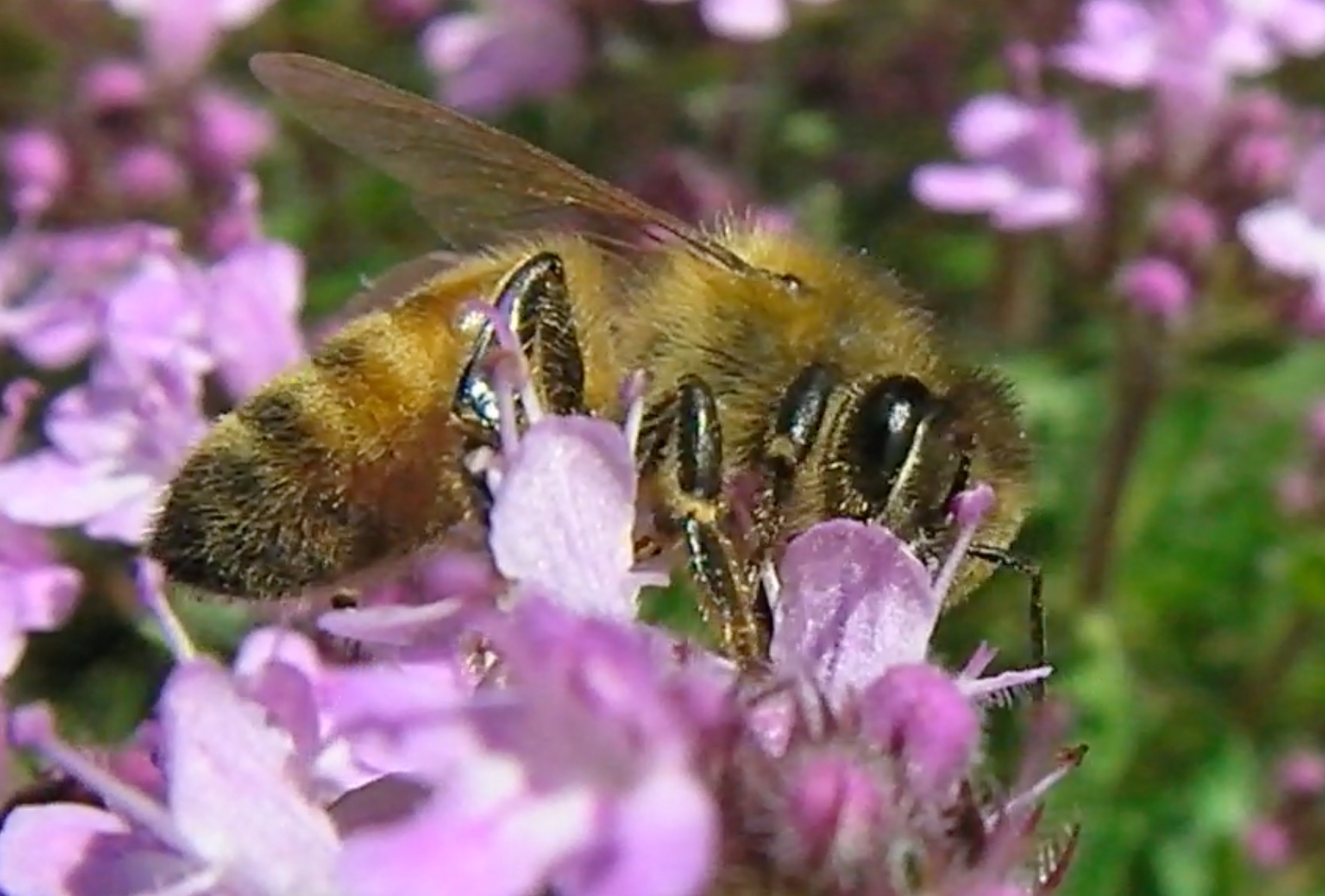
This is far from National Geographic video quality, but it does show the intimate relationship between the bee and the flower. The bee lands on the flower petals, spreads out the lower ones, then triggers the pollen release possibly by pushing something with it’s head…I couldn’t see that part, but when it happens, it’s sudden and strong, like an explosion.
May 3…Here’s a pretty variegated Scotch Broom (Cytisus scoparius). You can tell that a bee has been there , because the stamen have already popped up.
Pollen Alert…bee has triggered a pollen shower, stamen pop up and rub anthers on her back.
This bee has learned well how to trigger the pollen release as can be seen by the amount of pollen on herself.
I shot this video to show what our bees are doing when they leave the hive. It may surprise you. 🙂
Chuck Barrett is pictured here with his signature orange cake. Made from scratch, his secret ingredient is Triple sec. Whenever he is invited to a gathering, he brings his cake and garners rave reviews. The ladies in the group are are always impressed with his baking skills.
Inspired by my bee stories, my ninety-one year old father-in-law took pen in hand and wrote “A Busy Bee Song.” Setting the words to a simple tune he composed, he hoped to inspire children to learn about and respect the honeybees.
Judy Rhodes
He asked Judy Rhodes, a local singer in his home town of Phoenix, Arizona, to sing his song. Judy performs with a small group, “Up the Road and Around the Bend,” who sing for folks in retirement homes around the Phoenix area. He copyrighted his words and music to make it officially his own.
Chuck Barrett is truly an inspiration. He leads an exercise group three days a week at his local YW. His enthusiasm is contagious and people join in, some in wheelchairs, some with walkers with bingo in the next room as his fierce competition.
I set videos and photos of my bees to Chuck’s song, and we hope you will enjoy our efforts to bring awareness to the honeybees story.
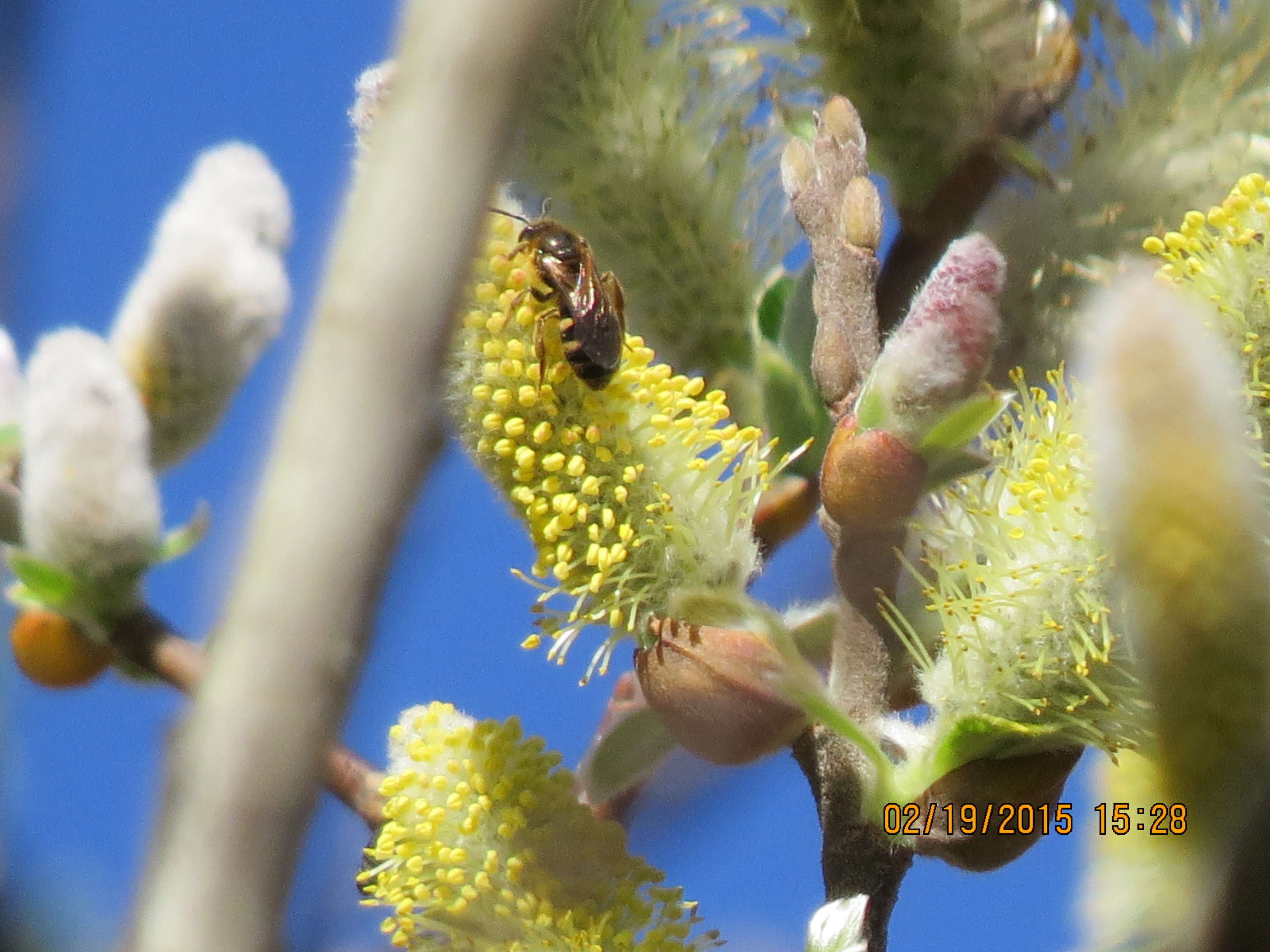
This honeybee has been busy. She’s already got a load of willow pollen.
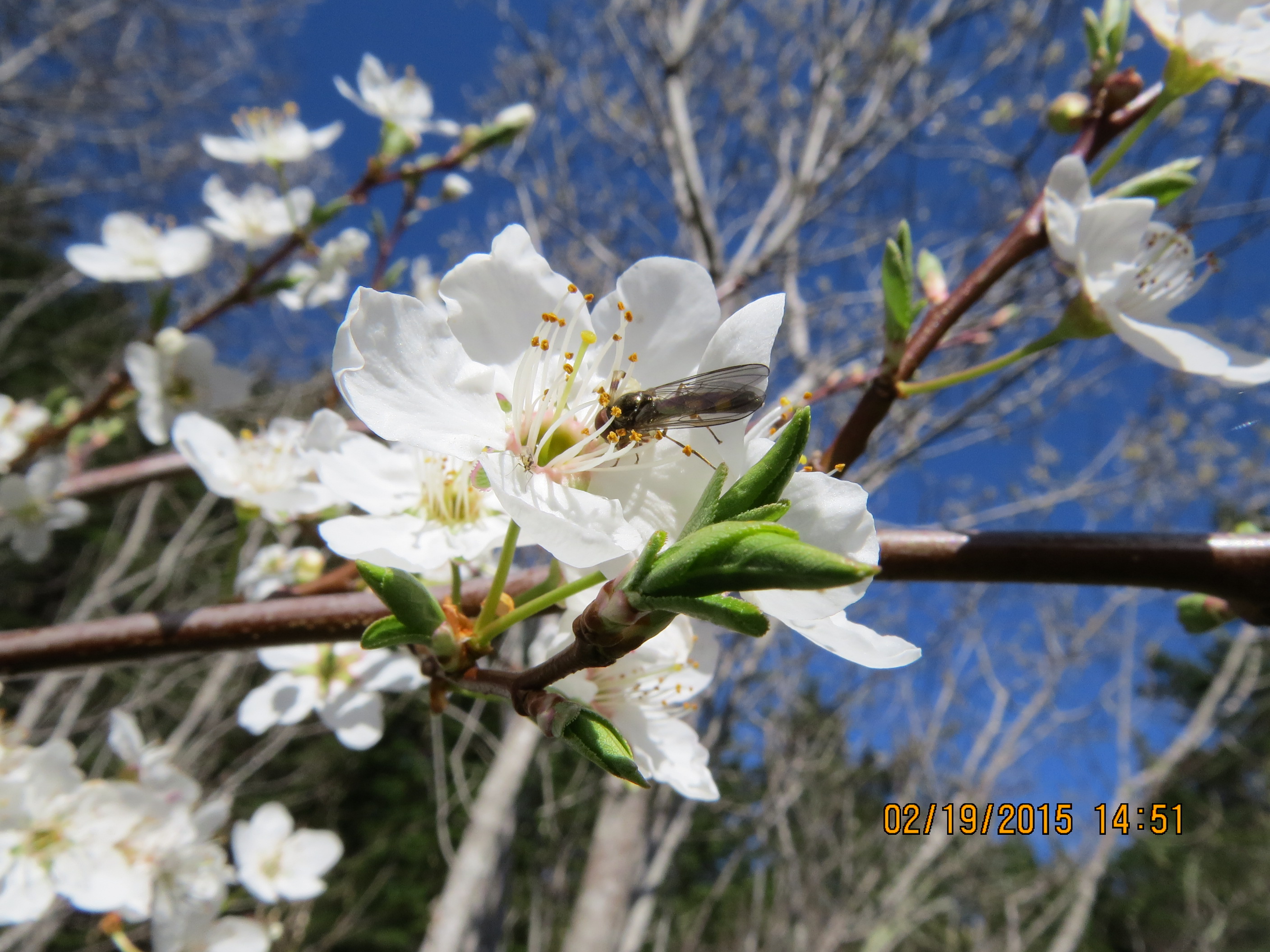
February 19…bees enjoy the willow blossoms along with robber flies and other pollinators.
A blurry look at a robber fly high in the Hooker Willow. See Michael Marlow’s comment below. “Hi Pat, just an fyi, those flies in your photos do not look like robber flies, but rather hover flies (family Syrphidae).”
Another robber fly on a plum blossom. See Michael Marlow’s comment below.
I’m not sure what kind of bee this is.
A gorgeous blue sky warm day…while the East Coast is getting battered with snow storms.
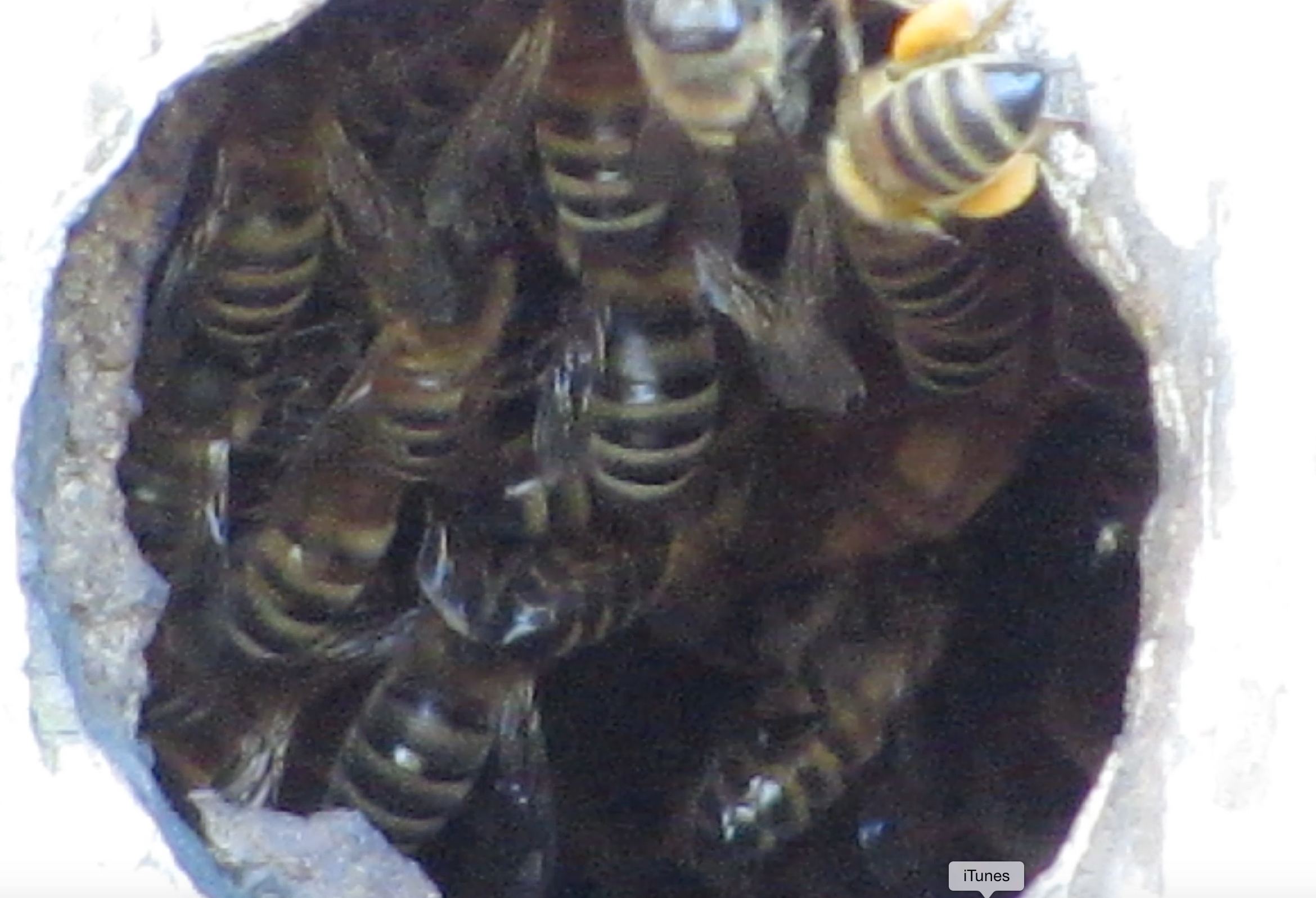
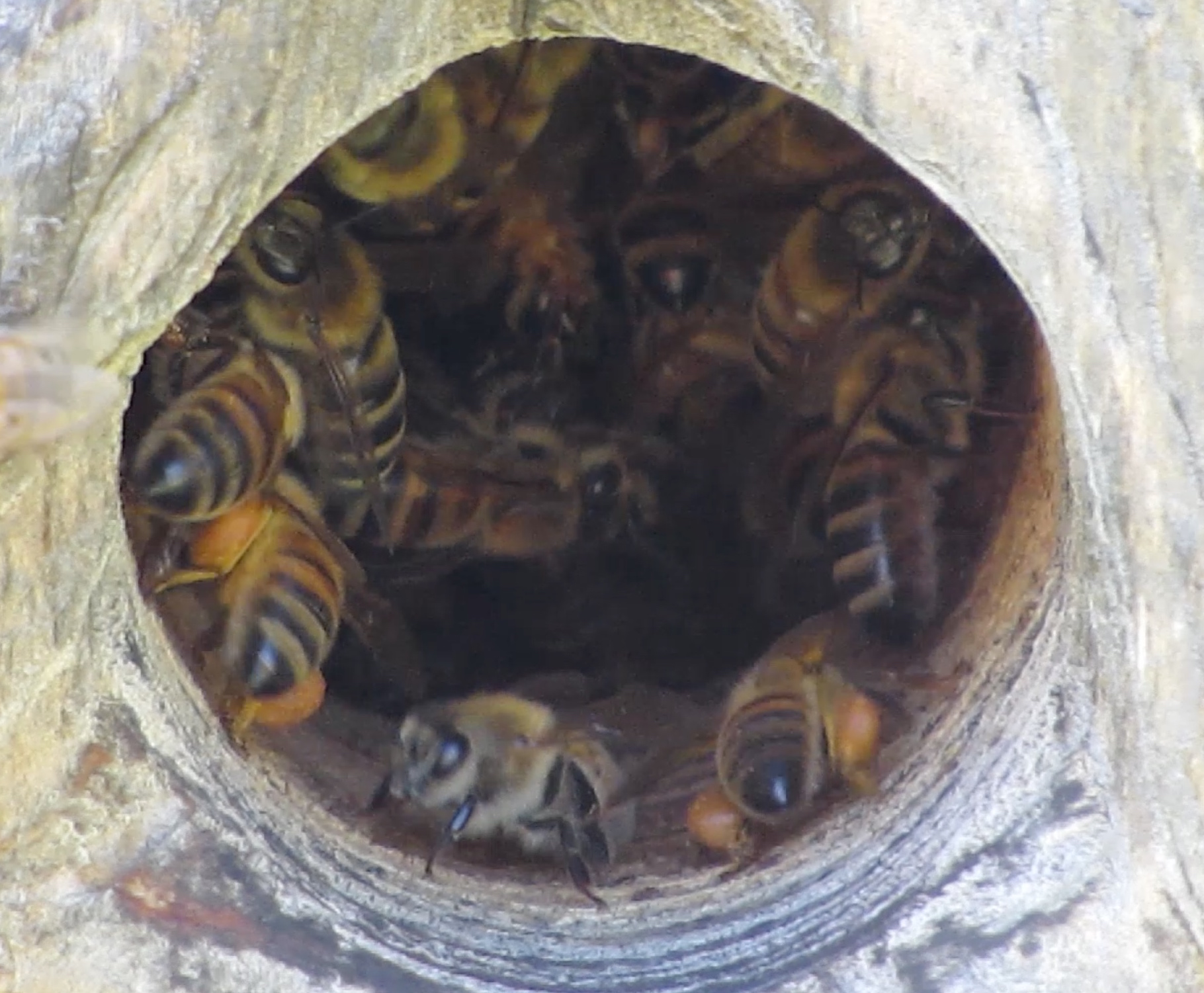
A look inside the little birdhouse bee hive with willow pollen being carried in. This little bee hive is doing well despite being in a small space in the winter shade. I’ve got to keep the swarm if I can…it’s got good genetics.
Of course, the other hives are enjoying the willows too. Here Bee Beard has bees swaggering in with their bags of pollen. There’s something going on in the background. I can’t figure out what the bees are doing, but if you look at the video, see if you can tell what they’re doing.
Not to be outdone, Bee-atrice’s bees have been busy too, with a bee fanning at the entrance.
February 24…I visited Brian Vorwaller today. I just wanted to see the log standing upright. He thinks he can start on it next week.
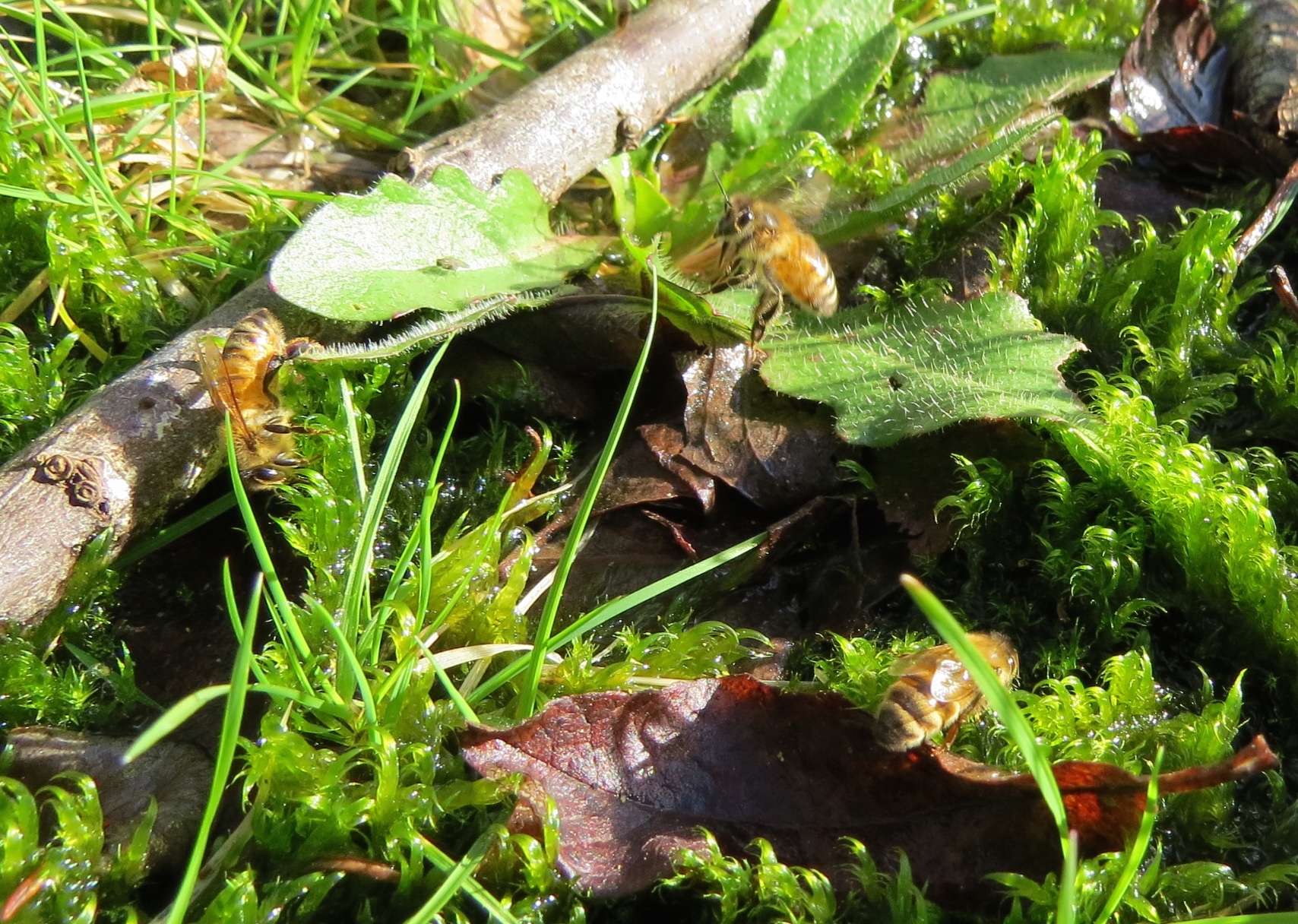
A couple of weeks ago we started seeing bees gather in a little pond beneath the willow tree. It looked like they were sipping the water where moss was growing.
January 22…Three bees spotted on this patch of moss.
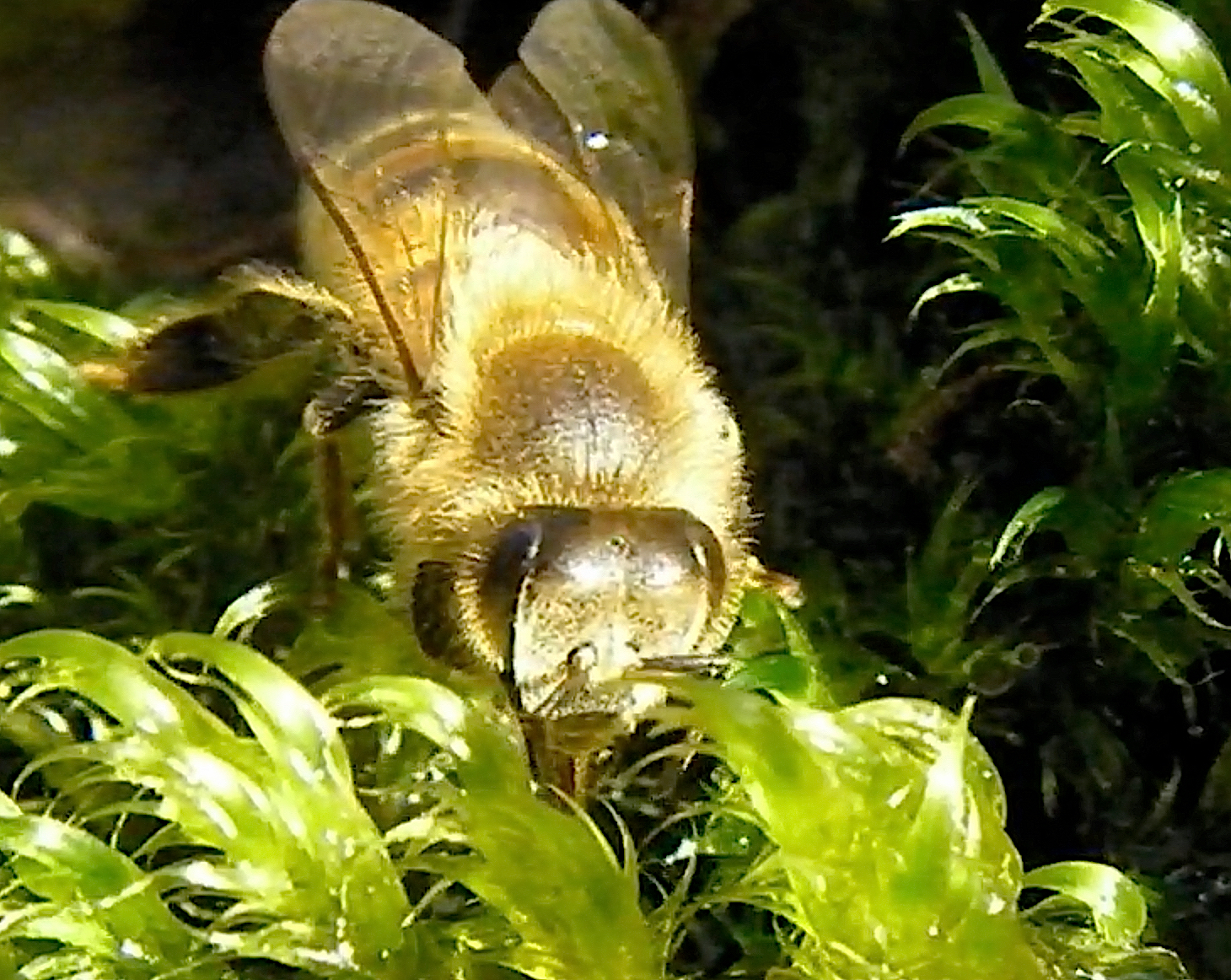
Into the moss…
January 22…I’ve heard bees like “dirty” water, so I guess this mossy water is no surprise, but I wonder what they’re getting out of it.
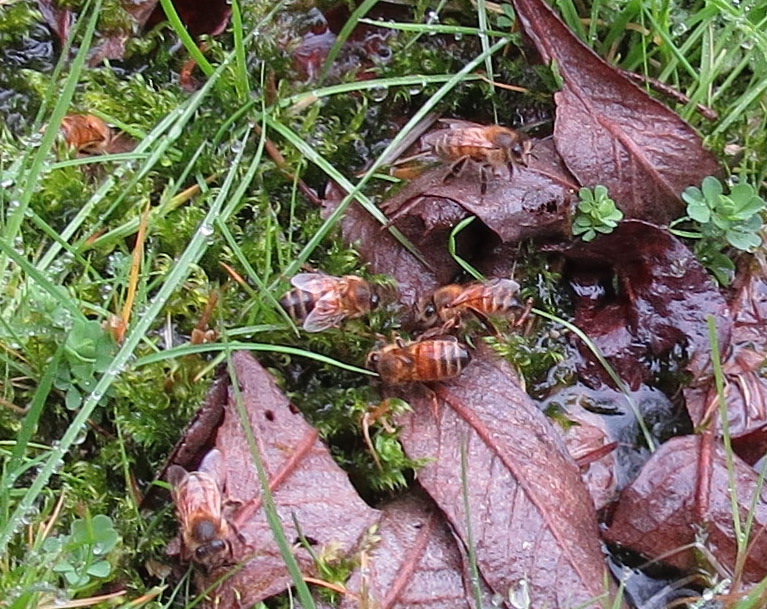
Feb. 2…Being a day of steady drizzle, I checked again to see if the bees were here. Yes, this time I saw more bees. They are truly dedicated bees.
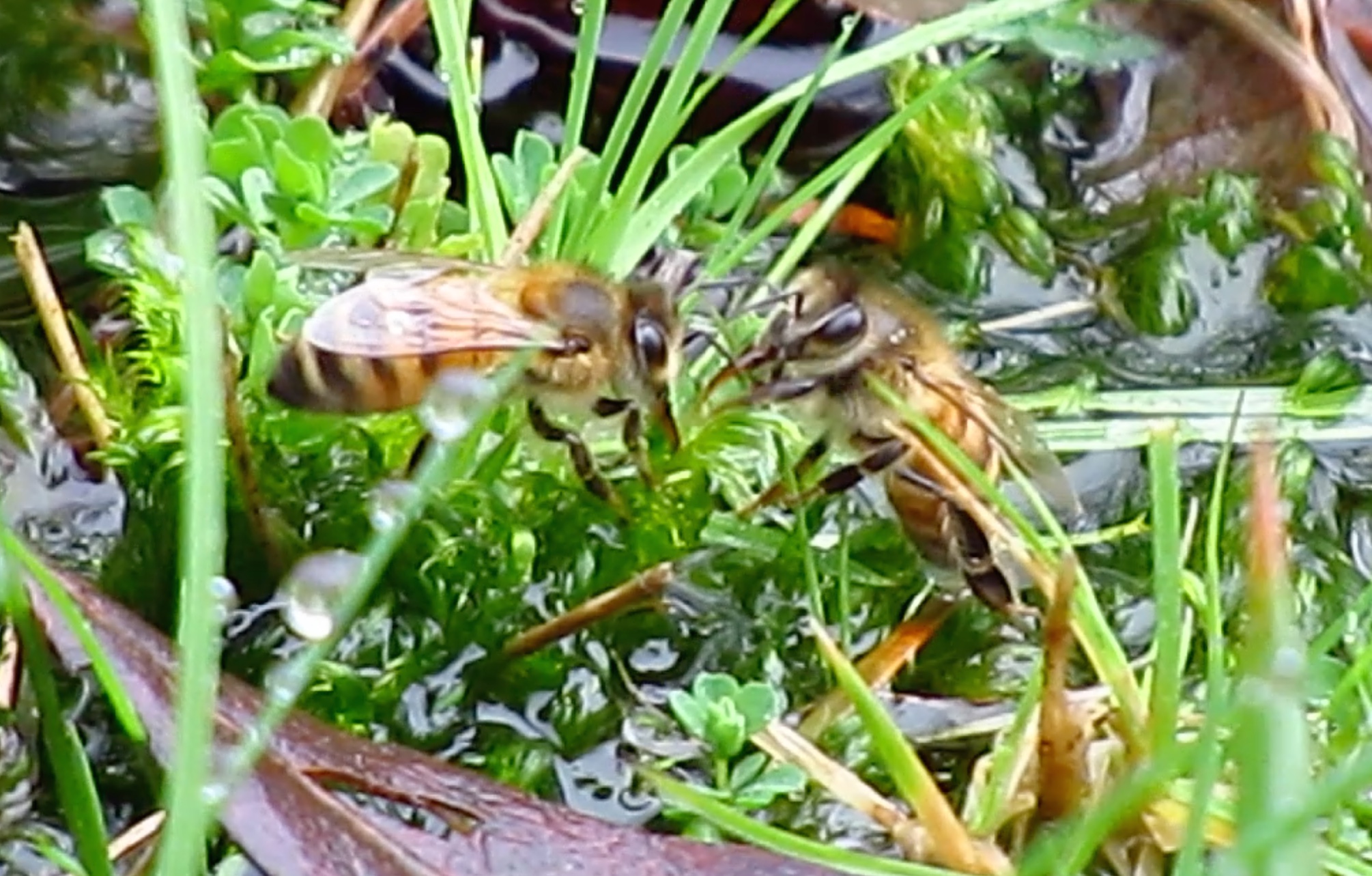
February 3…this photo is taken from a video when it was raining, but it still shows bees that are visiting the moss even though the water is covering most of it.
Some more video of honeybees active in the moss while it’s raining…
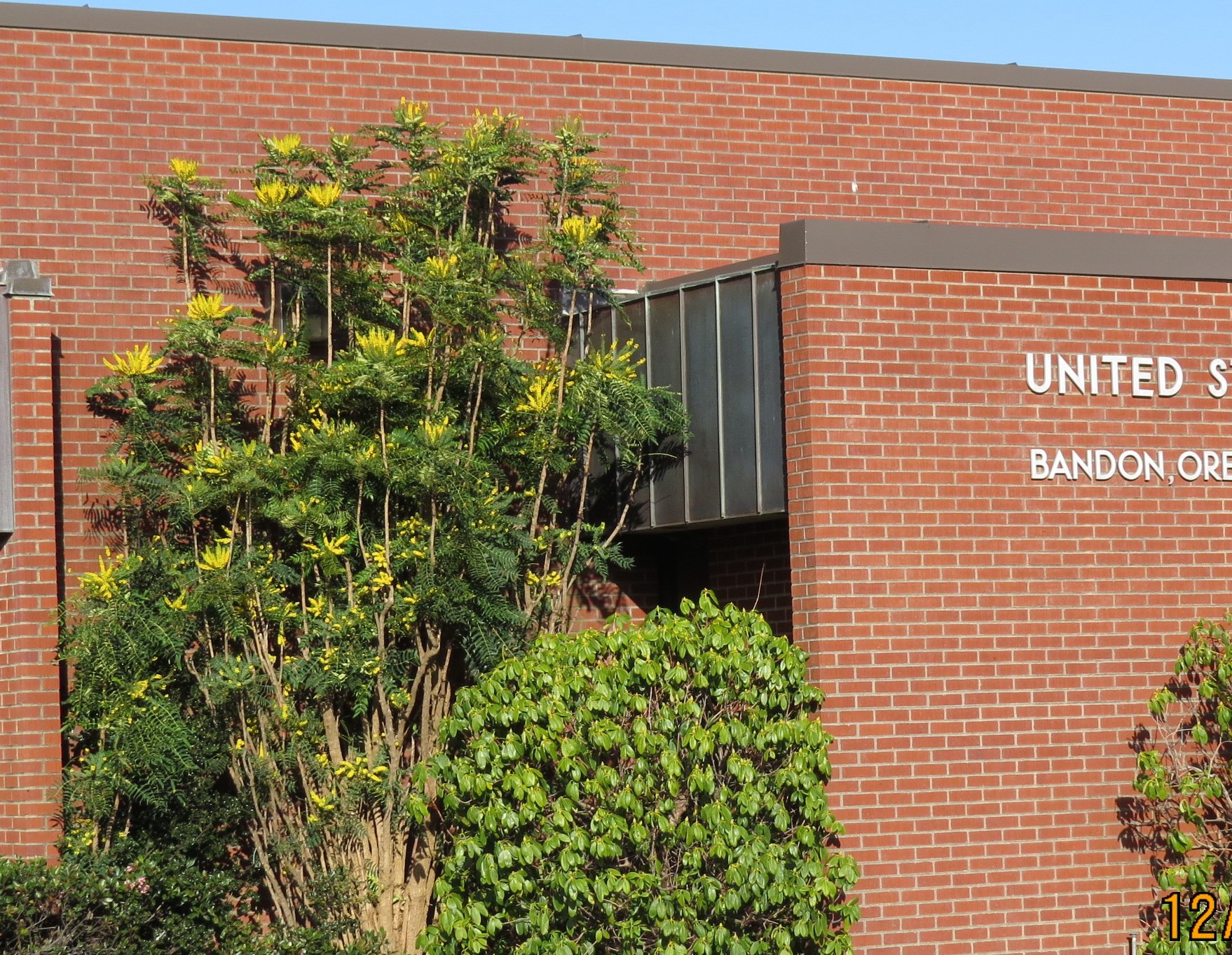
Since mid November this giant Oregon Grape Holly, (mahonia aquifolium) has been blooming and it’s likely to keep blooming into January the way the weather has been. Most people can’t believe it, but I’m happy to see so many of my bees getting nourishment from it. How do I know they’re mine? I’m sure I recognized them. 🙂
November 5, 2014…On an unusually warm November day, I spotted these hebes growing in front of Bill Sweet Insurance Agency. The bees were loving it. Thanks, Bill.
While the east coast is getting hammered by the polar vortex cold weather, the west coast is enjoying warm sunny days into early November. At this time of year there are very few sources of nectar, so it’s good that the honeybees are getting a lot from the hebes. Nectar provides an important energy source (carbohydrate) for the bees.
Many thanks to Steve Montana who has let me use his musical talents as background to the video. “GaelaMae On The Bluffs” was written by Steve and the banjo music was written by Buell Kasey back in the late 1800’s. Watch Steve Montana play banjo at the beginning of Sustainable World. Click on “Soldier’s Joy.”













 Adventures in Natural Beekeeping